Home Blog Page 5004

Nashe main kaun nahi hai, mujhe batao zara? Sanjay Raut pulls an Amitabh Bachchan in an attempt to shield Bollywood: Read what he said

Controversial Shiv Sena leader Sanjay Raut on Friday attempted to defend Bollywood actors who are being questioned by the Narcotics Control Bureau over their alleged involvement in the Bollywood drug case.

Attacking the Narcotics Control Bureau (NCB) for investigating the Bollywood drug case, Sanjay Raut almost mirrored a song in a movie featuring legendary actor Amitabh Bachchan by asking who does not have any addictions. Raut went on to claim that some people have an addiction to money and some have for others.

Defending the actions of Bollywood actors, who have been exposed in the ongoing drug case investigations, the Shiv Sena Rajya Sabha leader said that it is the job of Narcotics Control Bureau to prevent drug smuggling. Raut, protesting against the NCB summons to various accused, said that the NCB was calling one person after the other instead of preventing drug smuggling.

“In which field, there is no addiction? Some have an addiction to money, some have other addictions,” said Raut while questioning the summons of NCB to Bollywood actors.

Deepika Padukone to appear before NCB on Saturday

Meanwhile, Bollywood actress Deepika Padukone will be appearing before the NCB on September 26. Along with Deepika, Sara Ali Khan and Shraddha Kapoor have also been summoned by the Narcotics Control Bureau in connection with the drug mafia case.

On Friday, actor Rakul Preet Singh and Deepika Padukone’s manager Karishma Prakash were also summoned. 

The NCB officials on Friday recorded statements of fashion designer Simone Khambatta and Shruti Modi, the former manager of Sushant Singh Rajput in connection with the drugs case.

The NCB had launched an investigation after it received official communication from the Enforcement Directorate (ED) alleging a drug mafia in the Bollywood. The NCB had launched a probe after recovering various chats related to drug consumption, procurement, usage and transportation.

Shiv Sena has been rather actively trying to shield Bollywood after several A-Listers are now being summoned by the Narcotics Bureau. With this statement of Sanjay Raut, which comes a day before Deepika Padukone is set to be interrogated, one recalls a character played by Bollywood star Amitabh Bachchan in the 1984-movie “Sharaabi’, and the legendary words from a song – “Nashe main kaun nahi hai, mujhe batao zara?”.

Team OpIndia dedicates this song to Sanjay Raut… till he comes up with his next pearl of wisdom.

Chinese government systematically destroyed 16000 mosques in Xinjiang since 2017, finds Australian study using satellite imagery

The Chinese regime has destroyed around 16,000 mosques in the Xinjiang province since 2017, reported the Australian Strategic Policy Institute (ASPI). The Australia-based think-thank made the estimate using satellite imagery and statistical modelling.

As per the report, around 8500 mosques have been completely destroyed and the land on which the mosques were built lay vacant. The think tank added that while 28% mosques have been damaged or altered in some form, a whopping 30% of ‘important Islamic sites’, including pilgrimage routes, shrines and cemeteries, have been destroyed in Xinjiang. As per estimates, one of three mosques has been demolished since 2017.

Chinese government claims existence of 24000 mosques

The think tank found that contrary to the claims of the Chinese government of the existence of over 24,000 mosques, less than 15,5000 mosques exist in Xinjiang province today. Interestingly, around 7500 of the existing mosques have been damaged to some extent. ASPI emphasised that while several mosques were renovated between 2012-2016, there seems to be a policy change to ‘rectify’ things since 2017.

Decline in the number of mosques and increase in damaged Islamic sites (Image Courtesy: Australian Strategic Policy Institute)

ASPI has estimated that roughly 8,450 mosques were destroyed across Xinjiang, and a further estimated 7,550 mosques have been damaged or ‘rectified’ to remove Islamic-style architecture and symbols. It may be noted that Cultural destruction often masquerades as restoration or renovation work in Xinjiang. 

Employing satellite imagery, the think tank created a new data-set of mosques that existed before 2017. It discovered the co-ordinates of over 900 Islamic sites before 2017. using current imagery, they categorised the mosques as undamaged, slightly damaged, significantly damaged and destroyed. Through the analysis, they were able to determine visible changes in the structure of the Islamic sites.

The organisation also found that besides mosques, Chinese Government authorities have also desecrated important sacred shrines, cemeteries and pilgrimage sites. Their data and analysis suggest that 30% of those sacred sites have been demolished, most of them. An additional 27.8% have been damaged in some way. In total, 17.4% of sites protected under Chinese law have been destroyed, and 61.8% of unprotected sites have been damaged or destroyed. 

Mosques converted into cafe-bars and public toilets

The think tank found a pattern in which the demolition of the mosques was conducted. Areas with low tourist potential, such as Urumqi had lower rates of demolition. The mosques that were undamaged were found to have no existing Islamic architectural features, and therefore exempted from the ‘rectification’ campaign. Many mosques had also been converted to civic and commercial spaces like cafe-bars and public toilets. At the same time, 75% of existing mosques were either padlocked or had no visitors.

Red represents completely demolished mosques whereas orange circles represent destroyed ones (Image Courtesy: ASPI)

The report stated that more than a million Uyghurs have been placed in concentration camps in the northwestern territory and are being coerced to desert their religious practices. The policy of ‘cultural assimilation’ and ‘inter-ethnic mingling’ has been mainstreamed under the current Chinese Premier Xi Jinping. The think tank observed that the renovation work on mosques stopped after his Xi’s speech in April 2016 in which he advocated ‘sinicisation of Chinese religion.’

Chinese whitepaper reveals persecution of Uyghur Muslims

In a whitepaper published by the State Council Information Office, the Chinese Communist Party (CCP) has insinuated that the Uyghur Muslims are responsible for what China is doing to them. In a startling claim, China has revealed that it has placed over 1.29 million people in re-education camps between 2014 and 2019 in the Uyghur-dominated province of Xinjiang. The whitepaper claimed that Uyghur Muslims were ‘terrorists’ who believed in the ‘afterlife’ and rejected modern science owing to religious dogmatism.

The Chinese regime, keeping the rise of radical Islam in mind, justified, “Terrorists, separatists and religious extremists have long preached that “the afterlife is fated” and that “religious teachings are superior to state laws”, inciting the public to resist learning the standard spoken and written the Chinese language, reject modern science, and refuse to improve their vocational skills, economic conditions, and the ability to better their own lives.”

‘COVID bail’ extension provisions granted by HC being misused: Court rejects bail pleas of Ratan Lal murder accused

0

A Delhi court on Thursday dismissed the interim bail pleas of two accused persons, Mohamad Ayyub and Saleem Khan involved in the murder of head constable Ratan Lal during the violence that swept northeast Delhi in February this year. 

Accused Saleem Khan had applied for the interim bail on the grounds of the death of his 75-year-old sister. He has petitioned that he needs to perform post-death rituals for his deceased sister. Delhi police had told the trial court that many accused were misusing the interim bail which was being extended to them during Covid-19 pandemic.

The Public Prosecutor, appearing for the police, opposed the bail application arguing that the accused seek interim bails for a very short period and before its expiry, they file an application seeking an extension. The prosecution informed the court that many accused in the Delhi riots cases have been seeking interim bail on humanitarian grounds and then never coming back to prison, taking advantage of the ‘COVID bail’, extensions granted earlier by the Delhi High Court in a suo moto case.

The public prosecutor furthered that the accused has 9 other surviving siblings and besides, his sister is survived by her husband and five children who can perform her last rites.

Interim bail plea of another accused in the Ratan Lal murder case also rejected

Meanwhile, the Delhi court also rejected the interim bail application of another accused Mohammad Ayyub, who is also accused in the murder of constable Ratan Lal. Mohd Ayyub had sought interim bail for 11 days to perform post-death ceremonies of his father.

Rejecting the plea, the additional sessions judge Vinod Yada said: “The offences alleged against the applicant in the matter are quite serious as the present case pertains to an assault upon police force and resultant death of Head Constable Ratan Lal and severe injuries suffered by Amit Kumar Sharma, IPS, DCP-Shahdara; Anuj Kumar, IPS, and 51 other police personnel at the hands of rioters.”

“It is further a matter of record that the applicant (Ayyub) has already availed the benefit of interim bail twice in the matter and his other three brothers can very well perform the remaining post-death ceremonies of his deceased father,” the additional sessions judge said in its order.

Ratan Lal’s murder was a part of a wider conspiracy to trigger communal riots in Delhi

It may be recalled that head constable Ratan Lal was lynched to death by a violent Islamist mob while he was trying to do his duty on main Wazirabad Road, Chand Bagh during the Delhi riots in February.

It was reported at the time that the police had essentially gone to speak to the mob, pacify them and ask them not to continue with their illegal march, and it was then that they were attacked.

During the perusal of the charge sheet, OpIndia noticed that several witnesses who were examined by the authorities attested to the fact that before Ratan Lal was lynched to death by the Islamist mob, two other police officer was held hostage by the mob.

Jailed SP leader Azam Khan’s son Abdullah Azam to be barred from contesting elections for submitting forged birth certificate in 2017 elections

0

Jailed Samajwadi Party leader Azam Khan‘s son Abdullah Azam is likely to be barred from contesting elections for six years. Former Suar MLA Abdullah Azam was disqualified from Suar Assembly constituency after he submitted a forged birth certificate during elections. He is currently lodged in Sitapur jail along with his father and mother Tanzima Fatima in relation to a case of fraud.

The State Law Department has made the recommendation to impose a ban on Abdullah Azam. Principal of Uttar Pradesh Assembly Secretariat Pradip Dubey wrote a letter to the President of India Ram Nath Kovind yesterday seeking his opinion on the Law Department’s recommendation of barring Abdullah Azam under section 8A of the Representation of the People Act, 1951. The letter mentioned that Abdullah Azam was convicted of corrupt misconduct by the Allahabad High Court. It is now for the President to decide with the consent of the Election Commission of India (ECI) whether he should be banned for six years.

Convicted by Allahabad High Court

In 2018, Allahabad High Court on finding the allegations against Abdullah, who was elected as an MLA in 2017, to be true, had held his election as invalid. He was held guilty of submitting fake birth certificate while filing his nomination. The Assembly Secretariat had dismissed his membership after it was found that he was below 25 years of age and submitted a forged birth certificate.

France: Four injured in knife attack near former offices of Charlie Hebdo, suspicious package detected

0

Four people have been injured in a knife attack near the former offices of the French satirical magazine Charlie Hebdo on Friday. Two were critically injured in the attack and two suspects are on the run, the Paris Police department has stated. Officers are “actively hunting” for the perpetrators and the area has been cordoned off after a suspect package was spotted nearby.

The attack occurred near the Richard Lenoir Metro Station in Paris. Schools and care homes have been shut down in the area while the Police continues with the hunt. Journalist Lucas Burel confirmed that a suspicious package has been spotted.

“I saw a young woman with a huge head injury, blood was running all over her face,” a witness told BFMTV. The Police has not released the identity of the attackers or the victims as of yet. The attack occurred as the trial into the Charlie Hebdo attack in 2015 gets underway.

Charlie Hebdo had decided to republish the cartoons on prophet Mohammed that led to the terrorist attack against them in 2015. Their decision to republish the cartoons had triggered widespread protests across the Muslim world and renewed calls for violence.

UP CM Yogi Adityanath announces development of magnificent riverfront along the Ganga in Kanpur, dedicates it to PM Modi

0

After announcing the setting up of an enormous film city in the state, the Yogi Adityanath government in Uttar Pradesh is now set to construct a massive riverfront on river Ganga. The Uttar Pradesh government has a number of development projects underway including the Film City project in Greater Noida. The Ganga riverfront that is to come up in Kanpur is the latest addition in the list of development projects.

Chief Minister Yogi Adityanath made the announcement yesterday while reviewing the development projects in the Kanpur region. He said that the riverfront will be a gift for PM Modi who had praised the clean water of Ganga. There are 30 development projects worth Rs 50 crore going in each division in the Kanpur range which includes Kanpur Nagar, Kanpur Dehat, Kannauj, Farrukhabad, Auraiya and Etawah.

In the meetings, which was also attended by the State Agriculture Minister Surya Pratap Singh Sahi and the Panchayati Raj Minister Bhupendra Chaudhary, the Chief Minister asked the officials to pace up Smart City projects and the Metro projects in Kanpur. He said that the under-construction Bundelkhand Expressway that will pass through Etawah and Auraiya districts will provide the economic boost to the state. The development work on river Ganga will be implemented under the Namami Gange project as assured by the CM. He directed the officials to prepare an action plan for immediate construction of the riverfront in addition to expeditious implementation of Namami Gange.

CM Yogi also directed the officials to begin the construction of Kanpur Medical College. He also asked the officials to reduce the Covid-19 death rate in Farrukhabad district and instructed that every bed in the hospitals should have proper oxygen supply. He also directed for the hundred per cent Geo-tagging of the toilets constructed under the PM Awas Yojana, CM Awas Yojana or Swachh Bharat Mission.

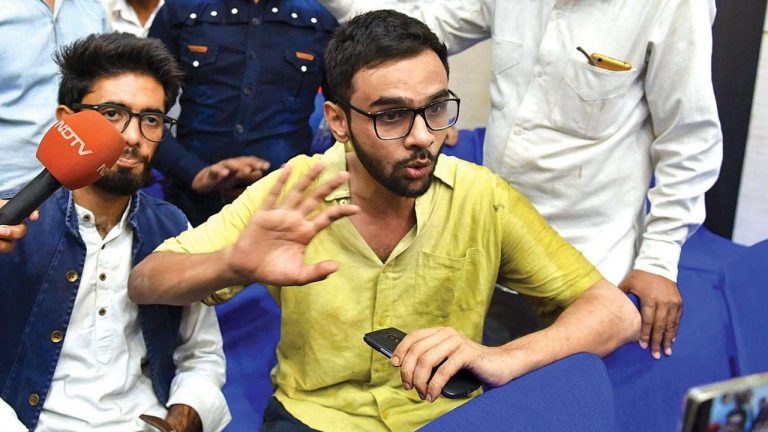
Why the mainstreaming of Umar Khalid is scary and the need to restore sanity by drawing a line in the sand

As a practical matter, anyone who is accused of a crime has to appear before three kinds of courts. The first is the court of law, which is, of course, the only legitimate one. The second is a court of elite opinion made up of “eminent” people: academics, intellectuals, journalists and such. In other words, people in positions of privilege, whether earned or inherited. The third is a court of general public opinion, where all of us get to say.

Now, the court of law has to proceed slowly and very carefully. And the court of general public opinion delivers its verdict only once every five years. As such, this gap is filled by the court of elite opinion. At the moment, with a range of “eminent” personalities coming out in favour of Umar Khalid, he is winning this circuit hands down.

I cannot tell you if Umar Khalid is guilty or innocent. However, I can tell you that the mainstreaming of Umar Khalid and other elements like him is absolutely terrifying.

Who is Umar Khalid? He first surfaced around 2016 as an apologist for Afzal Guru. Just listen to him speaking on Times Now here.

Remember Afzal Guru? He was a terrorist who was executed in Feb 2013 for his role in the attack on Indian Parliament in 2001. Not that it should matter, but his execution, as well as most of his trial, happened under the UPA government of Sonia Gandhi.

As with anything to do with terrorism, a small club of fringe elements sprang up around the issue, spreading conspiracy theories. It consisted of pathological anti-India elements like Arund**ti Roy, radical Islamists, JNU “students” with nothing better to do and the like. Nobody took them very seriously. They were the fringe. Whether left, right or centre, nobody in mainstream politics would have anything to do with them.

How did that change? How did someone like Umar Khalid become mainstream?

Here is Umar Khalid’s tribute to Hizbul terrorist Burhan Wani.

I don’t care if I fall as long as someone else picks up my gun and keeps on shooting. These were the words of Che Guevara but could have just been Burhan Wani’s too”

And:

Burhan wasn’t scared of death, he was scared of a life lived in subjugation. He detested it. He lived a free man, died a free man …..”.

In case you missed it, we are talking here about Burhan Wani, a commander of the dreaded terrorist organization Hizbul Mujahideen. Whether or not you think Umar Khalid belongs in jail, he certainly does belong to the madhouse.

But today, they speak as if Umar Khalid isn’t fringe. When did supporters of Hizbul Mujahideen, Jaish-e-Mohammad and Lashkar-e-Toiba become mainstream? Where is this country going?

Umar Khalid is not the only example of this phenomenon. Take Sharjeel Imam, another hero of modern Indian liberalism. A man who asked for the Northeast to be cut off from India. Now, India has never had a clear free speech law and therefore those who say outrageous things (on any topic) have often found themselves in jail.

Five years ago, Sharjeel Imam would have gone to jail and nobody would have cried for him. But today, the liberal media has come up with long-winded excuses about why he should be excused for saying what he did. Sharjeel is a man who wants thousands of portraits of Jinnah across this land to inspire Muslim youth. Incidentally, Sharjeel rails against liberals who wanted Muslims to vote for Kanhaiya Kumar in Begusarai Lok Sabha seat instead of the RJD candidate Tanvir Hasan. He asks how Muslims could be expected in good conscience to vote for a non-believer.

Sharjeel Imam despises liberals. The liberals love him. How did it come to this?

Some 15,000 people showed up to pay last respects to Yakub Memon, a terrorist executed for his role in Mumbai serial blasts. Leading national newspapers covered it as if it was the final journey of a hero. How did it come to this?

It’s not only the radical Islamist fringe that has become mainstream. The radical Communist fringe has enjoyed a similar welcome into the mainstream.

In Aug 2018, the Congress party’s official handle spoke up against arrests of a bunch of “activists.” Among the activists was Vernon Gonsalves, a man who had been convicted under many sections of the Unlawful Activities Prevention Act. Again, his arrest, trial, sentencing and jail term had happened entirely under the rule of Congress party, both at the Center and in Maharashtra. Yet, five years after he was released from jail, the Congress official handle made him out to be a hero.

Then, there is Varavara Rao, currently lodged in jail. He has been arrested multiple times under Congress govts as well. But today he is another hero of Indian liberalism. How did the mainstream come to embrace a man who supports “azaadi” for Kashmir, Hyderabad and the North East?

Remember how Dr. Singh had called left wing terror the greatest internal threat to India?

Seen through the prism of Indian liberalism in 2020, the government of Dr. Singh, under the control of Sonia Gandhi, now sounds like it was right wing.

So what happened? What happened is a spectacular failure of the Congress Party to keep its ecosystem together. If you look at the list of “eminent” people defending Umar Khalid, the mutually back scratching elites signing themselves with the names of their famous dads and moms, great granddads and great grandmas, these elites would never have come to BJP anyway. They belonged as friends of the Congress, the traditional party of zamindars.

But after the 2014 election, the Congress party collapsed. It’s intellectually void leadership could not give a home to the intellectual zamindars of the world. This left the field open for fringe elements such as Umar Khalid, Sharjeel Imam and Vernon Gonsalves to take charge.

When the Soviet Union collapsed, its nuclear weapon stockpiles were left scattered all across their fallen empire. Rogue states from all over the world seized on the opportunity: Pakistan, North Korea, Iran, etc. Everything, from jobless Soviet nuclear and bio weapon scientists to stores of highly enriched uranium, fell into the wrong hands. We are witnessing the political equivalent of that.

We need to restore sanity by drawing lines in the sand. It’s okay if the extreme left is defined by people such as Ram Guha or Shashi Tharoor. But the fringe, consisting of Yakub Memon, Umar Khalid, Afzal Guru, Burhan Wani, Vernon Gonsalves or Varavara Rao must not be allowed to become mainstream.

“People are deeply hurt”: Congress-ruled Rajasthan press for coercive action against journalist Amish Devgan in alleged defamation of Moinuddin Chisti

0

The Congress government in Rajasthan has shown an unusual alacrity in prosecuting journalist Amish Devgan for his allegedly derogatory remarks for the Sufi Saint Moinuddin Chisti on his prime time show “Aar Par” on CNN-News18 telecasted on June 15.

Representing the State of Rajasthan, Advocate Manish Singhvi argued against the quashing of the multiple FIRs filed against the embattled journalists for his remark against the much hallowed Sufi Saint of Ajmer where he described him as a “lootera”.

While Devgan’s counsel attributed the remarks to “slip of tongue” and argued that the multiple FIRs filed against the journalist should be quashed citing his unconditional apology, the prosecution counsel, Singhvi pressed for FIR and investigation into the malicious and deliberate intent of the journalist to make the objectionable remarks and thereby hurt the religious sentiments of the people.

“FIR is the only machinery to carry out the probe. An investigation needs to take place, and thereby charge-sheets need to be filed. Court has to prima facie considered the charge sheet and the statement of witnesses. A prima facie case needs to be made out,” Singhvi contended.

As many as 7 FIRs had been filed against the journalist in Rajasthan, Madhya Pradesh, Uttar Pradesh, Maharashtra & Telangana. Advocate Sidharth Luthra, on behalf of journalist Amish Devgan, submitted before the bench comprising Justices AM Khanwilkar & Sanjiv Khanna that the FIRs stipulate offences under Sections 153A, 153G, 295A, 298, 5050(2) of IPC & 66(f) of the Information Technology Act against Devgan but none of the FIRs & their contents justify their requisite ingredients in terms of the Indian Penal Code.

However, Singhvi today argued that essential ingredients of Section 295A (Deliberate and malicious acts, intended to outrage religious feelings) are there and therefore an investigation and FIR against Devgan cannot be quashed.

The State of Rajasthan’s counsel also added that the apology tendered by Amish Devgan was submitted after 30 hours from the broadcast of the show, reiterating before the court the need for an investigation to determine if the apology was an afterthought or genuine. Luthra, in his submissions, had yesterday stated that his client had offered an unconditional apology for his inadvertent error before the first FIR was filed against him and sought quashing of the FIRs against him.

Journalist Amish Devgan mistaken refers to Moinuddin Chisti as “lootera” while talking about Alauddin Khilji

Devgan was hosting a show on June 15 about the Place of Worship Special Provision Act on his show ‘Aar Par’, when he called the Sufi Saint a “lootera”. Following the show, several police complaints and FIRs were filed against the anchor in various parts of the country.

Mr Devgan had tendered an apology on Twitter a day after the show was telecasted, saying he was referring to Muslim ruler Alauddin Khilji and had mistakenly named Chisti, also known as Khwaja Gareeb Nawaaz (benefactor of the poor). The journalist also added in his tweet that he has himself sought the saint’s blessings in the past.

In July this year, the Supreme Court had ordered a stay on an investigation and coercive action against the journalist in connection with the case.

Junglee Rummy scales ahead by understanding skill gamers’ personas

0

The Indian online gaming industry is growing at an exponential rate. The user-centric approach has been recognized as one of the fundamental factors of the increasing adaptability and usability of online games. The KPMG X Google report “Online Gaming in India: Reaching a New Pinnacle” shows that the Indian online gaming industry is about to add 190 million gamers and become a USD one billion opportunity by 2021, from USD 290 million in 2016.

The advent of the digital age has revolutionized the gaming industry. The internet has opened the door to a whole new realm of opportunities for this industry and multiplied the number of players. There has been a constant legal battle between the game of skills and games of chance. A game is classified as a skill game or game of chance/luck on the basis of the outcome of the game. If the result predominantly depends on the skill of the player and not on chance, the game is considered legal and playing it for cash, as well as free, is legally allowed.

Understanding the “Game of Skill”

According to the law, a game of skill is one in which success depends predominantly on superior knowledge, training, attention, experience, adroitness, personal attributes, and capabilities of the player. The skill and expertise of the player play a dominant role in determining the outcome of the game. Among the various games of skill, the card game rummy has gained vast popularity in India. Popular online gaming operators like Junglee Rummy have added more exciting features to the game with the changing time to cater to the needs and wishes of millions of players.

Embracing the challenging times, mobile game operators are moving towards more value-driving products. With an increased focus on local development, the user-behavior has become the main focus for developing new skill-based games. The advancement in technology and the easy availability of cheap network services have made mobile devices a favorite medium for players. The advantage of playing games on the mobile is taking the player to the next level. India is rapidly moving towards improved age and gender parity among online gamers. Given the current situation, the majority will continue to play on mobile phones in 2021.

Indian Skill Gamers – how operators keep them engaged

India is a young country with about half of its population under the age of 25. A user-centered approach is fundamental in the usability of an app or gaming platform. Platforms like Junglee Rummy focus on the product and keep the user engaged through different attractions. The regular cash and free tournaments on their rummy app ensure that players stay entertained and engaged.

Gamers play and stay engaged with online games for specific needs such as productive entertainment, socializing, skill enhancement, and much more. Initially players used to play online games for just entertainment and took to online gaming for a change from their routine. But eventually social communities of gamers started building and people started playing for social interaction. They make new friends and socialize over games. Online games have become a means to connect with like-minded people.

With the increasing number of online players and online game operators, the thrill of competing, winning and acquiring high status in the community of gamers has become a big attraction. Junglee Rummy understood the pain points of users and made sure that their games work smoothly even with a low speed internet connection and can be played on almost all the smartphones/tablets, as well as computers and laptops. The easy accessibility, seamless user interface, and 24X7 customer support by Junglee Rummy ensure that gamers never get stuck anywhere and all their problems are solved in no time.

Skill Games X Junglee Rummy

As discussed above, growth in the country’s gaming industry is being fuelled by enhanced connectivity, changing ways of social interaction, and a growing young population. Junglee Rummy closely associated itself with the local players and created online rummy contests to celebrate every small event with them. Special events and tournaments were organized during all the popular Indian festivals, such as Holi, Diwali, Christmas, Republic Day, Independence Day, etc. to add more spark to the festivity and the spirit of gaming.

A strong and booming Junglee Rummy community of over 12 million registered users is the embodiment of Junglee Rummy’s success as India’s most trusted online rummy platform. As the trend of online gaming increases, Junglee Rummy keeps enhancing the gaming experience it offers.

The fierce competition among game operators gives the ever-expanding user base a wide range of choices. To stay in tune with the growing user-base and increasing expectations of players, a deep understanding of the behavior and personas of skill gamers is essential. Only constant improvement and catering to changing player preferences can ensure continued user engagement.

Transparency for thee but not for me: Here’s why foreign funded NGOs hate the FCRA amendment bill

The Foreign Contributions (Regulation) Amendment Bill, 2020 that was passed in the Lok Sabha on September 21 and Rajya Sabha on the 23rd of December had a chilling effect on several NGOs that are considering the amendment as blow to their financial freedom and functioning. The amendment to the Foreign Contributions (Regulation) Act, 2010 seeks to enhance transparency, accountability and to strengthen the compliance mechanism while allowing the genuine NGOs to continue working for the welfare of the society.

Salient features of the proposed amendment to the FCRA are:

  • It will prevent public servants from receiving foreign donations.
  • The NGOs registered under the FCRA will not be able to use more than 20% of their foreign funds towards meeting their administrative expenses (earlier the limit was 50%)
  • In order to be registered or renew license under the FCRA, all the directors, office bearers or primary functionaries of the NGOs will be mandated to provide their Aadhar number. In case these individuals are foreigners, they will be required to submit the copies of their passport or Overseas Citizen of India (OCI) card.
  • It provides for the surrender of license by NGOs post inquiry and clearance from the Central government.
  • The NGOs will be able to receive foreign contributions in their designated FCRA bank account in the State Bank of India in Delhi only.

During the Parliamentary debate on the proposed FCRA amendment. BJP MP SP Singh mentioned about the government reports on how in the northeastern parts of the country insurgency has increased through the foreign funds received under the FCRA. Few days ago, the Home Ministry had suspended the licenses of 13 NGOs after the allegations of forced religious conversion.

Opposition by NGOs

The amendment appears to have hit the expected targets as soon after the amendment was proposed in the Lok Sabha, several NGOs started opposing the bill. Oxfam India CEO Amitabh Behar took to Twitter and called the amendment a “devastating blow” that would create obstacles for the foreign aid that could uplift the poor. The Voluntary Action Network India (VANI) which is an umbrella body of voluntary organisations in India, had strongly opposed the proposed amendment and has demanded the Bill to be sent to a select or standing committee of Parliament for scrutiny. The organisation termed the amendment an attempt to stifle the NGOs.

In no time many similar voices joined the clamour against the amendment bill. Some went to call it an anti-poor bill alleging that it will make its impossible for the NGOs to function.

Some others registered their opposition by declaring the amendment as “the worst financial law” the country has.

An NGO named Arpan, registered in Mumbai, also opposed the amendment by supporting the demand of VANI for sending the for scrutiny to an Parliamentary Committee.

Another organistaion named the Population Foundation of India (PFI), also supported VANI’s call for scrutiny of the amendment.

NGOS in Tamil Nadu and Delhi likely to get affected

Expert on FCRA NGOs @by2kaafi has listed out some of the NGOs based in Delhi and Tamil Nadu that might be affected by the proposed amendment. As per the analysis by @by2kaafi, the NGOs that are likely to be affected in Delhi include:

  • Muneer Social Welfare Society
  • Appropriate Technology India
  • Action Aid Association
  • CDH International Foundation of India
  • Industrial Global Union
  • Ecoles de la Terre Welfare Society
  • Indian Olympic Association
  • Vision Foundation for Development Management
  • Saint Hardyal Educational and Orphans Welfare Society
  • Centre for Budget and Governance Accountability
  • Delhi Network of Positive People
  • Nand & Jeet Khemka Foundation
  • Indian Head Injury Foundation
  • Sightlife India
  • The Special Child Trust

The NGOs in Tamil Nadu that are likely to be affected include:

  • ECI Inter Church Aid & Service Association (Chennai)
  • In His Steps International Charitable Trust (Madurai)
  • Association for Rural Development (Madurai)
  • Institution for Rural Development Trust (Chingleput)
  • Faith Prayer & Tract League (Chennai)
  • Salvation Army India-South Eastern Territory
  • Integrated Research & Reconstruction Organization (Kumbakonam)
  • Oasis Ministries International (Chennai)
  • Families for Children (Coimbatore)
  • National Women Development Trust (Cumbum)
  • Boys Town Society (Madurai)
  • In New Democratic Integrated Action Trust (Okkur)
  • The Jesus Mission (Chennai)
  • Hope Public Charitable Trust (Chennai)
  • Bharathi Trust (Tiruvallur)

An Analysis of the Proposed Amendment

An analysis of the proposed amendment by @by2kaafi and @zeneraalstuff provides a glimpse of what the implications of the amendment will be.

  • Provision Preventing Public Officers from Receiving Foreign Aid: The will require the public officers to give up their positions in the FCRA-NGOs while holding a public office but it does not restrict them from doing so before or after their tenure. Since this will cause loss of extra income to many individuals, they might engage in malpractices to make up for that. Such public servants might find a way around by becoming members of non-FCRA NGOs and then making a member of such NGO a representative in an FCRA-NGO and thus control the latter through proxy. FCRA NGOs can also be run through Benamis.
  • FCRA Funds to be Spent Directly by the Organisation: In this case, the NGOs will be required to build their own capacity to deliver instead of relying on other partners for implementation. Large NGOs that have been liaising with foreign donors and have been coordinating the distribution of funds in India will be affected by in a way that may render them as pure administrative cost centres. This rule, however, could be bypassed by forming various for-profit entities that could work on contract with FCRA NGOs.
  • Administrative Expenses to be restricted to 20% of the Foreign Fund: This provision will reflect on the activities like soft conversions for which funds are distributed while accounting them under administrative expenditure. This will also lead to pay cuts, transition of full-time positions to contract based positions, reduction in rental expenses, etc. However, alternate means of income can be created in the form of travel and conference expenses and research grants.
  • Primary Inflow through an SBI Bank Account in Delhi: This will enable the government to keep a track of all the FCRA transactions and the sources of the fund flow allowing cross-verification with source organisation’s tax filings. However, the same entity can use multiple accounts for remittances.
  • Conditions to be Fulfilled for Registration as well as Renewal: The registration will be renewed every five years. Earlier there were no conditions required to be fulfilled for the renewal of the registration. This can put restrictions on renewal of registration of the NGO found in violation of the FCRA.

Why the opposition to the amendment?

Thus, the opposition that the amendment has received makes it clear that foreign-funded NGOs, although they seek transparency and accountability from others, are not willing to subject themselves to the same. Some of these NGOs appear to truly believe that they are so morally superior to the rest of us that they do not deserve to be held to the same standards as everyone else.

The amendment proposed, that awaits the President’s assent, should not elicit the manner of response that it has. Increase transparency and accountability from participants in the democratic process, and they are political organisations which regularly interfere in the internal affairs of the country, should be welcomed by everybody. But quite clearly, that is not the case.

Going forward, we can expect more incendiary criticism from the opposition and foreign-funded NGOs regarding the same. But nevertheless, it is a positive development that has long been required. However, it remains to be seen the precise effects that the new law forces on the operations of the NGOs on the ground.