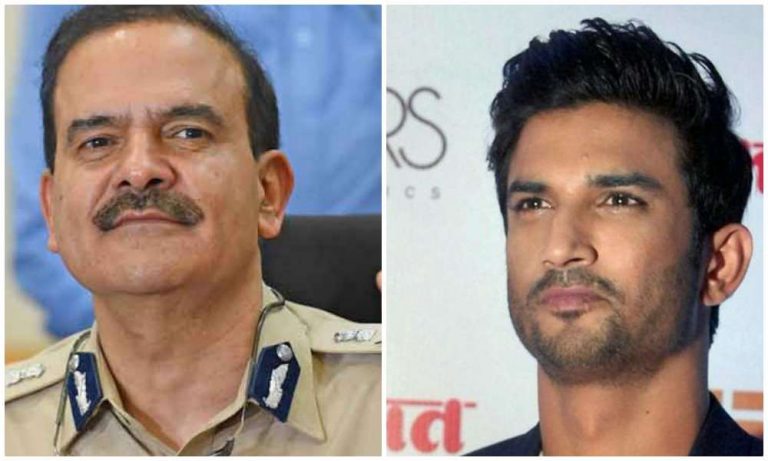
Mumbai Police on Tuesday said that they have registered two FIRs against social media users over allegations of ‘defaming’ the Mumbai Police Commissioner Param Bir Singh. One FIR is regarding ‘defaming’ the Mumbai CP while other is for using ‘morphed’ image of Mumbai Police’s official Twitter account.
Mumbai Police has claimed that many social media users and some ‘fake’ accounts were used for ‘defaming’ Mumbai Police Commissioner on various sites like Twitter, Instagram and Facebook. Mumbai Police has alleged that ‘abusive language’ was used against Singh and the Mumbai Police force.
As per reports, Mumbai Police has claimed over 84,000 ‘fake’ accounts were created from June 14 onward after the 34-year-old actor Sushant Singh Rajput was found dead in his apartment under mysterious circumstances. While initial reports had suggested death by suicide, the family had later alleged foul play.
Mumbai Police has claimed that the ‘fake accounts’ were created from countries like Italy, Japan, France, Indonesia and others. Mumbai Police Commissioner Singh claimed that a campaign was run to demoralise the police force and derail the investigation in the deceased actor’s case. “Multiple fake accounts on social media were created to target Mumbai police with abusive tones. Our cyber cell is conducting a thorough investigation into this matter and all those found violating the law will be prosecuted under relevant sections of the Information Technology Act,” he said.
Sushant Singh Rajput death
The 34-year-old actor was found dead in his apartment on 14th June 2020. The Mumbai Police had come under fire over allegations of shoddy investigation. The Supreme Court had also pulled up Mumbai Police for delay in filing the FIR.
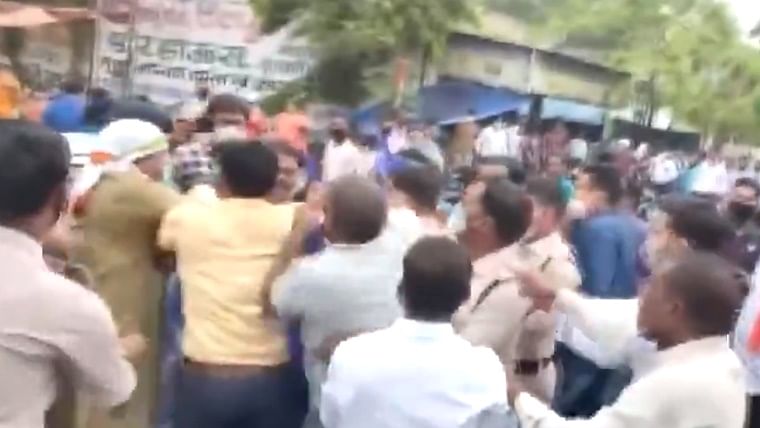
On Monday, Congress party workers clashed with members of Bhim Army in Janjgir-Champa district of Chhattisgarh during a protest against the Hathras incident.
According to the reports, the clashes between two sides erupted after Bhim Army members started sloganeering against Congress party workers who were protesting against the Hathras incident.
#WATCH Congress & Bhim Army activists clashed in Janjgir-Champa, Chhattisgarh y’day. Police said, “Congress workers were protesting against Hathras case. Meanwhile, Bhim Army members went there & started sloganeering against them, leading to the clash.” (Note – abusive language) pic.twitter.com/faHkk89vLM
During the protest, the Bhim Army members also hurled slogans against the Congress government in Chhattisgarh accusing them of being anti-Dalit. In the video, the two groups can also be seen shouting abusive slogans against each other.
“Congress workers were protesting against Hathras case. Meanwhile, Bhim Army members went there and started sloganeering against them, leading to the clash. Later police dispersed them,” said police officer Lakhesh Kevat.
The SDM said that the district administration has also received complaints from Mahila Congress demanding strict action against Bhim Army members. The authorities also added that they are investigating the matter and strict action will be taken against all those who created ruckus during the protest.
In a major embarrassment to leftist propaganda website, The Wire was found trying to pass off ‘study’ of social media trends conducted by five individuals, one of whom is associated with the University of Michigan, US, as that of an official study by the university. The discrepancy was pointed out by various social media users.
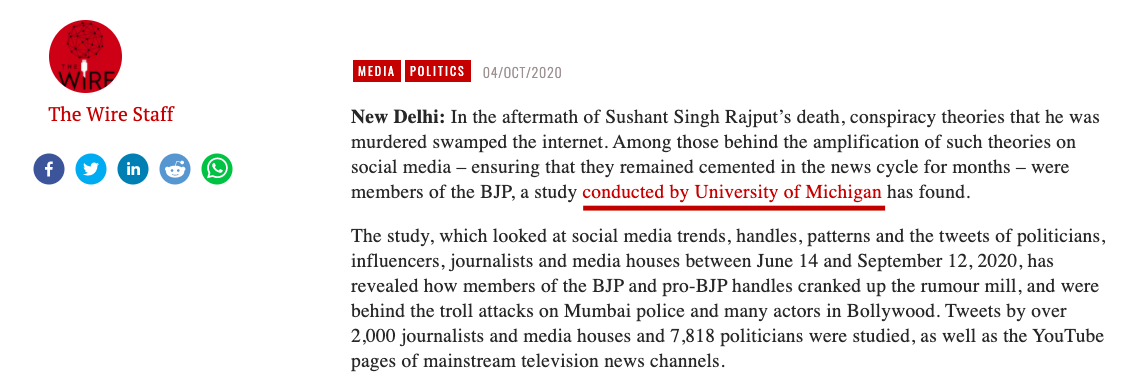
In its article titled “Sushant Singh Rajput: Study Reveals BJP’s Hand in Hyping Conspiracy Theories”, The Wire claimed that the University of Michigan carried out a study wherein “members of the BJP” were the ones who were ‘amplifying’ what The Wire claims is conspiracy theory on his death under mysterious circumstances.
The Wire passing off ‘study’ by four individuals as that of University of Michigan
The ‘study’ claimed that they ‘analysed’ social media trends over three months to conclude that pro-BJP social media handles ‘cranked up the rumour mill’. The Wire claimed that people demanding fair probe by Mumbai Police in the actor’s death was ‘troll attacks’. Nowhere in the article does The Wire clarify that this is not an official study by the University of Michigan.
Interestingly, the link of the ‘study’ which is used by The Wire leads to the landing page of one of the individual who spent time ‘analysing’ social media trends. The five individuals who conducted the study are: Syeda Zainab Akbar, Ankur Sharma, Himani Negi, Anmol Panda, and Joyojeet Pal. Syeda Zainab Akbar, Ankur Sharma, Himanshi Negi and Amol Panda are all researcher at Microsoft Research, Bengaluru.
OpIndia has reached out to University of Michigan to confirm whether the above ‘study’ is the official study of the university. We shall update the report once we hear back from them.
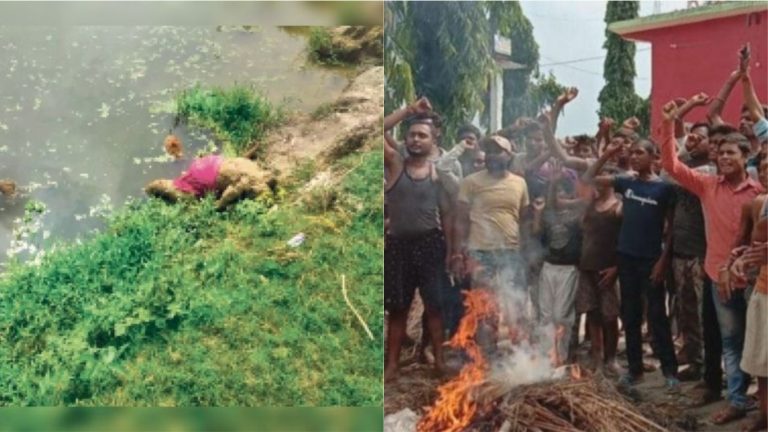
A case of skirmishes between the locals and police has been reported from the Meghpur village of Sitamarhi district of Bihar. The incident is from two days ago, i.e October 3, 2020. While the police alleged that the clashes erupted based on a rumour, the villagers claim that the police inflicted brutality on them, threw their revered Goddess Durga’s idol in the water and opened fire at them.
As per media reports, a group of people were conducting Durga Puja at Meghpur in Sitamarhi district. An idol of the Goddess Durga was also being fashioned at the place. When police administration got the knowledge of the event, the station in-charge, along with a phalanx of police troops, reached the spot and disrupted the Durga Puja. He is also accused of removing the statue by the villagers. Enraged by the police officials’ actions, the villagers reportedly pelted stones at the police.
Accusations levelled by the Villagers against the police personnel
The locals who were carrying out the Durga Puja alleged that the police initially wanted to forcibly immerse the idols of their Gods in the water. However, later they lifted the idols of Ganesh, Saraswati, Karthik, Lakshmi etc., along with Goddess Durga, and threw them in Sareh, about one kilometer from the place of worship.
This triggered anger among villagers, who started pelting stones at the police for disrespecting the idols of their Gods. The villagers have alleged that the police officials who came to stop the Durga Puja were under the influence of alcohol and when the locals tried to confront them for lifting and dumping the idols in water, they fired in the air to repel them.
In the ensuing clashes, Palak Chaudhary’s son Raghavendra Chaudhary got injured due to bullet injury. He has been admitted to Sitamarhi’s private clinic for treatment. However, the police, in their defence, claim that Raghavendra was injured by a bullet shot by one of the villagers.
Besides Raghavendra, 12 more people have been injured in the clashes, including Sushil Chaudhary, Umesh Chaudhary, Sunil Jha, Circle Inspector Arun Kumar, Zonal Officer Sanjay Kumar, Inspector Lallan Singh in stone-pelting and lathi-charge.
BJP district president demands for investigation
The BJP district President Suresh Kumar Mishra has asked for an investigation in the case. In addition to this demand, Chairman of Pooja Samiti, Brajesh Chaudhary, Vice President Rakesh Chaudhary, Secretary Brijesh Mandal and Treasurer Sakir Hussain etc. suspect a conspiracy behind the action initiated by the police in the village.
The locals have alleged that the policemen who had come to stop the Durga Puja, allegedly took away Rs 55,000 received in donation and jewellery worth more than Rs 1 lakh. To oppose police action, the villagers and dozens of members of the Pooja Samiti associated with Durga Puja staged a demonstration by blocking the Sursund Meghpur path for hours. They demanded action against the accused policemen.
Police defends itself, says rumours of police assault were spread by mischief-mongers
As per a report published in Dainik Bhaskar, Sursund police station chief, Bhola Prasad Singh, while the police were patrolling the area on Saturday night, some rumours were being broadcasted on the loudspeaker in a temple in Meghpur, accusing the policemen of launching an assault against the villagers.
Dismissing the allegations levelled against the police, SP Pramod Kumar Yadav said that 2-3 miscreants incited the villagers by spreading rumours about the police. He added that the mischief-makers have been identified and an FIR has been filed against them. He also added that the allegations against police are completely false and there is peace and tranquillity in the region.
Disowning the selective leaks to the media regarding the autopsy by Dr Sudhir Gupta, the All India Institute of Medical Sciences (AIIMS) has issued a statement on Monday in which it said that it has submitted the expert opinion report on Sushant Singh Rajput’s post-mortem and viscera reports to the CBI and only the department can now confirm the contents of the same.
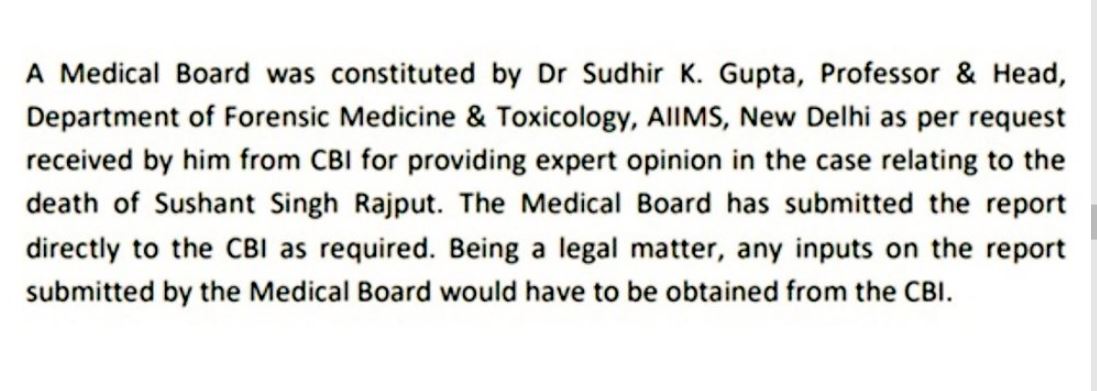
AIIMS statement read: “A Medical Board was constituted by Dr Sudhir K Gupta, Professor & Head, Department of Forensic Medicine & Toxicology, AIIMS, New Delhi as per request received by him from CBI for providing expert opinion in the case relating to the death of Sushant Singh Rajput. The medical board has submitted the report directly to the CBI as required. Being a legal matter, any inputs on the report submitted by the Medical Board would have to be obtained from the CBI”.
Statement issued by AIIMS
Moreover, CBI has also released an official statement Monday confirming that the probe into actor Sushant Singh Rajput is still ongoing and that all aspects of the investigation are being looked into meticulously, including the homicide angle.
CBI investigation related to the death of Sushant Singh Rajput is still continuing and all the aspects are being looked meticulously: Spokesperson, Central Bureau of Investigation (CBI) pic.twitter.com/hmsGEolQ1G
Two days earlier, AIIMS doctor Dr Sudhir Gupta had claimed that the medical team investigating the case has ruled out the ‘murder angle’ in the Sushant Singh case. “Sushant’s death is a case of suicide. Murder completely ruled out,” Dr Sudhir Gupta claimed on October 3 as per an India Today report. Dr Sudhir Gupta is the AIIMS panel’s chief who was tasked to examine the post-mortem and viscera reports of the deceased actor.
Republic TV exposes Dr Sudhir Gupta’s U turn
This revelation by the doctor was in stark contrast to his initial observations in the case, which Republic TV exposed on Monday. The channel leaked audio recording of the telephonic conversations it had with Dr Sudhir in August in which the latter had expressed suspicious over the autopsy conducted under the supervision of the Mumbai Police.
Following this, different news channels started publishing contradictory reports about Dr Sudhir Gupta’s present claims and past statements to the media.
Times Now contradicts its own ‘unleaked’ audio tape
On Monday, Times Now claimed that they are in possession of ‘leaked audiotape’ wherein Dr Sudhir had allegedly said that Sushant Singh Rajput was murdered. The news channel emphasised how the AIIMS doctor initially ruled out the ‘suicide theory’ after looking at the photographs of the deceased body of the actor. While Times Now did not telecast the audio clip, which formed the crux of their report, they, however, pointed out the contradiction between the observations and statements made by Dr Sudhir Gupta, in connection to the case.
Just half an hour later, Times Now in another report contradicted its own ‘leaked audiotapes’ to claim that not just Sudhir Gupta but the entire panel of 7 senior doctors have reached the conclusion that Sushant’s death was a case of suicide. As per the said report, Times Now claimed that even though the AIIMS doctors initially doubted ‘foul play’, the examination of all medical reports had put all speculations to rest.
India Today dismisses claims of U-turn
Meanwhile, India Today, which has been dismissing any ‘foul play’ in the unnatural death of Sushant Singh Rajput from the very onset, has been firm on its claims. The news channel was one of the first to claim that the ‘murder angle’ was ruled out by Dr Sudhir Gupta.
In line with their narrative, India Today published a report on Monday titled, ‘Dr Sudhir Gupta shares crucial facts on Sushant Singh Rajput death AIIMS report: 8 points’. The channel also published a statement of Dr Sudhir wherein he justified his U-turn. He opined, “Yes, everyone doubted when CBI started its investigation. We investigated all doubts and then came with this opinion. Now, there should be no doubts. It was a seven-member team of doctors who came to this conclusion that SSR died by suicide.”
The Chhattisgarh High Court has today granted interim protection to Alt News co-founder Mohammed Zubair while hearing his plea to quash the FIR filed against him under IPC Section 509B, IT Act section 67 and POCSO Act. A bench headed by Justice Sanjay Kumar Agarwal which passed the interim order has issued notice to Chhattisgarh Government and complainant Jagdish Singh on the petition filed by Zubair seeking to quash the FIR.
Last month, Zubair had also been granted relief by the Delhi HC which had asked the Delhi government and DCP Cyber Cell to file a status report of the case within eight weeks. It had also instructed NCPCR to file a reply on the allegations against Zubair filed by the petitioner by making his data public.
Two FIRs against Mohammed Zubair for doxxing a minor girl
Pertinently two FIRs had been registered against Mohammed Zubair for online harassment of girl child while arguing with a twitter user. In the first FIR filed by Delhi Police, the stringent POCSO Act was not added. However, in the second FIR filed against Zubair in Chhattisgarh along with the relevant sections of the IPC and IT Act, POCSO Act was also invoked.
Along with the AltNews co-founder Mohammed Zubair, Twitter user going by the handle @de_real_mak and @syedsarwar- Zubair’s supporters who had hurled a barrage of abuses at the child following Zubair’s Tweet, have also been named in the FIR.
Co-founder of AltNews shares the photo of a minor girl to intimidate the grandfather
For those unaware, the National Commission for Protection of Child Rights had initiated action against the Alt-News founder after it received complaints that Zubair had targetted a minor girl in his Twitter fight with this social media user Jagdish Singh. Instead of replying to the user directly, Zubair had brazenly referred to a minor girl seen in the profile picture of the user Jagdish Singh, presumably his granddaughter.
After Zubair had highlighted the minor girl seen in the photo, Islamists had started to issue rape threats to the girl. Zubair’s tweet came under heavy criticism from social media users who accused him of shamelessly using a child to get back at a critic.
The Hathras case has turned into a great political ruckus with the Congress party looking to use the tragedy as a platform to launch the career of Priyanka Gandhi and a pliant media compliant with their interests. Chief Minister of Uttar Pradesh Yogi Adityanath has ordered a CBI inquiry into the matter with numerous facets emerging to the story.
The crux of the allegations is that on the 14th of September, a 19 year old Dalit girl from the Bulgadhi village in Hathras was gang-raped by four men belonging to ‘Upper Caste’. The girl passed away a fortnight later and it was alleged that the body of the victim was cremated without the family’s approval on the intervening night between the 29th and 30th of September.
Since then, political parties of all hues have jumped into the fray and the conduct of the media has also been extremely questionable. Thus, it is of paramount importance that a timeline of events is established so that a clear picture of the entire episode emerges before us. In this report, we shall seek to establish a comprehensive timeline of the events that transpired in the Hathras case. Furthermore, the report shall focus strictly on events related to the case and would avoid the politics that has been played over it unless it is strictly relevant to the case at hand.
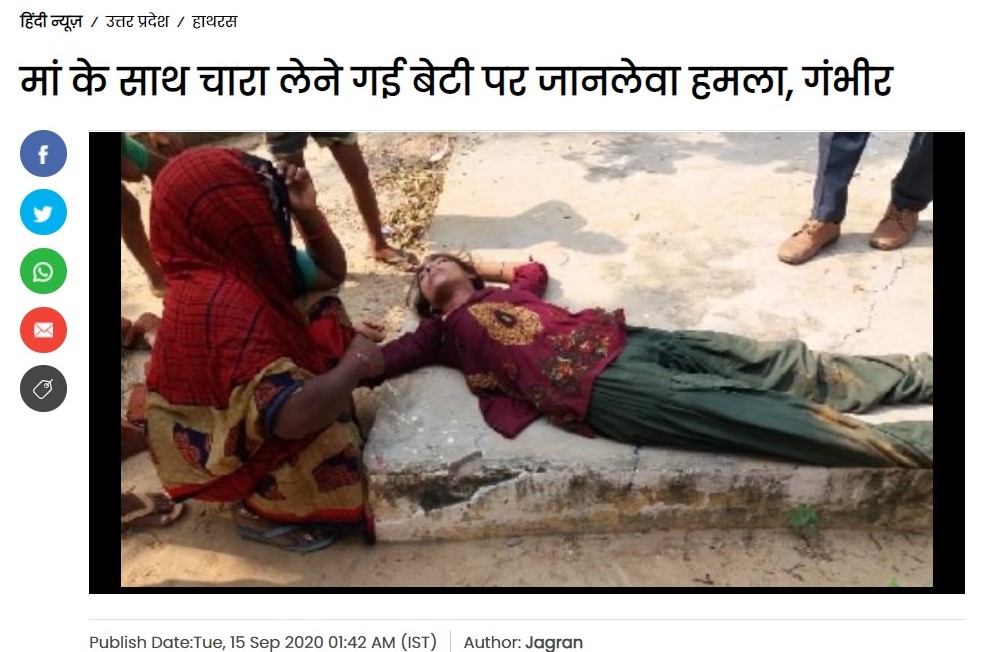
15th September: The first Hathras Case report emerges in Jagran
The matter was reported for the first time in Hindi daily Jagran as per the information we have been able to gather. The emphasis on the report, interestingly, was not on the caste of the perpetrators but a family feud between that of the accused and the victim. The report states that the victim was gathering fodder for animals with her mother when the accused, only a single youth, due to a history of bad blood, set himself upon the victim, dragged her away and attempted to strangulate her to death.
According to the report, the victim created a commotion due to which the accused fled the scene. The brother of the victim registered a case against the accused. The report that was published in Jagran does not mention any sexual assault on the victim. It even identifies the victim by name, which is not revealed in case of sex crimes. The accused was identified as Sandeep. The report also mentions that the victim was accompanied to the Chandpa police station by her relatives.
First report on the Hathras Case published by Jagran
The Police referred her to the district hospital where her condition worsened following which she was referred to Aligarh. Inspector Chandpa PS Deepak Sharma said that a longstanding family feud existed between the two sides and there was also a case ongoing in the Courts. A case was registered and it was assured that the accused would be arrested soon. It is pertinent to note here that the report does not mention rape anywhere and the number of accused stood at one.
The medical report recorded by the Jawaharlal Nehru Medical College at the Aligarh Muslim University, Aligarh on the 14th of September notes that the attendant of the victim had alleged neck injuries due to strangulation. The general examination noted that the “patient is conscious, oriented to time, place and person at the time of examination.” The patient history recorded on the 14th also only mentioned strangulation and one perpetrator. Hence, it is safe to assume that on the 14th, the victim or the family did not tell the doctors that the girl was allegedly sexually abused.
19th September-22nd September: Allegations of sex crimes emerge
A Jagran report published on the 3rd October asserted that a senior Congress leader in Uttar Pradesh met the victim on the 19th of September following which allegation of eve-teasing were added to the list of charges by the victim. The report further stated it was on the 22nd of September, eight days after the incident had occurred, that allegations of rape emerged for the first time and three additional names were added to the list of accused.
The report also noted that the Congress leader, one Shyoraj Jivan, met the family of the victim after meeting her following which the narrative around the incident started shifting. A statement by the Congress leader was also reported to have been going viral which says, ‘Our daughter has saved her honour but the sinners have cut her tongue, broken her spine.’
The report says that the allegations of eve-teasing and rape was added after the matter was politicised. And the police consequently added relevant sections to the case and arrested the four accused. It was also noted that the initial complaint related to the matter filed by the brother mentioned no allegations of rape, consistent with 15th September report published by Jagran.
23rd September: Caste enters the picture
The 15th September Jagran report noted that the crime was sparked off by a longstanding family feud and emphasis was not on caste. All of that was set to change, however, when Times of India published a report where it was sought to be highlighted that a 19-year old Dalit girl was raped by four ‘Upper Caste’ men.
The ToI report stated, “A 19-year-old Dalit girl was allegedly gangraped by four upper caste men in UP’s Hathras who also tried to strangulate her which left her fighting for her life in the intensive care unit (ICU) for days.” The report also noted that the gang-rape charges were added after the girl’s statement on the 22nd of September and three more individuals were added to the list of accused based on the same statement.
The report stated further, “On Tuesday after the girl’s statement was recorded, gang rape charges were added to the FIR and three more people were booked, said Hathras SP Vikrant Vir. “One more accused has been held and others, too, will be arrested soon,” he told TOI.” It added, “Additional SP Prakash Kumar said the girl’s statement under section 161 of CrPC was not recorded earlier by the investigation officer as the girl had been in the ICU after she was referred to Jawaharlal Nehru Medical College in Aligarh from Hathras district hospital.”
Most significantly, the report stated that the girl was out of danger when she gave her statement to the Police on the 22nd of September although she was still admitted in the ICU. Furthermore, contrary to the 15th September Jagran report, the emphasis was clearly on the caste of the accused, not family feud, and allegations of rape.
By the time the ToI report was published on the 23rd of September, the Congress party was already involved in the matter if the Jagran report from the 3rd of October is to be believed. It was after this that caste became the focal point of the incident in the media and family feud dissolved into the background.
The ToI report in question was authored by Anuja Jaiswal. On the same day, she tweeted a video of Shyoraj Jivan where the Congress leader could be seen inciting violence and casteist passions. He said that he was willing to go to jail but would not tolerate any ‘Thakur’ or anyone else looking at Valmiki women with “bad intentions”.
24th September-28th September: The lull before the storm
The next day, on the 24th of February, Rohini Singh of The Wire, posted a tweet where she claimed that a Dalit girl was raped in Agra and Dalits have become a vote-bank in the country. Similarly, I.P. Singh, national spokesperson of the Samajwadi Party, claimed that a Dalit girl was gang-raped in Agra and targeted the Yogi government over the matter.
Although both spoke of an incident of rape in Agra, it can be said with a fair degree of certainty that they were referring to the Hathras Case for two reasons. Firstly, Agra Police clarified that no such rape had been reported in Agra and secondly, for some reason, Anuja Jaiswal, had mentioned Agra as the location for her report.
जनपद आगरा में आज दिनांक 24.09.2020 को दलित युवती के साथ सामूहिक बलात्कार की घटना घटित होने की सूचना प्राप्त नहीं हुई है। अतः आगरा पुलिस इस असत्य एवं भ्रामक खबर का खंडन करती है।#UPPAgainstFakeNewspic.twitter.com/a1PWRlhYTd
On the 26th of September, Anuja Jaiswal again published a report on the matter with Agra cited as the location. The tone and tenor of her 26th September report were significantly different from the report three days earlier. While her first report said that the victim was out of danger, her second said that the doctors were not sure whether she would survive. It does not appear that she enquired the doctors as to what specifically changed between the 23rd and 26th of September.
In the most significant part of the report, it is stated, “The girl’s eldest brother said the investigation could have begun sooner had their mother spoken up. “It was only later that my mother told us she had found my sister semi-naked,” the girl’s brother, who had filed the first police complaint, told TOI. “She was worried about the stigma. Besides, the suspects belong to the dominant caste.” Charges under the SC/ST Act have also been added. PAC forces have been deployed in the village.”
It is pertinent to mention here that the 15th September Jagran report said that the victim had created a commotion following which the mother and villagers had reached the spot after which the accused had fled. Anuja Jaiswal had quoted one Dr Fakhrul Hoda to claim that her spinal cord was severely injured. The report does not make any mention of the family feud between the two families and the focus, again, was on caste.
The victim was transferred to the Safdurjung Hospital at Delhi for further treatment. By this time, the four accused of the crime had been arrested.
29th-30th September: The death and its aftermath
The victim passed away on the 29th of September, a fortnight after the incident and her family was notified of the same. The Police informed that there were no signs of rape from initial medical reports. Following the death of victim, IPC section 302 (murder) was also added. Under the SC/ST Act, the victim’s family had been given monetary compensation of Rs 10 lakh.
Dispelling news of brutality doing the rounds on the internet, the Police denied that her tongue was ripped out or that her eyes had been gouged out. The Police was denied that her spinal cord had been snapped.
She was cremated late into the night by her father and other family members as per the information received by OpIndia. Some media reports claimed that the cremation took place without the family’s approval. However, the victim’s father accompanied the police to the cremation ground where the rites were performed. The victim’s brother alleged that the police forced them to take the body to the cremation ground.
It was following the cremation that the controversy erupted massively into the national consciousness. The visuals coming out left an extremely bitter impression in the eyes of the public and the general impression was that the police and the district administration acted far too harshly in the matter. The general impression was also that the actions of the administration was entirely unjustified.
One of the central characters involved in conveying the above stated narrative to the public was Tanushree Pandey, a journalist with India Today, who had garnered huge praise from journalists and others in the media for the visuals she transmitted to the public regarding what happened on that night. A central aspect of the story that emerged is that the victim’s family wanted to take the body of the deceased to their home one last time but it was not permitted.
On the 30th of September, a report appeared on India Today that digressed from the now dominant narrative. It presented the accused’s version of events. The family of the accused claimed that they had been falsely accused over a longstanding family feud. “They were falsely accused of assaulting their family member. The grandfather of the deceased girl had hurt himself to send two of our family members to jail. Both Narendra and Ravi spent about 20 days in jail,” Rajwati Devi, mother of accused Ramu, told India Today TV.
“At the time of the incident, my son Ramu was on his job at the dairy chiller. One can check the attendance register or can speak to the manager. They will confirm that he was there. He leaves for duty as early as 7:30 am and returns at about 12:30 pm. He was falsely implicated in the case,” she said.
The same report also claimed that the victim’s family had said that the incident had nothing to do with the family feud and it was a pre-planned attack. It appeared to be a significant change from the initial report on the matter which considered the family feud as the reason for the attack. On the same day, Yogi Adityanath ordered an SIT probe into the matter.
By this time, other facts had started to emerge regarding the matter, on social media and elsewhere, which made people question the dominant narrative. Statements allegedly made by the victim and her mother made its way through to social media. In her statement, she blamed Sandeep, son of Guddu, for the attack. No other accused were mentioned.
Videos that emerged also showed that the victim was able to speak after the attack, although with quite a bit of difficulty. Other videos doing the rounds on the internet carrying the mother’s statement, presumably from the same date, shows her speaking of only a physical assault and not any instance of rape.
Hathras Case: October Rush
The 1st of October
On the 1st of October, ADG Prashant Kumar told ANI that the forensic reports that were awaited have been received and that the FSL report has found no sperm or semen in the samples collected from the victim’s body. He asserted that it concludes that there was no sexual assault, as was predicted from the post mortem report.
He further stated that despite swift action by the police to arrest the attackers and repeated clarifications in the case, certain groups have been involved to instigate caste-based violence based on false claims and misinformation. The same day, Priyanka Gandhi shared a video of the father of the victim where he claims that he was being pressurised.
There was also indication that he was being instructed to make specific statements by certain individuals. The father also said that he wants a CBI inquiry into the matter, again, it appears to have been said after being instructed by someone. The biggest twist in the story came the next day, on the 2nd of October.
The 2nd of October
The telephonic conversations between one India Today journalist and the brother of the deceased, Sandeep, has gone viral which has been accessed by OpIndia. In the audio clip, Tanushree Pandey can be heard trying hard to convince Sandeep to send her a video statement of his father alleging that he was under immense pressure from the administration.
Throughout the conversation, Tanushree Pandey appears insistent on coaxing out a very specific statement from Sandeep while the latter remains non-committal on his statement and appears hesitant to toe the line that the journalist wants him to toe. He confirms the journalist’s allegations of pressure and on other occasions, he says that his father was not very clear on whether he was pressurised or not.
Tanushree Pandey tells Sandeep that she has learnt from somewhere, she does not specify where, that an attempt is being made to blame the death of the sister on her family. It does appear to be an incendiary piece of information that has not been reported anywhere in the media. This bit of false information appears entirely fake and seems to have been invented solely to take advantage of the family’s misery to peddle a particular political agenda.
In another conversation that appears to be between villagers and Sandeep, the brother is advised that he should not accept Rs. 25 lakhs and reach a conclusion. He is told that he should even accept Rs. 50 lakh to reach a conclusion. The lady in that conversation says that some politician is saying that ‘faisla’ should not be reached. During this conversation, the names of one ‘Rahul’ and Manish Sisodia and Barkha Dutt also comes up.
In yet another conversation, an unidentified individual is heard telling Sandeep, the brother of the victim, to not leave his house because senior Congress leader Priyanka Gandhi would be visiting his home. In the conversation, the person could be heard telling Sandeep, “If anyone wishes to take you anywhere, you must not go, now Priyanka Gandhi will come to your house. Someone says you should go to Hathras, somewhere here, somewhere there, you must not go.”
The man continued, “Say that the police and the media are not allowing your relatives to come, that they have been kept for your protection or for Thakur’s. Tell them everything that has happened to you.” During the conversation, Sandeep tells the man that the SIT was on a visit and one ‘Sanjay bhaiya’, his father and two other people are sitting inside along with some Congress workers. The man further tells Sandeep, “Alright, don’t go anywhere. Now Priyanka Gandhi will come and tell her that pressure has been created on you and you want to create a video of that.”
The same day, Yogi Adityanath directed the suspension of the SP, the DSP, the Inspector and some other officials, based on the preliminary investigation report. The UP Government also ordered Narco Polygraph tests for the accused, the complainant and the police officials involved in the matter.
One of the cousins of the victim, who appears to be a minor, gave a byte to the media where he said that their phones were confiscated by the Police and they were being pressurised. He also claimed that an official had kicked his uncle.
The 3rd of October
India Today in a statement accepted the authenticity of the tapes OpIndia had released a day earlier. On the 3rd of October, the SIT probe was concluded and the media was provided access to the village of the family’s victim. the SDM also denied that the phones of the victim’s family were confiscated. That bit of misinformation was first spread by India Today.
The same day, the mother of the the victim told an AajTak journalist that she does not want a CBI investigation into the matter. “No, we don’t want the CBI to investigate the case. We want a team under the aegis of a Supreme Court judge probe the matter,” the mother responded when asked if the Hathras case should be transferred to the country’s premier investigation agency.
The victim’s mother also said that the family would not go a Narco test. Her argument was that they do not know what a Narco test is and therefore, would not like to take it. Simultaneously, a Congress supporter, Saket Gokhale, had approached the Allahabad High Court to prevent the investigating authorities from administering a Narco test on the victim’s family.
India Today, meanwhile, published a report where it asserted that one of the accused, Ramu, was not even present in the village during the incident. In the AajTak report, which is the Hindi channel of India Today, the journalist is seen speaking to the employer of the accused who says that at least 20-25 people work in the factory and all of them can attest that Ramu was working at the factory when the unfortunate Hathras incident took place.
According to Zee News, Madhusudan, a shift manager at the factory, also showed Ramu’s photo of that day in the factory’s internal WhatsApp group. Ramkumar (Ramu) is the uncle of the main accused Sandeep. Zee News has reported that according to the shift manager, Ramu’s presence is marked in the attendance calendar for both 14th and 15th of September, which proves that he could not have been present during the crime took place in Hathras.
UP Minister Ramapati Shastri said that the opposition wished to stir riots in the country. He said, “UP CM has already constituted an SIT in the case. The investigation has been initiated based on the preliminary report. The steps taken by the government will help bring the truth to light.” “Why is the Opposition against narco and polygraph test? The tweets and audiotapes posted by them point towards a conspiracy to incite riots under the garb of demanding justice in the Hathras case,” he added.
Meanwhile, a video went viral where members of the Thakur community in Uttar Pradesh could be heard expressing their anguish over the arrest of the accused in the Hathras case while claiming that the accused are being falsely implicated in a rape case. The gathering was organised on Friday (2nd of October) by the Savarna Samaj of more than two dozen villages.
“The FSL report says there was no rape but politicians and the media claim there was rape,” one of the voices could be heard saying. The apparent leader of the gathering said that an impartial investigation should be conducted and if any of the accused is found not-guilty, then they should be let off without bail. He also bemoans the fact that the reputation of the community has been tarnished.
The person also says that no one should create a nuisance and should not resort to any hooliganism. The person emphasised that no political party should come among them. He says that everyone has spat upon their kids and their community and their sentiments have been hurt because of it. “Only oppose the political parties, the rest will sort itself out,” he says. The panchayat also affirmed their support for a Narco test.
Yogi Adityanath ordered a CBI probe into the matter the same day. The decision, however, was opposed by the brother of the victim because an SIT investigation was apparently underway. There is another report that was published on Jagran the 3rd of October that hints at a possible contradiction. The report says mentions her elder brother saying that he was at the field but far away and her mother had already gone home with the grass. He says that he was the one who found the victim.
This is however is in stark contrast with everything that is known about the matter. Almost all reports agree that it was the mother who had discovered the daughter and her own statements confirm the same. Elsewhere, a brother of the victim claims that had her mother told them initially that the victim was discovered in a semi-naked stated, the investigation could have proceeded faster. Thus, certain things do not add up.
Hathras Case: Since then….
Yogi Adityanath, too, accused opposition parties of attempting to foment riots across the country. The comments by the UP CM without naming anyone came after the UP police filed an FIR under various sections of IPC alleging criminal conspiracy to incite violence in the state using the incident.
Consistent with that claim, a website called ‘Justice for Hathras’ was created and thousands of people were linked to the website through fake IDs. According to the probe, the website had received funding from Amnesty International, Fundamentalist organisations based out of Islamic Countries. It was subsequently pulled down by authorities.
The objective of the website was to create a wedge between the majority community in the country and undermine the Yogi and Modi government in Uttar Pradesh and India respectively. Objectionable content pertaining to inciting riots and safeguarding oneself during the riots was found on the website.
Also, Mau Police has registered a case against Suheldev Bharatiya Samaj Party’s leader Kamal Bharti for making an objectionable statement against women. A video has gone viral on social media platforms in which he said he would pay Rs 1 crore to any man from Thakur community who will bring his daughter or sister to sleep with him. He was referring to the Hathras case in which a 19-year-old Dalit woman was allegedly raped and beaten up by four upper caste men.
Cacophony of information explosion
There is a barrage of information that is pouring out on to social media related to the matter. Statements made by the father of the accused, Sandeep, have gone viral on social media. He claims that the victim was murdered by her own family.
#हाथरस के मुख्य आरोपी के पिता ने आज बड़ा खुलासा किया है, आखिर क्या वजह है कि ये इतना बड़ा घटनाक्रम हुआ? सालों पुरानी रंजिश का पीड़ित परिवार क्यों नहीं करता जिक्र? आरोपी और पीड़िता के प्रेम सम्बन्ध पर क्यों चूप्पी? ठाकुरों के अत्याचार की सच्चाई? Ground Zero से देखिये ये रिपोर्ट- pic.twitter.com/UzzoBsLPmt
Then there are screenshots doing the rounds of Pradeep Narwal, national coordinator of AICC’s SC Department, tweeting about an attempt to murder on the 22nd of September which soon converted into rape five days later.
Nupur see this… From the timeline of Pradeep @Narwal_inc he is member AICC (S Caste dept)
On 22nd Sep he visits the #Hathras Victim and writes that “उसपर जानलेवा हमला हुआ है” On 27Sept it becomes”दुष्कर्म”
Then, there are comments of the sister-in-law of the victim doing the rounds where it is said two to four Thakur women should be brought and be left with their men and the treatment that was meted out to the victim should be meted out to Thakur women as well.
This is shocking statement from Bhabhi of Hathras victim. I, too, want justice for Manisha but this is not the way.
This is the result of caste politics played by Rahul Gandhi & Liberal Media. This is what the Opposition wanted?? pic.twitter.com/7E9taJHWha
Then there are other comments doing the rounds on social media on the Hathras Case by apparent villagers who assert that the accused are actually innocent and the girl was murdered by the mother and brother.
ये हो क्या रहा है, मिडिया ये क्यों नहीं दिखा रही ?
Thus, quite clearly, a lot of troubling information is doing the rounds of social media related to the matter and a lot of it is unverified. Furthermore, it is also to be noted that the rape charge was added eight days after the incident and so were the names of three of the accused. The family of the victim has also flip-flopped on CBI inquiry and subsequently, pieces of information has surfaced which appear to contradict the dominant narrative of the matter.
Under such circumstances, a CBI inquiry appears to be the sensible course forward to resolve various aspects of the Hathras Case and to satisfy the doubts that anyone might have.
Sharing a snippet from the protest rally which West Bengal Chief Minister Mamata Banerjee was addressing in Kolkata on Saturday, the Trinamool Congress Party (TMC) took to Twitter to eulogize the party supremo as “Bengal’s own vaccine” against the Modi government. In what can be called a bizarre way to express their reverence towards the party supremo, the party said that though BJP led by Narendra Modi was the biggest “pandemic” India has ever seen, the people should not worry as “Bengal has its own vaccine in the form of Mamata Banerjee, who will prevent this deadly virus from polluting the society”.
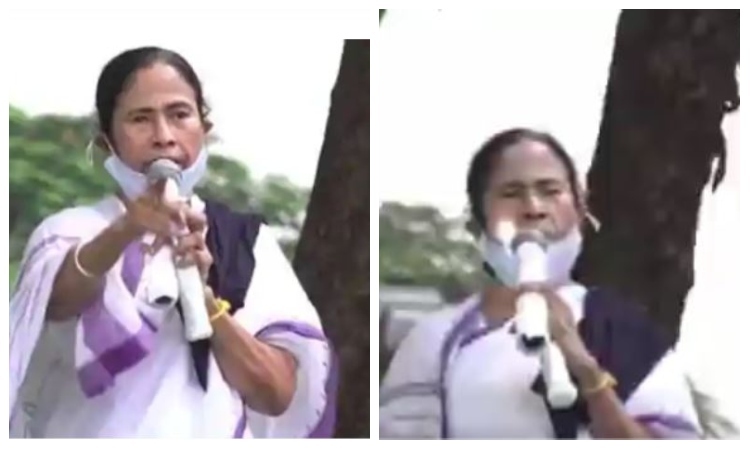
While the party has taken to the microblogging site to heap praises for their leader, in the 0.25 secs video clip, shared by the party, Mamata Banerjee is seen lambasting at the BJP party calling it India’s biggest pandemic. “Sabse bada pandemic toh BJP party hai. Khatam kar diya desh ko”, (the biggest pandemic is the BJP party which has finished India), said the TMC chief.
And as she does so, Mamata Banerjee, for reasons best known to her, carries a lit torch and mysteriously keep throwing its light inside her mouth. The act of shining a light inside her mouth with a torch becomes even more strange and suspicious when one realises that the rally was being held in broad daylight.
India’s #BiggestPandemicBJP, led by @narendramodi ji, is eating up the nation from inside, with its heavily casteist & despotic ideology. But fret not! Bengal has its own vaccine in the form of @MamataOfficial, who will prevent this deadly virus from polluting the society. pic.twitter.com/Yw99U4OH3g
— All India Trinamool Congress (@AITCofficial) October 5, 2020
Mamata Banerjee uses Hathras incident to target Modi .government
West Bengal CM Mamata Banerjee had taken out a protest rally in Kolkata on September 3 (Saturday) against the recent Hathras incident. Using it as a platform to continue with her tirade against the Modi government, Mamata had said that the BJP government in the state of Uttar Pradesh, as well as the centre, was torturing Dalits the most and running a “dictatorship” in the country.
Banerjee said she would stand by the Dalit community till the end as her caste is “humanity” and she does not believe in differentiation on the grounds of caste and religion.
TMC trying to encash the opportunity to further their political campaign
The Trinamool Congress (TMC) has been up-in-arms to further their political campaign at the expense of the victim in the Hathras case. Taking a cue from Rahul and Priyanka Gandhi, despite Section 144 still being in place, a four-member delegation of the Trinamool Congress, led by senior party leader Derek O’Brien had attempted to visit Hathras on Friday to express their solidarity with the victim’s family.
When they were stopped from entering the village, the party’s senior leader, Derek O’Brien had tried to pull off a similar ‘falling’ stunt like Rahul Gandhi. His p[arty members had then filed a complaint against the Hathras SDM claiming that they were manhandled by the UP police.
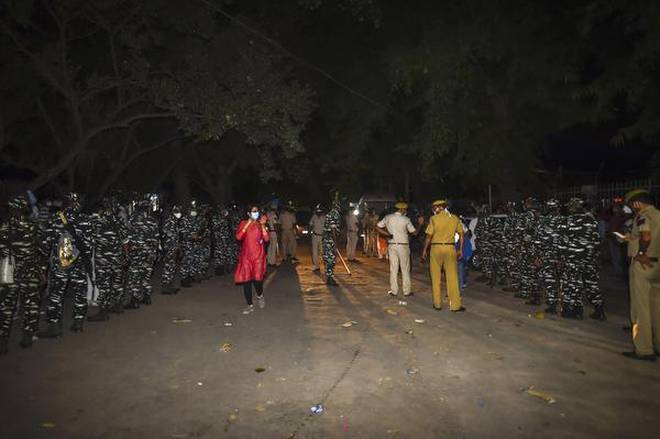
The Uttar Pradesh Police has registered multiple FIRs in connection with the Hathras incident, where a 19-year-old victim had died of her injuries on Tuesday last week. In this context, the police have released a press statement detailing the various FIRs filed against several individuals in the case.
The statement issued by the Uttar Pradesh Police said that though the accused have been immediately arrested on the basis of the victim’s brother’s testimony, 3-member SIT probe ordered and CBI investigation recommended in the case, there had been some organisations, individuals with vested interests, who had been bent on spreading ethnic and communal violence to tarnish the image of the government.
To this end, they had been posting unsubstantiated and fake assertions on various social media websites and unlawfully gathering people outside the village, egging them on to participate in the protests against the government in gross violation of the COVID-19 guidelines.
Several FIRs have been filed by the police in this regard. Following are the details shared by the UP police in their press release.
FIR lodged over international conspiracy to trigger caste-based violence in UP
After it came to light that an international conspiracy is being hatched to incite riots in Uttar Pradesh under the pretext of carrying out protests over the Hathras incident, the UP Police had registered an FIR over conspiracy to stoke caste-based riots in Hathras.
The case has been registered at the Hathras Police station under various sections that include conspiring for riots to create ethnic and communal riots in the state, spreading chaos, defaming the Yogi government on the pretext of rioting, spreading rumours, provoking the victim’s family against the government, spreading hatred through fake photos, fake information, photoshopped photographs.
Sections invoked by the police with regard to this FIR: 109, 120(B), 124-A, 153-A, 153-A(1), 153-A(1)(a), 153-A(1)(b), 153-A(1)(c), 153-B, 195, 195-A, 465, 468, 469, 501, 505(1), 505(1)(b), 505(1)(c), 505(2), and Section 67 of the Indian Penal Code.
FIR filed against a political delegation for disseminating propaganda video about the victim and her family
The UP police had also filed an FIR at the Chandpa police station in Hathras village against a delegation of a political party who had gone to visit the victim’s house. The police had alleged them of disseminating propaganda videos/audios of the kin of the victim on social media platforms. They have been charged under Section- 147, 148, 323, 504, 332, 353, 427, 188 Bhadvi & 7 CLA Act.
FIR filed against members of a political party for creating ruckus and pelting stones at police officials
The third FIR in the case pertains to the unauthorised visit of political members of a party after its delegation visited the victim’s house. According to the police, after the meeting of the delegation of the political party, several members and supporters of the party barged into the village without permission and violated Section 144 imposed in the region. They are also accused of abusing the law enforcement officials and engaging in a scuffle with them. Many police officials were injured after the political party supporters hurled stones at them. They have been charged with Section-147, 148, 323, 504, 332, 353, 427, 188 Bhadvi & 7 CLA Act.
FIR lodged for broadcasting videos containing inflammatory speeches
The Uttar Pradesh Police registered an FIR against a member of a political party for broadcasting a video in public in which inflammatory statements, including severing off hands of policemen, getting police officers suspended, and creating disharmony among caste/communities were made. The accused has been booked under Section-153A, 505, 506, 489 Bhadvi and 84C of the IT Act.
FIR against Bhim Army chief Chandrashekhar Azad and 400-500 for violating Section 144 and blocking traffic
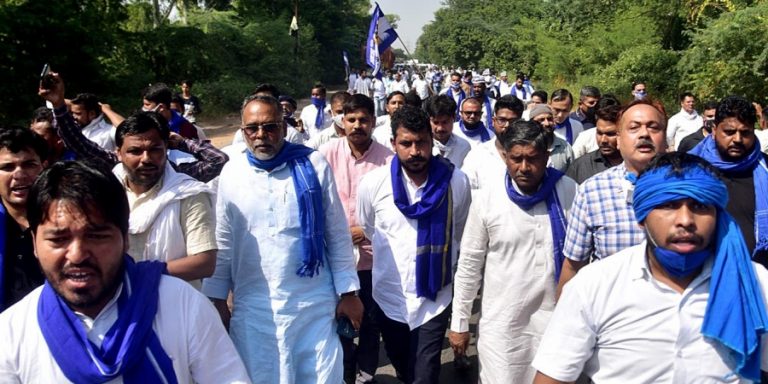
An FIR was filed against Bhim Army chief Chandrashekhar Azad and 400-500 others for violating Section 144 of the CrPC while marching to the Hathras for meeting the kin of the victim who died last week. The chief and his supporters had created a law and order situation for the police as they tried to forcibly enter the village and meet the victim’s relatives. When stopped, they sat on a demonstration, obstructing the traffic on the road, following which an FIR was filed against them.
FIR against about 200 people for violating COVID-19 guidelines and Section 144 of the CrPC
About 200 people were booked by the Uttar Pradesh police for gathering at Basant Bagh colony in gross defiance of the COVID-19 guidelines and Section 144 of the CrPC.
Besides, complaints were filed in the districts of Bijnor, Saharanpur, Bulandshahr, Prayagraj, Hathras, and Ayodhya for posting objectionable reamrks on various social media platforms. At least 5 people have been arrested and legal action have been initiated against them.
The police had also registered a case against a man for putting up a controversial poster in Commissionerate Lucknow. A man was arrested in this regard by the police.
An arrest has been made in Lucknow rural for uploading an objectionable post on Facebook. In Mathura, the Treasurer of the National Executive of the Campus Front of India, along with 3-4 other members, have been banned under Section 151 of CrPC.
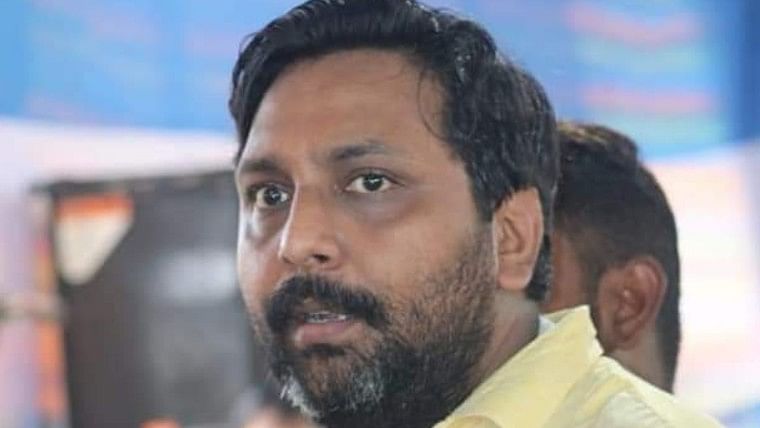
A day after BJP councillor Manish Shukla was shot dead allegedly by TMC goons, the West Bengal government had handed over the case to the Crime Inspection Department (CID) from the Barrackpore Commissionerate.
Shukla was killed on Sunday evening at around 8.30 pm near Titagarh police station in Barrackpore area. The incident took place when he went to the party office, after attending an event. Moments after he entered the office, bike-borne assailants fired at him. According to eyewitnesses, Shukla was shot from very close range. The case was handed over to the CID after the police conducted the post-mortem of the body of the deceased.
The state unit of the BJP has criticised the move, insinuating that they do not trust the police working under the TMC government. The BJP’s disapproval comes at the backdrop of several cases wherein the unnatural deaths of BJP workers were dubbed as ‘suicide’ or ‘inconclusive’ by the state police. They have demanded a Central Bureau of Investigation (CBI) probe into the matter.
West Bengal Police issues clarification, slyly vilifies victim as ‘murder accused’
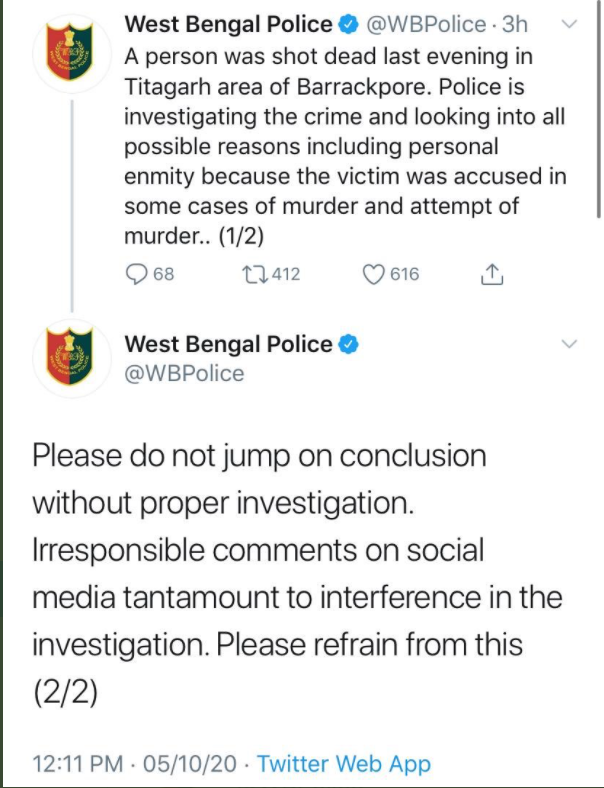
Following political turmoil and public outcry over the killing of the BJP councillor, the West Bengal police issued a clarification on Twitter. While claiming to investigate ‘personal enmity’ angle, the West Bengal police wrote, “A person was shot dead last evening in Titagarh area of Barrackpore. Police is investigating the crime and looking into all possible reasons including personal enmity because the victim was accused in some cases of murder and attempt of murder.”
The WB Police also issued a veiled warning to netizens against making “irresponsible comments”. It tweeted, “Please do not jump on conclusion without proper investigation. Irresponsible comments on social media tantamount to interference in the investigation. Please refrain from this”
Screengrab of the tweets by West Bengal Police Department
BJP demands body of Manish Shukla, cops deny permission
On Monday, BJP leaders and party workers gathered outside the Nil Ratan Sircar (NRS) hospital where the body of the deceased was kept. They had demanded that the corpse be handed over to them. The BJP has informed that they want to take the body of their party worker to from Kolkata.
“The police officials are not cooperating with us. We are not going to move from here. They (TMC) want to dispose of the matter. We have lost our party leader. They had earlier targetted Arjun Singh. Whoever deserts TMC, they get on the hit list of the party. They either kill them or file fabricated cases against them…There is no democracy in West Bengal,” a senior party leader told ABP news.
The cops had denied entry of BJP party members into the hospital premises and refused to comply with their demands. At the same time, the police had barricaded several gates of the hospital and were allowing the entry to ambulance and patients. On Sunday evening, the BJP workers had also blocked the GT road connecting South 24 Parganas to Kolkata.
Video Courtesy: ABP Ananda
Rising political violence in West Bengal
Murder, suspicious deaths and attacks on BJP leaders have been on the rise in West Bengal, a state marred with political violence since decades. Recently, a BJP worker named Rabin Paul was lynched to death in the Pathar Ghata village in Kalna in West Bengal.
As per reports, he was first beaten mercilessly by TMC supporters and then taken to another place in the village where Paul was thrashed by the TMC Deputy Chief. The family alleged that the TMC workers stopped the victim’s daughter when she tried to offer him water. The TMC workers also threatened to thrash Paul’s daughter if she tried to help her father.
On July 13, The West Bengal police had recovered the dead body of Debendra Nath Roy, a BJP MLA from Hematabad, in a closed tea shop in the village of Balia in Bindol Panchayat in Rajiganj. Roy was found hanging from the roof of the shop. He had been missing from the previous night. While the West Bengal police has ruled out ‘foul play’, the BJP unit of West Bengal has alleged that the MLA Debendranath Roy was murdered.
BJP President (North Dinajpur) stated that the ‘suicide note’ was a conspiracy by the police to protect the murderers of the deceased politician. “We are not satisfied with the probe by the CID and will stick to our demand for a CBI investigation,” he was quoted as saying.