California Governor Gavin Newsom has signed a law that introduces reserved quotas for the LGBT community and racial minority communities in the private sector. The newly signed law makes it mandatory for publicly held companies headquartered in California to have at least one individual from an ‘underrepresented community’ in its Board of Directors.
#California has made it mandatory for companies to have #LGBTQ+ and minority leaders
Under the new rules, companies must have at least one director from an under-represented community by the end of 2021. If they don't comply they could face huge fines of over $100,000 pic.twitter.com/hVCDN5g7uI
Gavin Newsom insisted that the law is necessary to ‘promote diversity’ in corporate boardrooms. “When we talk about racial justice, we talk about empowerment, we talk about power, we need to talk about seats at the table,” he said. ‘Underrepresented communities’ include Black, African American, Hispanic, Latino, Asian, Pacific Islander, Native American, Native Hawaiian or Alaska Native, or gay, lesbian, bisexual and transgender.
While some, such as Judicial Watch, have called the law unconstitutional, others have argued that it is perfectly permissible constitutionally. “I believe that there is a compelling need to enhance diversity on corporate boards,” Erwin Chemerinsky, dean of UC Berkeley School of Law said. “The question is whether a court will find these laws to be sufficiently narrowly tailored. Because there are few other alternatives, I think there is a strong argument that such laws are constitutional.”
The law requires companies to have at least one director from an ‘underrepresented community’ by 2021 and by 2022, companies with four to nine directors must have two and those with nine or more must have at least 3 in their Board of Directors. It is pertinent to note that India with its long history of quota politics has resisted reservations in the private sector. However, private sector quotas have entered USA without any significant resistance at all.
Meanwhile, another law has been signed to mandate that the California Department of Corrections and Rehabilitation (CDCR) will “house transgender, gender-nonconforming and intersex people according to their own sense of where they will be safest. This new law will require CDCR to record the individual’s self-reported gender identity, gender pronouns and honorifics throughout an inmate’s term.” In practical terms, it has the potential to jeopardise the safety and security of women inmates as certain male predators tend to take advantage of such laws. Other laws that were signed include approving the creation of a Transgender Wellness and Equity Fund.
The Trinamool Congress (TMC) has been up-in-arms to further their political campaign at the expense of the victim in the Hathras case. Taking a cue from Rahul and Priyanka Gandhi, despite Section 144 still being in place, a four-member delegation of the Trinamool Congress, led by senior party leader Derek O’Brien was en route to Hathras on Friday to express their solidarity with the victim’s family when they were stopped by the police from entering the village.
While they have jumped into the case where the rape has not been confirmed yet, the party had earlier resorted to slut-shaming, character assassination and even downplaying cases of sexual assault in West Bengal by labelling allegations as ‘political conspiracy’. One such example is that of the party’s reaction to the Park Street rape case.
TMC resorts to victim blaming, dismissing rape charges in Park Street case
An Anglo-Indian woman, by the name of Suzette Jordan, was raped in a moving car by five men on February 6, 2012, when she was returning home from Park Street in Kolkata. Soon after the news surfaced, TMC supremo Mamata Banerjee had absolved the accused of all charges. She had dubbed the incident as ‘shajano ghotona‘ (concocted incident) that was allegedly ‘designed to malign the government.’
While speaking to a news channel, TMC MP Kakoli Ghose Dhastidar had cast aspersions on the character of the victim and also ruled out the rape angle. She had stated, “If you are referring to the Park Street case, see that’s a different case altogether. It’s not at all a rape case. It was a misunderstanding between two people in a professional dealing between the lady and her client.”
At the same time, the then Transport Minister had also questioned the victim’s character and called the complaint fake. 3 years later in 2015, a Kolkata Court upheld the rape charges in the Park Street case and found accused Nasir Khan, Ruman Khan and Sumit Bajaj guilty.
Rape is due to modernisation and increasing population, claimed Mamata Banerjee
During another rape case in Burdwan’s Katwa in the same year, Mamata Banerjee again dismissed the rape allegations, even before the investigation was concluded. “A political party is doing all this, shouting rape. They are playing this drama. Harmader diye natok shajachhe jatey Banglar nam kharap hochhe (They are staging an act to give a bad name to West Bengal)”, she was heard as saying.
In 2013, during a debate in the West Bengal legislative assembly about the rising cases of rapes in the State, the CM had insinuated that it was due to an increase in the population of the State. She had also blamed modernisation, increase in shopping malls and multiplexes for rising rape cases.
While the Trinamool Congress is desperately trying to portray itself as a ‘crusader of justice’ in the Hathras case, the track record of the party on sensitive issues such as rape raises serious questions.
Arvind Kejriwal targets Yogi government
On Friday, Delhi CM Arvind Kejriwal, along with other AAP leaders, staged a protest at Jantar Mantar against the government. While demanding capital punishment for the accused, he stated, “The entire country is demanding strictest punishment for the accused. Hang them so that such an incident is never repeated in the country. Some people feel attempts are being made to shield the accused… The family has just lost their daughter. They need sympathy, support from governments and society. But the kind of treatment meted out to them is wrong.
Alleging coverup in the case, Kejriwal stated,”The recent developments in the Hathras gang rape incident give a sense that there is an attempt to cover up. For many days FIR was not registered; then proper care (to the deceased) was not given. When she succumbed, her body was cremated at night. And now they are saying there was no rape.”
A post-modern world, 1.2 billion Hindu population worldwide, and the largest religion in the world after Christianity and Islam. A Hindu nationalist government with absolute majority in power, in the second most populous country on earth, for the second consecutive term. Can we ever be under threat?
An anecdote
Dec 2019. Anti-CAA protests were on in full swing and the country was being set on fire by miscreants. Around this time, a few of us were in a workshop on Ashtadhyayi, the seminal work on grammar by Maharshi Panini, one of ancient India’s foremost scholars. In the course of intense discussions on Panini’s grammar, interestingly, the topic veered towards Panini’s history.
Who was the man behind the genius, when and where did he live, what was the interesting backstory that led to and produced this masterpiece, we were all curious to know. Unfortunately, there weren’t too many clear answers. He was supposed to have lived around 500 BC, and possibly in some part of what is present day Pakistan-Afghanistan, our Guru explained.
And then after a pause he continued ruefully, “Of course if he had been born there in present times, far from being a celebrated genius, he would have been a persecuted minority fighting for his very life and dignity”. “And if he had tried to seek refuge in India on those grounds, many of his fellow Hindus would have been up in arms against granting him accelerated citizenship,” some of us chimed in.
With that, a melancholic mood descended on the classroom as the grim reality of present times set in. And then, we did what modern day Hindus have always trained themselves to do – moved the uncomfortable thoughts to the recesses of our minds and resumed with the task at hand.
An unending saga of struggles
From time immemorial, Sanatana Dharma (or the Eternal Principle as it means) had always experienced challenges and churns. Sometimes in the form of internal strife between various clans and sects, and sometimes in the form of external challenges, like the birth of Buddhism. But each of these ended up strengthening us for the long run.
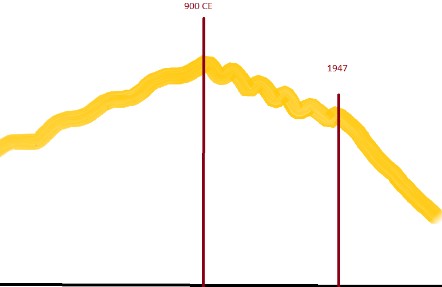
It helped us purge our deficiencies and revived us anew. For the longest time, despite all challenges, the grandest and oldest civilization on earth shone on, as splendorous as ever. But towards the end of 1st millennium of the Common Era, something changed. And then some more. A statistician would probably show two inflection points on the golden Sanatana trail over centuries (below).
Inflection points
History is witness to the fact that the Hindus had never lacked in wisdom or valor, so what really happened? In two words: new adversaries. New players, the likes of which Bharata had never encountered before, emerged in the Common Era and the rules of the game changed forever. To say that the playing field was changed would be an understatement. The playing field was not just uprooted, it was made a whole lot treacherous for the righteous Hindus to handle.
The Medieval challenge
The rules of confrontation had always been clear in the Dharmic framework. Sandeep Balakrishna beautifully describes this in his essay titled ‘The Hindu Ethics of War’. So what were these? Firstly only trained warriors could participate in war, as per established rules as followed by both sides. Civilians, especially women and children, were totally off the mark. Anyone who targeted the vulnerable populations were not Kshatriyas but Asuras.
And a victory that resulted in destruction of the enemy King, his family and country was called Asura Vijaya, and was considered the lowest form of victory. It was rarely pursued, if at all. For the longest time, India’s hero was Sri Rama, the King who was the very embodiment of Dharma. The ones who wrongfully coveted another’s wife or country (like Ravana and Kauravas respectively) were rightly relegated as national villains.
And then India came in contact with medieval Asuras, the Turkic demons, who casually mainstreamed mindless cruelty and sought only one thing – Asura Vijaya at any cost. Smashing places of worship and culling unarmed citizens at the first opportunity they got, they left nothing to chance. With successive waves of destructive attacks since the 10th century AD, each crueler than the last, the Asuras mauling Bharat had become too many to count.
But one name stands out, in the context of this discussion: Timur. Timur or Tamerlane was a Turkic invader who defeated the ruling Tughlaq dynast in Delhi in 1398 and captured the city of Delhi. What he did next was indescribable. Once the throne was captured, the revolting Hindus of Delhi were brutally butchered over the next few days, their bodies left for birds to feed and their severed heads erected like pillars.
With this barbaric act, without a doubt, in ancient India, Timur would have occupied his unchallenged position as one of the greatest villains, dwarfing even Kamsa. Cut to present day India. Here’s a video clip below. Starting 0.50, listen to a conversation on the subject of a leading Bollywood star naming his son Taimur. At about 1.25, after a casual acknowledgment of “the little violence” that General Taimur had showed, the same violence is glorified as ‘bravery’.
And then it is followed by some feeble justification of the name. In other words, in today’s India, the heroes of our heroes are not Sri Rama or Sri Krishna who upheld Dharma, but the Tamiurs who trampled upon it. If this is not an utter loss of dignity for a great nation, what is?
The medieval story meanwhile continues in the later part of the 2nd millennium, with only change of actors. While the Turkics did their bit violently, the European colonial powers did silently. In the name of pagan reform and administration this time.
The Portuguese inquisition in India’s western coast is not spoken of enough in mainstream discourse. Many brilliant books have already expounded the extent of cruelty Hindus faced at the hands of these missionaries and their ringleader St. Francis Xavier, but what did we as Hindus do about collectively? Yes, venerated him, of course and continue to do so till today in the grand church built for him in 1661.
This is the representative from “Hindu Nationalist BJP” CM Pramod Sawant personally attending the feast last year. But once again, we are getting ahead of ourselves. So, let us dial the clock back to the 2nd inflection point 1947.
1947 and State Might
“A moment comes, which comes but rarely in history, when we step out from the old to new, when an age ends, and when the soul of a nation, long suppressed, finds utterance…“
Memorable words spoken by our first Prime Minister from the Parliament as India emerged from colonial shackles. But did the miseries of a wounded civilization end on that day? Did we truly set on a path of healing and resurgence as we had promised ourselves? Did we even attempt to?
The new dispensation’s heartless attitude to the wounded Hindu was rightly summed up in the new PM’s words, “communalism of the majority is far more dangerous than the communalism of the minority”.
With that motto, the secular state took upon itself to “reform” the “regressive” Hindu community over the next seven decades. Hindu Code Bills were introduced to reform Hindu personal laws while minorities were untouched, Hindi temples and their wealth were brought under government control while minority institutions remained autonomous, Right to Education put strict clauses on majority-managed educational institutions while giving full freedom to minority institutions.
Furthermore, a full-blown minority commission was constituted to fund and subsidize minority religious and development activities from tax payer money, all this ironically by a ‘secular’ state. Phrases like ‘Hindu rate of growth’ were coined for poor economic growth and Hindu hatred was mainstreamed. These atrocities continue to this day.
Post 2014
‘Muscular Hindu nationalists’ are the words media, both national and international, loves to use for the BJP. The coming to power of self declared Hindu nationalists on absolute majority, without the checks offered by ‘secular’ partnerships and coalitions would herald the unchecked descent of India into a Hindu Rashtra, they chorused.
But for the average Hindu, BJP’s coming to power was something far simpler and closer to heart. It simply meant that for the first time in many, many centuries, a majority Hindu praja had finally an unapologetic, practicing Hindu raja! For a starving majority, robbed off even basic dignity for having chosen to practice a certain way of life for close to a millennium, even the associated optics were a huge step forward. It was finally possible for a people to publicly show Hinduness in a Hindu majority country!
While there is no denying that electoral gains and historic decisions like CAA and Ramjanmabhoomi might be indications that the tide is reversing slowly, the actual strategic war remains far from being won. So much so that I wouldn’t even bother to change the slope of the downward curve even a wee bit.
For one, shrinking demography is a reality Hindus face. With a falling birth rate and refugee influx from neighboring countries via porous borders, it is a matter of time before the inevitable outnumbering happens, first in pockets and then as a whole. Lack of international clout – it is still very easy for white supremacists, quacks and touts claiming to be ‘experts in Indic studies’ to participate in Lit festivals and exercise influence in setting narratives in India and globally.
The deep roots and pockets that Islamists and missionaries have managed to grow and flaunt is a stark reminder of an important exercise, that we as Hindus are even yet to start thinking about – developing globally influential institutions, think tanks and scholars. Relentless attacks from Judiciary, Media and Academia – not withstanding a one-off favorable verdict in the form of Ram Mandir, this a key bastion populated with Hindu haters.
Be it the self righteous judge who ordered a woman to distribute the Quran as ‘repentance’ for expressing her freedom of expression, openly Hindu hating portals like HuffPost and associated media personalities who cannot stand anything Hindu (link 1, link 2), Bollywood biggies who openly woo anti-india Islamist despots and selectively hold placards of shame against Hindus as a whole for any crime, academics who don’t hesitate to twist textbooks and feed canards to our children… the list is endless!
In daily discourse, terms like bhakta and saffron, far from being the pinnacle of sainthood and Hindu civilizational ethos, have been reduced to adjectives inviting derision, ridicule and even death. And last but not the least, our own civilizational apathy and amnesia. If not for own inertia, none of the above since 1947 could have happened this easily. Lulled by the constant whirring of the engines of our daily mechanical lives, many of us have no stomach left for a fight. And the worst part? The majority of us are not even aware that we are in a war.
In conclusion
Today Hindus lack two distinct advantages our ancestors in 1000 CE had – we are now no longer up against a tangible entity facing us directly – whom we can size up and strategize against. And the communal spirit that fired up our ancestors has shrunk considerably. We are encircled and enmeshed by invisible, antagonistic elements from within, many of whom resemble us, indulging in glib talks and all the while being safely ensconced in lofty ideals like liberalism and secularism that can fend off direct attacks.
From Panini to Palghar it has been a long, brutal and a steeply deteriorating journey for Bharatavarsha and Sanatana Dharma. Have we still got in us what it takes to survive this onslaught? Will this civilization stand one more, and possibly the most vicious attack yet? Only time will tell!
A Noida based digital news channel head, Afsar Ali alias A K Chaudhry has been arrested by the Delhi police and charged with extortion and blackmailing. An FIR under IPC Section 384 (extortion) has been registered against the Noida based fraud journalist.
Afsar Ali was running a digital channel Jansatya and news office-cum-studio Global News Media Pvt. Ltd at Film city, Noida. A case u/s 384/34 IPC has been registered at the Greater Kailash police station against the ‘journalist’ for allegedly attempting to extort Rs 5 crore from a South Delhi-based advocate by threatening to upload a sting operation that was conducted on him, police said on Friday.
The fraud journalist has previously been involved in three crimes, including vehicle theft and cheating, and an FIR has been registered against him in Delhi and Uttar Pradesh between 2010 and 2015, Delhi police informed.
The Noida based fraud ‘journalist’ selected his targets based on their lifestyle
DCP (South) Atul Thakur said that the alleged journalist had been recording videos of people and later demanding money for not airing it on his online news portal.
The case came to the fore after an advocate approached the police alleging that he had been receiving extortion calls. The advocate, who’s name has been withheld by the Delhi police, complained that the Jansatya ‘journalist’ was threatening to defame him by uploading a sting operation conducted against him on their news portal if he did not pay them Rs 5 crore, said Thakur.
The accused in connivance with a team of small-time photographers and aspiring job seekers identified his prospective targets based on their lifestyles and then conducted sting operations on them. Based on the victim’s potential he then demands money to settle the matter.
“After carefully picking wealthy targets, they would pose as buyers of big farmhouse land and conduct sting operations on one pretext or another and then hope that the victims will settle minor disputes and legal hassles. In the entire process which could continue for months, videos were made and the ‘accused’ was called for his version,” said Atul Thakur, DCP South Delhi.
The Delhi police are now verifying details to ascertain if there were other such victims against whom this fraud had adopted same modus operandi to extort money.
The union government has decided to waive “interest on interest” on loans upto Rs 2 crores for a period of six months, from March to August. This was informed by the govt in an affidavit filed with the Supreme Court on the matter.
The govt said in the affidavit that due to the unprecedented situation of the coronavirus pandemic, the only solution to give relief to the borrowers is for the government to bear the burden of waiving of interest. The govt said that it will seek the Parliament’s approval for the same.
This decision will benefit a large number of small borrowers, including those who have already repaid their loans during the period. As per the affidavit filed by the finance ministry, the compound interest on MSME loans, loans taken for education, housing, automobile, consumer durable goods, credit card dues, personal loans and consumption loans will be scrapped, and the loans will attract simple interest.
In March this year, the Reserve Bank of India had allowed the banks to extend a moratorium on loans for a period of three months. Later in June, the moratorium was extended for further three months upto 31st August. Therefore, borrowers were given the option of not paying EMIs from six months, from March to August.
But the moratorium meant that interests accumulate on this period, resulting in borrowers having to pay more than then original repayment schedule. Now removing the compounding of interests for the moratorium period will remove that requirement of increased payment.
This compound interest waiver will be applicable to all borrowers un the approved categories, regardless of whether the moratorium was availed or not. The ministry said that they decided to waive interest on interest only for certain categories, not all, because if interest on loans is waived, it will cost the banks Rs 6 lakh crores. “If the banks were to bear this burden, it would necessarily wipe out a major part of their net worth, rendering most of the banks unviable and raising a very serious question mark on their survival,” the ministry said.
“The government, therefore, decided that the relief on waiver of compound interest during the six-month moratorium period shall be limited to the most vulnerable category of borrowers,” the ministry said. As a result, interest on loans only up to Rs 2 crore will be waived.
Earlier the govt and the RBI had refused to grant any waiver of interest because it will affect the banks. The new decision comes after recommendation of a panel headed by former Comptroller and Auditor General Rajiv Mehrishi. The govt reconsidered its position after the Supreme Court bench of Justices Ashok Bhushan, R S Reddy and M R Shah asked the govt to “consider and reconsider” its position to give relief to borrowers affected by the Coronavirus lockdown.
The Hathras incident has sparked off a nationwide outrage over the safety of women in the country. There’s a growing clamour among a wide section of the country for a thorough investigation to get to the bottom of the case. However, the family of the victim has said that they neither want a CBI probe in the matter nor a narco test being done on them.
Hathras victim’s family refuses to have CBI probe in the case
Speaking to an Aaj Tak journalist, the mother of the victim shared her misgivings about CBI conducting an investigation in the case. She said that the family doesn’t want a CBI probe and instead want a team monitored by a Supreme Court judge to conduct the investigation.
“No, we don’t want the CBI to investigate the case. We want a team under the aegis of a Supreme Court judge probe the matter,” the mother responded when asked if the Hathras case should be transferred to the country’s premier investigation agency.
Family rejects undergoing the narco test
The SIT probe’s preliminary report has recommended the narco test of the victim’s family. However, the victim’s mother has rejected the recommendation, saying her family wouldn’t undergo the narco test.
Even when the Aaj Tak reporter pressed the grieving mother that the narco test would unearth facts of the matter hitherto hidden, the mother responded, “We have no idea what narco test and therefore we don’t want to get it done.”
When confronted about the discrepancies and contradictory statements made by the victim’s family regarding the case, especially about the absence of sexual assault allegations in the initial video of the mother, the grieving lady defended herself saying she was too traumatised with the incident and may have missed recounting some of the details.
The Hathras incident
A lot of debate and political mudslinging has been happening around the Hathras case since the victim succumbed to her injuries in Delhi’s Safdarjung hospital on Tuesday morning. She was allegedly raped two weeks ago. The case attracted nationwide outrage when some reports claimed Hathras Police forcefully cremated the girl on Tuesday night without consent of the family members. The police had later stated that the victim’s father was present during the cremation.
Speaking to ANI, ADG Prashant Kumar had informed that the forensic reports that were awaited have also been received. ADG stated that the FSL report found no evidence of ‘rape’. He asserted that it was concluded that there was no sexual assault, and the cause of death was strangulation and injury to the spine.
The police had stated that the victim had bitten her tongue, and had suffered injuries on her spine because of the brutal strangulation. The victim had later stated to the police that she was gang-raped. However, the UP Police have stated that the post mortem report did not mention any injuries that may have indicated rape or sexual assault. ADG Prashant Kumar had stated that the forensic lab report of the samples collected from the victim’s body have ruled out rape or sexual assault.
Yesterday, Uttar Pradesh Chief Minister Yogi Adityanath has directed suspension of the SP, the DSP, the Inspector and some other officials, based on the preliminary investigation report.
The Chief Minister was reportedly not satisfied with the handling of the Hathras case by the administration. A press release issued by the UP govt said that Hathras SP and IPS officer Vikrant Veer has been suspended for carelessness and lax in supervision while working on the case. Similarly, DSP Ram Shabd, inspector Dinesh Verma, sub-inspector Jagveer Singh, and head constable Mahesh Pal have been suspended. Shamli SP Vineet Jaiswal has been posted as the SP of Hathras after the suspensions.
The statement also adds that Narco Polygraph tests of the complainant, accused and the cops involved with the case will also be conducted.
The SDM has now said that the SIT probe into the case is complete and the media is being allowed in the village, however, they will only be allowed 5 at a time. Political delegations have still not been allowed in the village.
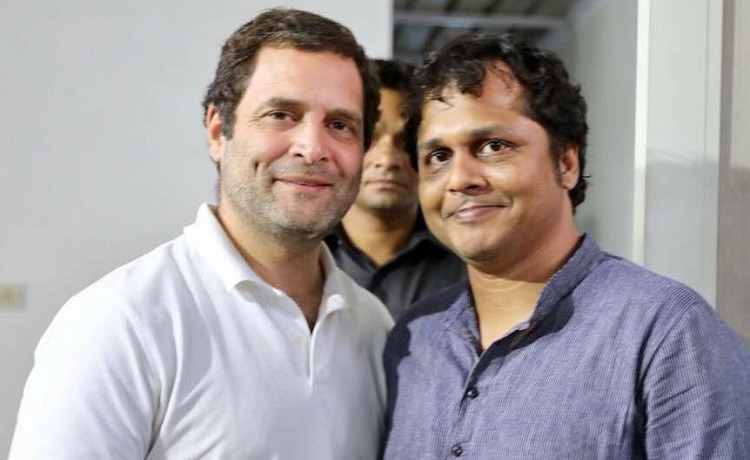
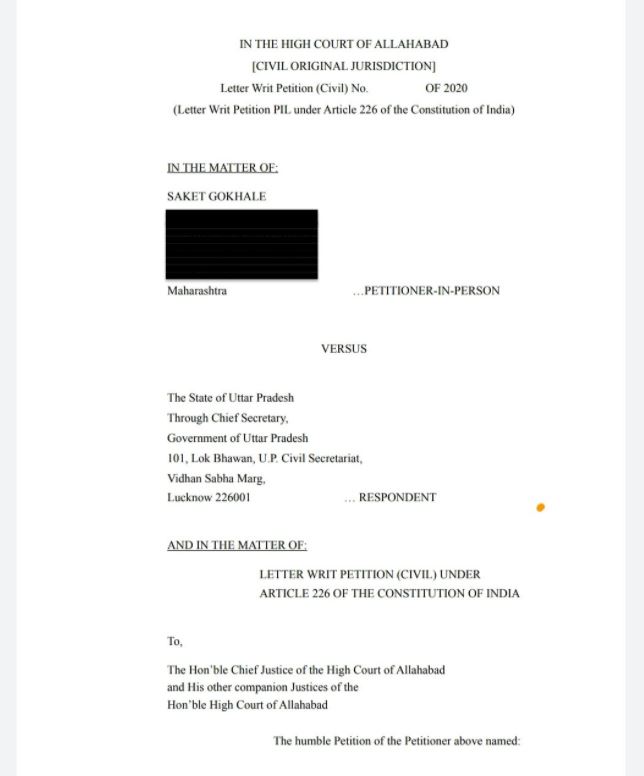
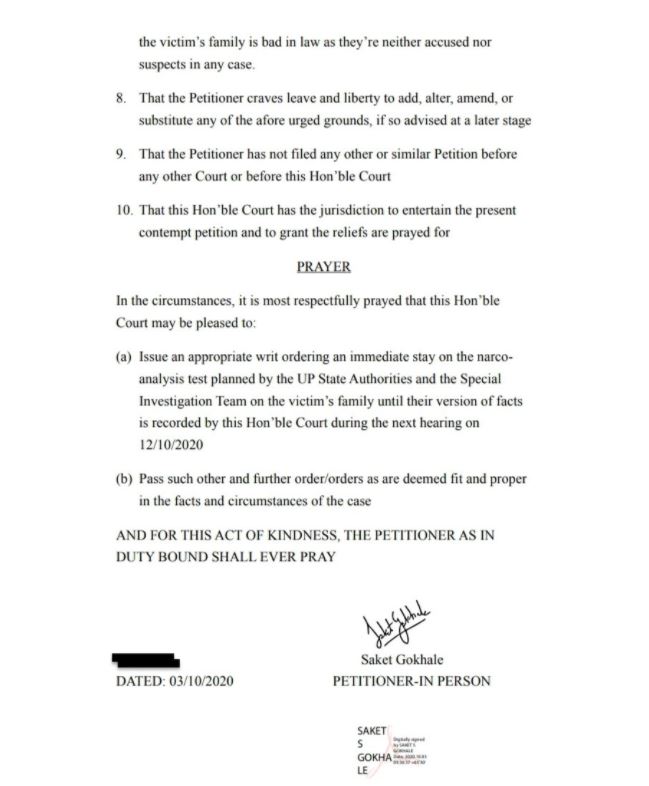
A day after UP CM Yogi Adityanath ordered that Narco Polygraph tests of the complainant, accused and the cops involved with the Hathras case to be conducted, Congress supporter Saket Gokhale has moved the Allahabad High Court against the decision.
In the letter petition, Gokhale has urged the court to put an immediate stay on the narco analysis test to be conducted on the family of the victim of the Hathras case.
The petition filed by Saket Gokhale in the Allahabad High Court
The Petition filed by Saket Gokhale in the Allahabad High Court
Calling the narco analysis test a means to coerce the family and intimidate them against deposing before the Court, Gokhale contended that this “coercion” is a violation of the orders of the Court.
“Subjecting the family of the victim to a narco-analysis test goes against all principles of natural justice as they’re neither accused in the case nor have been charged with any offence. Using an interrogation technique on the victim’s family is a blatant form of coercion” – the letter petition says.
The Allahabad court has fixed the date of hearing in the case for October 12 when the victim’s family is expected to be present before the Court to depose.
Polygraph test ordered for all complainant, accused and cops involved in the Hathras case
The Uttar Pradesh CM Yogi Adityanath, to ensure a fair and thorough probe in the Hathras case has decided upon carrying out narco-analysis polygraph tests on everyone involved in the case.
CM Yogi had tweeted earlier yesterday that those even think of harming women in Uttar Pradesh will be completely finished. Dissatisfied with the handling of the Hathras case by the administration, Yogi had also directed suspension of the Hathras SP, the DSP, the Inspector and some other officials, based on the preliminary investigation report.
Leaked audio in Hathras case raises questions against Congress
Leaked conversations of the Hathras Case reveal the manner in which politicians and the media have been trying to politicise the issue in order to settle scores with the BJP government in the state. In an earlier report, we had revealed the manner in which Tanushree Pandey, an India Today journalist, was attempting to incite the brother of the deceased with lies and emotional blackmail.
In another conversation, an unidentified individual is heard telling Sandeep, the brother of the victim, to not leave his house because senior Congress leader Priyanka Gandhi would be visiting his home. In the conversation, the person could be heard telling Sandeep, “If anyone wishes to take you anywhere, you must not go, now Priyanka Gandhi will come to your house. Someone says you should go to Hathras, somewhere here, somewhere there, you must not go.”
The man continues, “Say that the police and the media are not allowing your relatives to come, that they have been kept for your protection or for Thakur’s. Tell them everything that has happened to you.” During the conversation, Sandeep tells the man that the SIT was on a visit and one ‘Sanjay bhaiya’, his father and two other people are sitting inside along with some Congress workers. The man further tells Sandeep, “Alright, don’t go anywhere. Now Priyanka Gandhi will come and tell her that pressure has been created on you and you want to create a video of that.”
In another conversation that appears to be between villagers and Sandeep, the brother is advised that he should not accept Rs. 25 lakhs and reach a conclusion. He is told that he should even accept Rs. 50 lakh to reach a conclusion. The lady in that conversation says that some politician is saying that ‘faisla’ should not be reached. During this conversation, the names of one ‘Rahul’ and Manish Sisodia and Barkha Dutt also comes up.
Saket Gokhale and his fascination of filing petitions in matters which may not necessarily concern him
It is pertinent to note here, that Saket Gokhale, a less-known individual who fancies himself as an activist and threatens people at random with no concrete result, has this fixation to present such superfluous demands, which may not necessarily concern him, in front of the honourable court. He had earlier filed a petition in the Allahabad court demanding the court to stay the Bhumi Pujan in Ayodhya which he had said was in the interest of public health during a pandemic. The Allahabad High Court had, however, quashed the plea filed by Congress supporter Saket Gokhale observing that the entire petition was filed on the basis of assumptions.
Prior to this, the Congress troll was schooled by the Delhi police for peddling a lie about being granted permission to hold the rally.
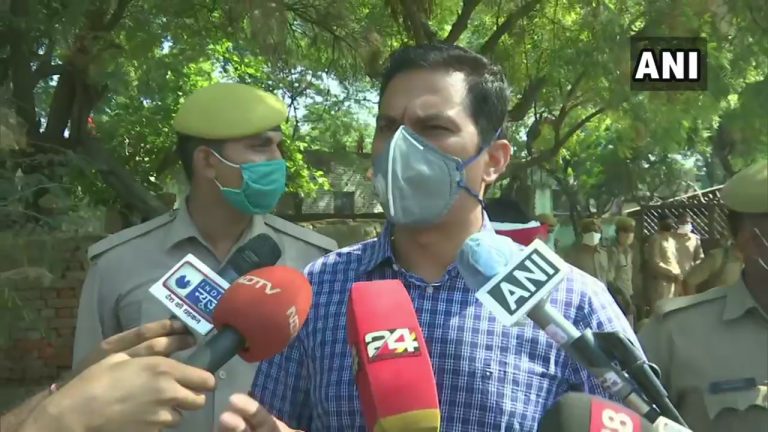
According to Sadar SDM Prem Prakash, the SIT probe in the Hathras case has been concluded and the administration is now allowing the media to go to the village of the victim’s family and speak to them.
“Since SIT probe in the village is complete, the restriction on media has been lifted. More than 5 media persons are now allowed to gather as Section 144 of CrPC is in place”, said the SDM.
Hathras: Media allowed to enter the village of the victim of Hathras case. Sadar SDM Prem Prakash says, “Since SIT probe in the village is complete, the restriction on media has been lifted. More than 5 media persons are now allowed to gather as Section 144 of CrPC is in place.” pic.twitter.com/BGb6F0VAGU
Further, the SDM has said, “Only media is allowed right now. When orders come in to allow delegations, we will let everybody know. All allegations about phones of the family members being taken away or confining them in their homes are absolutely baseless”.
Only media is allowed right now. When orders come in to allow delegations, we will let everybody know. All allegations about phones of the family members being taken away or confining them in their homes are absolutely baseless: Hathras Sadar SDM Prem Prakash Meena https://t.co/LE1mi6eZm8
The news about the UP administration and the police confiscating the phones of the victim’s family was first spread by the India Today group. Rahul Kanwal had taken to Twitter to ask “tough questions” from the Uttar Pradesh government after an audio of his correspondent coaching the victim’s family had been reported by OpIndia. Several other channels had also reported that the phones of the victim’s family members were taken away by the police.
Right to report freely must be strongly defended by journalists of this generation. Why is Hathras victim’s family being treated like they were the accused? Why have their phones been snatched? Rule of law must prevail in our country. A state cannot be run like a banana republic.
Interestingly, the allegations of the family’s phone being snatched came right after the media was heard freely talking to the brother of the victim over phone.
A lot of debate and political mudslinging has been happening around the Hathras case since the victim succumbed to her injuries in Delhi’s Safdarjung hospital on Tuesday morning. She was allegedly raped two weeks ago. The case attracted nationwide outrage when some reports claimed Hathras Police forcefully cremated the girl on Tuesday night without consent of the family members. The police had later stated that the victim’s father was present during the cremation.
Speaking to ANI, ADG Prashant Kumar had informed that the forensic reports that were awaited have also been received. ADG stated that the FSL report found no evidence of ‘rape’. He asserted that it was concluded that there was no sexual assault, and the cause of death was strangulation and injury to the spine.
Yesterday, Uttar Pradesh Chief Minister Yogi Adityanath has directed suspension of the SP, the DSP, the Inspector and some other officials, based on the preliminary investigation report.
The Chief Minister was reportedly not satisfied with the handling of the Hathras case by the administration. A press release issued by the UP govt said that Hathras SP and IPS officer Vikrant Veer has been suspended for carelessness and lax in supervision while working on the case. Similarly, DSP Ram Shabd, inspector Dinesh Verma, sub-inspector Jagveer Singh, and head constable Mahesh Pal have been suspended. Shamli SP Vineet Jaiswal has been posted as the SP of Hathras after the suspensions.
The statement also adds that Narco Polygraph tests of the complainant, accused and the cops involved with the case will also be conducted.
The Hathras case has been at the epicentre of a political slugfest. Far from empathising with the grieving family, Congress and other political parties are using the case to further their narrative and gain a stronghold in Uttar Pradesh on anti-upper caste sentiment.
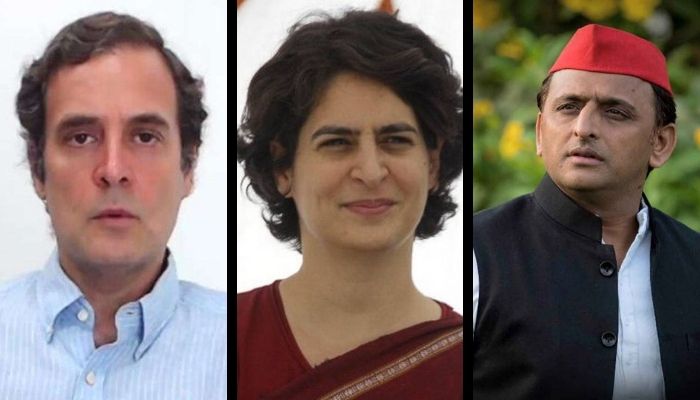
After their initial stunt on Thursday, the Congress leaders including Rahul Gandhi and Priyanka Gandhi are making an attempt, yet again, on Saturday to reach Hathras. This is despite the fact that the duo along with 200 other Congress workers was earlier stopped on Greater Noida expressway near Pari Chowk. Following a brief confrontation with the police, they were detained by the police and later released on a personal bond. Section 144 of IPC has been imposed in the area.
The Congress party has now demanded the resignation of Uttar Pradesh Chief Minister Yogi Adityanath. Meanwhile, the District Magistrate (DM) has made it clear that none will be allowed entry in the village until the Special Investigative Team (SIT) probe is concluded in the Hathras case. The grand-old party has threatened to go an indefinite strike if Congress leaders are not allowed to meet the victim.
Samajwadi Party leader Akhilesh Yadav has decided to reach Hathras on October 4, after returning to Delhi from London in the United Kingdom. He had also asked the UP government to file First Information Reports (FIRs) against the District Magistrate and Assistant Sub-Inspector.
Earlier, Yogi Adityanath had directed suspension of the SP, the DSP, the Inspector and some other officials, based on the preliminary investigation report. A press release issued by the UP govt said that Hathras SP and IPS officer Vikrant Veer has been suspended for carelessness and lax in supervision while working on the case.
Rahul Gandhi and his shenanigans
On their way to Hathras on Thursday, Rahul Gandhi tried to run away from the cops. Flanked by his security who took the lathi blows on behalf of Rahul Gandhi, he found himself a clean spot to ‘fall’. Like a domino’s effect, another Congress worker also ‘fell’ on Rahul Gandhi, to save the former Congress President and son of current interim Congress President from any injuries.
In a video that has now gone viral on social media, Rahul Gandhi innocently asked on what basis was he being stopped when the UP Police said that they were arresting him. A ‘helpful’ Congress worker prompted him to ask under what section was he being arrested instead of questioning the authority of the cops. “Bhaiya camera layiye,” he asked the camera person to record his big statement. Gandhi then questioned the cops as to why he was not allowed to travel alone, even though the Congress scion was accompanied by 200-odd party workers.
Leaked audio tapes reveal an underlying political conspiracy
Yesterday, the telephonic conversations between one India Today journalist and the brother of the deceased, Sandeep, was accessed by OpIndia. In the audio clip, Tanushree Pandey could be heard convincing Sandeep to send her a video statement of his father alleging that he was under immense pressure from the administration. Throughout the conversation, Tanushree Pandey appears insistent on coaxing out a very specific statement from Sandeep while the latter remains non-committal on his statement and appears hesitant to toe the line that the journalist wants him to toe.
In another conversation, an unidentified individual is heard telling Sandeep, the brother of the victim, to not leave his house because senior Congress leader Priyanka Gandhi would be visiting his home. In the conversation, the person could be heard telling Sandeep, “If anyone wishes to take you anywhere, you must not go, now Priyanka Gandhi will come to your house. Someone says you should go to Hathras, somewhere here, somewhere there, you must not go.”
After the Hathras case was turned into a political circus, OpIndia had yesterday reported a leaked conversation between India Today journalist and the Hathras victim’s brother where the journalist, Tanushree Pandey, was seen pleading with the victim’s brother to shoot and send a video of the father alleging that the UP administration was putting pressure on his. After the OpIndia report, India Today seems to have gone into panic mode.
Before publishing the report, OpIndia had reached out to Tanushree Pandey and asked her for her comments on the tape, however, she had not responded to the query. While on Television, members of the opposition parties were seen trying to shield India Today by claiming that the audiotape was fabricated, in their panic to defend themselves, India Today has admitted that the Hathras Tapes are indeed authentic.
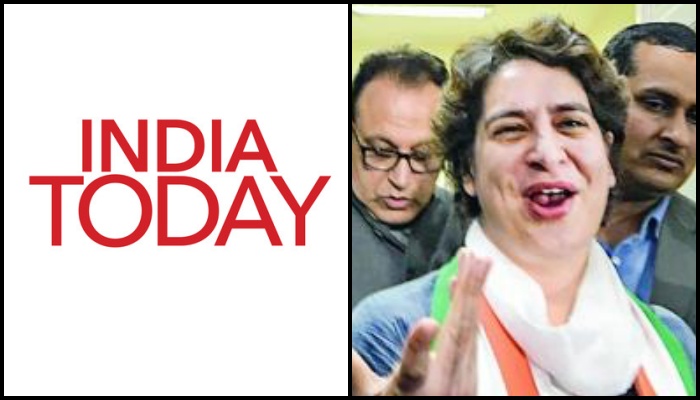
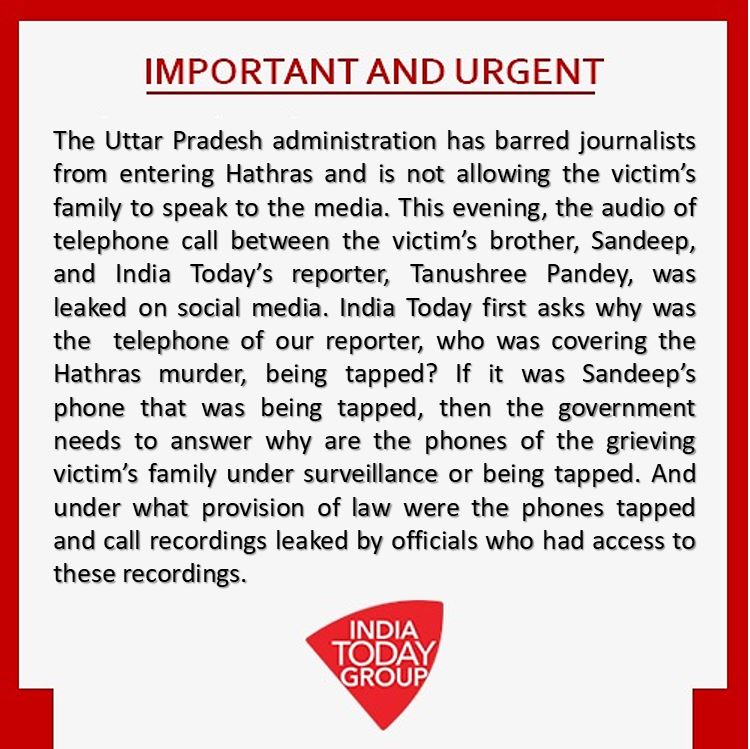
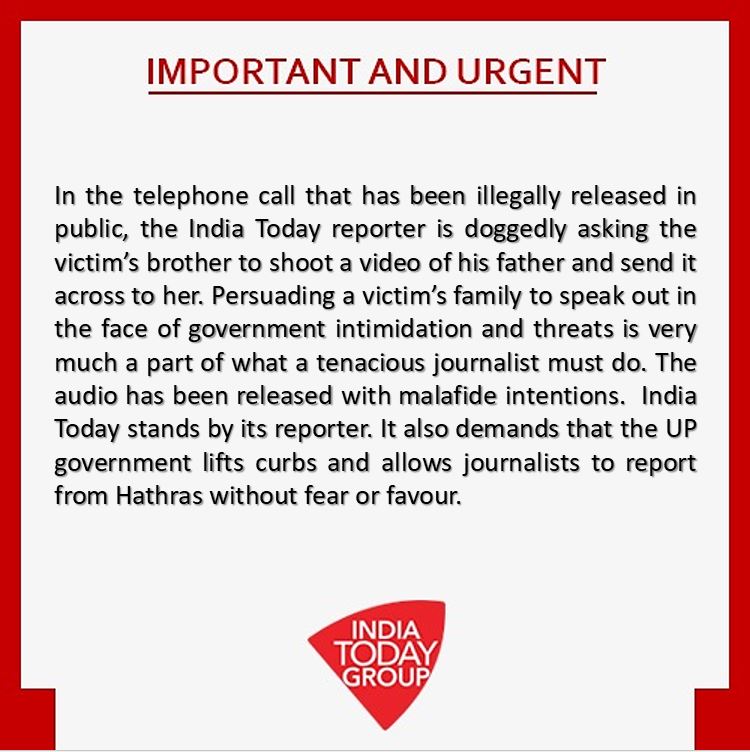
India Today took to Twitter to release an “Important and Urgent” statement where they admitted the authenticity of the tapes.
India Today statement
India Today statement
In their statement, India Today was hyperventilating after creating an imaginary story about their journalist’s or the victim’s brother’s phone being tapped. They demanded to know why and under what law were their phones being tapped.
It is worthy to note here that India Today is not aware of the source of this audio and the audio itself could have been leaked from any quarter. However, India Today has jumped to the conclusion of phone tapping.
Interestingly, even in the leaked audio, Sandeep, the victim’s brother had told the reporter towards the end that he thinks his phone is being tapped, whereas, there was no evidence for the same. After Sandeep had raised the suspicion, Tanushree Pandey had not raised an alarm over the same and had continued to coax him to get a confessional statement from the father about alleged pressure being put on him.
Meanwhile, Priyanka Gandhi Vadra came out in support of India Today and demanded that the Chief Minister of Uttar Pradesh resigns over the leaked audio.
It is interesting to note that Priyanka Gandhi Vadra has not responded to another audio that was leaked where someone, who is purported to be an aide from her team, was coaching the victim’s brother to stay put till Priyanka Gandhi Vadra gets there. In fact, in the audio conversation, it was also heard that this person, allegedly from Priyanka Gandhi Vadra’s team was coaching the victim’s father as to what is to be said in front of the cameras when Priyanka Gandhi reaches there to meet them.
The Leaked Audios: India Today, Priyanka Gandhi Vadra in the dock over their Hathras drama
Yesterday, a telephonic conversations between India Today journalist Tanushree Pandey and the brother of the deceased, Sandeep, had been accessed by OpIndia. In the audio clip, Tanushree Pandey can be heard trying hard to convince Sandeep to send her a video statement of his father alleging that he was under immense pressure from the administration.
Throughout the conversation, Tanushree Pandey appears insistent on coaxing out a very specific statement from Sandeep while the latter remains non-committal on his statement and appears hesitant to toe the line that the journalist wants him to toe. He confirms the journalist’s allegations of pressure and on other occasions, he says that his father was not very clear on whether he was pressurised or not.
Tanushree Pandey tells Sandeep that she has learnt from somewhere, she does not specify where, that an attempt is being made to blame the death of the sister on her family. It does appear to be an incendiary piece of information that has not been reported anywhere in the media. This bit of false information appears entirely fake and seems to have been invented solely to take advantage of the family’s misery to peddle a particular political agenda.
The full audio conversation can be heard here:
The objective of the conversation is clearly to have Sandeep’s father on record claiming that he was pressurised to give a statement that he was satisfied with the investigations into the matter thus far. She says, “Sandeep, please do one thing for me. And I promise that I will not move from here until your family has received justice… Sandeep, make a video of your father where he says, ‘Yes, there was a lot of pressure on me to issue a statement that I am satisfied.. I want investigation because my daughter has died. And we were not even allowed to see her and she was buried.’”
In another conversation that we reported, an unidentified individual is heard telling Sandeep, the brother of the victim, to not leave his house because senior Congress leader Priyanka Gandhi would be visiting his home. In the conversation, the person could be heard telling Sandeep, “If anyone wishes to take you anywhere, you must not go, now Priyanka Gandhi will come to your house. Someone says you should go to Hathras, somewhere here, somewhere there, you must not go.”
In a third conversation that appears to be between villagers and Sandeep, the brother is advised that he should not accept Rs. 25 lakhs and reach a conclusion. He is told that he should even accept Rs. 50 lakh to reach a conclusion. The lady in that conversation says that some politician is saying that ‘faisla’ should not be reached. During this conversation, the names of one ‘Rahul’ and Manish Sisodia and Barkha Dutt also comes up.