A day after the first anniversary of abrogation of Article 370 which made erstwhile state of Jammu & Kashmir an integral part of India without any riders attached and subsequent division into two union territories, the Chinese state-run media ran a Pakistani propaganda piece citing Pakistan’s ambassador to the Communist country.
Global Times publishes Pakistani propaganda
Interviewing Moin ul Haque, Pakistan’s Ambassador to China, Global Times claimed that 200 innocent Kashmiris were killed in one year. Haque also claimed that in past one year, 50 cases of rape and molestation and nearly 1000 cases of destruction of house and property were reported from Kashmir.
The Global Times, which is the English language mouthpiece for China’s ruling party, also referred to the union territory of J&K as ‘India-occupied Jammu & Kashmir’.
The Indian Embassy in Beijing today took to Twitter to call out Chinese state media for refusing to carry India’s response to the above baseless allegations.
In its response, Indian Embassy reiterated that the Union Territory of Jammu & Kashmir is an integral part of India and its affairs are internal affairs of India. Pakistan has no locus standi, India asserted. The Indian Embassy in China stated how in one year since the historic decision, there have been considerable social gains in the union territory. New educational and healthcare infrastructure is being created. 50 new educational institutions have been established in the region in last one year, largest addition in 70 years.
India also pointed out that while India is trying to bring peace and stability in the valley, Pakistan has continued the cross-border terrorism to debilitate the region. India also pointed out Pakistan’s absurdity in releasing new political map claiming Gujarat’s Junagadh as its territory. India also asked Haque to look inward and show a mirror to his own ‘regime’ before trying to meddle in India’s affair.
The winds of change have begun to blow in hundreds of villages in Naxal-hit Bastar division in Chhattisgarh. The black flags, which suggested the dominance of the Naxals in these regions are gradually being replaced with the National flag.
According to a report by Dainik Jagran, ignoring all the threats coming their way, the brave villagers of Chhattisgarh’s Bijapur, Dantewada, Sukma, Bastar, Kondagaon, Narayanpur and Kanker districts have been instating national flags in different parts of their villages during various occasions. This initiative is helping to cripple the supremacy of Naxals in these regions.
Oppressed villagers discarding the threat of left-wing terrorism
The unfurling of the Tiranga seems to be a way in which these oppressed villagers are expressing umbrage against left-wing terrorism domineering these Adivasis for decades. This small change marks the elimination of Naxalism from these areas in Chhattisgarh. Many schools in the Bastar district, which is considered a core area of Naxal activity, have started initiating flag hoisting ceremony on occasions like Independence Day and Republic day or any other national festival, in which the villagers participate extensively. In some villages, the Prabhat Pheri (early morning rounds) ritual is also being performed.
In 2017, the villagers in Chandameta and Mundagarh near Odisha border had hoisted the national flag irrespective of Naxalite threats. Naxals expect the villagers to boycott celebrations and raise black flags to protest against what they claim are imperialist designs to encroach upon their jal, jangal and zameen (water, forests and land). However, despite the threats, in 2017, the villagers in Chandameta and Mundagarh in Bastar district had hoisted the national flag on Independence day.
In the same year, over 12,000 people in Dantewada, the Naxal hit southern region of Chhattisgarh had sung the National Anthem together at the local Stadium on January 25- the National Voters’ Day. Having witnessed Naxal violence in the past, the District has been taking progressive steps to promote civic engagement and providing a nurturing environment for all its residents and officials.
Gompad in Sukma district of Bastar, Chhattisgarh, made headlines for the first time in August 2016 when villagers hoisted the tricolour for the first time since independence. Earlier, Naxalites used to hoist black flags in these villages and register their opposition to the country and the government, and also force people to hoist the black flag. Gradually, the tricolour has replaced these black flags, as villagers have started unanimously rejecting the left-wing extremism.
National Flag unfurled for the first time in Gompad in Sukma district of Bastar, image via Dainik Jagran
The national flag unfurled on a 100 feet high flag mast in a CRPF complex in Naxal-hit Sukma region in Chhattisgarh
On June 13, 2019, the national flag was unfurled on a flag mast that is 100 feet high at a new CRPF complex in Konta in Sukma. The flagpole is the highest in the entire Bastar Division.
Deep inside red corridor, @crpfindia sets up a new headquarters at Konta in Sukma district.
Highlight of this new Complex is a 100 ft high mast for displaying National Flag. This Flag pole is the highest in Entire Bastar Division. #Chattishgarhpic.twitter.com/TMp1u2wv4V
Bastar has been a hotbed of violent Naxal activities. Just before the 2019 Lok Sabha election, an Improvised Explosive Device (IED) was used by the Naxals to attack a convoy. BJP MLA Bhima Mandavi and four security personnel were killed when their convoy was attacked by Naxalites.
Decline in violence in Naxal-hit regions in Chhattisgarh with tribals returning to the mainstream
Gradually, Chhattisgarh has seen a decline in Naxal violence. The authorities have been encouraging the tribals to give up arms and return to the mainstream. In June this year, the police in insurgency-hit Dantewada district of Chhattisgarh had launched a novel initiative, named in local Gondi dialect as ‘lon varratu’, meaning ‘return to your village’, to encourage Naxals, who carried cash rewards on their heads, to give up arms and join the mainstream by urging them to return to their villages.
Last month, it was reported that five Naxals, three of them collectively carrying a reward of Rs 5 lakh, had surrendered in Chhattisgarh’s Dantewada district. Since the initiative ‘lon varratu’ was launched in June 2020, 58 Naxals had surrendered in Dantewada until July 15, Superintendent of Police Abhishek Pallava said.
Two days after the horrific riots unleashed by Muslim mobs in Bengaluru city, shocking details are emerging regarding the involvement of Congress party leaders in the violence that took place on Tuesday night in the city.
According to the reports, Kaleem Pasha – one of the masterminds of the riots, is the husband of Congress corporator from Nagavara Irshad – Begum. The Bengaluru police have named Kaleem Pasha as 7th accused in the FIR, who according to the police is also one of the conspirators behind the deadly violence that took place on Tuesday night.
On Wednesday, the Bengaluru police had nabbed a local SDPI leader Muzammil Pasha for orchestrating the violence. Along with Muzammil Pasha, the Bengaluru had also booked Jaffar and Kaleem Pasha, who had allegedly instigated the Muslim mob to pelt stones and torch vehicles near the police station.
Kaleem Pasha active member of the Congress party, close to leadership.
Kaleem Pasha, who is a former corporator of Nagavara ward, reportedly has close links with the party leadership and is known to be an associate of former Karnataka Home Minister KJ George.
Image Source: Suvarna news
The Facebook profile of Kaleem Pasha also highlights the fact that the accused was an active Congress worker. Ironically, Kaleem Pasha in his Facebook post claims to ‘work for the benefit of the needy people and supporter of secularism’.
Image Source: Khaleem Pasha
In an image shared by Pasha in his Facebook profile, he can be seen with former Chief Minister and senior Congress leader Siddaramaiah.
In another image, Kaleem Pasha can also be seen wearing Congress party shawl.
Bengaluru police files FIR in riots case
Meanwhile, the Bengaluru police have filed multiple cases against the 17 main accused in connection with the August 11 violence, which includes Congress leader Kaleem Pasha and also SDPI leader Muzammil Pasha.
In another FIR, the Bengaluru Police have booked five people in connection with the riots in the city that was unleashed on Tuesday evening. Reportedly, the five people had led a mob of 200-300 Islamists during the Bengaluru riots, called for ‘hacking the cops to death’.
The FIR states that these Islamists who were armed with machetes, stones, rods and other weapons allegedly raised slogans of “kill the cops and finish them” as they ransacked KG Halli and DJ Halli police stations on the night of August 11.
Bengaluru riots: A pre-planned attack by Islamists on police personnel
Three people were killed and more than 60 police personnel were injured in the stone-pelting and the subsequent riots unleashed by the irate Muslim mobs. At least 10 vehicles, including Innovas of two DCPs, were damaged in front of the stations. The mob also set fire to the vehicles in front of the DJ Halli police station.
During the pre-planned attack, the Muslim mob, carrying petrol bombs and other weapons, also barged into the nearby police quarters and attacked the premises. The Muslim mob was seen raising Islamic slogans like ‘Allah-hu-Akbar’ and ‘Nara-e-Taqbeer’ outside the police station.
Meanwhile, on Wednesday, the Karnataka Home Minister Basavaraj Bommai said that a district magistrate will hold an inquiry into mob violence in Bengaluru and also informed that so far 146 people have been arrested.
In a frightening flashback to March 2020, we remember the Left and Islamists justifying the Tablighi Jamaat incident, which had led to over 30% of Coronavirus infections in the country at that time (both directly and indirectly). The Left argues that religious gatherings were permitted at that time, and there hadn’t been any notification from Delhi Police against the gathering (which has already been disproved, with a video of a Delhi Police officer requesting Jamaat authorities to cancel the gathering).
Coming back to August 2020, the same Left-liberals and Islamists have started to trend “#TirupatiVirus” on Twitter, claiming that 75% of India’s COVID-19 cases are linked to temples. The infographic which shows this data is claimed to be an “unofficial infographic” by the India Today news channel.
The image doing the rounds on social media
While the Left ecosystem labelled everyone who criticised the Jamaat as “Islamophobic” in early 2020, they seem to be comfortable calling the outbreaks of the Coronavirus in Tirupati as “Tirupati Virus”, in an attempt to blame the virus outbreak on Hindus.
Though the blatant hypocrisy and double standards of the Leftist ecosystem are very apparent in this case, the misinformation spread by them raises concerns. There are several holes in their claims which demolish their attempts to demonise Hindus. Here are 5 such reasons:
1. No credible source to prove the claim
At the time of writing, there has been no evidence to prove that the rise of Coronavirus cases in the country are linked to temples. The source from which the infographic allegedly gives this estimate is not mentioned.
2. Tirupati devotees did not hide from government authorities
Unlike the attendees of Tablighi Jamaat Markaz in Delhi, Tirupati devotees did not take refuge in their temples to hide from government authorities and in the process, spread the virus further. The devotees readily got themselves tested and quarantined.
3. Tirupati devotees do not claim that the Coronavirus is ‘a punishment for non-believers’
During the Markaz of the Tablighi Jamaat, Maulana Saad claimed that the Coronavirus is a ‘punishment by Allah for non-believers’, and that Muslims ‘need not worry about the virus’. Tirupati devotees had a scientific temper and co-operated with the authorities and doctors.
4. Tirupati devotees did not misbehave with healthcare workers
Tirupati devotees at no point of the time resisted treatment from healthcare workers and did not harass the frontline warriors of COVID-19. The Tablighi Jamaat attendees had reportedly misbehaved and molested the nurses working in a Kanpur hospital.
5. No foreigner was present in the Tirupati temple procession
The Tablighi Jamaat incident led to a massive outbreak of COVID-19 in the country because of the presence of outsiders in the event, despite guidelines advising them not to do so. Before the Markaz, COVID-19 wasn’t that widespread in the country. However, the Markaz led to a massive outbreak of the virus. The Tirupati temple procession had only domestic pilgrims and no foreign national was present.
There has been a laughable comparison of the two events. The Leftists have yet again managed to expose their own hypocrisy and double standards by blaming temples for a rising number of COVID-19 cases in Tirupati.
Congress Party and a lot of non-governmental organisations (NGOs), especially from Tamil Nadu, are criticising the draft Environmental Impact Assessment (EIA) 2020, issued by Narendra Modi Government, saying that it will harm the environment.
In the month of March 2020, Ministry Of Environment, Forest and Climate change had proposed certain amendments which are incremental to the EIA 2006 which was issued on 14 September 2006, in the super-session of EIA 1994. The Notification was issued under relevant provisions of the Environment (Protection) Act, 1986.
What is Environmental Impact Assessment (EIA)?
EIA is a management tool to minimize adverse impacts of developmental projects on the environment and to achieve sustainable development through timely, adequate, corrective and protective mitigation measures. In a layman’s words EIA, is a process to evaluate the environmental impact of a proposed project (be it railways, bridge, roads, buildings). A decision-making tool whereby people’s views are taken into consideration for granting approval to any developmental project or activity.
History of EIA in India
The Indian experience with Environmental Impact Assessment began over 20 years back. It started in 1976-77 when the Planning Commission asked the Department of Science and Technology to examine the river-valley projects from an environmental angle. On 27 January 1994, the then Union Ministry of Environment and Forests, under the Environmental (Protection) Act 1986, promulgated an EIA notification making Environmental Clearance (EC) mandatory for expansion or modernisation of any activity or for setting up new projects.
The Ministry of Environment, Forests and Climate Change (MoEFCC) notified new EIA legislation in September 2006. The notification makes it mandatory for various projects such as mining, thermal power plants, river valley, infrastructure (road, highway, ports, harbours and airports) and industries including very small electroplating or foundry units to get environment clearance.
Changes in 2006 to Environment Protection Act, 1986
The Act was amended in 2006 making the EIA report mandatory for mining, thermal power projects, river valley projects, infrastructure development and electroplating and foundry units. The 2006 amendment also put the onus of clearing the projects on the State government. Till then, it was the responsibility of the Union government.
Environment Impact Assessment Notification of 2006 has decentralized the environmental clearance projects by categorizing the developmental projects in two categories, i.e., Category A (national level appraisal) and Category B (state-level appraisal).
Category A projects are appraised at the national level by Impact Assessment Agency (IAA) and the Expert Appraisal Committee (EAC) and Category B projects are appraised at the state level.
State Level Environment Impact Assessment Authority (SEIAA) and State Level Expert Appraisal Committee (SEAC) are constituted to provide clearance to Category B process. ‘B’ was further categorised into B1, which required an EIA report, and ‘B2’, that does not require such a report.
What was the Need For The 2020 Draft Notification?
The Hon’ble High Court of Jharkhand through its order dated 28 November, 2014 ruled that the proposal for environment clearance must be examined on its merits, independent of any proposed action for alleged violation of the environmental laws. The Notification clearly provides that cost of remedial measures would be imposed on the violators seeking environmental clearance after an assessment of the damage caused to the environment.
National Green Tribunal (NGT) ruling in 2018
How do the effects of sensitive environmental issues emerge from natural and man-made causes led the NGT to pronounce various directions. The NGT also emphasised on the priority areas regarding the environment that can be strengthened with appropriate environmental monitoring mechanisms.
The Major Change: Post Facto Approval
One of the major changes, which is misinterpreted by those opposing the EIA 2020 is the Post Facto Approval. It can be seen that the opposition argues against the EIA that ANY project can begin operation without environment clearance and then seek Post-Facto Approval. The fact is that the post-facto approval will apply only for those projects that are currently in operation without which have not been given a green signal with respect to environment clearance. No new project can seek post-facto approval. Further, the exemption of Environment Clearance is on specific projects and not all. Here is an Excerpt from the Draft EIA 2020 Section 4.
Requirement of Prior Environment Clearance or Prior Environment Permission:- (1) New projects or activities including expansion or modernization of project or activities listed in the schedule under Category ‘A’; Category ‘B1’; and Category ‘B2’ that are required to be placed before Appraisal Committee as specified in the Schedule, shall require Prior Environment Clearance from the concerned Regulatory Authority before start of any construction work or installation or establishment or excavation or modernization, whichever is earlier, on site or before expanding the production and / or project area beyond the limit specified in the prior-EC or prior-EP, as the case may be, granted earlier.
(2) New projects or activities including expansion or modernization of project or activities listed in the schedule under Category ‘B2’ that are not required to be placed before Appraisal Committee as specified in the Schedule, shall require Prior Environment Permission from the concerned Regulatory Authority before start of any construction work or installation or establishment or excavation or modernization, whichever is earlier, on site or before expanding the production and / or project area beyond the limit specified in the prior-EC or prior-EP, as the case may be, granted earlier.
(3) It is, however, clarified that ‘construction work’ for the purpose of this notification shall not include securing the land by fencing or compound wall; temporary shed for security guard(s); levelling of the land without any tree felling; geotechnical investigations if any required for the project
In fact under the earlier EIA 2006, any “Category B2” projects did not require an Environment Impact report. But the EIA 2020 also requires few of the Category B2 projects require Prior Environment Clearance process to be placed before Appraisal Committee.
Further, the post-facto approval are only for 40 categories of projects which are declared as non-mining by the State governments, solar thermal power plants, and units inside approved special economic zones or notified industrial clusters. For example, extraction of ordinary clay or sand by manual mining, by the Kumhars (Potter) to prepare earthen pots, lamp, toys, etc. as per their customs, extraction of ordinary clay or sand by manual mining, by earthen tile makers who prepare earthen tiles, removal of sand deposits on agricultural field after flood by farmers, customary extraction of sand and ordinary earth from sources situated in Gram Panchayat for personal use or community work in the village etc. Refer to the link [PDF] for all the categories.
Further, the EIA clearly states that ANY NEW PROJECT, will require the permission for operations It gives exemption to certain B2 projects which are exempted to be placed for appraisal committee but still required Prior Permission to operate. Refer the above excerpt
Approval for infrastructure projects
Opponents of the draft argue that no environment clearance is required for infrastructure projects and thus roads can be constructed taking away lands of poor farmers.
However, EIA 2020 only speaks of those projects concerning National Defence and Security or Involving strategic considerations NOT all infrastructure projects. The draft also exempts industries of “strategic importance” from getting environment clearance. This is in line with India’s defence requirements.
Truth About Exemptions To Public Hearings
As per the opposition proposed legislation exempts public hearing. According to the draft notification, all projects require public hearings. The only exemptions are for things such as modernisation of irrigation systems, projects under notified industrial areas, projects that don’t have an environmental impact and those of national defence importance.
Below is an excerpt from the draft EIA 2020 on public hearing:
Public Consultation The public consultation shall ordinarily have two components comprising of: a. A public hearing at the site or in its close proximity, district wise in case of the project area located in more than one district, to be carried out in the manner prescribed in the notification, for ascertaining concerns of local affected persons; b. Inviting responses in writing from other concerned persons having a plausible stake in the environmental aspects of the project; c. In addition, if required, based on the nature of project, public consultation through any other appropriate mode may be recommended by the Appraisal Committee, or the Regulatory Authority, on case to case basis;
(1) However, the Regulatory Authority may decide on the feasibility and requirement of Public Hearing and/or consultation in the case of defence projects being considered (2) All Category ‘A’ and Category “B1” projects of new or expansion proposals or modernization with capacity increase more than 50 percent shall undertake Public Consultation.
Time cut in Public hearing:
The cut in the time given for public consultations is very much fair as this would reduce the manoeuvring by anti-social elements and vested interests and three months is sufficient time for the hearing.
There have been several amendments issued to the EIA Notification, 2006, from time to time, for streamlining the process, decentralization and implementation of the directions of Courts and National Green Tribunal. Though the EIA Notification, 2006 has helped in realizing necessary environmental safeguards by assessing environment impacts due to the proposed projects, that require Prior Environment Clearance at the planning stage itself, the Central Government seeks to make the process more transparent and expedient through implementation of online system, further delegations, rationalization, standardization of the process, etc.
Draft EIA 2020 is against corruption. The public hearing for projects is a very ugly process in reality. There are deliberate reasons to provoke Locals to obstruct and delay the project, who when bribed, allow the project in their locality.
Subramanian Swamy is taking particular interest in Sushant Singh Rajput case. While talking in a live Q&A session with “Virat Hindustan Sangam,” on 2nd August, he alleged that with the evidence he has collected, it is evident that someone is trying to scare the CM [Uddhav Thackeray]. He added, “that someone is trying to drag his son’s (Aditya Thackeray) name, but I can tell you from whatever material I have, his son may be having flings with the actresses, but he has nothing to do with Sushant’s death.”
In the interview, he expressed his views on various topics including IPL, “mafia” in Bollywood and Sushant Singh Rajput’s death.
Swamy alleged that the person who is involved in the case is probably the son of somebody else who he is not in a position to name as he does not have enough evidence. He claimed that the evidence against that “son” who is so powerful that he can influence the system will be out soon.
He added, “in all and all we have a situation where politicians, gangsters and cinema stars who people respect, have formed a cartel which wants to ensure that the worst possible human beings become our actors and actresses. Anyone else with some decency, some educational background, and some sense of morality gets eliminated, does not get roles or gets killed. This is something we cannot accept in a democratic country like ours.”
Swamy said that he is happy to see the uprising among the general public about the case, especially after he announced that he would be taking an interest in the case. He added that he had designated Ishakaran Singh to assist in the court as well as the investigation as the man of law. He added that the government should not only ask the Central Bureau of Investigation (CBI) to take up the case but also involve National Investigation Agency (NIA) as there is a terrorist angle of Dawood as well.
The Q&A session happened before CBI was instructed by the union government to take up the case. When the Attorney General on 5th August informed the Supreme Court of India that Indian government has already instructed CBI to take up the case, Swamy tweeted and said, “The Centre has informed the SC that Sushant case has been handed over to CBI. Have I completed my commitment and free to go?”
The SC has been informed by the Centre that Sushant case has been handed over to CBI. Have I completed my commitment and free to go?
Actor Sushant Singh Rajput allegedly ended his life by suicide on 14th June 2020. Though the Mumbai police had declared it as a suicide, Sushant’s family claimed that it is not and a thorough investigation needs to b conducted. After over a month, his father KK Singh broke his silence and filed a case against Sushant’s girlfriend Rhea in Patna.
Bihar police formed a team of four officers who went to Mumbai for an investigation that apparently irked the Mumbai Police. Stating that Bihar police has no jurisdiction, Mumbai police denied providing any support to them. So much so, when IAS Vinay Tiwari reached Mumbai to lead the investigation, BMC forcefully sent him to quarantine that officially made it a turf war between Bihar and Maharashtra police departments. Maharashtra government also had an earful from the Supreme Court for sending IAS Tiwari to quarantine.
Ankita Lokhande, Sushant Singh Rajput’s ex-girlfriend and co-star from Pavitra Rishta helped Bihar police not only with the evidence against Rhea but also in the investigation when they arrived in Mumbai.
While hearing Rhea’s plea to shift the case to Mumbai, the Supreme Court rejected the request and allowed the central government to hand over the case to CBI. AG informed the Supreme Court that the CBI has already been instructed to take up the case, and as soon as CBI got the official letter from the ministry, they started the proceedings. The investigation is taking place from different angles, including Rhea’s involvement, nepotism, the role of Bollywood Mafia and money laundering, making it a high-profile yet confusing case that may not fade away soon.
Francois Gautier is a vocal and visible Dharmic voice, a lover and defender of Hindus in India and abroad. He is an eminent journalist in his own right, and has worked with Le Figaro, DNA and Outlook India. He has written books such as The Guru of Joy and India’s Self Denial. He has in the past brought awareness to the idea of a ‘Hindu Holocaust‘ in the medieval ages and advocates the indigenous Aryan theory. He has also founded an NGO called the Foundation for Advancement of Cultural Ties. He has been awarded Panchjanya’s Nachiketa Award and the Bipin Chandra Pal Award in the past.
Here is a conversation with Francois Gautier.
You had an upper-class Catholic education, though you never really fitted in the system and revolted against it quite early, as you have shared in the past. Your family wanted you to be a businessman but your interest was in writing, which made you write for a small newspaper and then a film script for a friend. This is a fascinating life trajectory for any teenager, as you were back then. How do you see that period of your life and the way it shaped you?
I was looking for answers. I was looking for who I am, what is the meaning of life. To know myself and it was the time I arrived from Paris to India. It just so happened that there was a caravan of cars driving from Paris to Pondicherry. Auroville. I did not know anything about India or spirituality. I had a little bit of a mystic side from my childhood. So I took that caravan and drove to Delhi. From Paris to Delhi. In Delhi, I had a very strong experience in the Sri Aurobindo Ashram. It was an old building then, not the big school that is there now. I felt like I had come home and this was a place of knowledge.
Then from Delhi, we drove to Pondicherry and I met The Mother, who was Sri Aurobindo’s companion and a great Yogini. After meeting her, I took her as my Guru, and life transformed. And that is when I decided to stay and live in India, after meeting The Mother. I went on to live for 7-8 years in the Sri Aurobindo Ashram in Pondicherry. I started reading Sri Aurobindo and then, of course, The Mother died.
So I had done a little bit of journalism and photography before coming to India, and started freelancing in the south of India first. Slowly, I came to Delhi and became a political journalist for some of the major French-speaking newspapers and magazines. Atleast for 20 years, I was a reporter and a journalist, and of course from writing articles I started writing books, on Indian history, because I was covering Kashmir and I saw with my own eyes clash-ups between religions. I am not a historian but I started studying Indian history, started writing books on Indian history.
You came to India with the first wave of Auroville-migrants at the age of 19, in 1969. What makes Auroville so special, according to you, and how would you see the message of Sri Aurobindo as well as The Mother, whom you interacted with personally, guiding humanity going forward?
Sri Aurobindo is a giant, he is a Himalayan giant, for many reasons. First because he was one of the first to ask the British to leave India, much before Mahatma Gandhi. He was educated in England and came back to India, landing in Bombay. In the early 1900s, he first started writing articles. He was so passionate that he was ready to fight. His brother Barin manufactured bombs in the basement of Sri Aurobindo’s house, to attack and kill the British, and arm the people. So, he was not a pacifist. He felt India should become free, and in the spirit of the Bhagavad Gita, if necessary by force.
But his place is not there in (many) history books. He was the forerunner, you know (to Gandhi and the later independence movement). People say that the first mutiny of India could have ushered in the revolution that could have brought Indian independence by force but that is not true since the mutiny is a very complicated story and mostly tried to put back on the throne the Mughals. We cannot say this was really the first independence movement. But Sri Aurobindo’s was a struggle for complete independence, but his place in Indian history books is not there.
And of course, Sri Aurobindo was a great philosopher, with The Life Divine and Foundations of Indian Culture, which can called the bible of everything – philosophy, painting, architecture, everything. Today, from the perspective of Indian culture, we seem to have gone astray and not the Indian way. Sri Aurobindo was also an extraordinary poet. Some of the greatest writers in the world have compared his epic Savitri to the works of Shakespeare and other. It is of that caliber. He was an Avatar, a great Yogi. For me, Sri Aurobindo is like the Himalayas, not only in Indian history but also philosophy. His thoughts, ideas and works are of a very, very high level. Sri Aurobindo remains my Guru, my inspiration. The fact I met The Mother is a great privilege. I am very grateful to have come to Pondicherry and this changed my life.
That must have been quite a life-changing experience. I have been to Auroville myself, and found the ambience to have a very distinct and almost surreal side to it. That obviously and very naturally brought you towards spirituality, but your move towards Indology is what fascinates me. You have written extensively on the subject, in articles and in books. What made you interested in Indology and spirituality, over the years?
In the Pondicherry Ashram, I spent many spiritual years – interacting with The Mother, meditating. For me, the genius of India is spirituality. The people of India, the people of the countryside, they have this spirituality in a very innate, spontaneous manner. So we need to think – I have to be good, not kill, not steal, but here in India, when I started freelancing as a journalist, I was in Kerala and was doing this feature on the martial art of Kalaripayat, which was taken from India to Japan and China, in the villages I found in the people an acceptance, a natural sense of tolerance, of knowing that God manifested in different times, different names. The simple people of India, not intellectuals or Yogis! Looking at this at close quarters was a memorable experience and spurred me on, in my journey in Indology and spirituality.
You have taken exception to A. L. Basham’s ‘The Wonder that was India’ and see this as laying the groundwork for his later ideas around ‘Hindu Imperialism’. Did you write ‘The Wonder that is India’ as a reaction against Basham’s work and what are your thoughts on Basham’s book?
There was a gentleman known as Sita Ram Goel, and in those days I used to write in The Hindustan Times and in the Bombay paper Blitz. Mr. Goel sent me a letter and asked me if I would be willing to have a collection of my articles published as a book. I replied saying that I would rather write a book from scratch. So, that is what I did. I wrote The Wonder that is India. I had come across this bestseller by a guy called Mr. Basham called The Wonder that was India. It was a good book, but it said that India was very good and now not so good. So, I wanted to write a book called The Wonder that is India. I am very grateful to Mr. Sita Ram Goel on the making me embark on the path of writing books. The first one was important to me and I owe it to Sita Ram Goel, who was a pioneer and champion of Hindu Dharma and interests in a time even when it was seen to be shameful to defend Hinduism by some.
You have mentioned in the past that the foundations of the Indian society were unique since all the aspects of life were turned towards the spiritual. Do you see a need to incorporate ideas and elements from these foundations of ancient Indian society in modern times, for establishing a more Dharmic society?
Yes. I was driving from the Himalayas back to Delhi in ’96 and was looking at the architecture and what India had built since 1947, and except for a few exceptions, it seemed to be largely copies of what was done in the West in the ’50s and ’60s. You look at Indian modern paintings…again there might be some talent but its just a copy of what is done in the West. If you look at everything in India, if we look at literature..the literature that works, that sells in the West is mostly written by the people who are Anglicized, like Vikram Seth or Salman Rushdie or all these writers…they write in English for a western mind. So, it seems to me that India has gone the wrong way. Even education today, they only produce drones.
The education that is happening in India is to make drones that are good for export. So, yoiu don’t have the spirituality which is the very foundation of Indian culture, Indian lives, of everything. Even in Indian politics. If you look at Indian politics in the past, there were kings and emperors who had the sense of Dharma, of duty, as did the people. I think Mr. Modi does stand on and by that but if we look generally at the politicians in India, even from the BJP, they are at best working for the party and at worst working for themselves, but not for the people who have elected them. Everything remains to be done in India. So many things are so westernised – education, politically also.
We have a President and Vice-President, who have no powers at all, and then we have a system where anybody gets elected if you a have a lot of rupees and you can offer radios or computers to people. The whole thing is done wrong. So, I think after Sri Aurobindo died in 1950, even with all that he worked for and all his efforts, India was going in the wrong direction. Of course Mr. Modi has come and there have been some corrections but a lot more still remains to be done.
You have also spoken about the misrepresentation of Indian history, about the skewed projection of history in our textbooks and various modern historians. You have previously said that the whole Indian history, as we read it and study it today, is a huge scam: Ashoka was a butcher who was made a hero by Nehru because he was Buddhist, while Akbar was no better than Aurangzeb and Alexander was beaten out of India, and yet heroes like Shivaji Maharaj and Maharana Pratap are hardly mentioned. What are your thoughts on this?
For a long time, we only spoke about Ashoka and Akbar, who are emblems that Nehru propped up for various reasons but there are so many other kings and queens who stand out and yet are relatively lesser known. For instance, Shivaji Maharaj – known in Maharashtra but not so well known in the South. He was on par with Napolean or on par with the greatest warriors ever. And he was more than a warrior. He was an administrator. He was a man of extraordinary courage and intelligence, but does not have the place he deserves, in Indian history. Maharana Pratap was the only Rajput who actually fought the Mughals.
The Mughals, who took to Maharajas, fascinated the westerners so much but Maharana Pratap and Shivaji Maharaj treated them as invaders, as foreigners. So Maharana Pratap was the only Rajput who fought the Mughals and he fought Akbar, and Akbar definitely wanted to be friends with him, sending him letters and emissaries, but Maharana Pratap wanted to treat him as a foreigner, an invader. As someone who had killed 30,000 Hindus in Chittor. There was a huge Sati (Jauhar) also because the women and daughters did not want to get raped by the soldiers of Akbar.
So, Maharana Pratap held his stance. He never lived in the palace (after Haldighati) and slept on the ground. He was very secular, as was Shivaji Maharaj. They were secular in the true sense. They were Hindus but they would never kill or harm the daughters and wives of their enemies. They were true Hindus. Today, if you ask many in the South of India, nobody knows who he is. And yet he was an extraordinary man. We know the Rani of Jhansi but there were so many others like Rani Kittur Chennamma, whom not many know of.
What you have now in Indian history books is Akbar. And Ashoka, if you research on Ashoka, he did not become a Buddhist because he wanted to shun violence but he did it for political reasons. In those days, there was Jainism and Buddhism, and there was a conflict. To counter one of the sects of Jainism and the Ajivikas, he took the move. Ashoka was an extremely cruel man before that. So, the whole history is often not written as it happened.
Whether it will change now with the Modi government has to be seen. To rename a road, to rename the Aurangzeb Road as Abdul Kalam Road is good but that is a very, very tiny symbolic step. You need to write the true history. So this is what I have thought of doing in my museum but it is a very difficult task because Indians still have a very narrow mindset, even many Hindus. Majority of Hindus, they might go to the temple and perform Hindu practices, but they remain ignorant about their own history. They remain shy, they are not challenged and they themselves are not challenging those who kill them, those who attack them and take over their temples.
In A Western Journalist on India: The Ferengi’s Columns, you are critical of Partition 1947. You go on to say,”as long as Pakistan and India are divided there will be other Kashmirs, other Ayodhyas, other wars with Pakistan—nuclear maybe—and India will never be at peace with its own Muslim community, which is a permanent danger to herself” and have advocated for India-Pakistan reunification. Given current geopolitical realities, how do you see a closer working relation between, if not reunification of, the two nations?
There was a chance that India not be divided at independence, and there was a guy called Stafford Cripps who Churchill assigned because in the Second World War, Churchill needed India not only for man power but also for good and so many things. So, Cripps told Gandhi and Nehru that if they collaborated in the war efforts, we will give you the Commonwealth status, which Australia and other countries had, which would have meant that India would not have been divided. There was already a movement for Pakistan. Jinnah was there. Sri Aurobindo sent someone to Delhi saying that yes we need to accept this proposal because it will avoid bloodshed as it happened in 1947, when there was enormous bloodshed.
An enormous number of Hindus were killed, as were Muslims and Sikhs -who are a warrior race protected Hindus and finally retaliated. But then again, not everything is said. For instance, it is not said the massacres were started by the Muslims, whether it was in Calcutta or whether it was before that…the Moplahs, the revival of the Caliphate or whether it was the Hindu massacres in Pakistan. So, Indian history is again not written as it happened. At that time, there was a thought that as long as Pakistan and India are divided, there will be strife, there will be the sticking point of Kashmir, but things have changed.
I feel the Kashmir problem cannot be solved. Unless India and Pakistan come together, the Kashmir problem will not go away, but things have become more complicated now because the Americans are going to withdraw from Afghanistan. They are going to again leave a gap for the Taliban to take over. Taliban takes over then it will be supported by Pakistan and again they will try to create strife not only in Kashmir but also possibly in Punjab. There is only one positive: Pakistan has exported so much terror not only to India but all over the world that it is coming back to themselves.
There is a possibility that Pakistan will slowly, internally disintegrate, and South Asia, let us say the commonwealth of South Asia or a European Union of South Asia is what ideally should happen, with no borders and a common monetary system. It may happen, it may happen. But there is a Chinese element that can come on top of that, which is much more dangerous than Pakistan since the Chinese are better off, and have a lot of money. I think, at the moment, Pakistan is not India’s main problem. India’s main problem is China at the moment.
We share our interest in decentralization of the economy of India and Indianization of its social, political and educational systems. In your case, even at the cost of democratic principles and the constitution. What do you see are the major roadblocks on that path, be it with corruption, inefficiency or excessive centralisation and misuse of power in various levels of the administration, and how could we resolve them?
The problem is Delhi. The problem is the capital of India is Delhi. It was a place of the British. Delhi beared the brunt of the invasions that came from the Hindukush, Afghanistan through Pakistan, to Delhi. British wanted the capital to be Delhi because from the military point of view, it could control and check these invasions. Now, Delhi has become a big bubble. A bubble where you take a politician from Tamil Nadu, from Pondicherry, let us, who is sincere and hardworking. He comes to Delhi, gets a car and driver, so many people, servants. Then goes into the Parliament, which is like a fish market – there is no fresh air, no natural air. There is no natural light. He loses sight of why he has been elected. In Delhi, he is surrounded by seven wings of security, bureaucrats. He is not in contact with India. I am sorry to say. He loses contact with the real India. He had a connection with the ground, which he slowly loses. Delhi is a huge bubble – there are diplomats, there are journalists, intellectuals and politicians. They stay together happily, in luxury. They often have no clue what the people of India really need.
And the second thing is that India is governed by bureaucrats. This morning I met Ms. Nirmala Sitharaman, the Finance Minister. She is a wonderful woman, very sincere, a true Hindu. But then she herself has to work under the influence of the bureaucrats. Mr. Modi makes very good decisions but he needs the bureaucrats to implement them. And by the time it comes down from Delhi to Gujarat or Orissa or Tamil Nadu or Andhra Pradesh, they are diluted. The bureaucrats make their own rules.
I will give you an example. We were coming back from the Himalayas and we were to fly to Chennai on that day. So we needed a COVID test. Now, the government said anybody can have a COVID test but actually you need to bribe a doctor, get a certification so that you can have a COVID test. So, the whole system has become polluted. Some district magistrate or mid-level bureaucrat may have said that unless you have a certification from a doctor you cannot have a COVID test. Someone made the rule. I don’t think Mr. Modi made the rule. Some bureaucrat must have made the rule. So, it opens the door to corruption. India has become a place of corruption. It is not that the people are corrupt as much as the system is corrupt. But who is going to tell Mr. Modi that if you want to have COVID test, you have to bribe a doctor? Maybe I will tell him.
You have openly said that Hinduism is under threat from Christianity, Islam, Marxism and westernisation. You also have spoken up against what you see as a Buddhist-Jain tradition – Ahimsa. What do you feel is a way to stand up against the threats that Hinduism faces? Fundamentally, how must the inclusivist Dharmic traditions oppose the exclusivist traditions in the contemporary world, according to you? As they say, we may embrace them, they won’t.
Hindus in India have faced multiple attacks. Ofcourse some of the Gulf countries are much more radicalised. I have seen that Islam in India has also become much more radicalised, in places, than it used to be when I first arrived. More so probably because Indians have been going to certain Gulf countries, where you know it is much more strict and dogmatic. And many Muslims Indians feel they are Muslims before being Indian. That is a problem and poses a threat. But that is not the only one. Another is that westernisation is fast catching up in India, with televisions and cable. I feel westernisation is the greatest danger that India is facing at the moment. When Sonia Gandhi was at the fore, helping lead the government, I feel this was more, with the idea that the solutions to India’s problems lies with westernisation.
And this is a problem with most Indologists in the West, when they think that they are a superior civilisation and India needs the West to become a civilised country. And the media…the Indian media looks at India with western eyes. They do not look at India with Indian eyes. They are more concerned about what Amnesty International says or some senator is saying. So, where is the Indianness? I am a westerner who came to see that Indianness is great, is essential. Most Indians have lost their Indianness. And the school system, the education system in India hardly imparts any Indianness. Politics in India is just a copy of democracy in the West. And a bad copy, at that.
The Hindu holocaust over centuries is a reality, which we both have written and spoken about. Given the scale and number of years that this holocaust took place, it stands unmatched in the levels of barbarism and casualties in human history. Much like colonialism is seldom shown in the true light in modern Britain, the description of this holocaust is watered down in modern India by various historians. How do you see us moving away from this tradition of obfuscation of truth and yet not be absurdly revisionist?
Absolutely. You know, I started studying Indian history with the period of Aurangzeb since Aurangzeb is a venerated man by most historians, who portray him as a very staunch but a very just emperor. But I think he was a monster. Even with his own family, he imprisoned his father and beheaded his brother Dara Shikoh, who was a true Sufi. So, he was an absolute monster. Now, we did an exhibition on Aurangzeb according to his own records. He was a very meticulous emperor and every order he gave, he personally signed it and it had the emperor’s seal on them. Whether we speak of the temple raids he ordered or the Hindus being attacked and massacred, all of these orders are preserved. But when I showed this exhibition in Delhi, many people asked – ‘Why do you want to wake up the past?’
The same goes for the Kashmiri Pandits. I showed an exhibition of Kashmiri Pandits in London, where many people came. Again, people asked – ‘Why do you want to wake up the past?’ It seems like Indians are not ready to look at the past. The Hindu holocaust, you know, not only Aurangzeb, I mean Timur killed a 100,000 Hindus. It is recorded. He made a pyramid of 100,000 skulls of Hindus. So, I don’t know if many Hindus want to look at it and know about this dark chapter. I am not sure if the BJP government wants to look at it either.
But no nation can move forward unless they look at their own history – the good and the bad. There are a lot of good things in Indian history, lot of good things to say, but the Hindu holocaust is the greatest in the world ever. Research has showed that 100 million Hindus (roughly) died from the Hindukush to today. Whether it is 100 million or 80 million, it is the greatest holocaust ever. The burning of Kandahar, the razing of Delhi several times – these are all historical facts. These need to be put in books but nobody is willing to. I have seen three education ministers, the HRD ministers, you know, none of them had the guts to touch them (and address this). The one who was there who stood out was Murli Manohar Joshi but even for some of his good steps on this front, there was such outcry that he had to back off. That was 20 years ago but now, we have a billion Hindus worldwise and still not much is being done. They can do it. Hindus must unite. Every sixth person is a Hindu. They can do it. But not only some spiritual and social leaders can do it not the politicians, for I don’t think the politicians can do this. They don’t have the will or the courage to do it.
You have criticised the Indo-Aryan theory and promoted the indigenous Aryan theory. What do you think are the strongest evidence in support of that?
There are lots of evidence. Genetic evidence has shown this. It has been shown that most South Asians, most Indians have the same genetic genome, they have the same genome. So, there was no Aryan invasion. There were no white people who came and pushed back the tribals and the darker people to the centre, to the South. It has long been disproved, this theory. Even the historians like Romila Thapar and Irfan Habib have taken a step back, and have said maybe it was not an invasion but just a migration. We know that it never happened and yet it still remains in history books. Unfortunately still very much in the history books.
It is the furnishing of Indian history. So, unless the government does something, this may not change. It must be made clear that there was no invasion. On the contrary, the Aryan indigenous theory and the Aryan Hindu sway over Bali and the Philippines is history. The Chola Empire, the Chera Empire, their culture peacefully went inwards (into South East Asia). In the same way, the Indian culture went towards Iran, prior to Muhammad. Even Iranian culture has some Vedic elements in it. It is very well known but it has still not been put into history books. It is an old story.
You support the theory that Jesus Christ came to India, and was influenced by Hindu and Buddhist esotericism. Today, we live in a world of increasing differences and strife. In this context, how do you see the message of Dharma helping the world to move ahead in a harmonious manner?
Certainly. The Bhagavad Gita can become the bible of the world. The Truth about what we are and what happens when you die, what happens when you are reborn, what is an Avatar, what is Karma – these are truths in the Gita and there is a lot in it. A truth that the world has lost and India still preserves. Everything there has to be said is said in the Bhagavad Gita. It can become the bible of the world, the Dharma of the world. That sense of why am I on this earth (is addressed). Even now, during the period of the Coronavirus lockdown, people are asking pertinent questions and every answer is there in the Bhagavad Gita.
Sri Aurobindo said the 21st century will be the hour of the unexpected and this is what happened with COVID. COVID is that reshuffling of the pack of cards and we do not know what is going to come out of it. It is going to last quite a few years. It is painful and it is difficult. I find it very difficult to function in this world with everything just standing (still, mostly). But it will become a Dharmic world. It will certainly become Dharmic at the end and that will improve the world. Dharma is the Indian concept that the world needs to understand and practice.
Communist China has had a history of brutish assertion since early days of its existence. Tibet’s annexation was a gross violation of propriety and standards of international relations in front of what can ironically be regarded as imperialist tendencies while fighting ‘entrenched feudalistic and imperial forces’. India and China recently had a standoff in Galwan. In light of these developments, what do you see as the larger international geopolitical reality when it comes to China and how best can India face it?
It starts with the economic angle. The West has invested hugely, hugely, hugely in China. Every major company in the West, from Nike to Apple, have invested in China. Now the Coronavirus has raised some questions. The first question is about the virus – how it escaped from China, how China kept quiet about it. And the second question is around how countries have realized how dependent they were on China. 95% of antibiotics are made in China and so when the (COVID) crisis happened, there was a shortage of antibiotics. Almost every computer today is made in China. There is probably no laptop that is not made in China. So, countries, because of the COVID-19 have woken up to the fact that China is a very inscrutable place.
Of course, since then, we have seen how they acted tough, with India, with Hong Kong, with Taiwan, the Indo-China sea. But one must see that, economically, the West has put all their chips on China. Now, for a long time I have been saying that at some point, the West will have to take back some of those chips and invest them in India which is a natural economic destination for the West because in India people talk English, they are friendly to the West, they are not tough and crooked like the Chinese. This has started, but from the political point-of-view, it is more complicated because China is establishing a new Silk Road through the Himalayas since it wants to pour its goods into the West. It goes through Pakistan-occupied Kashmir, to Gwadar and other places.
It is something that even the West is taking notice of. It is a tactic to establish hegemony by China. The West does realise this. And the only country that can contest China, economically or politically, is basically India. The US has realised that the only country that can contain China, from a military point-of-view or even economically, is India, because India has a huge army and shares nearly 3500 km border with China. Now, China is also trying to control the seas. They want to control the entire traffic going from the South China sea to the Indian ocean and beyond, and this is frightening many, mostly the US because Europe is sleeping. I think India is going to play a very important role in the next few years. Economically, because some of the western nations will want to shift, delocalise manufacturing from China to India. Medicine, for instance. Politically because India is the only country that can contest with China there.
There is one element that nobody is speaking about – Tibet. Most of the border between India and China is Tibet. Unfortunately, India under Mr. Nehru allowed the China to establish suzerainty over Tibet. The Dalai Lama is 85 now and after he dies, the Chinese are planning to prop up their own Dalai Lama to succeed him. India must start using the Tibet card just like the Chinese are using their claim on parts of Arunachal Pradesh, which is ours. We don’t even have all of Kashmir. You know, again, Hindus are shy. Even Mr. Modi is shy to say that ‘Okay, you want to play a game with us, we have the Dalai Lama and claim that Tibet is a disputed country’. Tibet has always been the peaceful buffer between the two giants – China and India. And it was pro-India, it was Buddhist. Even today, the Dalai Lama is grateful to India. So, why not throw up Tibet?
The conversion mafia that operates in many parts of India have forced masses to convert, sometimes by enticement, sometimes by force and at other times by misprojection (such as the presentation of Yesu Namaskar). How do you see this all-too-evident reality of India today?
The government must come down on such organisations but it is not doing that. People are poor and if you give them free education, free loans or free medicines (as enticement), they will convert out of need. It is a completely unethical conversion. Only the government that can do anything about this. The Hindu temples are in the government’s control but the churches and the mosques have independence. The government has to step in but I don’t think it will because I don’t think they have the willpower to do it.
Last week, a 25-year-old Madarsa teacher, Maulana Mohammed Arshad Rehmani, was arrested in Raipur, Chhattisgarh for the alleged rape of a 9-year-old girl. As per reports, the family of the Maulana is pressurizing the family of the victim to marry her to the alleged rapist. They have also been threatening the girl’s family to withdraw the case against their son.
According to reports, the victim’s father has filed a complaint with the Khamardih police station in Raipur, in this regard. The police who have already started probing the rape charges will now also investigate the alleged threats issued to the girl’s family, based on the complaint lodged by the victim’s father.
The police had arrested Maulana Mohammed Arshad Rehmani, who was also a teacher in a Madarsa, on August 9 (Sunday) after he had allegedly raped the 9-year-old girl. The Maulana had been visiting the home of the 9-year-old girl for the past fifteen days to teach her younger sister Arabic. Recently, he began teaching the victim too.
Maulana was booked under POCSO Act
The accused, who reportedly had been accused of a similar crime in the past too, has been booked under sections 376 (rape) and 506 (criminal intimidation) of the Indian Penal Code and relevant provisions of the Protection of Children from Sexual Offences (POCSO) Act.
The incident
In what transpired, the Maulana assaulted the girl sexually on Sunday after he found the little girl alone in her house. After committing the heinous crime, Rehmani reportedly fled from there. Afterwards, the child told her parents about the ordeal following which they promptly reported the matter to the police.
Victim’s father says he is being threatened
As per reports, the father of the victim has stated that he is getting threats from the local madarsa to withdraw the case against the Maulana. He has stated that some people associated with the madarsa have asked him to withdraw the rape case, failing which his daughter (the victim) will be vilified and ostracized from the local community. The victim’s father has stated that he will now register complaints against anyone who asks him to take back the complaint or ‘compromise’ with the Maulana.
Maulana Mohammed Arshad Rehmani originally hails from Bihar’s Banka district. He has reportedly been staying in the madarsa at Pandhri area in Raipur.
Tamils in Tamil Nadu have had the benefits of national integration, wider exposure to language among others, denied to them by the Dravidian agitation. We will look at the long history of sabotage that the Dravidian leaders have carried out, beginning with the closure of V.V.S. Iyer’s Gurukulam at Cheranmadevi and till today.
Along this journey, we will see their behaviour and intentions in the Hindi agitations of 1937 and 1965, their propaganda of casteism behind the education policy introduced in the 50s, the opposition to Navodaya Vidyalayas till today’s opposition to the New Education Policy of 2019.
Almost always, their cries have been those of casteism and ‘Aryan hegemony’. We will investigate these claims and see the damage they have done over the years.
Abhinava Bharatam and the Nationalist Movement in Tamil Country
Our story begins with India House, which was a London-based student residence promoted to encourage nationalist sentiment among young Indians who were in London at the time. In 1906, V D Savarkar was a leading member of the India House, which served as a hub for meeting and exchanging views among young students.
Veer Savarkar and his brother had earlier formed a secret society called Abhinav Bharat in Pune. In this environment, a young lawyer called VVS Iyer, who had come to London to study for the Bar. The Abhinav Bharat society had the agenda of building the propaganda, popular support, logistics and weapons for an armed insurrection to free India.
In 1910, Iyer had already come under the British Secret Police’s surveillance and escaped to France and from there, to Pondicherry, where he lived for 10 years.
In this decade, he came into contact with the revolutionary poet, Subramania Bharati and Sri Aurobindo, who were in favour of militant means to achieve freedom. Subramania Bharati had an earlier history of collaboration with such leaders as V O Chidambaram Pillai and Subramania Siva.
One of Iyer’s students was a young man called Vanchinathan. Between Vanchinathan and Nilakantha Brahmachari, they plotted and assassinated the Collector of Tirunelveli District, Ashe. Nilakantha Brahmachari was jailed. Subramania Siva and V O Chidambaram had also been arrested and were in jail.
Iyer was under pressure by the British. When Emden bombed Madras Harbour in 1914, the British tried in vain to implicate him in a sedition plot.
Eventually, all the militant factions were pacified, with Subramania Siva dying a lonely death, Subramania Bharati dying young, V O Chidambaram eking out a difficult existence. The only political forces left in Madras Presidency by 1922 were the Indian National Congress, by then dominated by the Moderates that believed in a policy of gradual devotion of powers and the Justice Party, dominated by landlords, big businessmen loyal to the Crown, that wanted British rule to continue in order to perpetuate their privilege.
Cheranmadevi Gurukulam
In 1922, Iyer was released from prison after a short spell of 9 months for sedition. At this same time, a young landlord from Erode, EV Ramasamy, became President of the Madras Presidency Congress Committee. Over the next few years, EV Ramasamy’s differences with the Brahmin leaders of the Congress widened due to varying opinion on caste-based reservations in Government jobs.
In 1920, as part of the Non-Cooperation movement, it was suggested that Indian children be removed from schools run by the British Government and placed in schools run by Indians on a nationalist basis.
In 1925, Iyer was given funds of Rs 10,000 from the Congress to start a residential school for boys that would be run on a nationalist basis. This would have boys from all caste backgrounds living and studying together. However, the parents of a couple of the Brahmin students objected to the dining arrangements and insisted that their children would have to be served food separately. Iyer agreed, on the condition that the boys would be given provisions from the common store and they could prepare food for themselves or they could take food from the common utensils and eat separately.
EV Ramasamy and Varadarajulu Naidu, Thiru Vi Kalyanasundaram among others objected to this situation based on a totally false allegation that Kalyanasundaram published in his Tamil separatist magazine ‘Tamil Nadu’. They alleged that there was a separate mess for Brahmin students alone, and that superior quality rations and food were served to the Brahmin boys.
Iyer offered to have the two boys be removed from the school after the academic year and for the school to continue in an article he wrote in The Hindu Newspaper. He also appealed to Gandhi, when Gandhi was in Vaikom in 1925. Gandhi was also not in favour of forcing the Brahmin boys to eat with the others. It was decided that common dining facilities be made a pre-condition for future admissions.
This had become such a major controversy that it was among the chief items discussed at the 1925 Madras Presidency Congress Committee meeting in Trichy.
At this time, the scholar, philosopher and social reformer ‘Kavyakantha’ Ganapati Shastri, also known as Ganapati Muni, who was respected by the Congress and often sought after for his opinions on the issue related to traditional shastras, was sought out for his opinion. Ganapati Muni suggested that the mess be run by a cook from the Adi-Dravida community so that all parties would have to make a compromise. This suggestion was, of course, ignored by all concerned.
It may also be noted that the Gurukulam had no students from the Depressed Classes (most of those communities are now in the Scheduled Caste List). Dr Varadarujulu Naidu, Thiru Vi Ka or EV Ramasamy, never saw this as an issue and made no efforts to correct this deficiency.
The Congress Committee passed a resolution against such restrictions. A separate committee composed of S Ramanathan, Thiagaraja Chettiar and EV Ramasamy was constituted to look into this issue. However, by this time, due to the pressure, Iyer left the Gurukulam which had been his brainchild. Without his driving force, the institution naturally closed down. Iyer himself died mysteriously after when he dived into a river to save his daughter who was drowning.
The Congress Committee never revived the Gurukulam. EV Ramasamy himself left the Congress in 1925, claiming caste-based discrimination against him.
The dream of an India-wide chain of schools, run on nationalistic lines and providing education that would help Indian gain a sense of historical pride, remained stillborn. In some ways, VVS Iyer’s dream has not fructified, close to a century after his death.
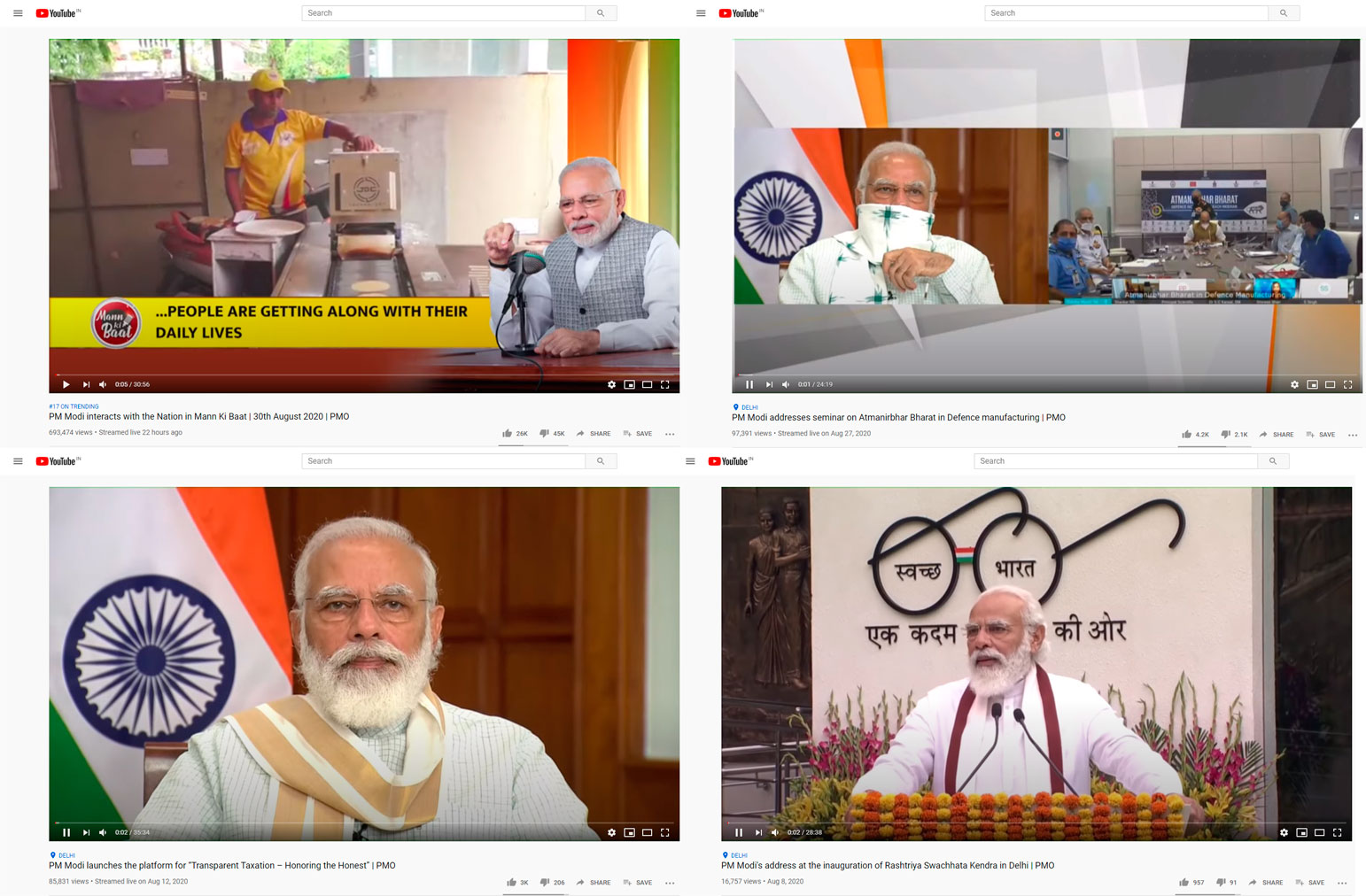
Prime Minister Narendra Modi launched a transparent taxation platform, “Transparent Taxation – Honoring the Honest” on 13th August 2020. During the launch, Finance Minister Nirmala Sitharaman and PM Modi addressed the nation informing about the platform and the changes it will bring in the taxation mechanism in the country.
Starting the program, FM Sitharaman said that today is the landmark day in the history of tax administration. Following the vision of the Prime Minister to empower the taxpayers, to develop a transparent system and to honour the honest taxpayer, the Central Board of Direct Taxation (CBDT) has given a framework and developed order in the form of this platform.
This platform brings in a transparent, efficient and accountable tax administration. “It uses technology, data analytics and also uses Artificial Intelligence. It eases the compliance burden. It brings in fair, objective and a just system,” she added. There will be no direct interaction between the department and the taxpayer.
She said that the Income Tax department had undertaken several reforms that would have been considered a significant milestone in a normal era.
Features of “Honoring the Honest” platform
Faceless assessments
Faceless appeals
Taxpayers charter
Any assessment outside faceless assessment will be invalid.
Any assessment without DIN will be invalid.
No intrusive or survey actions by field officers.
Selection only through system using data analytics and AI
Automated random allocation of cases irrespective of the city of the tax payer.
No Physical interference.
Features of “Honoring the Honest” (Images from @/NSitharamanOffice Twitter account)
PM Modi said that the trend of structural reforms taking shape in the country had reached a significant point with the launch of “Honoring the Honest” platform. This platform has major reforms such as Faceless Assessment, Faceless Appeal and Taxpayer Charter. Faceless Appeal and Faceless Assessment are applicable from today while Taxpayer Charter will start functioning from 25th September, the birth anniversary of Deen Dayal Upadhyay.
इस प्लेटफॉर्म में Faceless Assessment, Faceless Appeal और Taxpayers Charter जैसे बड़े रिफॉर्म्स हैं।
PM Said, “though the tax system is becoming faceless, it will assure Fairness and Fearlessness to the taxpayer.” In the last six years, the focus of the government was on the major reforms that are banking the unbanked, securing the unsecured and funding the unfunded.
“Honoring the Honest- ईमानदार का सम्मान”
Prime Minister said that taxpayers play an important role in building the nation. When the life of a taxpayer becomes easier, he moves ahead, and the nation moves forward with him. This new platform is in sync with the government’s vision of Minimum Government and Maximum Governance. It is a significant step in reducing the interference of the government in a taxpayer’s life.
Honoring the Honest- ईमानदार का सम्मान।
देश का ईमानदार टैक्सपेयर राष्ट्रनिर्माण में बहुत बड़ी भूमिका निभाता है।
जब देश के ईमानदार टैक्सपेयर का जीवन आसान बनता है, वो आगे बढ़ता है, तो देश का भी विकास होता है, देश भी आगे बढ़ता है: PM @narendramodi#HonoringTheHonest
“Today, we are removing process and power centric structure of every policy and making it people-centric and public friendly. It is the new governance model of India, and we are getting favourable results,” he added.
He said that the people of India understand their duty as a taxpayer. He added that the change in the mood of the taxpayers is not because of the strictness or punishment. He said there was a time when decisions taken under compulsion were projected as reforms. They did not show the desired results. The government has changed the thinking and approach. Now reforms are policy-based and holistic. These reforms build the base for future reforms. “It is a continuous process, and the government is bringing more reforms as required,” he said.
हमारे लिए Reform का मतलब है, Reform नीति आधारित हो, टुकड़ों में नहीं हो, Hollistic हो और एक Reform, दूसरे Reform का आधार बने, नए Reform का मार्ग बनाए।
PM Modi said that the taxation system was developed under British before independence. Though the previous governments made changes in the structure of the taxation system in India, the base remained the same. India needed fundamental and structural changes in the tax system that could not happen to the extent required. “When there is complexity, compliance becomes difficult.” He added. When there are lesser laws and regulations, taxpayers become happy, so does the nation. In the last few years, the government is working in the field, and GST is one of the finest examples of reforms brought by the government.
जहां Complexity होती है, वहां Compliance भी मुश्किल होता है।
कम से कम कानून हो, जो कानून हो वो बहुत स्पष्ट हो तो टैक्सपेयर भी खुश रहता है और देश भी।
PM Modi said that there was a time when the government used to appeal in High Court for the cases involving revenue of Rs.10 lakhs. Now, the government has set a limit of Rs.1 crore for the high court and Rs.2 crore for the Supreme Court. The idea is to solve maximum cases outside court. The results are favourable, and more than 3 lakh cases have already been cleared.
The taxation system has been simplified for the taxpayers. Now there is no tax for income less than 5 lakh. Taxes for the remaining slabs have also been reduced. India is among the nations with the lowest corporate taxes. “The government is working on making the system seamless, painless and faceless. The idea is to help the taxpayers in understanding the system rather than confusing them,” he added.
कोशिश ये है कि हमारी टैक्स प्रणाली Seamless हो, Painless हो, Faceless हो।
Seamless यानि टैक्स एडमिनिस्ट्रेशन, हर टैक्सपेयर को उलझाने के बजाय समस्या को सुलझाने के लिए काम करे। Painless यानि टेक्नॉलॉजी से लेकर Rules तक सबकुछ Simple हो: PM @narendramodi#HonoringTheHonest
Now, with the new system, the scrutiny cases, notices, surveys etc. will not be handled by the tax department of the city of the taxpayer. The computer will randomly select the tax department of another city to handle the case. The order form that department will be reviewed by the tax department of another city that has been picked up by the computer randomly.
अब टैक्सपेयर को उचित, विनम्र और तर्कसंगत व्यवहार का भरोसा दिया गया है। यानि आयकर विभाग को अब टैक्सपेयर की Dignity का, संवेदनशीलता के साथ ध्यान रखना होगा।
अब टैक्सपेयर की बात पर विश्वास करना होगा, डिपार्टमेंट उसको बिना किसी आधार के ही शक की नज़र से नहीं देख सकता: PM @narendramodi
Under the Taxpayer’s Charter, the tax department has to handle the taxpayers’ cases with dignity and sensitivity. The department has to trust the taxpayer, and if there is any doubt, it has to be handled with fair and rational methodology.
The Taxpayer’s Charter
PM Modi said that scrutiny figures have come down by four times in the last six years as compared to 2012-2013. Though the number of taxpayers has increased in the last six years, it is still less compared to the total population. PM Modi requested the taxpayers who are capable of paying taxes but are not paying taxes should come forward and join the drive to build new and self-reliant India.