Home Blog Page 5283

UP Power Minister Shrikant Sharma orders to close all drains opening in Yamuna river till February

Power Minister of Uttar Pradesh and MLA from Mathura assembly Shrikant Sharma had a review session regarding problems being faced in his assembly constituency through video conference on Friday. Expressing concern over the situation of Yamuna, he directed the officials that till the month of February, all the drains opening in the Yamuna river will have to be closed.

As per reports, many closed drains are also overflowing or their pumping stations are not functioning properly. The Power minister expressed displeasure over complaints of leakage in the water supply line in Vrindavan and over-filling of dirty drains. He strictly asked the officials why the overflow complaint is being heard despite the new sewage connection that has already been provided. The minister directed the municipal corporation to ensure that all the drains falling in the Yamuna river should be completely closed by the month of February next year.

Sharma told the officials of the municipal corporation, “The progress of the work being done in this regard is also slow. To avoid this, the Municipal Commissioner should regularly monitor and review the works of Jal Nigam. There should no carelessness or lapse indulged in the process. There is no problem of water in any area during the summer. If there is any problem in the matters of drinking water supply, then the water supply from the municipal tankers should be ensured.”

‘We want court and Govt to end Babri Masjid Demolition Case,’ says Ram Mandir dispute petitioner Iqbal Ansari after losing the case

The lead petitioner for the Muslim parties in the Ram Janmabhoomi case, Iqbal Ansari, has now demanded that the Court and the Government must take the Babri Masjid Demolition case to its final conclusion, at the earliest. He said that the matter should be closed ‘without any politics’. He is of the belief that the Special CBI Court must follow the precedent set by the Supreme Court and ‘deliver justice‘ in the Babri masjid case, without further adieu.

Iqbal Ansari reiterated that the Ram Janmabhoomi case had been put to rest and whatever was needed to be done had already been executed by the apex Court. He further added that the Special CBI Court, overseeing the demolition case, must look to deliver speedy closure. Ansari said that no dispute must exist regarding Ram Janmabhoomi and Babri Masjid cases and that communalism must end in the country. “Due to corona, it is time for social distancing but we don’t want distance between Hindus & Muslims,” he was quoted as saying.

A Special CBI Court under Justice SK Yadav is set to record the statements of the accused, namely, LK Advani, Murli Manohar Joshi and Uma Bharti, in the Babri Masjid Demolition case on June 4. The statements of 32 accused will be recorded under Section 313 (Power to examine the accused) of the CrPC (The Code of Criminal Procedure). It is not clear at this point whether they will give their statements via a video link or in-person.

Demand for the ruins of the Babri Masjid

After losing the Ram Janmabhoomi case in the apex court, the Muslim parties had earlier decided to lay claim to the remnants of the Babri Masjid along with its foundation, demolished and left behind by a group of karsevaks on December 6, 1992. The general secretary of the All-India Milli Council, Khaliq Ahmed Khan earlier said, “We will claim debris and foundation of the Babri Masjid as the structure belonged to Muslims. The Supreme Court has admitted that for more than 3 centuries Muslims offered prayers at the mosque.” The Hindu parties in contention had expressed no objection to the Muslim parties’ claim to the ruins of the demolished Babri mosque.

Unlock 1.0: MHA issues guidelines for phased reopening for all activities outside containment zones after the end of Lockdown 4.0

The Union Ministry of Home Affairs on Saturday issued new guidelines for the phased reopening of the country after the fourth phase of lockdown ends on May 31. In addition, the decree also states that the lockdown in containment zones will continue to remain in force for another month till June 30.

The current phase of re-opening, called ‘Unlock 1’, will focus on restarting the economic activities in the country. Here are the detailed guidelines issued by the MHA with regards to the phased opening of the country.

Phase 1

According to the new guidelines, malls, hotels and religious places will open in an incremental manner from June 8. The government will be issuing Standard Operating Procedures (SOPs) for the above-listed activities in consultation with Central ministries/departments concerned and other stakeholders, for ensuring social distancing and to contain the spread of coronavirus.

Phase 2

The government plans to re-open schools, colleges, educational/training/coaching institutions etc, after assessing the current situation and in consultations with States and Union Territories (UT). The Home Ministry order has asked State governments/UT administrations to have consultations at the institution level with parents and other stakeholders. Based on the feedback and state governments’ consultations, a decision on the re-opening of these institutions will be taken in July. The Ministry of Health and Family Welfare will also prepare SOPs for these institutions.

Phased 3

Based on the assessment of the situation, dates for recommencement of activities such as international travel, metro rail, cinema theatres, gymnasiums, swimming pools, entertainment parks, auditoriums, theatres, bars, assembly halls and similar places will be decided. The central government also plans to permit social/political/religious/entertainment/academic/cultural functions and other large congregations in this phase.

Unrestricted movement of goods and persons

The night curfew timings have also been revised from earlier 7 PM to 7 AM to 9 PM to 5 AM. Furthermore, the Home Ministry has removed all the restrictions of the interstate and intra-state movement of people. But the new guidelines concerning night curfew timing will have to be followed.

No separate permission/approval/e-permit will be required for such movements. However, if the states and UTs, based on their assessment and reasons of public health, proposes to control the movement of people, the procedures will have to be complied with, the MHA guidelines say.

National Directives for COVID-19

The containment zones will be demarcated by the state/ UT governments, after taking into consideration the guidelines issued by the Health Ministry. Within the containment zones, strict perimeter control shall be maintained and only essential activities will be allowed.

The National Directives for Covid-19 management will continue to be followed throughout the country, to ensure social distancing, says the latest order issued by the MHA.

States have been given the liberty to decide the activities they want to restart outside the containment zones. The new guidelines also say that the states and UTs, based on their assessment of the current situation, may forbid certain activities outside the containment zones, or impose restrictions as it deems necessary.

Prohibitions for the elderly

People who are most susceptible to the menace of coronavirus, i.e those above 65 years of age with underlying co-morbidities, pregnant women, and children below the age of 10 years, have been advised to stay indoors, except for meeting essential requirements and for health purposes.

Spy network using illegal VOIP exchange to gather information on Indian Army’s movement busted in Mumbai

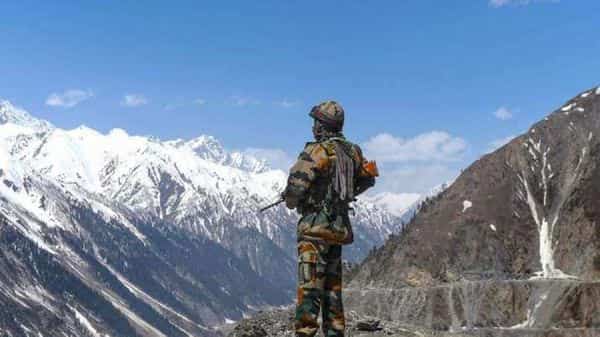
While the forces of India and China are standing face to face in the Union Territory of Ladakh, the military intelligence and Mumbai Crime branch have exposed an illegal Voice Over Internet Protocol (VOIP) telephone exchange in Mumbai. According to reports, this is the biggest spy network using VOIP telephony to be busted in India.

Security forces had suspected about this exchange after several security officials had received calls from suspected numbers in the last one month. Significantly, this year in the month of May, many officers associated with security forces had received calls from suspicious telephone numbers in which important information related to Ladakh and important defence establishment was sought from them.

Some officers even received calls from many suspicious numbers in which important information regarding the defence establishment from Ladakh was also sought. Those who sought information had given fake identity, so the role of ISI in this matter cannot be denied.

Security forces recovered 191 SIM cards, laptop modem, antennas, batteries and connectors used for illegal VoIP exchange. 71 of the 191 SIM cards were found active.

Investigations have revealed that such VOIP exchanges being run in Mumbai received calls from Pakistan which were converted to local numbers and routed to numbers in Kashmir and Ladakh. The calls were made with efforts to gather intelligence from the officers and jawans associated with the security forces.

In this exchange, international voice calls were converted into local calls through SIM boxes made in China. These SIM boxes used a dynamic IMEI system which makes tracking them very difficult. The system has been declared illegal by the Telecom Regulatory Authority of India. Till now the investigation has also revealed that the telecom department has lost crores of rupees through these exchanges.

“The exchanges which converted international voice calls originating from Pakistan into local GSM calls using the Chinese SIM Boxes (boxes fitted with GSM SIM cards of local cellular service providers) were busted in a police raid on Thursday. These SIM boxes also used dynamic IMEI system, which made them difficult to be tracked,” sources in security forces said. Apart from Pakistan, calls were received from other places like Dubai, Qatar etc also.

One accused has been arrested in connection with the illegal exchange and an investigation is underway to ascertain the identity of other individuals involved in the network and locations of other similar exchanges that may be present.

Three Indian Companies get licenses from NASA to manufacture ventilators developed by the space agency for coronavirus patients

Three companies of Indian origin have been given license by the National Aeronautics and Space Administration (NASA) for the purpose of manufacturing its indigenously developed ventilator for the coronavirus patients.

NASA stated on Friday that the three Indian companies are Alpha Design Technologies Pvt Ltd, Bharat Forge Ltd, and Medha Servo Drives Pvt Ltd.

Apart from these, 18 other companies, out of which eight are American and three companies of Brazil have been permitted to manufacture the device.

The NASA has developed a ventilator, especially for coronavirus patients, at its Jet Propulsion Laboratory in South California. The engineers of JPL designed a special ventilator named VITAL in a little over a month’s time and received ‘Emergency Use Authorization’ from the Food and Drug Administration on April 30.

The Space organization said, “The VITAL (Ventilator Intervention Technology Accessible Locally) equipment uses one-seventh the parts of a traditional ventilator, relying on parts already available in supply chains.”

The high-pressure ventilator offers a simple affordable option for treating critical patients in place of traditional ventilators for those with the most critical symptoms of COVID-19. NASA said, “Its flexible design means it also can be modified for use in field hospitals.”

John Alkalai, manager of the JPL Office of the strategic partnership said, “The VITAL team is very excited to see their technology licensed. Our hope is to have this technology reach across the world and provide an additional source of solutions to deal with the on-going COVID-19 crisis.”

NASA stated that the VITAL was developed after input from the doctors and device manufacturers. A prototype of the JPL device was successfully tested by the Human Stimulation lab in the Department of Anesthesiology, Perioperative, and Pain Medicine at Mount Sinai on April 23. The design uses compressed air and can be easily deployed by a greater range of hospitals. It was recently tested at the UCLA simulation center at Los Angeles.

NASA added, “A high-fidelity lung simulator tested almost 20 different ventilator settings, representing a number of scenarios that could be seen in critically ill patients in an intensive care unit.”

Dr. Tisha Wang, who is the clinical chief of the UCLA Division of Pulmonary and Critical Care Medicine said, “VITAL performed well in simulation testing with both precise and reproducible results.”

A media statement said, “In addition, the setup and operation of the ventilator were quick and user-friendly. The UCLA team commends JPL for actively contributing to the COVID-19 response and successfully addressing one of the key medical needs in the sickest group of patients.”

the Wuhan originated Corona virus has affected 5931293 people around the world. And has claimed lives of 3,65,051 people.

513 domestic flights carrying over 39,900 passengers operated on Friday, informs Hardeep Singh Puri

Union Civil Aviation Minister Hardeep Singh Puri informed on Saturday that a total of 513 domestic flights were operated on May 29 and a total of 39,969 passengers were transported via these flights. Moreover, a total of 79,941 people have been to airports on the same day. Between May 25 and May 28, a total of 1,827 flights were reportedly operated. This includes 428 flights on Monday, 445 flights on Tuesday, 460 flights on Wednesday, and 494 flights on Thursday.

Aviation industry sources had revealed that around 3,000 flights operate in India on a daily basis, prior to the nationwide lockdown that was imposed owing to the Coronavirus outbreak. As per the Directorate General of Civil Aviation (DGCA), about 4.12 lac passengers commuted daily via flights during the said period.

States with a high number of active Coronavirus cases have been directed to operate limited flights. They include West Bengal, Maharashtra, Andhra Pradesh, and Tamil Nadu. Owing to the relief work carried out in the State following cyclone Amphan, it meant that West Bengal began operating flights only on May 28. As per reports, 16 asymptomatic Coronavirus patients had been identified on 7 different flights, since the operations began.

Domestic Operations to normalise, post Diwali, says Hardeep Singh Puri

In an interview with the Economic Times, Aviation Minister Hardeep Singh Puri had informed that domestic flight operations would normalise by Diwali i.e. in the month of November. He said, “We will have all our 650 flights operated by Indian carriers.” Puri also stated that the recovery rate from the deadly Coronavirus was higher in India than that of other countries.

The Aviation Minister assured that the sector which had suffered losses amidst the lockdown would recover fast, owing to a huge captive market and the need for passengers to travel. He, however, conceded that the disinvestment plan regarding India’s national carrier, Air India, might be differed.

Interestingly, on Thursday, Karnataka urged the Union Government to reduce the number of incoming flights from the Coronavirus-affected States such as Maharashtra, Gujarat, Tamil Nadu, Rajasthan, and Madhya Pradesh. International flights were restricted on March 14 whereas domestic flight operations remained suspended from March 25 to May 24.

Domestic Flights resume Operations in India

On May 20, the Narendra Modi Government had announced that domestic flight operations would resume operations, in a calibrated manner, from 25 May. The Union Civil Aviation Minister Hardeep Singh Puri said that all the standard operating protocols (SOPs) for passenger movement was also being separately issued by the Ministry of Civil Aviation. The SOP stated that initially only one terminal should be used in airports, with more than one terminal. The larger terminal would be reduced to ensure proper sanitation, considering the limited availability of material resources.

Army hands over minor girl gang-rape accused Shahnawaz Sheikh to police, moved from Siliguri to Sahibganj

In a major breakthrough, the police have arrested all the accused in connection with a gang-rape case of a Hindu minor that happened in Jharkhand’s Sahibganj district. The third accused, Shahnawaz Sheikh, who served in the Army in Siliguri was subsequently handed over to the police. Following this, the police took him from Siliguri to Sahibganj on transit remand.

On May 25, Idgar Sheikh, Shahnawaz Sheikh and Ekramul Sheikh viciously raped a Hindu minor girl who had gone to a garden to pick mangoes. The incident had sparked off communal tensions in the region as the victim and the perpetrators belonged to different religions. It was reported that Shahnawaz works with the Indian Army, and all the accused had fled the scene after the crime on a Bullet motorcycle bearing Army markings.

Ekramul was the first to be arrested in the gang-rape case. Following Ekramul, Idgar was also nabbed by the police on 27 May. After Idgar’s arrest, Sahibganj SP Anuranjan, in a conversation with OpIndia, confirmed that the third accused- Shahnawaz is associated with the Army. He had said that he is part of the Army Medical Corps team and efforts are underway to arrest him.

The media reports had earlier reported that Shahnawaz had come home during Eid holidays and returned to his duty following the incident. Tempers ran high as angry people pulled one of the accused’s father out of his house before thrashing him. Because of the soaring tensions, personnel of Rapid Action Force were deployed in the region to prevent any untoward incident.

The victim had stated in her statement that at around 4:00 pm on May 25, she went to the garden behind her house to fetch mangoes. She was caught by Ekramul who threatened her to slit her throat. She was then taken to a nearby bush where two more individuals were lurking. The victim claimed in her testimony that the two individuals held her when Ekramul Sheikh raped her. The boys then took turns to gang-rape her and after that hastily fled from the scene on a motorcycle. The victim then reported the incident to her parents.

How six years of Modi Sarkar shifted the Overton Window of the country towards Hindutva dominance

The 30th of May marks the first anniversary of Modi Sarkar 2.0. In many ways, it has been the most historic first year of any government on Independent India. Remarkable decisions were taken, historic disputes were resolved and the country definitively oriented itself towards pursuing a different national vision than the one forged by Jawaharlal Nehru.

The 6th year of Modi Sarkar brought to an end a variety of disputes, both major and minor. The abrogation of Article 370, the Ram Mandir verdict and the Citizenship Amendment Act, undoubtedly, has been the defining trinity of the second term of Narendra Modi as Prime Minister thus far. But such historic decisions were not borne in a vacuum. The foundation for it was laid during his first term.

Ever since he took office, Narendra Modi’s governance has geared itself towards shifting the Overton Window of the politics of the country. It can be said without a shadow of a doubt that when he took office, Hindutva was still the counterculture in the corridors of power. But in six years, he along with Home Minister Amit Shah has made Hindutva the dominant political force in the country.

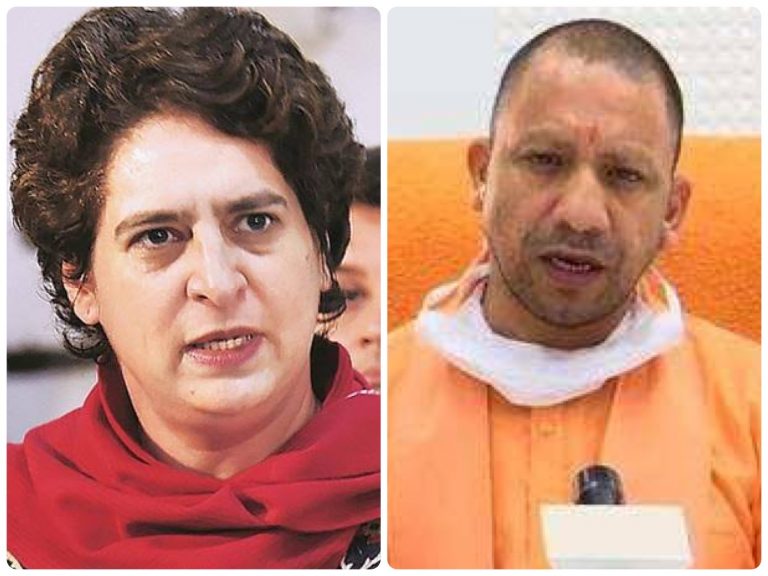
Towards that effect, the biggest decision towards the shifting of the Overton Window was the appointment of Yogi Adityanath as the Chief Minister of Uttar Pradesh. Until that moment, despite his significant political influence in eastern Uttar Pradesh, the Warrior Priest of Gorakhnath was still a pariah in political circles. But one move by Narendra Modi and Amit Shah altered the entire dynamics of what constitutes mainstream politics.

In retrospect, the appointment of Yogi Adityanath as the Chief Minister of Uttar Pradesh was perhaps the Big two of the BJP paying homage to the contribution made by the Gorakhnath Math towards the Ram Janmabhoomi Movement. Mahant Digvijaynath and Mahant Avaidyanath played a critical role in ensuring the Return of the King of Ayodhya to his sacred abode in Ayodhya.

As momentous it was, the elevation of Yogi Adityanath was only the highlight and not the whole reel of the manner in which Modi Sarkar shifted the Overton Window of Indian politics towards a more Hindu oriented approach. With every of his, Narendra Modi made it perfectly acceptable to be ‘Hindu and Proud’ in mainstream political discourse.

It may appear unthinkable now but six years ago, it was not the case and the entire political machinery worked towards shaming Hindus for their religious identity. The enemies of Dharma sought to make casteism and oppression of women the defining identity of Hindu philosophy. Narendra Modi liberated politics from such toxicity.

With each visit to a great Hindu temple, with his proud public demonstration of his Hindu identity, Narendra Modi made it clear once and for all that we shall no longer surrender our nation and its people to the false song of liberalism. Simultaneously, great emphasis was placed on the celebration of the Kumbh Mela as truly a national festival.

Another highlight of the first five years of Modi Sarkar was the defence of the traditions of the Sabarimala Temple. Yes, it could be argued that an ordinance could have been brought to settle the matter but that is a discussion for another day. But the fact is, the Prime Minister and the party came out unequivocally in the defence of Sabarimala Temple’s traditions and made it clear that the traditions were sacrosanct. Other party leaders also criticised the judiciary for interfering with Hindu traditions without any due reason.

At the same time, nationalist fervour gained momentum across the country as well. With political will, Modi Sarkar made it politically nonviable for parties to compromise in matters of national interest. Simultaneously, it was made clear to Pakistan that a game of dossiers won’t be played should it pursue its misguided terrorist adventurism.

The fervour was such that following the Pulwama Terror Attack, it was not a question of if Narendra Modi would take strong action against Pakistan, the only was when. And the answer came in the form of the Balakot Airstrikes. It is indeed a great shift in the Overton Window of a country’s politics when the Prime Minister is expected to pursue military action against Pakistan in retribution for the blood of the soldiers that was spilt. Gone are the days of UPA when Indians bayed for action against Pakistan but none was taken.

Another significant event of Modi Sarkar 1.0 was the crackdown on foreign funded NGOs and ‘civil society organisations’ that align themselves closely with Naxalites. ‘Urban Naxals’ was added to mainstream lexicon, quite a far cry from the days when such people used to dictate national policy and write our laws in the days of the UPA.

Nevertheless, the first five years of Modi Sarkar were spent on trying to lay the foundation for what was to come. But the hints were clear. And that is why we said that Nehruvian Secularism will not survive another five years of Modi Sarkar. And the events of the past year have only proven us correct.

It all began, of course, with the anti-Triple Talaq Bill. It was for the first time that a government of Independent India refused to cower before the Maulanas and Maulvis of the Muslim community. There was great opposition to it but Modi Sarkar refused to budge from the stand it had taken and ultimately, saw the path to the very end.

A sacred pillar of Nehruvian Secularism was desecrated by Modi Sarkar through the anti-Triple Talaq Bill. And it was a thing of great beauty. It was made clear once and for all that Islamic fundamentalists will not be permitted to run the roost in India any longer. And of course, what followed afterwards was the utter obliteration of Islamic fundamentalism from the corridors of power.

Currently, the Home Ministry under Amit Shah is busy making sure that the people responsible for orchestrating violence across the country in the aftermath of the Citizenship Amendment Act are brought to justice. ‘Activists’ associated with the far-left group Pinjra Tod have been arrested and numerous ‘students’ of Jamia Milia Islamia are languishing in jail as well for their alleged role in the violence.

And yet, there is still a lot of dissatisfaction among Hindus regarding the current turn of events. Article 370 is gone, CAA is here and Ram Mandir construction is underway and yet, people are not satisfied. But then, it is human nature to not remain satisfied and this is how it should be. It is both a testament to the quality of the leadership at the top and the desire to accomplish greatness of Indians that people are still not completely satisfied with those in power. And as I said, it is how it should be. People should always be demanding of their leaders.

Even so, the extent to which the Overton Window has shifted towards Hindu oriented politics cannot be denied. It is impossible now for a political party to insult Hinduism and still harbour dreams to play an important role in national politics. Recently, even demands for the abrogation of Article 30 that discriminates against Hindu were being made by people, led by none other than Kailash Vijayvargiya, the national general secretary of the BJP.

We have come a long way, yes, but a long way remains to be traversed. A lot has been accomplished but even more remains to be achieved. But it should be remembered that if we can stand today and hope for the things that we do, it is solely because Narendra Modi and Amit Shah and others have demonstrated that even more is possible and more can be achieved. It is because of them that we can stand here and still not be satisfied with what has been accomplished thus far.

Rajasthan CM Ashok Gehlot peddles lie about Shramik Special Train taking 9 days to reach destination days after the fake news was debunked by Railways

On 30 May, Congress leader and Rajasthan Chief Minister Ashok Gehlot launched an attack on Railway Minister Piyush Goyal alleging mismanagement in running of Shramik Special Trains. He tweeted that 40 such trains have been delayed, and one of them took as many as nine days to reach its destination. He also claimed that 80 deaths have been reported in the special trains run for migrants so far. He remarked that the Prime Minister should make Goyal a minister without portfolio, as he has never heard such mess in Indian Railways ever before.

The claims made by Gehlot are not new, for last few days some journalists opposition politicians are spreading a rumour a train from Surat in Gujarat to Siwan in Bihar took 9 days to reach the destination, against the scheduled time of two days. Some media houses had reported the train had started on 17th May, but reached Siwan on 25th May, after which it went viral on social media. But there not a single eyewitness that had confirmed this, no passenger of that train had said that their train took nine days to travel.

The Rajasthan Chief Minister made a claim which has already been debunked by the Railways. On 26th May itself, the Railways have clarified that the claim is not true, and 2 trains from Surat reached Siwan on 25th in two days, instead of 9 days as reported in some media reports.

Moreover, on 28 May, the Railway Board Chairman Vinod Kumar Yadav again denied the claims about Shramik Special Trains, some of which were repeated by Gehlot today. Addressing a press conference, he said that the concerned train had reached Siwan in two days, and he has all the details of the trains. He also dismissed the claim that the train was ‘lost’, saying trains do not get lost.

Responding to claims of delayed Shramik Special Trains, Yadav had confirmed that the number of trains which were delayed is miniscule compared to the total number of trains run. He said that 3840 trains were run by Railways between 20 and 24 May, and only 71 of them were delayed, which means only 1.8% trains were delayed.

The chairman said that these 71 trains were delayed because their routes hade to be diverted. He informed that a large number of trains were going to UP, and hence some trains were sent by alternate routes through neighbouring states. He asserted that no train was delayed by 9 days, and only four trains needed more than four days, for reasons like landslide. He said that all other trains travelled on the average mail-express train speeds, and only 10% trains were delayed by 2 to 5 hours.

Read- Opposition parties choose politics over human life, states run by them have approved far less Shramik Special Trains compared to NDA run states

He said that reports of trains getting lost, or trains taking 9 days to reach destination are fake news, and requested the media to not spread such false information.

Railway Minister Piyush Goyal also tweeted that no Shramik Train has taken 9 days to reach, and no train lost their way.

Twelve Coronavirus patients die in a span of a week in BMC-run Mumbai hospital due to shortage of oxygen: Read details of the report

In a shocking case of alleged negligence by authorities in Maharashtra, at least 12 people have died in a span of two weeks in a BMC-run hospital in Jogeshwari, Mumbai due to a shortage in oxygen supply to coronavirus patients, Mumbai Mirror reports.

According to the reports, about 90 per cent of patients admitted at a 200-bed facility at HBT Trauma Center in Jogeshwari require oxygen supply. A resident doctor said that out of the 25 beds in the ICU, there are at least 15 machines, which is running on low oxygen pressure.

Patients died due to low oxygen supply: Resident doctors

Narrating an emergency situation in the facility last week, a resident doctor recalled how two patients had died in the hospital due to low Oxygen supply.

The doctor said, “Two patients were gasping for breath and needed 8 to 10 litres of oxygen per minute. However, the supply was so slow that the screen was continuously giving low-pressure O2 alerts, and by the time I tried to fix the pressure with the hospital technician, both patients had died”.

Reportedly, one resident doctor has been is in severe mental pain after he witnessed a 51-year-old patient Imran die due to shortage of oxygen.

Recalling the tragic death, the doctor reportedly said, “This was his fourth day in the ICU. He was doing much better when he first came. His oxygen saturation level was also improving. I was sure he would be out of the ICU soon. That day, at least seven ventilators were showing low pressure, so I went to call the technician. By the time I returned in five minutes, Imran was dead.

“‘Low oxygen pressure’ was visible on his screen. His death made me very sad. ICU has become a disappointing place for us. Nobody wants to be on duty here only because of these conditions,” the resident doctor shared his ordeal to Mumbai Mirror by expressing the mental pain.

That doctor also asked what is the point of putting so much efforts, if we cannot save the lives of patients because of such issues.

In a similar heart-wrenching incident at the hospital, on Thursday, a 51-year-old Vakola resident gasped in the hospital. However, the patient could not be admitted to the hospital as there were no hospital beds with oxygen supply, the resident doctor said.

According to the doctors who are treating coronavirus cases, most of the patients suffer from moderate to severe breathing difficulty. Every coronavirus patient requires at least 3 to 10 litres of oxygen per minute. “Now you can imagine the need for oxygen in the hospital,” an ICU doctor said.

After apprising the grave situation in the hospital by writing he several complaints, the doctors at the HBT Trauma Center have now written a letter to the medical superintendent of the hospital – Dr Vidya Mane, saying that they should not be blamed for deaths of coronavirus patients in the ICU.

In the letter, the doctors have also written about their degrading mental health after seeing so many patients die due to lack of oxygen supply.

Hospital is struggling to meet Oxygen demand: Medical Superintendent

Meanwhile, Dr Vidya Mane, the medical superintendent of the hospital even though admitted that the hospital was facing a serious shortage of oxygen, however, denied any deaths due to low oxygen supply.

“When we started 50 Covid-19 beds, the requirement was 100 jumbo oxygen cylinders, now with 200 beds, we have increased the cylinder to 350. It is true that our demand is high, as we are currently getting many critical cases, nearly all of them need oxygen support. Patients have died because they reached the hospital at a critical stage,” said Dr Mane.

She also added that the hospital has placed an order for 500 cylinders on Thursday soon after the resident doctors brought the issue to her attention.

Dr Mane further stated that the HBT trauma hospital cannot fit a large oxygen liquid tank due to fire safety norms. However, she said, the hospital administration is trying to solve the problem by setting up a medical oxygen generation plant.

Failing health infrastructure in Maharashtra

The appalling health infrastructure in the state of Maharashtra, especially in Mumbai, was yet again evident few days back after shocking videos had emerged where it was seen how coronavirus patients and other emergency patients were made to share beds due to a shortage in capacity.

The coronavirus patients being treated at Mumbai’s Sion hospital emergency ward were seen sharing beds, with two people being allocated to a bed. With a rising shortage in beds, the patients, many with coronavirus symptoms are also sharing a single oxygen tank.

The videos of the patients lying almost on top of each other, sleeping on shared stretchers or just lying on the floor had also gone viral some days back.

Earlier, another chilling video of the Sion hospital had gone viral on social media in which it was clearly seen that corpses were kept in the ward in which the patients of coronavirus were admitted. The dead bodies of coronavirus patients were kept next to the patients under treatment in a Hospital of Mumbai in the Sion area.

Maharashtra remains the most-affected state in the country, with nearly 62,228 cases have been reported from the state. On Friday, the state saw 2,682 fresh cases. The state has also reported 2,098 deaths, 116 deaths came on Friday alone.

Meanwhile, Mumbai city has alone reported 1,437 fresh on cases on Friday as its tally crossed the 35,000-mark to reach 36,710 cases. The city has also reported 38 deaths on Friday to take its toll to 1,173.