Home Blog Page 5502

Director of AltNews Nirjhari Sinha shares old picture to protest against PM Modi’s call to stay home amidst coronavirus outbreak

Even as the country grapples with the looming threat of coronavirus, some perverse individuals have, in this time of national crisis, continued peddling their propaganda against PM Modi. In one such instance, faulty ‘fact-checker’ AltNews Director Nirjhari Sinha expressed her disapproval of PM Modi’s decision to lock down the country for 21 days to battle the spread of the virus that threatens to overwhelm the public health system in the country.

Ms Sinha tweeted a photo of a seemingly destitute and homeless family with a caption “What is the PM’s message for them? Stay at home..don’t venture out!”

While Ms Sinha’s sardonic tweet underscores the grim reality that there are still a great number of people without a roof on their heads but it also highlights her obstinate and depraved desire to imperil lives of millions of Indians by opposing total lockdown of the country just because it was ordered by PM Modi. It was, however, disingenuous of Ms Sinha to overlook the fact that PM Modi instituted PM Awaas Yojana, a scheme through which he plans to provide housing to everyone by 2022.

Read: AltNews’ Pratik Sinha helps New Yorker water down Pulwama attack, cast aspersions that Balakot airstrike was fabricated

In addition, while Nirjhari Sinha objected to PM Modi’s call for a blanket lockdown for 21 days, she apparently shared an old picture from December 2016 to push her anti-Modi hatred. According to Ms Sinha, PM Modi’s decision to announce total lockdown is inappropriate and that people should be allowed to move around as per their will and allowed to freely transmit the deadly contagion, endangering their own lives as well as those who come in their contact.

The lethal coronavirus had been rampaging across the world with fatalities reaching above 15000 and the figure of those affected by the contagion crossing 350,000-mark. Italy, the worst-hit country by the pandemic has witnessed deaths of more than 4800 people. Countries across the world who are now facing the menace of coronavirus are imposing sweeping restrictions to curb the spread of the disease and alleviate the burden on their respective public health systems and bring down the mortality rate.

However, pathological hatred towards Modi has caused Nirjhari Sinha to take leave of her senses, questioning the measures which have been imposed by various advanced countries who are battling the scourge of coronavirus. In the absence of a potent vaccine to eradicate covid-19, doctors across the world have advocated stringent measures such as total lockdown to thwart the ominous spread of the disease. This conventional wisdom and expert opinions, however, are anathema for the propagandists whose sole agenda is to promote their propaganda, even if it entails jeopardising lives of millions of people just to oppose PM Modi.

Read: “Media Houses that have amplified a report by so called ‘Fact-Checker’ AltNews may take note”: Prasar Bharti debunks fake narrative on JNU violence

Earlier yesterday, Alt News co-founder Pratik Sinha was found sharing misinformation and lies about India’s readiness to fight Wuhan coronavirus to cast the Indian government in a bad light. Pratik indulged in sharing rumours about Wuhan coronavirus as he retweeted a tweet in which Twitter user Vikrumaditya alias Vasundhara claimed that he/she (in the picture) is wearing the same mask since a week as doctors don’t have enough N95 masks, the masks which are more efficient in preventing the spread of the Wuhan Coronavirus. The tweet was subsequently deleted and soon afterwards, Vikrumaditya alias Vasundhara tweeted a clarification that he/she is not affiliated to any political party or any group.

The Taliban-US treaty: Will it sound the death knell for Pakistan?

GAS OVER TAKING OIL

With the use of natural gas for power generation skyrocketing during last over one decade, the share of energy produced from gas has also significantly increased with gas now comprising about 35% of the fuel mix. This rapid escalation in the dependence on gas presents a new challenge. This has led to increasing the quest for the same and subsequent dominance of the market by world powers. The largest known gas reserves today are found in Iran, Russia, Qatar and Turkmenistan, in that order. 

Turkmenistan, unlike the others, does not have a well-developed market and is an opportunity in the making. The gas reserves of Russia and Iran are out of the sphere of influence of the United States (US) and perhaps, that is why the American Energy Giants have a special interest in gaining access to this landlocked Central Asian country’s gas reserves. The geographical location of Afghanistan thus offers immense opportunity for the US to draw out gas reserves of landlocked Turkmenistan in Central Asia. Turkmenistan shares its border with Russia in the North, Afghanistan to the South East, Iran to the South and South West and Caspian Sea to the West.

MOST SIGNIFICANT CORRIDOR

Gas reserves of Turkmenistan have been on US radar since long. The US had four options to transport the gas. The first option was to transport through Russia, but that would have greatly enhanced Russia’s political and economic control over the Central Asian Republics. The second option was to lay a pipe through Iran, but that would have enriched a regime which the US was seeking to isolate. The third option was to route through China, but that would have been a much longer route and would have been prohibitively expensive. The fourth and the last option was to pump it through Afghanistan into Pakistan’s ports further on to the world market through the Arabian Sea. 

In December 1997, the US chose the fourth option and not many would remember that the US had then invited the Taliban to Texas as US State Guest for the said pipeline talks. In fact, a year later in 1998, Dick Cheney, later Vice President of the US during the 2001 Afghan war,  while serving as Chief Executive of a major oil company, had even remarked, ” I cannot think of a time when we have had a region emerge suddenly to become as strategically significant as the Caspian. But oil and gas are worthless until it is moved. The only route which makes both political and economic sense is through Afghanistan.” Perhaps, thus, Afghanistan and Pakistan became central to the US plan for an alternative to Russian and Iranian oil and gas. 

US intent of drawing gas from this region, therefore, could have been successful only by laying pipeline either through Afghanistan into Baluchistan province of Pakistan on to the Arabian Sea or linking it through the existing Turkmenistan–Iran pipeline in the Northern Region of Iran going into Turkey and the rest of Europe. Each of the two options had its own problems. Going through Afghanistan into Pakistan and up to Gwadar Port, involved the presence of the Taliban in Afghanistan and the other option of linking through the existing Turkmenistan–Iran pipeline involved dealing with a perceived hostile regime in Iran. Thus, the way forward was either through exerting pressure on the Iranian Government with an option of military conflict for a regime change or clearing Afghanistan of the Taliban. With the passage of time, China’s BRI Project coming up in Baluchistan going up to Gwadar Port since 2014, further added to the problem. Thus, the current unfolding strategy of the US in the Middle East can be seen through the combined prism of these two options. 

THE BIG BANG DEAL

Finally, after 18 years of bitter conflict, the US and Taliban have signed a deal on 29 February 2020. This deal, followed by the gradual withdrawal of US troops from Afghanistan, has now opened the door to talks between the Taliban and the Afghan Government. The Taliban is expected to commence talks with various other Afghan groups including the Afghan Government in Kabul to ensure a permanent ceasefire and working out a road map to install a new government.

But the question now is, who is going to be the representative of Afghan Government at various International level organisations form the new Government in Kabul – the faction led by the incumbent Ashraf Ghani or the other one by Abdullah Abdullah?  Both held separate swearing in ceremonies and claimed to have formed the Government. The ongoing dispute, therefore, renders the Afghan Government weak and divided at this crucial stage when the US is looking at withdrawing its troops post agreement with the Taliban. The Taliban is also expected to ensure that Afghan soil is not used by any group to threaten the security and other interests of the US and its allies. This may sound simple and straight forward, but is it going to be so? However, Pakistan somehow, appears to be upbeat and cheering up, perhaps because the ISI has close ties with Sirajuddin Haqqani, the deputy leader of the Taliban. 

Though the US expresses hope that Afghanistan will get stabilised once all groups including the Taliban and the Government in Kabul come to a permanent settlement through talks, but the majority do not feel so due to the presence of Islamic State (ISIS) resulting in incalculable future scenarios. The ISIS has already claimed responsibility for the blast carried out during the oath ceremony of the two leading Presidential candidates. ISIS has been very active in Afghanistan since 2014 and many former Taliban fighters have pledged allegiance to the black flag of the caliphate. ISIS virtually took control of complete Nangarhar Province leading to a number of violent clashes between them and the Taliban. ISIS is known to be having no dearth of weapons. Russia and its allies including Iran have routinely been accusing the US of inadvertently or deliberately backing ISIS, though the US has denied the accusation of having any such collusion. The prevailing feeling of fear is, perhaps, vindicated by the US too, expressing the need to keep a watch post withdrawal of US troops, by maintaining counter-terrorism units in Afghanistan essentially to ensure that attacks like Al Qaeda’s strikes of 2001 are not repeated.

PIPELINE POLITICS

It is believed that once the Taliban and the Government in Kabul finally come to a settlement, then at least six thousand prisoners will be released. Out of these, five thousand would be from the Taliban who have been in custody of the Kabul Government and the balance would be the security personnel in the custody of Taliban. Can anyone guarantee that these five thousand Taliban prisoners on being released, will be rehabilitated by Government of Afghanistan and the Taliban?

Though the Kabul Government has categorically said that no more private military troops will be hired, but in the backdrop of continued ISIS existence over so many years, it is natural to believe that when the US soldiers withdraw, they may be replaced by  American Private Military contractors, like Academia, for guarding US interests.

Having settled with the Taliban, ‘ the larger interests’ of US as part of next step, maybe now looking at creating a safe and friendly space for extending the much-awaited US gas pipeline from Turkmenistan to Taliban controlled Afghanistan and further on to Baluchistan which is now an important cog in the Chinese BRI project in Pakistan, linking it to the warm waters of the Arabian sea through Gwadar Port. The current revival of the Baluch freedom movement is detrimental to the interest of China and therefore, an all-out effort by Pakistan army is being made to crush the uprising.

The US-Taliban deal followed by committed withdrawal of the US Military from Afghanistan, is being seen as a major success in Pakistan and a reason for celebration. Is the Government of Pakistan really so naïve to be unable to analyse and foresee the negative fallout of this deal engulfing their own country or have they been misled into believing some illusive dream?

BOILING PAKISTAN

Baluchistan is the largest province of Pakistan, the others being Punjab, Sindh and Khyber Pakhtunkhwa, covering almost three thousand five hundred square km and 43 percent of the total area, but having only five percent of the total population of Pakistan. Strategically and geopolitically, by virtue of its location, Baluchistan provides access to the energy-rich regions of Central Asian countries. It also has vast deposits of natural resources such as coal, oil, copper, gold, lead, zinc etc. However, the people of Baluchistan have always felt marginalised, exploited and suppressed at the hands of the Pakistani state. In addition, the CPEC project through Baluchistan has also reinforced a sense of fear in the locals of getting further marginalised by the increasing presence and settlement of Chinese. In the recent past, a few attacks have taken place on Chinese workers where many lives have been lost. After the death of Nawab Akbar Bugti, the movement had significantly slowed down, but since the year 2018, the resurgence of strong and organised Baluch guerrillas is visible. Baluch Liberation Front and Baluch Liberation Army have recommenced armed struggle against Pakistan with renewed vigour putting immense pressure on already stretched out Pakistan Military. The brazen attack on the Chinese Consulate in Baluchistan, killing of Pakistani labourers and Chinese engineers working on the CPEC project, attack on Zaveri Pearl Continental, a five-star hotel in the port city of Gwadar and killing of Pakistan Naval and Coast Guard personnel on Markan Coastal Highway are few examples of a clear indication of the growing ability of Baluch freedom fighters to take it up to further dangerous levels in the near future. 

Pashtuns, the second largest ethnic group in Pakistan mostly confined to North-Western part of the country, have always been bearing the brunt of ‘war on terror’ launched by the Pakistan Military post US invasion of Afghanistan. Many innocents lost their lives instead of the intended terrorists and this led to the rise of Pashtun Tahafuz Movement (PTM). A mass movement led by a charismatic young leader in Manzoor Pashteen gathered storm against the Pakistan Government to seek justice for the innocents killed by the military and their tacit collusion with terrorists. But instead of addressing their grievances, the Pakistan Government chose to crack down on them and even the media went silent on the atrocities committed by the military. Today, the movement has gathered a lot of strength and is likely to go out of control. The movement today has taken a separatist nationalist turn and seeks greater autonomy as a ‘Pashtun state’. The presence of ISIS militants along the Pakhtun-Afghanistan border will only make matters worse for the Pakistan Government in not too distant a future. 

Gilgit Baltistan is also witnessing a new wave of separatist movement gaining ground in the region resulting in a number of deadly attacks and loss of lives. The Nanga Parbat attack undoubtedly underscored the region’s vulnerability to future attacks. Shias have always felt discriminated against and marginalised.  The unopposed rise of Tehreek-e-Taliban Pakistan (TTP) is a clear signal of escalation of worsening situation and weakening of the Pakistan Military in times ahead. Interestingly, Gilgit Baltistan, from where the CPEC enters Pakistan, is connected to the restive Chinese Xinjiang Autonomous Region as also with Kashmir. 

Sindh too, like Baluchistan and Khyber Pakhtunkhwa, is yearning to secure freedom from Pakistani occupation due to prolonged political tyranny and exploitation.  Though the movement initially began in 1948 and peaked in 1972 with demand for total independence, but lacking external support, the movement got contained by the Pakistan Military. Besides suppression of the Sindhi identity and language, the Pakistan government has also imposed a ban on all cultural celebrations within the province. People from other minority religions such as Hindus, Ahmadis and Christians are also facing religious persecution and being forced to convert or move out of the country. Close on the heels of the growing demand for freedom in other provinces, it will not be out of place to anticipate that Sindhudesh Liberation Army too will come into action in the near future. 

THE INEVITABLE FALLOUT

Pakistan must bear in mind that US withdrawal post-signing of US-Taliban peace accord, has actually not solved any existing problem. It has rather left open a Pandora’s box of troubles for both Islamabad and the Kabul Government. Pakistan is already bleeding internally from several thousand cuts. The public image of the Pakistan Army too has hit a new low in the eyes of the masses. They are seen as consuming bulk of the national resources and at the same time, woefully incapable of defending the country from intruders. Within the Army itself, soldiers are getting sceptical and wary of taking action against coreligionists who are believed to be fighting for Islam. While instances of junior officers questioning the prudence, judgement and integrity of senior officers are coming to light, the reason for action taken against a fourth-generation military officer Brigadier Ali Khan undoubtedly indicates sipping in of radicalisation in the forces. 

Pakistan is a poverty-stricken country where over 70 percent of the population lives in villages without the basic amenities of life. They are bereft of shelter, sanitation, drinking water, food and clothing. While the population of Pakistan continues to grow at a rapid rate, literacy rate is decreasing resulting in increasing unemployment. Pakistan having already availed of IMF bailout twelve times since 1980, Imran Khan is now running from pillar to post seeking bailout for the thirteenth time. Pakistan is facing a serious economic crisis on the back of insurmountable fiscal deficit and nil growth. The economy of Pakistan has totally crumbled as also communication barriers and societal divide have increased manifold to dangerous proportions. The Pakistan Government and the Military are known to be dominated by the Pakistani Punjabis who are the most despised lot in Pakistan as of today. In their effort to impose a uniform identity post-independence, the Pakistani Punjabis have tried to crush provincial identities, their unique culture and rich traditions which has led to a sense of lack of identity in Pakistan society torn by ethnic and sectarian divides. All this will now help ISIS to gain ground with the separatist organisations of the troubled provinces drawing parallel with what happened in case of Syria. 

The ISIS growing in space and strength, aided by the internal strife of Baluchistan, Khyber Pakhtunwa, Gilgit Baltistan and Sindh is a distinct possibility. The five thousand Taliban prisoners, if not absorbed in Afghanistan Military or suitably rehabilitated on being released, will find an easy and lucrative employment with the ISIS considering their training, battle experience and indoctrination. ISIS already has three districts of Afghanistan under their full control besides strong foothold in other parts of Pakistan, especially in Baluchistan province.

So, what is there for Pakistan to cheer about the US-Taliban deal?  Rather, it only sounds the bugle of Pakistan getting divided on ethnic lines and failing to exist as a Nation in the not so distant future. Iran too, will not remain unaffected in case Baluchistan becomes an independent nation as this will lead to the demand for Greater Baluchistan involving the Balochis of Iran. Also, with repeated attacks on the Hazaras, someday, Iran may intervene to protect the rights of Shia minorities as they have in Iraq, Syria and Lebanon only to add further fuel to the ongoing feud within Pakistan. 

Interestingly, not long ago, the Indian Defence Minister Shri Rajnath Singh while speaking at a Seminar on 22 September 2019 in Patna on Abrogation of Article 370 in J&K, had very clearly said, “You can see they’re already getting discouraged. Pak PM comes to PoK and says ‘countrymen don’t go to India-Pak border’. I said it’s good because if they do, they’ll not be able to go back to Pakistan. They should not commit the mistake of repeating 1965 and 1971.”  He further added saying that “If they (Pak) repeat it, then they should think what will become of Pakistan Occupied Kashmir…Human rights violations are committed against Balochs and Pashtuns there. If it continues, no power will be able to protect Pakistan from getting further divided into pieces.

Today’s prevailing scenario undoubtedly sounds the bell which our Defence Minister had very unequivocally sounded six months ago. 

TIME TO RECALIBRATE

Since Pakistan is on a self-destruct mode, India needs to work on a long-term military strategy both in Pakistan and Afghanistan. Pulling out of the US troops from Afghanistan and in all probability, replacing them with American Private Military contractor, will be a new reality. Though a decision for not committing of the Indian Armed Forces in Afghanistan had been taken as part of the policy, however, there is a need to enter the vacated space through alternative means and start influencing the outcome. While opening an embassy in Djibouti is a bold strategic initiative, India may also consider raising Private Military Companies through big corporate houses who have huge business investments and assets abroad to protect and let it be contracted by the US to augment their Private Military Troops. Indian Private Military Companies could also be employed to protect Indian assets not only in Afghanistan, but also in other troubled countries of the Middle East and some parts of Africa as well. It must be noted that Private Military Companies have been hired by China to build and operate internment camps in Xinjiang region affected by Uighur Muslims.

As far as Pakistan is concerned, the time to act is Right Now. India must keep a very close watch on all the separatist movements gaining ground in Pakistan and recalibrate its military strategy for the Western border. Exploiting Pakistan’s fault lines under the prevailing circumstances, India must deploy her military might accordingly to strike at the vulnerabilities on short notice at a place and time of own choosing. India also has to prepare herself to rigidly guard against the likely massive influx of refugees from a disintegrating Pakistan so as to not repeat the history of 1971. This is where the recently amended Citizenship Amendment Act, 2019 will become relevant in giving the Indian Government a statutory footing in deftly handling the likely refugee influx from the anticipated Afghan-Pakistan crisis. 

BEHIND THE CURTAIN

ISIS gaining ground in the aftermath of the US troop withdrawal, will rush to control the production and trading of opium. India by virtue of being geographically connected with the so called ‘the Golden Crescent,’ comprising Pakistan, Afghanistan and Iran, will become the easy destination and further transit route for smuggling through land and maritime routes. Thus, Indian public if hooked to the menace of opiates, may end up being the largest source of financing for the burgeoning Islamic State in the Afghan -Pakistan border regions. 

ISIS has also talked about creating a separate province in India. Recently Sawt ul Hind an ISIS digital publication carried stories on Delhi riots with a clear intention of provoking Muslim sentiments not only in India but across the Islamic world. Earlier also, plenty of fake news and videos had come up provoking Kashmiris and drumming up international support against India. 

FIRM DEALING

There is no guarantee that the Taliban will honour the peace deal signed with the US. Other players such as Russia, China, Pakistan, Saudi Arabia and Iran will be able to help in establishing a stable Government in Kabul. Thus, a chaotic phase is in the offing which will undoubtedly engulf Pakistan completely. India cannot remain unaffected unless India not only comes down heavily on drug mafias and destroys both the darknet trading platform and the likes of ‘tukde tukde’ gang operating within the country to create a divide, but also prepare for a full-scale military intervention on the Western border if the situation so demands. 

SUMMARY 

India has been on a constant watch of every development and movement taking place in Afghanistan since a long time. And this is amply demonstrated when one recalls what the then Home Minister and now Defence Minister Shri Rajnath Singh had told a delegation of US-India Strategic Dialogue way back in January 2015. He had then said, “New Delhi was keenly observing the developments in Afghanistan as the situation in the troubled nation has security ramifications for the region, particularly India.” Thus, India’s vision has always been clear without an iota of ambiguity. 

India, therefore, must now consider that participation through offering Private Military Companies would also meet in a way, a long-standing demand of the US for the presence of the Indian military in Afghanistan. This would also serve as an opportunity to exploit opening up of the Indian Defence market for supplying weapons and military equipment to this large private army enterprise, likely to be effectively employed by nations across the globe. This market will give a substantial push to the Indian Military Industrial Complexes, thereby enhancing the nation’s economic growth. India also has no dearth of well-trained retired personnel from the armed forces, armed police, special forces and other civil agencies to pick from and gainfully utilised.

To sum up, it would sound apt to quote at this stage what the Indian Foreign Minister Shri S Jaishankar, while addressing a conference by the Centre for Policy Research on 02 March 2020 said, “In a world which is fractured with polarised debates, India is willing to step up to the plate and play a larger role.” Therefore, the time has now come for India to step out and make her presence felt in the global power play, leveraging every instrument of power at her disposal ranging from natural geographical dominance, global presence of Indian diaspora, soft power of Bollywood, a growing strong economy, military might and nuanced diplomacy. 

(This aticle has been written by Lt Gen Abhay Krishna, PVSM, UYSM, AVSM, SM, VSM, (Retd) Former Army Commander of Central Command, Eastern Command and South Western Command.

Coronavirus: Election Commission of India allows the usage of its special indelible ink for home quarantine stamps

The Election Commission of India has decided to allow the use of its special indelible ink on people who are quarantined by the health authorities so that the patient couldn’t flee the quarantine and can be identified easily.

The proprietary ink used by the ECI is manufactured exclusively by a Mysore-based company and is used only during the voting process.

The letter generated by Election Commission of India remarks that due to extraordinary circumstances because of the COVID-19 pandemic, the commission has reviewed its decision suo moto and decided to allow usage of indelible ink for stamping on persons marked for home quarantine by the health authorities with conditions. The letter is signed by Secretary of Election Commission of India Madhusudan Gupta.

Read: Coronavirus: ICMR study finds that social distancing can reduce cases up to 62%, one Indian capable of infecting 4 others

Several cases of people fleeing quarantine have been coming into notice. the local police are registering the case against those who are fleeing quarantine, concealing travel information. The mandatory mark of quarantine was imposed earlier to deter people from violating quarantine norms. But some issues were raised where the ink has been found wearing off after some washes.

Jamia professor fails 15 non-Muslim students for supporting the Citizenship Amendment Act

Dr Abrar Ahmad, one of the faculties members at the Jamia Millia Islamia University today took to Twitter to claim that he had failed 15 of his non-Muslim students who had supported the Citizenship Amendment Act and expressed their disapproval against the anti-CAA protests.

Dr Abrar Ahmad’s now deleted tweet

The tweet is now deleted.

“All my students have passed except 15 non-Muslims, who have to reappear. If you protest against #CAAprotests, then I have 55 students in my favour. The majority will teach you a lesson if the protest doesn’t end #riots. Due to #corona, your symbols of protest be erased. I wonder why they hate me?” Ahmad tweeted.

While he posted the tweet in atrociously mangled English but a cursory glance at the tweet clearly conveys that he failed 15 non-Muslim students for supporting CAA. He also threatened the 15 non-Muslim students in his class that he enjoys the support of 55 students and if they did not give up protesting against the anti-CAA protests, the majority of the class i.e 55 students will teach them a lesson through riots. “Professors know the roll numbers and we have to put them on mark sheets. So it is easy for them to identify non-Muslim students,” a source in Jamia said.

It is notable here that some students of the University, under the condition of anonymity, have stated that the organisation holds regular meetings inside the campus, and in one of the ‘freshers meet’ events organised by the group, two professors of Jamia Milia Islamia were invited as guest speakers. The Facebook page had listed Prof Muhammad Rafat and Asst Prof Abrar Ahmed as the speakers.

The students stated that the group carries out its activities and meetings unabated and with complete awareness of the university administration. Their statements often call for the subversion of Indian identity and embracing of the Muslim identity. They had also reportedly held events where they had declared support for Palestine and condemned Israel.

Coronavirus: Former Madhya Pradesh CM Kamal Nath self-isolates after journalist present at his last presser tests Covid-19 positive

0

The former Madhya Pradesh Chief Minister and Congress senior leader Kamal Nath isolated himself on Wednesday after a journalist, who attended his news conference in Bhopal, was tested positive for coronavirus.

The journalist was tested positive for the Novel Coronavirus in Bhopal on Wednesday, five days after Kamal Nath’s press conference. His second sample has been tested positive in AIIMS Bhopal laboratory, confirmed officials at the institute.

Incidentally, this was the press conference where Congress stalwart Kamal Nath had announced that he’ll be stepping down as the Chief Minister of Madhya Pradesh, couple of hours ahead of a crucial floor test in the assembly, for which he did not clearly have the numbers. The press conferences were attended by many Congress leaders, dignitaries, journalists and others.

The 55-year-old journalist, a resident of Professors Colony, is the father of the first coronavirus case in Bhopal. The daughter of the journalist had tested positive earlier for coronavirus, which has now infected hundreds of people across the country and killed 11.

His family is under quarantine and his daughter is undergoing treatment for Covid-19 at AIIMS Bhopal.

Other journalists who were present at the press conference have been asked to self-isolate themselves in order to avoid possible transmission.

Health department officials revealed that the journalist, who has now become the second Covid-19 patient in Bhopal, was being traced in various locations including some press conferences since March 18.

The first case of Covid-19 (daughter of this journalist) in Bhopal was reported on March 22 (Sunday). The girl had a travel history to the UK. She had returned from the United Kingdom on March 11 and reached Bhopal by train on March 18. Contact tracing revealed that this girl patient had come in contact with 157 people. CCTV footage and other GPS locations visited by the family of infected is being reviewed.

A number of people who came in touch with the father of this first girl patient have already gone into self-quarantine. Meanwhile, test reports of the mother, brother and maid of the first girl patient are awaited.

With this, the COVID-19 cases in Madhya Pradesh rose to 15 on Wednesday. Earlier in the day, five people had been admitted in different hospitals of Indore, including a woman from neighbouring Ujjain district, tested positive for coronavirus.

Who is an ‘intellectual’ and why is he so frustrated

There is an intriguing contradiction in the way intellectual labor is articulated in contemporary times. On the one hand, we are told, we are living in the worst phase of Indian democracy that has trampled upon institutions, curtailed freedom, silenced dissent etc. implying a time of authoritarianism or even fascism as it is euphemistically called. On the other hand, there is a boom in the emergence of new dissenters and consolidation of old ones at a scale that defies the climate of authoritarianism. The simultaneous fear and mobilization of intellectuals responding to the time of intolerance is not unique to India, but may be a contemporary reality sweeping across the world. What explains this contradiction? Is it the reality of absence of freedom that creates intellectual consciousness or is it that the intellectual consciousness creates a reality in discourse that has no material foundation? Maybe it is a little of both. Social realities are not scientific truths that can be established in a laboratory and repeated over and over again, but are established in discourses, in writings and speeches as well as films, literature etc. That means, reality is as much a matter of interpretation and invention as it is material. 

Politics of writing open letters

Returning to intellectuals of the liberal left, those who know their ways understand intellectuals’ obsession with writing open letters to effect social change. What is implied in the act of writing such letters is not so much the imperative of change as an escape from an oppressive present as it is the spectacle of intellectual performance, combined with the desire of controlling the narrative. The writing of such letters and their release to media are so stylized and iterative that it becomes its own justification. The very fact that such periodic burst of letter-writing are strategies to cement their role as filters through which social realities can be interpreted establishes the supposed indispensability of intellectuals as carriers of ideas. Ironically though, such desire is often reality-checked by the continuous urge of writing more such letters, meaning the letters they write have no impact. 

Yet, the symbolic importance of such an act cannot be underestimated. In fact, it is not the carrying capacity of the letters to usher in any change, but their flimsy nature (and worse, the knowledge that they are irrelevant) which defines such letters. Just to give an example, civil society members such as TM Krishna, Romila Thapar, Naseruddin Shah (need we name them at all?) wrote a letter to PM Modi expressing concern over the FIR lodged against 49 intellectuals (that included Anurag Kashyap, Mani Ratnam, Aparna Sen, Ramachandra Guha) who had earlier written to the Prime Minister against the use of ‘Jai Shriram’ as a war cry. The problem was that it was not Modi, but one called Sudhir Ojha of Bihar who had invoked 124A of the IPC while registering the case and a Bihar court had agreed. The funny thing is that 124A had been invoked a number of times in the earlier UPA era as well. Even then liberal use of expressions like, fascism, emergency, authoritarianism or selective use of songs such as Niemoller ‘First they come for the socialists’ or Faiz’s ‘hum dekhenge’ etc. echo in our newspapers. 

Open letters are political tools written not to address the problem but to create noise, the reason why they are mostly released to the public rather than being sent to the designated agencies. Instead of writing to the state Chief Minister or the Home Minister who control law and order, most intellectuals write such letters to the Prime Minister or the PMO or just release the letter to media. While expressing outrage over weaponization of Jai Shriram, the 49 intellectuals kept mum when anti-CAA protesters openly chanted allahu akbar. When the FIR was lodged against 49 intellectuals, 180 more intellectuals joined the fray and wrote another letter. Supporting the 49 intellectuals, they wrote, “This is why we share their letter here once again and appeal to the cultural, academic and legal communities to do the same. This is why more of us will speak every day. Against mob lynching. Against the silencing of people’s voices. Against the misuse of courts to harass citizens”. What is interesting to note is the contradiction of ‘silencing of people’s voices’ and ‘more of us will speak everyday’.

What the letters actually signify?

The supposed democratic order that the intellectuals harp on is a carefully orchestrated move that perpetuates the inequality between intellectuals and the people they speak for. The mask of equality is constantly threatened by the desire to maintain difference or intellectual superiority. When it comes to the freedom and right of intellectuals, it is supposedly more meaningful and important than the freedom of the subalterns. When thousands of poor and hapless get arrested every day by the police and many get killed by Naxals or die in ideological violence (more pronounced in Communist-ruled or secular states), intellectuals maintain a studied silence. Contrast this to the arrest of activists and academics such as Varavara Rao, Shoma Sen and others when the intellectuals announced doomsday scenarios. When recently Arupjyoti Saikia of IIT Guwahati was interrogated, compulsive dissenters numbering about 42 such as Ram Guha, Partha Chatterjee and Nivedita Menon wrote to the NIA urging it to treat Saikia with dignity and respect he deserves. Holy constitution! What happened to the principle of equality? Only intellectuals and academics deserve respect? 

The desire for asymmetrical treatment though sits uneasily with their desire to speak for the subaltern, is not external to intellectual labour but is deeply embedded in it. It is during these moments of recognizing themselves as a distinct class, they perform as intellectuals. The question ‘what is an intellectual?’ is important due to these moments of intellectual consciousness when one of their own is under threat. But such expression is not always reactive; it could be proactive as well. By highlighting specific issues and not others, intellectuals create a climate of dystopia, partly owing to their diminishing relevance. In a way, the expression of outrage is less about the issue at hand and more about guarding the threshold of what counts as democracy and citizenship and what can go in their name. This partly explains why there is a simultaneous fear of loss of intellectualism and the simultaneous boom in intellectual production. Easy availability of media outlets creates conditions wherein one section of the civil society facing irrelevance (academics) joins hands with another section (media professionals) to create a web of dependency that in turn leads to the identification of intolerance. 

We have heard, courtesy Marx, about alienation of the working class from the capitalist modes of production. It is a truism in Marxist circles that capitalism dehumanizes the proletariat and robs him of his labor. Along these lines, we can think of something like intellectual alienation wherein the production of intellectual ideas, instead of producing desired result, often leads to counter narratives, derision, mockery etc. Like the proletariat’s labor enriches the capitalist, intellectual labor (in the act of writing letters) consolidates the groups and people they are written against. In a strange way, that frustration gets articulated by more such meaningless letters. As the proletariat cannot imagine a world without exploitation, the intellectual too cannot imagine a world where he is not respected. In the contemporary time of social media and deepening democracy, subalterns have started asserting themselves as equals, something that has been derided by intellectuals as post-truth. The fact that intellectuals still believe they are the change means they don’t get it yet; they are still misrecognizing themselves as intellectuals. When Ram Guha asked ‘where is your Amartya Sen?’ he misrecognized himself as the sole heir of Sen and intellectualism as a good/service to be flaunted. 

(This article has been written by Mr Jyotirmaya Tripathy, a Chennai based academic and cultural critic)

Britain: Prince Charles tests positive for Coronavirus, moves to Scotland

0

Britains Prince Charles, the next-in-line to the British throne, has tested positive for coronavirus, media reports in the UK have revealed.

Reports in British media have stated that the 71-year-old Prince of Wales has ‘mild symptoms’ but is in otherwise good health.

Charles’ wife Camilla, the Duchess of Cornwall, has been tested negative. As per reports, Prince Charles has decided to move to Birkhall, Scotland and ‘work from home’.

“The Duchess of Cornwall has also been tested but does not have the virus. In accordance with government and medical advice, the Prince and the Duchess are now self-isolating at home in Scotland. The tests were carried out by the NHS in Aberdeenshire where they met the criteria required for testing”, the Clarence House has stated in a media release.

As per reports, it is not yet clear from whom the British royal might have caught the virus. He has met a large number of people in the past few weeks.

Britain, like many western nations, has also seen many cases of the COVID-19. The death toll has reached 422 and more than 8000 confirmed cases have been reported. Over 82,000 people have already been tested for the disease.

China deploys dozens of underwater drones in the Indian Ocean Region, Indian navy alerted: Report

0

China has reportedly deployed dozens of underwater drones, apart from the hydrographic survey and research ships. As per a report in The Times of India, the development has put the India Navy on alert. The concern of the security establishment is that while such surveys are undertaken for deep-sea mining and other commercial activities, they are also critical of the submarine and anti-submarine warfare operations.

As per a report in Forbes, China deployed a dozen “Sea Wing” underwater drones from specialist research vessel Xiangyanghong 06 in the Indian Ocean Region during mid-December before recovering them last month. These long-range Sea wing gliders made 3400 observations for the winter survey of the joint ocean and ecology research project that is run by the Chinese ministry of natural resources.

The official sources of Navy said that Navy constantly tracks the presence of Chinese research vessels in the IOR through P-8I long-range maritime patrol aircraft and warships on mission-based deployments.

An official quoted by the TOI report has clarified that at any given time there are four to five Chinese research vessels who map different parts of IOR. They collect oceanographic data on a daily basis about the physical operating environment like seawater temperature, salinity, and chlorophyll levels that useful for general navigation and submarine operations.

“If any such Chinese vessel enters India’s Exclusive Economic Zone which is 200 nautical miles from the coast and engages in any suspicious militant activity, it is chased away after warning”, said another official. Navy Chief Admiral Karambir Singh in the month of December had confirmed that the Navy forces had chased away Chinese oceanic research vessel Shi Yan-1 after it was found indulging in suspicious activity near the strategically located Andaman and Nicobar archipelago.

China has been rapidly expanding in the Indian Ocean region with its naval footprint and hunting more logistic bases after establishing its first overseas base at Djibouti in the Horn of Africa and Naval turnaround facilities at Karachi. China has been witnessed sending both nuclear as well as conventional submarines to the region under the guise of Anti-piracy patrols.

Watch these videos of Covidiots that can keep you entertained during the national Coronavirus Lockdown

It’s been more than two months since a novel strain of coronavirus popped up in Wuhan, China, and proceeded to spread to countries across the world. And as that’s happened, panic has continued to disseminate throughout the world. As the deadly Coronavirus is spreading through communities in many countries now, the best way to fight this spread is for everyone to practice social distancing. For this reason, many countries including India has gone in for a complete lockdown.

Now that we’re all cooped up in our respective houses, what are we supposed to do with this abundance of undifferentiated free time? Well, during this time, when social distancing has been put into effect, these videos might come to your rescue.

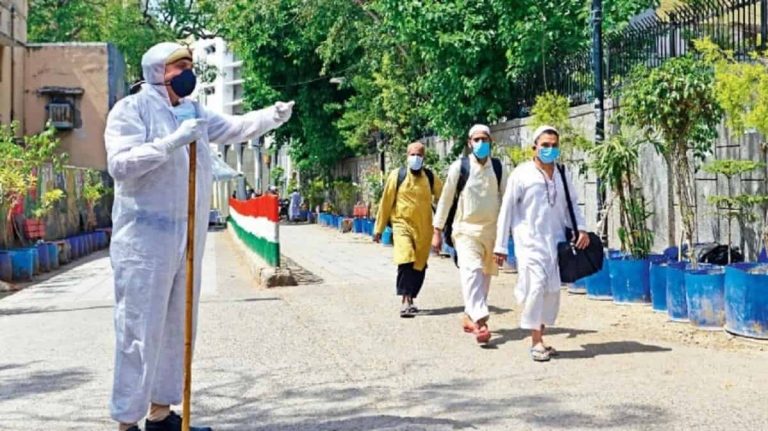
Twitter user Rahul Kr. Sr. going by the handle @BiharKaLal has shared a thread of ten videos with a caption: “A thread on the MOST DUMB PEOPLE OF THIS PLANET”, where Muslims are seen making bizarre excuses in the name of Islam to blatantly disregard the basic precautions advised amidst coronavirus outbreak. They are seen encouraging risky social behaviours in the name of Islam.

The first video begins with two people seen walking through a thoroughfare wearing masks. They bump into a friend and advise him to wear a mask amidst the Coronavirus outbreak. But that person arrogantly shrugs away the mask and instead takes out a Muslim skullcap from his pocket, puts it on and walks away.

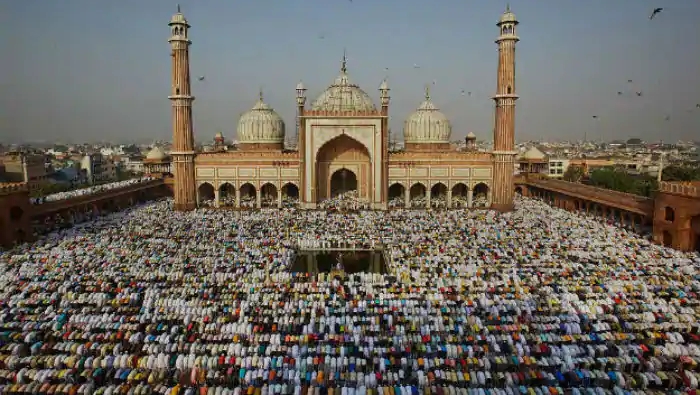
While the government has time and again emphasised that social distancing is the only way to break the chain of infection caused by Coronavirus, a Muslim man in the second video argues with a media anchor how he would continue to go to Jama Masjid to offer Namaz. He asserts that religion is above human safety. He says: “Marne ke baad bhi upar hi jaana hain, toh koi accha kaam karte hue agar hamari pran nikal jaati hain toh isse acchi humare liye koi baat nahi hain”, roughly translated as “everyone has to die one day and go to heaven, so even if we die while we carry out this noble task we have no regrets”.

In the third video when two Muslim youths shake hands to greet each other, the third one standing there warns them against shaking hands to reduce the risk of contracting the coronavirus, which is said to be a highly contagious and spreads from person to person in close proximity. The two youths, disregarding the advice, say that Islam has taught them that shaking hands can only spread love not coronavirus.

Similarly in the fourth one, a youth warns two others not to drink water out of the same bottle. Here too, the youth is seen slapping the one who advises and says that Islam teaches them to share. “Muslim bhaiyon ka jhoota peene se ya khane se Shifa (healing) milti hain virus nahi” (sharing food and water eaten or drunk by another Muslim bothers leads to ‘Shifa’ not corona).

Similarly, in the sixth video, Muslims are seen performing Wudu (a ritual of washing performed by Muslims before prayer) in groups and insisting that this will not cause infection.

In the remaining videos too, while some Muslim youths are seen worrying about giving up ‘Sunnat’ there is a Muslim woman who seems to be quite confident that “Corona has originated from the Quran”. The enlightened woman insists that “Corona means Quran”.

This is not the first time that Muslims have cited Islam in the context of coronavirus. Earlier, a Shaheen Bagh protester by the name of Rizvana said, “Washing hands regularly is part of our lifestyle. We offer namaz five times a day and we wash our hands every time”, suggesting how she was safe from COVID-19 despite being a part of a mass gathering.

In a viral video, one of the protesters could be heard dismissing the looming threat of coronavirus by claiming that Corona emerged from the Quran. Several protestors do not think that the pandemic is a threat because the Anti-CAA protests are supposedly a ‘call from Allah‘.

At a time when social distancing is crucial to preventing the spread of the pandemic, Muslims have taken to social media to encourage people to indulge in risky social behaviour.

Caravan editor spreads fake news, claims Coronavirus tests are not free in India

Even as India has moved to top gear to combat the Wuhan Coronavirus, the left-liberal ecosystem has also jacked up their efforts to malign the government by spreading fake news. Executive editor of propaganda site The Caravan, Vinod K Jose today shared a tweet which claimed that while the Coronavirus tests in other countries are either free or very cheap, it is very expensive in India.

Vinod shared the screenshot of a tweet by one Twitter user with the username @thedevil-Ind, who claimed that the test for Novel Coronavirus is done for free in Iran, China, Europe, America and Sri Lanka, and it costs only ₹500 in Pakistan and ₹300 in Bangladesh, the cost of the test is ₹4500 in India. The claim shared by the Caravan editor is completely fake, as it compares cost of test in private laboratories in India with the cost in govt labs in other countries.

In India, initially, the testing for Coronavirus was done at only government laboratories, and those tests are completely free, the patients don’t have to pay anything. Besides the test, the treatment for Covid-19 patient is also free India.

In anticipation of the growing number of tests to be done, the central govt recently approved several private laboratory chains to conduct the test. In the guideline issued in this regard, the ICMR has fixed an upper limit of ₹4500 which can be charged by the labs for the test. ICMR has also appealed the private labs to either do the test for free, or charge a reduced rate. Unlike what left-liberals are spreading on media and social media, the govt has not fixed the cost at ₹4500, but it the maximum limit, while the labs are expected to charge below that amount.

Read- Despite ICMR saying that India has reached local transmission stage of coronavirus, Caravan publishes fake news claiming govt of India and ICMR denied it

Just like India, India, the test is free in govt run laboratories in the USA, but the same is not case with private labs, where the cost will have to paid by the patient, or will be paid by insurance. According to one report, the test will cost between $50 to $100 at labs run by Laboratory Corp. of America Holdings and Quest Diagnostics Inc, which is at par with the cost in private labs India.

Therefore, it is completely false that Coronavirus test is not free in India. It is free in government laboratories, while it will cost some money in private labs which can’t exceed ₹4500. Moreover, the government has been saying that the govt labs have enough capacity, therefore most people should be able to get their tests done for free at govt labs.