Post-independence the idea of creating the post of Chief of Defence Staff (CDS) was actually mooted first time by Late General K V Krishna Rao in June 1982. But somehow, thereafter the idea continued to remain on the back burner till after the Kargil War in 1999 when the necessity of creation of this post was once again strongly felt. It was under the guidance of the then Prime Minister Atal Bihari Vajpayee that a Task Force consisting of a Group of Ministers was constituted to study the recommendations proposed to the Cabinet Committee on Security (CCS) for creating a post of CDS. However, with the change of Government at the centre, the matter once again went on the back burner only to be followed up by Naresh Chandra Committee in the year 2011 which also suggested the creation of the post of CDS, but a watered-down version.
It is believed that the bureaucratic turf protection, certain political misgivings and inter-service mistrust perhaps created so much friction that the proposal to create the post of CDS continued to remain only on paper. However, once again with a change of Government at the centre, the Shekatkar Committee was constituted which submitted its report in 2016 recommending the creation of the post of CDS.
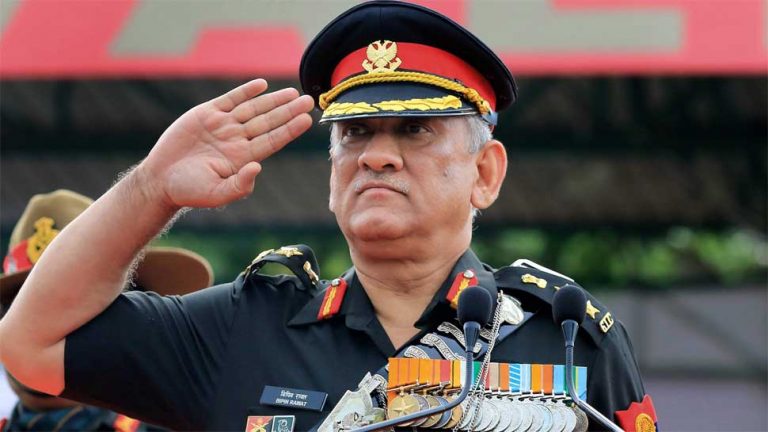
Finally, after years of wait, the Government appointed the much-awaited CDS on 01 January 2020 as a major step forward towards ensuring complete integration of the Indian Armed Forces and provide better direction for higher defence management. The creation of the post of CDS may be described as a ‘historic step’, but the seeds of the same had already been sown by the NDA Government during their earlier tenure. Demonstrating their foresightedness and resolve, they had already begun the process of tri-service integration by establishing the ‘tri-service theatre Andaman & Nicobar Command (ANC) and Headquarters Integrated Defence Staff (HQ IDS) in the year 2001. This was followed up by raising of Strategic Force Command in 2014 and later in the year 2018 by creating the Space & Cyber Agency and Special Operations Divisions under the Chairman Chief of Staff Committee.
Purpose and Role of CDS
The CDS has a vast charter to perform to include promoting jointness in defence procurement, training and staffing for the services through joint planning and integration of their requirements, facilitate restructuring of military commands for optimal utilisation of resources by bringing about jointness in operations, establishment of theatre commands and promote use of indigenous equipment by the services. Though the CDS will not exercise any military command including over the three Service Chiefs, he is, however, vested with the authority to provide directives to them on matters related to tri-service and procurement.
While the CDS will continue to execute the functions of Chairman Chief of Staff Committee to include management of tri-service organisations, Military Advisor to Nuclear Command Authority and Member of Defence Acquisition Council and Defence Planning Committee, a separate Department of Military Affairs (DMA) has been created within the Ministry of Defence (MoD) headed by the CDS as a Secretary who will function as the Principal Military Advisor to the Raksha Mantri on tri-service matters. The DMA is the fifth department of MoD whose funding will continue to be coordinated by the Defence Secretary, who will also continue to be responsible for the defence of India.
The Emerging Threat Dimension
Unfolding Global Security Scenario
With the discovery of oil in the 19th Century and the resultant rapid growth which followed, industrial and commercial rivalry thus became the seed of war post world war II. After the collapse of the erstwhile Soviet Union, the world witnessed the emergence of a number of flashpoints and regime changes in countries such as Afghanistan, Iraq, Syria, Lebanon, Libya, Sudan, Somalia to name a few.
To ensure control and domination over the energy market the world over and maintain the hegemony of the PetroDollar which constitutes 2/3rd of the global economy, the United States of America (USA) has established 800 major military bases spread over 74 countries as against France and Russia with 13 and Nine bases respectively. India has only one military base located at Tajikistan.
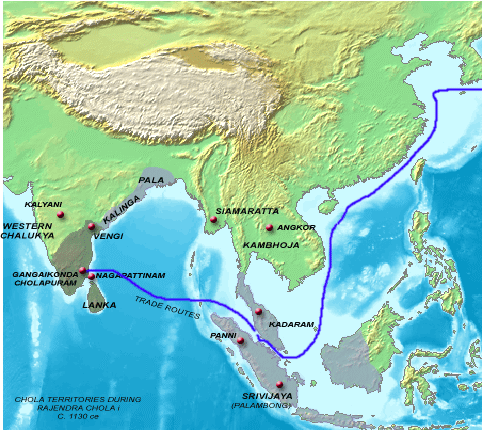
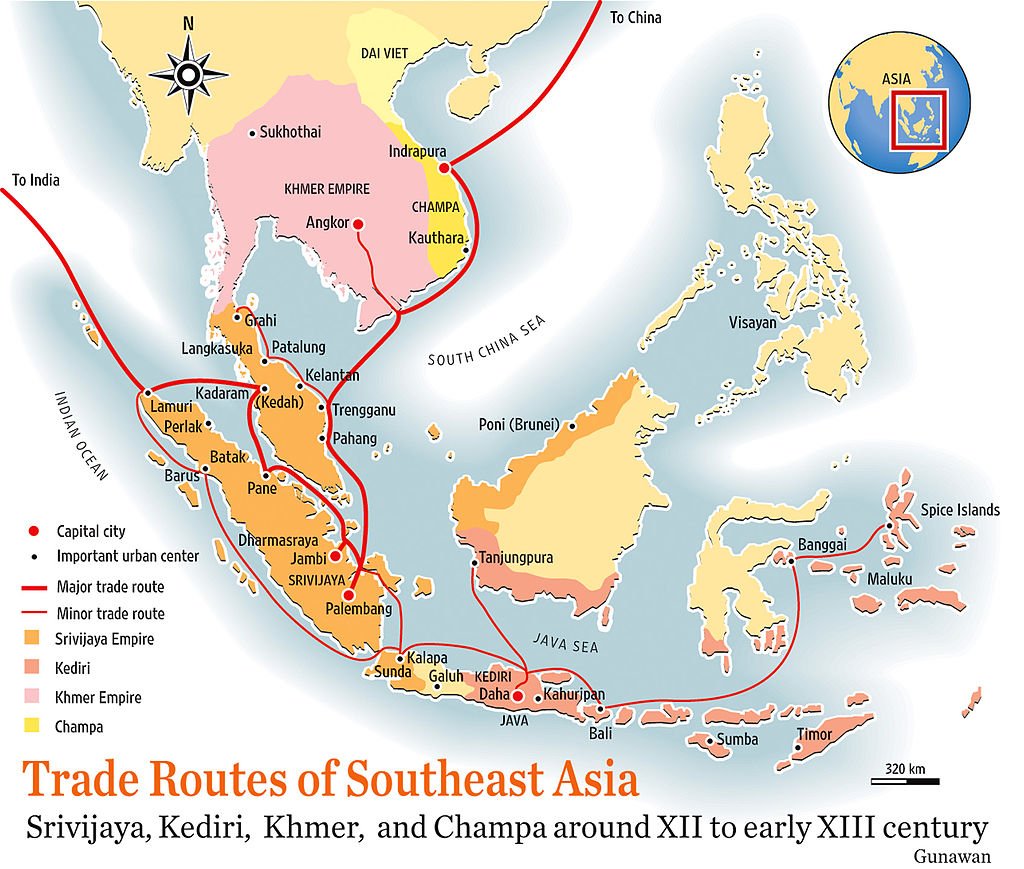
With the Russian economy bouncing back in 2016, the Western and Eastern power blocs are once again clearly seen emerging and jostling to safeguard their own trade and energy security interests. The current situation in the Middle East speaks for itself. The Indian Ocean Region, therefore, assumes a strategic significance as major sea trade routes pass through it. The Strait of Malacca is an important shipping lane in the world, linking the Indian and Pacific Ocean. Similarly, for the petroleum exporting Gulf region, the Strait of Hormuz is the only sea passage to the open ocean. Roughly over 40 percent of the world’s sea-borne oil shipments pass through the Strait every day making it the world’s most strategically important choke point.
In addition, Mandab Strait or Bab el-Mandab, situated between Yemen and Djibouti at the Horn of Africa, provides the strategic link between the Indian Ocean and the Mediterranean Sea via the Red Sea and the Suez Canal. The Lombok Strait between the Indonesian Island of Bali and Lombok, the Palk Strait between India and Sri Lanka are secondary choke points in the Indian Ocean Region. Over 70 percent by volume of international trade in goods and energy commodities like oil, coal and natural gas is transported by sea through the Indian Ocean Region. Trade and energy dominance by power blocs is largely dependent on reliable and secure oil and gas supply. Since the bulk of it is transported through the Indian Ocean Region, any blockage will lead to threatening the global or the regional economy.
The overpowering security concerns of major world powers for protecting their trade route through the Indian Ocean Region has, therefore, resulted in enhancing their military presence as well as forging of cooperative developments and agreements with several of the littorals to promote, support and sustain military operations in the Indian Ocean Region. It is now an accepted fact that all major powers have an ambient Naval presence from the Strait of Hormuz to the Strait of Malacca. Can India therefore, continue any longer in military isolation in the backdrop of economic globalisation and great power rivalry?
The Northern Front Threat
Over past two decades, the presence of China, our presumed ‘No 1 Adversary’, has also significantly increased in the Indian Ocean Region, generally referred to as ‘string of pearls’. However, there is yet no compelling evidence of Chinese Navy engaging overtly in aggressive military activities. But it can’t be ruled out in future to come. While China has reorganised itself into theatre commands duly supplemented by Special Operations, Aviation, Air Assault, Airborne and Marine Brigades along with other force multipliers including Artillery, Air Defence and Engineers integrated till combined Arms Battalion level, it has also significantly enhanced its nuclear missile capability with DF-26.
China has also reportedly test-fired the S-400 long-range SAM system and has developed HQ-19 with ballistic missile defence capability. Our main adversary has, therefore, reorganised and developed its strength much beyond the confines of our ‘Northern Borders’, to include long-range strikes by a credible array of missiles in addition to emphasis on ‘non-contact warfare’ which relies on a credible plan in the electronic, cyber and space domains with emphasis on winning wars under informatised condition and overwhelming superiority of force multipliers. China is striving to modernise the PLA by 2035 and create a world-class force by 2049. Currently, China is building its Air Force and Navy with the capability of long-distance operations with heightened operational tempo. On our ‘Western Front’ the Line of Control continues to burn and China remains the main military supplier.
What Do We Need to Do?
As far as the Northern Front Threat is concerned, besides infrastructure development, it is encouraging to note from the multiple media interviews given by the CDS that India will now begin to look at giving the much-awaited due impetus to her Strategic Forces, Space and Cyber capability, Command and Control capability shifting focus from manpower-heavy army to high-tech, modular, responsive ground forces capable of three-dimensional manoeuvre, long-range weapons of precision strike capability duly supported by special operations forces under the command of a combined military leadership ensuring jointness in planning and execution. But is that enough to deal with China?
China’s real vulnerability lies on its Eastern Front which constitutes almost 91 percent of its population covering 33 percent of the Chinese landmass. All industries, business and economic hub centres are spread all along the Eastern Coast with Pearl River Delta itself constituting 1/3rdof China’s export. From the Northern Border, the nearest significant economic target for India on the Chinese soil is 2800 km away which is well beyond reach by any measure today.
India needs to grow out of its continentalist mindset and expand its reach not only in the Indian Ocean Region but also close to China’s East Coast to be a meaningful counter-threat. India thus needs to grow beyond the fixation of Western and Northern land border threat perception syndrome and instead look to reorganise herself into maritime expeditionary force as also create few military bases both in the Indian Ocean Region and the Indo-Pacific Region in collaboration with friendly countries.
The Government’s Bold Initiative
No sooner the current Government when came to power in 2014, Hon’ble Prime Minister Shri Narender Modi chose to visit Seychelles and Mauritius where he unequivocally said,” Delhi will work to ensure safe, secure and stable Indian Ocean Region that delivers us to the shores of prosperity.” This undoubtedly signalled India’s shift towards Indian Ocean littorals being accorded priority. The Prime Minister went ahead and announced several maritime security-related projects in Seychelles as part of India’s efforts to build maritime domain awareness network across the Indian Ocean Region covering Mauritius and Sri Lanka too. He also made a commitment to build maritime capacity and infrastructure in both Assumption Island of Seychelles and Aga Lega in Mauritius. Later, India’s intent about taking on greater responsibilities for securing the Indian Ocean and for promoting regional mechanism for collective security was explicitly conveyed by appointing an ex Indian Army Chief as Indian High Commissioner of Seychelles.
India has also constructed Chabahar port in Iran and acquired an airport next to Hambantota port in Sri Lanka. India has already signalled her intent of a bold foreign policy in the Indian Ocean Region determined to take geographical advantage of the peninsular India and littoral as also by signalling to both the US and China to engage on maritime security issues. But now the question is how to take it forward. The answer lies in the subsequent actions taken towards achieving this goal.
Combined Push
Government policy or intent, where the implementation extends beyond the land borders, needs a strong push through a combination of both economic and military might. To give requisite strength to all the initiatives and intent in respect of maritime security shown by the Government, the Indian Armed Forces need to expand their footprint not only in the confines of the Indian Ocean Region; but also close to East and South China sea. At this juncture, therefore, the appointment of CDS to bring about the much-awaited transformation of the Indian Armed Forces enabling it to operate overseas beyond the subcontinent is the most significant step for which the Government must be truly complimented. However, proof of the pudding lies in eating. Is the current CDS really empowered, designed, capable and envisioned to achieve this?
The First Stepping Stone – The Budget
It was not surprising to see that in the current Budget, there was only a marginal increase in the capital outlay for Defence for the year 2020-21. Our economy currently pitched at $2.69 trillion is still to traverse a long distance to get close to $12.24 trillion economy of our main adversary China and $19.39 trillion economy of USA. In view of the committed liabilities from the previous years, the current allocation, therefore, will fall short to meet the requirements of the Indian Armed Forces. The meagre allocation will impede major acquisitions planned for the three services. However, notwithstanding the current allocation and prevailing state of the Indian economy, the Government’s push towards indigenous defence production to include diversifying and developing significant competencies with modern plant and machinery in collaboration with major business houses from across the globe, will turn India from world’ biggest defence equipment importer to a key aerospace and defence manufacturing hub in the coming decade.
With ‘Make in India’ taking deeper routes as envisioned by the Hon’ble Prime Minister, India’s march towards $5 trillion economy has thus begun. This belief was adequately reinforced by the Hon’ble Raksha Mantri, Shri Rajnath Singh, when commenting on the Budget he said, “The first Budget of the new decade presented today by Finance Minister Nirmala Sitharaman gives an outline of a new and confident India. It is a promising, proactive and progressive budget which will make India healthy and wealthy in the coming years.”
The Need of the Hour
It is, therefore, clear that under the present prevailing economic condition, no major acquisition for and reforms of the Indian Armed Forces can be undertaken in a tearing hurry. Under the prevailing budgetary constraints and its likely continuance for few more years and considering the Nation’s long-term strategic goal of becoming a Regional Power, the CDS may, therefore, first clearly set targets to be achieved harmonising the available resources with realistic timelines.
Look Beyond the Horizon
In view of the aforesaid, we need to first clear our understanding of the emerging threat impeding India’s march towards building a stronger economy and becoming a Regional Power. PLA’s development in the field of Cyber, EW and Space embedded in unmanned systems, has deeper reach much beyond the land borders claiming capable of rendering our systems at sea, air, space and land dysfunctional which cannot be ignored.
To tackle China effectively, India must not only develop the capability to strike the economic and business hubs along the China’s East Coast, but also show military presence close to East and South China Sea in addition to developing capability in the domain of Cyber, EW and Space to counter PLA’s growing power in non-contact warfare.
As far as the strategic space of the Indian Ocean Region is concerned, the CDS has very rightly shared his vision and thoughts about Peninsular India during one of his media interactions in the recent past. India needs to expand her effective and dominant reach deep into blue waters much beyond the world sea trade lanes extending from the Strait of Hormuz to the Strait of Malacca and be capable of protecting not only her own trade and energy security interests, but also be strong enough to provide logistics support and protection to other trading nations passing through the Indian Ocean Region.
Pakistan is going through immense internal turmoil and is no military threat to India, though China remains the main military supplier. India thus, need not fritter her military power and resources by waging a full-scale war against the Western neighbour. Pakistan is only an irritant which needs to be tackled through their own prevailing contradictions. Disintegrated Pakistan will neither pose a military threat nor will be in a position to fuel terrorism.
The CDS May Consider
Comprehensive National Security Strategy
To begin with, keeping in mind the Nation’s strategic goal of becoming the Regional Power, a new War Doctrine needs to be prepared to tackle the emerging threat scenario. The larger roadmap pertaining to unfolding global security challenges, emerging threat scenario and increasing military footprints in both the Indian Ocean Region and Indo-Pacific Region should be clearly spelt out in the said doctrine besides measure to tackle both Western and Northern Border Threat.
Integration
(a) Before embarking on the creation of Western, Northern Theatre, Air Defence, Peninsular and Logistics Commands as announced by the CDS recently, a study may be carried out to look into the CDS models already being followed by the P5 countries. It is always better to learn from others own first-hand experience. The study of the existing five models in the world will help us to identify a structure truly applicable and relevant to us in the backdrop of leveraging India’s geographical location advantage vis a vis available resources, economic and security interests to be protected. It will also help in working out a practical timelines keeping the budgetary constraints and other connected limitations in view.
(b) Creating a Joint Air Defence Command is considered a little early at this stage. Air Defence involves not only tactical air space; but also the whole of the air space above that. While the Indian Army and the Indian Navy are concerned with the tactical air space, the Air Force takes care of strategic airspace. Before we proceed, the CDS may consider constituting a team to study the existing varying models of countries like USA, China, Russia etc and their functionality. Thereafter, look at what suits us the best. Meanwhile, it is recommended that we need to first focus on integrating control and reporting with a communication network and their interoperability. Thereafter, creating joint structures for manning should be left with the respective theatre level. Placing all Air Defence resources under one Joint Air Defence Command will invariably result in a conflict of the requirement of Theatre Commanders. Resources of Air Defence, therefore, should be best left under command of respective Theatre Commanders who would be the best judge of their own priorities in the prevailing operational scenarios.
(c) Therefore, to begin with, CDS may consider integrating the existing tri service communication system to include cyber, Space and EW so as to not only get and share real time intelligence at all levels, but also help coordinate a timely and accurate response. In accordance with their interoperability, the maintenance wherewithal to include spares, infrastructure and other connected assets must also be integrated.
(d) Keeping in view our projected involvement in the Indian Ocean Region and the Indo-Pacific Region, building Carrier Battle Groups, Maritime Strike Aircraft and Amphibious Divisions must be accorded priority over straight away beginning to create Western Theatre, Northern Theatre, Joint Air Defence, Peninsular and Logistics Commands. Once these tri service forces become stable and operational then the process of creating of various Theatre Commands could commence. The Integrated Battle Groups of the Army is still to take a final shape and get operational. Once this concept finds a firm foot then further reforms in terms of reducing a number of higher formation headquarters within the Army must be thought of which will not only reduce multiple layers of command and control but also effectively cut down expenditure and result in substantial savings.
(e) The CDS may consider working out with the respective Ministries the integration and optimal employment of Para Military Forces for the defence of the border. Since the insurgency in the North East is on the wane as also not a single bullet has been fired on the Northern borders since 1973, the time is ripe to reconsider the current deployment of the army along the Northern and Myanmar borders. On the lines of Indian Coast Guard, the ITBP and Assam Rifles may be considered to be placed under the MoD and be deployed to defend the two borders duly supported by the SFF, while troops of the Indian Army be pulled out and reorganised to execute tasks beyond the borders and into blue waters.
(f) Current level of understanding of the operation of sister services is lacking amongst officers’ fraternity. To achieve the desired operational efficiency, there is a need for greater understanding of the strength and weakness of the three Services. This will be largely achieved if the cross attachment is undertaken in the middle and higher ranks.
Optimisation
(a) Growth of the Indian Armed Forces over decades, confined into individual service verticals, has led to a major deficiency in the planning process, duplication of efforts and sub optimal utilisation of resources. Duplication of assets in infrastructure and human resources whether in training or in operational commands, is a huge drag on the defence budget leaving very little for capital acquisition. Having created the appointment of CDS, the country definitely expects a payoff in the form of leaner, meaner and very effective armed forces that will achieve synergy through joint training, planning and operations to tackle the emerging threat scenario in the Asia- Pacific Region.
(b) At present, the immediate priority be accorded to tri service integration of existing resources to optimise and cut down on wasteful expenditures. This will ensure the commencement of a seamless integration of the three services at various functional levels without destabilising the complete structure. Therefore, ensure close cooperation and functioning of the three services through joint planning of operations, logistics, transport, training, communication, repairs and maintenance. This will help in building a strong foundation administratively, functionally, mentally and emotionally at all levels of rank and service to further help embark on creating the envisioned Theatre Commands in times to come.
(c) Before commencing the raising of a Logistics Command, common weapons, equipment, transport and other ancillaries used by respective Service be identified and the requirement of their maintenance in terms of infrastructure, man power, technical equipment and expertise be assessed. Thereafter integrate their maintenance wherewithal on a common platform considering the factor of interoperability and ensure provisioning done under one budget head.
(d) Rising above turf battles and Service-specific trivial considerations, all three Service Chiefs must assist the CDS in streamlining the procurement prioritisation, refining the archaic procurement process leading to over stocking, working out realistic stocking norms graduating from ‘Just in Case’ to ‘Just in Time,’ and reworking out the current skewed fuel efficiency norms leading to surpluses and misuse.
(e) The CDS may also consider constituting teams to look into civil warehousing facilities as also the prevailing work culture of OFB, DPSUs, Base Workshops, Shipyards and BRDs which have more often than not, led to time and cost over runs besides the poor quality of repairs and overhauls.
Review of Revenue Expenditure
All three Service Chiefs must assist the CDS to review fund allocations under various Heads of the Revenue expenditure of each Service and significantly cut down especially building non-strategic infrastructures and maintenance-related expenditure to the bare minimum. The MoD needs to give a serious look at the early disposal of surplus civilian manpower with various depots, workshops, DPSUs and OFBs. It is refreshing to hear CDS talking about the feasibility of monetising unutilised defence land. Rightfully, therefore, the rationale of continuing to hold on to several thousand acres of defence land under various categories, lying unutilised since independence as also the necessity of continuing with the concept of Cantonment Boards and Indian Defence Estate Services needs a dispassionate relook.
Military Diplomacy
Presently, the crucial aspect of defence diplomacy is being conducted in an ad-hoc manner without an overarching policy direction from the MoD. It will be ideal if the CDS is made responsible for all aspects of defence diplomacy with clear policy guidelines from the Government. The bureaucrats from the MEA need to be integrated so that the complete spectrum of functioning is attained. The potential of military diplomacy has not been optimally exploited so far.
HR Issues
Defence officers in the Department of Military Affairs will have a tenure of maximum two to three years only which will be inadequate to bridge the chasm in their understanding and comprehension which in turn will adversely affect their contribution. As a result, there will be a disconnect in functioning between such officers and the permanently settled civil service officers. This can be overcome by ensuring extended tenures of serving officers wherever possible and employing senior retired officers having domain knowledge on contractual basis.
Summary
In the backdrop of the prevailing budget constraints and the same likely to continue for next few years till we reach the threshold of the projected $5tn economy, we need to tread carefully with correct priorities, practical timelines and desist from embarking on large reforms calling for huge budgetary requirements and eventually leading to disruption and a stalemate.
In fact, it does seem that we are living in a pre-war era. Many of the factors that define the times we are in today, were present before the two world wars of the previous century: populism, nationalism, ethnic and religious conflicts, territorial disputes, economic depression and terrorism.
The West seems to see us, along with Japan and Australia, as a bulwark for a rising China. Therefore, we must look into the mirror and assess ourselves honestly if a global conflict breaks out, where will we stand and how much power can we realistically project beyond our borders. Our focus on a holistic vision for India as a Regional Power in the context of global power plays still doesn’t seem clear. The CDS thus, has an enormous task on his hands to galvanise the tri service military might under the prevailing budgetary constraints and prepare to fight the right war in multi-disciplinary domains in the times ahead.
Under the present charter of work assigned to Department of Military Affairs, it seems that the CDS will be compelled to devote a lot of his valuable time in overseeing administrative issues like promotions, postings, redress of grievances and foreign assignments as also other service-related trivial administrative and finance matters thus encroaching upon and denting the much desired singular focus and effort required towards achieving larger goals set for. These administrative issues should be best left to respective Service Chiefs and the MoD to handle as before, while the CDS must concentrate his focus and energy on macro considerations to facilitate the long-term perspectives. There is a need to develop a better understanding and deepen trust amongst Government functionaries so as to better employ ‘whole of Government approach’. The CDS is indeed well placed to achieve all this.
(The article has been authored by Lt Gen Abhay Krishna, PVSM, UYSM, AVSM, SM, VSM, (Retd). Before superannuating on 30 Sep 2019 after nearly 40 long years of service with Indian Army, he served as General Officer-Commanding-in-Chief (GOC-in-C), Central Command from 1 October 2018 having taken over the reins Lieutenant General Balwant Singh Negi. He handed over the command to Lieutenant General Iqroop Singh Ghuman. Prior to that, he has also commanded the Eastern Command and South Western Command of the Indian Army. During his long service journey he has served four tenures along Line of ActualControl, two tenures in High Altitude, two tenures as UN observer, in Mozambique & Rwanda and later as Chief of Staff (UN forces) in Burundi besides several tenures in the North East in various capacities. He has commanded a Rashtriya Rifles Battalion both in the North East and in Kashmir valley as well during Kargil conflict as also an infantry battalion in Sikkim. He has also tenanted the appointment of Brigadier General Staff 3 Corps, GOC 27 Mountain division (Kalimpong), Chief of Staff (Delhi area) and GOC III Corps (Dimapur). Besides receiving several distinguished service awards, he is also a recipient of gallantry award for an act of bravery and gallant action beyond the call of duty in a hostage crisis during his stint with UN Mission in Mozambique. He has good academic credentials with two M Phil and one MSc degrees, Post Graduate Diploma In Human Rights, International Humanitarian and Refugee Laws from Indian Academy of International Law and Diplomacy, Delhi as also in Information Technology from CDA-C, Pune. At present, he is going through an International Arbitration Course in dispute resolution mechanism)