Home Blog Page 5832

Massive jolt to Congress after BJP sweeps Karnataka by polls: Siddaramaiah resigns as Legislative Party leader and Leader of Opposition

The counting of votes for the 15 assembly constituencies that went for by-polls in Karnataka are going on and the ruling BJP has won 7 of the 15 seats. Congress has won 2. The BJP, which needed 6 seats to retain the majority, has now attainted it. BJP is expected to win 12 seats in total and Congress ally in Karnataka, JD(S) and scored a zero. Following the results, Congress in the state has suffered a massive jolt as Siddaramaiah has resigned as the Legislative Party Leader and as the leader of opposition in Karnataka Assembly.


Siddaramaiah, the former Chief Minister of Karnataka when the Congress was in power and the Legislative Party Leader currently has said that he is resigning because he ‘needs to respect democracy’. He has also resigned as Leader of Opposition in the Karnataka Assembly.

Read: Karnataka meltdown: Congress leader Roshan Baig trains guns at Siddaramaiah, calls KC Venugopal a buffoon

According to ANI, Siddaramaiah has said that he has submitted his resignation to Congress party interim chief Sonia Gandhi.

In July, the 14-month-old Congress-JDS government led by HD Kumaraswamy had fallen after it lost the trust vote in the assembly. The coalition government had lost the majority after 16 MLAs from both the parties had turned rebel and resigned from the assembly. After rebel MLAs from Congress and JDS had resigned, 15 out of 17 Karnataka seats had become vacant. The apex court had held the disqualification order but had disagreed on the duration of disqualification and had held that the MLAs will face re-election.

Read: Here’s why the Karnataka elections will signal the end of the road for Siddaramaiah

All MLAs were from Congress and JDS who had later decided to support the BJP. The 15 MLAs were all given BJP tickets. To retain power in the state, BJP needed to win at least 6 seats out of the 15. Following the disqualification, the strength of the assembly was reduced to 208, where BJP held the simple majority of 105. It had the support of independent MLA H Nagesh. Now, the numbers needed by BJP have been attained following the by-polls.

As for Siddaramaiah, when the Congress-JDS alliance had chosen to make Kumaraswamy the Chief Minister, it was considered a humiliating ouster for the Congress leader. There were several rumours of dissent not only from Siddaramaiah but also his supporters from within the Congress party.

BJP wins Karnataka by-polls: Rajdeep Sardesai blames voters, says ‘voters rewarded defectors’

As BJP sweeps the Karnataka by-polls by maintaining clear leads in 6 seats and winning 6 seats out of the total 15, controversial journalist Rajdeep Sardesai had a hard time believing the fact that the saffron party would continue to remain in power in the state. The by-polls were scheduled following the disqualification of 17 rebel Congress-JDS MLAs that paved the way for the BJP to form government in the state.

With the results declaring BJP’s victory, Rajdeep Sardesai posted a tweet claiming that the Congress party and JDS continue to remain ensnared in faction feuds while the BJP came out as number 1 party in the state. He further stated that voters in Karnataka rewarded the defectors, insinuating that ‘money and state power’ play a significant role in determining the election results.


Rajdeep’s rumblings come at a time when the BJP recently formed government in the state of Karnataka under the leadership of BS Yediyurappa. About 4 months ago, after 17 rebel MLAs from the previous Congress-Janta Dal (Secular) coalition revolted, the BJP staked a claim at the government in Karnataka. Many of the rebel MLAs fought and won the by-polls elections on the BJP ticket.

The by-polls happened on Thursday last week on 15 of the 17 assembly seats that were left vacant after the MLAs resigned in July, leading to the collapse of the Congress-JDS alliance. The BJP currently has 105 MLAs in the 222-member Karnataka assembly, with the support of 1 independent. It needed to bag at least six seats for scoring a majority in the assembly. The Congress and the JDS hold 101 MLAs between them.

As per latest reports, the BJP has already won 6 of the 15 seats, Congress leader DK Shivakumar has stated that his party accepts defeat.

Peak NDTV Logic: Sreenivasan Jain pulls a shocker, claims Muslims are minorities in Islamic States

The introduction of the Citizenship Amendment Bill attracted great criticism from the ‘Secular’ parties. But it’s not just political parties which were opposing the Bill. Their friends in the media were contributing significantly to the hysteria surrounding it as well. Among the many bizarre arguments made against the Bill, the most conspicuous among them, unsurprisingly, came from an NDTV journalist: Sreenivasan Jain.

During the debate in the Parliament on the introduction of the CAB, Union Home Minister CAB said that the Bill wasn’t against minorities at all. Responding to it on Twitter, Sreenivasan Jain argued how could a Bill that specifically “excludes” a “minority community” not be against minorities.


It appears that Jain is arguing that Muslims are minorities in the Islamic States of Pakistan, Bangladesh and Afghanistan. The CAB seeks to provide citizenship to the persecuted religious minorities from these three countries. And Muslims, in the countries mentioned, are the majority community. In one stroke, Sreenivasan Jain has far exceeded the most stupid statement Rahul Gandhi has ever made by miles.

Read: NDTV’s Sreenivasan Jain desperately tries to portray that Kashmiri Pandits are unhappy with the abrogation of Article 370

Quite obviously, Muslims cannot be considered a persecuted religious minority in an Islamic State. However, Sreenivasan Jain is so blinded by ‘Secularism’ that he cannot see the idiocy of his remark. Furthermore, the CAB has nothing to do with current Indian citizens. It only seeks to provide citizenship to people from neighbouring countries who are being persecuted due to their identity as a religious minority. Therefore, it’s utterly bizarre to argue that the Bill is in any way against the minority communities of India.

Read: Explained: How Citizenship Amendment Bill embraces the history of India

Sreenivasan Jain is known to misrepresent facts in order to peddle a certain narrative. He has done so on several occasions in the past. He has also edited interviews of his guests in order to favour his preordained narrative. He is also known for his false equivalences and equating online speech with actual violence.

Several govt job examinations have seen higher cut-off mark for OBCs compared to general category, here are the reasons

A curious phenomenon has emerged in various competitive exams held for government jobs across the country, where the cut-off mark for reserved category candidates was more than the cut-off for general category. In several examinations in various states such as Uttar Pradesh, Jharkhand, Madhya Pradesh, Rajasthan, Delhi etc, the cut-off marks for reserved category seats, especially OBC category, were more than the general category.

For example, in the recruitment of sub-inspector of Railway Protection Force in March 2019, the Group A cut-off for OBC category was 95.53%, while the same for general category was 94.59%. For group F, it was 87.33% for OBC and 76.99% for general. In the Bihar civil services examination results declared in October this year, the cut-off for OBC category was 595, while the cut-off for general category was 588. Similarly, in Rajasthan Administrative Services and Allied Services examination of 2016, the cut-offs of General and OBC were 78.54% and 94.98%.

This has raised alarm bell among the reservation activists, with a demand to make changes in the law to prevent this from happening. Apna Dal leader Anupriya Patel raised this issue during the zero-hour in Lok Sabha on 5th December, and demanded amendments in the reservation laws, so that reserved category candidates who score more than the general category cut-off are given posting in the general category, not the reserved category.

In general, reserved category candidates can migrate to the general category if they score enough mark in the competitive exam. The Supreme Court has also clarified several times that reserved candidates can be posted in general category posts if they have secured the necessary marks. But there is a catch in this rule, which says that if a reserved category candidate avails other benefits of reservation in an examination, like the relaxation in upper age limit, relaxation in the number of attempts, reduced examination fee etc, such candidates can’t migrate to the general category at a later stage. As most reserved category candidates avail these benefits, they are considered not eligible for the general category, even if they score more than the cut-off mark.

Read: Here are 4 lies being spread about 10% reservation to the economically backward section of society

The Supreme Court of India also has upheld this rule. In July this year, a bench of S Abdul Nazeer and Indira Banerjee had ruled the same, dismissing a plea by a candidate who had appealed against a Gujarat High Court order. As a results, those reserved category candidates who have availed such relaxations are are not placed in general category even if they have scored more than the cut-off mark for general category.

Moreover, as many reserved category candidates avail the age relaxation benefit, the number of candidates in the reserved categories go up, which eventually increases competition and the cut-off mark. Adding to this, several states have arbitrarily raised the relaxed age limit for reserved categories over the years, increasing the number of candidates competing for the reserved category posts.

Along with this, the population of OBC category accounts for 50% or more in several states, which means the population percentage is more than the reservation percentage in several states.

As this phenomenon is observed in more and more examinations, it can be said with certainity that the demand for an amendment in the law will increase.

AIMIM chief Owaisi continues his rant: Compares CAB to Nuremberg race laws and Amit Shah to Hitler

Union Home Minister Amit Shah on Monday tabled the controversial Citizenship (Amendment) Bill (CAB), 2019, in Lok Sabha to amend the six-decade-old Citizenship Act. The amended bill seeks to grant Indian citizenship to non-Muslim refugees from Pakistan, Bangladesh and Afghanistan escaping religious persecution there. Amid strong protests and sloganeering from Opposition leaders, AIMIM chief and Lok Sabha MP Asaduddin Owaisi once again continued his hateful rant and compared HM Amit Shah to Hitler.

Continuing his rants against the CAB, Owaisi asked the speaker to save the country from such a law and save the Home Minister also. ‘Otherwise, like in Nuremberg race laws and Israel’s citizenship act, Home Minister’s name will be featured with Hitler and David Ben-Gurion, said Owaisi in the Lok Sabha.


“In Israel, the Defence Minister’s name was attached to that of Hitler,” said Owaisi referring to David Ben-Gurion who was the first Prime Minister and defence minister of the State of Isreal.

Since the time the Citizenship Amendment Bill has been brought up for discussion in the Lok Sabha’s winter session, the AIMIM chief has been continuing his tirade against the Modi government. Hitting out at the central government Owaisi had recently rehashed that if CAB is implemented it “will make India Israel.”

Read: AIMIM chief Asaduddin Owaisi mocks Hindus for the Nimbu-Mirchi ritual in Nanded public meeting

“The Citizenship Amendment Bill (CAB) in itself shows that they want to make India a religious country,” Owaisi told ANI. “India will be in the league of Israel which is the most discriminatory country in the world,” he added.

Nobody really knows what Owaisi’s rationale is considering that India is not making any laws against its Muslim citizens. India is not obligated to give citizenship to Muslims from Islamic nations. The CAB is aimed at giving citizenship to persecuted minorities from Islamic nations like Pakistan, Afghanistan and Bangladesh. Unless Owaisi believes the theory of ‘Ummah’ and that all Muslims of the world belong to the same nation based on religion, one is hard-pressed to understand this line of attack.

Read: The conduct of ‘Secular’ parties on CAB shows there’s no difference between them and Muslim communal parties

Owaisi had earlier in another veiled attack said that the Modi government was “reviving two-nation theory” and would “dishonour our freedom fighters” if the Bill was passed. “If we pass this law then it will be disrespect towards Mahatma Gandhi and BR Ambedkar”, Owaisi had said.

The BJP-led NDA government had introduced the Bill in its previous tenure and got the Lok Sabha’s approval. But it did not introduce it in the Rajya Sabha, apparently due to vehement protests in the Northeast. That Bill lapsed following the dissolution of the last Lok Sabha.

Paving the way for Parliament to take up the contentious Citizenship (Amendment) Bill, the Union Cabinet on Wednesday approved the draft law and has been taken up for discussion and passage in the Lok Sabha today.

The conduct of ‘Secular’ parties on CAB shows there’s no difference between them and Muslim communal parties

The Citizenship Amendment Bill was tabled in the Parliament today by the Union Home Minister Amit Shah. And as expected, there was great resistance from the Opposition parties today. The resistance only demonstrates that there’s a very thin line between the ‘secular’ parties in India and those that are identifiably Muslim parties. And sometimes, on matters such as the CAB, the thin line evaporates completely.

Senior Congress leader Shashi Tharoor, who had only yesterday cheered for foreign interference in India’s internal matters, said that the Citizenship Amendment Bill was in violation of Article 14 of the Indian Constitution and opposed the introduction of the Bill itself. In a notice that he submitted, Tharoor said that the CAB infringes upon the principle of “equality before the law” and the “equal protection of laws” guaranteed to all persons, including non-citizens. He said that the Bill also endorses the idea of exclusion on the basis of religion and said that Bill was “an assault on the foundational values of our republic”.

The leader of Congress in the Lok Sabha, Adhir Ranjan Chowdhury, who has made it a habit of making crass remarks, too, adopted the same stance and said that the Bill violated articles of the Indian Constitution. He said that the CAB is nothing but “targeted legislation over minority people of our country”.


Trinamool Congress MP Saugata Roy made similar arguments and said that the CB is “divisive and unconstitutional” and “it violates article 14 of the constitution”. He went one step further to assert, “This law is against everything our founding fathers including Dr.Ambedkar envisioned.”

The language adopted by the ‘Secular’ parties on the Citizenship Amendment Bill is remarkably similar to that of Muslim Communal parties such as the AIMIM and the AIUDF. Of course, Asaduddin Owaisi was more caustic as only he can afford to be but there was no difference in the tone and tenor between the two sides. Owaisi claimed that if the Bill were to be passed, then Amit Shah’s name will be featured with Adolf Hitler and David Ben-Gurion.

Read: Congress leader P Chidambaram plays the religion card, says BJP abrogated Article 370 because there is a Muslim majority in Kashmir

The latter is considered the primary national founder of the State of Israel and served as its first Prime Minister. Badruddin Ajmal, the AIUDF supremo, said that the Bill was “against the Constitution and against Hindu-Muslim unity. We will reject this Bill and Opposition is with us on it. We will not let this bill pass.”

The conduct of the ‘Secular’ parties on the matter of the CAB clearly demonstrates that Muslim communal parties will always be their natural allies and they will ‘oppose’ any Bill that the latter are not fond of. On all contentious issues, the ‘Secular’ parties will always side with the hardline Muslim factions. Therefore, a question has to be asked here, if ‘Secular’ parties consistently support Muslim communalists on every contentious matter under the Sun, is there any difference between them and parties such as AIMIM and AIUDF?

Read: Hindu massacres and demand for Sharia: The story of Rahul Gandhi’s ally IUML, an offshoot of Jinnah’s Muslim league

The same was observed during the abrogation of Article 370. Nearly all the ‘secular’ parties opposed the move, sometimes, to the chagrin of their own members. In that instance as well, the stand taken by the ‘Secular’ parties was indistinguishable from that of the Muslim communal parties. The same was observed during the move to criminalize Triple Talaq. Every single ‘Secular’ party supported the barbaric practice that infringes upon the dignity of a woman.

Thus, while ‘Secular’ parties may say different things or claim to endorse different values when it really comes down to it, there’s no difference between them and Muslim communal parties. Actions speak louder than words, after all. And however much they may deny it, in the end, their actions betray their intentions.

Proposal in favour of introduction of Citizenship Amendment Bill passes in Lok Sabha with 293 Ayes and 82 Noes

After an intense debate on the legal and constitutional merits of the Citizenship Amendment Bill, the Lok Sabha has voted in favour of the introduction of the bill in the parliament.

The proposal to introduce the bill in the parliament passed with 293 members of Lok Sabha voting Aye and 82 members voting No.

Voting in Lok Sabha

The Citizenship Amendment Bill proposes to provide citizenship to the persecuted minorities of Pakistan, Bangladesh and Afghanistan. The Hindu, Parsi, Sikh, Christian, Jain etc minorities of Islamic nations like Pakistan, Bangladesh and Afghanistan are severely persecuted and have been demanding citizenship of India for long.

Read: India: A land with Hindu consciousness, which will forever be a natural home for Hindus

The opposition parties including Congress, TMC etc have opposed the Citizenship Amendment Bill tooth and nail asserting that the bill is anti-Muslim. The opposition parties fail to understand that CAB aims to give citizenship to persecuted minorities from Islamic nations and that Muslim sects like Shias and Ahmeddiyas are not ‘minorities’ since Islam is the dominant religion of those countries.

Read: Shiv Sena wants no voting rights for Hindus taking citizenship of India after facing persecution in Pakistan, Bangladesh, Afghanistan

Today in the parliament, the opposition parties’ argument against the CAB were mostly misplaced and born out of their electoral politics that aims to appease the minority Muslim community in India. AIMIM chief Owaisi went as far as to call Amit Shah ‘Hitler’ and said that the constitution would be subverted if the bill is introduced and passed.

Research by IIT-Bombay and PRL, Ahmedabad scientists finds evidence of Saraswati river: Read details

A research team led by scientists and researchers of IIT-Bombay and the Physical Research Laboratory, Ahmedabad has stated that they have found ample evidence of a perennial river on the plains of Northwestern India, that had led to the flourishing of early Harappan civilisations in the area.

As per a report in the Times Of India, contradicting the earlier beliefs that the Harappan civilisation depended upon monsoon, ample evidence has been found that suggests that a considerable number of Harappan settlements had flourished along the ancient course of a modern seasonal stream called Ghaggar in Northwestern India.

The new research by the Physical Research Laboratory, Ahmedabad, in collaboration with IIT-Bombay has stated that there is enough evidence to say that there was a perennial river in the parts of Northwestern India that followed along the current course of Ghaggar. The scientists believe that it is the ancient river Saraswati mentioned in the Rig Veda.

Read: Archaeologists discover pre-Harappan site ruins in Kutch

The research work has been published in the recent issue of the scientific journal ‘Nature’ under Scientific Reports and is available in the public domain.

The research says that the Saraswati was perennial and had flowed from the higher Himalayas between 7000 and 2500 BC. The Harappans had built their earliest settlements along the perennial Saraswati between 3000 and 1900 BC. The decline of Saraswati eventually led to the collapse of Harappan civilisation, the research adds.

It also says that the demise of the river and the Harappan civilisation approximately coincide with the onset of the Meghalayan stage, the current dry state of global climate that began 4200 years ago.

The scientists involved in the study also say that while the Saraswati had sources in the glacial regions of Himalaya, similar to the Ganga, Yamuna and Sutlej, the current Ghaggar has no direct connection to the higher Himalayas and originates from the Siwalik, the foothills of Himalaya.

The course of the modern-day Ghaggar and Himalayan glacier-fed rivers in Northwestern India, image via Nature.com. Research paper by PRL and IIT-Bombay scientists

Scientist JS Ray from the Physical Research Laboratory says that the only likely path for the glacier melt was the ancient course of the modern-day Ghaggar could have been through the distributaries of the Sutlej river.

The scientists have determined the depositional ages of the coarse-grained white sand layers that occur 3-10 meters below the modern alluvium of the Ghaggar’s flood plains.

Read: No ‘Aryan Gene’ in Rakhigarhi skeletons, Indus Valley population largest source of ancestry for South Asians: Study

The dating of the layer was done with the radiocarbon and optically stimulated luminescence methods at the PRL. Scientist JS Ray explains they found that the perennial river had uninterrupted flow starting 80,000 years ago and continued till 20,000 years ago. It then started diminishing due to the extreme aridity of the later glacial period. However, the river gained strength some 9000 years ago and continued till 4500 years ago.

The decline of Saraswati’s flow is said to have started due to the drying up of the Sutlej-fed channels. The later epics such as the Mahabharata also describe the Saraswati’s diminishing flow, till it all but disappeared.

The scientists associated with the study are Anirban Chatterjee, J S Ray, and Anil Shukla of PRL, along with Kanchan Pande of IIT Bombay.

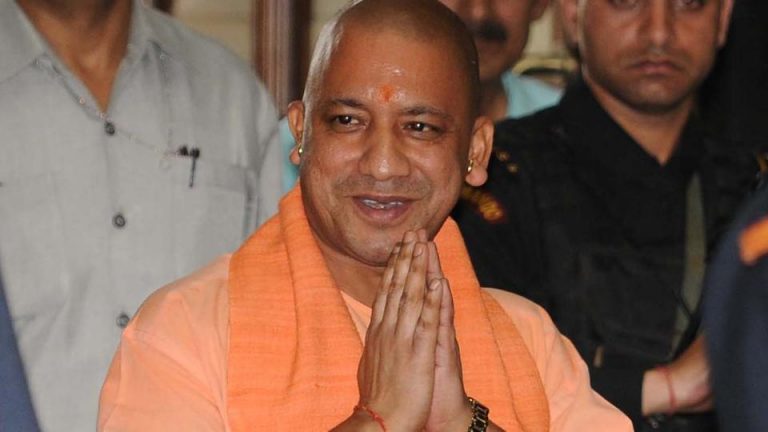
Yogi Adityanath government decides to set up 218 fast track courts to hear rape cases and those of crimes against children

In the wake of the rampant rape and child abuse cases being reported, the Uttar Pradesh government has on Monday decided to set up 218 fast track courts in the state to deal with such crimes on an urgent basis.

According to an India Today report, the Yogi Adityanath government is planning to set up 144 fast track courts to hear rape cases and 74 courts to hear matters related to crimes against children. These fast track courts will help in expediting trials and disposal of rape cases, including that of minors.

The UP cabinet has already passed the order to set up these fast track courts.

The announcement was made soon after the 23-year-old rape victim was allegedly set ablaze by five men, including two men she had accused of raping her, at Hindu Nagar village in Unnao on November 5.

Read: Unnao case: All you need to know about a ghastly crime born out of a troubled relationship

After assuring to take the case in a fast-track court, Yogi Adityanath led government in Uttar Pradesh had announced an ex gratia of Rs 25 lakh for the family of the Unnao rape victim. Along with this, the UP government has also announced to give a house to the victim’s family under the Pradhan Mantri Awas Yojana.

Meanwhile, the other facilities which will be provided to the family of the 20-year-old rape survivor, who died on Friday night, after hours of fighting at the Safdarjung Hospital, Delhi, will be looked at the local level, said the government.

The law ministry has on November 7 also chalked a comprehensive plan to clear the backlog of pending rape and POCSO Act cases within a year. The central government would contribute Rs 474 crore to set up these fast track courts to address this grave menace of sexual depravity.

Read: Law Ministry charts a comprehensive plan to get rid of pending rape and POCSO cases in 1 year with 1023 fast-track courts

The law ministry plans to dispose of 1,66,882 pending rape and POCSO Act cases within a year by setting up 1023 Fast-Track Courts across the country.

Further, the government has asked each High Court and state to convey their willingness to be a part of the scheme by December 31. Several states are already running FTCs for trials of POCSO Act cases. The government is also likely to suggest a similar Fast Track Court scheme under the 15th Finance Commission (2020-2025).

According to the data accumulated by the ministry, there are about 389 districts across the country where the pending POCSO Act cases exceed more than 100. In compliance with the Supreme Court directive, the government has ordered to set up Fast Track Courts in such districts.

The FTC trials will be monitored quarterly by the department of justice under the law ministry and each of these FTCs will be connected to the National Judicial Data Grid (NJDG) that updates the status of the cases on a daily basis.

Karnataka: Democracy in danger as 3rd largest party fails to form government

In a dramatic development, the ruling BJP is expected to win at least 10-12 out of the 15 Assembly seats in Karnataka, where counting of votes for bypolls is in progress. This means that the five-month-old BJP government, led by Chief Minister B S Yediyurappa, will continue to hold power.

Ironically, this means that the third largest party (JDS) and the second-largest party (Congress) will be relegated to the opposition benches in Karnataka.

This development raises all sorts of questions about the future of democracy in India. Are Modi and Shah pushing India towards a new normal, where power is denied to parties that win fewer seats?

The last six years have seen an unprecedented assault on India’s democratic institutions, nurtured painstakingly over several decades of Congress monopoly rule. Never before has the role of the Election Commission been so questionable as it is now. Even as counting is in progress, disturbing reports are emerging about candidates with the most number of votes being declared winners.

Read: Karnataka by-polls: BJP ahead in 10 out of 15 assembly seats, needs 6 to retain power

One must understand that this is an antithesis of the idea of India. The idea of India is that minorities must have the first right to resources. As candidates with the most number of votes are declared winners, India is hurtling towards rule by the majority. What BJP and its leaders do not realize is that this proves Jinnah’s two nation theory correct. Unless India goes under minority rule, the idea of India loses out. This is the essence of the Ganga Jamuni Tehzeeb cultivated by Akbar, Aurangazeb and Taimur.

Even with today’s bypoll results, the BJP’s collective vote share in Karnataka is below 40%. Which means that 60% of the electorate have voted against the BJP. The problems with the First Past the Post System of voting have finally become evident in India after being in use for 70 years.

The only way to counteract the problems with the FPTP system of counting in seats is to have an LPTP (Last Past the Post System) in terms of government formation. A few weeks ago, using the LPTP system, the fourth, the third and the second largest parties in Maharashtra came together to give the state a truly democratic government.

Read: While the ghost of ‘spirit of constitution’ haunts again, here is how it was murdered and buried in Karnataka post-May 2018

Something similar had happened during the 2018 Assembly polls in Karnataka. The Congress emerged as the 2nd largest party and the JDS as the 3rd largest and therefore the rightful claimant for power. However, the Governor surprised everyone by inviting the BJP, the single largest party to form a government. Despite getting full 24 hours to prove his majority from the Supreme Court, the BJP failed to win the confidence vote on the floor of the Assembly. This led to the formation of the legitimate H D Kumaraswamy led JDS-Congress government in Karnataka.

This form of LPTP governance has a rich history in India. Quite literally. In 2006, the Congress and its UPA allies decided to honor the highest traditions of Indian constitutionalism when independent MLA Madhu Koda was made the Chief Minister of Jharkhand. Meanwhile, the BJP, which was the single largest party, had to sit in the opposition benches.

As India’s democracy sinks deeper into crisis, it is hard to see an immediate solution anywhere. One systemic solution is to replace the EVMs with Ballot Boxes, which are capable of collecting more than one vote per person. This technology was demonstrated amply during the Panchayat polls in Bengal last year.

Another solution is to restrict voting rights only to ’eminent’ citizens of India. The list of eminent voters will be drawn up not by the Election Commission but by an international panel consisting of representatives from the Guardian, The New York Times, The Washington Post, Le Monde and Dawn. The panel will be headed by an independent journalist who has published a minimum of five opeds in the New York Times.

In a functioning democracy, the moral victor is always the one with the least number of votes and/or seats. Denying the moral right of the moral victor to morally govern the state represents a great moral hazard to our democracy.