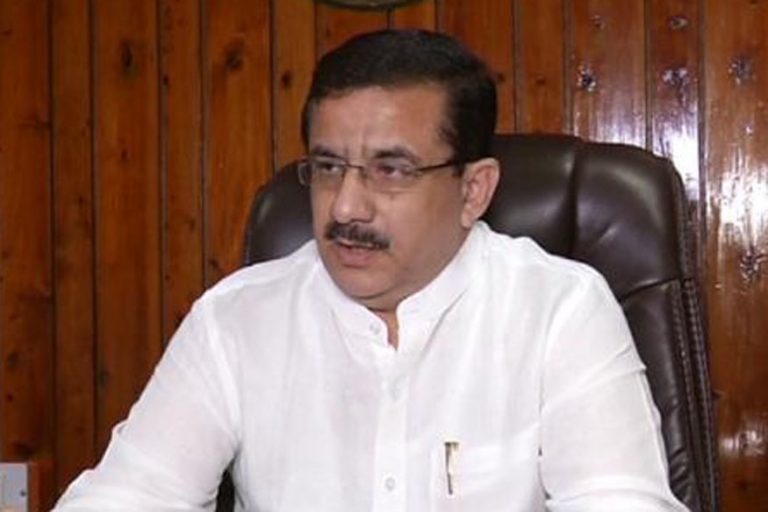
Uttar Pradesh Shia central Waqf Board chief Waseem Rizvi has stated that not just Ayodya but Muslims should hand over all the 11 Mosques that were built by Mughal emperors after demolishing temples on prominant places of worship for Hindus.
Rizvi stated that Muslims should give up their claim on all such disputed sites and hand them over to the Hindus to “corect the mistakes of ancestors”.
Rizvi has stated that the need for such an appeal has risen after the reports of Sunni Muslims seeking permission to offer Namaz at the disputed structures.He added that if all such issues were not resolved, the disputes will not end with the verdict on Ayodhya but fresh issues and disputes will arise.
In video shared on social media, Rizvi stated that there are 11 such disputed sites where Mosques stand on important places of worship for Hindus. The Mosques at Kashi, Mathura, Jaunpur and the Qutab Minar.
Rizvi stated that while all the churches that were destroyed to build Mosques have been reconstructed and restored, now is the time to give back the temple lands that were taken away by the Mughals.
He asserted that Muslims to rectify the mistakes made by ancestors and restore peace in the country.
It is notable here that Rizvi has been a supporter of building a temple at the Ramjanmabhoomi site. The Shia Waqf Board under him had also claimed that the Mosque was built by Babur’s Shia commander and it belongs to the Shia Waqf Board. He had announced that Shia Muslims are ready to hand over the land to Hindus to build a Ram Temple.
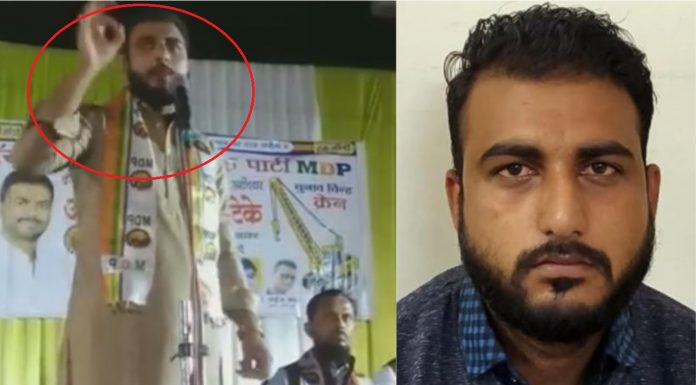
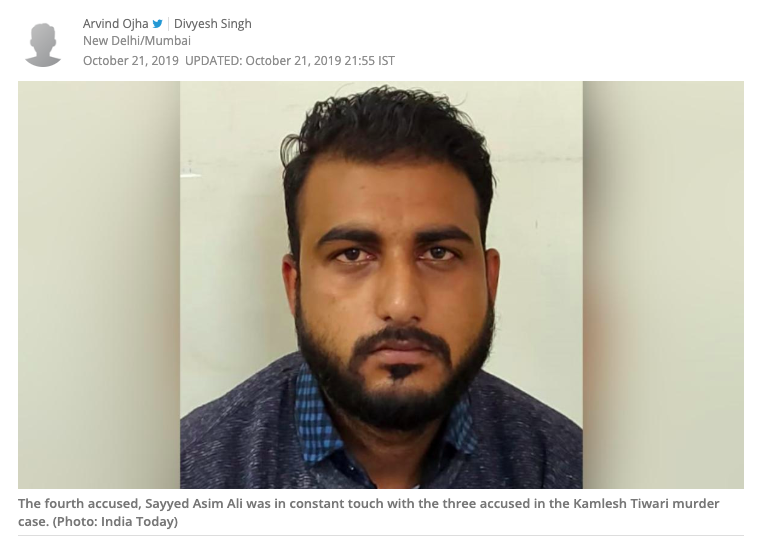
The Maharashtra ATS has arrested fourth accused, Sayyad Asim Ali from Nagpur, in the Kamlesh Tiwari murder case on Monday, October 21. He is a hardware shop owner and was reportedly constantly in touch with the three accused Rashid, Mohsin and Faizan already detained by the UP Police, UP ATS and Gujarat Police. As per reports, Asim Ali played a key role in the Kamlesh Tiwari murder case.
India Today report that Sayyad Asim Ali has been arrested by Maharashtra ATS
Who is Sayyad Asim Ali?
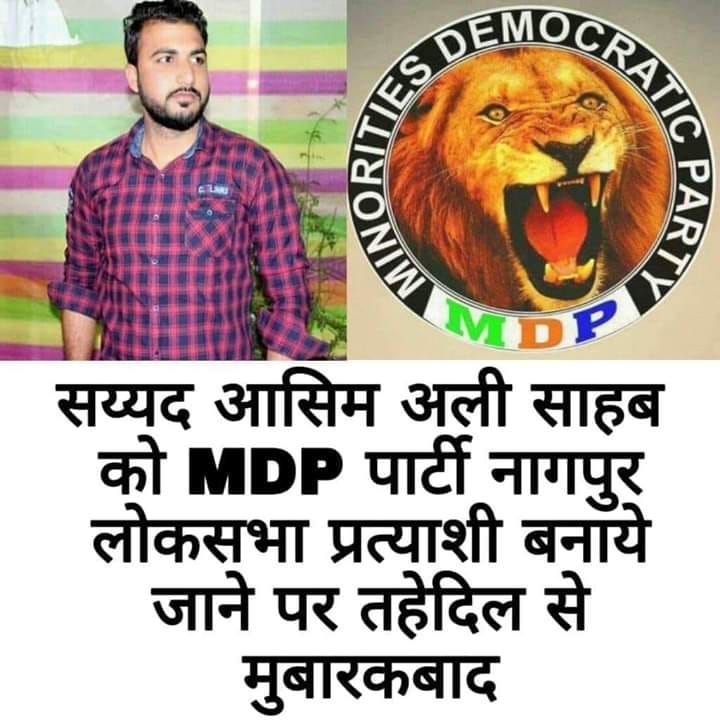
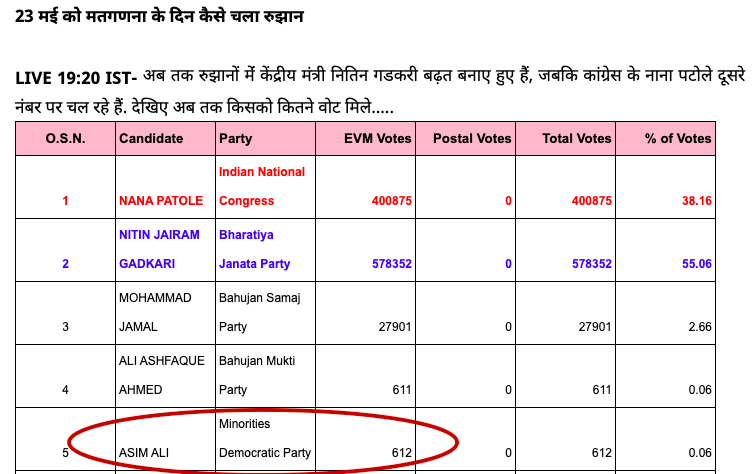
Sayyad Asim Ali contested the 2019 Lok Sabha elections from Nagpur constituency from ‘Minorities Democratic Party’ against BJP’s Nitin Gadkari.
Sayyad Asim Ali getting congratulated for contesting 2019 elections from Nagpur (Image: facebook.com/syedasimalisyw)
He got over 600 votes.
Nagpur constituency results for Lok Sabha elections, 2019
A year ago, he had threatened that Kamlesh Tiwari is now nearing his death. The video was uploaded on his YouTube channel on 24th October, 2018.
https://youtu.be/H_FpFbcTBes
In the video, he refers to Tiwari as ‘Kamlesh Harami’ and is angry at him for having insulted the Prophet. He says Kamlesh ‘Harami’ had two fathers and he was born out of their relationship. Anyone who is a ‘harami’ will only blaspheme against Rasulallah he says. Asim plays a clip where Tiwari could be heard saying how he is planning to make a film on the Prophet, his life, his character titled ‘Rangeela Rasul’.
In his video, he alleges that Hindu Mahasabha and the RSS came together to be slaves of the British and betray the Indians. He further says how Tiwari has blasphemed and was jailed for insulting the Prophet and now he is insulting again. “You killed us in Gujarat, we were silent. You killed us in Godhra, we were silent. You killed us in Muzaffarnagar, we remained silent. We remained silent when you took away our reservation. You tried to break up the laws of Islam, we were still silent. We even tolerated when you tore down Babri masjid. But if you will blaspheme against our Prophet, we will kill you,” he says. Asim adds that ‘mujahids’ know how to fight for the cause.
He further adds that this ‘qaum’ is made of soldiers of Aurangzeb and should not mess with them. “Do you want to destroy the peace in India?” he asks. In a veiled threat to Tiwari he says, looks like you don’t love your life, otherwise you should tell openly what you want. “We are neither afraid to die nor afraid to kill,” he says. We will not abuse your religion but if you abuse our religion, we will remind you of your ‘aukaat’.
“Kamlesh harami tu yaad rakh ki Rasulallah ki shaan mein tu movie banane ki baat kar raha hai, tere din to mukammal ho chuke hai. Aur woh film banane wale director, writer, producer, jitne bhi log hai, ek ek log yaad rakhiye… hum log, MDP, Sunni Youth Wing. Tumhara mukabla karne ke liye taiyar hai. Hum tumse mukabla karenge, chun chun ke mukabla karenge. Tum movie to bana kar dekho, maine pehle bhi kaha hai Ghazi Ilm-ud-din chale gaye, chhura abhi bhi baaki hai. Yaad rakhna us chhure ki dhaar ko bhoole na,(Kamlesh, remember, you are making a movie blaspheming against Rasullah, your days are numbered. That film director, writer, producer, whoever is involved, remember, we MDP, Sunni Youth Wing, we will fight you. We will fight with each of you. You just make the movie once. I have told before also and I’m saying it again. Ilm-ud-din may have gone, but the knife is still there. Never forget the sharp blade of the knife” he threatens.
To put things in perspective, Alim was angry because Kamlesh Tiwari had announced he’d make a movie ‘Rangeela Rasul’, chronicling life of Prophet Muhammad. Rangeela Rasul was a book published in the 1920s by one Pandit MA Chamupati as a retaliation to the book written by a Muslim depicting goddess Sita as a prostitute. Ilm-ud-din or Ilm Din was a carpenter who stabbed the publisher of the book, Mahashe Rajpal with a dagger.
On 18th October, Kamlesh Tiwari, who had once announced he would make a movie titled Rangeela Rasul, was stabbed by a man who was allegedly in touch with Asim who had invoked Ilm Din last year.
Reports suggest that Ilm Din proudly claimed that he killed Rajpal over Rangeela Rasul. He was represented by Muhammad Ali Jinnah in Lahore High Court and appealed to the court that Ilm Din was only 19 or 20 and hence he should not be given capital punishment. However, he was given death penalty for the murder.
Now, in Kamlesh Tiwari murder case, reports have emerged that like Ilm Din, whose reference Asim makes in his YouTube video, Kamlesh Tiwari’s murderers also wanted the world to know that they killed him. An Aaj Tak report states the accused Ashfaq and Moinuddin took sim card, booked hotel rooms in their real names, giving real identity proofs. They have also not made any effort to conceal their faces in the CCTV footage. It shows that they not only wanted to stab Tiwari (like Ilm Din who stabbed Rajpal, publisher of Rangeela Rasul, the book), but also wanted to be known that they did it.
Another BJP worker has been murdered by TMC goons in West Bengal. As per reports, Sankari Bagdi, a 47-year-old BJP worker in Bengal’s Birbhum was shot dead by TMC workers on Monday afternoon.
As per reports, Sankari Bagdi was a BJP worker from the Hatsalandi village under the Nanoor police station area in Birbhum district. She was shot dead by TMC goons in a clash between two groups.
Sankari Bagdi, a female BJP worker was brutally murdered by TMC goons in Nanoor, Birbhum. TMC was upset because BJP has a lead in Shankari’s village.
The sad irony is that women are dying due to political violence in a state where a woman is the Chief Minister. pic.twitter.com/5d8AQ36QGb
Bagdi’s son Uday had reportedly fought with his neighbour Aditya Bagdi who is a TMC supporter in the area. On the day of the incident, dozens of TMC workers holding guns and weapons had allegedly surrounded Sankari Bagdi’s house.
West Bengal BJP has claimed that TMC goons were upset because BJP was gaining popularity in the village.
As a clash erupted between TMC workers and BJP workers in the area, TMC workers allegedly started firing. Sankari Bagdi was hit with a bullet. 6 other BJP supporters have also been injured in the clashes.
Reports say that the TMC goons had targeted Uday Bagdi but hit Sankari instead. Uday is a BJP worker too. As per a report in Hindustan Times, Uday has stated that TMC goons in the area were angry on him because he had quit the party and joined BJP. They had cooked up the story of an illicit affair and targetted Uday over it, claiming that he is involved in a relationship with a married woman in the village.
As the TMC workers started firing during the clash, Sankari reportedly came in the way of a bullet that was fired to kill Uday. Sankari Bagdi died on the spot. The police reached the crime scene and have taken the body away for postmortem. An investigation has been initiated but no one has been arrested so far.
The TMC has reportedly stated that Bagdi was not associated with the BJP. But Birbhum district BJP president Shyampad Mandal has stated that Bagdi was associated with the local BJP office. Abhijit Singha, TMC district unit vice president has claimed that the clashes were due to the infighting between two groups of villagers over Uday’s affair and not political in nature. The TMC has also claimed that Bagdi was not associated with the BJP.
It is notable here that West Bengal has been witnessing rampant political violence as the BJP slowly gains a foothold in the TMC ruled state. Dozens of BJP workers have been killed so far by TMC goons.
A Muslim cleric based in Deoband, Uttar Pradesh has issued a fatwa ahead of Diwali. Maulana Abdul Waqeel Qasmi has issued a fatwa saying that bursting firecrackers in un-Islamic and any profit earned from the business of firecrackers is ‘haram’.
Maulana Abdul Waqeel Qasmi, who has declared firecrackers as haram through a fatwa is the state-secretary of Ittehad Ulema-I-Hind.
Maulana Qaseem said, “What others are doing is none of our concern, but for Muslims, it is certainly haram. Bursting crackers is nowhere mentioned in our religious texts. To burn crackers is like burning your own money. This money can be used for better things like education”.
Interestingly, this fatwa comes only days before Diwali, perhaps in a bid to ensure that Muslims stay away from participating in the Hindu festival.
Firecrackers also form a large part of Shab-e-Barat celebrations. Shab-e-Barat is what the Muslims celebrate once a year to seek forgiveness from their God. After staying up all night, it is often followed by sweets and the bursting of firecrackers.
The Ittehad Ulema-I-Hind has a long history of pronouncing fatwas. Recently, the Vice-President of Ittehad-Ulema-I-Hind had targeted Nusrat Jahan, the TMC Member of Parliament who married into a Hindu family.
The cleric slammed Nusrat for celebrating Durga Puja and said that it was un-Islamic for her to do so. In fact, the cleric also said that Nusrat Jahan should change her name and religion because while being a Muslim, she cannot participate in Durga Puja.
A few anonymous employees of global software giant Infosys have accused its Chief Executive Officer (CEO) Salil Parekh and Chief Financial Officer (CFO) Nilanjan Roy of unethical practices for many quarters.
According to the reports, the Infosys has been hit by a major controversy after an anonymous group of employees, who calls themselves as ‘ethical employees’, alleged that the firm has been dressing up its books to show better revenue and profit numbers.
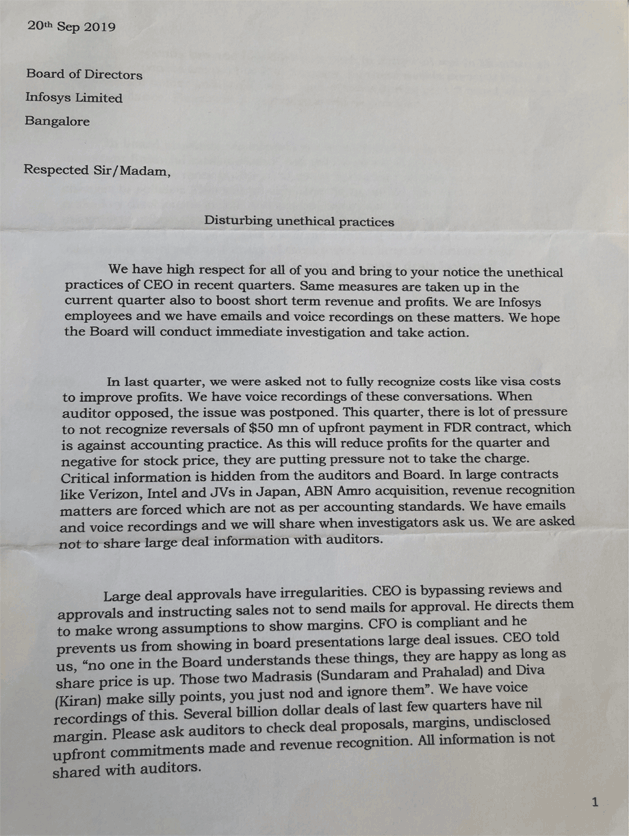
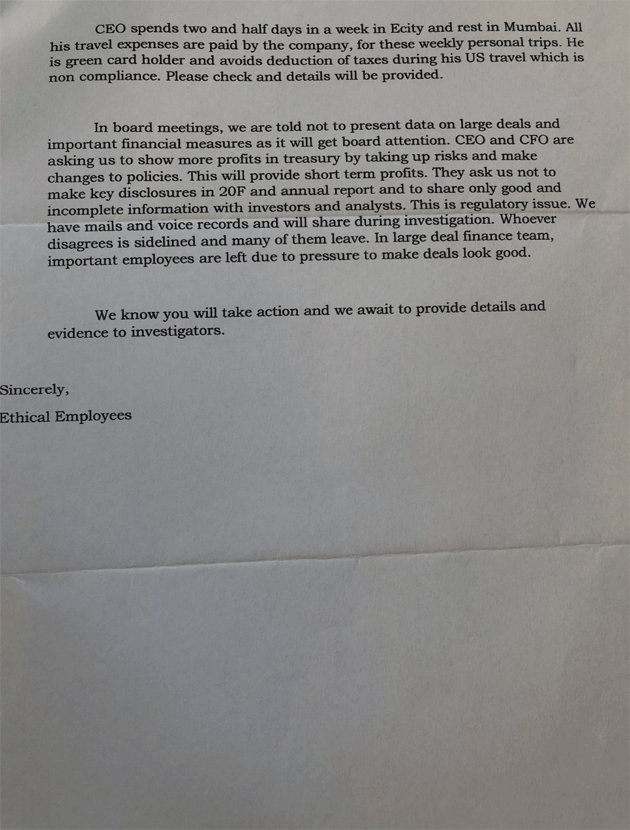
In a letter to the Infosys board and the US Securities Exchange Commission (SEC), the ‘ethical employees’ targetted CEO Salil Parekh while pressurising the finance team to take a number of steps that go against standard accounting practices.
“We are Infosys employees and we have emails and voice recordings on these matters. We hope the board will conduct an immediate investigation and take action,” they said.
“Parekh and Roy have been resorting to unethical practices for many quarters, as evident from their e-mails and voice recordings of their conversations,” said the complainants, who called themselves ‘ethical employees’ in a 2-page letter to the city-based IT behemoth’s board of directors on September 20.
The employees alleged irregularities in large deals like Verizon, ABN Amro and a joint venture in Japan, saying revenue recognition was not as per accounting standards.
“Large deals have irregularities. CEO is bypassing reviews and approvals and instructing sales not to send mails for approval… Several billion-dollar deals of the last few quarters have nil margins. Please ask auditors to check deal proposals, margins and undisclosed upfront commitments made and revenue recognition. All information is not shared with auditors,” the letter read.
The letter alleged they were asked not to fully recognise costs like visa costs to improve profits in the last quarter. “We have voice recordings of these conversations. When auditor opposed, the issue was postponed.”
The letter further stated that important metrics on large deals and other financial information was suppressed to avoid the board’s attention. “CEO and CFO are asking us to show more profits in treasury by taking up risks and make changes to policies. This will provide short term profits. They ask us not to make any key disclosures in 20F and annual reports and to share good and incomplete information with investors and analysts. This is a regulatory issue. We have email and voice recordings and will share during the investigation. Whoever disagrees is sidelined …In a large finance team, important employees have left due to pressure to make the deal look good,” the employees said.
In response, Infosys in a statement on Monday said the complaint has been placed before the audit committee as per the company’s practices. “The complaint will be dealt with in accordance with the company’s whistleblowers policy,” Infosys said in the statement.
Soon after the Modi government agreed to give Guru Ravidas Temple devotees the same site where Ravidas temple was demolished a few months back in South Delhi, the Supreme Court has given its consent for the same.
Supreme Court on Monday also agreed to allow construction of a shrine to Guru Ravidas, revered by the Dalits, in south Delhi, on a 400 square metre plot of land at the same site where a Ravidas temple stood before it was demolished in August on the orders of Supreme Court.
#Breaking | SC allows construction of Guru Ravidas temple at the same site where the temple was demolished and says that temple has to be build within 400 sq. m. pic.twitter.com/Byr3VLk3mS
Moreover, barring any commercial activity in the area in and around the place earmarked for the temple, the apex court has ordered the Central government to set up a committee within six weeks for the construction.
According to reports, the Centre offered to give back the same site to rebuild the shrine to ensure peace and harmony amongst the Dalit community which follow Saint Guru Ravidas.
In the last hearing, the Supreme Court had asked the stakeholders involved in the Ravidas temple controversy to deliberate on the issue with the lawyers and law officers and devise a solution to build a new temple at an alternate site.
The Supreme Court bench comprising of Justice Arun Mishra and Justice Ravindra Bhat said that the Court will pass orders after the parties place a solution before it. The court asked the parties to find an amicable solution on a better location where the temple can be built.
“You find an amicable solution and come back to us. Any day we can pass the order. We respect the sentiments of everybody on the earth but we have to follow the law,” the bench said.
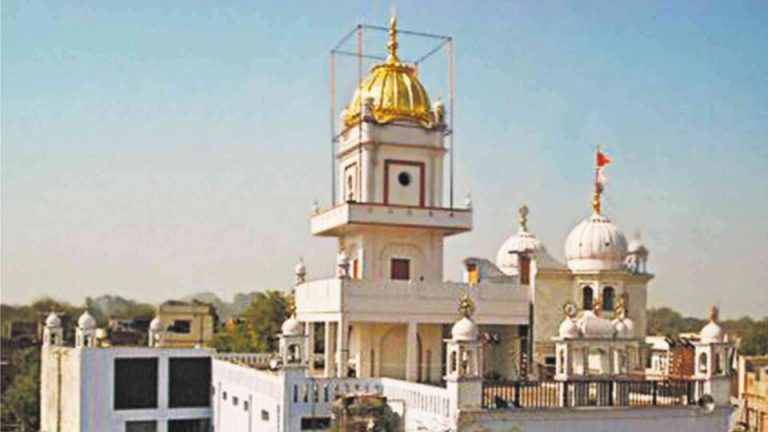
The temple was demolished by the Delhi Development authority following Supreme court’s orders as the 15th-century shrine was located in a protected forest. Following the demolition, large scale protests were organised by members of the Dalit community who follow Saint Guru Ravidas. The followers of the Saint Ravidas believe that Guru Ravidas had stayed at the temple site after it was given to him in 1509 by Sikander Lodhi.
In their plea, the petitioners have contended that the site has religious significance for over 500 years, even before the Government of India or DDA came into being. The petitioners argue that the government, therefore, cannot say that the temple and the samadhis of Guru Saint Ravidas are encroaching upon the Government land.
The petitioners had urged the top court to restore the Ravidas Temple at the Tughlaqabad site.
As per the latest numbers trickling down from multiple exit polls, the BJP is all set to come back to power in both the states of Maharashtra and Haryana. All exit polls suggest that BJP will be in a comfortable position, perhaps in a better position in staking a claim at the government as compared to their standing in 2014 Vidhan Sabha elections.
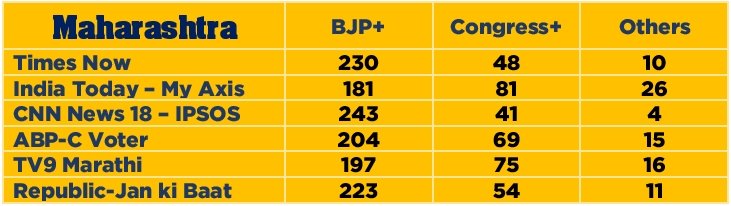
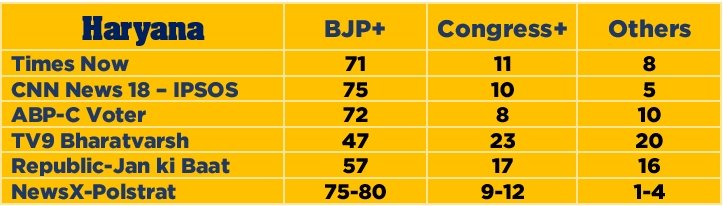
Here are the exit poll numbers from top agencies for the two states:-
For the state of Maharashtra, Times Now Exit Poll projected a whopping 230 seats to the BJP coalition while the alliance stitched by Congress is forecasted to get a paltry 48 out of the 288-member Vidhan Sabha assembly. The tally of other parties stands at 10.
India Today- My Axis Exit Poll
The India Today-My Axis exit poll has been slightly generous to the grand old party as it predicted 81 seats to the Congress alliance while forecasting 181 seats to the coalition formed by the saffron party. The number of seats procured by Others as per India Today-My Axis hovers around 25.
CNN News 18- IPSOS Exit Poll
According to the CNN News 18- IPSOS poll, the Devendra Fadnavis-led BJP government in Maharashtra is all set to come back to power with 243 seats while the opposition will be reduced to 45 in the 288 member Vidhan Sabha assembly.
ABP – C Voter Exit Poll
The NDA alliance stands at 204, while the Congress-led UPA alliance is poised to bag 69 seats in the recently concluded Maharashtra Assembly elections. ABP- C Voter has predicted 15 seats to smaller parties and an independent candidate.
TV9 Marathi
The exit poll conducted by regional news channel TV9 Marathi grants 197 seats to the BJP coalition while forecasting 75 seats for the Congress-NCP alliance.
Jan Ki Baat
Jan Ki Baat poll agency has forecasted BJP dominance in the state of Maharashtra with 223 seats to their alliance. The exit poll shows Congress languishing at 54 while others count remains at 11.
Haryana Exit Polls
POLL OF POLLS: Here are the projections for Haryana Assembly polls. | #TimesNowExitPoll
The Times Now exit poll claims that BJP coalition will sweep Haryana with 71 seats while Congress will be reduced to 11 seats from its previous tally of 15 seats in 2014 state assembly elections.
IPSOS
The IPSOS survey says BJP will secure 75 seats in the northern state of Haryana while Congress will grab 10 of the total 90 Vidhan Sabha seats.
TV9 Bharatvarsh
According to TV9 Bharatvarsh, the BJP alliance will bag 47 seats while the UPA alliance will get 23 seats. The exit poll suggests that other smaller parties may play an important part in forming the government in the state as their number will be close to 20.
NewsX
The survey conducted by NewsX reveals that BJP alliance will score 77 of the 90 seats and comfortably form a government at the centre. The UPA’s relegation in the Lok Sabha elections will be mirrored in the Haryana state elections as NewsX survey predicts a meagre 11 seats from the coalition.
Jan Ki Baat
Jan Ki Baat predicts 57 Vidhan Sabha seats to BJP alliance in Haryana while grating 17 and 16 to the UPA and other parties respectively.
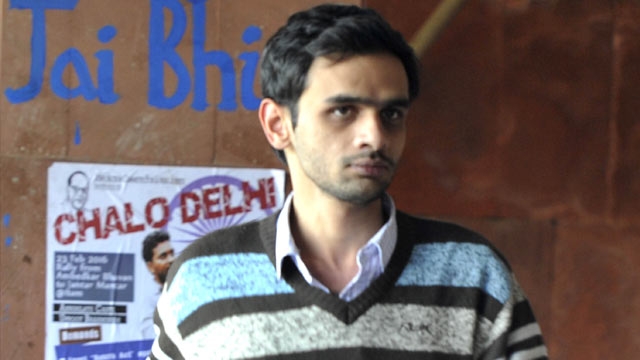
Two days after Hindu activist Kamlesh Tiwari was brutally murdered by Jihadis for blaspheming against the prophet of Islam, far-left atheist Umar Khalid has come out as a devout Muslim on social media. In a long Twitter thread, the former ‘apostate’ Umar Khalid preached the glory of Islam.
Thread:
The Hindutva brigade is desperate to divide. In their hatred for Muslims & Islam they are now openly abusing the Prophet. How do we respond? The life of Prophet Muhammad (SAW) teaches us that the best way to respond to hatred is by love & compassion.#ProphetofCompassion
Umar Khalid claimed that the prophet was “not just Rahmatul Muslimeen. He is Rahmatul Alameen.” For a person who is supposedly an ‘atheist’, that’s an awful lot of respect for a religious figure. He further says that “we” shouldn’t disrespect anyone’s religious beliefs because that “goes against the Prophet’s teachings.” It was part of a coordinated attempt to deflect attention from the threat of Radical Islamic Terrorism and blame the ‘Hindutva brigade’ for preaching hatred.
The Hindutvadis hate has given us an opportunity to present the views of Prophet. Let us take this opportunity whole heartedly. But we should not, in any condition, disrespect anyone else’s faith or God’s. That goes against the Prophet’s teachings.#ProphetofCompassion
Thus, it can be safely concluded that whatever Umar Khalid’s beliefs were until yesterday, the tweet thread confirmed that he is no longer an ‘apostate’. He is a devout Muslim now. The punishment for apostasy is deemed to be death by a great many Muslims around the world. It is a crime in many Islamic countries and some even reserve the death penalty for apostates. The Islamic term for an apostate is ‘Murtad’.
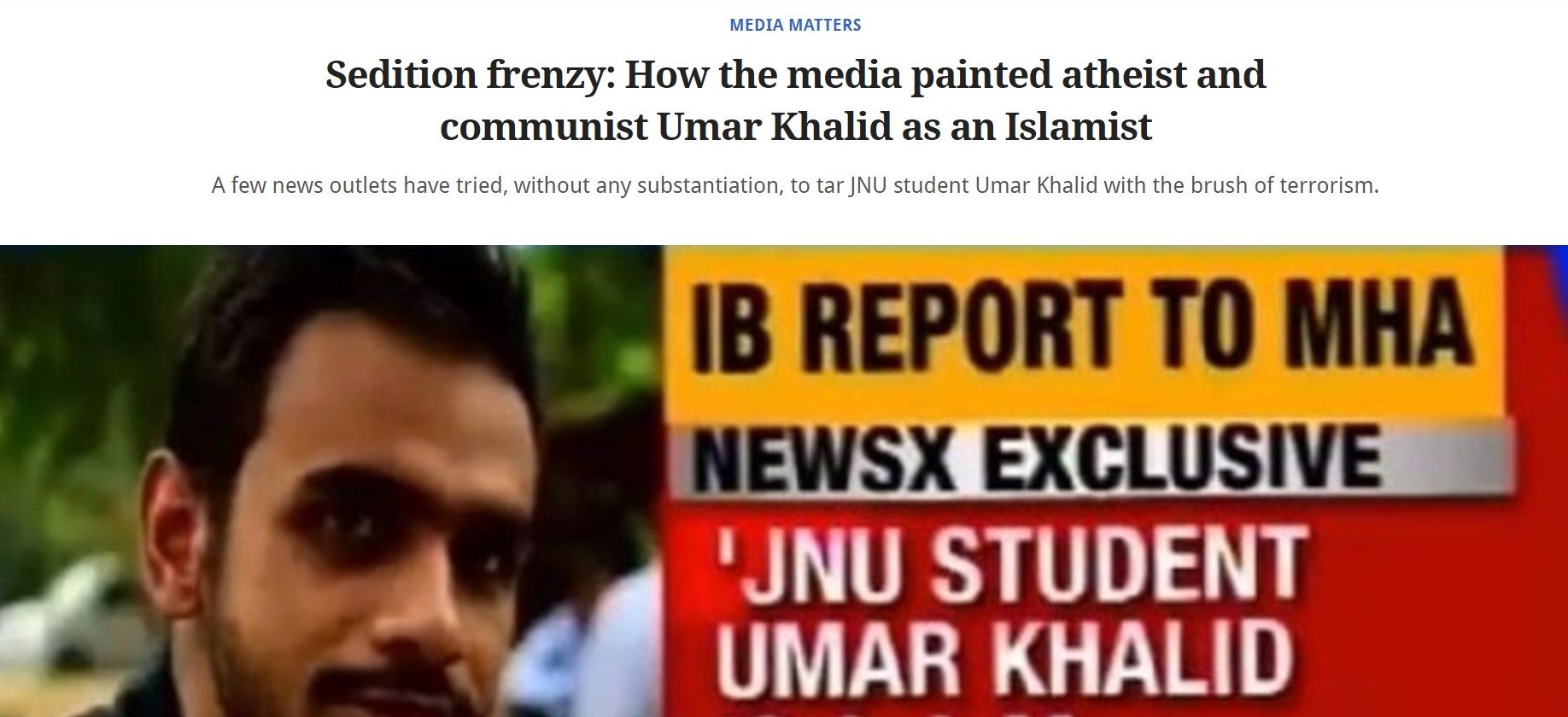
Umar Khalid’s apparent reconversion to being a Muslim presents an interesting case as his leftwing atheist credentials were greatly emphasized in the media. Scroll published an article with the headline “Sedition frenzy: How the media painted atheist and communist Umar Khalid as an Islamist”.
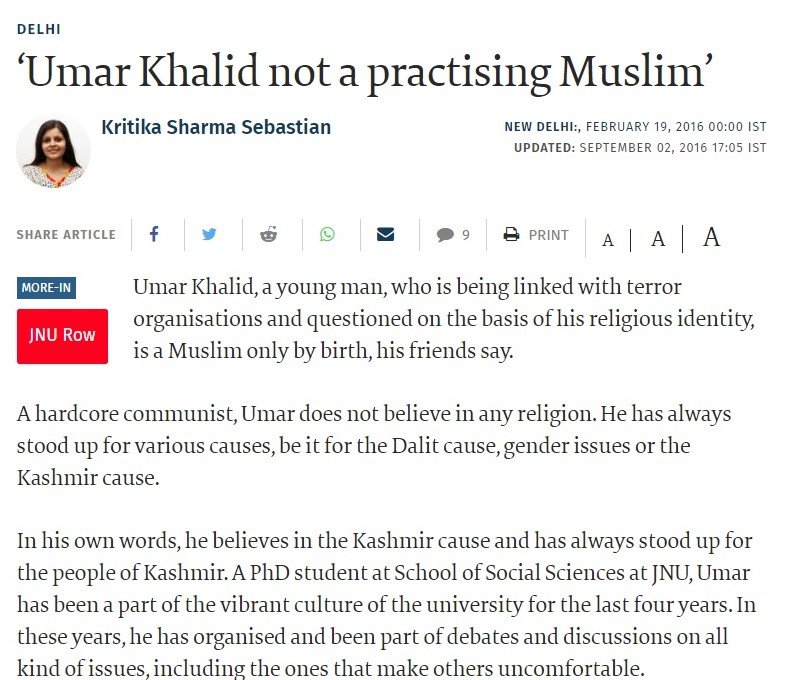
The Hindu, too, emphasized on him being a “hardcore communist” who “does not believe in any religion”. Not just Scroll or The Hindu, Wire and Quint and numerous other media outlets also published articles emphasizing on his communist identity and atheism.
In February 2016, he was quoted by NDTV as saying that he had felt ‘Muslim’ for the first time in his political life during the JNU controversy. He had said, “For the six-seven years that I have done politics on this campus, I have never thought of myself as a Muslim. I have never also projected myself as a Muslim. In the last 10 days, for the first time, I felt like a Muslim. These people are telling us about patriotism… They may have a majority but they are scared of us… they are scared of our struggle, they are afraid of us because we think.”
However, long after that as well, Umar Khalid was continued to branded as an atheist by the media and judging from the fact that he never corrected them, it is safe to say that he continued to be an atheist long after that. The confirmation of his Muslim identity only came after Kamlesh Tiwari’s murder for blasphemy by Jihadis, although it has been suspected for long.
Thus, there are two major possibilities that could perhaps explain Umar Khalid’s radical transformation from an atheist to a Muslim. Firstly, the whole charade of him being a Muslim might have been ‘Taqiyya’. The practice of ‘Taqiyya’ is religiously sanctioned lying or deceiving non-Muslims in order to present oneself as not a true believer in Islam.
The other possibility is that seeing the rise of Radical Islam, which is the single greatest threat that India currently faces and has many Indians afraid for their lives, ‘Murtad’ Umar Khalid did not feel comfortable with identifying himself as an atheist in these troubled times. It could very well be that he succumbed to the threat of Radical Islam, which was evident in Kamlesh Tiwari’s murder, and used the ‘Hindutva brigade’ to reaffirm his identity as a Muslim.
If the second speculation is indeed correct, then it does really speak for the times we are living in when someone who has been as vocal a critic of Hindutva as Umar Khalid and has adopted numerous stances which have popular support among Islamic fundamentalists as well does not feel safe as an atheist. In fact, his brand of politics was so similar to that of Islamic fundamentalists that the media had to emphasize on his ‘communist atheist’ credentials to rubbish speculations of him being a closet Islamist. The biggest argument against this theory is the fact that not a single Islamic fundamentalist, not anyone we know of anyway, has issued any comments against him for being a Murtad, which is extremely unusual.
Of course, Umar Khalid could go on to claim in the future that he is still an atheist. But it will be extremely difficult for anyone to sell that story given the manner in which he prostrated before on Twitter. Furthermore, the fact that he used hashtags on Twitter to deflect attention from the barbarity of Radical Islam demonstrated during Kamlesh Tiwari’s murder makes it monumentally hard to argue that he is still an atheist. Despite all of this, he could, of course, still claim to be an atheist but that will be extremely hard to believe.
One has to admit that there are other possibilities that might have fueled Umar Khalid’s reconversion to Islam. And we can only speculate the reasons until then. There’s only one person who can put these speculations to rest, Umar Khalid himself.
The Nagpur Unit of Maharashtra Anti Terror Squad arrested one Sayyed Asim Ali from Nagpur in connection with his role in the murder of Hindu Samaj chief Kamlesh Tiwari on Saturday last week. The Uttar Pradesh police produced the accused before the court in Nagpur today and obtained his transit remand.
It was revealed that the suspect Sayyed Asim Ali was in constant touch with other accused in this case. It is also revealed that he has played very important role in the #KamleshTiwariMurder case. The accused was
arrested by ATS, Maharashtra.
According to the sources, the Nagpur ATS received confidential information regarding the involvement of Sayyed Asim Ali in Tiwari’s murder. Based on the information received, Maharashtra ATS conducted an operation and Nagpur ATS inquired Ali. As per the revelations, the accused Ali was in constant touch with the 3 other accused arrested and played a pivotal role in the assassination of Kamlesh Tiwari.
The Uttar Pradesh police and Gujarat ATS sprung into action to blow the lid off a Surat-based Jihadi group that was indoctrinated by one of the accused who planned the murder, Maulana Mohsin Sheikh. Two other conspirators, Rashid Pathan and Faizan have been arrested. They have reportedly confessed to the crime of killing Tiwari.
The Gujarat ATS has declared the names of the murderers as Moinuddin and Ashfaq who are still absconding. Director General Police of UP has announced a reward of Rs 2.50 lakhs each (total Rs 5 lakhs) for the apprehending of the two murder accused. According to the reports, the Gujarat Special Task Force (ATS) stated that a conspiracy was hatched to murder Kamlesh Tiwari and one of the accused, Ashfaq created a Facebook profile with the name ‘Rohit Solanki’ and befriended the deceased leader.
A CCTV footage had emerged showing the two attackers moving out of the hotel in their saffron kurtas carrying the box of sweets in which the murder weapon had been hidden. The Uttar Pradesh are still on the lookout for the murderers.
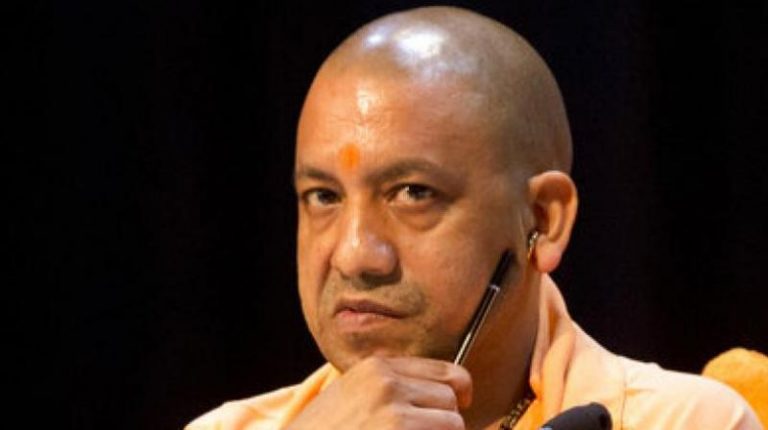
The Yogi Adityanath led Uttar Pradesh government has ordered that the hearing in the ex-Hindu Mahasabha leader Kamlesh Tiwari’ murder case would be heard in a fast track court.
Respecting the deceased leader’s families demand Yogi Adityanath has decided that the case would be heard on a daily basis.
The Uttar Pradesh Police has also announced Rs 2.5 lakh reward to anyone who gives information on the two suspected killers of ex-Hindu Mahasabha leader Kamlesh Tiwari, Ashfaq and Moinuddin.
The police have intensified raids across ‘musafirkhanas’ and madarsas in Shahjahanpur in Uttar Pradesh in a bid to arrest the culprits.
The duo has been identified using CCTV footage from a camera outside Tiwari’s office in Lucknow as well as the hotel they checked in to. They have been absconding since. The UP Police is looking for them in UP as well as neighbouring states.
According to sources, the suspects had reached Lucknow by road after deboarding the train at Kanpur, Uttar Pradesh. CCTV footage has been obtained from Kanpur Railway station. Following the murder, the assassins reached Hardoi, Pilibhit and Bareli. One of the suspects is also believed to be injured and he got treatment in Bareli at a known person’s place. Moinuddin was reportedly hurt while committing the murder and in the CCTV footage obtained from the hotel, he could be seen with his hand in his pocket trying to hide his injury.
It is believed that one of the accused, Ashfaq, had befriended Tiwari by posing as Rohit Solanki to gain his trust. Before the murder, Ashfaq had a conversation with Kamlesh Tiwari on the phone when he stated his wish to join the organisation. The meeting between Kamlesh Tiwari and Ashfaq was fixed after the conversation.
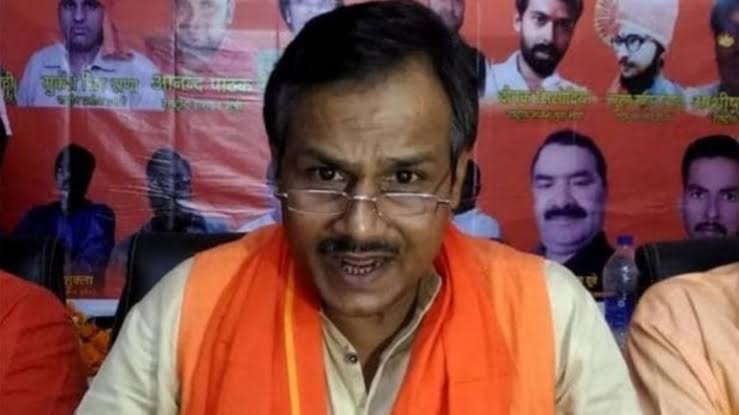
Tiwari, a former Hindu Mahasabha leader, was assassinated at his Lucknow office by one Ashfaq and one Moinuddin who are still absconding and on the run. The Uttar Pradesh police and Gujarat ATS sprung into action to blow the lid off a Surat-based Jihadi group that was indoctrinated by one of the accused who planned the murder, Maulana Mohsin Sheikh. Two other conspirators, Rashid Pathan and Faizan have been arrested. The Gujarat ATS has declared the names of the murderers as Moinuddin and Ashfaq who are still absconding. Director General Police of UP has announced a reward of Rs 2.50 lakhs each (total Rs 5 lakhs) for the apprehending of the two murder accused.