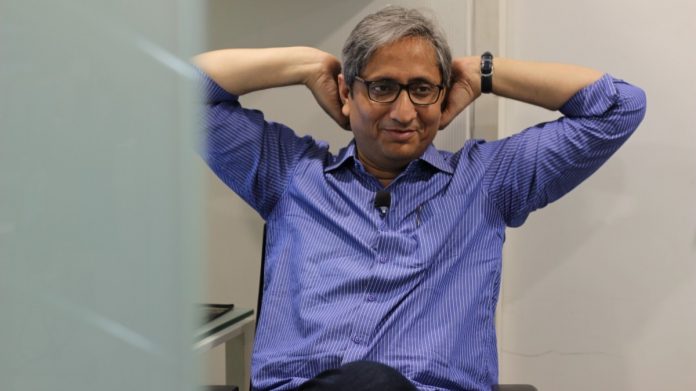
Magsaysay Award winner ‘journalist’ Ravish Kumar has now doubled up as love-guru as he mansplains a captivated audience what kind of men women should fall in love with. While short answer according to him is a BJP supporter, long answer in his monotone has quite a few problematic generalisations and quite frankly, an assault on sensibilities. Ravish Kumar was speaking at ‘Talk Journalism’ event in Jaipur last week where he was perhaps giving a glimpse to his own mindset.
In a 6-minute clip shared by Madhya Pradesh Congress, Ravish is seen dishing out pearls of wisdom to young girls on the kind of man they should fall in love with.
नफरत फैला रहा है कोई,
आपको पड़ोसी से लड़ा रहा है कोई,
कमल पर मतदान की इतनी सजा,
गोडसे को देशभक्त बता रहा है कोई..! pic.twitter.com/MjCQw2gmZ4
Ravish starts off which saying how everyone has gone ‘silent on Swami Chinmayanand case’ where the former union minister has been accused of raping a girl. While fact is, Swami Chinmayanand case has been all over the place, covered by everyone. He then says how a case filed against Azam Khan for stealing a goat is debated for hours.
Ravish Kumar says some men like to see their neighbourhood Muslim as an enemy. Just to be clear here, Azam Khan is currently an MP and is declared as a ‘land mafia’ and has over 80 cases against him, including that of stealing goats. Perhaps Ravish would like to explore the idea that the cases against Khan are filed not because of his religion but because of the fact that those are crimes?
He then mansplains to women that if a man shows hatred towards a section of society can not be a good husband, a good lover or a good brother. “Do not marry any IT cell worker,” he cautions. “While one should not give dowry, but if your parents give some money secretly then you’ll lose money as well,” he says to a cheering audience. In his one hour address, this is not the only time he has mentioned dowry. He had also casually joked how the fathers of audience members would have also taken dowry to marry their mother. While humour is often considered a way to highlight social evils, the fact that Ravish is so obsessed shows a glimpse into his own thinking. On an aside, Ravish Kumar’s brother, Congress leader Brajesh Kumar was accused in a sex scandal which reportedly ended with a ‘compromise’.
This is not the first time Ravish Kumar has tried to show his disturbed mindset by disguising himself as a feminist.
Why does Rubbish insist on talking in English? But his last question is very pertinent, I want to ask that question to his wife, how can she stay married to a guy with a constantly constipated countenance and an irritating laugh like that? pic.twitter.com/QayuxlzWDp
Soon after his Magsaysay award, while answering an audience question Ravish Kumar very casually says how he sometimes asks girls how can he marry an Indian boy. “Full of caste, feeling, full of bias, full of patriarchy, how can you love them?” he asks. A bit rich coming from the man who praises a magazine which tried to divide the Indian Army on caste lines. According to Ravish, dividing the Army on the basis of religion is wrong but asking the families of martyrs “Kaun Jaat Ho?” while they are grieving is an example of path-breaking journalism.
Remember, Ravish Kumar has no qualms in asking people on screen what caste they belong to.
On one hand, Ravish Kumar communalises the law taking its course against politicians by investigating the allegations of crime against them and on the other hand, he cautions the audience to not fall prey to communalisation. Ravish Kumar really can’t make up his mind.
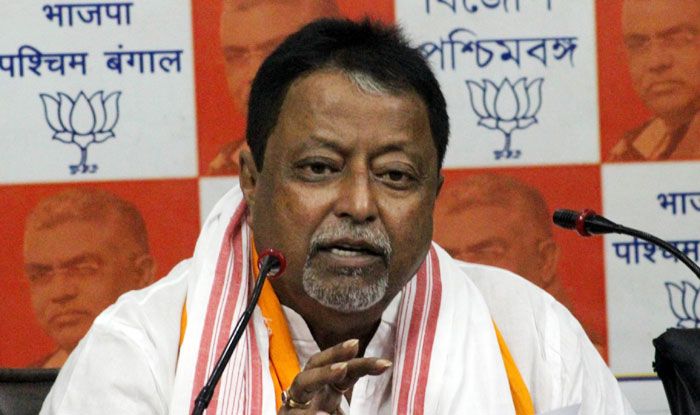
The CBI reached the residence of BJP leader Mukul Roy to question him in connection with the Narada Sting Operation case. IPS officer SMH Mirza, who was arrested recently, was made to accompany the CBI during the questioning as well.
The ‘face-to-face’ interrogation has been videotaped by the investigative agency, reports say. In the tapes that had surfaced in 2016, Roy and Mirza were allegedly seen accepting bribes for favours.
The BJP leader was grilled by the CBI for two and a half hours on Saturday. Following the interrogation, he had accused Chief Minister Mamata Banerjee of hatching a “big conspiracy” in a bid to frame him. He promised to cooperate with the investigative agencies fully.
“Mamata Banerjee is hatching a big conspiracy against me. Whoever is being arrested for corruption, they are being told to take the name of Mukul Roy,” he said. “Everybody is being instructed (to take my name),” he claimed. “I would like to state that I am always ready to face the probe agency, because I know I have no involvement in the case,” he stated further.
IPS officer SMH Mirza became the first person to be arrested in the Narada Sting Operation Case on Thursday. The sting operation was conducted by Mathew Samuels of the Narada News portal. Samuel posed as a businessman and could be seen in the tapes offering money to Trinamool Congress leaders. The video clips span over 52 hours and showed 13 people, including seven MPs, four ministers, one MLA and an IPS officer accepting a total of Rs 60.5 lakh as bribe.
Cricketer and BJP politician Santhakumaran Sreesanth has claimed that he will be fighting the General Elections 2024 from Thiruvananthapuram constituency against eminent Congress leader Shashi Tharoor. Sreesanth’s statement has appeared in an exclusive interview in the Indian Express.
Appearing upbeat about his chances against Tharoor, Sreesanth said that he will defeat the three-time MP in the 2024 Lok Sabha elections.
”I am a big fan of his as a person who stood by me but I will defeat him in the upcoming Lok Sabha elections in 2024, Sreesanth added.
The fast bowler said that he is toiling to increase his outreach among the people and win their support. He also stated about his future plans that included a web-series about his life, an autobiography, movies and one final cricket game before he hangs his boots.
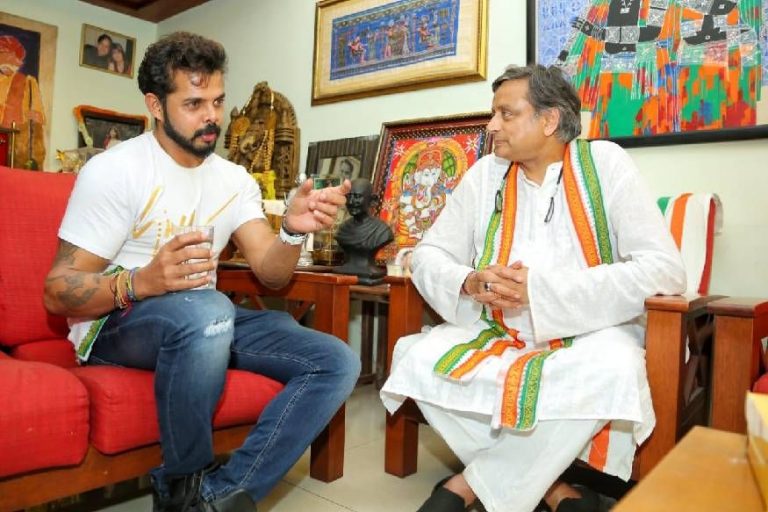
Earlier in the year, when Sreesanth had visited Tharoor at his residence in Thiruvananthapuram, Tharoor had hailed him as one of the best bowlers India has produced and had called him a proud icon of Kerala. The meeting came at a time when the ban imposed on Sreesanth for his alleged involvement in match-fixing was revoked. “Happy to know his ban has been revoked. Wishing him all success for the wickets ahead!” Tharoor had tweeted.
It is notable to mention that Sreesanth and two other Rajasthan Royals players were banned for life over alleged involvement in betting and spot-fixing following a 2013 scandal in the Indian Premier League. However, the apex court had lifted the life-ban on the cricketer and pulled up the BCCI for the botchy handling of the betting and the match-fixing case.
Sreesanth had joined BJP in 2016. Though the RSS had reservations about the cricketer’s candidature, BJP had finally declared Sreesanth as a candidate for the Thiruvananthapuram assembly seat for 2016 Kerala assembly elections. Sreesanth had lost the seat to Congress’ VS Sivakumar by 11,710 votes.
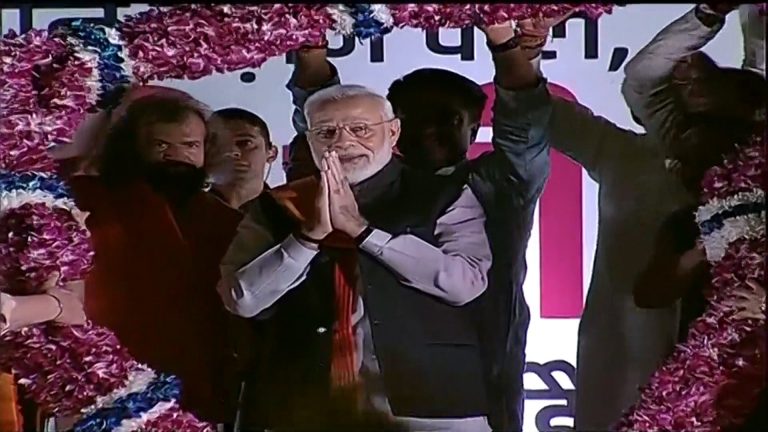
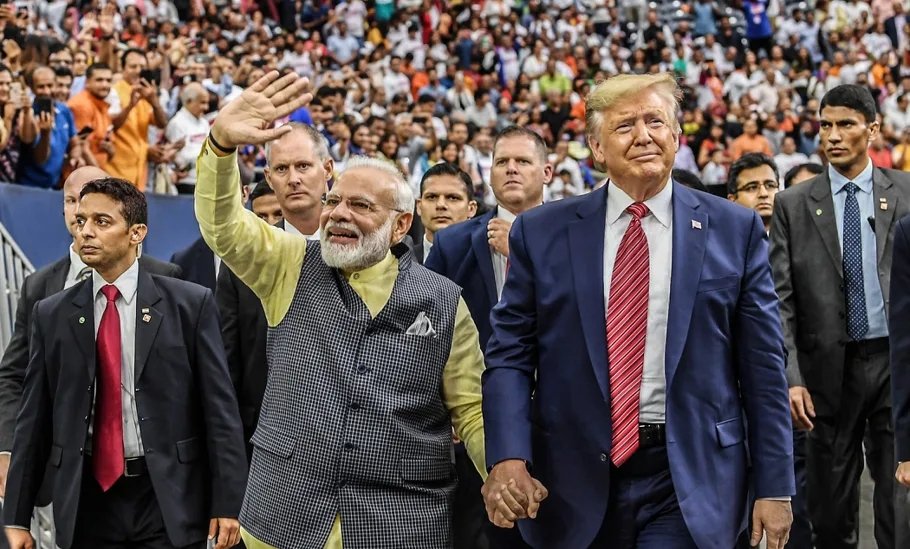
Prime Minister Modi was welcomed with a grand reception on his arrival from the USA where over 30,000 BJP supporters were present. Some BJP supporters on social media had expressed their displeasure over the same.
Yes, I have read these reactions where people have questioned the event and why BJP should not have done this. People have termed it sycophancy and expressed apprehensions that the BJP will turn into Congress if this continues. But rest assured, it is not so.
You see, PM Modi is making it all look so easy and simple but it was not. What happened in USA is extraordinary and unprecedented.
What happened in UN is also something that was unimaginable a few years back. Complete meltdown of Pakistan and its sympathisers is one big achievement which should be celebrated and highlighted.
Further, the very fact that it was 28th September. Third anniversary of surgical strikes in Uri which we almost have forgotten that. We needed a Modi to carry out surgical strike and we also needed a Modi again to remind us of third anniversary of historical first ever surgical strikes against Pakistan.
It shows that somewhere we have started taking it all for granted. We are forgetting how it all was just impossible and unimaginable a few years back.
As far as fear of BJP becoming Congress, one thing we all should know, BJP cannot become Congress ever because these two are exactly opposite of each other. The very fact that BJP supporters can question and criticise even an event that has PM Modi at the centre of it shows and proves that there is no possibility of it ever becoming like Congress.
BJP would have celebrated the success of Indian Prime Minister on global stage even if it were a Congress Prime Minister. The way Pakistan and anti-India forces are attacking BJP and RSS and the way they are using exact language that Congress and its leaders are using shows the inherent basic difference between BJP and Congress.
We as a nation are witnessing history in the making. We as a nation are witnessing things that were beyond our imagination even till few months back. We should not fall into the trap where we start seeing our big achievements as small and our small problems as big.
We need to learn to celebrate, to highlight and to acknowledge this massive attitudinal and perceptional change that India is going through.
Just because PM Modi is delivering very single day something extraordinary, it doesn’t mean that we can afford to take it all for granted.
Decision like abrogation of Article 370 , Triple Talaq Bill, surgical strike and all the awards and recognitions he is receiving for the remarkable work on development and climate change, is extraordinary and worth celebrating and highlighted and talked about.
Friends, never forget that there are forces who are trying every single day to change the narrative. Forces who depends on negative energy, forces which are constantly working very hard to ensure that India and Indians should never be able to realise and celebrate its extraordinary powers and its extraordinary achievements.
Ending the negativity and highlighting the positivity, ensuring that this message repeatedly reaches to everyone in the society in all possible ways is one most important task at our hands.
Celebrations gives us the belief and faith that we are capable of more.
Abrogation of Article 370, Triple Talaq Bill, Gates Foundation Award, meltdown of Pakistan at UNGA, anniversary of surgical strikes, massive action against high level corruption, aggressive financial reforms and boom in share markets: there is so much to celebrate, the list is long and growing…
This is New India. it celebrates a little and achieve a little more every single day.
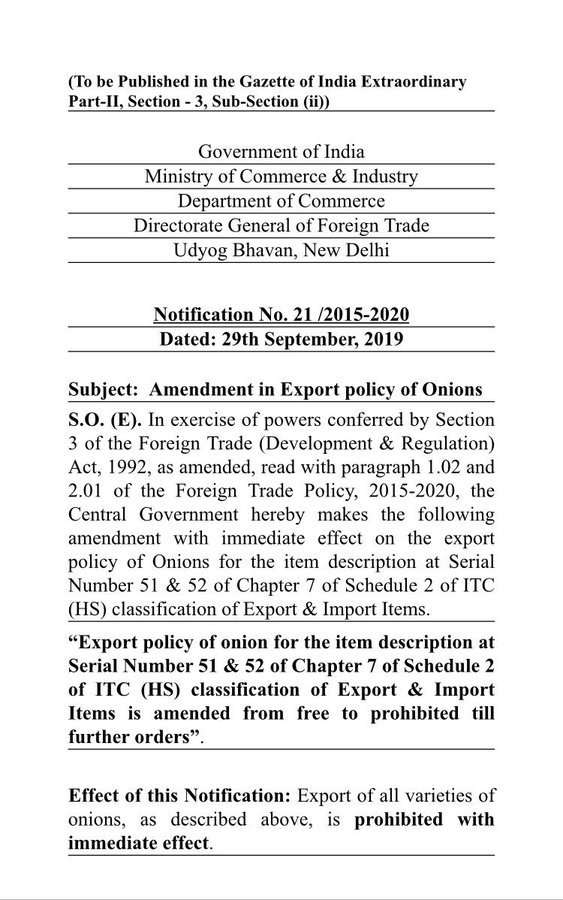
The government of India has banned the export of all varieties of onions. As per a notification published by the ministry of commerce and industries on 29 September 2019, the government has ordered that the export of all varieties of onions are banned with an immediate effect.
Via Nistula Hebbar on Twitter
It is notable here that the prices of onions are currently at the highest level since September 2015. On September 26, Union Minister Ram Vilas Paswan had asked the states to buy onions from Centre and asserted that their requirements would be fulfilled immediately.
In national capital Delhi, the prices of onion had touched Rs 70 per kg. Delhi government had availed 70 mobile vans selling onions at Rs 23.90 per kg. Earlier, agriculture minister Narendra Singh Tomar had stated that the prices will come down in a few days. He had added that prices have shot of due to tight supply. The government was also considering stock limiting.
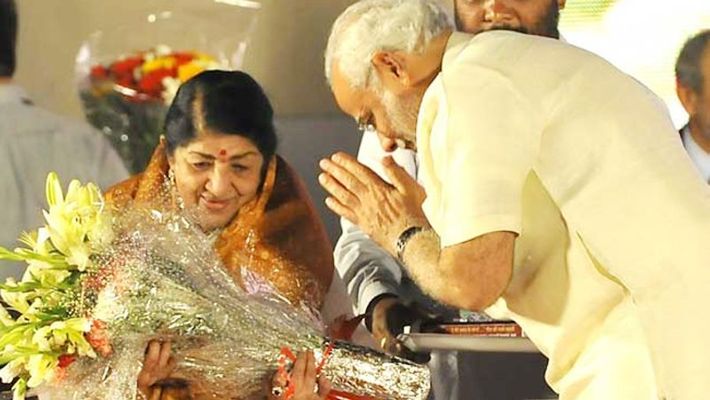
During his Mann ki Baat aired on Sunday, Prime Minister Modi shared a telephonic conversation he had recently with the legendary singer, Lata Mangeshkar, who turned 90 on the 28th of September. Narendra Modi had called her before leaving for the United States to attend the United Nations General Assembly.
[youtube https://www.youtube.com/watch?v=Ou0Ju1HQFZE]
“Wish you a very happy birthday, congratulations in advance. May your health be good, your blessings be with all of us, I called you before I left for America,” the Prime Minister said. “There would hardly be anyone who does not show utmost regard for Lata Mangeshkar ji. She is elder to most of us and has been witness to different eras in the country. We address her as ‘didi,'” PM Modi added further.
The legendary singer was effusive in her praise for the Prime Minister as well. She said, “Even you don’t know what you really are. I know that the picture of India is changing with your arrival and that, that makes me very happy. It makes me feel very good.”
Narendra Modi also recounted his personal relationship with Lata Mangeshkar. He recalled how she always treated him to Gujarati delicacies whenever he had the opportunity to meet her. He mentioned how she has always inspired him has had the pleasure of receiving his letters. Lata Mangeshkar also said that she had a conversation with Narendra Modi’s mother over the phone and took her blessings.
Lata Mangeshkar has received numerous awards during the course of her stellar career including the Dada Saheb Phalke and Bharat Ratna. She is the recipient of three National Film Awards and four Filmfare Best Female Playback Singer Award, among others.
Can a pilot press a wrong button in a cockpit causing the plane to crash?
This is an Airbus A320 cockpit. With so many panels, levers and switches, is there a chance that pilot presses a wrong button and put the plane’s safety in jeopardy?
Pilots are highly professional with thousands of hours of training on ground, simulator and aircrafts before they get to fly a commercial plane. There are redundancies built into the flight systems. Aircrafts have warning mechanisms. The ground staffs constantly observe all aircraft movements.
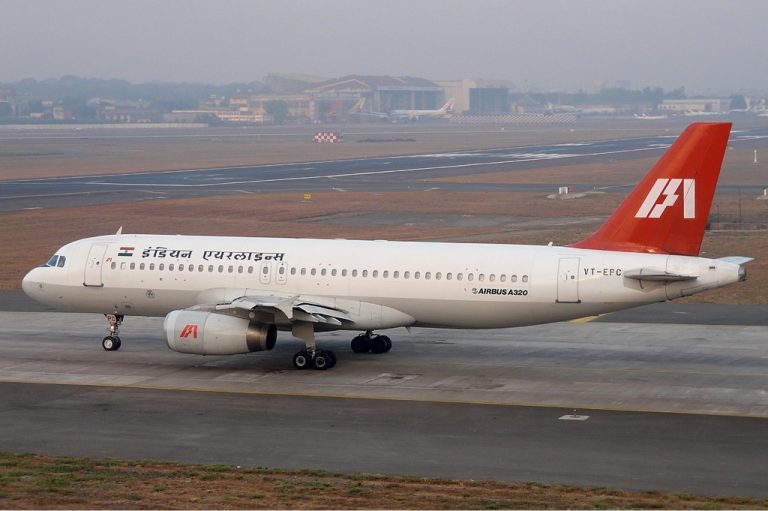
Yet this happened on 14th February 1990 with an Indian Airlines aircraft, Flight 605 from Mumbai (Then Bombay) to Bengaluru. Flight 605 was a scheduled flight between Mumbai’s CSIA to Bengaluru’s HAL airport on an Airbus A320.
On the fateful day, it was being piloted by CA Fernandez who had 9037 hours of flying out of which 68 hours was on A320. Capt. Fernandez was undergoing the first of 10 route checks required for qualification to Captain. He was being supervised by co-pilot and check pilot SS Gopujkar.
Capt. Gopujkar had 10,340 hours of flying experience out of which 255 hours was on A320.The aircraft left Mumbai at 11:58, after an hour delay, with 139 passengers and 7 crew members. The take off and cruise phase of the flight proceeded normally. At around 12:25, the aircraft began its descend into Bengaluru and contacted Bengaluru approach control. The approach control let the pilots know about visibility, weather and wind all of which were normal.
After about 15 minutes, the flight was cleared to descend to flight level 110 (FL 110 = 11,000 feet). At 12:53, IA Flight 605 appeared on Bengaluru’s radar blip. At this point, the approach control handed over flight 605 to Bengaluru Air Traffic Control tower who would lead the aircraft to the ground.
Tower informs the pilot to approach on Open Descent mode, make a right turn and make a visual approach to Runway 09. A bit of explanation here.
During descend, aircrafts can select either of the 2 modes. Open Descent vs Vertical Speed.
Open descent (OP DES) is when the aircraft begins its approach phase. You must have heard the pilots saying, “Ladies and Gentleman, we will shortly commence our descend to Mumbai”. That’s when the pilots engage the open descent mode.
In this mode, () the aircraft goes to idle thrust i.e. the engines are running at ideal RPM. Imagine your car going down a hill. At most times, you take your feet off the accelerator pedal but the car still maintains the speed because of the downhill. If you want to control the speed, you would apply brakes or change the pitch of the road lowering the downhill angle (No you can’t do that hence you have to apply brakes).
OP DES mode is something similar. The Auto Flight System (AFS) commands idle thrust and the elevators adjust the pitch to maintain the target speed. The pilot inputs the speed and the AFS pitches up (slows down the aircraft) or down (speeds up) the aircraft to maintain that speed at idle thrust.
Open Descent mode is selected to lose altitude fast i.e. say from 10,000 feet to 1000 feet. It’s really simple. You are at 10,000 feet and want to go down to 1000 feet. You let the engines in idle mode and allow the aircraft to come down. Once you are at 1000 feet at final approach, you can’t be in open descent any more. From here on, it has to be guided descent with adequate engine power.
Imagine you are at the fag end of the downhill and your destination is on sight. Ideally you won’t leave your engine at idle and would like to take control. That’s when pilots switch to Vertical Speed mode.
Vertical Speed (V/S) mode is chosen during final approach i.e. when the aircraft establishes itself on glide slope (GLS). Unlike OP DES, in V/S mode, the AFS manages both pitch and thrust level. Once on final approach, the standard angle of descent is 3 degree. Aircraft can’t descend at idle power because the aircraft needs to maintain a guided profile in order to touch down the runway at the right place. You can’t have a target speed here. Your speed has to change constantly so as to maintain the aircraft on the GLS.
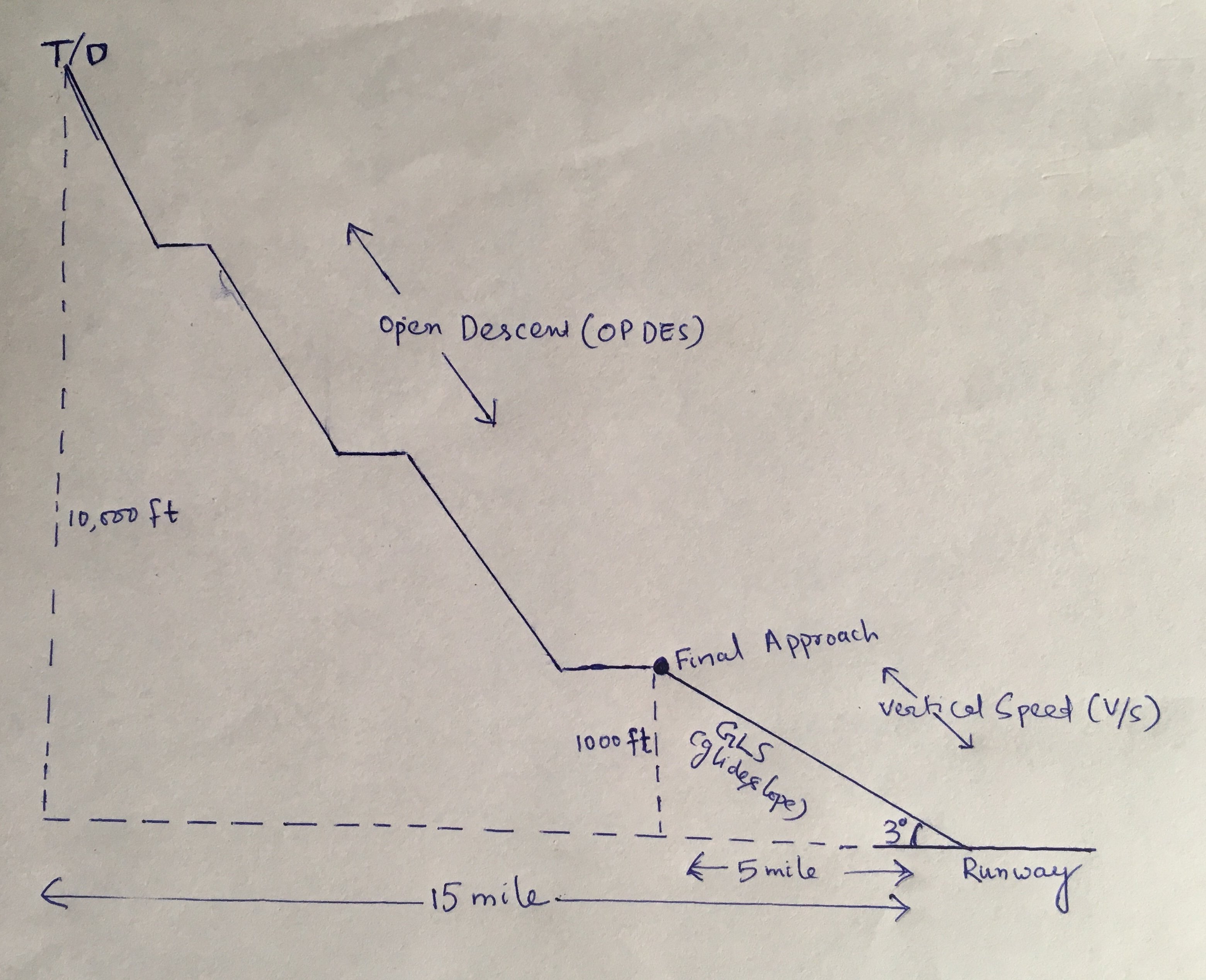
Difference between OP DES and V/S (representational purpose only)
The picture above tries to describe the difference between OP DES and V/S. The picture is for representational purpose only. Aircrafts don’t descend at such steep angles. The altitude and distance to runway are made up figures not to be taken at their face value. All that the pilot has to calculate here is, when to start their descend so that they can kill enough altitude and distance to join the glide slope at 1000 feet altitude and 5 mile distance from RWY. This is called the descend profile of an aircraft. The point at which it must start descending is Top of Descent or T/D as shown in the picture. A wrongly calculated descend profile often results in runway overshoot or early touchdown. Remember the Mangauru incident involving at Air India express? Well, another article some day. We have given a more mathematical calculation involving simple trigonometric height and distance concepts here.
Now back to Flight 605. After being cleared for RWY 09, at around 5000 feet, Fernandez realises they are 600 feet above the glide slope(GLS). To rejoin the glide slope, Fernandez asks for a go around. It would mean that, they would climb again to 6000 feet, go around, come back and rejoin the GLS at normal altitude. At this point, Gopujkar asks, “Do you want a go around or vertical speed?” Fernandez choses the latter and asks for a descent rate of 1000 feet/min, higher than the normal 700 feet/min. They now go to V/S mode where flight computers are managing pitch angle and engine power for guided speed to descent at 1000 feet/sec. This is the right mode for landing once you join glide slope. After they joined the GLS, captain Gopujkar asks captain Fernandez to put it back to 700 feet/sec.
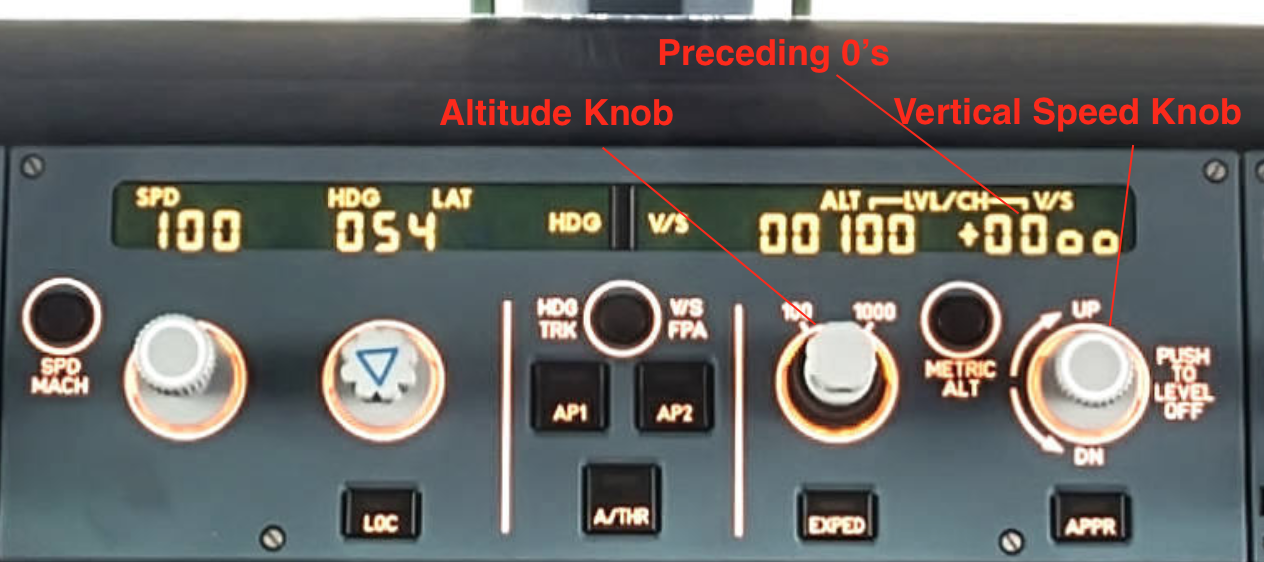
Capt Fernandez, however, instead of choosing the vertical speed knob, choses the altitude knob. The knobs are located next to each other and were similar in design. That could have led to the confusion. So the pilots, instead of asking the aircraft to descent at 700 feet/min asked it to descend to 700 feet. This action switches back the aircraft from V/S mode to OP DES again which means engines are now at idle power. However, both pilots are unaware of it.
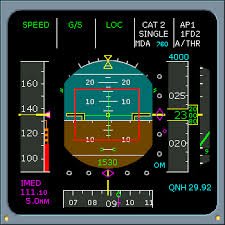
With minimal engine power, the plane starts falling first. At lower altitude with slats and flaps extended, due to lack of engine power, there is not enough lift to keep the aircraft flying. The radio altimeter gives a call out at 500 feet. This is when captain Gopujkar realized, something is not normal. He quips, “So you are descending on idle power all this time, eh?” At this point they tried switching off the flight directors, an autopilot system that displays a guide on the artificial horizon and attitude, which helps the pilots to fly manually or auto pilot to fly the plane as per the guidance. Had this been switched off, the plane could have sensed that it was dropping fast and could have gone to speed mode to give enough engine power for a possible recovery. But, flight directors were not put off.
Flight Director, A320
At 135 feet, both pilots finally realized the gravity of the impending disaster. Fernandez screams, “Hey we are going down” to which Gopujkar exclaims, “Oh shit”. Last recorded voice on the CVR. Fernandez immediately orders a TOGA (Take-off Go-around) and applies full take off power. But it was too late by then. The aircraft’s nose pitches up but the aft part of the fuselage hits Karnataka Golf Club’s ground, 2300 feet short of BLR runway, 200 feet right to the imaginary centre line.
The aircraft rolls to left and then lifts to 230 feet again. Descends again and hits the ground where the landing gears dug into the ground and aircraft hits a 12 feet high embankment. Investigators suggested that had they pulled the throttle 2 seconds earlier, the disaster could have been avoided.
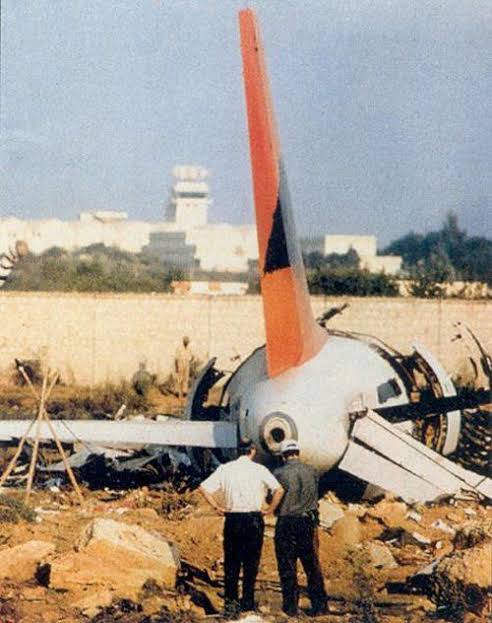
Indian Airlines Flight 605 After The Crash
Immediately after the crash, fire starts in the aircraft. Some passengers jump out of a break that had opened in the fuselage. Crew members helped passengers disembark. However, due to an unserviceable radio transmitter between Bengaluru ATC and fire station, fire brigades could not arrive and passengers who survived the crash, burnt to death. From 146 passengers and crew members, only 54 survived. Official investigations by DGCA as well as Airbus blamed pilot errors to be the cause. Indian Commercial Pilot Association however disputed this. They blamed erroneous design by Airbus to be the cause. They claimed that the engine went into idle power because of a serious flaw in Airbus’s Fly-By-Wire (FBW) automation system.
Less than 2 years after the crash, a similar incident occurred in France involving another A320 which forced the Airbus engineers to change the design of both the knobs and add two preceding Zeroes (00,XXX) to the vertical speed display to avoid confusion.
Altitude and Vertical Speed Selector Knobs of an A320
Though such an incident is not possible in today’s time due to improved instrumentation, it goes on to show how a small mistake can lead to a disaster with catastrophic consequences.
PM Modi with his ingenious outreach programme ‘Mann ki Baat’ on Sunday apprised the citizens of India about the harmful effects of electronic cigarettes that were recently banned in the country after an ordinance was passed by the cabinet.
Drawing the nation’s attention to the devastating consequences of smoking in general, PM Modi emphasised that smoking causes diseases such as cancer, diabetes, blood pressure and increases the chances of other fatal diseases. He further added that the addiction caused due to the presence of ‘nicotine’ in tobacco not only poses grave hazards to health but it also makes it extremely difficult for smokers to quit smoking.
PM Modi then delved into his government’s recent decision on banning electronic cigarettes from the Indian markets and defended the move by claiming that electronic cigarettes are equally harmful to one’s health as normal cigarettes. Modi said that e-cigarettes contain liquid content that produces nicotine and smoke when heated. “A misconception is being spread that e-cigarettes do not pose any serious health hazard,” PM Modi said.
PM Modi further added that there is very little awareness among people about e-cigarettes. “Regarding cigarettes, nobody has doubts that it is injurious to health. This fact is known to the seller, to the consumer and even to the onlookers. However, there is very little awareness among people about e-cigarettes. People are unaware of the threats posed by these e-cigarettes. Therefore, out of curiosity, such electronic cigarettes find their way into homes,” PM Modi said.
E-cigarette or electronic cigarette is a small electronic device which is used as an alternative to a traditional cigarette. They are the most common form of Electronic Nicotine Delivery Systems (ENDS). It is a handheld battery power vaporiser which produces an aerosol or vapour by heating a liquid, and that vapour is inhaled. This provides an experience similar to smoking cigarettes, but without burning tobacco.
An e-cigarette is made up of a mouthpiece, a cartridge where the e-liquid is stored, a heating element or atomiser, a microprocessor, a battery, and some may have a LED to simulate the burning of a cigarette. There are some mechanical cigarettes also which do not include any electronic and is activated by a mechanical switch. The atomiser heats and vaporises the liquid solution, a wicking material carries the vapour to the mouthpiece through which it is inhaled by the user. Some devices have a push button to take a puff, while others are automatic which have sensors to detect inhaling and activate the atomiser.
The culture of vaping which is essentially the practice of inhaling and exhaling the vapour produced by an electronic cigarette or similar device was gaining prominence in the country. However, with issues related to e-cigarettes surfacing from different parts of the world, the government of India took preemptive action and approved an ordinance making the production, import, distribution and sale of electronic cigarettes a cognizable offence.
“Don’t hit at all if it is honorably possible to avoid hitting, but never hit soft” – once quipped US President Theodore Roosevelt. As the 74th UNGA comes to conclusion after an eventful week in the United States, where Pakistan Prime Minister Imran Khan blabbered about the same thing from one event to another, and Indian Prime Minister Narendra Modi engaged in matters from deepening Indo-US people-to-people connection and trade ties, to seeking support in peace initiatives and effective work in the space of Climate change; the whole trajectory of conversation of Indian delegation ending with a spectacularly splendid response by the First Secretary Vidisha Maitra to the repetitive Pakistani rants was something which would have made Roosevelt particularly proud today.
Narendra Modi stepped on the American soil amid huge reception in Houston, where he was joined by the US president, and more than fifty senators, welcomed by an Indian-American crowd of more than fifty thousand people. Modi spoke about diversity of India, assured the audience that all was well back home in several Indian languages, called for trade ties, oil sector engagements with Texan oil companies.
He also spoke about how the will of the Indian people reflected in the abrogation of Article 370, which restricted people-friendly policies of the secular and democratic Union of India like right to equality, right to education, right to information, anti-corruption laws in the Muslim-majority state, merely because some thought back in the bruised era of history, immediately post-partition, that Muslims should get special treatment in a secular state, temporarily. These Indian leaders of the time had thought that it will allow the state to slowly integrate, while staying safe from the brutal invasion like 1947 from Pakistan, which wanted to fly the Islamist flag of Pakistan in the state, up in Srinagar. Obliquely referring to the efforts of the Pakistan to poke its nose into the internal affairs of India, Indian Prime Minister had at the beginning of the trip advised Imran Khan to rather focus on the matters of his grieving nation, struggling with high inflation, poor growth, violence, crime against minorities, terrorism and martial law in a part of Pakistan.
Not heeding to his advice, Imran Khan decided to go around, crying hoarse about Kashmir, calling it a cause of the Muslim Ummah to rise and threatening bloodshed, terror and war, regularly and repeatedly. We must grant that Imran could not have had an event like Modi had. All said, Narendra Modi’s life is much easier than Imran Khan’s. When Imran goes to England, Pakistani sex grooming gangs stare at him in the face; when he goes to the US, memories of Osama Bin Laden who killed thousands of Americans sheltered in Pakistan come alive again. He does not have successful Pakistanis, who like decent legal migrants settled down in the foreign lands, with a deep respect for the new cultures which they have stepped into. Unlike Indians contributing immensely to the host nations- serving the societies, leading the economies, enriching the culture; the way otherness has been cultivated in the Pakistani minds over the decades, since the formation, Pakistanis live like a pariah in most countries they move to, without gratitude, with the mindset of an invader, seeking privileges without contributing, often hiding their identities, projecting themselves as Indians. On the matters of bilateral relations too, he must have been finding it much difficult. While Modi could be asked about how he feels about the growth march of India in terms of climate, sanitation, infrastructure and sciences, all Imran Khan could be asked by the world about is the terrorism in his impoverished nation. That Imran did nothing to shed off that image and give a fresh perspective to Pakistan only indicates that things are going to get worse for Pakistan from now.
The lack of confident history and constructive vision for the future for Pakistan was pretty evident in the speech Imran Khan made on Climate change. He said Pakistan discovered six year ago that it was one of the most vulnerable countries. 80% of its rivers get water from Himalayan glaciers. He spoke about 1 Billion trees the Pakistan government planted in last six years. The fact remains that India planted 1.2 Billion trees in last one year, raising the green cover to 24.36% as against Pakistan’s green cover between 2.5 to 5%. He then falls into the rhetoric, claiming that the world is not taking it seriously. He laments refugees coming into Pakistan from Afghanistan and then the usual funding request comes asking rich countries to contribute. Modi, on the other hand, speaks in specifics on Climate change. He spoke about increase in non-fossil fuel share, increase in renewable energy to 175 GW and plan to increase it to 450 GW, promotion of electric mobility, clean cooking gas to 150 million families, clean water mission with a planned expenditure of 50 billion USD, 80 nations being part of India’s International Solar Alliance, India‑Sweden alliance on low-carbon pathway, banning single-use plastics, solar energy plant at the UN Headquarters installed by India. PM Modi also spoke about the cultural heritage of India which has a deep affection for the environment inherently imbibed in it. It is not that Pakistan cannot claim a part in the glorious aspect of this great culture, but then the biggest issue of Pakistan is that it has, since formation, negated its Hindu past and is so deeply tied up it is with its dogmatic pursuance of a doctrine of hate that it has converted itself into a nation with no roots and no legs. Devoid of cultural history, it has tried to find invented consonance with those very symbols which denote the subjugation of Pakistan at the hands of invaders.
Then as PM Modi went on with industry interactions and inter-country engagements, Imran Khan sat for CFR (Council on Foreign Relation) interaction. He lamented situation in Kashmir, claimed that he, as an elected PM, has the approval and support for Pakistan Military for his policies, at once funny and sad for a democratically elected PM to confess at the global stage. He further unknowingly proves his claim of being at the mercy of the approval of Pakistan Army when answering the question about how Osama Bin Laden being sheltered near Army HQ in Abbottabad for years, he says an enquiry commission was formed and says that he believes, they have submitted the report, but he is not aware of the findings. The head of state of a nation visits another nation, thousands of whose citizens were murdered by the man which his country sheltered, and the PM of the nation does not know a thing about it. Whether he was uninterested in reading such a critical report or was it simply above his pay-grade, Imran Khan doesn’t elaborate. However, confirming the apprehensions made about Pakistan being run by a rogue army, Imran regrets Pakistan’s decision to join the war on terror and says erstwhile President of Pakistan was attacked by Army people. He deftly places Pakistan into the textbook definition of a rogue state.
Then came the much-awaited UNGA address. Indian PM spoke about the citizen welfare schemes, schemes to uplift the lives of people, economic progress, the challenges of terror. For Pakistan, Indian PM’s speech was the worst nightmare. A royal ignore, a clever and much-needed de-hyphenation of Indo-Pak and a clear refusal by India to be placed on the same platform as a rogue nation. Sticking to the allotted timeline, Modi spoke under 15 minutes and made a statesman-like speech. Imran Khan spoke after him, making an incongruent 45 minutes blabber, jumping from climate change to corruption in Pakistan, somehow claiming in a convoluted manner that it was making rich nations richer.
After struggling across topics, he landed on 9/11 as the time when Islamophobia took a place of prominence, cunningly ignoring those who lost lives in the terror attacks. Then he went on the explain the special place religion had in the life of Muslims and somehow explained how lack of sense of humour is an inherent part of Islam. He kind of forewarned the world quoting the case of bounty on the head of Salman Rushdie, how because of the limited tolerance of Muslims, they are well within their rights to cause violence to those they do not agree with. He, who had once earned for himself a moniker of Taliban Khan for being a staunch supporter of the dreaded Taliban, which was a predecessor of ISIS, explained the blasphemy laws and the necessity of these archaic laws which have left hundreds imprisoned, exiled and killed. Having justified terror as a legitimate means to establish religious supremacy, where one religion cannot be even spoken about without the fear of violent response, he drew even deeper lines for Islamophobia. In a way, he advised people to be scared, very scared of Muslims, because for them orthodox fanaticism is a way of life.
An overdrawn rant of the premier of a rogue nation was then responded by a short, smart, stinging reply by Ms. Vinita Maitra, First Secretary in India’s Permanent Mission to the UN. She responded to the Pakistan PM’s garrulous rant with facts. She brought the attention of the world community to one of the largest genocide and massacres in Human history perpetrated by the Pakistan Army under General Niyazi who eventually lost East Pakistan in the form of Bangladesh. This was beautifully linked with the second Niyazi who is all set to lose Balochistan, Sindh and Gilgit in his urge to become junior Caliph to Turkey’s Erdogan, like some Robin to his new-found Batman, as he tries to split the world into Muslim and Non-Muslim world.
We, in India, have seen this before as to how polarization always results in reverse-polarization, I hope, the wise words of Ms. Maitra’s short speech would bring some sense into the Islamist Pakistan PM. The Islamic Republic of Pakistan with curtailed rights of Hindus, Sikhs, Ahmadiyas, Balochs has already reduced the percentage of minorities from 23% at the time of the creation of Pakistan to 3%. We only hope the terror-nation finds the end which it is rushing crazily towards. India’s right to reply in the UN brought out that Pakistan has become an ISIS in a fancy suit and lost its right to exist in a civilized world. So after avoiding to hit Pakistan the entire week honourably, eventually when the hit came, it wasn’t soft. This is the way civilized nations do diplomacy, decisive and dignified. Churchill had said once that Diplomacy is the art of telling people to go to hell in such a way that they ask for directions. Let us wish Imran Khan best as he searches for his way back to the hell he came from.
Prime Minister Modi in his address to nation through Mann Ki Baat radio programme today paid tributes to Sister Mariam Thresia who will be canonised on 13th October by Pope Francis. The founder of Congregation of the Holy Family will be declared a a saint. Her canonisation was formally approved by Pope Francis at an ordinary public consistory of cardinals on causes of canonisation at the Vatican on 1st July, 2019.
A team from Kerala will participate in the special prayer that will be held in the Vatican a day prior to the canonisation.
Born on 26th April, 1876 in Puthenchira, Kerala, Sister Mariam belonged to the Syro-Malabar Church based in Kerala and was professed in 1914. She died on 8th June 1926 and was declared venerable on June 28, 1999 and beatified on April 9, 2000 by Pope St. John Paul II in Rome.
She is the fourth Kerala-born Indian Catholic to be declared as a saint. Father Kuriakose Elias Chavara and Sister Euphrasia from Thrissur, Kerala, were canonised by Pope Francis in 2014 while Sister Alphonsa was declared a saint in 2008.