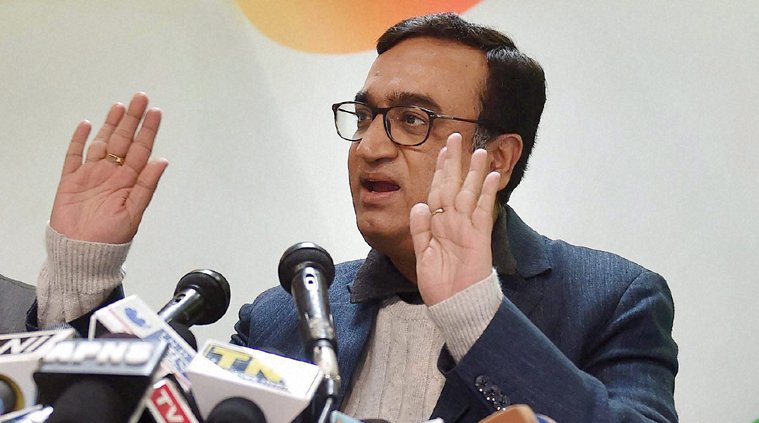
Congress leader Ajay Maken in his interview with Hindustan Times expressed that Congress will find it difficult to win seats without the Congress-AAP alliance. Maken said that had there been an alliance, they (Congress and AAP) would have won all seven seats with a margin of 2-3 lakh each, but now without any alliance, Congress will not be able to win all seven seats.
“Had there been an alliance, we would have won on all seven Delhi seats by margins of 2-3 lakh each. Now, we won’t win all seven seats and the margins will be smaller,” Maken said. He further added that while people do not have much confidence in Aam Aadmi Party candidates, “some of them have made their mark.” However, he dismissed AAP saying that Congress is in direct competition with BJP, which is a national party, and not AAP.
Maken has been quite vocal in supporting the AAP-Congress alliance in Delhi which, after a lot of deliberations between the two parties, was called off. Earlier he had expressed unwillingness to contest Lok Sabha elections in absence of an alliance with AAP. Even then he had said that without an alliance with AAP, it would be difficult to win ‘all seven’ seats in Delhi.
He had said that he would support an alliance with AAP even if he is not given a ticket to contest. Maken’s pro-alliance stance was opposed by former Delhi CM Sheila Dikshit. She had very categorically said that an alliance with AAP would be impossible to work through.
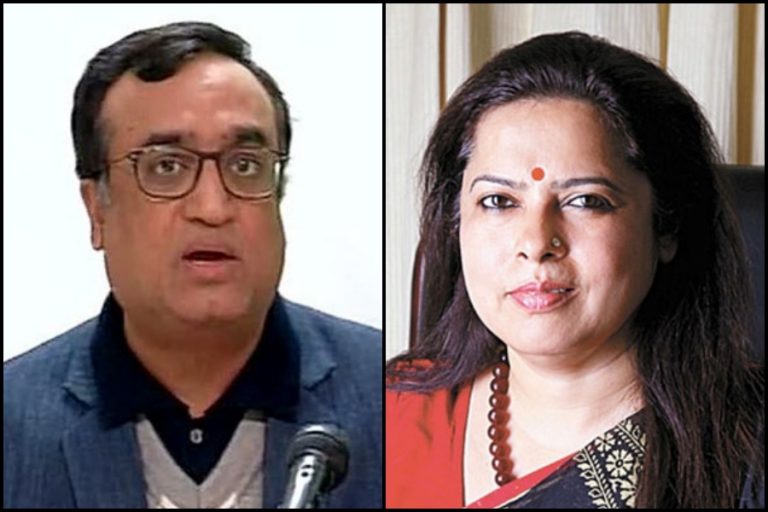
Ajay Maken is contesting the high profile New Delhi seat and is pitted against BJP’s Meenakshi Lekhi who defeated him in 2014 elections whereas AAP has fielded Brijesh Goyal. Amusingly, ground reports suggest that instead of a triangular fight on New Delhi seat, AAP seems to be transferring its votes to Congress. There are rumours that while the alliance is officially off, AAP could go easy on Congress so that there could be a chance of post-poll alliance and AAP could try and stay relevant for a few more years.
With voting already at its peak and the new government is about 20 days away, Congress seems to have already given up the fight and conceded defeat. Few days back, Congress leader and Madhya Pradesh Chief Minister Kamal Nath had put the figure of total seats Congress might win in Lok Sabha elections at 122, which is nowhere close to the halfway mark of 272.
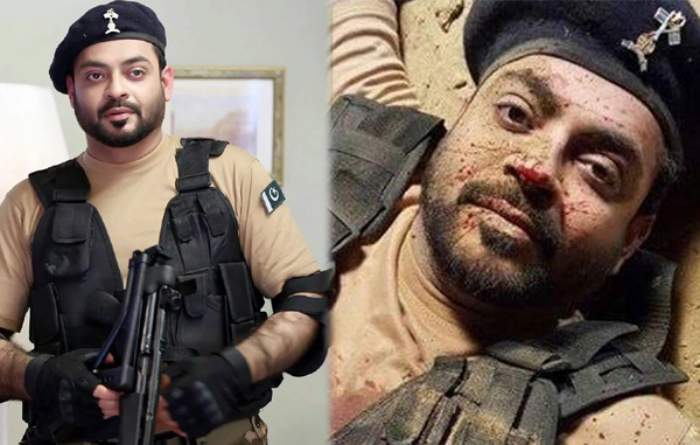
Pakistan, despite playing the farce of being a victim of terror, just cannot stop glorifying terrorists and celebrating radical Islamists who kill innocents. A Pakistani legislator named Aamir Liyaqat Hussain is to play the role of Burhan Wani in a movie.
As per reports, Liyaqat, who is a member of Imran Khan’s PTI and is a Member of National Assembly from Karachi, is all set to play the role of the slain Hizbul Mujahideen terrorist.
The director of the proposed movie, Ayub Khosa, has said recently during a talk show that he wants to make a “clean, issue-based movie” on Kashmir. He also added that Kashmir’s portrayal in Bollywood movies gets international acclaim but the local movies made on Kashmir hardly get any attention.
Aamir Liyaqat Hussain has reportedly stated, “The film is about Burhan Wani and I am going to play him in the film. I don’t think I am a hero but Burhan Wani was definitely a hero.” He added that Wani was a hero of the ‘Kashmiri Nation’.
Liyaqat Hussain is a PTI legislator from Karachi. He is a popular televangelist and hosts religious TV shows. This year he is also to host the Ramazan transmissions in Pakistan’s state-owned PTV.
It is notable here that Burhan Wani was a dreaded Hizbul Mujahideen terrorist who was gunned down by Indian security forces in 2016. Wani’s death was used by scores of Kashmiri separatists and even Indian ‘liberals’ to peddle separatist narratives and had created months of unrest in the valley. Journalist Barkha Dutt had introduced Wani as the ‘son of a school headmaster’.
Pakistan had also attempted to fan the unrest in the valley by hailing Burhan Wani as a martyr. Former PM Nawaz Sharif had even addressed Wani as a ‘young leader’ in an address in the United Nations. Last year, in another brazen attempt, Pakistan had issued a series of postage stamps commemorating Wani and terrorists in Kashmir hailing them as martyrs.
India had reacted strongly to the stamp release and had proceeded to cancel a scheduled meeting between EAM Sushma Swaraj and her Pakistani counterpart Shah Mehmood Qureshi.
The release of stamps had added to a series of other events that had seen India suspending all bilateral talks with Pakistan. The kidnapping and murder of 3 policemen in Shopian by Pakistan aided terrorist was also one of the major reasons. Even during the inauguration of the Kartarpur corridor, India had stated that the opening of the corridor itself will not open the doors for bilateral talks and talks can only happen when Pakistan stops supporting terrorists.
It is notable here that Imran Khan is known for his tacit support to terrorist groups that work against India. Known as ‘Taliban Khan’ he had been caught fraternizing with radical and extremist Islamists.
Sri Lanka did not heed the alert from India about the possibility of Jihadist attacks as it feared India was trying to create a rift between them and Islamabad, a report in Economic Times claims.
Sri Lankan officials believed that India was trying to pit Colombo against Islamabad by proposing counter-terror operations against certain sections of the Muslim community, sources told ET. They further claimed that the island country doesn’t want to be dragged into an “India-led alliance” against Pakistan and was of the opinion that New Delhi was trying to create a bogey by floating the possibility of suicide attacks.
India had warned relevant authorities in Sri Lanka about possible suicide attacks in the country in advance on the basis of raids on ISIS modules conducted here. The NIA had procured several videos featuring Zahran Hashim, one of the nine suicide bombers involved in the blast, in the electronic devices of the seven alleged ISIS activists arrested in September last year in Coimbatore. NIA had conducted raids in several places last year in the case of an alleged plot to kill Hindu outfit leaders by ISIS-inspired terrorists. These ISIS activists were allegedly radicalised by Hashim on his visit to India.
On the basis of these videos, the Indian Authorities identified Hashim as the leader of National Thowheed Jamaath (NTJ) and led investigators to believe Hashim was planning “something big” in Sri Lanka. On the basis of this information from NIA, Indian authorities alerted their Sri Lankan counterparts on April 4 about possible attacks.
The misguided notions of Sri Lankan authorities meant that the terrorists succeeded in their objectives which resulted in the deaths of more than 300 individuals and injured hundreds more. Later, ISIS had claimed responsibility for the massacre.
The alliance between Congress and Aam Admi Party has been one of the most interesting stories this election. Their on-again-off-again relationship has been a source of amusement for many and a source of frustration for the others, depending on where your political loyalties lie. The ones who support BJP have been amused by the indecisiveness and the Twitter shenanigans of Rahul Gandhi and Kejriwal, the others have been frustrated because the poll prospects Congress or AAP independently don’t look very bright.
Recently, news came in that the alliance between AAP and Congress was officially off the cards as both parties fielded their candidates for all constituencies. Ajay Maken, in an interview today also mentioned that without an alliance between the two parties, BJP might just sweep all 7 seats in Delhi.
With all of this, one would imagine that there would be a fierce competition between AAP and Congress to wrest control of the constituencies away from BJP, a party that is poised to sweep Delhi is the alliance is off.
However, is that the case?
Reports are now trickling in that at least in the New Delhi constituency that might not be entirely true. The New Delhi constituency is a high profile fight between Congress’ Ajay Maken, BJP’s Meenakshi Lekhi and AAP’s Brijesh Goyal and according to ground workers of the BJP, AAP is conceding space to Congress’ Ajay Maken almost giving him a walkover.
Rohit Virmani, a ground karyakarta of BJP has alleged that the campaign team of AAP is hardly on the ground and it seems like a tacit understanding between AAP and Congress to let Ajay Maken win by transferring all of AAP’s votes to Congress.
“Brijesh Goyal’s team is hardly campaigning. They have done a lot of drama about the alliance being off, but it seems like on the ground they have some sort of understanding. AAP is just not campaigning in the New Delhi constituency like it generally does. They are there a little bit, here and there, but hardly campaigning as they should”.
Another campaigner for BJP, Rohit Singh had a different take on the situation. He said the AAP has conceded defeat and is hoping that if they go easy on Congress, there could be a post-poll alliance that would keep AAP relevant at least for a couple of years more.
“Arvind Kejriwal has lost ground support. His naatak of calling voters up and saying that their names have been deleted from the voter list has backfired. People can see through his lies and that’s why he is going easy on Ajay Maken. He seems to be hoping that if they let Maken save face, Congress will be helpful to them and do a post-poll alliance just so he can stay relevant”.
Rajesh, another BJP worker said that just like in Uttar Pradesh, AAP and Congress seem to be doing this alliance tango for show. So Kejriwal and Maken both can retain their core voters. Ultimately they are transferring votes to each other where they think either of the candidates is strong, especially in New Delhi.
When we reached out to a volunteer from Meenakshi Lekhi’s campaign team, the volunteer was upbeat and said that the people recognise the work of Meenakshi Lekhi and especially, the work of Prime Minister Narendra Modi and no matter how Congress and AAP try to tango, victory shall be BJP’s.
In the 2014 general elections, Meenakshi Lekhi had won from the New Delhi constituency with a 46.73% vote share. While AAP came in second, Congress’ Ajay Maken came in third. In the 2019 Lok Sabha elections, it remains to be seen whether AAP’s strategy of tacitly supporting Maken would save face for Congress or would Lekhi still sweep the elections like 2014.
As the Lok Sabha elections in India conclude four phases of polling, opposition parties seem to be plunging further into the depths of conspiracy theories and otherworldly claims that can shame even the worst written science fiction.
In the latest, NCP chief Sharad Pawar has come up with a claim that can gain entry in the top 5 most ridiculous EVM hacking conspiracy theories ever made. Pawar, speaking to a TV channel in Maharashtra, has stated that the EVMs inside a polling booth has a ‘chip’ that can be manipulated from a ‘tower’ nearby.
Adding a statutory warning to his claim, Pawar also mentions that he does not know the details of the technology but he has heard it exists. He even goes ahead to add that during the Gujarat assembly elections, some ‘honest’ officers had ‘jammed’ the signals in some of the towers outside booths, hence BJP had to face a tough fight.
Pawar also claimed that the people who were not elected, like Chandrakant Patil are claiming that the BJP will win. He adds that if BJP wins (because of EVM hacking)in Baramati, the people will lose their faith in the elections.
It is notable here that Baramati has been the Pawar bastion since decades and Pawar’s daughter Supriya Sule has been the MP from the seat after Pawar left electoral politics. This time BJP’s Kanchan Kool is challenging Sule from the seat.
Baramati CM @PawarSpeaks has lost it completely. Now he’s peddling EVM hacking by towers outside polling booth theories https://t.co/clS7og1FgO
The new “hacking via towers outside booth” is only the latest in many conspiracy theories peddled by opposition leaders on EVMs. Interestingly, none of the theories are heard when BJP loses an election. They also do not offer an explanation over the question that if BJP is indeed able to ‘hack’ EVMs, why has it lost multiple state elections and why the BJP had not attempted to ‘hack’ EVMs in the elections before 2014.
Speaking at a joint press conference in Mumbai just before the third phase polls, NCP chief Pawar, TDP chief Chandrababu Naidu and the leaders of AAP and TMC had made similar claims. TDP’s Naidu has stated that EVMs are vulnerable to programming errors and the BJP only gets votes through manipulating EVMs. AAP’s Sanjay Singh, however, failed to invent a theory of his own and repeated the old and worn out claim, “Push any button and the vote goes to BJP”.
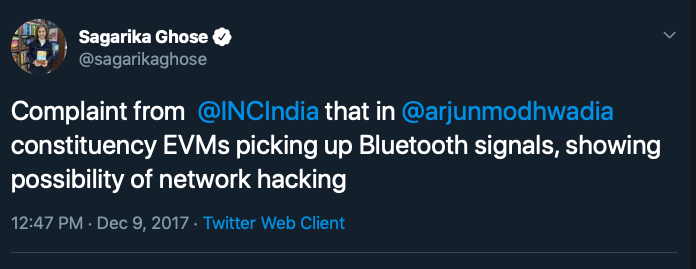
The theories of EVM hacking are wide and colourful. During the Gujarat assembly polls, ‘journalist’ Sagarika Ghose had attempted to peddle the theory that EVMs are picking up ‘Bluetooth signals’ and that can lead to ‘network hacking’.
Via Twitter
Congress and the opposition leaders have been peddling the EVM hacking theories time and again after the BJP came to power with an absolute majority in 2014. Notably, when the election commission of India had thrown an open challenge to all political parties to ‘show’ how the EVMs can be hacked, none of the parties had turned up to take it. Congress’ Kapil Sibal had even tried to propagate the claims of a dubious ‘hacker’ through a press conference in the UK. However, that had ended up in massive embarrassment for the party.
Recently, Congress’ Sam Pitroda had claimed that he believes there is something wrong with the EVMs and though he cannot point it out, he can find it out if he is given an EVM to study for at least a year.
West Bengal has been the hotbed for political violence during the 2019 Lok Sabha election. Several incidents have been reported from various constituencies in West Bengal in the four phases of the Lok Sabha elections. Keeping this in view, the Election Commission, as a preventive measure, has decided to deploy 100 per cent cover by central forces in all the polling booths in the fifth phase of polls.
The decision was taken at a meeting between State Special Police Observer Vivek Dubey, Special Observer Ajay Nayak and Chief Electoral Officer Aariz Aftab. Furthering that the state police will not be allowed within 100 metres of the booths, the EC decided that a total of 578 companies of central forces would be deployed for the fifth phase of Lok Sabha elections to be held on 6th May in West Bengal.
Bengal 5th phase to get 100% cover by central forces: A total of 578 companies of central forces are being deployed for the 5th phase of Lok Sabha elections to be held on 6th May in West Bengal.@Tamal0401 with details. | #May23WithTimesNowpic.twitter.com/fgpptDJjZc
During the first phase, the EC had deputed central forces at 50 per cent of the booths, which was increased to 92 per cent in the third phase of polling held on April 23. The fourth phase on April 29 saw a deployment of over 200 companies more as compared to the number in the third phase.
The decision comes a day after a BJP delegation led by Kailash Vijayvargiya and Babul Supriyo has approached the Election Commission to register their complaint against the violence allegedly unleashed by the TMC goons in West Bengal during the fourth phase of the Lok Sabha elections.
The BJP delegation in its complaint against the TMC has asserted that several booths were captured by its workers and violence was perpetrated against Babul Supriyo and stones pelted on his car.
BJP MP and Asansol candidate Babul Supriyo had visited a polling booth in Asansol constituency after villagers had threatened to boycott polls following the non-deployment of central forces in some polling booths.
Clashes took place between TMC workers and BJP workers over a disagreement on the deployment of Central forces to man the booths. In the ensuing scuffle, Babul Supriyo’s car was vandalised by the TMC goons.
Places like Birbhum and Asansol in West Bengal which went into polling during the fourth phase of elections reported rampant rigging with TMC leaders accompanying voters in the voting booth. Moreover, there were reports of massive violence from Asansol. Crude bombs have been found at a polling booth in Krishnanagar, WestBengal and also bombs have been recovered from a polling booth in Santipur, Nadia district. Also, Central forces, journalists, villagers along with a Union Minister were reportedly attacked in Dubrajpur district.
The fourth phases of Lok Sabha elections in West Bengal were mired in controversy just as the first three phases of elections. Threats, intimidations, bomb attacks, proxy voting have also been recorded in some of the Lok Sabha constituencies in West Bengal during the third phase of Lok Sabha elections.
Similarly, TMC workers had clashed with BJP workers inside a polling booth in Chopra, Darjeeling and broken an EVM machine during the second phase of elections that concluded on April 18th.
Incidentally, the first phase of the Lok Sabha polls was no different for West Bengal, Where elections are often greeted with violent skirmishes and clashes between competing parties. Violence and rampant polling malpractice were reported from Cooch Behar and Alipurduar, that had gone to polls in the first phase of the elections.
Moreover, there have been multitudes of reports of TMC goons perpetrating violence against their political adversaries in the past. However, these are only a few of the many incidents of violence and hooliganism which West Bengal has been a witness to in so many years of Mamata’s governance. With Mamata Banerjee at the helm of affairs in West Bengal, TMC goons under her protection, are empowered to carry out their depraved activities with impunity.
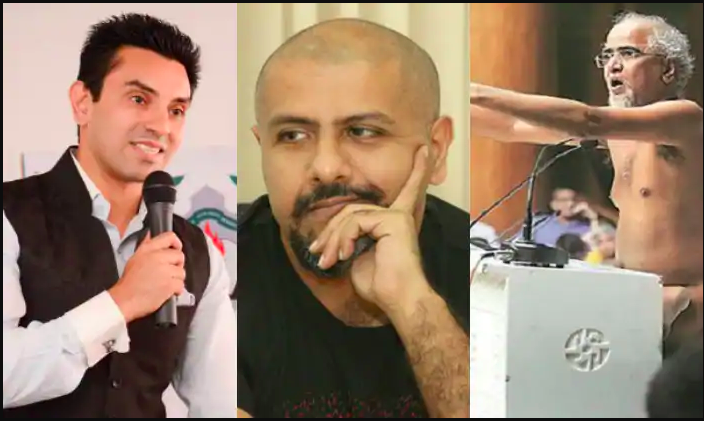
Music composer and Aam Aadmi Party supporter Vishal Dadlani and Robert Vadra’s relative Tehseen Poonawalla have been fined Rs 10 lakh each for allegedly hurting religious sentiments of the Jain community by their tweets on Jain monk Tarun Sagar.
In August 2016, Dadlani had tweeted his displeasure at the ‘colossal idiocy’ of ‘some naked monk’ addressing the Haryana assembly.
People actually trying to defend the colossal idiocy of some naked monk, addressing Haryana assembly, telling women how to live! UNREAL! (2)
His tweets did not go down well with the Jain community and to damage control, AAP chief Arvind Kejriwal and Delhi Health Minister Satyender Jain had to tweet apologies on behalf of Dadlani.
Tarun Sagar ji Maharaj is a very reverred saint, not just for jains but everyone. Those showing disrespect is unfortunate and shud stop
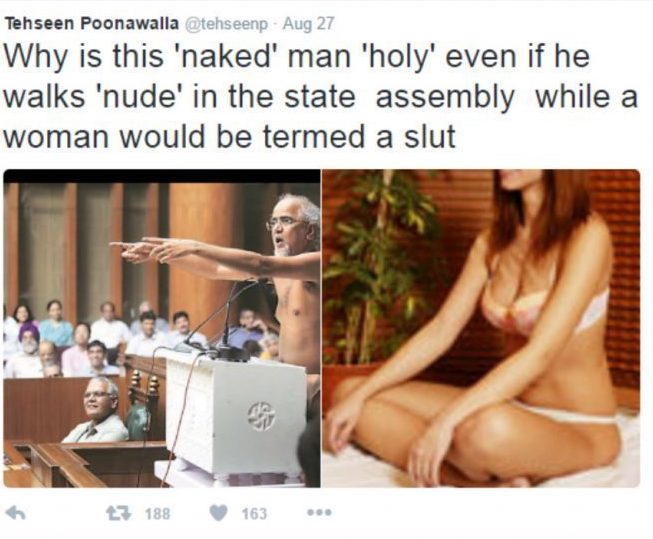
Congress supporter and Robert Vadra’s relative Tehseen Poonawalla had also made offensive remarks on the Jain monk.
Tehseen Poonawalla’s tweet, now deleted (image: newsloose.com)
Tarun Sagar was a Jain monk of the Digambar community and these monks do not wear clothes. He had addressed the Haryana Assembly when the duo made these offensive remarks.
The duo was booked by the Haryana Police in August 2016 and a case was registered “for deliberate and malicious acts intended to outrage religious feelings and other offences” under Sections 295-A, 153-A and 509 of the IPC (Indian Penal Code) at Ambala Cantonment police station.
The Punjab and Haryana High Court, however, quashed the FIR on condition that both will first pay up Rs 10 lakh as fine. The High Court said that the fine was imposed to send a message that no one can mock the heads of religious sects.
The Election Commission has issued a notification saying that Prime Minister Narendra Modi didn’t violate the model code of conduct in his speech in Wardha in Maharashtra.
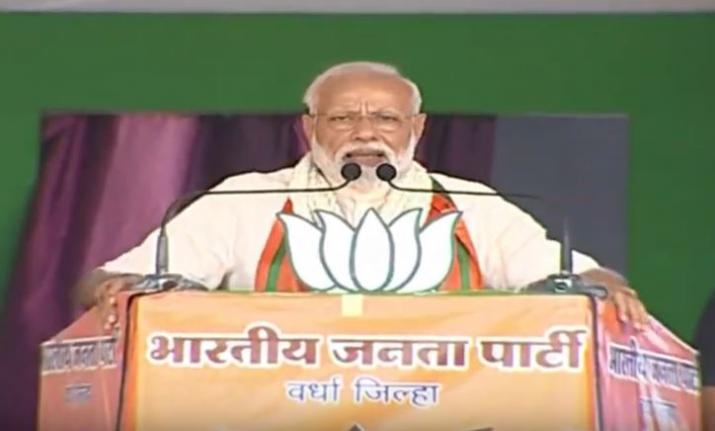
PM Narendra Modi, while addressing a rally in Wardha on April 1, said Congress was scared to field its leaders from majority dominated constituencies. He had made the remark in reference to Congress chief Rahul Gandhi’s decision to contest from Wayanad in Kerala, as a second seat apart from Amethi.
“The Congress insulted Hindus and the people of the country have decided to punish the party in the election. Leaders of that party are now scared of contesting from constituencies dominated by the majority population. That is why they are forced to take refuge in places where the majority is a minority,” PM Narendra had said at the rally.
Following this, a delegation of Congress leaders including Ahmed Patel, Jairam Ramesh, Abhishek Manu Singhvi and Randeep Surjewala had filed a complaint with the EC, alleging that PM Modi’s speech was “hateful and divisive”. “The prime minister through his speech tried to spread hate for electoral gains which is a serious violation of the Representation of People Act,” the Congress leaders had alleged.
After going through the transcript of the speech and report from the chief electoral officer of Maharashtra, the Election Commission has decided that the speech didn’t violate election laws. “The matter has been examined in detail in accordance with provisions of Model Code of Conduct, R P Act, and Maharashtra CEO’s report. Accordingly, EC is of the considered view that in this matter no such violation has been noticed,” the poll panel said.
With Trinamool Congress’ hooliganism at its peak in West Bengal, two more BJP workers became victim to their savagery in the Siliguri district on Monday night.
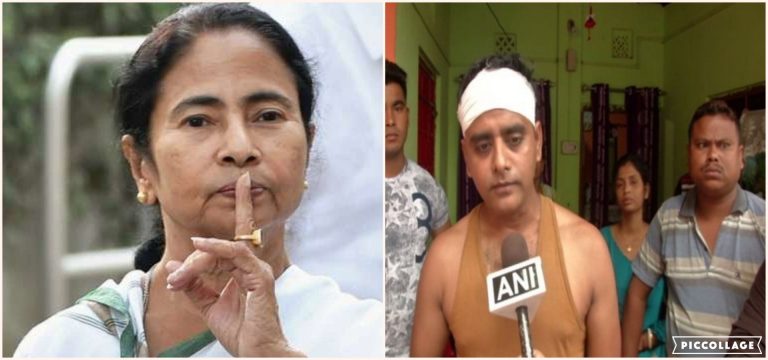
Uttam Mondal, New Colony booth unit president of BJP, and his brother Gautam Mondal were attacked at their shop in the city’s Matigara area by ‘TMC goons’. Their shop was also vandalised. The two have sustained injuries in the onslaught.
Uttam recollected, “On Monday night, local goons came and vandalised my shop. They came to my house and fired in the air and threatened me and my brother,” adding, “Since we support the BJP, they attacked us. We are not at all afraid of them. Even though the election is over, we do not understand why they committed such an act. We will gherao the police station today,” he said. Later bullets were found at the spot the incident happened.
Police at Matigara police station have filed an FIR against the TMC goons who attacked the leaders. Due to the prevailing tension in the area, police have been heavily deployed to ensure no untoward incident occurs in that area.
Local TMC leader Ardhendu Biswas has, however, denied the involvement of his party workers in the attack on Mondal brothers.
This election season has witnessed several incidents of violence under Mamata’s regime in the state. Elections in West Bengal are often greeted with violent skirmishes and clashes between competing parties.
Recently, as the fourth phase of election concluded in the state, sporadic instances of violence have been reported throughout the state just like the first three phases of elections. Rampant rigging had been reported from West Bengal with TMC leaders accompanying voters in the voting booths. Massive violence was also reported from Asansol, where BJP MP candidate Babul Supriyo’s car was vandalised and BJP workers attacked.
Similar threats, intimidations, bomb attacks, proxy voting had also been recorded in some of the Lok Sabha constituencies in West Bengal during the third phase of Lok Sabha elections. Several incidents of violence were also reported in West Bengal during the first phase of the Lok Sabha elections which concluded on April 11.
Moreover, there have been multitudes of reports of TMC goons perpetrating violence against their political adversaries in the past. Few days after the first phase of elections concluded, a BJP worker’ body was found hanging on a tree in West Bengal’s Purulia.
This is the third such incident in West Bengal’s Purulia district. Prior to this, two BJP workers, Trilochan Mahto and Dulal Kumar had also gone missing from the same Balrampur area last year and were found murdered later. While Mahato’s body was hanging from a tree, that of Kumar was hanging from a high tension electric pole.
Similarly, Patanu Mondol, brother of a Gram Panchayat member from the BJP in West Bengal, Utpal Mondol, was murdered at Malda. Mondol was allegedly shot dead by miscreants from Trinamool after barging into his home.
However, these are only a few of the many incidents of violence and hooliganism which West Bengal has been a witness to in so many years of Mamata’s governance. With Mamata Banerjee at the helm of affairs in West Bengal, TMC goons are empowered to run amok carrying out their depraved activities with impunity. It is widely believed that TMC goons are protected and sheltered by TMC leadership which further emboldens them to execute their nefarious activities.
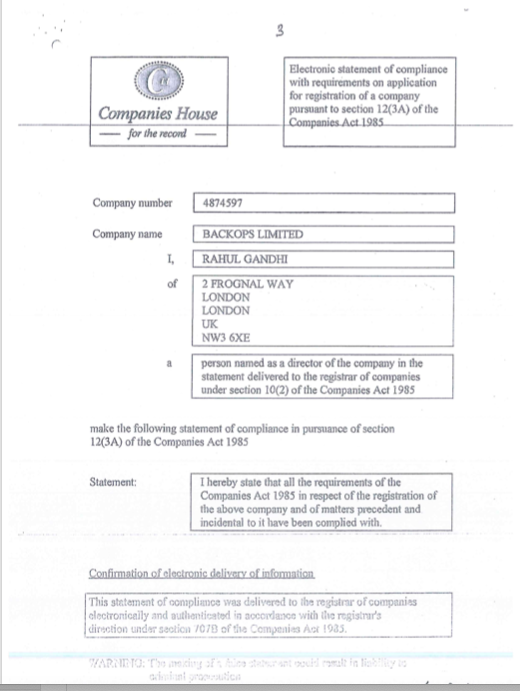
Rahul Gandhi’s nationality gets curiouser and curiouser. After the Home Ministry sent a notice asking for clarifications on the basis of the British company documents where the Congress President has declared his nationality as ‘British’, Congress released a document to prove that in a British company where Rahul Gandhi was listed as a director, he had declared himself as an Indian national. Congress-friendly journalist Pallavi Ghosh was among those who shared the document.
OpIndia tried to dig more into this and here is what we found.
To begin with, while the MHA based the notice on the company BACKOPS Limited, it is curious that Congress should choose a document of another UK based company ‘Bristol Legal Services Limited’ where Rahul Gandhi was a director as a counter. Instead of putting the doubts to rest, it has opened a whole new can of worms.
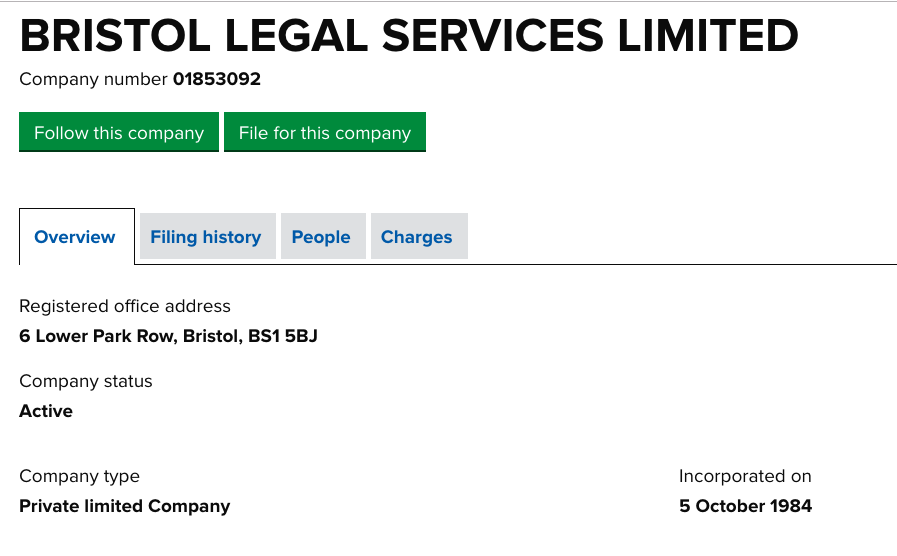
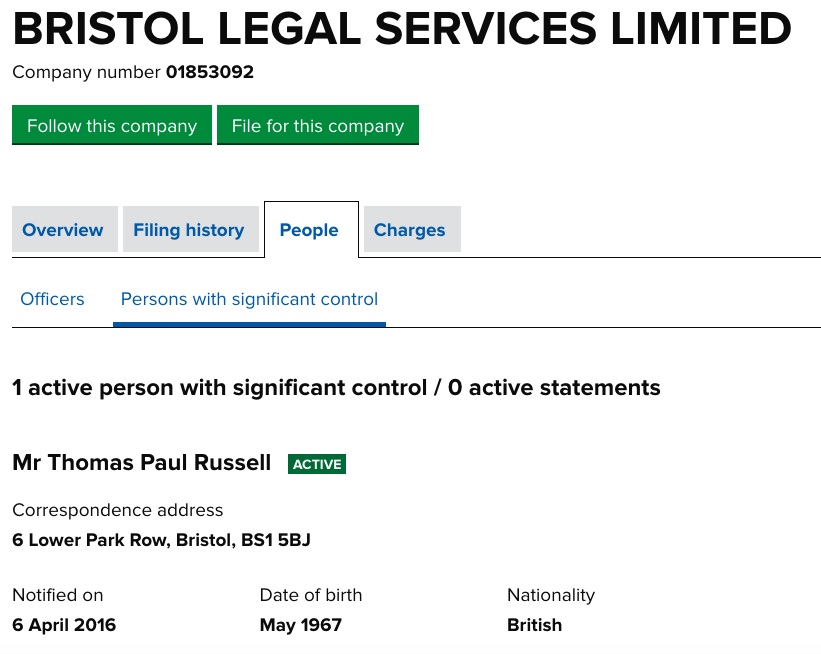
We looked up ‘Bristol Legal Services Limited’ on companieshouse.gov.uk the online database of Registrar of Companies of the United Kingdom.
Company overview of Bristol Legal Services Limited‘Thomas Paul Russell’ is officer-in-charge of Bristol Legal Services Limited
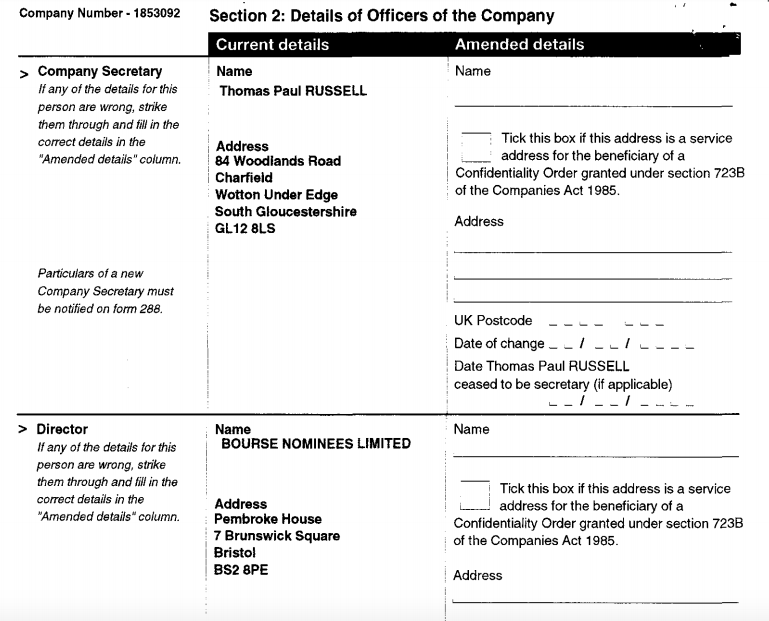
On CompaniesHouse, we tried to find the 21 August 2003 resolution which Pallavi Ghosh had posted. The Annual Return filed on 26 April 2003 (date prior to the date mentioned in the document shared by Ghosh), does not mention Rahul Gandhi as a director.
Return details on April 2003
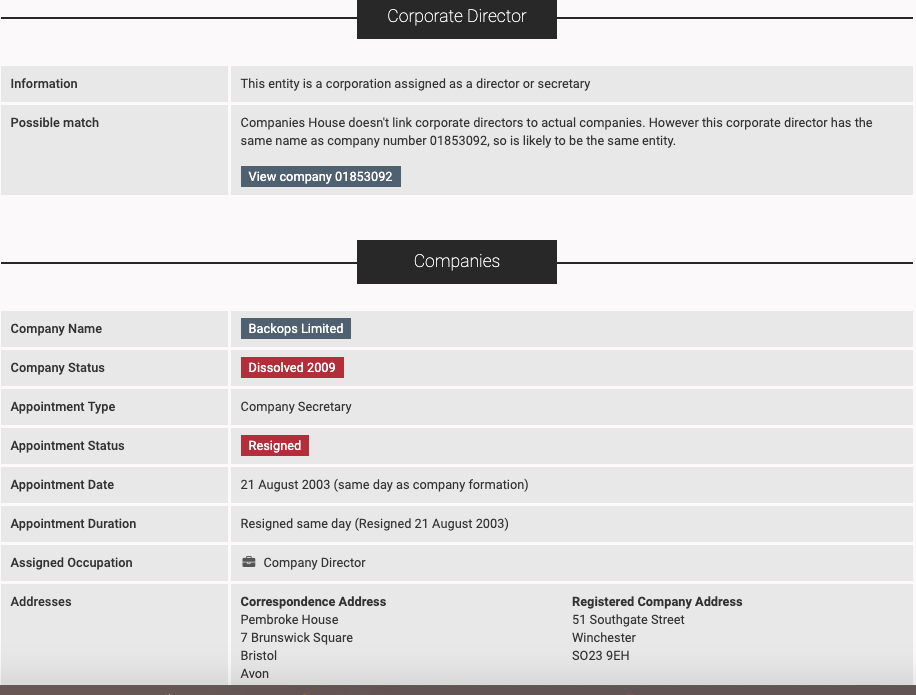
We then looked up the company ‘Bristol Legal Services Limited’ on nexok.co.uk, an online database of companies and directors for the UK. Surprisingly, it directed us to ‘BACKOPS Limited’.
Bristol Legal Services Limited made ‘company secretary’ for a day before Rahul Gandhi was made one.
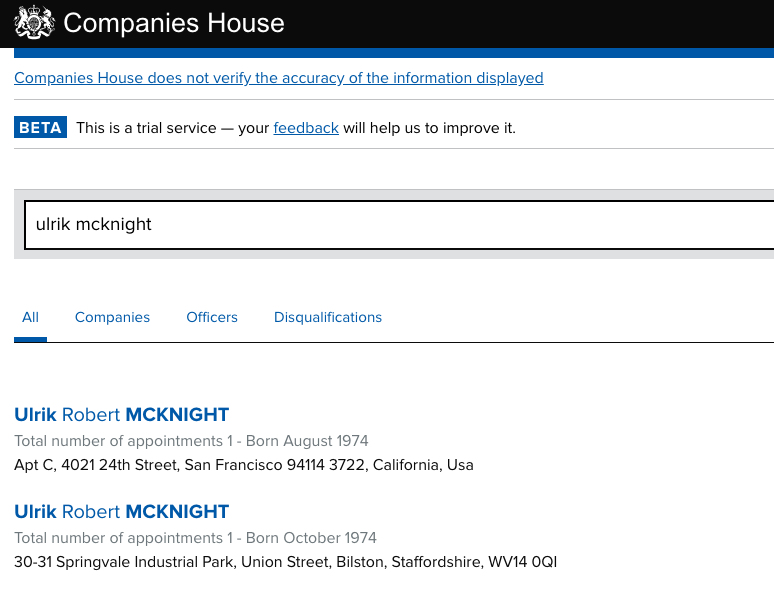
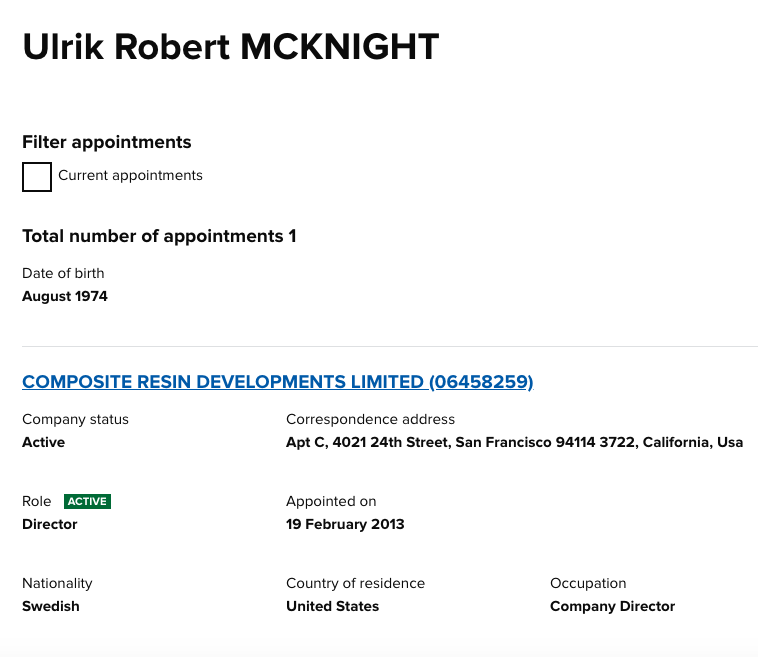
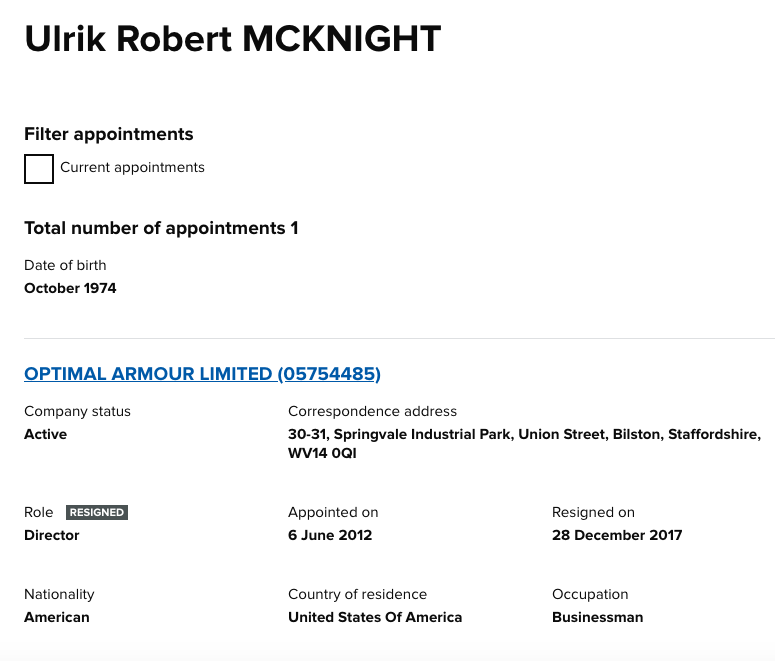
One name that stands out in the document Ghosh shared was of one Ulrik McKnight, another director of Bristol Legal Services Limited. McKnight name did not appear as a director when we looked for in the company profile of Bristol Legal Services Limited (just like Rahul Gandhi’s name did not appear). However, when we searched for his name, two Ulrik McKnights appeared.
Ulrik McKnight details on Companies House
Both are American citizens, both are born in 1974, both have the same middle name. Except, one is born in August and one in October. Since the document Pallavi had shared mentioned birthdate of Ulrik McKnight as 19th August, 1974, we went with the first option.
Ulrik McKnight born in August 1974
The company details of Ulrik do not mention Bristol Legal Services Limited. Also, his nationality is Swedish.
Ulrik McKnight, who was born on October 1974
Ulrik McKnight born in October 1974, too, did not hold directorship of Bristol Legal Services Limited. So, who exactly is this mysterious Ulrik McKnight whose details are also missing from the details of Bristol Legal Services Limited like that of Rahul Gandhi?
Ulrik McKnight is journalist and NYT columnist Sonia Faleiro’s husband. And who is Sonia Faleiro? She is the daughter of Eduardo Faleiro, who has been a Congress politician all his life, and has even been a Union Minister for 5 years. Nothing illegal here, but now we know how Rahul Gandhi might have met Ulrik McKnight.
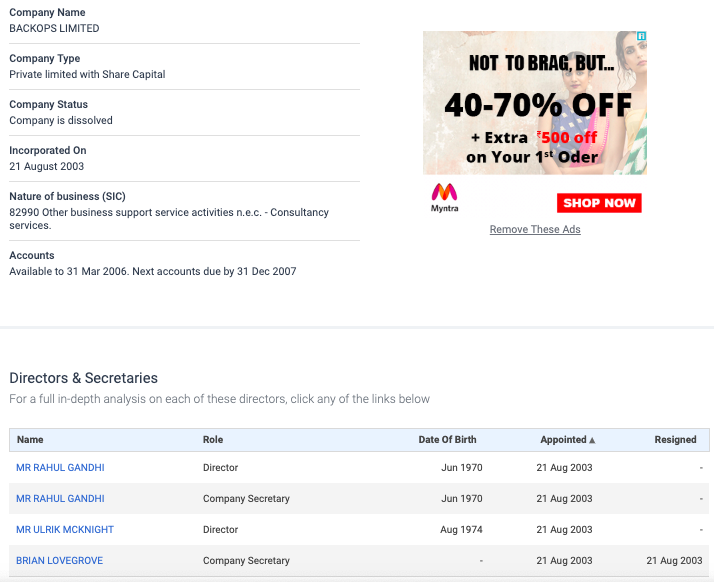
Twitter user ‘WrongDoc’ pointed out one more discrepancy. There is one mysterious ‘Brian Lovegrove’ who appears as a company secretary for a day. While Companies House does not throw many results, companycheck.co.uk and duedil.com (another companies data aggregator websites) list him as a company secretary for one day.
Companycheck.co.uk data on BACKOPS Limited
Brian Lovegrove has retired as a director from as many as 1,056 companies and has active directorship in as many as 21 companies as of now.
Moving on, we look at the address Bristol Legal Services Limited is registered at. 6 Lower Park Row, Bristol BS1 5BJ is the address which is also the address for correspondence for ‘Thomas Paul Russell’. It is also the address of one company called ‘Bourse Company Services’ which helps individuals in registering companies. The company shares its address with over 70 other companies. Hardly anything is available on who Thomas Paul Russell is. Brian Lovegrove mentioned above also has his address set up as 6, Lower Park Row, Bristol.
Coming back to Rahul Gandhi’s address found in the document Pallavi Ghosh shared. 2, Frognal Way, London, UK NW3 6XE. At least five companies are registered at 2, Frognal Way, London at the address Rahul Gandhi has given as ‘proof’ of his Indian nationality.
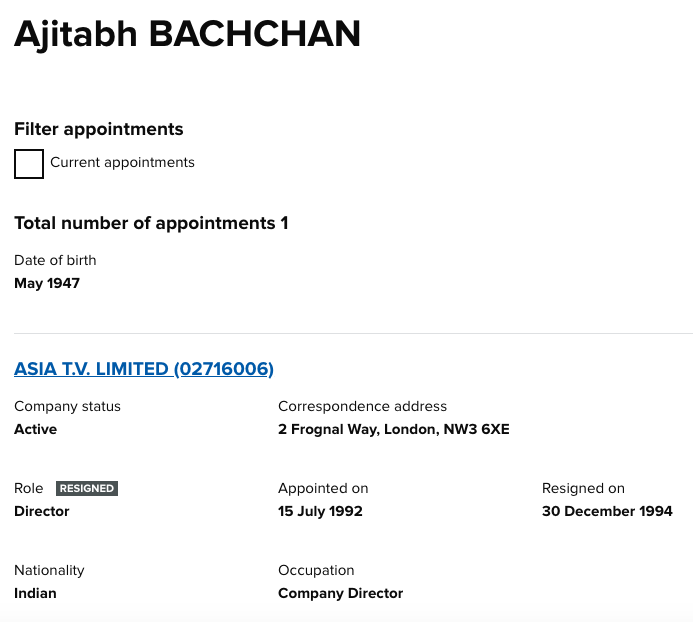
According to companieshousedata.co.uk, Amgi Limited, Oligopoly Enterprises Limited and Tapnow Limited are registered at 2 Frognal Way. As per endole.co.uk, Hoxton Securities Limited and Deltaxy Ltd. are also registered at the same address. 2, Frognal Way, London is also the address of Asia TV Limited, a company incorporated by Amitabh Bachchan’s brother, Ajitabh Bachchan.
Ajitabh Bachchan at 2, Frognal Way
And surprise, surprise, 2 Frognal Way, London is also the address Rahul Gandhi has given for BACKOPS Limited registration.
Details of Rahul Gandhi as Director of BACKOPS
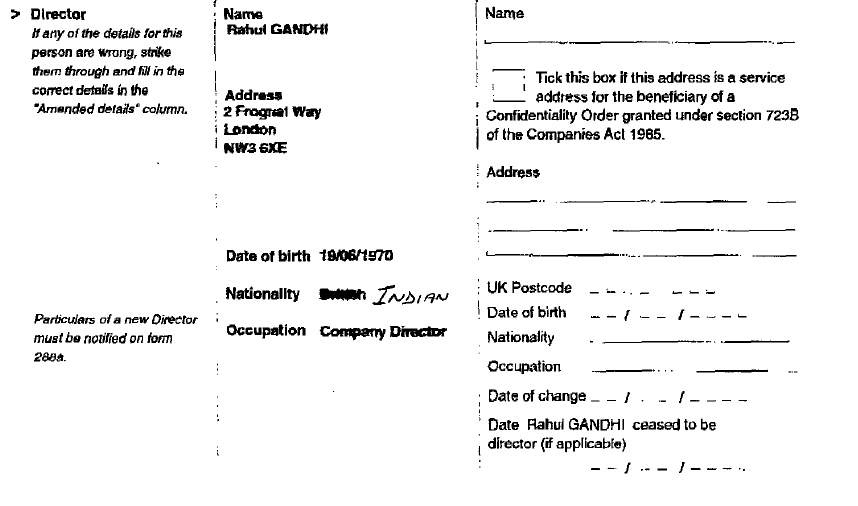
Rahul Gandhi himself has not been consistent in declaring his nationality. While in the above letter, he is ‘British’, in the letter shared by Congress through the friendly media, he is ‘Indian’. And again there is a 2004 document where his nationality is first typed as ‘British’ but it is corrected manually to “Indian”.
Rahul Gandhi’s nationality manually changed to ‘Indian’ from ‘British’ (image: IndianExpress)
Amidst all this, Congress’ ‘clarification’ has only opened a pandora box of discrepancies. These documents raise more questions than they answer. Congress and Rahul Gandhi both must come clean on the following points:
What is Rahul Gandhi’s nationality?
If it is Indian, why do these documents identify him as a British national?
What is BACKOPS Limited? What was your role in the company? How is BACKOPS Limited and Bristol Legal Services Limited related?
Why is the address in your filing with the companies registrar in the UK same as of so many other companies?
Article 9 of the Constitution of India bars every Indian citizen from acquiring voluntary acquiring citizenship of a foreign state. Article 19 of the Constitution of India also bars Indian citizen from accepting foreign titles.
Earlier today it was reported that the Ministry of Home Affairs has issued a notice to Congress President Rahul Gandhi over the citizenship controversy that erupted a few weeks ago. The Home Ministry has cited documents of the British company BACKOPS where Rahul Gandhi filed returns are a British citizen and sought a response from him within 10 days.
The matter of citizenship had also arisen when representation was made to the Election Commission about Rahul Gandhi’s election affidavit from Amethi. That complaint was however disposed off saying that this is the domain of the Home Ministry and not of the Election Commission.