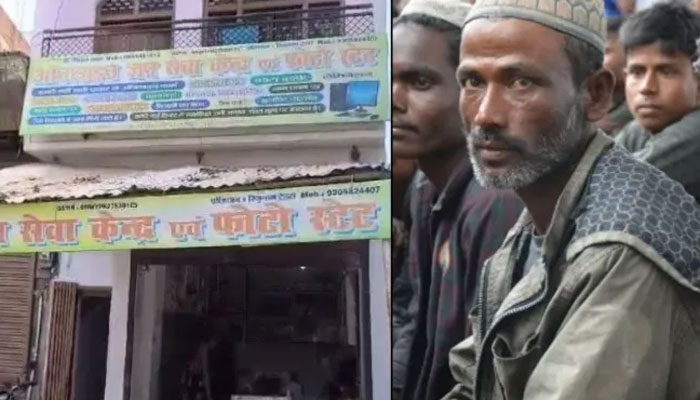
An investigation into the fabricated birth certificates of thousands of Rohingya and Bangladeshi infiltrators was launched on 18th July in the Rae Bareli district of Uttar Pradesh. The probe is still ongoing. So far, over 52,000 certificates have been discovered to be fraudulent. This forgery includes identification certificates of people from several states of India, along with people from neighboring countries including Pakistan, Bangladesh and Nepal.
The government has announced cancellation of all these bogus certificates. According to media reports, a total of 11 villages in Salon block is where these fake birth certificates were discovered. A total of 52,594 of these certificates have been forged in these villages. These certificates were issued in the names of citizens of Bihar, Madhya Pradesh, Jharkhand, Tamil Nadu, Kerala, and Punjab, as well as for people from Bangladesh, Pakistan and Nepal. Deputy Director Panchayati Raj Saswat Anand Singh has ordered to revoke these bogus certificates.
Furthermore, the district’s District Public Relations Officer (DPRO) has been directed to exercise extra caution while issuing birth and death certificates going forward. According to the inquiry, fraudsters in multiple villages created 500 to 1000 phony birth certificates in a day, although a computer is only capable of producing 100 certificates in a 24-hour period. It is believed that the perpetrators from several locations collaborated to generate a large number of certificates in one day using a single ID and password.
Palhipur is the most afflicted of the 11 villages where fraudulent birth certificates have been unearthed and 13707 fake certifications have been detected, followed by Nuruddinpur where the number is 10151, and Prithvipur at third number at 9393 fake certificates. Moreover, 4897 fake certificates were identified in Sanda Saidan, 3746 in Madhavpur Ninaya, 3780 in Lahurepur, 2255 in Garhi Islamnagar, 1665 in Aunanees, 225 in Gopalpur, also known as Anantapur, and 2 in Dubhan.
The primary suspect in this matter is Mohammad Zeeshan who is a resident of Salon. Riaz, Suhail Khan, and Block Development Officer (BDO) Vijay Singh Yadav were allegedly involved in the conspiracy with him. All accused have been arrested. The National Investigation Agency (NIA) has also been roped in along with Anti-Terrorist Squad (ATS) to investigate the case. Investigators are looking into whether other accused people were complicit in the forgery.
The issue was brought to light in July 2024 when more birth certificates were issued than the population of some villages. This conspiracy was initially not known even to the heads of several villages. Vijay Yadav had filed the police complaint in an attempt to prove his innocence. According to a police probe, he provided Zeeshan with his official CUG number. All birth certificates used to arrive at this number with an OTP confirming their approval.
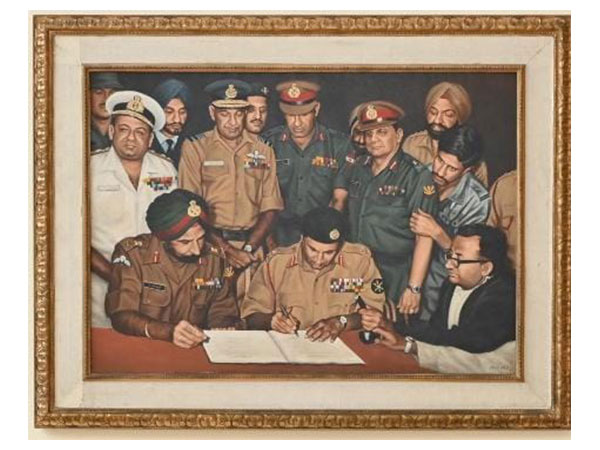
The Chief of Army Staff of the Indian Army, General Upendra Dwivedi, along with Sunita Dwivedi, on Monday installed the ‘iconic 1971 surrender painting’ at the Manekshaw Centre in New Delhi.
The iconic painting portrays the ceremonial surrender of Pakistani soldiers to the Indian Army on 16 December, 1971, in Dhaka following the liberation of Bangladesh was installed on the occasion of Vijay Diwas.
December 16, 1971, was the day when Pakistan signed the instrument of surrender in Dhaka, following a 13-day India-Pakistan War. This resulted in the surrender of over 93,000 soldiers, and the Pakistan Army’s capitulation against Indian forces was complete. Following this decisive victory, India announced itself as a major regional force.
“On the occasion of #VijayDiwas, #GeneralUpendraDwivedi #COAS, along with the President #AWWA, Mrs. Sunita Dwivedi, installed the iconic 1971 surrender painting in its most befitting place, The Manekshaw Centre, named after the architect and the hero of the 1971 War, Field Marshal Sam Manekshaw.” The Indian Army posted on X.
Senior serving officers of the Indian Army and veterans were present on this occasion.
As per the Indian Army, the installation at the Manekshaw Centre, named after the Field Marshal Sam Manekshaw, will benefit a large audience due to substantial footfall of diverse audiences and dignitaries from India and abroad at this venue.
“This painting is a testament to one of the greatest military victories of the #IndianArmedForces and the commitment of #India to justice & humanity for all. Its placement at the #ManekshawCentre #NewDelhi will benefit a large audience due to substantial footfall of diverse audience & dignitaries from #India and abroad at this venue,” the post further reads.
Notably, the painting was earlier installed in the Army Headquarters, New Delhi.
Earlier in the day, Congress MP Manickam Tagore moved an adjournment motion notice in the Lok Sabha on Monday to discuss the removal of a 1971 war photograph from Army Headquarters, New Delhi, and its implications.
In his notice to Speaker Om Birla, Manickam Tagore said that the removal of the photograph, which commemorates the historic surrender of Pakistani forces in Dhaka, Bangladesh, on December 16, 1971, is not only troubling but is a direct affront to the historical memory of this monumental event.
He urged the central government to “immediately” restore the photograph to its original position.
For India, the 1971 victory is a historic milestone, and December 16 is commemorated nationwide as “Vijay Diwas” to honour India’s triumph over Pakistan. According to reports, 3,900 Indian soldiers are believed to have died and 9,851 were injured during the war of 1971.
(This news report is published from a syndicated feed. Except for the headline, the content has not been written or edited by OpIndia staff)
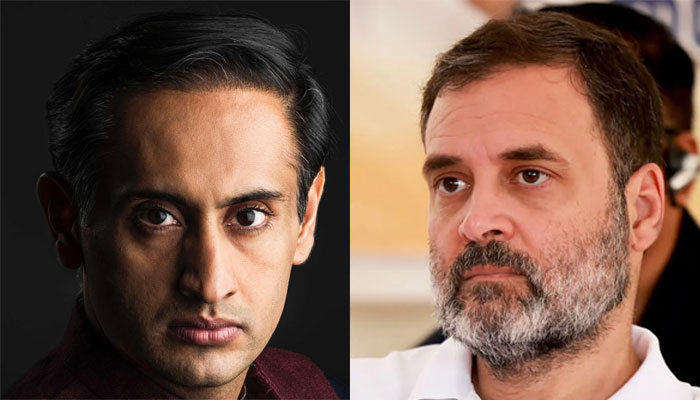
On 15th December, the Congress Party once again opened a front against India Today and Aaj Tak’s News Director, Rahul Kanwal, and announced that they had blacklisted him. The development came after, according to Congress, Kanwal “insulted” Congress leader and Leader of the Opposition in the Lok Sabha, Rahul Gandhi, at the India Today Conclave during an interview with Home Minister Amit Shah.
In the India Today conclave, Kanwal exposed the Gandhi scion stating that even though he held forth on upholding the Constitution, he had been visiting
The Congress Party has always stood for freedom of the press and respects fair journalism – not when those carrying a press card are actually acting like trolls on behalf of a political party.
We do not think it is necessary to engage with such trolls. It has therefore been…
In a post on the social media platform X, the Chairman of the Media and Publicity Department of the All India Congress Committee, Pawan Khera, wrote, “The Congress Party has always stood for freedom of the press and respects fair journalism – not when those carrying a press card are actually acting like trolls on behalf of a political party. We do not think it is necessary to engage with such trolls. It has therefore been decided to blacklist India Today’s Rahul Kanwal, who was brazenly kowtowing to the self-styled Chanakya who made outrageous innuendos on the Leader of the Opposition in the Lok Sabha, at the India Today Conclave. We gave Kanwal a chance the last time when he regretted his conduct, but he has turned out to be a repeat offender and hence, by our participation, we cannot qualify what he does in the name of journalism.”
In an earlier post, Khera, who was visibly angry as asserted in the post’s content, said, “What was more shameless? The Home Minister of the country indulging in cheap, gutter-level gossip about the Leader of the Opposition, Mr Rahul Gandhi or Rahul Kanwal deriving cheap thrills by egging Amit Shah and the audience? Would Rahul Kanwal have the guts to ask Shah about Modi’s abandoned wife? Would Kanwal have the guts to ask Shah about Snoopgate? Is this what India Today conclaves have been reduced to, Mr Aroon Purie?”
What was more shameless? The Home Minister of the country indulging in cheap, gutter level gossip about LOP, Mr @RahulGandhi or @rahulkanwal deriving cheap thrills egging Amit Shah and audience? ▪️Would @rahulkanwal have the guts to ask Shah about the abandoned wife of Modi?…
This is not the first time the Congress Party has targeted Kanwal. On 4th September, Khera posted on X, stating that Kanwal had met the Congress President and other party leaders to clarify his position regarding a debate on Indira Gandhi and Rajiv Gandhi, during which a BJP spokesperson made remarks that the party deemed “obnoxious views.” Kanwal approached the Congress leaders after they announced their decision to boycott his shows.
Mr @rahulkanwal met the Hon’ble Congress President, the General Secy Media, Communications and Publicity and the Chairman, Media, Communications and Publicity to clarify his position on the matter pertaining to the debate on Late Smt Indira Gandhi and Late Shri Rajiv Gandhi and…
What happened during the interview at the India Today Conclave
In the interview with Home Minister Amit Shah, Rahul Kanwal asked straightforward questions related to the Lok Sabha elections, recently held Assembly Elections in several states, the law and order situation in the country, upcoming elections, border security, and more. During the discussion, both talked about how Congress reacted differently to wins and defeats and also discussed the political career of Congress leader Rahul Gandhi in the context of various topics.
HM Shah did not mince words when discussing Gandhi’s leadership. He referred to him as a “rare example in Indian politics of someone who becomes arrogant even in defeat.” He criticised Gandhi for having “misplaced confidence” and a reliance on external influences. While referring to Gandhi’s repeated reliance on international reports to attack the government, he said, “Why does Rahul Gandhi always look outside India for inspiration? This country has a judiciary, vigilance bodies, and democratic mechanisms, yet he continuously brings accusations from foreign sources.”
He further added that the approach Gandhi has taken raises questions about the Congress Party’s commitment to India’s institutions. He said, “Is it so hard for the Congress to use domestic institutions instead of always seeking validation from abroad?”
HM Shah mocked Congress for repeatedly laying down accusations against electronic voting machines (EVMs). He said, “When Congress wins, EVMs are fine. When they lose, EVMs are suddenly defective. This shows their inability to accept defeat gracefully.” He further dismissed the allegations of EVM tampering as baseless and part of Congress’s broader strategy to undermine the credibility of the electoral system in the country.
Shah pointed out that Gandhi frequently refers to international institutions and bases accusations on foreign reports. He said, “I don’t understand why Rahul Gandhi’s inspiration always comes from outside India. Is this the same Congress that once spoke of Indian self-reliance?” Referring to Gandhi’s recent statements in Parliament and his focus on global narratives, Shah said, “This constant need for validation from foreign institutions shows Congress’s inability to trust India’s systems.”
During the interview, HM Shah did not miss a single chance to make sarcastic comments about Rahul Gandhi, Congress, and Priyanka Gandhi. Here is a collection of some of the comments he made:-
Speaking on Rahul Gandhi’s arrogance in defeat, he said, “I have seen leaders who are neither discouraged by defeat nor arrogant in victory, but Rahul Gandhi is the first in Indian political history to become arrogant even in defeat.”
Roasting Rahul Kanwal & Rahul Gandhi at the same time ?
Speaking on Congress’s election performance, he remarked, “In the last three elections—2014, 2019, and 2024—Congress hasn’t won as many seats combined as we won this time, yet they act as though they won the election.”
2014, 2019 और 2024 तीनों मिलाकर भी कांग्रेस को जितनी सीटें नहीं आई है, उतनी सीटें हम इस बार जीतकर आए हैं। फिर उनको (कांग्रेस) लगता है हम चुनाव हारे हैं।
Targeting Rahul Gandhi for taking inspiration from “abroad,” HM Shah said, “Why does Rahul Gandhi always find inspiration abroad? This country has its judiciary, vigilance bodies, and democratic mechanisms, but he keeps running to foreign institutions for validation.”
HM Shah pointed out that whenever Parliament is in session, Gandhi comes up with fresh accusations based on foreign reports. He said, “Whenever Parliament is in session, Rahul Gandhi comes back with some fresh accusations based on foreign reports. It’s as if his only source of inspiration resides outside India.”
Sanghis are C0wards for a reason & they proved it again
Home Minister Amit Shah & National media anchor Rahul Kanwal doing Dog whistling about Rahul Gandhi
They don't even have enough guts to say that directly, because they know that they are spread manufactured Lie ?? pic.twitter.com/KOKLXMu0TK
Taking a dig at Congress’s accusations against BJP, claiming the ruling party has control over institutions, HM Shah said, “Rahul Gandhi claims that every institution in this country, from the judiciary to the CAG, is under Modi’s control. Perhaps Congress is projecting its own history of manipulating institutions.”
HM Shah took a dig at the Congress Party for its flip-flop attitude on EVMs. He said, “When Congress wins an election, EVMs work perfectly. But when they lose, suddenly, the machines are faulty. It’s like saying, ‘I don’t know how to dance, so let’s blame the floor for being uneven.’”
HM Shah pointed out that it seems to be Congress’s strategy to keep laying down baseless allegations. He said, “Congress’s strategy is simple—make an allegation, run away from evidence, and create confusion. They have mastered the art of accusation without substance.”
Taking a dig at Priyanka Gandhi, he said, “Priyanka Gandhi says institutions have weakened under Modi. Funny how the same institutions thrived under Congress when they were exposing scams like 2G and Coalgate.”
At one point, HM Shah warned Rahul Kanwal to stay away from Rahul Gandhi; otherwise, his thinking would go haywire. He said, “Be careful about staying in touch with Rahul Gandhi. Too much contact could cause your thinking to go haywire as well.” Rahul Kanwal himself took a dig at Rahul Gandhi at that point and revealed that Gandhi refused to come to India Today’s platform and answer questions. He said, “We’ve been inviting Rahul Gandhi to such forums for 20 years. He’s never come. It’s as if he’s allergic to facing questions.”
Congress, its leaders and its allies regularly target journalists
Congress has a long history of suppressing the voices of media houses and journalists. In September 2023, I.N.D.I. Alliance released a list of 14 anchors including Arnab Goswami, Rubika Liaquat and Shiv Aroor saying the alliance would boycott them. They decided that these were the anchors whose tough questions they were not willing to answer and would only perhaps entertain those anchors who asked Sonia Gandhi whether she knew how to cook pasta. The list included names of Aditi Tyagi, Aman Chopra, Amish Devgan, Anand Narasimhan, Arnab Goswami, Ashok Shrivastav, Chitra Tripathi, Gaurav Sawant, Navika Kumar, Prachi Parashar, Rubika Liaquat, Shiv Aroor, Sudhir Chaudhary and Sushant Sinha.
Not only the party and the alliances it has been part of, but Congress leader Rahul Gandhi also leaves no stone unturned when it comes to mocking, intimidating, and targeting journalists. In November this year, Gandhi hackled a News18 journalist named Niraj Kumar and branded him as “BJP Agent”. The incident occurred during a press conference of the Gandhi Scion. Kumar had highlighted 3 allegations levelled by the rival national party BJP against the Congress. On being confronted with these tough questions, a rattled Rahul Gandhi attacked the News18 journalist and accused him of parroting the BJP agenda.
Why does @RahulGandhi get triggered by tough questions?
When unable to answer, he labeled them BJP questions & started heckling the journalist. pic.twitter.com/JZFoKUiyMt
In February, when Lok Sabha election campaigning was gaining pace, Rahul Gandhi almost got a journalist lynched during his Bharat Jodo Nyay Yatra. During a speech at a rally, Rahul Gandhi addressed a journalist in public and asked for his name. “Are you from the media? What is your name? What is the name of the owner of your organisation?” Rahul Gandhi asked the journalist. When the journalist attempted to say something, Rahul Gandhi’s tone suddenly became aggressive. “Tell his name, what is your owner’s name? Say it”, he was heard saying as the crowd of Congress supporters around him got agitated and hostile against the journalist. “Is he an OBC? Is your owner a Dalit? No, he is not.” Rahul Gandhi continued as the crowd around the journalist got hostile. He then stopped the Congress workers saying, “No. Don’t beat him up”.
This is serious! This ven0mous clown had literally unleashed his goons on a journalist for not being a Darbari….
His tone was so provocative & then he acted like he didn't want him to get hurt…. pic.twitter.com/llRdKWvS4F
Not only in India, Congress workers have allegedly attacked Indian journalists on foreign soil. In September, Congress workers in Dallas, Texas assaulted India Today media network during Rahul Gandhi’s US visit. Journalist Rohit Sharma had gone to Texas to cover Indian Leader of Opposition Rahul Gandhi’s much-anticipated visit. During the event, Sharma was harassed by the Congress workers as he raised the question of Hindus killed in Bangladesh at the hands of Islamists after the fall of the Sheikh Hasina government there. As per the India Today report, Sharma approached the Chairman of the Indian Overseas Congress (IOC) Sam Pitroda for an exclusive interview hours before Gandhi was scheduled to arrive at the DFW International Airport. The entire interview went well until the last question posed by the journalist.
As the interview drew closer to the conclusion, Sharma asked, “Will Rahul Gandhi raise the issue of Hindus being killed in Bangladesh during his meetings with US lawmakers?” Before Pitroda could respond to the question, other 20-30 close associates and supporters of Congress and Rahul Gandhi who were present during the interview began creating chaos saying that the question asked by Sharma was ‘controversial’. They assaulted him, snatched his phone, and deleted the entire video of the interview.
In April 2020, Arnab Goswami and his wife were attacked by two Congress workers while driving home from Republic TV’s studio. The attack followed Goswami’s sharp criticism of Sonia Gandhi, questioning her silence on the Palghar lynching of two sadhus. Days later, Goswami was interrogated by Mumbai Police for over 12 hours on Congress leader Nitin Raut’s complaint. Allegations surfaced that Raut’s complaint was based on a manipulated clip, exposing a politically motivated attempt to silence Goswami.
Furthermore, how can one forget the treatment of media outlets during an emergency? During the Emergency imposed by Prime Minister Indira Gandhi from 1975 to 1977, the Congress Party severely curtailed press freedom in India. The government implemented strict censorship, banning domestic and international news critical of its actions, and expelled numerous foreign journalists. Over 260 Indian journalists were imprisoned for opposing the regime, highlighting the Congress Party’s authoritarian approach to suppressing dissent and controlling information during this period.
The Congress Party’s move to blacklist Rahul Kanwal shows its uneasy relationship with independent journalism and raises questions about its commitment to press freedom. By targeting journalists and media houses that don’t agree with its views, Congress goes against the values it claims to support.
In Uttar Pradesh’s Basti district, a 17-year-old Hindu girl allegedly committed suicide on 14th December by hanging herself at her house after being fed up with the harassment by a Muslim boy named Nafees Khan. According to the deceased victim’s father who works as a labourer in Mumbai, the accused had been calling the girl over the phone for the last two years and harassing her. The incident utook place in the Athdeura village of Rudhauli police station area.
Even after Nafees Khan’s marriage was fixed with another girl, he continued harassing the minor Hindu girl who eventually grew frustrated and took the extreme measure. Reports say that the victim’s father had lodged a police complaint around a year ago against accused Nafees, but the accused continued harassing the girl. He also allegedly used to blackmail the victim.
Another day, another innocent minor Hindu girl dead!
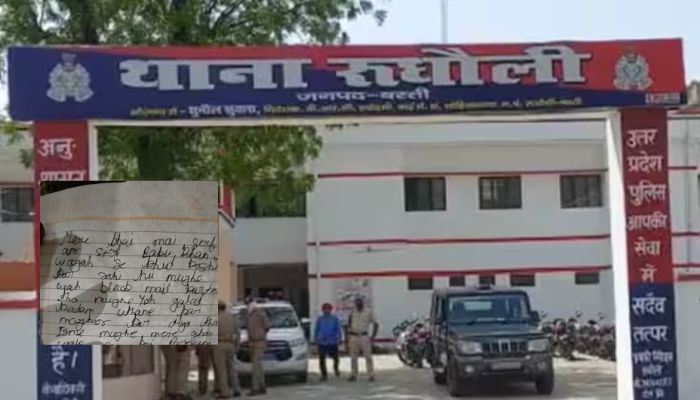
Basti, UP: A 16-year-old Hindu minor girl, an 11th grader committed suicide, accusing Babu Khan, also known as Nafees, of non-stop harassment and blackmail in her suicide note.
The deceased victim’s brother alleged that Nafees Khan used to harass his sister when she used to go to school. When her brother went to Nafees’s shop to confront him, the accused put a knife to his neck and started threatening him. Tired of the perpetual harassment, the 17-year-old girl hanged herself in her room on 14th December.
Meanwhile, Circle Officer Satyendra Bhushan said that on 14th December, information was received that the 17-year-old girl committed suicide by hanging herself. Subsequently, the police and forensic team reached the spot and inspected the crime scene. He said that evidence has been collected from the spot and the body has been taken into custody and sent for post-mortem.
CO Satyendra Bhushan added that the family members have said that a youth from the neighbouring village used to talk to their daughter. Probably, that is why the girl has taken this extreme step, the police are investigating this matter. The officer added that the CDR of the mobile is being retrieved and further legal action is being taken after taking a written complaint from the family members.
The Prime Minister’s Museum & Library (PMML) has written to Congress leaders Sonia Gandhi and Rahul Gandhi, asking them to return the 51 cartons containing private letters of former Prime Minister Jawaharlal Nehru.
The private collection of papers was initially donated by Indira Gandhi for the purpose of ‘safekeeping’ to the Jawaharlal Nehru Memorial Fund (JNMF).
It was not a gift, meaning that it couldn’t be accessed by scholars without her permission. Indira Gandhi was essentially the owner of the documents until her assassination in 1984.
In a letter to Congress leader Rahul Gandhi, the Prime Ministers' Museum and Library urged him to return Jawaharlal Nehru's personal letters from Sonia Gandhi.
Later, Congress leader Sonia Gandhi also donated letters of Jawaharlal Nehru for ‘safe custody’ to JNMF.
These private papers contain the correspondence of the former Prime Minister with the likes of Edwina Mountbatten, Albert Einstein, Jayaprakash Narayan and Aruna Asaf Ali.
The letters were transferred to the Nehru Memorial Museum and Library (NMML), which was re-christened as Prime Minister’s Museum & Library (PMML) in 2022.
This is intriguing! From What’s today the Prime Minister’s Museum and Library & formerly Nehru Museum and Library, the then UPA Chairperson Sonia Gandhi took away 51 cartoons of letters written by Nehru to various personalities including “EDWINA MOUNTBATTEN”! In the recently… pic.twitter.com/2TVwjPUSi3
Private letters were removed from collection in 2008
It has now surfaced that the private collection of letters, donated by both Indira Gandhi and Sonia Gandhi, was removed from NMML on 5th May 2008.
Sonia Gandhi had reportedly sent a representative, identified as M V Rajan, to the then Nehru Memorial Museum and Library to separate the private papers from official papers of Jawaharlal Nehru.
With the help of other officials, the large collection of private letters of the former Prime Minister was segregated and stuffed in 51 cartons. M V Rajan then facilitated the transfer from the Nehru Memorial Museum and Library to Sonia Gandhi.
At that time, Sonia Gandhi was the chairperson of the Congress-led ‘United Progressive Alliance’ (UPA). The attempt to retrieve the private collection of papers, including letters to Edwina Mountbatten, has failed since 2014.
The matter was discussed at length in April this year during the Annual General Meeting (AGM) of the Prime Minister’s Museum & Library (PMML). Rajnath Singh, Dharmendra Pradhan and Nirmala Sitharaman were present at the meeting.
Letters to Sonia and Rahul Gandhi
PMML member and historian, Rizwan Kadri, wrote a letter to Sonia Gandhi in September but failed to get a response. He then sent another letter to Rahul Gandhi on 10th December.
He emphasised the need to preserve India’s historical heritage, adding that access to the private letters of Nehru ensures an understanding of India’s history.
Kadri had requested digital access/ physical copies or a complete return of the 51 cartons of Nehru papers.
“These documents provide invaluable insights into a critical period of Indian history…We would be grateful for your collaboration in exploring possible solutions,” he added.
In Uttar Pradesh, a vegetable vendor was caught spitting on vegetables at a local market in the Anupshahar police station area in Bulandshahr district. A video of the incident surfaced online, after which the police initiated action and arrested the accused on Saturday (14th December). The accused has been booked under the Food Security Act.
Anupshahar Kotwal Rakesh Kumar Singh said that the accused was interrogated by the police. He told them that he eats gutkha and was trying to spit out the particles of betel nut in the gutkha. The accused claimed that someone made the video with ‘wrong’ intentions. Meanwhile, the police said that the matter is being investigated. SSP Shlok Kumar said that further action will be taken in the matter based on the findings of the investigation.
As per reports, the name of the accused is Shamim.
Earlier, on 3rd December, a video had also gone viral from Chauhalda village of Baghpat. In this incident, two youths were seen spitting repeatedly while making naan.
Similarly, in Ghaziabad, a minor Muslim boy working at a hotel was allegedly spitting on rotis while making it at a hotel. The CCTV footage of the incident went viral online prompting the police to initiate action and take the hotel owner and his associate into custody. The incident unfolded in the Modinagar Police Station area when a person named Prakash Singh went to the same hotel with his friend and noticed the accused spitting on the rotis. To prove this, he made a video of the worker. When he complained about this act to the hotel owner, the hotel owner, Anuj, and his associate Abid attacked Prakash and his friend.
Note: An earlier version of the report mistakenly mentioned Baghpat as the location of the incident. It has been corrected to Anupshahr in Bulandshahr district.
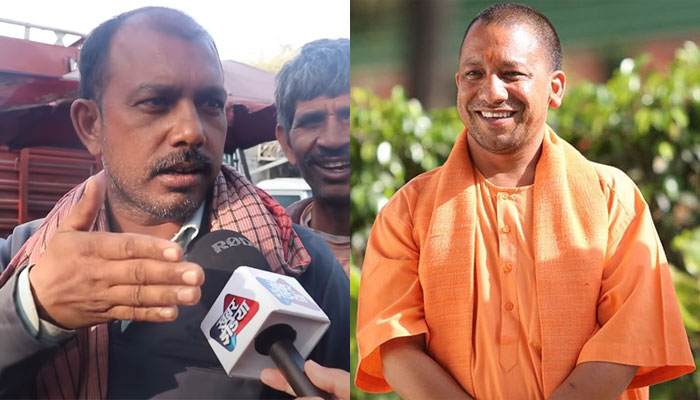
On 13th December, Khabar India, a YouTube-based news channel, published a video on the sidelines of the upcoming Delhi Assembly elections scheduled for early 2025. In the video, the reporter asked questions to Muslim migrant workers from West Bengal who have been working in Delhi for years. During the interview, one of the migrant workers openly threatened to behead the Chief Minister of Uttar Pradesh, Yogi Adityanath. The Muslim workers said they prefer Congress over the Bharatiya Janata Party (BJP) and Aam Aadmi Party (AAP), as “Rahul Gandhi” is a good leader. They further hoped that West Bengal CM Mamata Banerjee becomes Prime Minister in 2029, replacing PM Narendra Modi.
Open threat to UP CM Yogi Adityanath
The interview took a disturbing turn when one of the Muslim migrant workers expressed anger towards UP CM Yogi Adityanath, specifically targeting him for the construction of the Bhavya Ram Mandir in Ayodhya, the demolition of illegal mosques and mazars, and actions against loudspeakers and illegal slaughterhouses. He went ahead and threatened to behead CM Yogi, saying, “Bismillah bolunga aur qurbani de dunga Yogi ki”, which literally translates to “I will invoke Bismillah and sacrifice Yogi.” While making the threat, he symbolically gestured as though performing “qurbani” with his hands.
"Will take Bismillah's name and do the Qurbani of Yogi Adityanath.."
– An ordinary Indian Muslim threatening to ßeheΔd the Chief Minister of the State of UP. pic.twitter.com/k3veSXJrEg
Many in the group confirmed that they prefer Congress over the Arvind Kejriwal-led AAP. They questioned the credibility and style of governance of the Delhi government. One of the Muslim migrant workers dismissed Kejriwal, saying he is “nothing compared to Rahul Gandhi” and added, “Congress is the only national party that can ensure peace and unity among all communities.” Though they acknowledged that the Delhi government has been providing free electricity and water, they stated that Rahul Gandhi is in a better position to challenge the BJP.
Praise for Mamata Banerjee
West Bengal’s CM, Mamata Banerjee, was praised by the Muslim migrant workers. One of them asserted, “Our Didi is doing great in Bengal, and we hope she becomes the Prime Minister in 2029.” However, there was a mixed reaction to these sentiments, as another individual criticised Mamata for her inability to bring large corporate houses to the state.
He said, “If Bengal had jobs, why would we come to Delhi? There’s nothing in Bengal.” He added, “Bengal has 28 districts, but there are no big companies providing jobs. If there were jobs, we wouldn’t need to walk 1,400 kilometres to Delhi.” Interestingly, the same individual who threatened Yogi defended Mamata, claiming, “The government can’t do everything. It’s up to individuals to work hard and survive.” He added, “India is a free country. People can go anywhere for work. The government provides basic facilities; the rest is up to us.”
Political hypocrisy and misplaced priorities
The interviews shed light on the political inclinations of the Muslim migrant workers in Delhi. Such sentiments are important to note, especially with the Delhi Assembly elections around the corner. Notably, the open threat against a sitting CM and the justification of Mamata’s governance failures indicate that there is a deeper issue of communal polarisation, which may impact the election results. It is evident that they were angry over the construction of the Ram Mandir in Ayodhya and the action taken against illegal religious structures belonging to their community.
Amid rising incidents of attempts to derail trains by placing various objects on tracks are various places in the country, it has been revealed that training on how to derail trains was being imparted in madarsas. A probe by NIA and Uttar Pradesh ATS has unveiled a conspiracy to derail trans in Jhansi and Kanpur.
As per the probe, students of the madarsas are being radicalised and instigated to derail trains. Moreover, the youths are also being trained on how to derail trains. As part of the probe, the agencies are conducting raids at various madarsas in the region.
Such training is being imparted via online mode, and the probe teams recovered several videos. In the videos, radical Islamists are seen instigating youths to derail train, and also instructing on how to do the task.
One Madarsa teacher named Mufti Khalid Nadvi is being interrogated in connection with the conspiracy.
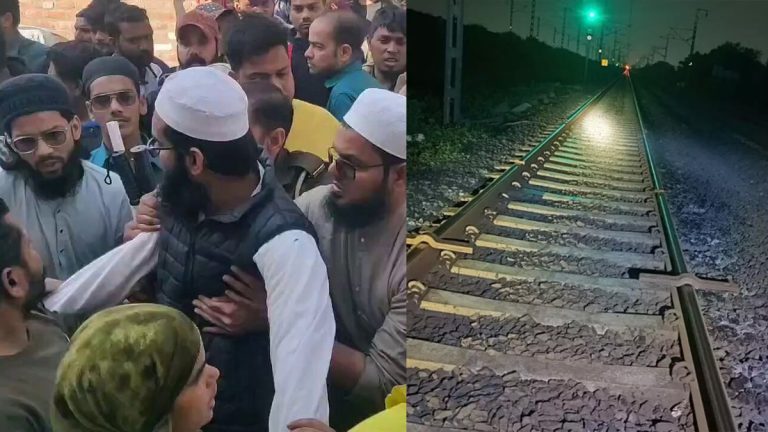
On Thursday, the investing team raided the houses of Nadvi and questioned him for several hours. However, when NIA and ATS teams were taking him to the police station for further interrogation, a massive Muslim mob attacked the convoy and freed Nadvi. The mob including a large number of women gathered after announcements were made from the local mosque.
Later the police again detained him, and he is being questioned. How laptop, mobile phone, and other items have been seized. He is accused of involvement in terrorist activities and foreign funding. After questioning, police released Mufti Khalid Nadvi.
Police have also filed a case against around 100 people for attacking the NIA-ATS team and freeing the detained person. Raids are being conducted to nab the accused.
In the last 3 months, there have been several attempts to derail important trains like the Sabarmati Express and Kalindi Express around Jhansi and Kanpur. Stones were also pelted on the ‘Vande Bharat’ train in this region. Various objects like cylinders, wood logs etc were placed on the tracks, however, they were spotted by alert railway workers or locals, and there was no untoward incident.
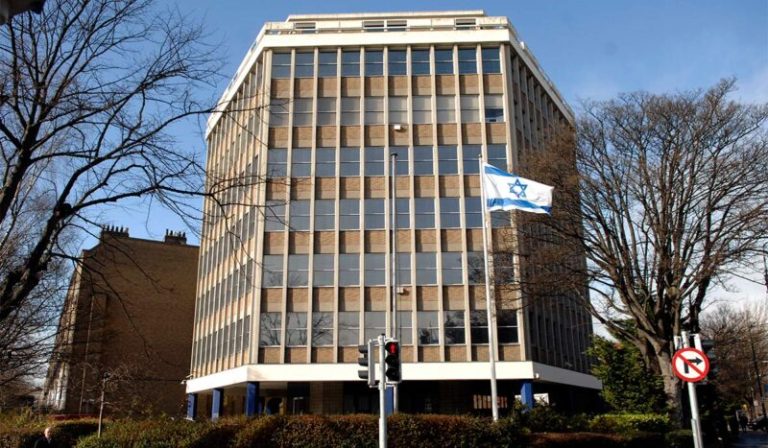
The govt of Israel had decided to close its embassy in Ireland, citing the “extreme anti-Israel policy of the Irish government.” Israeli foreign ministry announced the decision taken by Foreign Minister Gideon Sa’ar on Sunday.
Foreign Minister Sa’ar said, “Ireland has crossed every red line in its relations with Israel. Israel will invest its resources in advancing bilateral relations with countries worldwide according to priorities that also take into account the attitudes and actions of these states toward Israel.”
He added, “The antisemitic actions and rhetoric that Ireland is taking against Israel are based on delegitimization and demonization of the Jewish state and on double standards.”
Irish Prime Minister Simon Harris called the decision “deeply regrettable”, and rejected the assertion that Ireland is anti-Israel. He tweeted, “This is a deeply regrettable decision from the Netanyahu government. I utterly reject the assertion that Ireland is anti-Israel. Ireland is pro-peace, pro-human rights and pro-International law.”
Harris further added, “Ireland wants a two state solution and for Israel and Palestine to live in peace and security. Ireland will always speak up for human rights and international law. Nothing will distract from that.”
Earlier in May this year, Israel recalled its ambassador to Ireland after the Irish govt announced that they would unilaterally recognize a Palestinian state. Ireland has not recalled its envoy to Israel yet.
Last week, Ireland joined South Africa in the case against Israel at the International Criminal Court in The Hague. South African govt has accused Israel of ‘genocide’ for its military action against Hamas in Gaza in retaliation to the 7 October 2023 terror attack.
Minister Sa’ar said that Israel will adjust its diplomatic network of missions to strengthen ties with countries that want to do the same with Israel, but do not yet have an Israeli embassy. As part of that, Israel has decided to open an embassy in Moldova, the small East European country landlocked between Ukraine and Romania. Moldova has an embassy in Israel.
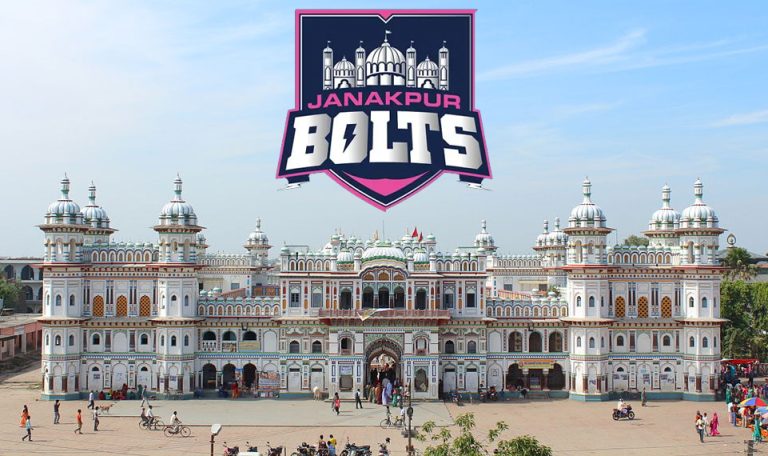
The Janakpur Bolts, one of the teams in the Nepal Premier League (NPL), recently found itself at the centre of a controversy regarding its logo. The logo, which was revealed in November this year, is reportedly inspired by the iconic Janaki Mandir, dedicated to Mata Sita in Janakpur, Nepal. However, the logo sparked outrage among locals as they claimed it more closely resembles a mosque rather than the Hindu temple. Fans have alleged that by using such a logo, the team has disrespected the culture and religious sentiments of the devotees.
Understanding the issue
Since the launch of the Janakpur Bolts’ logo, the team has faced criticism for allegedly inaccurately depicting the Janaki Mandir. Notably, the temple is known as an emblem of Janakpur’s cultural identity and heritage. Social media users and critics have argued that the logo distorts the architectural beauty of the temple and thus undermines the pride of the Mithila region.
One of the social media users called the logo an insult to the cultural essence of Janakpur. He urged the organisers to rectify it at the earliest. Similarly, other social media users labelled the logo a “threat to the global reputation of the temple” and demanded immediate correction. On the other hand, some social media users called for restraint from making such comments, as it might harm the morale of the team.
What the franchise said
Following the controversy, the owner of the Janakpur Bolts franchise, Niroj Khatri, issued a statement and expressed regret over the confusion. He clarified that the logo was, in fact, designed using the front face of the Janaki Mandir. He further explained that they only used a partial depiction of the religious structure to ensure it complied with the rules and regulations set by the International Cricket Council (ICC) regarding the usage of religious symbols.
He added that such partial depiction might have led to unintended resemblance to a mosque. He further stated that the franchise would soon launch a video to demonstrate the logo’s inspiration and assured that it would be redesigned in the future. However, he noted that making changes this year is logistically impossible. The video was released on 28th November explaining the logo and the inspiration taken from the iconic temple.
The white-coloured Janaki Mandir has several big and small round domes on its top, and the Janakpur Bolts team chose to use the top part of the temple as its logo. But, due to the chosen design, the logo looks like a mosque with domes and minarets. However, the logo incorporates flags atop the shikhars, a defining feature of temples not found in mosques.
Although round domes are commonly associated with mosques, they are also used in Hindu temples, although not commonly.
ICC rules on religious symbols
The ICC prohibits the display of religious symbols or messages on team clothing or equipment without prior approval from the council. According to the ICC, these guidelines are in place to maintain cricket as an inclusive and neutral platform, keeping it free of divisive religious, political, or racial connotations. This restriction likely influenced the partial depiction of the Janaki Mandir on the logo, inadvertently contributing to the controversy.