Home Blog Page 6830

BJP may be weaker than it was in 2014, but Congress is not as strong as projected either

The high-stakes assembly elections concluded yesterday and BJP ended up being routed in three high profile states of Rajasthan, Madhya Pradesh and Chhattisgarh. The Congress friendly media has dubbed it as an undisputed victory for Rahul Gandhi.


Some even had a word or two of caution for the Congress President.


But before they go about patting back of Rahul Gandhi and Congress, they should not forget that Telangana and Mizoram also gave their verdict. Mizoram, which was the last remaining Congress-ruled state in the Northeast has shown the door to Congress with the regional party Mizo National Front (MNF) emerging victorious with 26 seats out of the 40-seat Assembly.

Telangana, where the regional party KC Rao’s Telangana Rashtra Samiti (TRS), which had won 63 out of 119 seats in 2014 state assembly elections, took up its tally to 88 seats. Here, too, Congress ended up with 19 seats along with its alliance partner Telugu Desam Party (TDP) which got 2 seats.

While BJP, too, has gone from 5 seats in previous elections in Telangana to 1 seat, it has managed to get its first ever seat in Mizoram. While the BJP has little to celebrate, the ambitious ‘mahagathbandhan’ may also not prove to be a cakewalk for the grand old party, as yet.

If Mizoram and Telangana are anything to go by, regional parties are giving a tough fight to the national parties in state elections. Karnataka state assembly elections too showed how with double the seat tally at 80 seats, Congress had to play the second fiddle to HD Kumaraswamy as the regional party played the kingmaker.

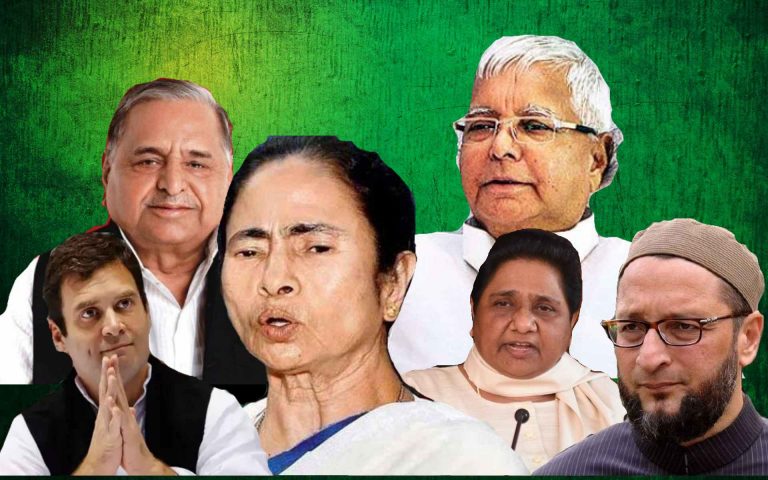
In Madhya Pradesh, while Congress emerged as the single largest party with 114 seats, just 2 short of the magic figure of 116 seats, Congress needed the support of the BSP and SP to stake claim to form governments. BSP chief Mayawati, while extending support to the Congress said that she is doing this only to defeat the BJP. That despite not agreeing with Congress’ ideology and leadership, she would support Congress even in Rajasthan, if needed, ‘to keep BJP out of power’.

Another regional party leader who has shown displeasure on Congress leading the ‘United Opposition’ with Rahul Gandhi as the prime ministerial candidate is Trinamool Congress’, Mamata Banerjee. Banerjee, too, whose supporters have already started campaigning for her as Prime Minister for 2019 on social media, chose not to congratulate Congress and stuck to BJP bashing. She was in Delhi yesterday to meet the Opposition leaders to formulate a strategy for 2019.

RJD’s Tejashwi Yadav, reacting to the results credited it as a victory of the public.


Akhilesh Yadav, too, took a dig on the BJP instead of congratulating the Congress, which was their alliance partner back in 2017 Uttar Pradesh state assembly elections.


Similarly, Aam Aadmi Party’s Arvind Kejriwal too chose to remain silent on ‘Congress’ victory’.


Recently, another regional party head DMK’s MK Stalin had reached out to Kejriwal and asked him to bury his hatchet with Congress to make the ant-BJP front stronger.

All India Majlis-e-Ittehadul Muslimeen’s Asad Owaisi yesterday lashed out on Congress and Rahul Gandhi and said that in 2019, there would be a non-BJP and non-Congress government at the Centre.


Ripping into Rahul Gandhi, Owaisi had called for a ‘Congress-Mukt Bharat’ after the 2019 elections.

Keeping all these points in mind, over and above fighting the BJP at the Centre in 2019, Congress also has to deal with the coalition, which is already not too keen on Rahul Gandhi leading. Barring Chhattisgarh, where BJP was facing over a decade of anti-incumbency, Congress needed the support of other regional parties in Karnataka, Rajasthan and Madhya Pradesh where it failed to get a clear majority while in direct competition with the BJP.

While it is clear that the BJP is weaker and on a thinner ice than it would have liked, the Congress is not strong either. That is where the regional parties and other smaller parties get to take the calls. Like back in the 1990s when HD Deve Gowda and Inder Kumar Gujral were made prime ministers.

In 1996 general elections, Congress, led by P V Narasimha Rao won only 140 seats, after losing 104 more seats than previous elections, making BJP led by Atal Bihari Vajpayee as the single largest party with 161 seats. However, since no party had a clear majority, the ‘United Front’ of Congress and non-BJP parties decided to form the government.

The manner in which Congress had to make way for HD Kumaraswamy (HD Deve Gowda’s son) for forming a government in Karnataka in May this year, Deve Gowda was unexpectedly made the Prime Minister avoid re-elections.

If Congress has not forgotten the 1996 elections, they would very well know they are on a sticky wicket here. With regional and smaller parties already calling the shots, Congress may have to work a lot harder.

One has to remember that the regional parties may not necessarily want to ally with a strong or resurgent Congress. Congress is the cash cow and a weak Congress means the regional parties not only get the funds but also the machinery needed to fight elections. What they get is also the foundation numbers that a weak Congress brings to the table with regional parties being the kind makers who can draw a hard bargain. A resurgent Congress is more than useless for regional parties. On the other hand, strong regional players are also useless for the Congress considering they would only draw a harder seat-sharing bargain thereby undermining Congress’ superiority.

In the end, the Mahagathbandhan only works if all the players are individually weak. With this win of Congress and the regional players getting stronger, the Mahagathbandhan is in for a bumpy ride.
India cannot turn into Islamic Nation, only Modi can understand gravity and do needful: Meghalaya HC

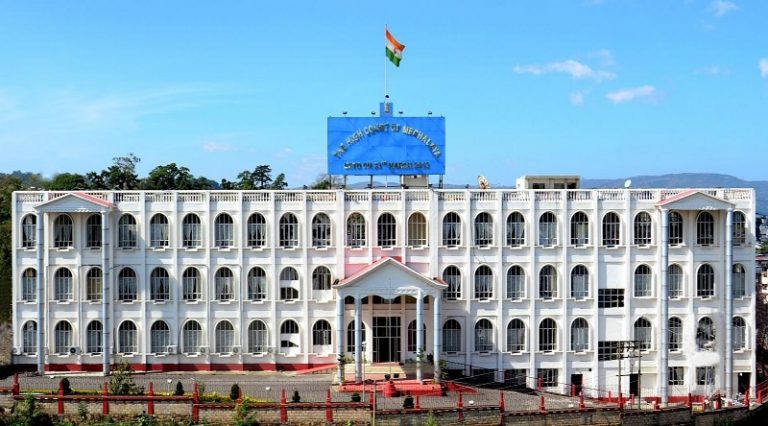
“I make it clear that nobody should try to make India as another Islamic country, otherwise it will be a doomsday for India and the world. I am confident that only this Government under Shri. Narendra Modiji will understand the gravity and will do the needful as requested above and our Chief Minister Mamataji will support the national interest in all respect”. Justice S R Sen of Meghalaya High Court said in a judgement issued on December 10.

Hearing a case of refusal to issue domicile certificate to person by the Meghalaya government, the court said that difficulties faced by the residents to get the Domicile Certificate and the Permanent Residence Certificate have become a great issue today, which need to be seen in the context of the partition of India. While saying that no Hindus, Sikhs, Jains, Buddhist, Parsis, Christians, Khasis, Jaintias and Garos should be denied citizenship in India, the judgements go into the detail of the history of India’s partition.

Justice Sen said that partition of the country was done in hurry by politicians, which had led to many problems now. He said that “the demarcation of the boundary between Pakistan and Hindustan as well as the Referendum is totally unfiltered and our political leaders were too much in a hurry to get the independence without considering the future generation and interest of the country, thus, creating all the problems today”. He says that the Boundary Commission appointed for partition of the country did not do any work and drew an imaginary line to divide India into two pieces.

The court also says that “India achieved independence through bloodshed and the worst sufferers were the Hindus and Sikhs who had to leave their forefather’s property, birthplace with tear and fear”. Although rehabilitation of Sikhs was done, the same was not done for Hindus, it adds.

Justice Sen says that laws are made for the people and people are not made for laws, and laws cannot be effective until and unless the history and real ground reality is taken into consideration. Therefore, he requested the Prime Minister, Home Minister, Law Minister and Members of the Parliament to bring a law to allow the Hindus, Sikhs, Jains, Buddhist, Parsis, Christians, Khasis, Jaintias and Garos who have come from Pakistan, Bangladesh and Afghanistan to live in this country peacefully and with full dignity without making any cut off year and to give them citizenship without any question or requirement of any documents. He said that such people may be allowed to come to India at any point of time and the government should arrange for their rehabilitation and declare them citizens of India.

“Pakistan declared themselves as an Islamic country and India since was divided on the basis of religion should have also been declared as a Hindu country but it remained as a secular country”, the court said in the judgement. The judgement also called for a uniform law for all Indian citizens and said that anybody opposing the Indian laws and constitution cannot be considered as citizens of the country.

Justice Sen also directed that a copy of the judgement should be handed over to Prime Minister, Home Minister and Law Minister by 11th December for necessary steps to safeguard the interest of the Hindus, Sikhs, Jains, Buddhist, Christians, Parsis, Khasis, Jaintias and Garos who have already come to India and who are yet to come from Pakistan, Bangladesh and Afghanistan and other countries. “This Court expects that Government of India will take care of this judgment in the historical background and save this country and its people”, the judgement said. The judgement was also ordered to be sent to West Bengal chief minister and Meghalaya governor.

The judge noted that the ongoing process to update the NRC in Assam is “defective as many foreigners become Indians and original Indians are left out which is very sad”.

The judgement showed confidence that only this Government under Narendra Modiji will understand the gravity, and will do the needful as requested by the court.

The high court accepted the petition of Amon Rana and ordered Meghalaya government to issue him a domicile certificate so that he can apply to join the Indian Army.

It may be noted that the Citizenship amendment bill of 2016 brought by the Modi government seeks to implement the suggestions made in the Meghalaya high court’s order. The amendment seeks to provide citizenship to Hindus, Sikhs, Buddhists, Jains, Parsis and Christians from Afghanistan, Bangladesh and Pakistan.

Read full judgement below:

[googleapps domain=”drive” dir=”file/d/1pE05yS0mki6Mfwi1QlnpApBHnzCvrOlp/preview” query=”” width=”640″ height=”480″ /]

Former Army Chief General J J Singh resigns from Shiromani Akali Dal

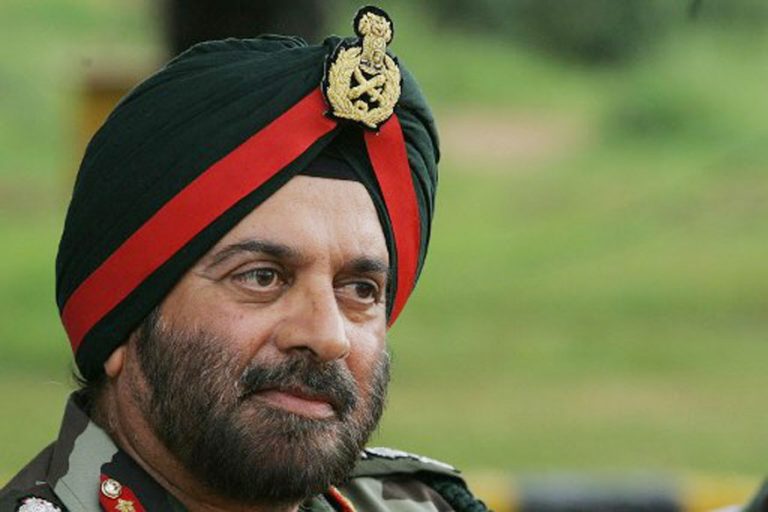
Former Army chief General J J Singh has resigned from Shiromani Akali Dal citing personal reasons. He tendered his resignation today.

Addressing his resignation letter to the Akali Dal Chief Sukhbir Singh Badal, he wrote that he was resigning with immediate effect due to personal reasons. “I wish to inform you with a heavy heart that I have resigned from Shiromani Akali Dal and from the position of president of Shiromani Akali Dal, Ex-Servicemen wing with immediate effect due to personal reasons,” he wrote.

Singh, who was the first Sikh to become Army Chief, has also served as the Governor of Arunachal Pradesh. He joined the Akali Dal in 2017 during the Punjab Assembly elections and had unsuccessfully contested against Captain Amarinder Singh from Patiala Assembly constituency. He had served as 22nd Chief of Indian Army (Jan 31, 2005, to Sept 30, 2007). He is a veteran of the 1965 and the 1971 wars. He had also participated in the Kargil war.

He is an alumnus of National Defence Academy. He has been decorated with various military honours including Param Vishisht Seva Medal (PVSM), Ati Vishisht Seva Medal (AVSM), Vishisht Seva Medal (VSM). Singh, a keen mountaineer has also trained under the famous Nepali-Indian mountaineer Tenzing Norgay also known as Sherpa Tenzing at the Himalayan Mountaineering Institute, Darjeeling.

Singh wants to keep serving the people in future as well. “I want to serve the people and the country,” he told the media. He has also stated that he is keeping his political options open.

Even in victory, Rahul Gandhi remains a sore loser

Despite winning the Assembly elections in the three States of Madhya Pradesh, Rajasthan and Chhattisgarh, Congress does not seem to get past its old complaints of EVM tampering.

Congress President Rahul Gandhi while addressing a press conference after the results of the elections came out, expressed concerns over the reliability of the EVMs. “Throughout the world, it is a generic question that EVM has problems. If the people are uncomfortable with EVM, it has to be addressed. The central issue concerning EVM still remains. There is a chip in EVM, which can be impacted and the whole election can be manipulated. The question of EVM is still on the table,” he said.

Despite the Election Commission’s repeated assurance that EVM is a standalone machine which disables if any attempt of tampering is made, Congress remains unconvinced about its reliability. Last year in June, after political parties repeatedly questioned the infallibility of EVM machines, the Election Commission had thrown an ‘Open Challenge’ before the political parties to prove that EVMs could be rigged.  No political party which questioned the EVMs had turned up for the challenge. The representatives of the NCP and CPI-M who were the only ones to turn up at the event had merely stated that they were there to ‘understand the functioning’ of the EVMs.

Interestingly, Congress party raises the questions regarding EVM tampering only where it sees itself losing the election. As soon as the results of the Assembly Elections in the five State started coming out yesterday, the Congress party as usual resorted to the EVM tampering gimmick which is actually the brainchild of BSP Supremo Mayawati who used it after the Uttar Pradesh polls.

Even before the election results, seeing that it was going to be close call, Congress had already started raking up the EVM tampering issue. The party even approached the Election Commission with the complaint of EVM tampering in Madhya Pradesh. The Madhya Pradesh High Court had rejected a petition filed by Congress demanding the constitution of a SIT to examine the irregularities in the handling of EVMs.

A  similar petition was filed by Congress in the Chhattisgarh High Court seeking directions to the Election Commission to maintain proper security of the Strong Rooms.

In Telangana also, the Telangana Pradesh Congress Committee submitted a complaint to the State Chief Electoral Officer (CEO) on Tuesday as TRS surged towards victory in the State polls.


Recently the Congress Party had to face embarrassment when a sting done by India Today exposed the fallacy of Congress’ EVM tampering theory when its leaders were caught revealing that the EVM issue was maliciously used to defame the BJP.

Now when the Congress have won the Assembly polls in Madhya Pradesh, Rajasthan and Chattisgarh, the EVMs seem to have worked fine magically despite there being BJP governments in the three States as well as at the Centre. However, it seems that with the Congress President still talking about the EVM tampering issue after winning in three states, the Congress wants to keep the option of making the EVMs scapegoat open if they face election defeat in future.

Why Congress-mukt Bharat is still very much in progress

As the BJP faces its biggest electoral setback in five years, it is easy for BJP supporters to give in to a sense of gloom and doom. It’s too soon for that.

Relax. Breathe. There are never full stops in politics. In every victory, there are seeds of defeat. In every defeat, there are seeds of victory.

Above all, I bet BJP supporters are asking: where did it all go? What happened to the dream? Will ‘Congress-mukt Bharat‘ become a reality or not?

Absolutely. Congress-mukt Bharat is unfolding in front of our eyes. Have no doubt about it.

In order to understand this, two key things are necessary. The first is to decode the peaks and troughs of electoral politics. The second is to understand what ‘Congress-mukt Bharat’ means.

You and I might want life to look something like this:

Untitled.png

But we all know from our lived experiences that it never works like that. So why should politics be any different? Take a look at this graph instead :

Untitled.png

This is a realistic graph of success in politics. There are peaks and then there are troughs. But the key is that the upcoming trough is around the same height as the previous peak. And that every successive peak is higher than the last one.

This is roughly the BJP’s trajectory. The Ram Temple movement took it to 120 in 1991 and then further ahead till Atalji achieved the peak of 160-180 in the late 90s. After that, the BJP declined in 2004 and 2009. But when it declined, the BJP’s number was around 110-130, in the same range as the peak of 1991.

In 2014, the BJP zoomed to 282, leaving far behind the Vajpayee peak of 182. It’s possible that 2019 might see a fall. Which is disheartening. But please remember that if BJP falls back to around 180, it is still beating the Vajpayee peak of 1996-1999.

Quite the opposite is happening with the Congress. For the Congress, each successive “peak” is now at the level of a trough from yesteryear.

The Congress used to be the party of 272 and beyond. For the Congress, 272 has long become a pipe dream.

What about 200 seats then? It might sound unreal today, but Rajiv Gandhi was so tremendously embarrassed by Congress winning “just 197 seats” in 1989 that he resigned. Instead, Janata Dal formed the government with 143 seats and V P Singh became Prime Minister.

Sonia Gandhi’s peak came in 2009 with 206 seats. Roughly the same as what Rajiv Gandhi got at his lowest point.

On the contrary, Sonia Gandhi’s lowest point came in 2014 when Congress couldn’t even secure the post of leader of Opposition with 44 seats.

Looking towards 2019, how many seats is Congress hoping to win? What is Rahul Gandhi’s peak? Somewhere around 120 seats. Perhaps even less than that.

That would put Rahul’s peak at the same level as Sonia Gandhi’s low point in 1999 when Congress got 114 seats.

Forget about winning majorities, the Congress today no longer even tries to be the single largest party.

The results of the recent Assembly elections show the same trend. The Congress has fallen short of a majority in both Rajasthan and Madhya Pradesh. This is nowhere compared to the resounding BJP victories in Madhya Pradesh in 2003, 2008 and 2013. This means that the last time the Congress won a majority in Madhya Pradesh would be 1998.

The same story holds in Rajasthan. BJP won thumping victories in 2003 and 2013. The Congress managed to form governments in 2008 and 2018, but couldn’t win a majority in either case. Again, the last time Congress won a majority in Rajasthan was in 1998. In 2008, the Congress managed a win by a 2% vote margin. In 2018, they eeked out a 0.5% vote share gap. The downward trend couldn’t be more obvious.

This may feel slow. One may complain that ‘Congress-Mukt Bharat‘ is taking too long. But you must factor in the size of the task. The British spent over 62 years building the Congress Party as their successors. When British rule was set to end, the country was partitioned between the Congress and the Muslim League. The Republic that we see today was tailor-made by Nehru and the British for Congress rule.

This was followed by 40 years of near-uninterrupted power held by the Nehru-Gandhi dynasty. Every road, every building, every public space was smothered with the brand of the Nehru-Gandhis. The concocted history of the Nehru-Gandhis is compulsory reading for every Indian child right from primary school. It will take time and patience to break a 100-year monopoly of the Congress Party.

Speaking of which, what is ‘Congress-mukt Bharat’ after all? It is time that BJP supporters understand what the term means… and more importantly, what it doesn’t mean:

Untitled.png

A state like Uttar Pradesh is ‘Congress-Mukt’. So are Bihar and Bengal. So is Tamil Nadu. Congress can never come to power in these states. The newest state to become ‘Congress-mukt’ in Andhra Pradesh. It is YSR Congress and TDP that are the main contenders there. Congress doesn’t count.

One might suggest that Delhi is ‘Congress-mukt’ as well because it has become an AAP vs BJP contest. But considering the fickle nature of an urban electorate, we have to observe the state for at least one more election cycle before it can be declared ‘Congress-mukt’.

All the years when CPIM was ruling Bengal, the state was never Congress-mukt because it was always the main opposition. Today, however, Bengal has become Congress-mukt because of the TMC vs BJP fight, with CPM increasingly irrelevant and Congress in 4th place or worse.

In that sense, the whole question of Congress-mukt does not arise when it comes to Rajasthan, Madhya Pradesh and Chhattisgarh. Even though BJP was ruling them, Congress was very much present in these states. Even if BJP had won 3-0 yesterday, these states would still not have been Congress mukt.

And Gujarat is not Congress-mukt either, despite BJP winning 6 elections in a row. A state like Karnataka is much closer to becoming Congress-mukt because the Congress has already made a tactical concession to JDS. In the coming days, Congress may give up even more.

Another state where ‘Congress-mukt Bharat’ is in progress is Odisha. Now that BJP is emerging as the real alternative to BJD, Congress is losing all hope of ever getting back to power.

As for Gujarat, Chhattisgarh, Madhya Pradesh, Rajasthan, these states will never be Congress-mukt unless regional forces emerge that can replace Congress as the BJP’s main rival.

Until a few days ago, BJP supporters loved to show a map of India splashed all over with saffron, showing the extent of BJP rule. That map has gone sour since yesterday. But that map was never a good reflection of the state of the Congress-mukt Bharat project.

So, BJP supporters need to start focusing on a new map. Take the map of India and mark on it the states that are truly Congress-mukt and those which are not. Include UP, Bihar, Bengal, Tamil Nadu and Andhra Pradesh. Do not count Gujarat or Maharashtra or Assam. Now think about how the map of Congress-mukt states has changed over the years. You will find that it goes in only one direction: states become Congress-mukt and they never ever come back to the Nehru-Gandhi Dynasty. Congress-mukt Bharat is very much on. 

2018 Assembly Elections: NOTA outperforms AAP and the Communists in all the states they contested

0

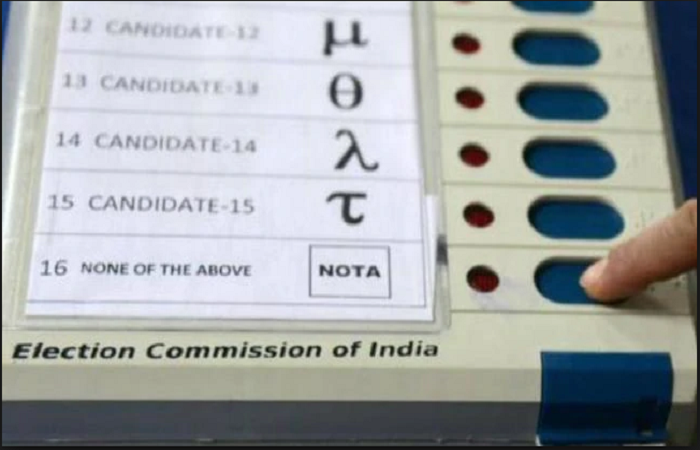
NOTA or None Of The Above was given more preference in assembly elections by voters in than parties like Aam Aadmi Party, Samajwadi Party and Communist Party of India, according to Election Commision data.

The NOTA vote share oscillated between 2.0% in Chhatisgarh and 0.5% in Mizoram, and rest three states got an average of 1.2% NOTA votes.

In Chhattisgarh, parties like Samajwadi Party of UP, NCP of Maharashtra and Aam Aadmi Party tried their lucks. AAP got 0.9% of total votes, both NCP and SP got 0.2% each, with CPI getting 0.3%. All of these parties were outperformed by NOTA votes, which alone got 2.0% or around 2 lakh 82 thousand votes.

Interestingly, total NOTA votes are way more than the combined sum of votes received by AAP, SP, CPI and NCP which is around 2 lakh 22 thousand.Chhatisgarh elections witnessed higher per cent of NOTA votes than the other four states.

In Madhya Pradesh too, AAP lost all candidates and failed to outnumber NOTA votes.AAP had contested on 208 seats out of total 230, and most of the candidates even failed to save their deposits. Their chief ministerial candidate Alok Agrawal, only got 823 votes in his constituency. AAP got 0.7% of total votes while NOTA received 1.4%. SP fared better than AAP, but still not more than NOTA, as it registered 1.3% votes.

Even in Rajasthan AAP got 0.4%, while both SP and NCP got 0.2% each. NOTA votes stood at 1.3%. In Telangana, CPI and CPM both got 0.4% each, while NCP managed 0.4%. NOTA has again outnumbered them all. NOTA registered 1.1% of total votes.

This is not the first election in which AAP party has got a lower vote count than NOTA. In last year’s Gujarat election too, they contested 33 out of the total 182 seats of Gujarat. There, all its candidates lost all their deposits and polled lower votes than even NOTA on a few of the seats.

Delhi MLA and Aam Aadmi Party rebel, Kapil Mishra took to Twitter and slammed AAP over its indifference to poll results.

“AAP had contested polls in Chhatisgarh and MP, they lost all deposits, even in constituencies where CM Kejriwal had rallied. They(AAP) have got far lower votes than NOTA” He tweeted and added that AAP had also spent money on advertisements in the newspaper, emphasising their work in Delhi.


Yesterday, results of polls of five states were announced. BJP failed to safeguard its three states of Chhattisgarh, Rajasthan and MP against Congress. Telangana witnessed K Chandrashekar Rao retaining his throne with a thumping majority. Mizoram voted out the incumbent Congress government and made north-east officially Congress-free.

Congress celebrates election victory by wearing Amit Shah, Narendra Modi masks and distributing tea

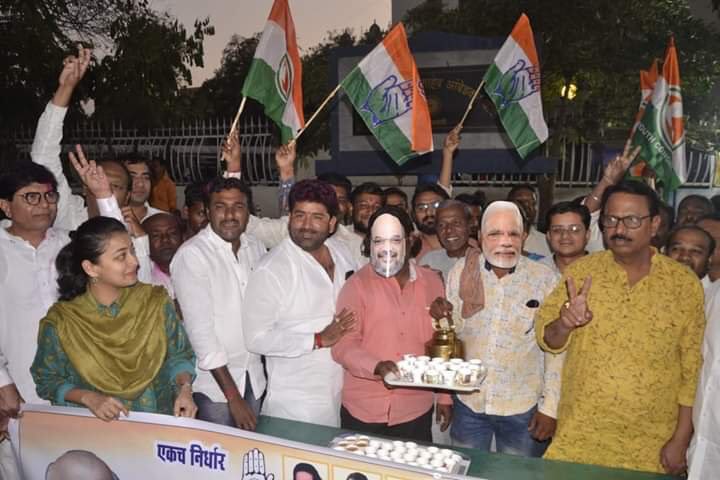
In a photo that has gone viral on social media, Congress leaders and workers can be seen celebrating their victory over the BJP in the assembly elections by wearing masks of BJP President Amit Shah and Prime Minister Modi and distributing tea.


The masks of Amit Shah and Narendra Modi are representative of the ‘chaiwala’ jibe the Congress party has used time and again to target the Prime Minister’s humble beginnings. Union Minister Smriti Irani has responded to the photo calling it arrogant and asserting that the Congress party’s mindset ‘abhors’ people who rise from poor backgrounds by virtue of their hard work.


People on social media were not pleased with the manner of celebration either. Some have called it ‘abusive’ and ‘casteist’.


Others have dubbed it ‘Congress culture’ and ‘cheap’.


Calling it in ‘bad taste, some said that it was a departure from what Congress President Rahul Gandhi preaches.


The Congress party had made personal attacks even during their election campaign.  In Rajasthan, a Congress candidate had abused the Prime Minister in extremely filthy language. Uttar Pradesh Congress Chief Raj Babbar had used the devaluing rupee to mock the mother of Modi. Earlier, senior Congress leader C.P. Joshi had hurled casteist slurs at Narendra Modi. Prior to Assembly elections in Gujarat, Mani Shankar Aiyer had called him ‘Neech’.

Telangana: Failure of Prajakutami alliance of Congress and TDP might dampen future alliance options

As the results of the five state assembly election were announced, K Chandrasekhara Rao, the Telangana Rashtra Samithi (TRS) supremo secured a clear majority over the Congress-TDP alliance.

However, as per a report in the New Indian Express, some senior Congress leaders were of the view that it was a blunder on the part of the party leadership to align with the TDP in Telangana Assembly elections and the results were obvious. “If not for the alliance with the TDP, the election results perhaps would have been different. At least not this massive defeat,” observed a senior Congress leader.

Another leader pointed out that the Congress’ strategies during the election campaign fell flat. The party leaders instead of properly projecting what the Congress did for the people of Telangana only focused on vilification of Telangana Rashtra Samithi. “Perhaps, we were overconfident in our approach in Telangana. It is time for introspection and we have to rework our strategy,” said former Union minister MM Pallam Raju.

The TRS has also registered a massive vote share of 46.9% against the Congress share of 28%.

As per reports, several analysts feel that if the Rahul Gandhi is in a mood to replicate this model of the alliance on a national level in 2019, he might need a better strategy. As TDP is often accused of stalling Telangana’s formation, many also think that an alliance with TDP created ‘Telangana sentiment’ among the masses and drove them towards TRS.

Even the Congress CM candidate A Revanth Reddy and many senior leaders like DK Aruna, K Jana Reddy failed to hold on to their seats.

Political analyst M E V Prasad Reddy told TOI, “KCR could strike a chord in rural areas with his schemes. Long neglected villages were taken care of. Congress was disconnected from the masses due to its ageing leadership. Tying up with Naidu was a big blunder. People of Telangana didn’t like it.”

Distressed by the anticipated defeat, Congress had earlier tried to play their favourite “EVM tampered theory” in the state. On cue of the early trends, the TRS supporters had already started celebrating which made Telangana Congress leaders raise the doubt.

Amusingly as Congress stakes victory in Madhya Pradesh, Chattisgarh and Rajasthan, these false theories which the Congress peddled for all this while seemed to have disappeared in thin air in all these three states.

Congress manifesto for Madhya Pradesh: Freebies and doles for every section of the electorate

The Congress party has emerged as the single largest party in Madhya Pradesh after the results of Assembly Elections were declared on the 11th. With support from elected candidates of the Bahujan Samaj Party and Samajwadi Party, the Congress party looks set to form the government in the state.

To topple BJP in Madhya Pradesh, where it has been in power for 15 years, the Congress party promised a plethora of sops for various sections of the electorate. Now that it has won the elections, it is a good time to revisit some of the promises the Congress had made in its manifesto.

For farmers, the Congress party promised a loan waiver and to reduce their electricity bills by half. The party also promised them a tax break for petrol and diesel. And for farmer cooperatives, a commission for the regulation of pension was promised as well. Food Processing Industries were promised exemption from GST as well. Children of farmers were promised for fives years concessions in the interest rates on loans to felicitate their self-employment.

The party had an entirely separate category for doles to youth. Self-employed youth were promised Rs. 4,000 per month as assistance. Industries that provided jobs to youth were assured Rs. 10,000 as salary grant. Youth researchers and investors were promised a prize money of Rs. 10 lakhs. Youth entrepreneurs have assured loans at concessional rates. Laptops for students who secure 70% in class 12 board exams were also part of the manifesto. For women aged between 17-45, smartphones were assured. College-going women were promised two-wheeler vehicles at no-interest on their loans.

In addition, women will be given 51 thousand rupees for their marriage. Women will be given free education right till PhD. The Congress party assured more support for women self help groups. Not only would they be given a loan waiver but additional loans will also be provided at concessional rates. More than that, 10 sewing machines will be provided for free to those groups involved in stitching.

When it comes to reservations, the Congress party went all out as well. Reservations of 27% were promised to Backward classes. The Congress also promised an increase in social security pensions for economically weaker sections of the society. Pensions under the Pension Yojana will be increased to Rs. 1000 from Rs. 300. Citizens over a hundred years of age have been promised a reward of Rs. 1 lakh as well.

The most interesting, perhaps, was the Congress party’s promises which indicate its desire to shed its anti-Hindu image. The party promised to pass the “Maa Narmada Trustee Act”. Its manifesto also promised a boost to Sanskrit as it promised to promote the language and establish educational institutions for its preservation. Laws will be made to give the legal status of a living unit to all the sacred rivers mentioned in Hindu Shastras. The most significant, however, was the promise to construct the Ram Path from Chitrakoot to the borders of the state.

The electorate also appears to care more about monetary benefits promised by parties more than actual assets provided to them. For instance, about 30 lakh families were provided with free LPG connections under the Pradhan Mantri Ujjwala Yojana between March 2017 and December 2018. And yet, it doesn’t appear to have translated into electoral benefits for the BJP. Furthermore, various other issues such as Upper Caste anger due to the amendment in the SC/ST Act amendment appears to have contributed to BJP’s demise in the state.

Considering the extravagant promises made by the Congress party, the economic health of the state is likely to suffer a significant blow. But given their track record of fulfilling promises made in their manifesto, such as the loan waiver for farmers in Karnataka that never happened, it is unclear how many of these promises will be actually fulfilled.

2018 assembly elections: the exit-poll predictions against the final results

The results for the five state elections have been already announced. The Congress has won the elections in Chattisgarh, while managed to be the single largest party in both Rajasthan and Madhya Pradesh. The Telangana was secured by the regional party Telangana Rashtriya Samiti (TRS), while Mizo National Front (MNF) bagged the North-East state of Mizoram to make Northeast India Congress-mukt.

The most interesting aspect to the build-up of any elections in the country is the phenomenon of exit polls and numerous surveys predicting the outcome of a specific election. The pollsters and psephologists joining hands with media organisations were once again back to action during the elections to five states and had come up with their own numbers.

Rajasthan:

Exit Polls of Rajasthan Image Source: NDTV

The exit polls for Rajasthan was far from reality as none of them could predict a close race between the BJP and Congress. In any exit polls, predicting a range is convenient for the pollsters rather than putting up a number. In Rajasthan elections, the Congress secured 99 seats,  BJP got 73 seats, BSP secured 6, while independents and smaller parties combined crossed 20 seats.

Interestingly, none of the Exit polls despite taking it into their wide range of predictions did come close to actual results. If we take a median of all the seats projected for Congress it would be around 112 and for BJP it will be around 79. Predicting a range is way too easy for pollsters rather than predicting the exact number. The pollsters have yet again failed to read the tight race between both the parties in the state of Rajasthan where vote share is close as 0.5% resulting in a difference of 26 seats between Congress and the BJP.

Madhya Pradesh:

Image Courtesy; Twitter
Exit polls for Madhya Pradesh

Most of the pollsters have come close with their range in predicting the elections in Madhya Pradesh. Though none of them predicted a number or a smaller range, some managed to predict the tough fight between the Congress and BJP, courtesy of anti-incumbency of 15-year rule of Chief Minister of Shivraj Singh Chouhan. The CSDS, which has a distinct achievement of predicting most of the elections wrong has once again failed to guess the right number. It has given 126 seats to Congress, but it only got 114 seats.

IndiaToday-Axis were almost close to the election results if we discount the factor of predicting a huge range for both parties rather than providing a more clearer survey with a smaller gap. TimesNow-CNX survey has been proved false too, as they had given a clear majority to BJP.

Chattisgarh: 

Image Source: NDTV/twitter
Exit Polls of Chattisgarh state elections  Image Source: NDTV

The prediction of Chattisgarh assembly elections is unique as every pollster apart from IndiaToday-Axis Exit polls had put up terrible numbers. The Congress won 68 seats, while BJP secured just 15 seats. Though IndiaToday-Axis did not predict it completely right but at least they had put forward the mood of voters in the state correctly. Most of the others like ABP News-CSDS, TimesNow-CNX had given a majority to the BJP, while Republic C-Voter had projected a victory for Congress in Chattisgarh but had given fewer numbers of seats for the Congress party.

Pollsters like RepublicTV-Jan Ki Baat had hinted of a hung assembly with 40-48 seats to the BJP and somewhere between 37-42 seats for Congress. Similarly, NewsNation had projected a tight race between the BJP and Congress with a median of 40 and 42 seats respectively.

Telangana:

Exit polls for Telangana assembly elections Image Source: NDTV

IndiaToday-Axis polls predicted a closer range for Telangana and their survey were almost near to the election results. It had predicted 79-91 seats for the TRS and around 21-33 seats for Congress. The TRS has secured 88 seats, while Congress got 19 seats. According to IndiaToday-Axis survey, BJP was supposed to get 1-3 seats, while the party scored 1 seat. Apart from them, TV9-Telugu had put up similar numbers of a median of 80 seats for TRS and 30 seats for Congress.

Most of the others got the Telangana polls wrong as they had predicted a close race but the state elections were single-handedly secured by the TRS. Republic-C Voter had predicted a hung assembly in the state with a median of 55 seats to each. Even Republic-Jan Ki Baat had predicted more seats for Congress against just 21 seats secured by the party.

Mizoram:

Mizoram, the one of the North-East to go to the polls has been tough to predict because of various reasons like logistic issues, dynamic nature of elections, the ‘tyranny of distance’ that Delhi based ‘national’ media houses feel for the region. Few pollsters tried to guess the numbers but failed to predict it right. TimesNow-CNX and Republic-C Voter had predicted 16-18 seats to Congress and 18-20 seats to MNF, while IndiaToday-Axis had predicted a victory for MNF and had projected 8-12 seats to Congress. Though IndiaToday-Axis survey was right in projecting MNF victory but erred in its numbers for Congress. In the actual results, MNF won 26 seats while Congress got only 5. None of the exit polls correctly predicted the huge defeat of the Congress party. Interestingly, all the exit polls predicted 0 for BJP, but the party was actually able to 1 seat in the state.

It may be noted that most of the pollsters, psephologists have gone wrong in understanding the nature of elections in states like Rajasthan and Madhya Pradesh due to its huge electoral dynamics and caste calculations. These surveys can just be an indicator of the overall mood of the people in the state, otherwise, it should be taken with a pinch of salt.