Home Blog Page 7434

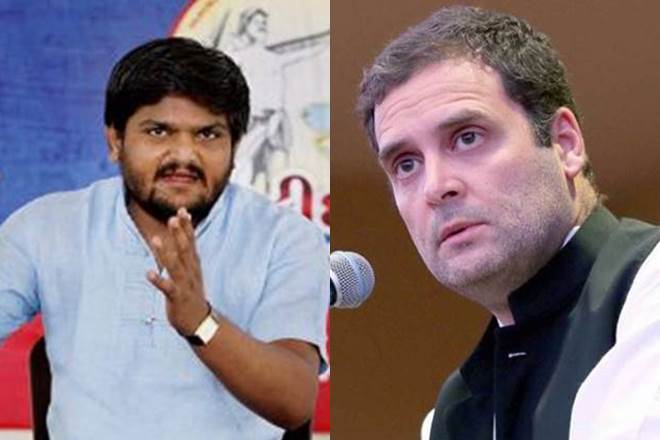
Hardik Patel threatens to disrupt Rahul Gandhi’s rally if Congress doesn’t make its stand clear on Patidar reservation

0

Hardik Patel, who rose to prominence over agitation demanding reservation for Patidar community in 2015, seems to be putting up a final fight to remain relevant, at least till Gujarat elections conclude. After his video of allegedly meeting Gujarat Congress in-charge Ashok Gehlot went viral, Patel is back to being in news. However, this time, he wants to play by his own rules. In a surprise move, and in an attempt to gain back some credibility that he is not a Congress stooge, Hardik has threatened to disrupt Rahul Gandhi’s upcoming rally in Surat on 3rd November.

Yesterday, Hardik tweeted that if Congress does not make its stand clear on reservation, he will repeat with the Patidars did with Amit Shah.


Hardik was referring to September 2016 rally of Amit Shah, also in Surat, which was held along with 44 Patidar MLAs of the BJP when Hardik was in Udaipur serving a bail condition. Earlier, there were reports that Hardik will join Rahul Gandhi during his rally in November.


Recently, Congress had tried to woo the so called youth leaders who were leading various agitations against the government, Hardik Patel, Jignesh Mevani and Alpesh Thakor, to join Congress and put up a united fight against the BJP.


Alpesh was fighting for other backward class (OBC) reservation quota, and in turn, was opposing Hardik who also wanted Patidars to have share of the same pie. This led to things turning sour for these two. If Alpesh and Hardik join hands, both of them will find it difficult to explain to their communities on how they will be able to maintain their promise of reservation for their respective communities.

Congress, on the other hand has offered economically backward class (EBC) quota to Patidars. Interestingly, Hardik’s former aides Reshma Patel and Varun Patel have recently joined the BJP and had said PAAS leaders were indulging in politics for their vested interest.

The OBCs comprise 146 castes and make up around 40% of the state’s about 6.5 crore people. Patidars, who have been traditionally BJP supporters comprise about 12% of the population. Gujarat’s OBCs are given 27% quota in jobs and education. The scheduled castes have 7% and the scheduled tribes 15%, making a total of 49%, just under the 50% reservation cap set by the Supreme Court.

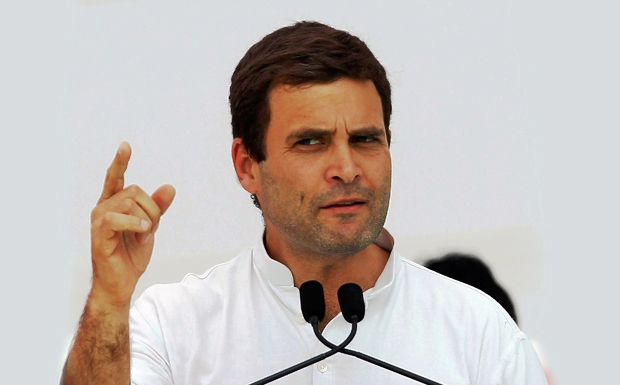
Rahul Gandhi’s claim of having a black belt in martial arts leaves people amused

0

Rahul Gandhi the Vice President of the Congress party has in recent days jumped into campaign mode for the upcoming Gujarat and Himachal Pradesh assembly elections. This has meant that he has managed to generate a fair amount of controversy, first by repeatedly lying during campaign rallies and then by making sexist comments against women associated with the RSS.

He now seems to have decided to try something something different by starting to “boast” about his “personal achievements”. As per reports, Rahul Gandhi in an awards ceremony claimed that sports is a very important part of his life. His sporting indulgence reportedly includes running, swimming and even holding a black belt in Japanese martial arts form Aikido:


Such a statement sent the media and his party spokespersons in a bit of a frenzy and soon there were more reports about other sporting events in which Rahul has supposedly excelled in. As per Rahul’s Akido teacher, the Congress leader is also trained in sword fighting and Brazilian jiu-jitsu. As per the coach named Sensei Paritos Kar, Rahul along with his friends used to practice Aikido at his official residence and had successfully passed the black belt test in 2013.

Revelation of this aspect of Rahul Gandhi meant that twitter users rushed to put out witty responses:


Some also questioned the timing of such revelations by Rahul:


It remains to be seen if these “fighting skills” of Rahul would help his party put up a fight during the upcoming state assembly polls or would the party instead suffer a knock out blow.

Twitter users slam India Today for sharing a video demeaning the use of Saree

0

The India Today media group has in the past managed to generate controversies in a variety of ways. This includes getting slammed by External Affairs minister Sushma Swaraj for a “false and mischievous” report, for issuing a wrong corrigendum and even for writing a suggestive headline while sharing pictures of Shahrukh Khan’s daughter.

Today it looked like India Today decided to add another trophy to its controversy cabinet by sharing a video which depicted how, Wearing a sari to your office is one hell of an uphill climb:


Saree which is a revered and heritage female garment of India has always occupied a revered status in the Indian culture. But India Today decided to create a bland video to try and mock the supposed “hassles” which accompany it.

As per the video which is set in an office, wearing a saree means it is difficult to climb stairs and use the toilet. The video further claimed that by wearing saree one gets ogled by co-workers and also gets turned into a “neighbourhood aunty”.

Such a negative depiction the garment angered twitter users who reacted in protest:


A few twitter users enlightened India Today about how much can be accomplished while wearing a saree:


Some used sarcasm as their weapon:

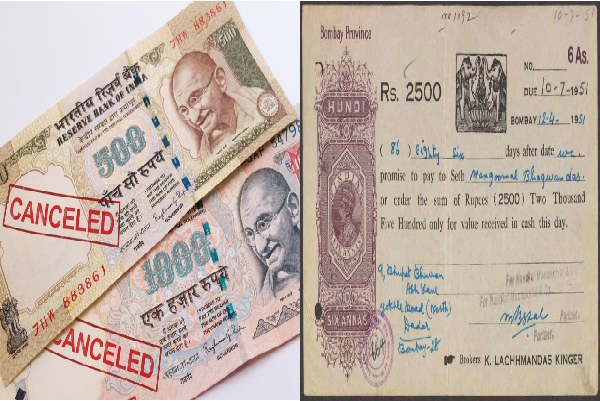
India’s informal Hundi market and how it has suffered a blow post demonetisation

0

The recent hoopla around declining GDP growth firmly puts blame at the door step of demonetisation. Though the move was controversial mostly among so called liberal elites, armchair economists and of course, the opposition political parties, it paid huge political dividends to Modi government. The reality is, the effects of demonetisation are still unfolding. The initial impact was obviously negative since the move was always meant to be disruptive. But whether it will be positive in long term is yet to be seen.

One sector that definitely got hurt badly was the informal money lending or the ‘Hundi’ market. There are two types of black money – The first kind of black money, the classic black money, generated through bribes. That money does not generate any economic value. It generally stays hidden or in some cases gets flown out of country to Swiss bank. This kind of black money is the worse. It is a true loot of India.

The second type of black money is different. The second type of black money is primarily hidden from the government because of taxation purposes. This money is earned legally and honestly but usually under-‘receipt’ed’. The earners are professionals like Doctors or Architects or businessmen.

Some of these people don’t mind lending it out in Hundi market or the informal money lending sector. The interest rates in Hundi are quite high – 18% on an average and transactions mostly happen in cash. The borrowers usually tend to pay interest on a monthly basis. The market is quite efficient even though the potential to default is high and also it does not have much recourse potential. The lender can lend his own hidden money or pool in money from his circle and front it up to borrowers.

The word Hundi goes back to medieval India. The system can be considered as pre-cursor to formal banking sector. The Hundi is not just lending but also includes cashless remittance. From financing expeditions of Mughals during medieval times to financing grain market transaction during British era, the system lubricated commerce across length and breadth of Indian subcontinent.

Per an article in The Hindu Business Line, the Marwaris were pioneers of Hundi transactions and as the lines of communication and transportation increased during British era, so did the business empires of Marwaris. However, with introduction of formal banking infrastructure in India, Hundi and such similar financial instruments never gained official status.

Per Reserve Bank of India, Hundis are “a part of the informal system, have no legal status and are not covered under the Negotiable Instruments Act, 1881.” Researching on Hundi is not easy and statistics on size and breadth of this financial instrument are almost non-existent. Though RBI mentions about waning of Hundi transaction, the reality is the Hundi market was doing quite well prior to demonetisation.

The obvious question here is, since banking infrastructure is comparatively widely accessible today, why would anyone borrow at such a high interest rate when banks lend roughly at around 10%. The equally obvious answer is because banks literally don’t lend enough money or in lot of cases, don’t lend money at all.

Usually if one has to open a brand new business then banks won’t lend you. They usually require three years of clean and positive balance sheet. That means, the business not just has to be running for at least three years but it should be making money for three consecutive prior years! So, to begin with, the cash is raised through informal means or family money is used. And when expanding in the initial phase, again informal sector is leveraged.

The hundi market black money creates a positive impact on GDP. Businesses get established or are able to expand, generating more cash flows and more jobs. But, all is not positive here. Since formal banking sector is not lending to these businesses, anything’s that not formal and not necessarily legal has hidden costs. Remember the 18% interest? The cost of borrowing has to be recovered, right? So it gets passed on to the service requester or to the consumers indirectly. So, because government doesn’t allow banking to be free of suffocating regulations, the whole society directly or indirectly pays the price. And I am not even adding the lost opportunity costs of the entrepreneurs who couldn’t open their businesses because their business model doesn’t afford them to pay 18% interest!

Demonetisation has impacted Hundi transactions since cash suddenly dried up and became “honest black money”. The cash transactions dried up overnight, so the lending also dried up. The projects in flight or about to get started must have been severely impacted. The effect of this may not even show up directly on GDP growth considering that it’s an informal sector. Plus, projects that did not start would not have any impact on GDP since, but the imprints of it can be seen in consumption pattern.

Government needs to take concrete structural banking and taxation reforms post demonetisation. No, GST is not the answer, not yet at least. GST coupled with lower income tax and simpler income tax would be lot more efficient. (the GST rates are also way to high, but that’s for another topic) Modi government has done great job in increasing banking imprint in rural area  but banks don’t exist merely to manage accounts.

So, the next generation banking reforms should free the banks to lend more freely and yes, to take the positive risk. In India, “Mallya gets loans as much as he wants but the small entrepreneurs are made to pay hell to get even a penny. This needs to change in a structured fashion. Just as economy can not be at the whims of government policy, it shouldn’t be at the mercy of informal lending sector either. If Modi government manages to implement these key reforms, then Indian economy will reach the stratosphere it never imagined in a very short period of time. The Bank Recapitalisation plan, may just be the beginning, in that regard.

Kerala’s electricity minister shares fake picture of a solar power plant in Kerala

0

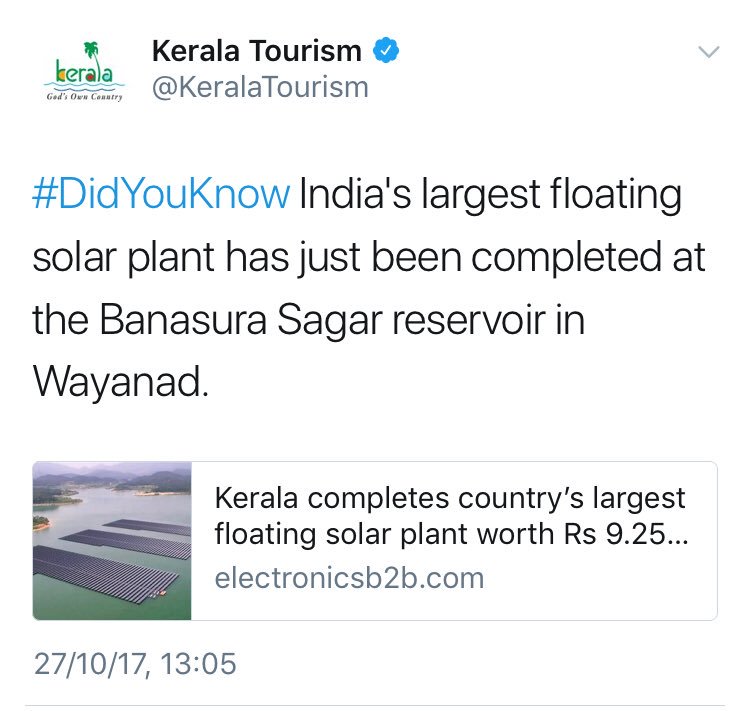
In a bit of an embarrassment for the ruling communist establishment in Kerala, its official tourism account and electricity minister were found spreading fake pics of a solar power plant which has been installed in Kerala.

This whole phenomenon of sharing this fake picture seems to have begun after an online website named, “The Logical Indian” curated a news report about the installation of India’s largest solar power plant at Banasura Sagar reservoir in Wayanad region of Kerala.

The website incidentally used this picture in question as a “representational image” for the article:

This report was later shared by a member of Greenpeace Canada in a way that it insinuated that this was the picture of the solar plant:


This seemed to have opened the floodgates and it resulted in various accounts including Kerala’s electricity minister M M Mani, promoting this as the picture of the solar power plant:

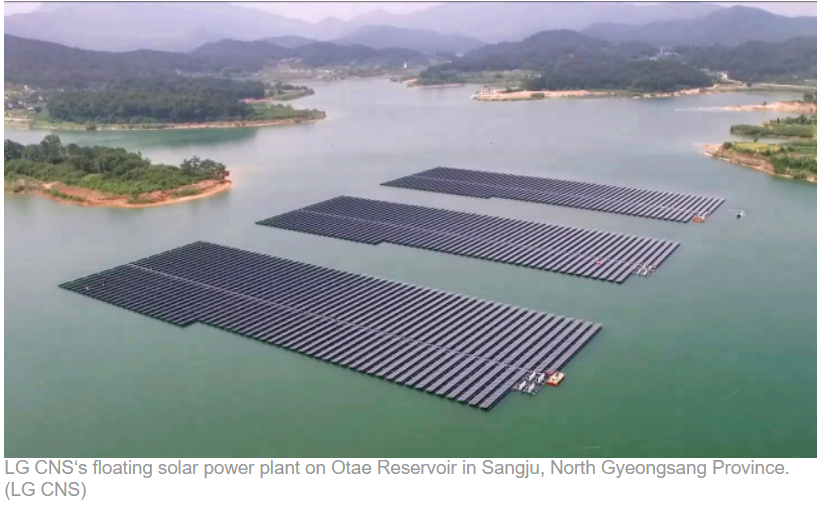
The truth of the matter is that, this picture in question is from South Korea and is part of LG CNS‘s Otae Reservoir in Sangju, North Gyeongsang Province. This plant, as per the report was constructed in 2015 and has now been recycled by prominent twitter accounts:

The picture from South Korea

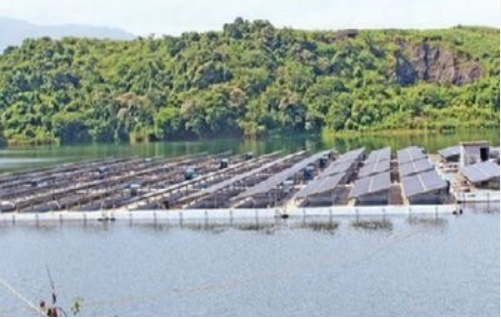
The actual picture of the Kerala’s solar power plant as per Times of India is this:

Various twitter users indeed found this whole thing amusing and reacted:

I&B Ministry issues show cause notice to Radio Mirchi for its anti-India campaign

0

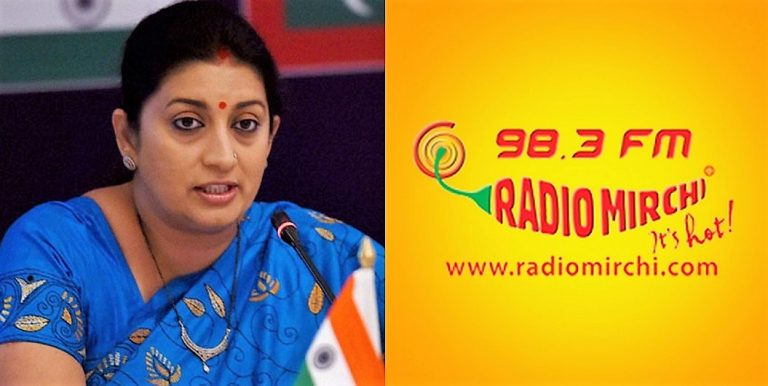
Radio Mirchi, a Delhi based FM radio station has been served a show-cause notice by the government for its campaign, where it asked foreign tourists not to visit India.

Earlier today, we had reported how a twitter troll named Akash Bannerjee, who is also the vice-president of Radio Mirchi had shared a video under the FM station’s brand name, which urged foreign tourists to not visit India. This absurd campaign was in response to a horrific attack on Swiss tourists in Agra.

Soon, people were aghast at the decision of the radio station to degrade and defame the entire nation based on the actions of a few criminals, all five of whom have been arrested.

As a result of sustained pressure mounted by the netizens, Radio Mirchi was forced to apologise for the video:


People though still continued to be angry at the radio station and felt that an apology wasn’t enough:


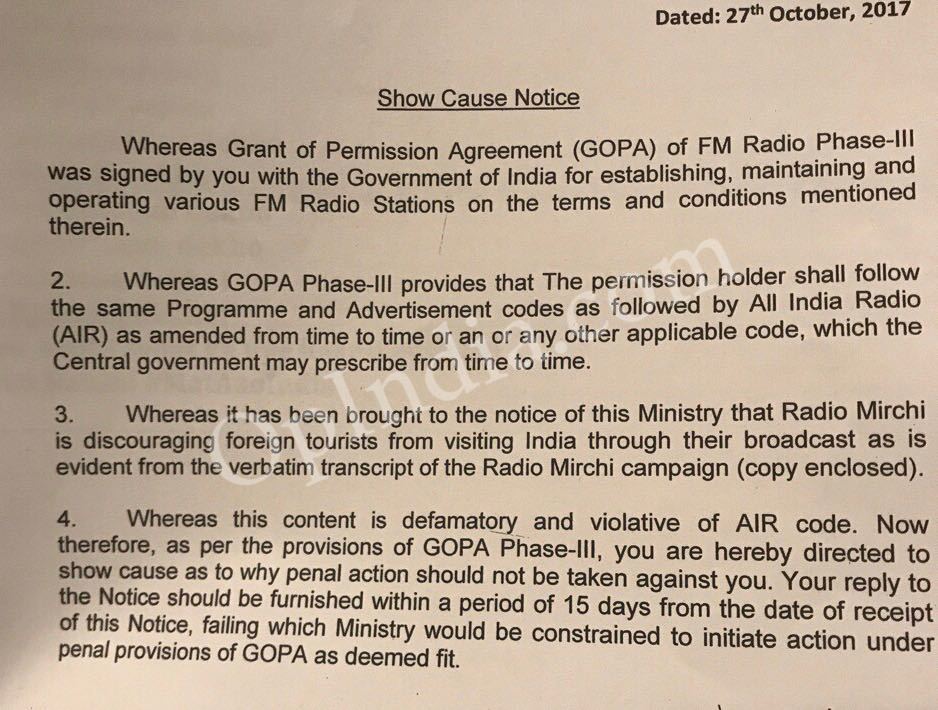
Now as per exclusive information accessed by OpIndia, the Smriti Irani led Information & Broadcasting ministry has decided to step into the matter and has sent a show-cause notice to the FM station. We managed to access a copy of this notice:

As seen in the image above, the notice dated today reminds the radio station of the Grant of permission Agreement (GOPA) it signed, which requires operating, establishing and maintaining its terms and conditions. It later stated how, it was brought to the ministry’s notice that the radio channel was discouraging foreign tourists from visiting India through their broadcast.

The notice finally states that the content in question is defamatory and violated the AIR (All India Radio) code. Therefore via the GOPA Phase-III provisions, the channel has been asked to show cause as to why penal action shouldn’t be taken against it. The radio channel has been asked to furnish its reply within 15 days of receiving the notice, failing which the ministry would be constrained to initiate action.

It should be noted that earlier in 2007, the UPA government had banned an FM station for a week for airing content that was seen as demeaning to a section of the society. Radio Mirchi in effect had demeaned the entire nation.

This isn’t the only time the I&B ministry has taken such a prompt action following complaints by common citizens.

Ever since Smriti Irani has taken charge of the I&B ministry, it has started to take media houses which spread fake or malicious news to task. We had reported in the past how Irani herself slammed PTI not once but twice for spreading fake news and posting a derogatory tweet respectively.

Later it was reported how The Hindu was issued a show cause notice by the press council for its fake Elphinstone molestation story. This notice was issued reportedly as the result of the I&B ministry having expressed their displeasure at the whole turn of events which they later conveyed to the Press Council of India. Yesterday only we had reported that ministry was active again and was planning to make NDTV India go off air for 15 days for compromising national security.

A brief profile of 14 Apostles of Left-liberal feminism

0

Earlier we had reported how the Leftists come together to defend a damning list of academics in Indian institutes accused of sexual harassment claiming how a ‘due process’ should be followed instead of name and shame. A list of academics was put up in a Facebook post by one Raya Sarkar, accusing them of sexual misconduct towards women, especially students. Lot of women, who were too afraid of taking a legal course, reached out to her, many anonymously, accusing their professors of sexual harassment.

In wake of Harvey Weinstein incident, a lot of people are coming out and retelling the horrors of men in powerful position abusing their power by sexually harassing women, and even men. Hence, it comes as a shock when the torchbearers of feminism in India are actively trying to suppress these voices by asking them to not publish such lists. 12 self proclaimed feminists of India have written a post that they are against the idea of “name and shame”.

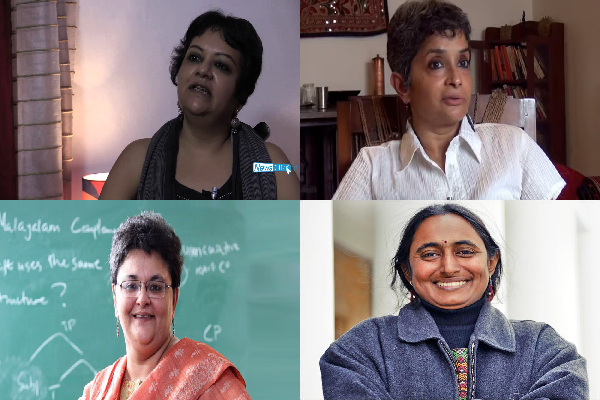
Let us brief you with the 14 flag-bearers of feminism in India who are passive aggressively implying that the victim may be lying about sexual harassment and hence the accusations may be unsubstantiated.

1. Ayesha Kidwai

Ayesha Kidwai, a professor at Jawaharlal Nehru University (JNU) believes she is a parallel judiciary unto herself and is currently leading a kangaroo court against the Vice Chancellor of JNU accusing him of promoting authoritarianism. Let us also not forget that she has allegedly threatened students and tried to protect Ashraf Alam, a JNU professor accused and found guilty of sexual molestation of a student in JNU, by indulging in victim shaming.

2. Brinda Bose

Brinda Bose is a professor at JNU who had rallied for Professor Saibaba, who has been awarded lifetime imprisonment for having Maoist links. The court had also found JNU student Hem Mishra and four others guilty of waging a war against the country. Brinda and other Leftist professors had appealed against the action taken against the ‘loving professor’.

3. Janaki Abraham

Professor in Sociology department in Delhi University, Janaki Abraham had in 2013 credited the youth for being assertive and triggering protests to create safe spaces for women. Now, 4 years down the line, she believes online protests are delegitimizing the long struggle against sexual harassment.

4. Janaki Nair

JNU professor Janaki Nair believes that only a nervous and insecure regime distrusts its intellectuals and the university as the space of critical intellection. In the same breath, she hails the bully Gurmehar Kaur and called her fearless. She also identifies herself as feminist.

5. Kavita Krishnan

Ironically, Kavita is the Secretary at All India Progressive Women’s Association and till two days back, was a very vocal advocate of naming and shaming abusers and sexual predators. Of course, until the abuser isn’t allegedly a professor in one of the elite academic institutes with Leftist and pro-Naxal ideologue. Kavita has also been the former joint secretary at JNU Students Union.


6. Madhu Mehra

Madhu heads a legal resource organisation advancing women’s rights, Partners for Law in Development and till 4th October this year believed that ‘We cannot depend on our legal system to bring many convictions or a big drop in cases’ with regards to witch hunting cases. It is surprise, then, that she has suddenly developed faith in the legal system for sexual harassment by academics.

7. Nandini Rao

Nandini Rao is a self proclaimed ‘independent women’s rights activist’ and focuses on women’s rights, including violence against women, sexual harassment at the workplace. She claims she spends the best part of her life (very productively) listening to women’s stories of struggle and the pain and joy they express through their songs. Perhaps, Facebook posts discussing sexual harassment is not something she ‘enjoys’.

8. Nivedita Menon

JNU (yet again) professor Nivedita Menon believes Dalit candidates are not good in English.


She has also been accused of resorting to name-calling a Dalit student.


Nivedita, who claims to be a feminist too, at one point said that in an academic environment, the definition of sexual harassment would have to be different from other kind of workplaces. She said universities are filled with young people in their formative years, and hence we must think about what it does to them when the teacher regularly passes derogatory comments. You could read her book “Seeing like a Feminist” from where the above quote is taken here.
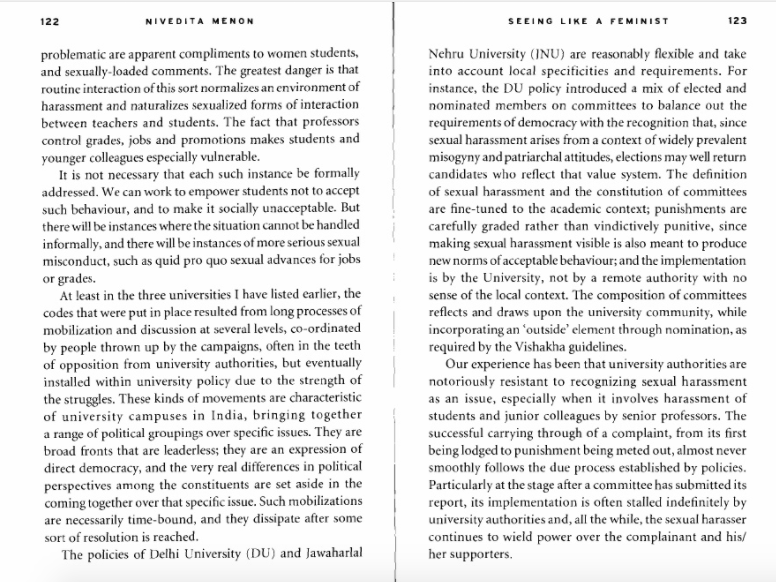
Now if only she’d practice what she preaches. Unsurprisingly, she also believes India is illegally occupying Kashmir.

9. Pratiksha Baxi

A JNU facutly, Baxi also talks and writes on feminism. In 2012, she believed “Men and women, alike, from all classes, castes and communities must adopt a stance of solidarity that will not tolerate politicians, police officers, planners, judges and lawyers who build their careers on silencing the voices of raped women. Only a heightened intolerance for any kind of sexual violence as a social force will begin to chip away at the monumentalisation of rape cultures in India. Our collective melancholia must be far more productive.” Of course, a lot of water seems to have passed under the bridge since then, eh, Ms Baxi?

10. Ranjani Mazumdar

Professor at the JNU (is someone keeping a tab of number of people associated with JNU in the list of ’eminent feminists’?) seems to be against the publicly naming and shaming since someone they know is named in the list.
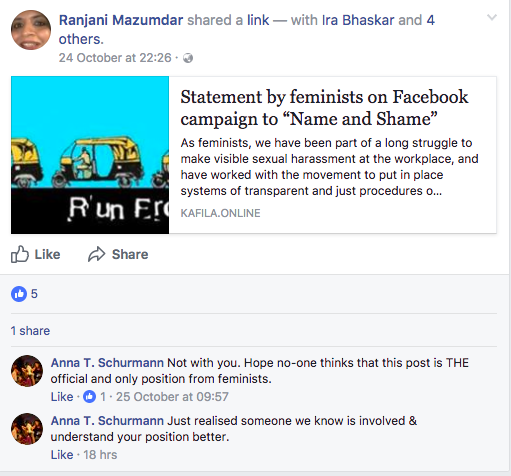
Enough said. By the way, Ira Bhaskar, who is tagged in the post is film actress Swara Bhaskar’s mother. Ira was also at one point member of Central Board of Film Certification. Pretty sure Swara is talented and her mother being board member had nothing to do with her film career.

11. Sabeena Gadihoke

Sabeena is a JNU alumnus (I sense a pattern here) and currently teaches at Jamia Millia Islamia. She takes to photography and films to talk about feminism and spends most of her free time signing letters condemning things she doesn’t agree with.

12. Shikha Jhingan

A JNU professor, Shikha Jhingan is a batchmate of Sabeena and Ranjani and like to talk about secularism in India, Shah Bano Case and the rise of Hindu Right through their documentaries.

13. Shohini Ghosh

Ghosh is a professor at Jamia Millia Islamia and till 14th October believed in protecting the innocent and punishing the guilty.

14. Vrinda Grover

Vrinda Grover was one of the torchbearers in saving Yakub Memon from the gallows and went knocking on Supreme Court of India’s doors at 2 am to save him from the noose. More importantly, she also represented Ishrat Jahan, who was accused of being a Lashkar-e-Taiba operative.

Why are these ‘feminists’ threatened? Is it because the new breed of feminists are not ready to play by the rules set by them? Do they fear they might become irrelevant? They, at one point, thought are the ‘voices of the oppressed’. Now those oppressed voices have started speaking, on their own and the voices are clear. Without any distortion and are not getting lost or misconstrued in transmission. Are they afraid that their feminism, which is so riddled with hypocrisy and dichotomy, is getting exposed?

One wonders, what gives them the right to speak on behalf of all women? Who made them the representatives? Do they feel entitled because of their association with JNU (9 out of 14 above are associated with JNU), they are the flagbearers of feminism?

And more importantly, are they trying to hide something? Whom are they trying to save? One of their own?


Now Gurmehar Kaur’s mentor shows fascist color, abuses people from UP and Bihar

0

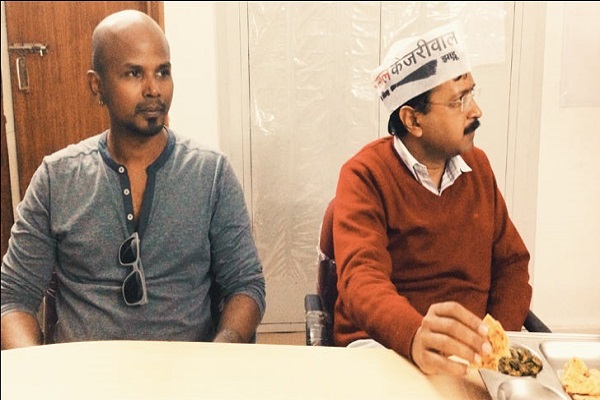
Ram Subramanian is supposed to be an ad filmmaker who has worked with top advertising firms like Ogilvy, Contract. But recently he seems to have started specialising in political agenda peddling and hate mongering.

A well known AAP supporter, he had openly volunteered to work for the party in the 2015 Delhi assembly elections and one of the reasons given was, AAP winning in Delhi would make them the choker-leash that needs to be around the neck of the right-controlled majority government. He around this time had also put out a video-letter titled “Pause”, to help fix the India-Pakistan dispute.

Recently he shot to fame for being the mentor of celebrity student Gurmehar Kaur and being the brain behind her infamous placard holding video, where she rather naively, declared that “Pakistan did not kill my dad, war killed him.” This had later exploded into a, free speech under attack narrative after she was allegedly trolled and also supposedly received death threats.

Gurmehar, “the champion of free speech” has herself been in the news recently, after being accused of threatening young boys for making memes. Even though her blatant hypocrisy was out in the open, it hasn’t stopped TIME magazine from hailing her as a free speech warrior.

Now it seems that Ram Subramanian, Gurmehar’s mentor has himself created a controversy after openly abusing the people of UP, Bihar and Haryana.

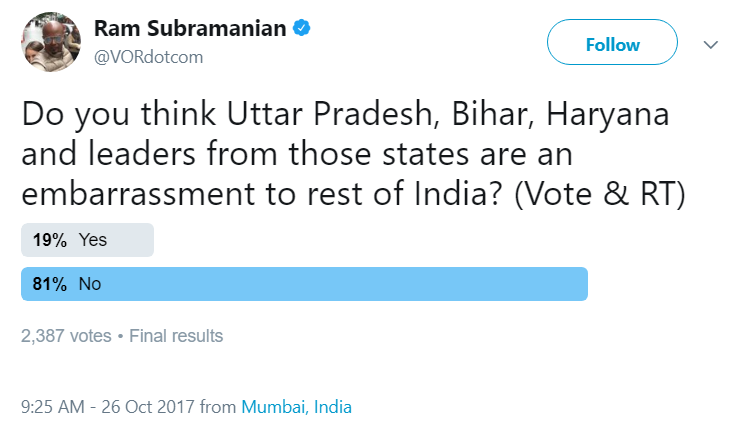
On Thursday he first put out a poll, asking whether the states of Uttar Pradesh, Bihar, Haryana and their political leaders were an embarrassment to the rest of the nation. This agenda fell flat as a resounding 81% of the people voted against it:

He later upped his motivated political agenda by exploiting a very unfortunate attack on Swiss tourists in Agra:


His openly fascist tone naturally meant that people started calling him out:


Even AAP’s IT Cell head took offence:


Rather than apologising for his hate spewing rhetoric, he decided to start abusing people:


This further angered people:


To further solidify his brazenness he has neither deleted his hateful tweets, nor has he apologies to the people of UP, Bihar, Haryana for spewing hate against them. It remains to be seen if Gurmehar Kaur herself takes a stance against him for his hate spewing tirade, given that she is branded a “peace activist” against social discord.

Comedian blames The Wire for spreading fake story about censorship of Modi jokes

In the last few days, social media is abuzz with messages insinuating that a leading TV entertainment channel censored jokes on Prime Minister Narendra Modi under pressure from government agencies. These messages, often accompanied with some media reports, provide no proof, not even unnamed “sources” citing any government censorship, but the tone of most of these reports nonchalantly suggest some kind of state pressure.

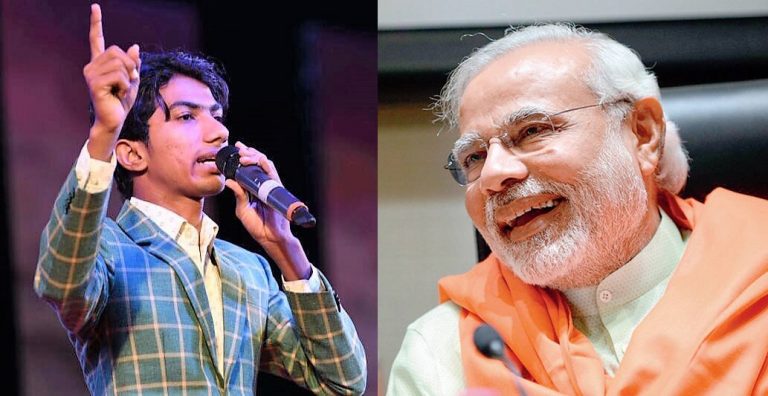
The person whose jokes are reported to have been censored is Shyam Rangeela, who participated in comedy reality show “The Great Indian Laughter Challenge” of Star Plus. Rangeela’s mimicry of Prime Minister Modi is widely popular. He was apparently invited to the show owing to that popularity.

However, he reportedly was asked not to mimic PM Modi – ironically something for which he is widely popular and it was that popularity that won him an invite to the show. As a result of his mimicry act being thrown out of the window, this extremely talented mimicry artist was eliminated from the show. A video clip of his act where he is seen mimicking Narendra Modi and Rahul Gandhi, which allegedly was not aired by the TV channel, has already gone viral and is being circulated as ‘censored clip’ with claims of ‘attack on free speech’.

Unsurprisingly, half baked news reports, which claimed that Rangeela was asked to not do any mimicry of Modi but was told that he was free to make jokes on Rahul Gandhi, gave this entire incident a completely partisan colour. These news reports aimed to communicate the supposed dichotomy in political attitude. With BJP trampling upon freedom of expression by censoring mimicry of the Prime Minister and Congress graciously accepting jokes on Rahul Gandhi.

Congress’s allegiance to ‘free speech’ is already a widely discussed topic on social media with users putting forth dozens of examples where Congress has censored creative and literary work. Scientist and columnist Anand Ranganathan has already listed one hundred instances of censorship by Congress, with help from various Twitter users, and the list is not yet complete.

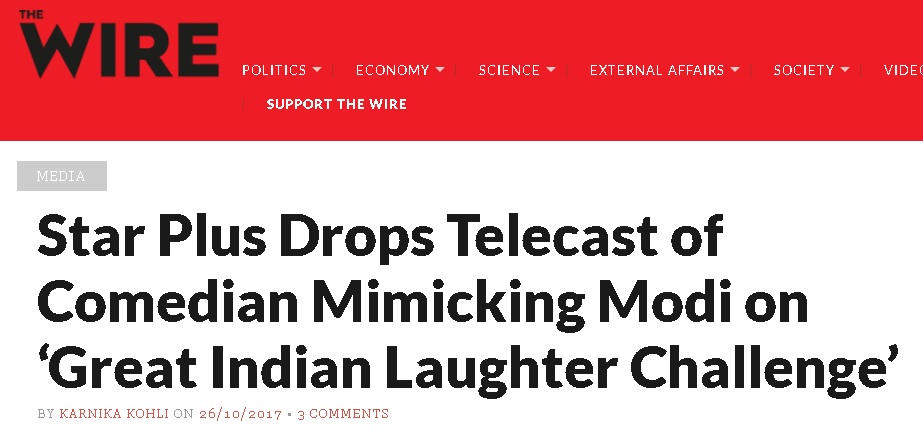
The media is meant to be non partisan and free, but this seems to be yet another example of half baked, incomplete facts being peddled as the truth, the whole truth, and nothing but the truth. One of the publications that tried to give clean chit to Congress while besmirching BJP was The Wire, which came up with a following headline:

The agenda was more obvious in the Hindi report by The Wire, where the headline quoted Shyam Rangeela saying (in Hindi) ‘TV channel told me I can mimic Rahul Gandhi but not Narendra Modi’.

This politically partisan and dishonest headline by The Wire was spotted by many Twitter users who pointed out how the story by The Wire itself contradicts its headline. In the story, Rangeela clearly says that he was asked not to mimic Rahul Gandhi either:


To confirm the details of this story, I called up Shyam Rangeela and he expressed displeasure over the way The Wire had twisted his words and spread a fake news about Narendra Modi jokes being censored while Rahul Gandhi jokes being allowed.

Rangeela confirmed that The Wire was the first one from the mainstream media to approach him, but they twisted his words, which gave the entire story an anti-BJP and anti-Modi spin. Incidentally, The Wire is already in a fix over another story that tried to insinuate corruption by BJP President Amit Shah’s son and the website has now been summoned by a court for defamation.

“I had recorded my whole statement and given to The Wire, but they are using just one sentence here and there, and now the entire incident has become that if Star Plus did not air that clip, it was because of Modi government,” Shyam Rangeela told OpIndia.com (his statements are being translated into English).

Rangeela rues that due to this original spin by The Wire, now every media house is repeating it as a case of censorship, even though he had made no claims about government interference and clarified that the channel asked him to mimic neither Narendra Modi nor Rahul Gandhi.

He further rues that the channel took such a decision, even though he is known for mimicry.

“Initially I was told by them (TV channel) I can do mimicry of both Rahul and Modi, and later I was asked to mimic neither,” he shared his disappointment, “I was asked to do other stand-up acts and not do political mimicry, and I had no time to prepare. I tried some stand-up acts, but was eliminated from the show.”

Rangeela reiterated that he doesn’t believe there was any pressure from the government as his mimicry of Modi was already hugely viral and he never faced any hostility or hate from anyone, especially from Modi supporters. He also noted how PM Modi himself had appreciated how well some people mimic his voice.

“I personally know many Modi supporters and they never had any objections to me mimicking Modi,” he told OpIndia.com on phone, “Out of 100, there are barely 5 who might say don’t mimic Modi, but they have no idea what they are talking about and they are the ones who find everything wrong in anything in the world.”

(you can listen to my conversation with Shyam Rangeela below)

India receives high praise from FIFA for very successfully hosting the Under-17 World Cup

On 6th October, a sporting extravaganza in the form of the Under-17 FIFA World Cup kicked off in India. This was the first time India was hosting a FIFA event and the football fraternity as a result was closely observing the nation and its capacity to host such global tournaments.

In a previous report, I had written how this tournament was a chance for both India and its U-17 team to get on the global football map. Our football team didn’t disappoint in this regard and even though it exited in the group stages, it wasn’t before players like Dheeraj Singh Moirangthem received aplomb for their performance.

Now even the event organisers have been showered with praise by none other than top FIFA officials for delivering a very successful World Cup. As per reports, Jaime Yarza the FIFA Head of Competitions has stated that the infrastructure provided was world class and the teams were happy with the organisation.

As per Yazara, the teams did not expect such good quality training pitches and they were satisfied with regards to accommodation, food and transportation. He also commended the fact that this tournament is on route to becoming the most attended  U-17 World Cup.

Already a total of 12,24,027 spectators have attended the matches which is a mere 6949 less than the current record. With the 3rd place match and final still to go, India is comfortably expected to break the record, currently held by China. The high interest of spectators was visible recently when Kolkata’s salt lake stadium hosted a record 66,613 fans during the Brazil vs Germany quarterfinal.

Yazara also claimed that all the 6 venues which hosted the tournament were not just of U-17 world cup level, but were also good enough for senior football tournaments and India can host bigger FIFA events in the future. Yazara also praised the Indian football team who he claims, played at high speed and weren’t afraid of facing very good teams.

Praise was also delivered by the current FIFA president Giani Infantino, who declared that “India is a football country now”.

It remains to be seen if the praise results into a future opportunity for India. All India Football Federation (AIFF) President Praful Patel has already indicated that he will try and convince the football governing body to let India host the Under-20 World Cup in 2019, despite the fact that the last U-20 World Cup was also hosted in Asia (South Korea).

It also remains to be seen how much of an effort is made to maintain the newly renovated football infrastructure and whether it is made accessible to current and future footbal players One also hopes that the current momentum which has been built up with regards to football, continues to thrive and India well and truly arrives on the global footballing scene.