Home Blog Page 75

Supreme Court turns to Manusmriti while granting widowed woman assets of her late father-in-law: Read how the ancient Hindu text became a guiding light for the Judiciary.

The Supreme Court of India affirmed a widowed daughter-in-law’s maintenance rights from her late father-in-law’s assets in a historic decision delivered on 13th January this year. The court drew straight from the Manusmriti to underline familial duties under modern Hindu law. In addition to resolving a family dispute over inheritance, the ruling in Kanchana Rai vs. Geeta Sharma & Ors. (2026 INSC 54) demonstrated the continuing impact of ancient writings like the Manusmriti on India’s legal system, even as courts give precedence to constitutional principles.

This ruling is an example of how judges interpret laws such as the Hindu Adoptions and Maintenance Act, 1956 (HAMA), using classical Dharmashastra as moral and historical guidelines rather than as legally obligatory.

Family fued which sparked the legal battle

The issue concerned the assets of Dr Mahendra Prasad, who passed away on December 27, 2021, and left behind properties in a registered will dated July 18, 2011. Prasad had three sons. Rajeev Sharma, Devinder Rai (pre-deceased, whose wife Kanchana Rai was declared executor and beneficiary for her boys), and Ranjit Sharma (died March 2, 2023). After Ranjit passed away, Geeta Sharma, Respondent No.1 and his widow, argued that she was a dependent and requested maintenance from her father-in-law’s estate under HAMA.

Her husband outlived Prasad; she was not a widow at the time of his death, according to the family Court, which dismissed her case as unmaintainable. On August 20, 2025, the High Court overturned this on appeal, remanding the case for merits evaluation and designating Geeta as a dependant as she is Prasad’s son’s widow. This was contested in the Supreme Court by Kanchana Rai and Uma Devi, who claimed to have lived with Prasad for forty years. They framed the main question asking Does a daughter-in-law who is widowed following the death of her father-in-law qualify as a dependent under HAMA Section 21(vii)?

Sharp statutory interpretation

Writing for the bench alongside Justice S.V.N. Bhatti, Justice Pankaj Mithal used a literal interpretation of HAMA to cut through the objections. Timing is irrelevant because Section 21(vii) specifies dependents as “any widow of his son,” without qualifiers like “predeceased,” therefore, Geeta qualifies regardless. Heirs are required by Section 22 to provide for such dependents from the inherited estate, particularly if the dependent does not receive a succession share.

Citing precedents such as Crawford v. Spooner (1846) for plain sense and B. Premanand v. Mohan Koikal (2011) against judicial rewriting of statutes, the bench rejected restricted readings. It cautioned that any more restrictive interpretation would violate Article 14’s equality by arbitrarily separating widows according to the time of their spouse’s death and having no logical connection to HAMA’s welfare objective. Purposive reading was also required to protect vulnerable women from poverty under Article 21’s right to a dignified life.

Manusmriti’s invocation

The court addressed the origins of Hindu law in a crucial paragraph, pointing out that where statutes leave gaps, HAMA’s Section 4 maintains uncodified principles. Manusmriti Chapter 8, Verse 389 was cited, ‘No wife, son, father, or mother should be abandoned. The king should impose a fee of six hundred units on anyone who deserts these innocent family members.’ This passage emphasised the need of the family head to provide for female relatives, obliging heirs both legally and ethically to help a widdaughter-in-lawn law who is unable to support herself.

The reference confirmed that a father-in-law’s duty continues after death through estate heirs, aligning Manusmriti’s emphasis on familial piety with HAMA’s framework. Section 22 expanded Section 19, which covered maintenance for a live father-in-law, to include post death claims. The court maintained the High Court’s ruling and dismissed appeals, with no costs.

Manusmriti’s shadow over modern law

According to recent analysis, Manusmriti’s recurrent, non-binding function in Indian jurisprudence is mirrored in this invocation. Manusmriti appears in judicial discourse to invoke tradition, contrast reforms, or uphold morals in matters involving families, women’s dignity, and social reform, in contrast to the Constitution or statutes. In line with Dr B.R. Ambedkar’s subtle criticism, courts use it as an example, gaining authority from the law rather than scripture.

During the 1927 Mahad protest against caste injustice, Ambedkar burned the Manusmriti, but during the Hindu Code Bill debates, he deliberately cited its egalitarian themes, such as women’s property rights. While acknowledging the complexithe ty of Dharmashastra, he attdiscriminatorynating texts about patriarchy and varna rigidity, creating codified regulations that eliminated injustices while preseManu-based based ideas like joint families and sapinda relationships.

From the Dharamshastra to codified Hindu law

Manusmriti, which served as the basis for the Dayabhaga and Mitakshara schools, had an impact on colonial Hindu personal law through commentators such as Vijnaneshwara. The Hindu Marriage Act, Succession Act, and HAMA, which were codified after the 1950s, corrected abuses while maintaining Manu’s categories for inheritance, coparcenary, and maintenance, subject to equality. As Law Minister, Ambedkar upheld organised family responsibilities while ensuring that oppressive features were subject to constitutional review.

Chapter 8, verse 389 in Kanchana Rai transformed a patriarchal passage into a shield of dignity by reiterating HAMA’s religious duty without accepting hierarchy. The Supreme Court cited Manu seven times before 2019 (e.g., Vimla Bai v. Hiralal Gupta on inheritance), and the recent POCSO rape of daughter denial of bail aligns withthe constitutional vision. This selective use matches the judicial trend.

High Court echoes the tradition

High Courts go further, citing Manu regarding upkeep. In Narang v. Narang, the Delhi High Court cited Chapter 9.108 on Karta’s obligation to dependents, including spouses. The passage ‘where women are miserable, family perishes’ was quoted by the Jharkhand High Court (2024) in its denial of a claim based on facts regarding spousal support. Husband and wife obligations were employed forpost-decreee maintenance in Chhattisgarh’s Das v. Das case.

Even outside of court, judges praise women’s ‘respectable position’ (Delhi HC Justice Prathiba Singh) or allude to the Manusmriti as a ‘holy book’ (Allahabad HC 2025 FIR refusal). Smritis like Manu were upheld in Sri Krishna Singh v. Mathura Ahir (1980) as authoritative for uncodified personal law, always subservient to statutes.

Balancing heritage and equality

Kanchana Raemphasises how Manusmriti evolved from a prescriptive code to a rhetorical instrument that was both absorbed and criticised in accordance with Ambedkar’s legacy. Courts use it to close gaps, denounce wrongdoings such as incest, or uphold obligations while adhering to Articles 14 and 15 of the Constitution. Through the Dharmashastra to HAMA, this legal heritage guarantees that traditional knowledge influences but never supersedes contemporary justice, defending widows like Geeta and promoting women’s rights.

In the midst of Manusmriti’s contentious patriarchy, criticscriticisee selective quotation, but rulings like these reduce hierarchies and support the reforms Ambedkar advocated. Such decisions confirm that Manu’s echoes are still there in India’s judicial DNA, albeit with modifications for democracy, as the country navigates tradition and progress.

Conclusion

The Supreme Court not only upheld a widow’s unwavering right to maintenance from her father-in-law’s inheritance in the final ruling of Kanchana Rai v. Geeta Sharma, but it also incorporated the ancient strands of Manusmriti into contemporary jurisprudence. Justice Pankaj Mithal reminded heirs of their eternal moral obligation by citing Chapter 8, Verse 389, ‘No mother, no father, no wife, and no son deserves to be forsaken,’ which goes beyond the strict deadlines of codified law. In accordance with Articles 14 and 21’s guarantee of equality and dignity, this decision eliminates artificial barriers under HAMA Section 21(vii), guaranteeing that no woman is abandoned due to the unfortunate death of her spouse.

However, the decision goes beyond the conflict within a single family. It highlights Manusmriti’s phoenix-like return, which Ambedkar criticised for being patriarchal, selectively used to support women’s vulnerabilities, from Jharkhand’s family welfare appeals to Delhi High Court maintenance approvals. Such citations reinforce legacy as a living guide, stripped of hierarchy to serve justice, in India’s legal evolution from Dharmashastra commentary to post 1950s reforms. The success of Geeta Sharma shows that the judiciary is not scared to clos2,000-yearar gaps and protect family piety from deterioration. Ancient echoes resound in 2026’s courtrooms, posing a question to society: Will we uphold Manu’s mandate or abandon the abandoned?

PM Modi-led Appointments Committee appoints IPS officer Rakesh Agarwal as the new Director General of the NIA: all you need to know about the top cop

0

On the 14th January 2026, the Central government appointed senior IPS officer Rakesh Agarwal as the new Director General of the National Investigation Agency (NIA). Rakesh Agarwal is a 1994 batch Indian Police Service officer of the Himachal Pradesh cadre. Before his appointment as the Director Agarwal of the NIA, Agarwal served as the interim Director General of the anti-terror agency.

As per the Personnel Ministry’s order, the Appointments Committee of the Cabinet, led by Prime Minister Narendra Modi, approved Rakesh Agarwal’s appointment as the NIA’s Director General for a tenure up to 31st August 2028, the date of his superannuation.

“The Appointments Committee of the Cabinet has approved the proposal of the Ministry of Home Affairs for the appointment of Shri Rakesh Aggarwal, IPS (HP: 1994), SDG, NIA as Director General, National Investigative Agency (level-16 of Pay Matrix) from the date of assumption of charge of the post and up to 31.08.2028 i.e. date of his superannuation or untill further orders, whichever is earlier,” the letter of appointment states.

Agarwal’s appointment as NIA DG followed the Appointments Committee of the Cabinet’s approval of the premature repatriation of NIA DG Sadanand Vasant Date, to his parent cadre, Maharashtra.

After Date’s repatriation, the Appointments Committee appointed Rakesh Agarwal as the interim DG NIA.

Rakesh Agarwal: Expert in counter-terrorism and internal security investigations

Hailing from Haryana, Rakesh Agarwal brings extensive expertise in counter-terrorism, radicalisation networks, terror-financing, cross-border linkages, and internal security matters. Agarwal’s experience and expertise make him a recognised specialist in complex high-stakes probes and operations under pressure.

Rakesh Agarwal holds a Bachelor’s degree in Mechanical Engineering and a Master’s degree in Management. Agarwal began his service in the Himachal Pradesh Police, where he gained foundational experience in law enforcement and administration. Over the years, Rakesh Agarwal served in major central agencies and forces. These include operational positions in the National Security Guard (NSG), the elite counter-terrorism unit, the Special Protection Group (SPG), and as an Inspector General in the Border Security Force (BSF). He oversaw the Guwahati Frontier in sensitive northeastern regions. Agarwal also served the nation as the Joint Director in the Central Bureau of Investigation (CBI). At CBI, Agarwal received multiple extensions.

In his home cadre, Rakesh Agarwal served as Director General of Home Guards in Himachal Pradesh before moving to central deputation. The new Director General of the NIA joined the anti-terror agency in July 2024 as Additional Director General. On 29th September 2025, Agarwal was promoted to Special Director General on an in-situ basis for a two-year term.

After the premature repatriation of previous DG NIA Sadanand Date to his Maharashtra cadre, Rakesh Agarwal assumed additional charge as the interim DG NIA on 30th December 2025. Finally, on 14th January, the Appointments Committee of the Cabinet officially approved Rakesh Agarwal’s appointment as full Director General of the NIA.

Rakesh Aggarwal, IPS, Director General, NIA. Image source: NIA’s website

In his distinguished career spanning over three decades, Rakesh Agarwal has made significant contributions to probing terror-related cases, ranging from Left-Wing Extremism (LWE) or Naxalism to ISIS-linked modules. Agarwal has earned a reputation for investigative acumen, professional integrity, and impactful leadership in national security matters.

Bangladesh cricket crisis explained: Why cricketers are boycotting the BPL and demanding the exit of BCB director M Nazmul Islam

Bangladesh cricket is staring at one of its gravest institutional crises as a player-led boycott threatens to paralyse domestic competitions, including the Bangladesh Premier League (BPL) and the Dhaka Cricket League. What began as a controversial remark by a senior board official has now snowballed into a confrontation between cricketers and administrators, exposing deep structural and governance fault lines within the Bangladesh Cricket Board (BCB).

What triggered the crisis?

The immediate flashpoint was a series of “objectionable comments” made by BCB director M Nazmul Islam. Speaking publicly, Islam claimed that Bangladesh players would not be paid if the BCB decided to pull out of the T20 World Cup in India. He went further, alleging that players return “crores and crores of taka” that the board spends on them, a remark widely seen as demeaning and misleading.

The controversy escalated sharply when Islam branded former Bangladesh captain Tamim Iqbal an “Indian agent” for advising against withdrawing from the T20 World Cup. The comment was viewed by players as not only defamatory but also an attempt to politicise cricket and question the patriotism of senior cricketers.

How did players respond?

The Cricketers’ Welfare Association of Bangladesh (CWAB) issued a call for a boycott of all forms of cricket unless Nazmul Islam resigns from the BCB board. The demand is unequivocal: stripping him of committee roles is not acceptable; only his complete exit from the board will suffice.

CWAB president Mohammad Mithun, along with national Test captain Najmul Hossain Shanto and senior player Nurul Hasan Sohan, emerged as the public face of the players’ stand. Their position reflects broad unity within the dressing rooms, with reports suggesting that players across franchises are aligned.

What has the BCB done so far?

In an attempt to contain the fallout, the BCB issued a show-cause notice to Nazmul Islam, asking him to submit a written explanation within 48 hours. The board said formal disciplinary proceedings had been initiated and that the matter would be handled “through due process.”

Behind the scenes, the BCB also held an emergency late-night meeting with CWAB representatives at a Dhaka hotel. Director Iftekhar Rahman Mithu represented the board during talks. As a compromise, the BCB reportedly offered to remove Islam as chairman of its Finance Committee.

That proposal was immediately rejected by the players.

Why is the standoff so hard to resolve?

The crisis has now entered a legal and constitutional impasse. According to BCB officials, the board’s constitution makes it extremely difficult to remove a director unless the individual voluntarily resigns. In other words, even if the board leadership wants Nazmul Islam out, it lacks a straightforward mechanism to force his removal.

This constitutional constraint has left the BCB with limited options: pursue a slow disciplinary process, negotiate a voluntary resignation, or risk prolonged disruption to domestic cricket.

What is the impact on domestic cricket?

The fallout is already visible on the ground. Bangladesh Premier League matches have been delayed, with teams failing to arrive at venues even close to the scheduled start times. A Chattogram Royals official admitted that the situation is “extremely complex” and that match uncertainty remains high.

Players from franchises such as Noakhali Express have reportedly stayed back at their hotels, awaiting communication from the BCB. Sparse crowds and deserted stadiums have underlined the seriousness of the boycott.

Match officials, too, have been left in the dark. “We are standing in the middle of the ground. We don’t know what’s happening,” said match referee Shipar Ahmed, reflecting the administrative paralysis.

The Dhaka Cricket League has also been affected, with matches failing to start on schedule.

What happens next?

CWAB leaders are expected to formally present their list of demands at a press conference, with Nazmul Islam’s immediate resignation at the top. Unless that demand is met, players have indicated they are prepared to continue the boycott indefinitely.

For the BCB, the crisis has become a test of governance credibility. How it navigates the constitutional limitations, player trust deficit, and public scrutiny will shape not just the immediate fate of the BPL, but the long-term relationship between Bangladesh’s cricketers and its administrators.

At stake is not merely a domestic tournament, but the institutional authority of the BCB itself.

Archaeologists discover imprints estimated to belong to a 10,000-year-old civilisation at the Sambalpur district of Odisha, ASI starts survey

In a rare discovery, archaeologists have found impressions of what they believe to be a 10,000-year-old civilisation at the Bhimmandali mountains in Redakhol, Sambalpur district of Odisha. Following the discovery, the Archaeological Survey of India (ASI) launched an extensive survey of the site on Thursday (15th January).

As per reports, the ASI found several rock-cut paintings, tools, and other artefacts at 42 locations across Bhima Mandali, Raila, Landimal, and Luhapanka panchayats, and the protected forests of Chhatagada and Brahmani. The rock carvings depict imagery of animals and birds, providing a glimpse into early human artistic expression.

Currently, the first phase of exploration is going on at the sites, including the historic Bhima Mandali cave. The ASI researchers are expected to stay at the cave for about two months to conduct systematic studies. Experts believe that the findings may be older than the Indus Valley Civilisations of Mohenjo-daro and Harappa. Teams of scientists from the Gangadhar Meher University and INTACH have focused on the prehistoric significance of the discovery. However, the local tradition links the site to the Mahabharata era.

Image of rock carvings found at the site. (Image via Deshkal News)

ASI Superintending Archaeologist DB Gadnayak described the survey work as delicate. He has been surveying with a 15-member team of experts.

ASI teams surveying the site. (Image via Deshkal News)

Gadnayak said that all the findings of the survey will be recorded using advanced digital documentation techniques for accuracy. “We are trying our best to make the survey better. ASI will go for digital documentation of the entire process. The survey will help turn the region into a historic place in the world. The artefacts are spread over a vast area, including hilly terrain and forests,” he said.

A rock carving spotted at the site. (Image via Deshkal News)

Explaining the intricacies of surveying an archaeological site, Gadnayak said that teams dig by hand instead of using heavy machinery, which significantly slows down the process. He said that the progress is only about a centimetre a day. “It is difficult to tell exactly how much time will be required for the survey. However, it may require around two months or even more than that,” the Archaeologist added.

ASI member Anil Swain said that the findings so far include stone blades, needles, and scrapers used for leatherwork. “So far, we have recovered fragments of stone arrows, knives, and spears. These are clearly not modern tools; they are ancient,” Swain said. The site has over 45 rock shelters bearing inscriptions and paintings. The rock paintings were created using natural pigments made from iron oxide mixed with tree bark and leaves. The paintings and carvings depict forest environments and daily life, offering a record of their existence. A carbon dating of the site is also being conducted, as the locals and the Bhimmandal Sangha are calling for the site to be declared a National Heritage Monument.

Other recent archaeological findings

In June 2025, researchers from the Indian Institute of Technology Gandhinagar (IITGN), in collaboration with IIT Kanpur, IUAC Delhi, and PRL Ahmedabad, discovered firm evidence of pre-Harappan human presence in the Kachchh region of Gujarat. The study found that human settlement as old as 5,000 years before the emergence of the Harappan civilisation existed in the region. The researchers found massive heaps of discarded shells, now identified as shell middens. This indicated that prehistoric communities inhabited mangrove-dominated landscapes and consumed shell species such as oysters and gastropods.

Subsequently, in July 2025, a remarkable archaeological finding emerged in Maski town in the Raichur district of Karnataka. It was estimated that humans lived in that are around 4,000 years ago. The discovery was made by scientists who were searching for additional information about the captivating location. A collaborative team of 20 researchers from India, Canada and the United States worked together to find out more about the area’s past. Researchers started excavation around Mallikarjun Hill, close to the Mallikarjuna Temple and the town’s Anjaneya Swamy temple. They came across a variety of artefacts and other tools that date back four millennia, which suggests that the area was once a vibrant settlement. 

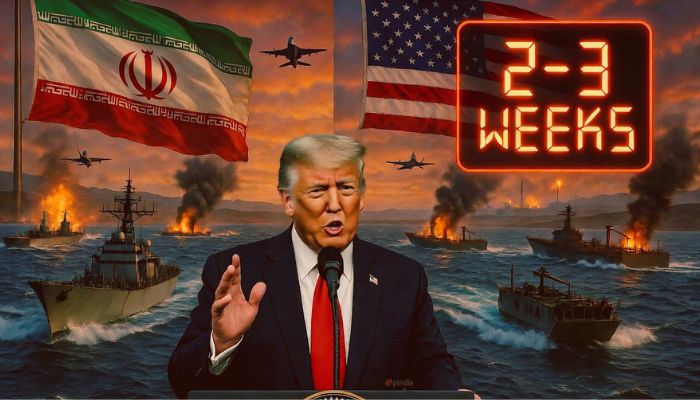
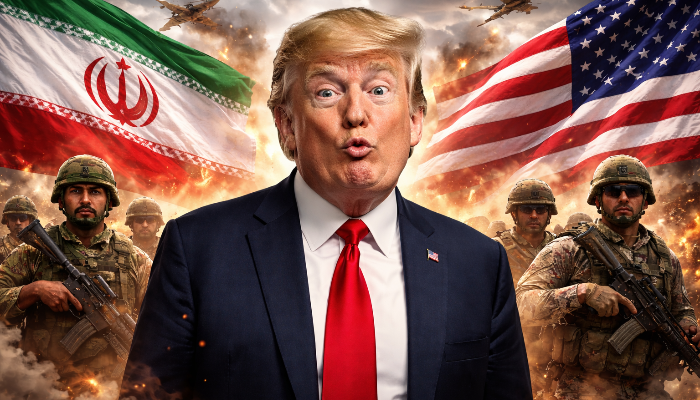
Is a US strike on Iran imminent? Troop pullouts, threats and signals that point to escalation

On 14th January (Wednesday), a United States official announced that the country is removing some of its troops from Middle Eastern facilities, reported Reuters. The development transpired after a senior Iranian official’s claim that Tehran had threatened its neighbours with striking American outposts in the event of a Washington-initiated attack.

According to a US official, the withdrawal from some important bases is a preventive measure in light of the increased instability in the region. A Western military official disclosed, “All the signals are that a US attack is imminent, but that is also how this administration behaves to keep everyone on their toes. Unpredictability is part of the strategy.”

The move could occur within the next 24 hours, according to two European officials. Additionally, an Israeli official stated that it seemed President Donald Trump had made up his mind, even though the timing or scale of the action remains unknown. Qatar declared that the reduction from the largest American air station in the Middle East, Al Udeid, is “being undertaken in response to the current regional tensions.”

Three envoys mentioned that orders have been given to some personnel to leave the installation. The US embassy in Doha has also instructed its staff to be more cautious and to avoid visiting the Al-Udeid air station for non-essential purposes.

The United Kingdom is also following suit with the drawdown of its personnel from Al-Udeid air base. Al-Udeid hosts almost 10,000 US officials and about 100 British staff. According to a government official, the British embassy in Tehran has been temporarily closed by the Foreign Office and is going to function remotely, reported BBC.

The United States maintains forces throughout the region, including the Navy’s Fifth Fleet headquarters in Bahrain and the forward headquarters of its Central Command in Al Udeid.

Iran even closed its airspace due to worries of a US assault before opening it again early on 15th January (Thursday). The majority of arriving and leaving planes were not allowed for 5 hours. As of 4 am UTC (Coordinated Universal Time) the majority of planes were still avoiding Iranian airspace, per real-time data from flight tracker FlightRadar24, however several local carriers had resumed their flights.

Iran’s warning to US, assassination threat to President Trump

The Islamic Republic is attempting to dissuade Trump from repeatedly warning of intervention on favour of anti-government demonstrators as its leadership works to put an end to the biggest internal unrest in the nation. The speaker of Iran’s parliament also emphasised that Israel and the US military, as well as shipping establishments in the area would be acceptable targets if the nation comes under assault.

The Iranian official conveyed that Tehran has requested regional US allies to stop Washington. The person revealed, “Tehran has told regional countries, from Saudi Arabia and the United Arab Emirates (UAE) to Turkey, that US bases in those countries will be attacked,” if Iran is hit. 

The official also highlighted that direct communication between US Special Envoy Steve Witkoff and Iranian Foreign Minister Abbas Araqchi had been cut off. Iran vowed to react “decisively” to any action taken against it.

Iranian state television even displayed a provocative image from Tump’s rally in Butler of Pennsylvania, where he was grazed by a bullet. It used visual from the July 2024 assassination attempt at the campaign event to directly threaten him, alongside a message which read, “This time it (the bullet) will not miss the target.”

Iranian foreign minister Abbas Araghchi also warned Trump in an interview with Fox and expressed, “My message is do not repeat the same mistake that you did in June. If you try a failed experience, you will get the same result. You know in June, you destroyed the facilities, the machines, but the technology cannot be bombed. And the determination also cannot be bombed.”

“We are not looking for war, but we are prepared for war, even more prepared than the previous war,” Araghchi had earlier told a conference of foreign ambassadors in the capital as other officials tried to tone down their anti-US criticism before the recent escalation.

Trump evaluates a potential strike on Iran

Washington began to consider the potential of striking Iran as Trump had an extensive talk with his advisers on the subject of Iran on 13th January, reported Channel 12 news. According to an American insider, he “will have to do something within a day or two at the latest” because “the bloodshed in Iran is continuing.”

Trump has been given multiple choices, such as fresh attacks on Iran’s ballistic missile program or its nuclear program, which the US and Israel targeted in June, reported The New York Times. Cyberattacks and operations on the nation’s internal security systems were “more likely” than attacking nuclear or missile installations. However, it will probably take “at least several days” for the Trump administration’s chosen course of action to become clear.

White House press secretary Karoline Leavitt noted that airstrikes are “one of the many, many options that are on the table,” but “diplomacy is always the first option for the president.” She asserted, “What you’re hearing publicly from the Iranian regime is quite different from the messages the administration is receiving privately and I think the president has an interest in exploring those messages.”

Trump has been threatening Iran with military action for days amid the relentless anti-government protests. He also announced to take “very strong action” against Iran if it proceeds with the execution of agitators, following the news of Erfan Soltan (26), the first protester sentenced to death since the onset of the current unrest.

 “If they hang them, you’re going to see some things. We will take very strong action if they do such a thing,” he stressed in a CBS interview. The hanging has been postponed for now. Afterwards, Trump outlined that he had spoken to “very important sources on the other side” and that he would monitor the situation, though he did not rule out possible US military engagement. However, he added that a “very good statement” was received from Iran.

“We have been notified pretty strongly, but we’ll find out what all that means. We’ve been told that the killing in Iran is stopping,” he insisted and added, “There was supposed to be a lot of executions today, and those won’t take place. We’ve been told on good authority, and I hope it’s true, but who knows.”

The protests that began in the last week of December have persisted unabated and have only intensified with time. Furthermore, internet and telephone services were suspended by the government for several days. However, the restrictions were later relaxed, allowing people to make calls abroad, although they could not receive them. Likewise, internet and texting services were not reinstated. Meanwhile, Trump voiced his support for the agitation and cautioned Iran against any severe crackdown, which exacerbated the already deteriorating relationship between the two sides and heightened the fear of a military confrontation.

No, Centre did not copy the BRICS 2026 logo from a hospital’s logo as claimed by Congress supporters, here is the truth

On the 13th of January 2026, the Ministry of External Affairs launched the official logo, theme and website of the upcoming BRICS Summit. The BRICS India 2026 logo is inspired by India’s national flower lotus. At the design’s centre, the inner petals form two hands resembling a Namaste, and the five petals represent the founding BRICS member countries.

While the logo reflects India’s cultural identity and unity among BRICS nations, the usual suspects floated claims that the logo is a copy of the logo of a hospital in Telangana.

Alleging that the government officials somehow ‘plagiarised’ the BRICS 2026 logo, one pro-Congress troll wrote, “This is embarrassing. India’s official BRICS 2026 logo has been copied straight from a Telangana Hospital. Imagine the laziness of Indian Babus.”

Another pro-Congress troll also peddled the claim that the Centra copied the Lotus Hospital logo, which was originally designed by a Bihar-based man named Lalit Kamal Kumar for just Rs 200. “Lotus Care Hospital logo was designed by Lalit Kamal Kumar from Bihar for just ₹200. BRICS 2026 simply lifted that logo from Lotus Care and claimed that their designers created it, saying it took them a lot of time to create this masterpiece. New India,” the X user wrote.

Similarly, ‘journalist’ Pankaj Pachauri, who was media advisor for former Prime Minister Manmohan Singh, amplified the ‘BRICS logo copied from a hospital ’claim on X. “As an ultimate proof of India’s ‘Creator Economy’ prowess, the logo of #BRICS2026 has been copied from a 12 year old Hospital. A strong signal to the world of copy paste governance!” Pachauri wrote.

Another X user wrote, “What a coincidence! The new BRICS logo already exists. For Lotus Cure Mutlispeciality Hospital. ‘Selected through an open contest’.”

Meanwhile, leftist propaganda portal The Wire also jumped the bandwagon and published a report titled, “BRICS 2026 Logo Sparks Row Over Resemblance to Hyderabad Hospital Emblem”.

Throwing its weight behind social media users, The Wire claimed that while the Centre said that the BRICS logo was designed by a calligraphist named Sudeep Subhash Gandhi, it is actually an outright copy-paste of the logo of the Lotus Hospital in Telangana.

Did Centre copy BRICS logo from that of a hospital?

Before delving into whether the Central government copied the BRICS 2026 logo from that of a hospital, it is important to note that the logo unveiled by Minister of External Affairs, S Jaishankar on 13th January is very similar, in fact, it is almost the same as that used for India’s BRICS chairship in 2016.

While the government’s decision to reuse the logo instead of coming up with a new one could be a debate, as India has no dearth of creativity and talented artists, the claim that the logo is an outright copy of the logo of a hospital is factually incorrect. The logo was originaly designed for the BRICS summit in India in 2016.

The original logo, that is the BRICS 2016 logo, was designed by Sudeep Subhash Gandhi. In a written reply in the Rajya Sabha back in December 2016, Minister of State for External Affairs V K Singh, informed that the logo in question was selected via an open contest. This contest was launched by the Ministry of External Affairs on the Government of India’s Citizen Engagement Platform, http://www.mygov.in.

In this contest, the entry of Sudeep Subhash Gandhi was selected. The logo designed by Gandhi was described as, “As India is the host of 8th BRICS summit, we have incorporated the Indian salutation ‘Namaste; in the centre. Namaste is the gesture of welcoming and respecting someone on arrival. The overall logo depicts the national flower of India ‘Lotus’. The perception of the countrymen and the world towards India has changed in the last 1.5 years. As Lotus is the symbol of prosperity and India is heading in the same direction, we have designed Lotus with the colours signifying BRICS members and their unity.”

Since the BRICS India 2026 logo is same as the BRICS India 2016 logo, claiming that it is plagiarised from a hospital’s logo means that the 2016 BRICS India logo too was a copy-paste.

Coming back to whether the BRICS India logo was copied from that of Telangana’s Lotus Cure Multi Speciality Hospital, the answer lies in when the hospital was registered.

While the logo was created for BRICS summit in 2016, official records show that the Lotus Cure Multi Speciality Hospital was registered in the year 2018. The official date of approval of this hospital is 12.09.2018, meaning that the Lotus Cure Multi Speciality Hospital in Secunderebad was registered two years after the logo was designed for BRICS India Summit in 2016.

This essentially means that if there is any plagiarism of logo, it is on the part of the hospital and not on the Central government. However, the anti-BJP ecosystem peddled misinformation, or rather disinformation, to concoct a narrative against the Modi government and score political points.

Explained: Why is Delhi colder than Shimla this January

North India is still gripped by a brutal cold wave that’s making everyone stay indoors. Places like Gurugram, Delhi, and much of the National Capital Region (NCR) saw biting cold on Tuesday (13th January), with folks barely stepping out and officials on high alert. This chill has been relentless, turning daily life into a real struggle.

Gurugram hits a historic Low

According to the India Meteorological Department data, Gurugram witnessed the lowest temperature on Monday morning (12th January), with the minimum temperature touching only 0.6°C, the coldest January morning in the last 50 years.

Image via Hindustan Times

That matches the low from 22nd January, 1977, and it’s only happened a handful of times before, like minus 0.4°C on 5th December, 1966, 0°C on 11th January, 1970, and 0.3°C on 22nd January, 1979. Delhi was not too far behind with its minimum temperature of 3°C at the Safdarjung station.

Temperatures in adjoining regions of Haryana and Rajasthan were also close to or below freezing points. Hisar touched 2.6°C, Karnal registered 3.5°C, and Fatehpur, in Rajasthan’s Sikar district, was below zero. Punjab’s Amritsar and Gurugram, despite being further away, touched a very chilly 1.1°C.

Delhi is colder than Shimla

What’s really surprising this time is how the plains are out-chilling the hills. Delhi and the neighbouring areas have been experiencing lower temperatures than the hill stations such as Shimla

Even on Monday, the 12th of January, Shimla was expected to reach a maximum of 16° C and a minimum of 9° C, whereas the minimum temperature for Delhi was expected to be 3-4.2° C with a maximum of 18-20° C. As a result of high temperatures, several hill stations in the Himalayan states didn’t receive snowfall this year, or received far less compared to previous years.

Graph via Ease Weather

Places in Himachal, such as Shimla and Kullu, have no warning, while Delhi will experience cold days every day, with partly cloudy conditions in the later part. Plains such as Delhi and Chandigarh are cooler than the mountainous region of Shimla.

Why are the plains colder than the hills?

This flip plains colder than hills comes down to some key weather tricks playing out this January. An active Western Disturbance brought clouds over the higher hills like Shimla, acting like a warm blanket at night. 

IMD Director General M Mohapatra explained that due to cloudy nights in the area, the minimums were a little higher there at 8.8 °C in Shimla, while other hills such as Kangra and Palampur were at 3°C, Jammu at 3.4°C, while other places like Mukteshwar in Uttarakhand were around 4.1 °C, and Mussoorie recorded 7.7°C.

But in Delhi-NCR, clear skies let heat escape fast from the ground, that’s radiative cooling in action. No clouds means the earth loses warmth quickly at night, dropping temperatures sharply to 3°C in Delhi and even lower nearby areas. Add in strong northwesterly winds blowing icy air from snow-covered mountains straight into the open plains, and you’ve got this deep freeze. 

According to a report by NDTV, IMD’s Naresh Kumar noted no Western Disturbance over northwest India right now, just cold Himalayan winds stretching 5-6 km high, piling frigid air into the lowlands. Hills get mixed up by their height and slopes, plus those clouds trap ground heat, keeping Shimla cosier. 

Pollution and dry air in Delhi trap cold near the surface too, through temperature inversions. Other plains suffered: Hisar 2.6°C, Amritsar 1.1°C, Churu 1.3°C, Karnal 3.5°C, Meerut 4.5°C. Punjab’s Bathinda matched Gurugram at 0.6°C, and Rajasthan’s Fatehpur hit minus 0.4°C. 

In Gurugram outskirts and rural Haryana, frost blanketed cars, crops, and everything; mustard fields looked like they were dusted with sugar. Uttar Pradesh cities saw days between 13-19°C, Jammu and Kashmir had frozen Dal Lake bits during Chilla-i-Kalan, the peak winter harshness.

Extreme cold hits other plains too

The cold isn’t just Delhi’s problem; it’s slamming northwest India hard. Meteorologists point to clear skies, fierce northwesterly winds, skipping Western Disturbances, and bone-dry winter air fueling this radiative cooling frenzy. Ground frost showed up everywhere in NCR, from Faridabad to Rewari, icing over farms and vehicles, cutting visibility to zero in spots.

IMD issues warning

IMD has issued an Orange Alert on Delhi-NCR, warning cold wave or severe cold wave will stick around for the next 48 hours. Experts say it’ll ease after that, with a new weather system bumping minimums slightly from 15th January. Until then, North India is in a historic freeze. Authorities urge everyone, especially kids and the elderly, to skip early mornings and late nights outside. 

Health advisories have urged people, especially the elderly and children, to avoid stepping out early in the morning or late at night. Officials have warned that shivering is the body’s first sign of losing heat and should not be ignored.

Saurashtra–Kutch emerges as the growth engine of a developed Gujarat: Rs 5.78 lakh crores MoUs signed at Rajkot VGRC, boosting industries, jobs, and regional development

Gujarat’s land has always been known for entrepreneurship and sharp commercial acumen. When then Chief Minister Narendra Modi sowed the seeds of Vibrant Gujarat in 2003, few could have imagined that this initiative would one day grow beyond the regional level to attract investments worth trillions of rupees.

The Vibrant Gujarat Regional Conference(VGRC), held in January 2026 at Marwadi University in Rajkot, has clearly demonstrated that Gujarat’s growth engine is no longer confined to metro cities alone; it has now expanded deep into the hinterlands of Saurashtra and Kutch.

It is noteworthy that the 10th edition of the Vibrant Gujarat Summit was held in 2024, during which MoUs worth Rs 26.33 lakh crore were signed across 41,299 projects. Taken together, the pre-summit and summit phases attracted investments exceeding Rs 45.2 lakh crore across 98,540 projects, with the potential to generate 81 lakh jobs. The 11th edition was scheduled for 2026. However, to focus on regional development, the government decentralised the summit through regional conferences. Under this approach, the first VGRC was held in Mehsana, North Gujarat, in October 2025, followed by the Saurashtra–Kutch VGRC in Rajkot on 11–12 January 2026. The state-level summit will now be held in 2027.

At the first VGRC held in October, 1,212 MoUs were signed, attracting investments worth ₹3.24 lakh crore. The recently concluded Saurashtra–Kutch VGRC focused on sectors such as the blue economy, green startups, shipbuilding, ceramics, and tourism. Rajkot—already an engineering and auto-parts hub—was connected to international markets through this summit. The conference was held at Marwadi University, located on the Rajkot–Morbi Highway, where six exhibition domes and a central innovation hall were set up across a 55-acre area. Prime Minister Narendra Modi inaugurated the conference on 11 January.

Key outcomes after the conclusion of VGRC

This was the first conference covering 12 districts of Kutch and Saurashtra. It saw participation from representatives of 24 countries, more than 4,000 entrepreneurs, over 450 exhibitors, and 29,000 registrations. In addition, more than 2,200 B2B and B2G meetings were held. As a result of the conference, 5,492 MoUs worth ₹5.78 lakh crore were signed.

Sharing details in a post, Deputy Chief Minister Harsh Sanghavi stated that the following MoUs were signed:

  • ₹381 crore across 5 MoUs in auto, engineering, and allied sectors
  • ₹1,460 crore across 5 MoUs in the ceramics manufacturing sector
  • ₹1,650 crore across 3 MoUs in aerospace and defence manufacturing
  • ₹0.22 crore across 4 MoUs in skill development and MSME capacity building
  • ₹261 crore across 13 MoUs in the blue bio-economy (biofuels, functional foods, nutraceuticals)
  • ₹9 crore across 2 MoUs in green AI data centres and deep-tech sectors

At the valedictory ceremony, Cabinet Minister Jitu Vaghani noted that during the first Vibrant Gujarat summit in 2003, only 80 MoUs worth ₹66,000 crore were signed. In contrast, this regional conference alone, held in Rajkot, concluded with 5,492 MoUs worth ₹5.78 lakh crore. These figures, along with participation from multiple countries and the unwavering trust in Prime Minister Narendra Modi, speak for themselves. He further stated that initiatives such as Atmanirbhar BharatStartup India, and Make in India are being realised under the Prime Minister’s leadership, directly benefiting Gujarat’s entrepreneurs and industrial units.

Strategic rationale behind the government’s focus on Saurashtra and Kutch

The Gujarat government is deliberately promoting Saurashtra and Kutch due to their immense potential. Gujarat has a 1,600-kilometre-long coastline, over 70% of which lies in Saurashtra and Kutch. This coastline serves as India’s gateway to global markets such as Dubai, Europe, and Africa. Compared to Ahmedabad or Surat, Saurashtra—and particularly Kutch—offers vast tracts of land, which are essential for mega projects such as solar parks and steel plants.

Addressing the conference, Minister Arjun Modhwadia stated that entrepreneurship runs in the veins of the people of Kutch and Saurashtra. The government is now taking this spirit to the global stage by providing infrastructure and policy incentives. Morbi accounts for 90% of India’s ceramic production and ranks second globally. At the VGRC, this sector was showcased as a special zone, and MoUs worth Rs 1,460 crore were signed during dedicated seminars. These MoUs are not limited to setting up new factories; they are also aimed at technology upgradation.

As a result, advanced technology, automation, energy efficiency, and waste recycling will reduce production costs, enhance global competitiveness, and boost exports. The sector, which currently employs 10,000–12,000 people (around 60% women), will be further strengthened. New ceramic parks will drive value-added products and modern manufacturing.

From engineering to green energy

Rajkot’s engineering industry is now being integrated with “new-age technologies.” Traditionally known for pumps and auto parts, Rajkot is set to benefit from the development of a semiconductor hub, enabling local MSMEs to become part of high-tech chip manufacturing supply chains. This will allow engineering graduates to secure high-paying jobs in Rajkot itself rather than seeking opportunities abroad.

Additionally, Gujarat has set a target of developing 100 GW of renewable energy capacity by 2030. MoUs signed in this sector will significantly contribute to green hydrogen, solar, wind, and ocean energy, enhancing energy security, reducing carbon emissions, and creating thousands of skilled jobs—especially in rural areas. Rural electricity stability will improve, and new income streams will emerge. Investments in green hydrogen are expected to position Kutch as a future “energy capital.

The coastlines of Dwarka, Somnath, and Porbandar are being developed for cruise tourism, which will boost local handicrafts, transport, and hospitality sectors. Ports in Kutch and Saurashtra serve as major gateways for India; increased exports will reduce transport costs and enhance global trade participation, promoting the blue economy and green shipping. Modern cold storage and processing units in the fisheries sector will also raise fishermen’s incomes.

Investments worth Rs 5.78 lakh crore are expected to generate approximately 12–15 lakh direct and indirect employment opportunities, curbing migration for jobs. Industrial growth will drive the development of new highways, railway connectivity, and smart cities. Rajkot’s new international airport will further accelerate this growth. Notably, whenever a large plant is established, ancillary MSMEs emerge around it, providing expanded markets for small entrepreneurs in Rajkot and Jamnagar.

The government is also establishing new skill universities and centres of excellence aligned with industry needs, ensuring that youth are job-ready. In that sense, Gujarat is no longer just vibrant; it is now regionally vibrant.

Naxalism won’t be allowed to fester again: Read how the Modi govt is working on a multi-pronged approach to make sure Left Wing terrorism finds no ground to grow

India is edging closer to its goal of becoming a “Naxal-free” nation by 31st March, with the Centre rolling out a detailed 10-point plan to make sure that areas cleared of Left-Wing Extremism remain peaceful, The Economic Times reported.

The new strategy goes beyond security measures and focuses on development, better livelihoods and everyday governance, while also stepping up action against Maoist networks in urban areas.

Officials familiar with the discussions said the plan is meant for the post-Left-Wing Extremism phase and focuses on stabilising districts that have lived through years of violence. It brings together faster delivery of government schemes, a change in security strategy and tougher steps to break the money and support systems of Maoist groups.

The roadmap was discussed during recent high-level meetings involving senior officials from the Centre and states.

From battlegrounds to stable districts

One of the most important changes under the new approach is the shift in security thinking. Instead of treating these regions only as conflict zones, the Centre wants them to move towards normal administration and everyday peace. The idea is to ensure that once violence reduces, the gains are not lost because of weak governance or lack of development.

Officials say this change is crucial because many areas that were once strongholds of extremism still struggle with basic facilities. If everyday problems are not addressed, there is always a risk of unrest returning. The new strategy is designed to prevent that slide.

Why development still holds the key

The need for a strong development push was underlined during the Chief Secretaries’ Conference held between 26th to 28th December, 2025. Data shared at the meeting showed that poverty levels remain much higher in Left-Wing Extremism-affected districts compared to the national average.

While poverty across India stands at around 15%, it goes beyond 20% in LWE-hit areas. In districts such as Lakhisarai, Latehar, Malkangiri, Sukma and West Singhbhum, more than 40% of the population lives in poverty. These figures, drawn from 2019-21 data, explain why development remains central to the fight against Naxalism.

Most families in these regions depend on forest produce and rain-fed farming. Non-farm job options are limited, irrigation coverage is poor and access to markets is weak. Even where progress has been made in building roads and installing mobile towers, some villages remain difficult to reach.

Education and health gaps remain wide

Education and healthcare continue to lag behind in many affected districts. School dropout rates are high, especially after the primary level. In several schools, even basic facilities such as functional girls’ toilets are missing, making it harder for children, particularly girls, to continue their studies.

Health centres often struggle with staff shortages and limited facilities. Maternal care remains uneven, and infant and maternal death rates are higher than the national average. Clean water and sanitation are also ongoing challenges in remote pockets. Financial literacy and access to skill training institutes remain limited, reducing job options for young people.

Security strategy gets a reset

One of the most significant changes under the 10-point plan is the shift in security handling. The Centre wants to gradually move away from a Central Armed Police Forces-led conflict response to a system where state police take the lead in maintaining peace.

The belief is that local police are better placed to understand community issues and build trust with residents. Over time, CAPF camps will be handed over to state police, marking a move from short-term control to long-term peace maintenance.

Alongside this, the Centre is pushing for a more responsive civil administration. District officials are expected to stay engaged with communities, address grievances quickly and ensure that government services reach people on time.

Government schemes reach the last mile

To close long-standing gaps, LWE-affected states have been asked to ensure full coverage of 137 central government schemes spread across 20 ministries. A special relaxation has been given to allow faster rollout, keeping in mind the challenges of working in remote and forested areas.

One key initiative is the faster rollout of the Swamitva scheme using drones. The aim is to provide clear land ownership records to every rural household. Officials say proper land records can reduce disputes, improve access to loans and give families a sense of security.

Focus on better livelihoods

Livelihoods form a major pillar of the post-LWE plan. Studies from the Bastar division highlight the scale of the challenge. Nearly 70% of households there earn less than ₹10,000 a month, with more than a third surviving on under ₹6,000. A large majority earn no more than ₹15,000.

The Centre now wants to raise average monthly incomes to ₹25,000-30,000. This will be done by widening livelihood options, encouraging group-based work, improving links to markets and bringing in technology where possible. Officials believe steady incomes are one of the strongest safeguards against the return of extremism.

Breaking the money chain

Along with development and governance, the plan takes a tough stand on the financial and logistical networks linked to Maoist groups. There is a proposal to hand over major LWE-related cases to the National Investigation Agency, with coordinated action by the Enforcement Directorate, the CBI and the Income Tax Department.

States have been encouraged to set up special courts to ensure strong investigations and faster trials. Better coordination between states is also planned to curb the supply of weapons and funding. A new policy to regulate tendu leaf collection, a known source of Maoist income, is also being worked on.

Urban networks under watch

The Centre has also made it clear that its focus is not limited to rural and forest areas. A key target of the plan is the Maoist support system operating in urban centres. Officials say such networks often work quietly from within institutions, providing ideological, legal or logistical support.

The strategy includes identifying such front organisations through surveillance and investigation, followed by swift legal action. The aim is to ensure that extremist influence does not rebuild itself in cities even as rural areas stabilise.

How the Modi Government changed the fight against naxalism

Over the past decade, the government led by Prime Minister Narendra Modi has steadily pushed Naxalism to the margins by combining firm security action with visible development work. Instead of treating the issue only as a law-and-order problem, the focus shifted to improving daily life in remote districts.

Roads, electricity, mobile connectivity, housing, toilets and banking services were expanded in areas that were once cut off. Welfare schemes were pushed aggressively, reducing the space for extremist groups to influence everyday life.

Targeted security operations cleared core Naxal zones, while outreach programmes, health camps and job schemes helped rebuild trust with local communities. As governance improved, violence dropped sharply and the geographical spread of Naxalism shrank.

With the new post-LWE plan, the Centre now wants to lock in these gains for good. By focusing on development, dignity and long-term peace, the government hopes to ensure that areas once known for conflict move firmly towards stability, growth and a normal way of life.

India set to hold discussions with France for acquiring 114 Rafale fighter jets: Read how the deal will boost India’s air defence as well as domestic manufacturing

In a step to boost its air defence capabilities, India is set to discuss a deal with France for acquiring 114 fourth and fifth-generation Rafale jets. The contract, valued at around ₹3.25 lakh crore, is to be negotiated in a high-level Defence Ministry meeting scheduled for this week.

The deal, which is set to be one of India’s largest aircraft procurement deals, will include the delivery of 12-18 Rafale jets to India in fly-away condition, while the rest will be made in India. This will take the total number of jets in the Indian Air Force’s Rafale fighter squadron to 176. Currently, the Indian Air Force operates with 29 fighter squadrons, while the sanctioned critical strength of fighter squadrons is 42. This is the reason that India is making efforts to expand its fighter squadron to set up a robust air defence.

Last year, in April 2025, India contracted with France for the procurement of 26 Dassault Rafale-M (Marine) jets for $7.4 billion. After France itself, India is the only country with both the naval and the air force variants of Rafale jets. The latest negotiations with France regarding Rafale jets come at a time when the US and Russia have offered India their 5th-generation fighter jets, the F-35 and the Su-57, respectively.

A deal to boost India’s domestic defence manufacturing

The agreement, once finalised, would bolster India’s aim of strengthening domestic manufacturing by allowing for the domestic production of the jets with over 30% indigenous content. However, this is lower than the required  50%-60% indigenous content under the Make in India deals. Additionally, India has requested that France enable the integration of Indian weapons and other indigenous systems into the jets. However, the source codes of the jets will remain with France only.

In June 2024, Tata Advanced Systems Limited (TASL) signed a deal with Dassault Aviation of France for the induction of domestically manufactured Rafales into the Indian Air Force and the Army. The contract was an important step towards enhancing India’s defence self-reliance, as it facilitated the flow of modern defence technologies into the country. Besides, the TASL is in the process of designing and constructing an exclusive manufacturing unit in Hyderabad to tailor Rafale jets as per the strategic requirements of India. The facility will be capable of producing 24 fuselages (main body of the aircraft) annually. The first unit from the facility is expected to be delivered by 2028.

Moreover, apart from the MRO facility to come up in Hyderabad, an MRO facility is also being established in Uttar Pradesh. All these facilities will cumulatively bring 60% of strategic Rafale manufacturing into India in terms of value.

Why Rafale jets?

The Indian Ministry of Defence received the proposal prepared by the Indian Air Force for the 114 Rafale jets a few months ago. After getting the Defence Ministry’s approval, the proposal will need clearance from the Cabinet Committee on Security. The fresh efforts of India for the acquisition of the Rafale jets come after the highly effective performance of the jets against Pakistan during Operation Sindoor. The jets managed to comprehensively beat the Chinese PL-15 air-to-air missiles using their Spectra Electronic Warfare suite.

India strengthening air defence amid rising regional threats

Amid the rising regional threats to its national security, India has been firming its air defence by expanding its fighter squadron with high-performance, advanced aircraft. As part of its plans for air defence modernisation, India has already placed orders for 180 LCA Mar 1A jets and is planning to induct indigenous fifth-generation fighter jets in large numbers after 2035.

Under the proposed deal, France is also planning to establish a maintenance, repair and overhaul (MRO) facility for the M-88 engines, fitted in Rafale jets, in Hyderabad. A firm has been set up by Dassault Aviation, the maker of Rafale jets, to oversee the maintenance of French-origin fighter jets. Several Indian aerospace firms are expected to be part of the domestic manufacturing of Rafale jets.

India-France Defence Partnership

The current negotiations follow the 38th India–France Strategic Dialogue in New Delhi last week, which was co-chaired by India’s National Security Adviser Ajit Doval and Emmanuel Bonne, diplomatic adviser to French President Emmanuel Macron. At the dialogue, Doval and Bonne discussed defence cooperation, regional and global security issues, technology partnerships, space collaboration, and civil nuclear energy. They also reviewed progress on joint defence projects and discussed new opportunities for co-development and co-production.

The India-France defence partnership has rapidly expanded over the last decade. The defence cooperation between the two countries extends from Rafale fighter jets and includes submarines, helicopters, and joint military exercises. The current deal for Rafales is an example of India’s balanced approach with respect to defence cooperation and domestic defence manufacturing.