Home Blog Page 941

Neglected regions: The socio-economic struggles of Pakistan-Occupied Jammu & Kashmir and Gilgit-Baltistan

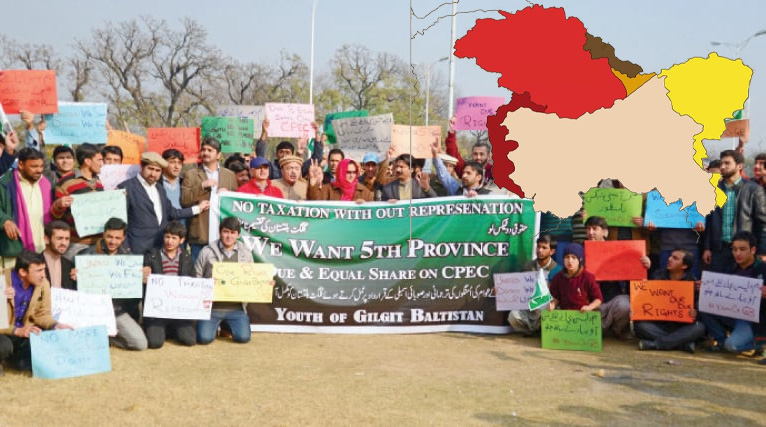
Pakistan Occupied Jammu and Kashmir (POJK) and Gilgit-Baltistan (GB) are regions in Pakistan that have long been neglected in various domains such as education, youth unemployment, poverty, infrastructure, healthcare, and food security. This neglect has led to significant socio-economic challenges for the residents of these areas. Highlighting the extent of neglect and its impact on the people of POJK and GB is the most crucial step that society demands at present.

Since Pakistan’s independence, GB has lacked political representation in the national parliament. Despite its historical struggle to end this inequality with other regions, GB does not have seats in either of the two houses of the Pakistan Assembly.

Education is a fundamental right and a crucial factor for socio-economic development. However, the education sector in POJK and GB has been severely neglected. According to the Pakistan Education Statistics 2021-22 report, there are significant disparities in the availability of essential facilities such as toilets, potable water, and boundary walls in schools across different regions of Pakistan. POJK and GB are among the regions with the lowest access to these basic facilities. The lack of infrastructure in schools is a major barrier to education in these regions.

Many schools operate without proper buildings, and students often have to study in makeshift classrooms or under open skies. This not only affects the quality of education but also discourages parents from sending their children to school, especially girls. As a result, the literacy rate in these regions remains low compared to the national average.

Moreover, there is a significant shortage of qualified teachers in POJK and GB. The existing teachers are often underpaid and lack proper training, which affects their ability to deliver quality education. The government has made some efforts to address these issues, such as the establishment of Daanish schools in POJK and GB, but these initiatives are not enough to meet the growing educational needs of the population.

Youth unemployment is another major issue in POJK and GB. The unemployment rate in POJK is double that of Pakistan’s other provinces. The lack of job opportunities forces many young people to migrate to other parts of the country or abroad in search of better prospects. This brain drain further hampers the development of these regions. The situation is particularly dire for women and young people. The female labour force participation rate in POJK is only 7.9%, compared to the national average of 23%. Similarly, the youth unemployment rate in POJK is 27%, indicating systemic inequities within the labour market.

The lack of employment opportunities not only affects the economic well-being of individuals but also contributes to social issues such as crime and drug abuse. In GB, the situation is slightly better due to the presence of a highly educated workforce in the Information and Communications Technology (ICT) industry. However, many young people still struggle to find decent jobs and are forced to settle for low-paying, dead-end jobs. The government needs to create more job opportunities and provide vocational training to equip young people with the skills needed for the job market.

Poverty is a pervasive issue in POJK and GB. According to the Pakistan Poverty Alleviation Fund, the proportion of the population living below the poverty line in these regions is significantly higher than the national average. The multidimensional poverty index, which takes into account factors such as education, health, and living standards, also indicates high levels of poverty in these regions. The high poverty rates are a result of various factors, including the lack of economic opportunities, poor infrastructure, and limited access to basic services.

Many households in POJK and GB rely on subsistence farming and face challenges such as low agricultural productivity and limited access to markets. The government has implemented some poverty alleviation programs, such as the Interest-Free Loan Programme, but these initiatives have not been sufficient to address the root causes of poverty.

The lack of basic infrastructure is a major barrier to development in POJK and GB. The regions suffer from poor road networks, inadequate water supply, and limited access to electricity. The mountainous terrain and harsh weather conditions further exacerbate these challenges. The government has announced several infrastructure development projects such as the construction of the Shounter tunnel and the establishment of a bus service between POJK and GB.

However, these projects have faced delays and funding issues along with giving contracts to outside contractors which suppresses local marginal contractors, and their impact on the ground has been limited. The lack of infrastructure not only affects the quality of life of the residents but also hinders economic activities and access to essential services.

Healthcare services in POJK and GB are inadequate and fail to meet the needs of the population. The regions have a limited number of healthcare facilities, and those that exist are often poorly equipped and understaffed. Overall healthcare infrastructure remains insufficient. The lack of healthcare services has serious implications for the health and well-being of the residents. Many people have to travel long distances to access medical care, and the cost of treatment is often prohibitive. The government needs to invest in healthcare infrastructure and ensure that quality healthcare services are accessible to all residents of POJK and GB.

Food security is a major concern in POJK and GB. The regions are heavily dependent on government subsidies for basic necessities such as wheat which started in 1970. The recent reduction in wheat subsidies, declared by the GB Chief Minister due to pressure from the federal government, has led to widespread protests and increased food insecurity. The rugged terrain and limited agricultural land make it difficult for the regions to achieve self-sufficiency in food production.

Once upon a time, wheat was a budget hero at 20 PKR per kilo (that’s a mere 7 cents in USD). But then—plot twist!—the government cranked up the price to 36 PKR (13 cents). An 80% leap! The government needs to address the food crisis by restoring subsidies and promoting local agricultural production. This can be achieved through initiatives such as providing farmers with access to modern farming techniques and improving access to markets. Ensuring food security is essential for the overall development and well-being of the residents of POJK and GB.

The neglect of POJK and GB in various domains such as education, youth unemployment, poverty, infrastructure, healthcare, and food security has had serious implications for the socio-economic development of these regions. The government needs to take urgent and comprehensive measures to address these issues and ensure that the residents of POJK and GB have access to basic services and opportunities for a better quality of life. By investing in these regions and addressing their unique challenges, Pakistan can promote inclusive and sustainable development for all its citizens.
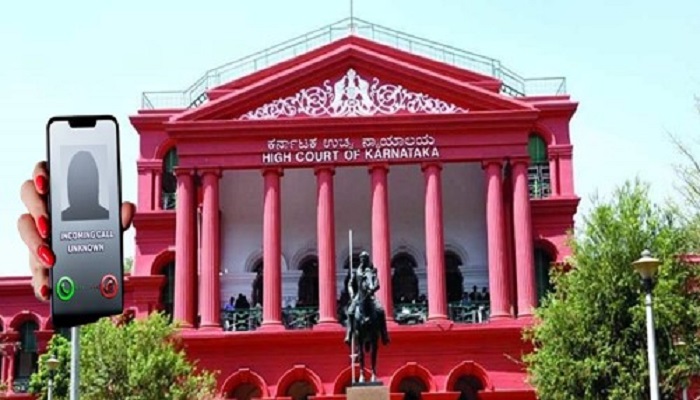
“Judges are also humans”: Karnataka High Court recalls order which stated only watching child pornography not a violation under IT Act

On Friday, 19th July, the Karnataka High Court rescinded its 10th July ruling which stated that the Information Technology Act does not criminalise merely viewing child pornography. Judge M. Nagaprasanna’s division bench withdrew the order and said that on 18th July the bench had “misread” Section 67B (b) while pronouncing the initial judgment.

“We are also human beings and mistakes do happen on our side. There is always an opportunity for corrections. An inquiry will be done in this regard and a new order will be delivered. This order is cancelled,” the bench conveyed.

It also noted that the order was passed under Section 67B (a) of the IT Act, following a petition filed in this regard by the state government. According to the IT Act’s Section 67B (b), creating text or digital pictures, collecting, searching, browsing, downloading, making advertisements, circulating, exchanging, or picturising children in an obscene, indecent manner is open for investigation under the section.

The court’s reconsideration came after a previous ruling that had granted relief to a person who had been charged with spending fifty minutes viewing child porn on the internet. A complaint was filed against the petitioner for distributing or sending content that included children in violation of Section 67B of the IT Act. The petitioner’s attorney contended that since his client only visited the website and did not disseminate anything, the section was not applicable in the case.

Judge Nagaprasanna dismissed the charges against N Inayatullah and stated that one doesn’t turn into an accused by only watching pornographic content online. He added that the material must be published or distributed for prosecution under Section 67B of the Information Technology Act. The court’s ruling drew heavy criticism. A recall application was filed with the court by the state administration following which the bench discovered that it had not considered Section 67B (b) of the Information Technology Act as it rendered the decision.

According to the Karnataka High Court, Section 67B (b) is pertinent to the matter at hand. It further clarified that the original decision’s omission to take this section into account was an error. The proceedings have been quashed as a result. Judge M Prasanna of the High Court then cancelled the earlier directive.

The petitioner, Inayatullah, had looked at pornographic pictures of kids on his phone on 23rd March 2023, between 3:30 and 4:40 pm and a complaint was filed to the Bangalore Cyber Crime Station of the Bangalore City CID unit by the National Crime Records Bureau (NCRB). NCRB obtained information via the portal established by the national government to combat sexual abuse against women and children.

A case was filed against the perpetrator under Section 67B(b) of the Information Technology Act on 3rd May 2023, at the Bangalore Cyber Crime Police Station, following verification of the information. Inayatulla was identified as the individual who checked the obscene video of children. The petitioner filed a request before the High Court to have the lawsuit dismissed.

A case of a similar nature had previously reached the Supreme Court. During the hearing in April of this year, the apex court declared that visiting child pornographic websites was not illegal but the use of kids in such videos is a crime. The observation was made while reserving the order on a plea challenging the Madras High Court judgment that stated that downloading child pornography was not an offence under the Protection of Children from Sexual Offences (POCSO) Act.

Judge N Anand Venkatesh of the Madras High Court during a hearing on 11th January 2024, pronounced that downloading and viewing child porn in private is not unlawful under the IT (Information Technology) Act and POCSO (Protection of Children from Sexual Offenses) Act. A case under POCSO will only be brought if a minor is used for pornography.

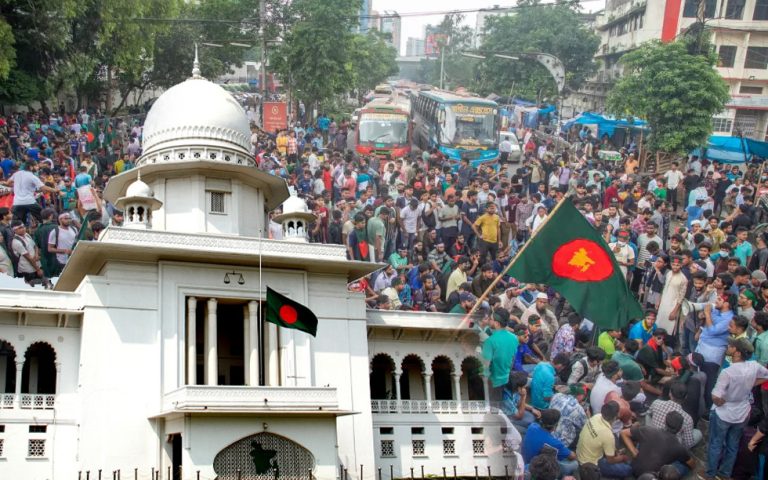
Bangladesh Supreme Court revokes High Court order on govt job quota that led to deadly protests, reduces reservation from 56% to 7%

In a significant decision, the Bangladesh Supreme Court has scrapped most of the quotas in govt jobs amid violent protests against the reservations for grandchildren of freedom fighters. The entire country is burning as students are protesting against a recent High Court order restoring the 30% quota in govt jobs for children and grandchildren of independence war veterans.

Notably, over 130 people have died in violent protests, colleges and universities have shut down, and internet services have been mostly suspended due to the protests. The protests started after the High Court on 5 June reinstated the 30% which was abolished by the govt in 2018. The HC had said that the circular abolishing reservation for the descendants of freedom fighters in class 1 and 2 jobs was illegal.

This led to massive protests by students, as this left only 44% of jobs in the unreserved category. Following this, the Bangladesh govt appealed against the High Court order in the Supreme Court, and now the Supreme Court has reportedly abolished most of the reservation, keeping only 7%.

The Supreme Court on Sunday agreed with the government’s petition and ruled that the High Court order was illegal, as per Attorney General AM Amin Uddin. As per the apex court order, now there will be 5% reservation for children of independence war veterans, and there will be only a 2% reservation for other categories.

This means, 93% of the govt jobs will be filled up based on merit, not based on quota. After the HC verdict, 56% of jobs were reserved, which included disabled individuals (1%), indigenous communities (5%), women (10%), people from underdeveloped districts (10%) and families of the freedom fighters of the 1971 Bangladesh Liberation War (30%).

This means the Supreme Court not only reduced the 30% quota for families of the freedom fighters to 5%, but the 26% reservation in the other 4 categories has been reduced to just 2%. After this verdict, the top court urged student protesters to return to their classes.

Anyone who harms us will pay a heavy price: PM Netanyahu after Israel attacks Houthi-controlled Yemen port which left 3 people dead, injured 87 others

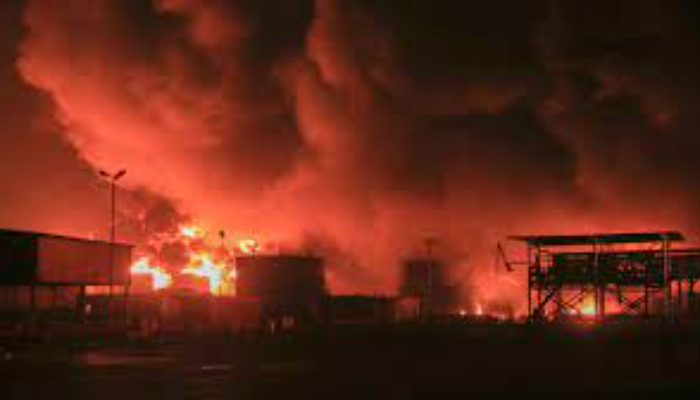
On 20th July Israeli warplanes killed three people and left dozens of others injured in the Houthi-controlled Yemeni port of Hodeida, a day after the Iran-backed outfit claimed a deadly attack on Tel Aviv. According to Israeli Prime Minister Benjamin Netanyahu, the Israel Defense Forces (IDF) responded directly to the Houthi drone attack on Tel Aviv on 19th July which killed a 50-year-old Israeli. The IDF stated that its fighter jets hit “military targets of the Houthi terrorist regime” in the vicinity of Hodeidah Port. Israeli officials asserted that this was their first strike in Yemen.

Houthis have launched hundreds of missiles and drones on Israel since last year which were intercepted until the latest attack that killed one person and injured at least 10. It struck just yards from a United States Embassy branch office after which they declared that Tel Aviv was no longer safe and would be the new target for the group. The Houth terrorists responded to the strikes by threatening to “plague” Israel with more assaults. According to Houthi-run Al Masirah TV, the attack aimed at the port’s oil facilities on Yemen’s west coast, resulted in at least three fatalities and 87 injuries, the majority of them with “severe burns.”

Prime Minister Benjamin Netanyahu declared later in the evening that the port was targeted because it was utilized “for military purposes.” He highlighted that the hit “makes it clear to our enemies that there is no place that the state of Israel’s long arm will not reach.” He voiced that his nation will defend itself “by all means.” In a televised speech, he forewarned, “Anyone who harms us will pay a very heavy price for their aggression,” alleging the port served as a point of entry for Iranian weaponry.

Furthermore, he urged the international community to increase pressure on Tehran and its proxies, the Houthis, Hamas, and Hezbollah in order to help safeguard international trade channels. “Whoever wants to see a stable and safe Middle East needs to stand against Iran’s axis of evil, and support Israel’s struggle against Iran and its proxies.”

According to Yoav Gallant, the minister of defence, his nation wanted to make a statement to the Houthi movement. He declared, “The blood of Israeli citizens has a price,” and warned further action against the Houthis “if they dare to attack us.” He highlighted, “The fire that is currently burning in Hodeidah is seen across the Middle East and the significance is clear. The Houthis attacked us over 200 times. The first time that they harmed an Israeli citizen, we struck them. And we will do this in any place where it may be required.”

The Israeli military informed that on the 21st of July morning, it had intercepted a surface-to-surface missile fired from Yemen before it entered the country’s airspace. It added that Israel’s Red Sea port of Eilat activated air sirens “in response to the possibility of falling shrapnel.”

Mohammed Abdulsalam, a Houthi spokesman, described it as a “brutal Israel aggression against Yemen.” The Israeli bombings, he alleged, were intended to put pressure on the Houthis to cease their assistance for the Palestinians in Gaza, which he insisted would not happen. Israel reportedly attacked a neighbouring power plant and oil storage facilities along the coast, according to the Houthi-run government in Sanaa.

Yehya Saree, the spokesperson for the Houthi army, promised to retaliate to the attack, stating that the Houthis would not think twice before hitting Israel’s “essential targets” and cautioning that Tel Aviv, a significant city that is home to numerous diplomatic missions, was still unsafe. “We have prepared for a long war with this enemy until the aggression stops and the blockade on the Palestinian people is lifted.”

“After nine months of continuous aerial attacks by the Houthis in Yemen toward Israel, IAF [Israeli Air Force] fighter jets conducted an extensive operational strike over 1,800km (1,118 miles) away against Houthi terrorist military targets” in the area of the port of Hodeidah. The IDF is capable of operating anywhere required and will strike any force that endangers Israelis,” informed IDF in a statement.

According to IDF spokesman Daniel Hagari, the attacks were also a reaction to the approximately 200 rockets that the terrorist group had fired in Israel since the start of the conflict with Hamas in Gaza in October. Israel had notified allies in advance of the strike, which it revealed was executed by Israeli F-15 aircraft, that made a safe return.

Meanwhile, reports of the strikes were of “deep concern” to Secretary-General Antonio Guterres of the UN, according to a UN statement. “The Secretary-General calls on all concerned to avoid attacks that could harm civilians and damage civilian infrastructure,” it read.

Landslide in Rudraprayad on Kedarnath Yatra route kills 3 pilgrims, 8 injured

0

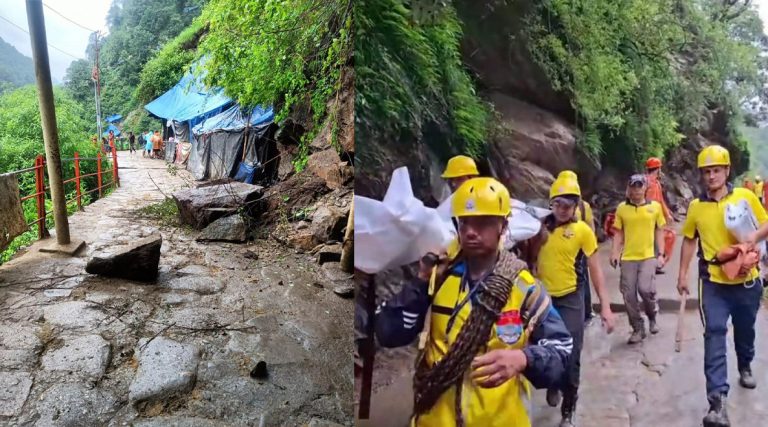
Three people are dead and eight were injured in a landslide in the Chidwasa region of Rudraprayad district of Uttarakhand on Sunday. The incident occurred on the Kedarnath Yatra route this morning when the devotees were on their way to Kedarnath Dham from Gaurikund on foot.

The District Control Room in Rudraprayag informed the State Disaster Response Force team that some people have been trapped under debris due to a landslide in that region on the Kedarnath Yatra route.

On receiving the information, the SDRF team immediately reached the spot with the necessary rescue equipment and carried out rescue operations.

SDRF evacuated eight injured people and took them to the hospital. Three people died on the spot and SDRF handed their bodies over to the district police.

Speaking on this incident, Uttarakhand Chief Minister Pushkar Singh Dhami took to X to express his grief and his condolences to the family of the deceased.

“The news of some pilgrims getting injured due to debris and heavy stones falling from the hill near the Kedarnath Yatra route is very sad. Relief and rescue work is going on at the site of the accident, I am constantly in touch with the officials in this regard. I have given instructions to provide better treatment to the people injured in the accident immediately. May God grant the departed souls a place in His feet and give strength to the bereaved family to bear this immense sorrow,” Dhami said.


(This news report is published from a syndicated feed. Except for the headline, the content has not been written or edited by OpIndia staff)

Pakistan economy is very fragile: Global financial report on the country facing economic collapse

0

In a recent report, Business Monitor International (BMI), the Fitch Group has said that there is no likelihood of the Tehreek-e-Insaaf chairman Imran Khan being released from jail anytime soon.

Dawn News quoted BMI as saying “Despite several successful legal appeals, opposition leader Imran Khan will remain imprisoned for the foreseeable future.”

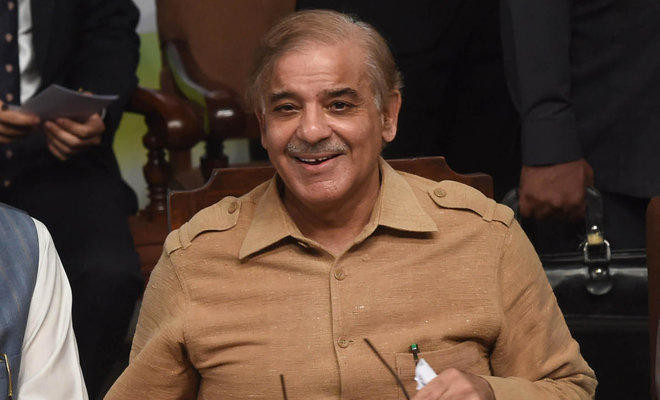
The report has predicted that the Shehbaz Sharif government is likely to last out at least the next 18 months as it tries to push through fiscal reforms mandated by the IMF.

“We expect that the Pakistan Muslim League-Nawaz (PML-N)-led government will remain in power over the coming 18 months and will succeed in pushing through with International Monetary Fund (IMF) mandated fiscal reforms.”

However, the analysis made some dire predictions for the Pakistani economy saying that it remains extremely fragile and that growth was weighted to the downside.

“The risks to our growth outlook are heavily weighted to the downside. Pakistan’s economy remains very fragile in the face of external shocks,” the BMI report was quoted as saying.

“Given that 40 per cent of Pakistanis work in agriculture, another flood or drought would pose a significant risk to the economy. The country’s fragile political situation could also derail the recovery,” the report added.

With the Pakistan government now speaking about contemplating a ban on Imran Khan’s party the Pakistan Tehreek-e-Insaaf, Pakistan could well find itself in the thralls of another series of protests. BMI in its report warns that such a scenario would be disastrous for Pakistan.

“While Pakistan’s establishment parties were successful in creating a new coalition government following the February election, the strong electoral performance of independent candidates backed by jailed opposition leader Imran Khan suggests that there is significant dissatisfaction with the current political elite. Another round of protests in urban areas could disrupt economic activity,” the BMI report stated.

The BMI report also said that Pakistani policy makers were likely to miss their ambitious budget targets, though they would manage to narrow the deficit.

(This news report is published from a syndicated feed. Except for the headline, the content has not been written or edited by OpIndia staff)

There were 3 Muslim-majority districts after independence, now there are 9, how is this happening in West Bengal: Union Minister Sukanta Majumdar

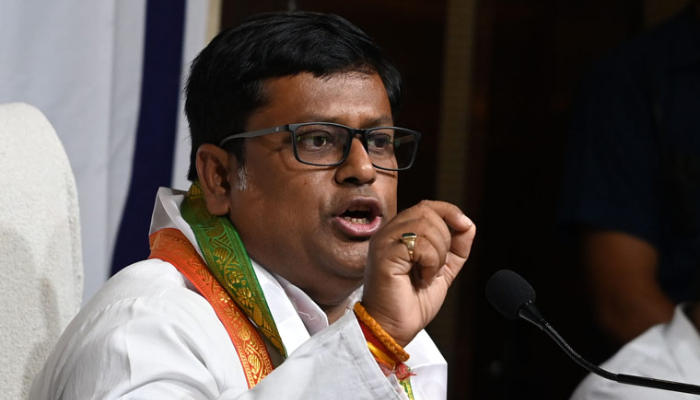
Union Minister and President of West Bengal Bharatiya Janata Party Sukanta Majumdar has come in support of Assam Chief Minister Himanta Biswa Sarma’s recent remark that Assam will become a Muslim-majority state by 2041, and stated that the demographic change is not through biological means but there are other reasons behind it. As per a Jagran report, he asserted, “The Chief Minister of Assam is right. The situation in West Bengal is more or less the same. The infiltration has also altered the population here.”

Majumdar pointed out that in the 70 to 75 years after independence, there have been demographic shifts not just in Assam but throughout eastern India, particularly in the border regions. The union minister added, “The fact that this population has not grown biologically should be a matter of concern for all. Children would have been born, raised and granted citizenship in the nation if there had been a natural increase in the numbers. There wouldn’t have been a reason to worry if the population profile had transformed in this manner. These people have come from outside.”

He further highlighted, “Demography has been altered deliberately and it has been planned from somewhere outside the country. West Bengal has nine districts presently that are Muslim majority, compared to three that were predominantly Muslim both before and after independence. How is this happening? Where is it coming from and why is the population expanding at such a rapid rate? This is not how a rise in population unfolds organically.”

Himanta Biswa Sarma, on 19th July, forewarned that the state will turn into Muslim-majority by 2041. He revealed that the number of Muslims was increasing by about 30% every ten years. According to him, “statistical sampling” indicates that Muslims now make up 40% of the state’s population. “The increase in the population of Muslims in Assam is a statistical fact. The rate of population increase of Muslims is much more than of Hindus and at this rate, they will be a majority by 2041.”

He unveiled that the number of Hindus is rising by around 16 per cent in comparison to the Muslim population growth during the same period. “Hindu population has increased by 16 per cent. Muslims constituted 1.40 crore of Assam’s population in 2011. There is an increase of 30 per cent in the Muslim population every 10 years. In every decade, the Muslim population is outstripping the Hindu population by 16 per cent. In every decade, there is an addition of 22 lakh Muslim population.”

Madhya Pradesh: “It is customers’ right”, Ujjain Mayor directs shops to show names of owners prominently

On Sunday, 21st July, Ujjain Municipal Corporation’s Mayor Mukesh Tatwal issued orders directing shopkeepers to prominently show the name and phone number of the owner outside the shop. The directive came shortly after Uttar Pradesh government and Uttarakhand government issued similar orders for the shops that fall on the Kanwar Yatra route. In case anyone fails to obey the Mayor’s orders, there is a provision of a fine of Rs 2,000 for the first violation and Rs 5,000 for the second violation.

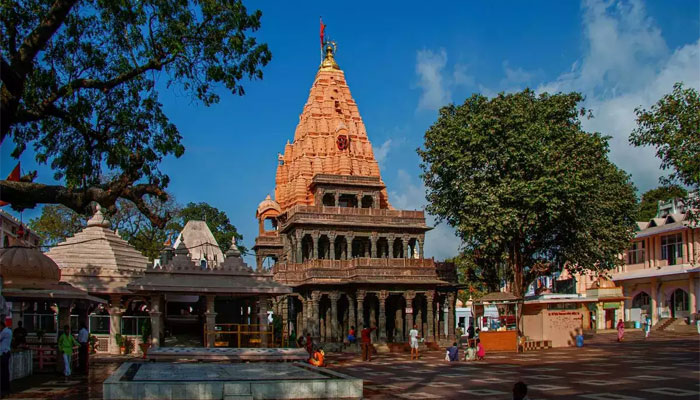
In a statement, Tatwal said, “The purpose of the order is not to target Muslim shopkeepers but to ensure security and transparency”. The month of Sawan starts on 22nd July 2024. Ujjain, the holy city of Mahakal, witnesses a sea of devotees from all over the world during the holy month of Sawan who visit the city to offer prayers at Mahakal Temple. Madhya Pradesh’s chief minister Mohan Yadav is also from Ujjain.

Notably, the mayor-in-council earlier approved a proposal to allow shopkeepers to display their names in the shops. It was then sent to the state government for objections and formalities. He said, “All the formalities have already been completed. The implementation was delayed as the nameplates initially had to be of the same size and colour. Now, we have relaxed these conditions. Displaying the names and mobile numbers of shopkeepers will now be sufficient.”

He further stressed that it enhances customer safety. The directive is also included in the MP Shop Establishment Act and Gumasta License. He said, “Ujjain is a religious and holy city. People come here with religious faith. They have the right to know about the shopkeeper from whom they are buying goods. If a customer is dissatisfied or has been cheated, then knowing about the shopkeeper can solve his problem.”

Interestingly, shopkeepers in Bodh Gaya have already started putting up display boards with shopkeepers’ names given the pilgrimage devotees undertake to Mahabodhi Temple during the month of Saavan.

UP and Uttarakhand governments issue orders to show the names of shopkeepers

It all started with the orders by the Muzaffarnagar administration directing shopkeepers and cart owners to prominently display the names of the owners and workers. The aim was to avoid any dispute during the Kanwar Yatra. Left-liberals and Islamists objected to the orders calling it discriminatory. Following the controversy, Chief Minister of Uttar Pradesh, Yogi Adityanath, stepped in and issued orders to show the names of shopkeepers and cart owners across Kanwar Yatra Marg. Taking inspiration from UP, the Uttarakhand government also issued similar orders.

“I took a bullet for democracy”: Former US President Donald Trump in his first rally after assassination attempt

“I took a bullet for democracy,” former US President Donald Trump said on Saturday, addressing a first rally after he was shot in the ear during an assassination attempt on his life last week, The Hill reported.

Trump returned to the campaign trail in Michigan’s Grand Rapids, days after accepting the Republican nomination for president at the Republican National Convention.

“I don’t want to know anything about it. But what they do is misinformation and disinformation, and they keep saying he’s a threat to democracy,” Trump continued, referring to Democrats. ‘I’m saying, ‘What the hell did I do for democracy? Last week, I took a bullet for democracy,” Trump said.

Speaking about Project 2025, Trump said, “They’re seriously extreme, but I don’t know anything about it.”

Democrats have tried to tie Trump to Project 2025, a conservative policy platform organised by the Heritage Platform, whose contributors include former Trump administration officials, according to The Hill report. Former US President and his campaign have denied any support for Project 2025.

During the rally, he said, “I stand before you only by the grace of Almighty God.” Trump was wearing a smaller beige coloured bandage on his right ear at his rally, different from the larger white one he wore at the Republican National Convention earlier this week, according to The Hill report.

It was Trump’s first rally after surviving an assassination attempt at a rally in Pennsylvania last Saturday. He was shot in the ear and was escorted off the stage by US Service agents. One attendee and the shooter died during the attack, while two others were injured in the shooting incident in Pennsylvania.

Many Trump supporters who came to attend the rally were wearing shirts featuring the image of Trump holding his fist in the air and telling his voters to “fight” as Secret Service agents were escorting him off the stage after the shooting incident in Pennsylvania, CNN reported.

Many of the merchandise tables outside the venue in Michigan’s Grand Rapids were selling shirts to attendees as they waited in queues to enter the indoor arena.

At the same rally in Michigan, Republican Vice presidential nominee JD Vance slammed US Vice President Kamala Harris, questioning her achievements and defending his own loyalty to the country, CNN reported.

Vance said, “There’s some bad news actually, Vice President Kamala Harris, she doesn’t like me.”

“Kamala Harris said something to the effect that … I have no loyalty to this country. Well, I don’t know, Kamala, I did serve in the United States Marine Corps and build a business. What the hell have you done other than collect a check?,” Vance said.

It was Vance’s first rally with former US President Donald Trump after being selected as his running mate. Vance’s remarks came after Kamala Harris earlier this week criticised him for saying he would not have certified the election results of 2020.

Harris even compared Vance to former US Vice President Mike Pence, saying that Vance “would have carried out Trump’s plan to overturn the 2020 election.”

In a video released on Wednesday, Harris said, “Donald Trump has picked his new running mate: JD Vance. Trump looked for someone he knew would be a rubber stamp for his extreme agenda.” She further said, “Make no mistake: JD Vance will be loyal only to Trump, not to our country,” ABC News reported.

In his remarks at the rally, Vance rejected the media’s assessment that Trump and the Republican agenda are “radical” and “dangerous,” CNN reported. He was given a warm welcome in Michigan.

(This news report is published from a syndicated feed. Except for the headline, the content has not been written or edited by OpIndia staff)

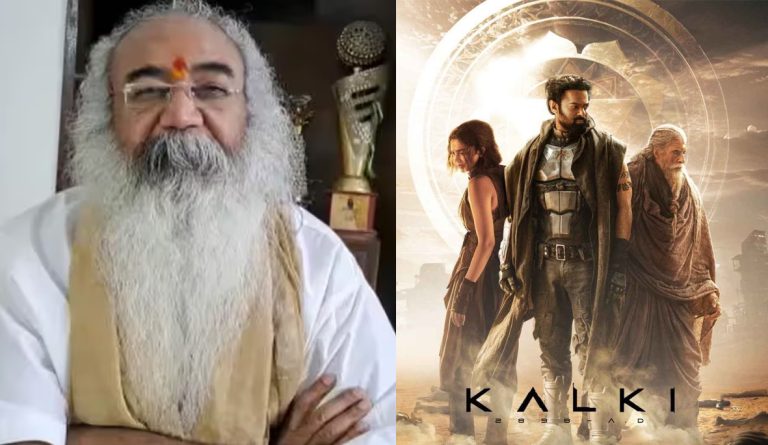
Acharya Pramod Krishnam sends legal notice to producers and actors of ‘Kalki 2898 AD’ including Amitabh Bachchan alleging the movie has hurt religious sentiments of Hindus

Former Congress leader Acharya Pramod Krishnam on Saturday sent a legal notice to the producers and actors of the recently released movie ‘Kalki 2898 AD’.

The notice has been sent to Bollywood legendry actor Amitabh Bachchan and South film industry fame, Prabhas along with others.

Acharya Pramod Krishnam, while speaking over his actions, said that the movie has hurt the religious sentiments of Hindus.

“India is a land of emotions, faith, and devotion. The values of Sanatana Dharma should not be tampered with. The scriptures of Sanatana should not be altered. Lord Kalki Narayan is at the center of our faith. He is considered the final incarnation of Lord Vishnu. Much is written about the incarnation of Kalki in the Puranas, and based on this, PM Modi laid the foundation stone of Shri Kalki Dham on February 19,” he said.

“This film goes against what is described in our scriptures. This film is hurting our religious sentiments. Therefore, we have noted some objections and are waiting for a response. Playing with the sentiments of Hindus has become a pastime for filmmakers. Saints are portrayed as demons. Freedom of expression does not mean that you can play with our faith,” Acharya Pramod Krishnam added.

The notice has been sent by Ujjawal Anand Sharma Advocate of the Supreme Court of India on behalf of Acharya Pramod.

“Your Movie has changed the basic concept about Lord Kalki, from what has been written and explained in Hindu Puranic Scriptures and for the said reasons, the portrayal and depiction of the story of Lord Kalki is wholly inaccurate and also blatantly disrespectful to these sacred texts, which are central to the religious beliefs and practices of a vast number of devotees, numbering in the hundreds of crores,” the notice said.

“Such a depiction has already led to confusion and further has the propensity to irretrievably tarnish the mythology and ethos of Lord Kalki in the hearts and minds of devout Hindus; which will lead to misunderstanding, misinterpretation and subsequent erosion of the Hindu faith, thereby causing extreme distress to the faith and religious sentiments of Our Client, and needless to say, of the wider Hindu community at large,” it added.

Directed by Nag Ashwin, the post-apocalyptic film is inspired by Hindu scriptures and set in the year 2898 AD. Amitabh Bachchan, Deepika Padukone, Kamal Haasan, Prabhas and Disha Patani are part of the film.

The film is a mythology-inspired sci-fi extravaganza set in the future. Actors Vijay Deverakonda, Dulquer Salmaan and Mrunal Thakur have cameos in the film.

‘Kalki 2898’ was released in theatres on June 27.


(This news report is published from a syndicated feed. Except for the headline, the content has not been written or edited by OpIndia staff)