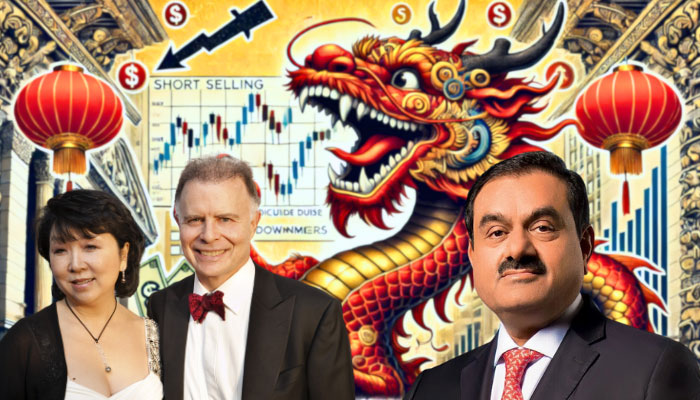
In a recent twist of events, the Securities and Exchange Board of India’s (SEBI) notice to Hindenburg Research revealed significant details about how the Adani Group was targeted. The revelations involved Kingdon Capital, which allegedly used Kotak Mahindra Bank to short-sell Adani. Hindenburg’s response to SEBI has disclosed that Hindenburg and Kingdon Capital partnered to orchestrate a strategic move against Adani Group and benefitted from short-selling Adani stocks.
The disclosure has put a spotlight on Kingdon Capital, its founder Mark Kingdon and the complex financial manoeuvres in play. Kotak has however denied the allegations.
Offshore fund and investment manoeuvres
The focal point of the scrutiny is that on Kingdon Capital’s recommendation, Kotal Mahindra Bank created an offshore fund named the Kingdon India Opportunity Fund. It served as a critical vehicle for Kingdon Capital to engage in short selling of Adani Group’s shares.
It has come to light that the creation and utilisation of this fund was part of sophisticated strategies employed by Kingdon Capital to leverage financial markets to their advantage. Kotal Mahindra Bank facilitated this offshore fund which further complicates the narrative and prompts questions about the bank’s involvement and due diligence processes. The implications of these manoeuvres extend beyond just financial gains for the stakeholders involved and touch upon regulatory, ethical, and geopolitical dimensions.
Here’s a huge smoking gun in the sordid episode of the short sale of #Adani shares by #Hindenburg. Pursuant to #SEBI's notice to Hindenburg, the following facts emerge: 1. Hindenburg – a research agency – was hired by American businessman #MarkKingdon to prepare a report on the… https://t.co/yar0uEuarm
As pointed out by Mahesh Jethmalani, Kingdon India Opportunity Fund took large short positions in Adani shares through the Mauritius route before the Hindenburg report was published. The Rajya Sabha MP disclosed that funds amounting to $40 million were provided by Kingdon’s Master Fund, owned by the Kingdon family.
The man behind Kingdon Capital
Mark Kingdon is the founder and owner of Kingdon Capital. He is a prominent figure in the investment community. Kingdon’s background and connections add layers of complexity to the story that has been unfolding for the last week. Anla Cheng, a Chinese American woman, is the wife of Mark Kingdon. She is a senior partner at the private equity firm Sino-Century and the founder of the New York-based news platform SupChina.
Her career includes significant roles in investment banking including her tenure at at Robert Fleming & Co. and her positions on the Committee of 100 and the board of the Columbia Global Centers, East Asia. The affiliations that Cheng has can be attributed to Kingdon Capital as an extension at the intersection of influential financial, cultural, and geopolitical networks. This background raises questions about potential influences and interests shaping Kingdon Capital’s strategies and actions in global markets.
Investigations and allegations
Notably, Anla Cheng is facing an investigation by the US Senate for her involvement with SupChina which has now been renamed to The China Project. The focus of the investigation is on the allegations that SubChina harboured Chinese Communist Party agents, raising serious concerns about foreign influence and espionage.
The investigation against Cheng began in 2022. It cast a shadow over her professional activities, and by extension, the operations of Kingdon Capital’s operations. The possible implications of the allegations against Cheng are far-reaching as they touch upon issues of national security, economic espionage, and the integrity of financial markets. The investigation’s outcomes could have significant ramifications for Cheng, Kingdon Capital, and their associated networks.
The Haifa Port Deal: A possible motive
There is one critical element to the narrative which revolves around the Hafia Port Deal which Adani Group won. Hafia Port is located in Israel. Adani Ports and Israel’s Gadot outbid Chinese competitors for this strategic port privatization deal. The Adani Group’s victory to take control of the port defeating the Chinese represents a significant geopolitical and economic win for India and a corresponding loss for China. Haifa is one of the largest sea ports in Israel.
This development has fueled the speculation that the attack on Adani Stocks could be a retaliatory action by China using a short-selling campaign against the business group. The Haifa port deal is not just a commercial victory; it strengthens India-Israel business ties and enhances India’s strategic position in the region.
The possibility of China using its position in the financial markets and partnerships with entities like Kingdon Capital to retaliate against Adani highlights the interconnectedness of global business, finance, and geopolitics.
Speculation and retaliation
It has to be noted that so far, it is just speculation that there might be a connection between Kingdon Capital, Hindenburg Research, and the broader geopolitical context involving China and Adani Group. However, the speculations are compelling. The theory that China might be using financial manoeuvres as retaliation for losing the Haifa port deal is plausible. However, it requires in-depth investigation. There is a need for thorough analysis and transparency in uncovering the full scope of these activities. As more information becomes available, the motivations and implications of these actions will likely become clearer.
The revelations about Kingdon Capital’s involvement in short-selling Adani Group shares using offshore funds by Kotak Mahindra Bank and the ongoing investigations into Anla Cheng’s activities dive into a complex and multifaceted story. It highlights how complex and sophisticated the high-stakes financial strategies are and how they can have long-term effects on geopolitics. Notably, since Hinderburg initiated an attack on Adani Group, the business house has found itself in the defensive mode as it has to come up with explanations to counter the long list of allegations against it.
Questions that need answers
After these revelations, several questions have emerged that need answers. First is how the Kotal Mahindra Bank’s collaboration with Kingdon Capita took place, and who facilitated it. The Hindenbard report was amplified by a larger number of politicians, and it is needed to whether they were party to the conspiracy. It will be interesting to know whether Kotak Mahindra went ahead with the tie-up with Kingdon Capital even after known the China connection and the probe in the USA.
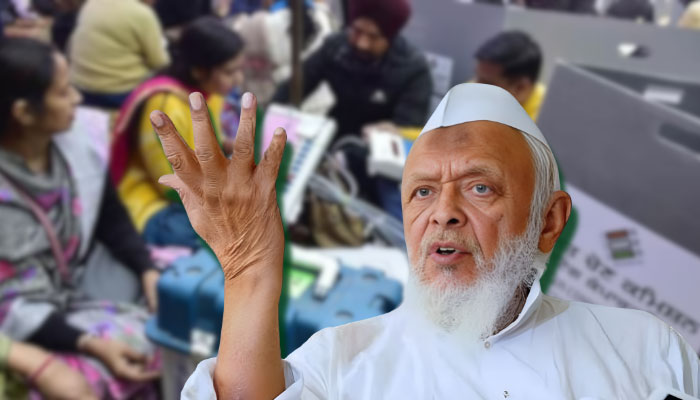
On 3rd June, Jamiat Ulema-e-Hind chief Maulana Arshad Madani said that the results of Lok Sabha Elections 2024 were the outcome of strategic voting by minorities, specifically Muslims, aimed at defeating the Bharatiya Janata Party (BJP).
He asserted that the General Election results rejected the politics of “hatred and communalism” and attributed the outcome to the “wise voting” by the Muslim community. He said, “Had the voters not voted wisely, the results could have been different,” he said.
Madani emphasised that the parties, particularly the Congress Party, have the moral duty to “protect the constitution and democracy” while “fighting for the rights of the oppressed minorities”. He also lauded Congress leader Rahul Gandhi and Samajwadi Party leader Akhilesh Yadav for their “secular stance”. He claimed that it was their so-called secular stance that garnered trust and support from the “secular-minded” voters. He also claimed that Muslims are “patriots” and they love the country more than their lives.
According to Madani, there has been a systematic effort to render the Muslim votes ineffective in the elections and marginalise the community altogether. However, the recent elections, according to him, saw Muslims voting en-masse to “uphold secularism, democracy and the constitution.” He highlighted the need for “secular parties” to continue their struggle for the rights of the Muslim community both inside and outside the Parliament.
Madani pointed out that there is a declining trend of Muslim representation in parliament and legislative assemblies. He claimed that it could be attributed partly to the ‘strategic’ reservation of Muslim-majority constituencies for Scheduled Castes and Scheduled Tribes.
Reflecting on the 2021 meeting with RSS Chief
In stark contrast to the recent statements by Madani, he had praised the Rashtriya Swayamsevak Sangh (RSS) and its chief, Mohan Bhagwat in 2021. At that time, he had welcomed Bhagwat’s comments on the shared ancestry of Hindus and Muslims in India and suggested that RSS was moving towards a more inclusive ideology.
According to reports, Madani said that he likes the statement made by Mohan Bhagwat. He said that in India, there are Gurjar, Rajputs and Jats, for example, amongst Hindus and Muslims both, therefore, there is nothing wrong in saying that Hindus and Muslims in India share the same ancestry. He is further claimed to have said that RSS is “changing its old ideology and is now on the right track”.
Arshad Madani believes Taliban is “good”
Arshad Madani, the principal of Darul Uloom Deoband who is also president of Jamiat Ulema-e-Hind doesn’t believe the Taliban as a terror outfit, and, he adorns Taliban and Talibanis as freedom fighters. In an exclusive interview given to the Dainik Bhaskar, Madani said that if fighting against subjugation is terrorism then by this logic Mahatma Gandhi, Jawaharlal Nehru and Maulana Hazrat Shekhuddin were also terrorists.
It must be noted that the Taliban is believed to have drawn inspiration from the Deobandi movement which originated in Uttar Pradesh’s Deoband. As the Taliban has come to conquer Afghanistan a large number of Muslim scholars, politicians and leftist media are trying for the makeover the image of the Taliban as ‘Good Taliban.’ “Anybody fighting against subjugation we don’t consider them as a terrorist. We clap if the Taliban are fighting for independence because everybody has the right to independence. If this is terrorism then Gandhi, Nehru and Shekhuddin were also terrorists, all those who fought against the British government were terrorists,” Dainik Bhaskar quoted Madani saying.
On 3rd July, the Tamil Nadu government informed the Madras High Court that the 2024 Kallakurichi hooch tragedy cannot be compared to the two 2023 hooch tragedies at Chithamur in Chengalpattu district and Marakkanam in Villupuram district because the methanol source and quantity were different. Notably, the report was submitted following the court’s request for a thorough action report on the subject during the hearing of appeals for a Central Bureau of Investigation (CBI) investigation.
Chief Secretary Shiv Das Meena stated in a status report submitted to the first Division Bench of Acting Chief Justice R. Mahadevan and Mohammed Shaffiq that the methanol content in the samples was found to be 99.1% in the 2023 instances while it was only between 8.6% and 29.7% in Kallakurchi. The report alleged that within five days of the incident, 21 people including six retail sellers, seven transporters, and eight suppliers as well as assistants had been taken into custody. Furthermore, around 700 litres of illegal goods were nabbed and three First Information Reports were filed in relation to the matter while 132 witnesses were questioned.
He claimed that the government formed a one-man commission led by a retired judge to look into the matter and district officials were either suspended or transferred in the wake of the tragedy in Kallakurichi. A bill to amend the Tamil Nadu Prohibition Act was introduced and passed in the assembly to raise the length of imprisonment and fine for offenders.
Speaking about the actions the government took in response to the 2023 occurrences, the Chief Secretary claimed that widespread raids against fake alcohol and illegal arrack were carried out throughout the state, resulting in the arrest of 95 additional people as of May of this year and 159 people in 2023. He also enumerated the steps performed since 2021 to combat offences against the restriction.
The Chief Secretary, meanwhile, also disagreed with the demand for a CBI inquiry, arguing that the Crime Investigation Department’s (CID) investigation had already advanced sufficiently. A Central Bureau of Investigation investigation into the hooch tragedy, which claimed at least 65 lives, was sought by attorneys representing the All India Anna Dravida Munnetra Kazhagam (AIADMK) and Pattali Makkal Katchi (PMK) in a court filing. Shiv Das Meena claimed, “Transfer of the case to the CBI is not to be resorted to routinely but only to be used in rare circumstances where the investigation was found by the courts to have failed.”
The Chief Secretary refuted the charges that despite the local AIADMK MLA’s complaints about illicit brewing in the area prior to the occurrence, no action was taken to avert the catastrophe, asserting that no records on the matter could be located despite searching numerous station houses and local authorities for a considerable amount of time. However, later information from the assembly disclosed that the speaker had turned down a calling attention motion that the MLA had submitted.
According to Shiv Das Meena, the speaker rejected a call attention motion made by AIADMK Kallakurichi MLA M. Senthilkumar on 29th March 2023, concerning the sale of counterfeit alcohol. As a result, the issue was not brought up in the Legislative Assembly and no notice of it was given to the relevant authorities. He defended the speaker and claimed, “Kallakurichi MLA had sought the permission of the Hon’ble Speaker to move an Attention Notice in the Tamil Nadu assembly. It appears that the same had been disallowed, and hence the matter was never discussed in the Assembly, nor was notice of it received by the government authorities.”
He further added, “Hundreds of Call Attention Motions are submitted to the Assembly Secretariat and the Hon’ble Speaker, depending on the seriousness and accuracy of the information that permits discussions. When the rest are rejected, the government hardly ever receives information unless the Hon’ble Speaker forwards it. In this case, as stated above, it was not done.”
The report was submitted in response to two public interest litigation petitions asking for a probe by the Central Bureau of Investigation that were filed by Pattali Makkal Katchi counsel K. Balu and AIADMK advocate I.S. Inbadurai. Following the submission of the status report by State Public Prosecutor Hasan Mohamed Jinnah, Additional Advocate General J. Ravindran requested an extension for Advocate General P.S. Raman’s attendance as he was unable to appear in court since his mother Kalpakam Raman had died earlier on the same day, according to the AAG.
The justices granted his plea and postponed the hearing on the two PIL petitions until 10th July (22nd July per other reports). Meanwhile, lawyer A. Mohan Doss also requested a CBI investigation into the Kallakurichi hooch tragedy in a separate Public Interest Litigation filed in the High Court. On 18th June, a hooch tragedy occurred in Karunapuram hamlet in Tamil Nadu’s Kallakurichi district, resulting in at least 65 deaths and 118 hospitalizations.
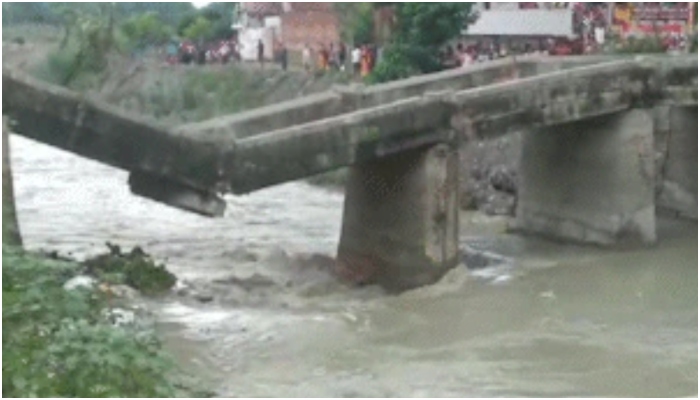
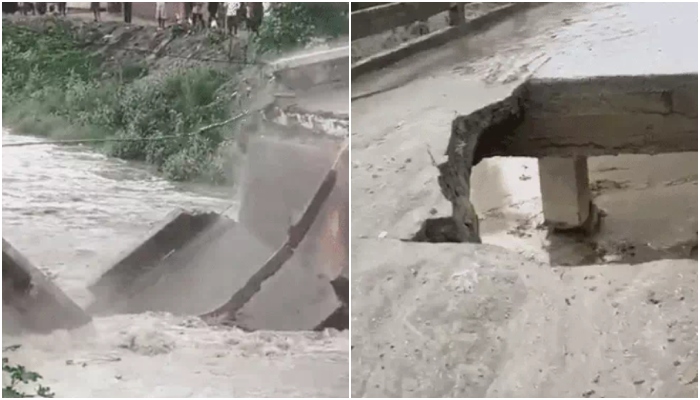
In a disturbing incident, two bridges in Saran district collapsed due to heavy rainfall in the state of Bihar. Now there are 9 such incidents reported in the last 15 days in the state. Thankfully, no casualties have been reported in the latest incidents of bridge collapse. As per the reports, both the bridges that collapsed on July 3rd were constructed over the Gandaki River.
The collapse of both bridges has reportedly hampered the connection between multiple villages, hurting local businesses and also hampering access to critical services such as schools and hospitals. One of the bridges that collapsed yesterday was built in the year 2004 near a British-era bridge.
Image- Daini kBhasker
Locals stated that riverbank cleaning was underway, and once completed, water was dumped into the river, coinciding with the bridge collpase. People who were present at the spot captured the incident on their cell phones and posted it on social media.
The second bridge, also on the Gandaki River, is said to be over 100 years old and collapsed due to excessive rain during the monsoon season. Given this, a plea has been filed in the Supreme Court demanding a structural audit of the bridges built in the state. 12 bridges have collapsed in the last two years in Bihar, posing danger to the lives of civilians.
A two-person team, led by the Sub-Divisional Officer and an engineer from the Flood Department, has been constituted to investigate the incident. Saran District Magistrate Aman Sameer remarked that the team will submit their views within 24 hours, following which a complete report will be provided to the state government.
Several similar incidents of bridge collapse have happened in districts like Madhubani, Siwan, Araria, East Champaran, and Kishanganj recently. A small bridge connecting several villages with Mahrajganj in the district’s Deoria block also collapsed on July 3rd.
“The incident took place around 5 am. As per initial information, the bridge was constructed in 1982-83. Repair work was going on the bridge for the last few days,” Deputy Development Commissioner Mukesh Kumar said confirming the incident.
On June 22nd, a portion of a bridge collapsed in the Darounda area of Siwan. This came 4 days after a bridge collapse was reported from the Araria district.
On June 18, a large segment of an 182-meter bridge fell in Sikti, Araria. The bridge, built for Rs 12 crore, had recently been completed. Only approach roads on either side had to be built before its opening.
On March 22nd, one labourer was killed and eight others injured when three slabs of an under-construction bridge over the Kosi River in Supaul collapsed. The 10.5-kilometer-long bridge, valued at more than Rs 1,200 crore, is to be built between Bakour in Supaul and Bheja in Madhubani.
The state has also issued red alerts in around 17 cities given heavy rainfall. People in the state have been advised to stay at their homes.
A lot has changed in Jammu and Kashmir. The region mired in violence, stone pelting and anti-India protests is now witnessing an unprecedented wave of development, peace and prosperity after the abrogation of Article 370. However, the agony of those who ruled Jammu and Kashmir for many years after independence is yet to subside.
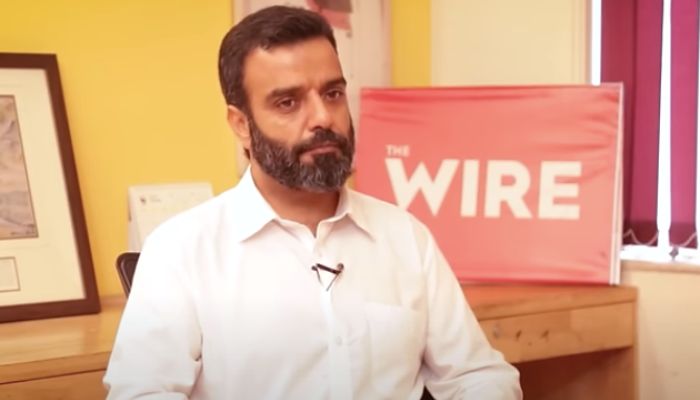
In an interview with leftist propaganda portal The Wire on 2nd July, Jammu Kashmir National Conference (JKNC) leader and Srinagar’s newly-elected MP Ruhullah Mehdi almost threatened the Indian government that “the anger of Kashmiris over Article 370 removal” can erupt anytime in the future just as it did 40 years after independence.
In a nearly 44-minute long interview with The Wire’s Arfa Khanum Sherwani, Ruhullah Mehdi made several remarks that sounded like furtherance of the Pakistani narrative and whitewashing of Islamic terrorism instead of ‘concerns’ of a common Kashmiri. Before delving into what all Ruhullah Mehdi said in the interview, it is interesting to mention that it is the same JKNC MP who in his maiden parliamentary speech last week claimed that Article 370 was abrogated by the Parliament within half an hour. He was, however, schooled by the Lok Sabha speaker that the bill to repeal Article 370 was discussed for nine and a half hours before its passage.
Ruhullah Mehdi cherrypicks incidents of violence to play the “Musalmaan Khatre Mein Hai” narrative
In the backdrop of the BJP MP Ramesh Bidhuri’s offensive remarks against the then BSP MP Danish Ali in Lok Sabha last year wherein Bidhuri called the latter a “terrorist” and was later made to apologise, Ruhullah Mehdi asserted that common Muslims and other ‘oppressed’ minorities are being targeted. The JKNC MP talked about an incident wherein a Dalit boy was allegedly beaten for drinking water from a tap in a temple. He also asserted that Muslims are being “mob lynched”. Sikhs are called Khalistanis when they seek their rights and Christians when they step out to do ‘social work’ are called “missionaries” converting people to Christianity.
“Is this what we created this country for? Is this what we gave our blood for and continue to do so?” Mehdi said.
While violence against anyone for their caste or religious identity is condemnable, the Srinagar MP did not talk about the incident wherein a Brahmin youth was brutally thrashed by Dalits and made to drink urine. Will Ruhullah dare to raise his voice for Praveen Nettaru who was killed by PFI’s Islamic terrorists? Is it not true that during the farmer’s protest, some people raised pro-Khalistan slogans and wore T-shirts featuring slain Khalistani terrorist Bhindranwale? Is it not true that there are several Christian missionaries operating in different states in the barb of ‘Changai Sabha’ converting poor and vulnerable people by misleading them with false promises of cure and financial bribery?
Even the Allahabad High Court recently said if religious conversions at such congregations continue, the majority Hindu community would be reduced to a minority. Not a day goes by when a Love Jihad case is not reported but such incidents are not much discussed and often dismissed by the Islamist-sympathising ecosystem as “hoax”, “fiction” and “propaganda against Muslims”. But Ruhullah Mehdi will not demand justice for the victims of Love Jihad since it doesn’t suit his narrative.
It is notable that Pakistani political leaders also peddle the same narrative that the minorities particularly Muslims, who actually form the second largest religious majority are under threat from the ‘Hindu majoritarian’ government. Mehdi’s comments advertently or inadvertently give an apparent push to this sinister narrative aimed at furthering fissures in Indian society.
Ruhullah Mehdi downplays the 1990 Kashmiri Hindu Genocide as “Haadsa”
During the interview, when Arfa Khanum Sherwani asked about Ruhullah Mehdi’s ‘secular’ stand, the JKNC leader said that Kashmir is secular and that just one “Haadsa” [accident] and that even Muslims were killed during the militancy in those days.
“Kashmir is secular but the way attempts are being made to mould it in the last 10 years, Kashmir is not like that. An accident happened in the early 1990s when [Kashmiri] Pandits had to leave their homes due to the fear of guns. Situations were created and they had to leave their homes…their killings should not have happened but even Muslims were killed…” Mehdi said.
No Ruhullah! It was not a “Haadsa”, it was a well-planned killing and exodus of Kashmiri Hindus. It did not happen all of a sudden but the hatred against non-Muslims (Kafirs) was being instilled in the local Kashmiri youth since the 1960s by JeI. Notably, during the exodus, lakhs of Kashmiri Hindus were forced to flee their valley literally overnight, abandoning all of their belongings. Mosques made declarations urging Kashmiri Hindu men to flee the valley, leaving their women behind. The chants ‘convert (to Islam), leave or die’ (Raliv, Galiv, Chaliv) echoed across the valley. Mosques also played inflammatory slogans like Kashmir mei agar rehna hai, Allah-O-Akbar kehna hai’ (If you want to stay in Kashmir, you have to say Allah-O-Akbar); ‘Yahan kya chalega, Nizam-e-Mustafa’ (What do we want here? Rule of Shariah); ‘Asi gachchi Pakistan, Batao roas te Batanev san’ (We want Pakistan along with Hindu women but without their men).
It was not a “Haadsa”, (mishap). Calling the exodus of Kashmiri Hindus from their motherland a “Haadsa”, is sinister and ridicules their pain, especially coming from someone claiming to be a victim of terrorism. Apparently, such people want to discuss terrorism but not the root cause of it, by selectively highlighting the killings of some local Muslims during the 1990s, they want the people not to know that the Islamists orchestrated terrorism in the valley to establish what they call “Nizam-e-Mustafa.”
Jammu Kashmir Liberation Front (JKLF)’s Farooq Ahmed Dar alias Bitta Karate, a notorious Pakistan-sponsored Islamic terrorist who waged war against the Indian state for decades was a local Kashmiri born in Srinagar.
Notably, Jamaat-e-Islami (JeI) has played a significant role in shaping the political and militant landscape of Kashmir. Founded in 1941, JeI is an Islamist terrorist organisation that aims for the establishment of “Nizam-e-Mustafa”, an Islamic state governed by Sharia law. This was the vision of JeI’s founder Maulana Abul A’la Maududi, a hardcore Islamist who advocated for a theocratic state where Islamic laws and principles would govern all aspects of life. JeI’s establishment in Kashmir can be traced back to the socio-political upheavals in the region during the mid-20th century.
The local chapter, Jamaat-e-Islami Jammu and Kashmir (JeI-JK) became a significant vehicle for spreading Maududi’s venomous ideology. JeI-JK set up numerous educational institutions, including schools and madrasas, aimed at instilling Maududi’s ideological principles among the youth. These institutions provided religious education that emphasized the need for an Islamic state and governance. The organisation’s political wing engaged in local elections and used its platform to advocate for an Islamic Sharia rule. The Jamaat contested the 1987 elections as a part of the Muslim United Front (MUF), however, it failed to do well. There were allegations of rigging. Jamaat’s political failure gave rise to terrorism in Kashmir and during the 1990s, its Pakistan-backed armed wing Hizbul Mujahidin headed by Syed Salahuddin became active in the valley. Notably, following the heinous terror assault in Pulwama, the union government banned Jamaat-e-Islami on 28th February 2019.
While hundreds of Kashmiri Pandits were killed by Islamic terrorists during the 1990s, Ruhullah Mehdi has the audacity to dub their killings as mere “Haadsa”. Mehdi kept emphasising as to how concerned he is for the Kashmiri Pandits, however, not once did he talk about Pakistan’s role in the terrorism in Kashmir especially during the 1990s.
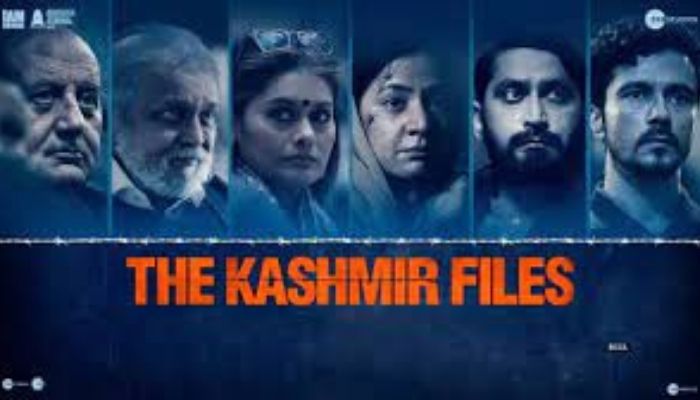
Ruhullah Mehdi says incidents shown in film The Kashmir Files never happened
The JKNC leader claimed that in the last ten years, a large section of the majority community has been prepared to become thirsty for the blood of Muslims. He went on to claim that whatever is shown in the film The Kashmir Files is not true. Mehdi should answer, that what exactly is not true. Was a Government Girls High School lab assistant Girja Tikoo not gangraped for many days by five Islamists? Was she not sliced to pieces by those terrorists at a sawmill? Was there no Farooq Ahmed Dar alias Bitta Karate? Were no Raliv Galiv Chaliv announcements were made?
Ironically, Ruhullah Mehdi belongs to the same political party that ruled Jammu and Kashmir just before Islamic terror was unleashed on Kashmiri Pandits. Farooq Abdullah was re-sworn in as Chief Minister in an NC-Congress coalition government in November 1986, following the infamous Rajiv-Farooq Accord. In mid-June 1988, spontaneous protests took place demanding a commitment to Islamise Kashmir through the enforcement of Shariah law.
Between July and December 1989, Farooq Abdullah’s government freed 70 hardline Pakistan-trained terrorists. Is Ruhullah Mehdi downplaying the massacre of Kashmiri Pandits to whitewash the role of Farooq Abdullah?
Mehdi also lamented how ‘journalists’ and several political ‘activists’ were arrested after the abrogation of Article 370, however, he did not talk about why they were arrested. OpIndia earlier reported that such ‘journalists’ like Fahad Shah, Aasif Sultan, Majid Hyderi, and Sajad Gul among others were arrested over allegations of glorifying terrorism and terrorists like Burhan Wani and involvement in other anti-India activities. A detailed report on these ‘journalists’ and their alleged anti-India activities can be read here.
Ruhullah Mehdi refuses to accept Supreme Court verdict on Article 370
When The Wire’s Arfa Khanum Sherwani asked Mehdi about what is left in the Article 370 abrogation issue since the Supreme Court has “settled” it, Mehdi said that one Supreme Court judgement is not acceptable to him. He said that before the final verdict, the Supreme Court had said that Article 370 which conferred the special status of the state of Jammu and Kashmir and limited the Centre’s powers to make laws for J&K, had become a “permanent feature”. “If three judgements are not sufficient for the BJP and its like-minded parties, one judgment is not enough for us…,” Mehdi said.
It is worth recalling that on 11th December 2023, a five-judge Supreme Court bench headed by Chief Justice DY Chandrachud upheld the Modi government’s decision to abrogate Article 370. CJI Chandrachud held that Jammu and Kashmir does not hold any internal sovereignty after accession to the Union of India. CJI said that Article 370 was a temporary provision, and it was introduced to serve a transitional purpose to serve an interim process.
While it is shocking that a person elected to the Lok Sabha in a democratic election refuses to accept the Supreme Court verdict, the least shocking part is Arfa not confronting him for disregarding the Judiciary.
Ruhullah Mehdi’s refusal to accept the Supreme Court’s verdict on the abrogation of Article 370 is not just a political statement but a challenge to the rule of law and judicial authority in India. His stand also aligns with the Pakistani narrative that the abrogation of Article 370 is ‘illegitimate’, politicises judicial decisions, and risks destabilising the already fragile social fabric of Jammu and Kashmir.
By rejecting the Supreme Court’s verdict, Mehdi lends credence to Pakistan’s claims, which can be exploited by Pakistan to further its agenda on the international stage. While Kashmir may have not become a “Utopia” after the removal of Article 370, it is gradually moving towards peace and all-round development, however, raking up the Article 370 issue again seems like an attempt to incite public unrest, fuel separatist sentiments, and deepen existing divisions within society. This can be detrimental to the broader interests of India and its efforts to foster peace and development in the region.
Ruhullah Mehdi calls for fight against ‘Hindutva extremism’
The newly-elected MP from Srinagar said that if the opposition parties have to fight the ‘Hindutva extremism’ they need to talk about and stand with Muslims. Amusingly, Mehdi conveniently labelled Hindutva as an ‘extremist’ ideology but he did not dare to call the terrorists who perpetrated violence against Kashmiri Pandits out of their hatred for non-Muslims as “Islamic extremists”.
Kashmir’s anger came out 40 years after independence, it will happen again: JKNC MP Ruhullah Mehdi threatens Indian government of 1980s-90s-like violence again
Typically, Arfa Khanum Sherwani’s interviews for The Wire appear to be two clowns sitting together and vying to see who can be funnier; however, the interview with Ruhullah Mehdi is unsettling.
In the backdrop of the recent incidents of terror attacks including the attack on Hindu pilgrims in Reasi, Mehdi asserted that ‘militancy’ has not ended in the region. He said that much like the removal of Article 370, back in 1953, a similar thing was done by Congress when Kashmir’s autonomy was snatched. “For the next 40 years, nothing happened and everyone was of the opinion that Kashmiri was settled and there was no anger, no protests but later their anger burst,” Mehdi said.
Completely dismissing the role of the banned Jamaat -e- Islami throughout the 60s, 70s and 80s to nurture Maududi's jihadi mindset, the two-nation theory and the unfinished business of the Partition in the minds of a population in an era sans technology, social media, 24/7… https://t.co/KoZtXMkB9s
Mehdi’s comments imply that the anti-India protests, calls for the Islamisation of Jammu and Kashmir, the radicalisation of Kashmiri youth as well as the anti-Hindu atrocities were the outburst of the ‘anger’ of Kashmiris over their ‘autonomy’ being snatched 40 years ago. By saying so Mehdi blatantly whitewashed the horrific crimes of Pakistan-sponsored terrorist groups like Jamaat-e-Islami, Hizbul Mujahideen and all the Islamists that burnt the valley for their own extremist agenda.
At one point Ruhullah said that he is not an advocate of Pakistan, however, Pakistan does not essentially need to send its advocates here when it has its stooges peddling its sinister narrative just for narrow political gains.
Ruhullah Mehdi went on to warn the Indian government saying that a similar situation is prevailing in Jammu and Kashmir and in the coming decades there will be violence in the valley again. “…So do not get fooled, what we did in 2019 and the [peaceful] situation in Kashmir is permanent. I am afraid of the way that anger burst after 40 years now I don’t know when will it happen now…We have made a wound which can burst anytime and when it happens it will not be good for you…I am warning… the people of Jammu and Kashmir have a sense of defeat and this silence is not good…” Mehdi said.
On one hand Ruhullah Mehdi says he wants peace in Jammu and Kashmir on the other he does not want people to move on from Article 370 and join the Indian mainstream. Similarly, Mehdi wants to be the voice of ‘oppressed minorities’ but downplays the targeted killings of Kashmiri Pandits in the 1990s and dismisses Islamic terrorism as “anger of people”. Apparently, this time the strategy may have changed, however, the ‘Maqsad’ remains the same.
By suggesting that the current alleged “anger” is akin to the terrorism unleashed in the 1980s-90s, Mehdi implicitly legitimises violence as a response to supposed political grievances. This will also embolden Islamists and separatist groups who thrive on unrest and conflict. It is an attempt to fuel passions and could lead to an escalation in tensions, ultimately resulting in violence.
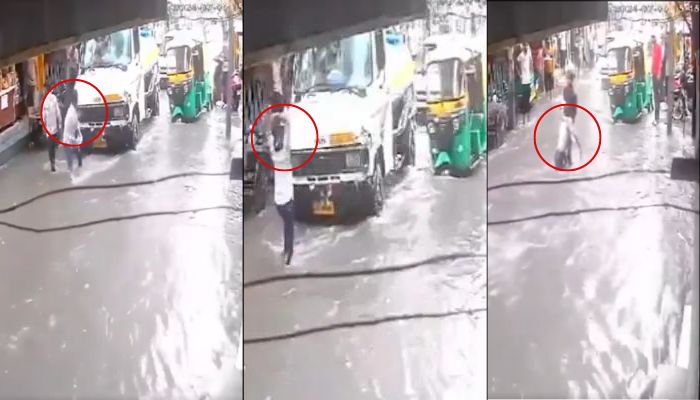
In a shocking incident, a water tanker driver while trying to escape crushed a youth who was pelting stones on his tanker in the Sangam Vihar area of the national capital.
On Wednesday evening, in the Ratia Marg Sangam Vihar area of South Delhi, some people pelted stones on a tanker when rainwater splashed on them. When the tanker driver, identified as 35-year-old Sapan Singh, tried to escape to save his life, a young man identified as 21-year-old Saddam came under the wheels of the tanker. He died on the spot.
Angry people again started pelting stones at the tanker. Meanwhile, an auto driver identified as Bablu came to the spot and opposed the stone pelting and got stabbed by those who were pelting stones and sustained serious injuries.
The situation in the area became tense. A police force has been deployed on the spot.
DCP South Delhi Ankit Chauhan said, “Saddam died after being hit by a tanker. Police have taken the body into custody and sent it to the mortuary for postmortem. The 21-year-old deceased lived with his family in the Sangam Vihar area.”
Additional DCP East District, Achin Garg says, “We got a call about stone pelting on a water tanker. In this, an auto had broken down on Ratia Marg in Sangam Vihar and some boys were fixing the auto. Meanwhile, a water tanker was passing by and some water splashed on the auto drivers, which led to an altercation. These auto drivers attacked the driver, and pelted stones. Seeing this, the driver got scared and moved the vehicle forward, in which one person came under the water tanker. When he was taken to the hospital, he was declared dead. The driver of the water tanker left his tanker and tried to run away, the boys again pelted stones. Meanwhile, another auto driver was passing by and asked what happened, and why they were pelting stones. They also attacked the auto driver with a knife. He is currently inside the hospital…The investigation is underway…”
According to the police, Bablu’s condition remains critical. He has been stabbed at two places in his body. He has been referred from Majidia Hospital to Safdarjung Hospital. No arrest has been made yet. The investigation is underway and the accused have been identified.
More details into the matter are awaited.
(This news report is published from a syndicated feed. Except for the headline, the content has not been written or edited by OpIndia staff)
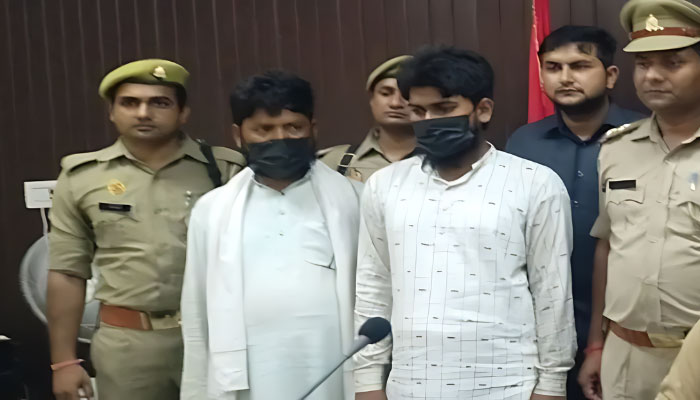
On 3rd July, a ‘hafiz’ identified as Dilnawaz and a maulvi identified as Rakimuddin were arrested by Fatehpur Police, Uttar Pradesh, in connection to the murder of a 9-year-old student inside a madrasa. The arrested accused in the matter are brothers-in-law. The deceased minor victim was sexually assaulted inside the madrasa on 29th June. Fearing exposure, the accused killed the child.
फतेहपुर– एसओजी व मलवां पुलिस की संयुक्त टीम द्वारा थाना क्षेत्रांर्तगत कुएं में 09 वर्षीय बच्चे के मिले शव की घटना का सफल अनावरण करते हुये घटना में संलिप्त 02 अभियुक्तों की गिरफ्तारी के संबंध #Spfhr द्वारा दी गयी बाइट।#UPPolicepic.twitter.com/Rn3h7LHOHA
As per reports, Dilnawaz was addicted to watching porn. While speaking to the media, Superintendent of Police (SP) IPS Uday Shankar Singh said that 20 students are studying in the said madrasa. He added that hafiz Dilnawaz, who teaches at the madrasa, committed the sexual assault on the 9-year-old. The child reportedly resisted the assault leading to his murder. After killing the innocent kid, Dilnawaz and Rakumuddin disposed of the body. They stuffed the dead body into a sack and threw it into a well near a cemetery located just 400 meters away from Madarsa.
SP further added that separate investigations are being conducted by the Child Welfare Committee and the District Minority Welfare Department in the matter. The legality of madarsa is also being checked by the concerned authorities. The deceased minor kid was the youngest child in the madrasa. Media reports suggest that on the day of the incident, Dilnawaz was watching porn on his mobile phone.
SP Singh said that hafiz Dilnawaz found the victim alone in madarsa and sexually assaulted him. Following the heinous act, he feared exposure and strangulated the kid using a rope. Dilnawaz’s brother-in-law Rakimuddin, the maulvi of the same madrasa, planned to dispose of the body to save his brother-in-law.
Rakimuddin stuffed the body into a sack during the night and threw it into a well near the cemetery. They took the body from Madarsa to the well on a bike. Later, Rakimuddin informed the family of the child that the victim disappeared from the madrasa. The police have recovered the rope used in the murder and both accused have been arrested.
The bike used for transporting the dead body has been recovered by the police.
Details of the case
On 30th June, some shepherds from Saura village under the Malwan police Station area in district Fatehpur, Uttar Pradesh, spotted the dead body of a child floating in a well. They informed the police about the dead body. The police recovered the body and found that the hands and feet of the corpse were tied. There was a tape placed over the mouth as well.
The family of the child was called for identification. Following the identification of the deceased as 9-year-old son of a resident of Baraura village in Malwan block, Fatehpur, the dead body was sent for postmortem and a case was registered under relevant Sections of the Indian Penal Code (IPC) and POCSO Act. Based on the complaint of the victim’s family, maulvi and Hafiz of the madrasa were detained by the police.
According to reports, a few months ago, the victim’s family enrolled the child in the Ulama Madrassa located in Saura for Arabic and religious study. Around 5 days ago, they left the child in the Madrassa from where he went missing.
Following the post-mortem, the dead body was handed over to the family for last rites.
In response to recent speculations, the White House has unequivocally denied any consideration of President Joe Biden stepping down, with Press Secretary Karine Jean-Pierre stating “absolutely not” when asked about the possibility.
Concerns are mounting about Biden’s viability as a candidate following what has been described as a devastating performance in Atlanta, according to a New York Times (NYT) report.
Jean-Pierre on Wednesday (local time) highlighted President Biden’s recent engagements with supporters, acknowledging that while he has had challenging moments, his overall record and accomplishments should not be overshadowed.
“He had an opportunity to talk to supporters. He has done it a couple of times at this point and laid out what happened on that night, talked about how he understands, and it was not his best night. He understands that it is fair for people to ask that question,” she told reporters at the White House.
Emphasising the president’s achievements, Jean-Pierre added, “We cannot forget his record and what he’s been able to do. We cannot forget how he has been able to deliver for the American people for almost four years. That matters, too. He has the most historical record of administration, the most in modern politics.”
The Press Secretary’s comments come amid ongoing scrutiny and debates about the president’s performance and future plans.
The NYT report also said that President Biden has confided in a close ally about his contemplation of continuing in the race, acknowledging the challenge of salvaging his candidacy following a disappointing presidential debate performance.
The president’s focus now lies heavily on upcoming public appearances and interviews to sway public opinion, particularly an upcoming interview with George Stephanopoulos of ABC News and planned campaign stops in Pennsylvania and Wisconsin.
“He knows if he has two more events like that, we’re in a different place,” the ally, who spoke on condition of anonymity, emphasised, referring to Biden’s criticised debate performance.
Meanwhile, former Fox News host Tucker Carlson claimed that several prominent Democrat leaders have suggested that US President Biden is “brain-damaged” and it is only a matter of time before they remove him from running for the post again.
Former US President Barack Obama had after the debate hosted by CNN, between Biden and Trump, voiced his support for Biden, acknowledging that “bad debate nights happen”.
These remarks come days after Donald Trump and Joe Biden engaged in a fiery debate broadcast live on CNN.
The age disparity between the 81-year-old incumbent US president and his 78-year-old challenger was starkly apparent throughout the evening, with Biden notably hoarse and exhibiting limited vocal range, struggling at times to articulate clear differences from Trump.
(This news report is published from a syndicated feed. Except for the headline, the content has not been written or edited by OpIndia staff)
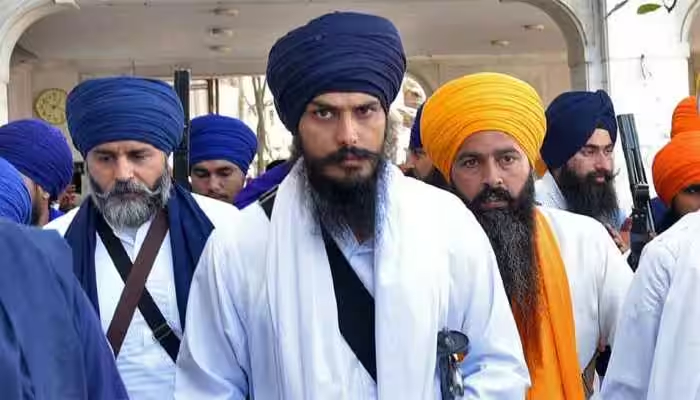
Pro-Khalistani separatist leader Amritpal Singh who is currently lodged in Assam’s Dibrugarh jail along with nine associates under the stringent National Security Act, has been granted a four-day parole to enable him to take oath as MP. The separatist leader had contested the Lok Sabha elections as an independent candidate from the jail in Assam and won the Khadoor Sahib parliamentary seat in Punjab.
The parents of “Waris Punjab De” chief and Khalistani separatist Amritpal Singh had on June 9, applied for their son’s release or parole so that he could take oath as a member of parliament.
Singh had also written to the Punjab Government on June 11 and asked to be released temporarily so that he could be sworn in. The state government had sent an application to Lok Sabha Speaker Om Birla and the parole decision was taken based on that.
Speaking on the development, Amritsar Deputy Commissioner Ghanshyam Thori said on Wednesday, “Amritpal Singh has been granted parole for 4 days or less from July 5 with certain conditions, about which the jail superintendent, Dibrugarh, has been informed.”
Amritpal Singh is currently lodged in Dibrugarh Jail in Assam after being arrested by central agencies under National Security Act (NSA). Amritpal secured 4,04,430 votes which translated to 38.62% vote share. He defeated Congress’s Kulbur Singh Zira who secured 2,07,310 votes. Amritpal Singh gained popularity in Punjab after taking over the late Deep Sidhu’s organisation Waris Punjab De. Sidhu was also a pro-Khalistani leader. Notably, Amritpal was seen as Bhindranwale 2.0 by pro-Khalistani elements in Punjab.
In 2023, Central agencies and Punjab Police launched a manhunt against Amritpal Singh for his pro-Khalistani and anti-India activities. The hunt began in March 2023 but he managed to stay on the run for over a month and was arrested at the end of April 2023. Amritpal Singh, who donned attire similar to Khalistani terrorist Jarnail Singh Bhindranwale during his march across Punjab, gave an impression that his movement was against drugs in the state, which is a serious problem.
The Indian Army has said that it salutes the supreme sacrifice made by Agniveer Ajay Kumar who lost his life in the line of duty and his family has already been paid Rs 98.39 lakhs. Ex-gratia and other benefits amounting to approximately 67 lakhs will be paid on final account settlement shortly post-due police verification.
*CLARIFICATION ON EMOLUMENTS TO AGNIVEER AJAY KUMAR*
Certain posts on Social Media have brought out that compensation hasn't been paid to the Next of Kin of Agniveer Ajay Kumar who lost his life in the line of duty.
Indian Army’s Additional Directorate General of Public Information (ADGPI) posted a ‘clarification on emoluments to Agniveer Ajay Kumar’ on Wednesday and said certain posts on social media have brought out that compensation hasn’t been paid to the next of kin of the Agniveer.
“It is emphasised that the Indian Army salutes the supreme sacrifice made by Agniveer Ajay Kumar. The last rites were carried out with full Military Honours. Of the total amount due, family of Agniveer Ajay has already been paid Rs 98.39 lakhs,” ADGPI said in a post on X.
“Ex – Gratia and other benefits amounting to approximately 67 lakhs, as applicable according to the provisions of the Agniveer Scheme, will be paid on Final Account Settlement shortly post-due police verification. The total amount will be Rs 1.65 Cr approximately. It is re-emphasised that emoluments due to a fallen hero are paid expeditiously to the Next of Kin of departed soldiers, including Agniveers,” it added.
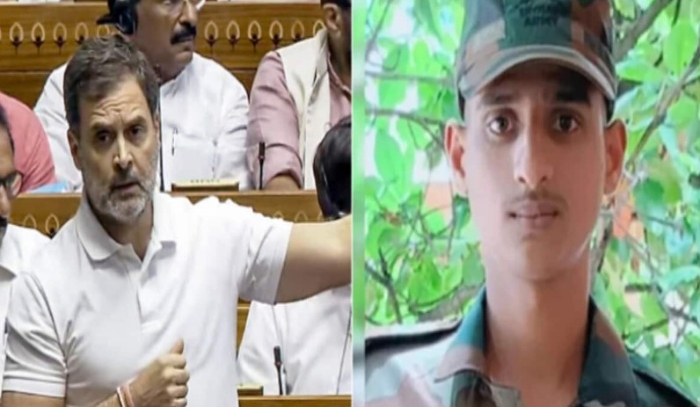
Earlier in the day, Leader of Opposition and Congress leader Rahul Gandhi accused Defence Minister Rajnath Singh of “lying” on the floor of the Lok Sabha over the Agniveer scheme and demanded an apology.
In a video posted on X, Rahul Gandhi alleged that the minister had lied in Parliament about the issue of compensation to families of killed Agniveers.
“The importance of truth in every religion. Rajnath Singh lied before Lord Shiva’s photo about the compensation to the country, its armed forces, and Agniveers. I have said in my speech that don’t listen to me or his (Rajnath Singh) speech, but listen to the family of Agniveer family,” the Leader of the Opposition said in a video message.
He shared the video of the father of Agniveer Ajay Singh who lost his life in Jammu and Kashmir and said that despite Singh’s claims, his family had not received the promised compensation.
Ajay Singh’s father said, “Rajnath Singh made the statement that families of killed soldiers have been given Rs 1 crore compensation but no such assistance had been received by his family. Rahul Gandhi is raising our voice in Parliament that families of martyrs must get all necessary help. Agniveer recruitment must stop and regular recruitment should be reinstated.”
The Congress leader demanded an apology from the Defence Minister.
“The Defence minister had lied to the family of killed Ajay Singh ji, the armed forces and the youth of the country, and must apologise to them. Daro mat, Darao mat,” he added.
Earlier on June 1 in Parliament, Rajnath Singh objected to Congress leader Rahul Gandhi’s remarks in Lok Sabha on the Agniveer scheme and said financial assistance of one crore rupees is given to the family of the Agniveer who sacrifices his life while protecting the country’s borders or during a war.
Rajnath Singh accused Rahul Gandhi of trying to mislead the Lok Sabha by making wrong statements.
“Rahul Gandhi should not try to mislead the House by making wrong statements. Financial assistance of Rs one crore is given to the family of the Agniveer who sacrifices his life while protecting our borders or during war,” the Defence Minister said.
(This news report is published from a syndicated feed. Except for the headline, the content has not been written or edited by OpIndia staff)