Home Blog Page 981

Saudi Arabia stops selling oil exclusively in US Dollar: As 50-year-old US-Saudi Petrodollar Agreement expires, new avenues expected in the global economy

Recently, a 50-year-old petrodollar pact between Saudi Arabia and the United States expired and Saudi Arabia has opted not to renew it. The shift of base currency is going to have longlasting implications for the global economy. The decision made by Saudi Arabia marks a significant departure from the longstanding financial arrangement between the two nations that was established back in 1974. Notably, this particular arrangement to recycle petrodollars positioned the US dollar as the primary currency for international oil transactions, which is now bound to change.

The Historical Agreement

The original petrodollar agreement was signed on 8th June 1974 by US Secretary of State Henry Kissinger and Prince Fand Ibn Abdel Aziz of Saudi Arabia. It was a period marked by the aftermath of the Arab oil embargo and a notable spike in international oil prices. The agreement, which was later known as the petrodollar system, was aimed to establish a stabilised global oil market and ensure a steady flow of oil from Saudi Arabia to the United States. In return, the United States agreed to help Saudi Arabia with military enhancements and economic cooperation.

Under the agreement, Saudi Arabia agreed to price its oil exports exclusively in U.S. dollars and invest its surplus oil revenues in US Treasury bonds, and it was promised US military, security, and economic development assistance in return. This system replaced gold as the standard of value which enabled the US to maintain dominance over international trade and allowed the US govt to control the world’s energy market. Although the agreement was signed by the Saudi govt, almost all OPEC countries use the US Dollar to sell their oil in the international market.

When the pact was signed, The New York Times reported it as a “milestone pact” and highlighted its role in fostering closer economic ties between the two nations. The report pointed out that it would stabilise the oil market. The U.S.-Saudi Arabian Joint Commission on Economic Cooperation, as detailed in a report by the Comptroller General of the United States, was a central element of this agreement.

This particular commission has the aim to foster closer political and economic ties between the two nations. Not to forget, the US allies were also dependent on Saudi oil. It facilitated the flow of goods, services and technology from the US to Saudi Arabia in exchange for Saudi oil sold exclusively in US dollars. This arrangement not only secured the US’s energy needs but also reinforced the dollar’s position as the dominant global currency​​.

Evolution and impact of the petrodollar system

Over the years, the global economic dynamics were highly influenced by the petrodollar system. It created a constant demand for US dollars as the currency was required for oil transactions. The value of the US dollar increased significantly, and it reinforced the currency’s status as the primary reserve currency of the world. It allowed the US to run larger trade deficits and maintain lower interest rates than would otherwise be possible.

According to a report by the Government Accountability Office (GAO) in 1979, the mechanisms of the US-Saudi agreement included the establishment of the two joint commissions focused on economic cooperation and military needs. The agreement ensured that Saudi Arabia would reinvest its oil revenues in US assets. It further tied the economic fortunes of the two nations together and enhanced US economic influence worldwide.

A paradigm shift in global finance

As Saudi Arabia has decided not to renew the petrodollar agreement, the country now has the flexibility to conduct sales of its largest asset in multiple currencies. It includes the Chinese RMB, Euros, Yen, and Yuan, which will expand in the future. It reflects a broader strategy of the Middle Eastern country to diversify its economic alliances and reduce reliance on the US dollar. This move can be seen as a potential catalyst for a significant shift in the global financial markets as it will push the countries to shift away from the US dollar as the primary reserve currency.

So far, the US dollar has served as the base for determining the value of different international currencies which would now change in coming years. Katja Hamilton of BizCommunity highlights that this shift could open new avenues for global economic transactions. He pointed out that digital currencies like Bitcoin are also being considered for future use in oil trading, a step that will change the economic structure of the world currencies at an unprecedented level. The diversification of currency usage aligns with Saudi Arabia’s broader economic vision, which includes integrating into the global economy through varied financial instruments and digital innovations.

Recent developments and prospects

It has to be noted that Saudi Arabia has been actively exploring digital currency avenues in recent times. The nation recently joined Project mBridge which is an initiative led by the Bank for International Settlements (BIS) that explores a multi-central bank digital currency (CBDC) platform. The main aim of the project is to facilitate instant cross-border payments and foreign exchange transactions. The move underscores Saudi Arabia’s commitment to modernise its financial avenues and opt for digital transformation.

Notably, the CBDC platform is mainly controlled by the Chinese central bank. Saudi Arabia has signed a local currency swap agreement with China that indicates a strategic pivot towards stronger financial ties with Asia. The agreement between Saudi Arabia and China allows for smoother bilateral trade and investment flows without needing US dollars as base currency for transactions.

Broader implications

The expiration of the petrodollar agreement between Saudi Arabia and the US is going to have extensive implications for the global economy as the former’s subsequent financial manoeuvres will open doors for a paradigm shift. The US has long benefited from the status of the dollar as the dominant global currency. The position of the currency provided the US with significant economic advantages. However, Saudi Arabia and other countries are now exploring alternatives resulting in reducing the hold that the US has on other countries’ economies. With this shift, the global financial landscape could witness a shift towards a more multipolar currency system.

The move came at a time of broader geopolitical realignment. The nations are seeking a balance between economic dependencies and aim at strengthening regional partnerships. With a singular base currency for trade, it is not easy for the countries to do business without the US’s interference. The potential decline in the dollar’s dominance could lead to increased volatility in currency markets and a re-evaluation of financial strategies by central banks and multinational corporations worldwide.

Domestic currency trade is increasing worldwide. In July 2023, it was reported that banks in 22 countries including Russia, UK, Germay, Israel and others opened special Vostro accounts in Indian banks to trade in Indian rupee. With Saudi shifting away from dollar, it will give a push to other countries including India to make the much needed shift.

AAP now blames other states for tanker mafia in Delhi, claims water tankers in Haryana stealing water meant for Delhi after SC slammed Kejriwal govt over the issue

As Delhi continues to face a water crisis, the AAP govt continues to blame other states for the same. After alleging that neighbouring states were not sending adequate water to Delhi, it has now alleged that water tankers from neighbouring states are stealing water from pipes carrying water to Delhi. This allegation came after the Supreme Court of India slammed the AAP govt for not controlling the water tanker mafia.

On Thursday (13th June), the Aam Aadmi Party (AAP) government in Delhi submitted an affidavit to the Supreme Court alleging that the tanker mafias were entering the city of Delhi from the Haryana side. It claimed that these mafias were stealing the water from the canals and selling it to the poor in exchange of a hefty amount.

The Aam Aadmi Party also claimed that it was unable to take action against the water mafia due to jurisdictional concerns. However, it stated that it was making every effort to control water leaks.

“As regards any news reports or references of an alleged ‘tanker mafia’, such illicit pilferage of water is taking place prior to the water reaching the CLC or DSB. In other words, the tanker mafia is operational on the Haryana side of the Yamuna river and the Petitioner lacks jurisdiction to act against the same,” the affidavit mentioned.

“It is for Haryana to explain what steps it is taking to preserve the full supply of water to Delhi between the point of release and the point of receipt. The Delhi Jal Board (DJB) has prepared a comprehensive blueprint for augmenting water supplies in the NCT of Delhi. This plan has been prepared keeping in mind the water scarcity faced by Delhi every year and the sharp rise in population in the city,” it mentioned.

The Delhi government further stated that it respectfully welcomed the appointment of an independent committee by the Supreme Court to monitor and ensure its effective implementation.

This comes a day after the Supreme Court slammed the AAP government over the role of the tanker mafia in the national capital’s water crisis. The court said that if the Delhi government can’t take action then the court can ask the Delhi police to intervene. The Delhi Minister Atishi accused senior officials of colluding with the mafia to reduce the number of DJB tankers and demanded an investigation.

Following the Supreme Court’s observations, the Lieutenant Governor Secretariat wrote to the Delhi Police Commissioner, requesting that he take action against the tanker mafia involved in the theft of water from the Munak canal, which transports water from Haryana.

Seeking a compliance report within a week, the LG instructed the police commissioner to maintain strict vigilance along the canal to avoid water theft by the tanker mafia and other illicit activities.

The national capital has been dealing with a water crisis, with the Delhi administration blaming Haryana for failing to release its share of water. Notably, Haryana on the other hand maintains that it has been releasing water to the city as decided in the 1994 MoU.

As reported, Delhi BJP chief Virendra Sachdeva earlier held the AAP government responsible for the ongoing water crisis indicating that the government was stealing water from the Munak canal and providing the same via tankers to the locals in exchange for money.

“The tanker mafia, run by AAP MLAs and Ministers, steals water from the Munak canal in exchange for which they earn money. This is the main reason for the lack of water in Delhi,” the BJP leader was quoted as saying.

Several parts of Delhi have been affected by a lack of water due to the city’s current heatwave. Slums, resettlement colonies, and villages are particularly hard-struck, forcing residents to purchase water tanks or rely on Delhi Jal Board (DJB) tankers.

In the latest update to the situation, the Delhi Police has begun monitoring the Munak Canal area to track the tanker mafia’s activities. A senior officer stated that police teams have set up pickets and begun patrolling the 15-kilometer stretch of the canal on the Haryana border that supplies water to the national capital. The canal enters Delhi from Bawana and flows to the Haiderpur Treatment Plant.

Teams from Bawana, Narela Industrial Area, Shahbad Dairy, and Samai Pur Badali police stations have been charged with patrolling the Munak Canal and its surroundings.

USA trying to carve a Christian nation in South Asia? A violent Manipur and Sheikh Hasina’s caution: How the dots align

In a recent statement, the Prime Minister of Bangladesh, Sheikh Hasina made a shocking claim that a plot is being hatched to carve out “a Christian state like East Timor,” from parts of Bangladesh and Myanmar and that she will not let it happen. “Like East Timor…they will carve out a Christian country, taking parts of Bangladesh (Chattogram) and Myanmar with a base in the Bay of Bengal,” Hasina said.

She claimed that a “white man” who visited with her prior to the Bangladesh elections in January of this year assured her that there would be “no problems” if she permitted them to establish an airbase on Bangladeshi soil.

Last year, the US also extended support to the Islamist Bangladesh Nationalist Party (BNP) and its Jihadist ally Jamaat-e-Islami during its protests against the PM Hasina-led government. The US and other Western countries expected the Awami League government to step down and hand over power to a caretaker regime, and release all jailed BNP and Jamaat leaders to ensure ‘free and fair’ elections. However, India and China, despite their own disputes, backed Sheikh Hasina in dealing with US pressure resulting in her return to power for the fifth time.

Since there have been reports of the United States attempting to meddle in the elections in Bangladesh by imposing sanctions on Bangladesh’s Rapid Action Battalion (RAB) and some officials alongside placing visa restrictions on Bangladeshi officials, it is being speculated that the airbase offer was made by the US.

The USA’s interference in Bangladesh is not confined to influencing elections. It has emerged that Sheikh Hasina was hinting at the attempts to carve out an independent nation of the Zo-Christian people.

Speaking to Swarajya, several leaders of the ruling Awami League have confirmed that PM Hasina was talking about a conspiracy to create a Christian nation “Zogam” for Zo people. It is said to be on the lines of “Zalengam” [land of freedom], a proposed Kuki State. This separate nation would comprise large parts of Sagaing Division and the Chin state of Myanmar, the Indian state of Mizoram, and Kuki-inhabited areas of Manipur, and the Bandarban district and adjoining areas of Bangladesh’s Chittagong division.

Except for Mizoram, the other regions have been grappling with the militancy of Kuki-Chin terror groups.

Map of proposed Zo state ‘Zalengam’ comprising areas of Bangladesh, Myanmar, and Mizoram (Image source: Swarajya)

Who are Zo people and what is Zalengam?

Notably, the Zo people, also known as Zomi, Chin-Kuki-Mizo, are an ethnic group inhabiting the hilly regions of India, Myanmar, and Bangladesh. Their historical origins trace back to the Chin Hills of Myanmar and the adjoining areas of Manipur, Mizoram, and Nagaland in India. Over centuries, they migrated and settled across these regions, forming distinct yet related communities.

During the British colonial period, the Zo people came into significant contact with Christian missionaries. The early 20th century saw a widespread conversion to Christianity, which resulted in profound changes to their socio-cultural fabric.

After the independence of India and Myanmar, the Zo people found themselves divided by national boundaries. In India, the Zo people were recognized as Scheduled Tribes, which provided certain constitutional safeguards. In Myanmar, several militant groups including Chin National Front’s armed wing Chin National Army, Chinland Defence Force (CDF), and the Chin National Defence Force (CNDF) is engaged in an armed conflict against the Myanmar junta. In Bangladesh, the Kuki-Chin National Front (KNF) has been carrying out killings and loot in the Chittagong Hilly Tracts (CHT).

Meanwhile, in India, as Swarajya reported, “Kuki militants under the banners of the Kuki National Army (KNA), Kuki National Front (KNF), and Kuki Liberation Army (KLA) have been carrying out killings, kidnappings, and extortions in Manipur, and are closely involved in the ongoing ethnic strife in the north-eastern state.”

In Mizoram, the ruling Zoram People’s Movement (ZPM), the opposition Mizo National Front (MNF), as well as the state unit of the Congress party endorse the unification demand made by the Mizoram-based Zo Reunification Organisation (ZRO), whose main objective is the unification of all Zo-inhabited areas in the three countries. It has been reported that church bodies, particularly the US-based Baptist Church is instigating this “Zo-unification” demand. These church bodies are reported to be closely linked to the US’s Central Intelligence Agency (CIA).

Moreover, in June last year, the World Kuki-Zo Intellectual Council (WKZIC) submitted a memorandum to the United Nations and Israeli Prime Minister Benjamin Netanyahu seeking their intervention to carve out separate Kuki state from the hilly regions of conflict-hit Manipur. The memorandum said, “To grant Kuki statehood under Article No.3 of the Indian Constitution for self-governance free from the control and discrimination in all aspects by the majority community. In case of any hesitancy from the part of the Government of India for the creation of Kuki State…..Your kind intervention is a must for the declaration of Kuki Country…”

Despite the Manipur conflict being India’s internal matter, WKZIC’s move was seen as a blatant attempt at giving the foreign entities an opportunity to question India’s territorial integrity. It was seen how US Ambassador to India Eric Garcetti although deemed the Manipur issue as India’s internal matter, offered to ‘assist’ India if asked.

Thus, it is a matter of concern for not just Bangladesh and Myanmar but also for India when Sheikh Hasina says that attempts are ongoing to carve out separate Christian nations comprising the portions of territories of these countries.

How will a Christian nation right in the middle of India-Bangladesh and Myanmar territory serve USA’s interests?

Carving out a separate Christian nation in South Asia serves the interests of the US since a Buddhist Myanmar is heavily under the influence of China. The hostility in US-China relations is widely known. Its latest example was seen when US President Biden announced heavy tariffs on Chinese products. On the other hand, the US’s exertion of influence in the internal matters of a Muslim-majority Bangladesh has miffed the Bangladeshi people. Meanwhile, India, though a strategic ally to the US, under the Modi government does not allow any sort of foreign influence in its internal matters, and prioritises its national interests.

Thus, establishing an “easy-to-control” (read poor, and desperate) Christian nation in this strategically important region could provide the US with enhanced geopolitical leverage over South and Southeast Asia. Besides, the territories inhabited by the Chin-Kuki-Zo people are rich in natural resources including minerals, narcotics, oil and gas. A new Christian nation aligned with US interests would help its ambition of establishing military bases a reality, which Bangladesh under Sheikh Hasina, India under Narendra Modi and Myanmar junta influenced by China would never allow.

Notably, the establishment of military bases in the so-called “Zalengam” would also bolster the US presence near China and provide a strategic counterbalance to Chinese influence. The US’s alleged attempts, however, could exacerbate ethnic and religious tensions in an already volatile region, leading to prolonged conflicts and humanitarian crises and also resulting in a diplomatic fallout with Bangladesh, Myanmar, and India.

Speaking to Swarajya, a retired Major General who has served in Bangladesh’s Directorate General of Forces Intelligence (DGFI) said, “The US is thus frustrated over failing to acquire a firm ally in South Asia. A Christian country which looks up to it will fit into the USA’s long-term plans to play a decisive role in South Asia perfectly.”

Kuki-Chin groups joining forces with Islamic terror organisations

Meanwhile, an Indian intelligence officer has said that the Kuki-Chin groups are strengthening themselves militarily for a ‘final push’— an intense offensive against the security forces in Manipur, Myanmar, and Bangladesh. It has also been said that these Kuki-Chin groups are joining forces with the Islamic terrorist group Jama’atul Ansar Fil Hindal Sharqiya. Last year, it was reported that Jama’atul Ansar terrorists were training under the supervision of the Kuki-Chin National Front (KNF) in their camps in CHT.

In Manipur, the Kuki-Chin groups have built a narrative that a peaceful co-existence with Meiteis in the state is not possible. An Intelligence Bureau officer told Swarajya that “Kuki-Chins have got tens of thousands of Chins from neighbouring Myanmar to illegally enter Manipur and settle down in the state, thus boosting the Kuki-Chin population of the state exponentially.” As their population has now increased dramatically, they are demanding a separate nation. 

The Kuki groups deliberately created situations that would result in the exodus of Kukis from Imphal Valley to foment a divide with the Meiteis. Initially, they plan to demand a separate state and then demand a merger with Mizoram. Notably, these militant groups earn money through the cultivation of opium and trafficking drugs, including synthetic drugs, from Myanmar and Manipur through Mizoram and Bangladesh.

The revenue generated from these activities is then used to buy weapons and peddling false victimhood on social media and other forums building a narrative that they are being persecuted by the Hindu Meiteis in Manipur, the Buddhist regime in Myanmar and Islamists in Bangladesh. The sole motive behind this is to justify their demand for Zalengam.

Thus, Sheikh Hasina’s statement should not be taken lightly, particularly by India since Manipur is still far from achieving peace in the state. The Indian security forces and intelligence must effectively counter the separatist groups and puncture the sinister designs of foreign entities to harm India’s territorial integrity.

‘Deploy full spectrum of counter-terror capabilities’: PM Modi instructs after reviewing the security situation in Jammu and Kashmir

Prime Minister Narendra Modi on Thursday reviewed the security situation in Jammu and Kashmir with National Security Advisor (NSA) Ajit Doval and other senior officials, the Government of India sources said.

The Prime Minister was given a full overview of the security-related situation in Jammu and Kashmir.

PM Modi was also apprised of the counter-terror efforts being undertaken.

During the meeting, PM Modi emphasized the importance of deploying the full spectrum of India’s counter-terror capabilities.

He also spoke to Union Home Minister Amit Shah and discussed the deployment of security forces and counter-terror operations, it added.

The Prime Minister also spoke to Jammu and Kashmir Lieutenant Governor Manoj Sinha to take stock of the situation and was briefed on the efforts being undertaken by the local administration.

This recent encounter follows a series of terror attacks in the Jammu and Kashmir region over the past few days.

Jammu and Kashmir region has been witnessing a surge in violence with three significant attacks: the Reasi terror attack, the Kathua terror attack, and the Doda terror attack.

The first incident was reported on June 9, when terrorists targeted a bus in Reasi, causing it to plunge into a gorge, resulting in the deaths of at least nine pilgrims and injuring 42 others.

Earlier, a constable of the Special Operations Group (SOG) sustained injuries in an encounter in Doda district, said the Jammu and Kashmir police.


(This news report is published from a syndicated feed. Except for the headline, the content has not been written or edited by OpIndia staff)

Supreme Court halts the release of movie “Hamare Baarah”, says the teaser has objectionable content which has already been deleted from the movie

A day before the schedule date of release, the Supreme Court of India today halted the release of the movie Hamare Baarah. The court ordered on 13 June that the movie will not be allowed to release until a case pending before the Bombay High Court on its release is disposed. The movie scheduled to release on 14 June is being opposed by Muslim groups alleging that it is derogatory towards their religion.

A vacation bench of Justices Vikram Nath and Sandeep Mehta passed the order responding to a plea that challenged the Bombay HC’s decision to permit the release of the movie. The bench ruled, “Until disposal of the petition before the High Court, screening of the movie in question shall remain suspended”.

Notably, the bench also commented that the movie’s teaser contains objectionable content. Justice Mehta said, “Today morning we have seen the teaser. It is as such with all those objectionable materials. The teaser is available on YouTube.”

Then Justice Nath added, “The teaser is so offensive that the High Court granted an interim order.”

The original plea against the movie was filed with Bombay HC by petitioner Azhar Basha Tamboli. The movie was originally scheduled to release on 7 June. The plea was filed against Central Board of Film Certification (CBFC), seeking to revoke the certification granted to the film “Hamare Baarah” and halting its release.

The petitioner alleged that the film was in contravention of the provisions of the Cinematograph Act, 1952, and the rules and guidelines associated with it. He claimed that the trailer was derogatory to the Islamic faith and married Muslim women in India, and the film’s release would violate Articles 19(2) and Article 25 of the Constitution.

However, the CBFC defended its decision to grant the certificate to the movie saying all necessary procedures were followed. The Board said that the objectionable scenes and dialogues were deleted and the trailers of the film released on YouTube and BookMyShow were not certified trailers.

The High Court then postponed the release date from 7 June to 14 June and appointed a review committee to watch the movie. However, when the 3-member committee failed to give a verdict and sought more time, the Bombay High Court on 7 June allowed the release of the movie after the makers agreed to delete some controversial dialogues.

Allowing the release, the high court said, “One individual in a country of 130 crore citizens can not bring such a petition which can stall a film release without granting any guarantee whatsoever for costs incurred by filmmakers in such a case.”

During the hearing at the Supreme Court, the advocate of the respondents objected to the plea saying that it was based on the trailer which has already been deleted from the movie. He also said that the makers have the right to release the movie as it has the CBFC certificate.

But the Supreme Court bench still prevented the release of the movie, saying that the case pending with the High Court should be resolved first. The bench declined the request of the filmmakers to direct the High Court to dispose of the case within 1 week.

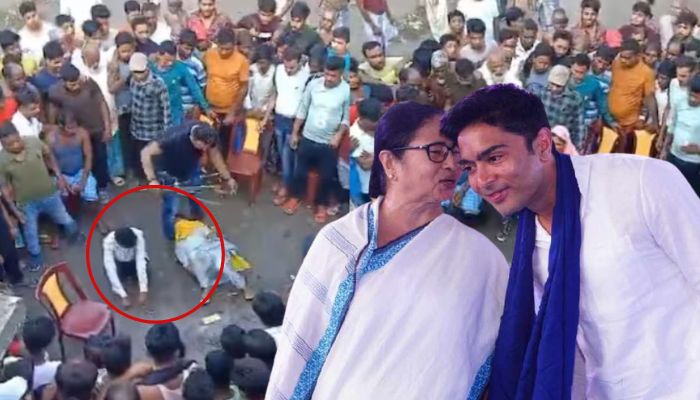
Courts came down heavily on Mamata govt over rampant post-poll violence multiple times: What it says about the ‘liberal’ establishment

On 12th June, the Calcutta High Court issued an interim order extending the tenure of Central Forces deployed in Mamata Banerjee-ruled West Bengal given post-poll violence rampant in the state. Notably, West Bengal has a history of post-poll violence and in the last few elections, Bharatiya Janata Party (workers) have become a prime target of ruling party Trinamool Congress (TMC) goons.

A division bench comprising Justice Harish Tandon and Justice Hiranmay Bhattacharyya came down heavily on the West Bengal government and said there is “no place for violence in the democratic polity”.

The court was hearing Public Interest Litigations (PILs) filed by BJP leaders Suvendu Adhikari and Priyanka Tibrewal. They have sought judicial intervention given the widespread post-poll violence allegedly initiated by TMC goons against the members, supporters and workers of the BJP. The court highlighted the paramount importance of law and order in the electoral process and extended the stay of Central Forces in the state until 21st June 2024.

In the interim order, the court said, “The election ensures the majority opinion of the citizen of the country and its faith and allegiance to a political party to administer and maintain the various facets of the people for their betterment and development, which goes without saying that there is no space for any violence in a democratic polity.”

The court noted the serious nature of allegations levelled in the PILs and emphasised that there was a necessity to maintain security and peace in the state. The court also referred to a coordinate bench decision that established an email system for registering complaints linked to post-poll violence. The court noted that a significant number of complaints were received that there was a need for serious intervention.

During the hearing, the petitioners argued that the safety and security of many individuals were jeopardized after the election. Those who held opposing political views to that of the ruling party faced homelessness and fear for their lives. The Advocate General for the State questioned the locus standi of the petitioners. On the other hand, the Additional Solicitor General appearing on behalf of the central government acknowledged the reports of violence and assured the court that the Central Government was ready to extend the forces’ tenure if the court directed to do so.

The court in the interim order extended the tenure of the Central Forces in the state till 21st June 2024 to ensure the safety and security of the residents of the state given the post-poll violence.

Courts came down heavily on Mamata Govt over rampant post-poll violence multiple times

Post 2021 Assembly Elections

After the 2021 Assembly Elections, there was rampant violence across West Bengal. BJP supporters were assaulted and attacked. The Calcutta High Court ordered a court-monitored Central Bureau of Investigation (CBI) probe into the post-poll violence. The court reprimanded the state administration for failing to curb the violence and protect citizens, emphasising the importance of maintaining law and order during elections.

A five-judge bench of the Calcutta High Court comprising Acting Chief Justice Rajesh Bindal, Justice IP Mukerji, Justice Harish Tandon, Justice Soumen Sen and Justice Subrata Talukdar pronounced the judgement in a batch of petitions alleging Mamata Banerjee-led West Bengal government’s inaction over the brutal acts of violence unleashed by members of ruling Trinamool Congress in the aftermath of assembly elections.

In its scathing order, the Calcutta High Court ordered that the High Court will monitor the CBI investigation into the post-poll violence in the state. “The Committee, NHRC, any other Commission or Authority, and the State shall immediately hand over entire record of the cases entrusted to the CBI for investigation. It is made clear that it shall be a Court-monitored investigation. Any obstruction in the course of investigation by anyone shall be viewed seriously”, the Calcutta High Court observed.

The High Court directed that a Special Investigation Team, under the monitoring of the Court, should investigate the other criminal cases related to post-poll violence. IPS officers Suman Bala Sahoo, Soumen Mitra and Ranbir Kumar of the West Bengal cadre have been made the members of the SIT. The working of SIT will be monitored by a retired judge of the Supreme Court, the High Court said.

The court noted that in over 60% of the cases, no FIR was filed by the police. The Court has also ordered the West Bengal government to grant compensation for the victims of the post-poll violence immediately. In a major embarrassment to Mamata Banerjee-led government, the High Court rejected the allegations of bias against the National Human Rights Commission, a team of which had submitted a fact-finding report to the court as per its directions.

“The allegation of bias against the Committee is not material because this court has considered not only the report of the Committee but other materials as well and arguments of learned Counsel based thereon”, Justice IP Mukerji observed in his judgment.

Post 2023 Panchayat Elections

In June 2023, Calcutta High Court lambasted the Mamata Government for the large-scale violence that the state has been witnessing since the time the filing of poll nominations has begun for the Three-tier Panchayati Raj System in West Bengal, slated to be held on July 8.

Calcutta High Court judge Amrita Sinha tore into the ruling dispensation for turning a blind eye as the state grapples with continued violence and chaos. Expressing anger over continuing incidents of violence and clashes, she observed that the election should be stopped if the process involves so much violence, unrest and bloodshed and loss of lives. “The condition is such that in a Panchayat Election, there is so much unrest, violence and bloodshed. It’s a shame. What is the picture which is going out?” Justice Amrita Singh lambasted, adding that umpteen matter of rape, threats, violence and murder has come up for hearing in her court.

Political violence in West Bengal

Large-scale political violence has become synonymous with Mamata Banerjee’s West Bengal. Year after year, whether it is during the Panchayat elections in 2018 or the Legislative Assembly elections in 2021 or the 2022 civic body polls, members of the ruling regime unleash unbridled violence to silence the opposition and dissenting voices.

What it says about the ‘liberal’ establishment

The repeated interventions by the courts in West Bengal post-poll violence cases show that there is a broader issue with the way so-called “liberal” establishments rule states. The consistent failure of the Mamata Banerjee-led government to prevent and control post-poll violence has raised serious questions over the commitment of the state government to democratic principles and the rule of law.

The incidents of violence have become frequent post-polls which is an indication that the state is okay with the political thuggery and there is no accountability whatsoever. The so-called secular-liberal establishment of West Bengal and the likes often champion human rights and democratic values. They falter when it comes to the implementation of these ideas within their jurisdictions. The deepening gap between rhetoric and reality undermines public trust and erodes the foundational principles of democracy.

Moreover, if the judiciary has to step in then there have to be systematic issues with the way the state manages law and order. The law enforcement agencies’ failure to control the violence shows there is some political pressure that stops them from fulfilling their duties towards the state residents. Merely because there are ideological differences between the supporters of the ruling party and the opposition, that does not give right to the former to attack, assault and force the latter to flee their homes.

There is a need to look into the deeper flaws of the “liberal” governments that sing songs of their commitments towards human rights and law & order but fail to execute them on the ground.

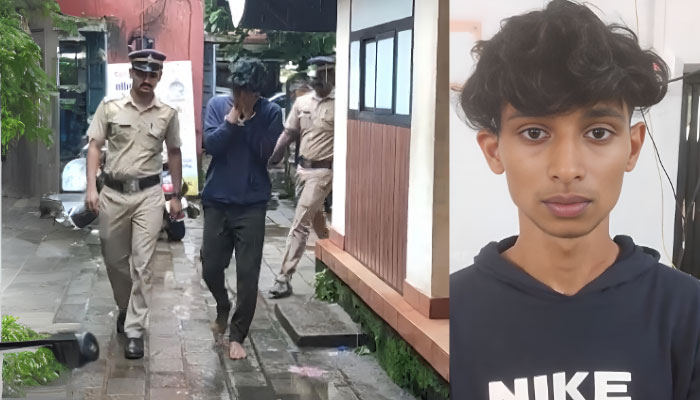
Uttar Pradesh: ‘Sex doctor’ Abdullah Pathan raped a girl on the pretext of giving a job, his brother threatened her with a gun when she protested against sex with him

In Moradabad District of Uttar Pradesh state, a woman has accused YouTuber and quack ‘sex doctor’ Abdullah Pathan of gang rape. The victim is originally from Gorakhpur district. She has accused Abdullah Pathan of calling her on the pretext of a job and raping her after giving her drugs. During this ordeal, the victim was also forced to have an abortion by blackmailing her by making an obscene video of the victim. Along with Abdullah, his brother Abdul Malik is also named in this case. The police have started investigation by registering an FIR against Abdullah Pathan on Monday (10th June 2024).

The case is from Kundarki police station area of ​​​​Moradabad. A woman has filed a complaint against Abdullah Pathan and his brother along with another unknown person. In the complaint, the victim told that in the year 2021, she got acquainted with Abdullah Pathan through social media. After some time, Abdullah lured the woman from Gorakhpur to give her a job of 15 to 20 thousand rupees at his dispensary in Moradabad. He assured the victim that many women already work at his clinic.

Abdullah had said that the accommodation and food would be free in the job offer given by him. The victim, convinced by Abdullah’s words, reached Moradabad from Gorakhpur in July 2021. There, the accused kept the victim in a rented room. After making her work for 4 months in the clinic, Abdullah sent the woman back to her home, saying that he would call her again soon. In January 2023, Abdullah Pathan himself went to Gorakhpur and brought the girl with him to Moradabad. This time he kept the girl in one of his own houses in Kundarki area.

It is alleged that in this house, Abdullah Pathan raped the victim by giving her drugs in January 2023. During the sexual assault, he made obscene videos of the girl. Threatening to make the video viral in the girl’s village, Abdullah started raping the victim every day. When the victim became pregnant due to the rape, he got the child aborted in December 2023. On Thursday (June 6), Abdullah’s brother Abdul Malik came to the victim’s room with an unknown person. He pressured the girl to have physical relations with the person who came with him.

The woman said in her complaint that when she refused, Abdul Malik and the person accompanying him raped her in turns. During this, Abdul Malik put a gun on the woman’s head and threatened to kill her if she made any noise. Later, when the victim told Abdullah Pathan about his brother’s act, he was not affected. He told the victim about his high connections and advised her to forget everything. Along with this, Abdullah also threatened to make the obscene video viral if she opens her mouth.

Eventually, the victim’s patience broke. She decided to teach the accused a lesson at any cost. On the woman’s complaint, the police have registered an FIR against Abdullah Pathan, his brother Abdul Malik, and another unknown person. This FIR has been registered under sections 376-D, 313 and 506 of the IPC. In the complaint, the victim has accused one of Abdullah Pathan’s brothers of pressurising the Kundarki police station. OpIndia has a copy of the complaint. Moradabad police said that legal action is being taken in the matter.

Abdullah Pathan claims to have met Great Khali and also gone on a date with Sunny Leone. He has also expressed his desire to fight in WWE. Abdullah also posts fitness-related blogs on YouTube. He has a good number of followers on YouTube and Facebook. Abdullah is also accused of cheating many people in the name of selling masculine strength medicine. On October 16, 2023, a team of the State Health Department raided Abdullah Pathan’s alleged hospital in Moradabad district. After this raid, the hospital of Abdullah, who called himself a ‘sex doctor’, was sealed.

Karachi: 16-year-old Hindu girl kidnapped, forcefully converted to Islam, married by abductor Sameer Ali claiming she is 19

On June 13th, a shocking case of abduction of a minor Hindu girl and her forceful marriage to a Muslim youth came to the fore from the Karachi region of Pakistan. The 16-year-old victim was kidnapped by a Muslim identified as Sameer Ali, son of Gul Hassan belonging to Shahdabkot town in Pakistan, and was forcefully converted to Islam.

As per the documents made public on social media by Faraz Pervaiz, a Pakistani Christian activist who is known for highlighting cases of religious persecution against minorities, the girl, Sangeetha was forcibly converted to Islam, and married off to the abductor Muslim youth.

Further, the Hindu girl was given the new name Hameeda after conversion. Although she is 15 years old, her documents were forged by the accused Muslim who made her look 19 years old. The accused in the affidavit submitted before the forceful marriage mentioned that the girl was an adult and that she was freely willing to marry him.

The accused as per Pervaiz, forced the girl to sign an affidavit that read that she was 19, an adult, and that she was marrying Sameer Ali out of love respecting her free will.

“I have not been abducted by anyone to perform this marriage and I am giving this affidavit in my full senses without any force, pressure, or undue influence that I am going to solemnize my marriage with Sameer Ali with my personal decision without any force by anyone,” the affidavit further read.

The affidavit also added that if anyone filed a police complaint against the accused, it would be false as the victim was marrying him ‘with her free will’.

Recently another 14-year-old was kidnapped, converted to Islam in Sindh

This is not the first time a Hindu girl has been kidnapped by a Muslim in Pakistan and forced to convert to Islam. Recently, on 2nd June, a 14-year-old Hindu girl was kidnapped, forcibly converted to Islam, and married off to a Muslim man in Pakistan’s Sindh province.

The Hindu girl identified as Sohana Sharma Kumari was kidnapped at gunpoint from her home in the Benazirabad district of the southern Sindh province in front of her mother by her tutor and his accomplices.

Her father, Dilip Kumar, filed a police report alleging she was kidnapped. Later, the girl appeared in a video, plainly under pressure, claiming to have converted to Islam and married a Muslim man. Her parents, however, maintained she was underage.

Police retrieved the youngster from a residence in the district five days after she was kidnapped, following much outrage on social media. Sohana was brought to the district court in Larkana last week where she told the judge that she had been abducted and forced to convert to Islam and that she wanted to go with her parents. Notably, the court on June 12 refused to send the girl with her parents.

Another Hindu, Priya Kumari abducted by a Muslim in Dera Murad Jamali, Pakistan

In April this year, massive protests erupted over another Hindu girl named Priya Kumari who was abducted by Muslims in the Dera Murad Jamali town of Pakistan. The girl is still believed to be in captivity. As per the reports, on April 2nd, members of the Hindu community and traders in Dera Murad Jamali took to the streets to condemn the recent abduction of the Hindu girl. They demanded urgent action for her recovery.

The matter has received massive escalation with the Sindhi Foundation, a Washington-based human rights body focusing on the human rights of Sindhis in Pakistan, demanding strict action against the accused persons.

As per the reports, the foundation has planned to organize a long march on the streets of London to commemorate the abduction of Priya Kumari on June 14th. “The long march has been organized in remembrance of the enforced disappearance of a young girl, Priya Kumari who was forcibly abducted in Pakistan three years ago,” the statement read.

The statement further stated that the girl was kidnapped near her home in Sangrar, near Sukkur in Sindh province. “A Hindu girl who was abducted near her home when she was serving water to the thirsty mourners on the day of lamentation in commemoration of Imam Hussain and his companions on the 10th day of Muharram, at her village Sangrar near Sukkur in Sindh province,” it read.

UN recently condemned Pakistan for atrocities against minority women in the country

On 11th April, the United Nations expressed its disappointment with the continued atrocities inflicted upon women from minority communities in Pakistan. A panel of experts from the UN issued a statement in Geneva and slammed the Islamic country for the forced marriages and religious conversions of Christian and Hindu women in Pakistan.

The statement said, “Christian and Hindu girls remain particularly vulnerable to forced religious conversion, abduction, trafficking, child, early and forced marriage, domestic servitude, and sexual violence.”

The statement from the Office of the High Commissioner, United Nations Human Rights, further said, “The exposure of young women and girls belonging to religious minority communities to such heinous human rights violations and the impunity of such crimes can no longer be tolerated or justified.”

The experts mentioned that the “Perpetrators often escape accountability with police dismissing crimes under the guise of ‘love’ marriages”. The UN press release also mentioned that any child, early, or forced marriage cannot be justified in any case. According to international law, any consent remains irrelevant in the case of marriage, provided the victim is a minor (anyone younger than 18 years).

“A woman’s right to choose a spouse and freely enter into marriage is central to her life, dignity, and equality as a human being and must be protected and upheld by law,” it was noted.

In conclusion, the UN called upon Pakistan to ensure that those responsible for such actions are held accountable through legal proceedings, to strengthen the enforcement of existing laws safeguarding against child, early, and forced marriage, as well as the abduction and trafficking of minority girls, and to fulfill the country’s international human rights commitments.

Ghaziabad YouTuber ‘Kuwari Begum’ who taught subscribers ‘how to sexually violate infants’ booked for videos on child sex abuse

Shikha Metray, a YouTuber and gamer from Ghaziabad who goes by the moniker “Kuwari Begum” has been booked by the authorities for disseminating explicit material on her channel and encouraging the sexual abuse of infants. A First Information Report was filed after social media users flagged her videos and demanded police action against her for uploading obscene and offensive content.

According to Information Technology (IT) Act-67B and Indian Penal Code section 293, it is unlawful to distribute, provide or circulate pornographic materials as well as to sell the same to anyone younger than 20 years of age.

Additional Commissioner of Police (ACP) Dinesh P Kumar informed that two police teams have been dispatched to arrest Ghaziabad-based YouTuber Shikha Metray, who has 2,050 subscribers and published over 115 videos on her channel. The videos, some of which have received several hundred views are being removed by Google at the request of the police. The ACP added that she works for an apparel company in Delhi and is a graduate of the National Institute of Fashion Technology (NIFT), Delhi.

After the complaint was filed against Kuwari Begum, the accused changed her YouTube channel’s video privacy settings from public to private and erased or deactivated a few other social media accounts, according to authorities. Meanwhile, video platform YouTube also responded and declared, “Appreciate the report! we’re passing this along and we’ll take it from here.”

A clip posted by YouTuber Shikha Metray advising her fans on how to sexually assault children went viral on social media on 10th June. She was heard saying, “If I had a d*ck, I would have made a tutorial on masturbation. I could have then shared tips on how masturbation can be made to feel better. I would have also explained why you should masturbate. Find an infant who doesn’t even have teeth. Seek permission from the child’s mother to take the child somewhere and do something.”

She maliciously continued, “I am not so sorry. If I had a d*ck, then, I would have tried it. Imagine children without teeth. Wow, it would be one heck of an experience.”

Jaipur, Rajasthan: Local Hindus cite harassment, pressure from Muslims to vacate the area, posters urging Hindus not to sell their homes to non-Hindus put up in Shastri Nagar

In the Shastri Nagar area of Rajasthan’s Jaipur, posters have been put up urging local Hindus not to sell their homes to non-Hindus and stop migration. The poster pasted on the walls in Shastri Nagar reads, “Sanataniyon se appeal: Palayan ko rokein. Sabhi Sanatani bhaiyon beheno se appeal hai ki apna makaan gair Hinduon ko na bechein. Nivedak: Sarva Hindu Samaj” [Appeal to Sanatanis: Stop migration. It is an appeal to all Sanatani brothers and sisters not to sell their homes to non-Hindus. Applicant: Sarva Hindu Samaj].

It has been said by the local Hindus that the local Muslims are continuously harassing them through various tactics and even pressuring them to sell their houses to Muslims. Frustrated due to the perpetual harassment several Hindu families are reportedly migrating from the area.

Local Hindus have alleged that Muslim youths harass Hindu girls and create ruckus in the locality adding that it has become difficult for Hindu girls to even step out of their homes. Speaking to TimesNow Navbharat, several local Hindu women said there has been a significant surge in incidents of theft recently. A Hindu woman said that the Muslim harassers arrive on their bikes as Hindu girls return from their school and harass them. The local Hindus said that several youths roam around in the locality late in the night after consuming drugs.

A local Hindu woman said that they submitted a complaint to the police in the matter, however, the authorities took no action. She added that in a residential colony, some Muslims have opened goat markets near a Hindu temple. Moreover, reports say that there have been clashes in the past and local Hindus fear the possibility of violence against them. The local Hindus have also reportedly demanded from the government that it should stop non-Hindus from buying houses here.

“In the wake of this situation, we decided to post posters outside our homes urging people not to sell their homes to non-Hindus.” Property brokers frequently approach us, asking whether we want to sell our house. In the daytime, they come and ask us to show them our houses even though we tell them that we are not interested in selling our houses. Many houses have been sold to outside people and the atmosphere in our locality has been disturbed,” the local Hindu residents said.

Meanwhile, the SHO stated that the police had not received any complaints about the matter. “Selling and buying property is a personal matter. “No such matter has come to light in which there is any dispute,” the SHO said.