

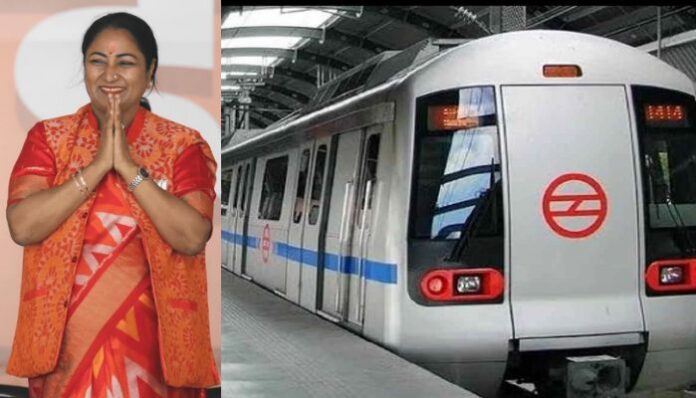
The Delhi government has cleared a major plan to expand the metro network in the city, aiming to improve connectivity in outer and developing areas. Under Phase V(B) of the project, seven new metro corridors will be built, covering a total distance of about 97 kilometres. These corridors will include 65 new metro stations. Chief Minister Rekha Gupta said the total cost of the project is estimated at around ₹48,204 crore.
According to the media reports, the Detailed Project Report (DPR) has already been prepared and sent to the central government. It is now waiting for approval from the Union Cabinet. Officials said the proposal was finalised after discussions between the Delhi government and the Delhi Metro Rail Corporation earlier this week. Once the Centre gives its nod, both the Delhi and central governments will also have to approve funding before construction can begin.
The Delhi government on Saturday announced it has approved an extensive expansion of the city’s Metro rail network, with plans afoot to add over 97 kilometres of new lines and 65 stations across seven corridors under the Phase V(B) plan
— Hindustan Times (@htTweets) May 3, 2026
Tap to read more 👉… pic.twitter.com/DSmSea7vSe
The seven corridors planned under this phase includes:
- Dhansa Bus Stand to Nangloi
- Central Secretariat to Kishangarh
- Samaypur Badli to Narela
- Kirti Nagar to Palam
- Jor Bagh to Mithapur
- Shastri Park to Mayur Vihar Phase 2
- Keshavpuram to Rohini Sector 34.
The Dhansa Bus Stand to Nangloi corridor will be around 11.86 km long with nine stations, and it will be fully elevated. The Central Secretariat to Kishangarh route will be approximately 16 km long and have ten stations; most of them will be underground. The Samaypur Badli to Narela route will span across 12.89 km and have eight stations. All of its stations will be elevated. On the other hand, the Kirti Nagar to Palam route will be 9.96 km long and consist of six stations. Some of its stations will be elevated while others will be underground.
The government believes that the extension will benefit those who reside in areas poorly served by the metro. In total, there will be seven corridors. Of them, four will be designated as high-priority routes, and their construction will begin first. The goal is to finish building these corridors by 2029.
Overall, this expansion is expected to give a big boost to Delhi’s public transport system and reduce travel time for thousands of daily commuters.
