

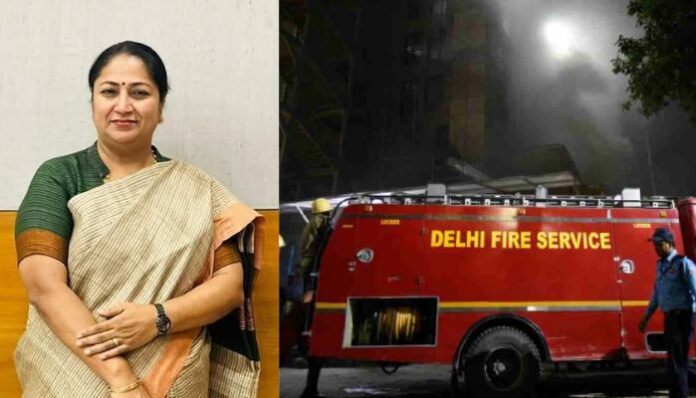
After a series of deadly fire incidents, the Delhi government has decided to prepare a long-term Firefighting Master Plan for the next 25 years. The plan is aimed at improving emergency response, upgrading firefighting systems, and reducing the repeated loss of lives and property in fire accidents across the city.
Chief Minister Rekha Gupta said the government wants to build a stronger and future-ready fire safety system by fixing the weak points that often come to light after major fire tragedies in crowded residential areas.
Recent fire incidents raised fresh concerns
The move comes shortly after a massive fire in Delhi’s Vivek Vihar area claimed the lives of nine people, including a toddler, after flames spread through a four-storey residential building. Earlier in March, another tragic fire in Palam killed nine people, including three children.
Both incidents once again raised questions over illegal construction, blocked emergency exits, narrow lanes, and weak implementation of fire safety rules in densely populated areas of the city.
Officials admitted that with rising temperatures and increasing electricity demand during summer, the risk of fire incidents in Delhi also goes up sharply, making better preparedness an urgent need.
Departments asked to submit reports
Following a high-level review meeting with senior officials, Rekha Gupta directed all concerned departments to prepare detailed reports and suggestions within 10 days for the proposed master plan.
According to the Chief Minister, departments have been told to study previous fire incidents carefully and create a stronger response system so emergencies can be controlled quickly and casualties can be reduced.
She also warned that there would be no negligence in matters related to public safety and said the government wants to significantly improve the working capacity of departments linked to fire prevention and emergency management.
Focus on faster response and better equipment
Officials said the proposed strategy will mainly focus on strengthening the Delhi Fire Services (DFS), cutting emergency response time, and improving coordination among different civic agencies.
The government has instructed the fire department to recruit more staff, open new fire stations in high-risk and underserved areas, and purchase modern rescue and firefighting equipment designed for congested urban neighbourhoods.
Advanced hydraulic platforms, rapid-response vehicles, modern communication systems, and protective safety gear are expected to be included in the upgrade plan. Officials also said the government is likely to increase financial support for modernising firefighting infrastructure in the coming years.
The MCD and power department given key responsibilities
The power department has been directed to remain extra careful while issuing electricity connections and regularly inspect vulnerable areas. Faulty wiring and overloaded electric circuits are considered among the biggest reasons behind fire incidents in Delhi.
At the same time, the Municipal Corporation of Delhi (MCD) has been asked to stop illegal constructions in residential areas and ensure roads and lanes remain free from encroachments that block the movement of fire tenders during emergencies.
An official statement from the Chief Minister’s Office said departments have been asked to identify vulnerable zones, recurring causes behind fires, gaps in the current system, and practical preventive measures.
Public awareness campaign also planned
Apart from infrastructure upgrades, the Delhi government is also planning a citywide awareness campaign to educate people about fire safety, evacuation methods, and precautions at homes and workplaces.
Mock drills are expected to be organised in residential colonies and public places to help residents respond better during emergencies.
Delhi Home and Power Minister Ashish Sood said the aim is to build a stronger Fire Services Department capable of protecting the city over the next quarter century.
Experts, however, believe that along with new infrastructure, strict enforcement of safety rules and better urban planning will be equally important for the success of the master plan.
