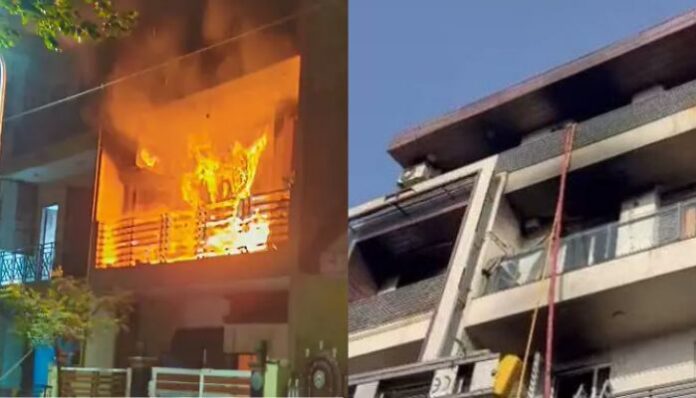
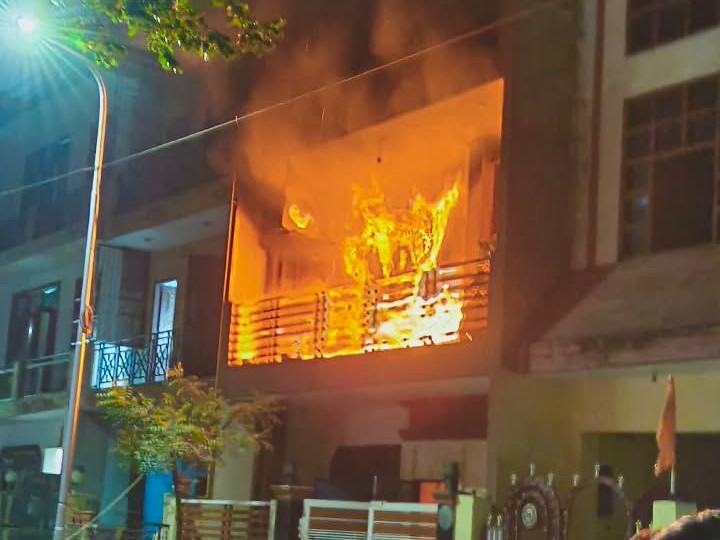
In recent weeks, there have been several incidents of AC blasts in the country. In a recent incident, an air conditioner exploded in a house in Greater Noida’s Beta Sector on the night of 6th May. Following the AC blast, the fire spread rapidly and engulfed the entire house. While no one was injured, the blast destroyed household items worth lakhs of rupees. Eventually, fire crews arrived and extinguished the flames.
In a similar incident reported in Delhi’s Vivek Vihar on 3rd May, a massive fire broke out in a four-storey residential building due to an air conditioner (AC) blast. The tragic incident left nine people dead and four others injured. During the rescue operation, around 10 to 15 people were safely brought out from inside the fire-engulfed building.
There have been several other such incidents in recent weeks, raising a question: Why do AC blasts occur?
What is commonly referred to as AC ‘blast’ is actually a violent rupture or fire involving the compressor, which is the heart of the air conditioner’s outdoor unit, or the refrigerant circuit.
One of the most common reasons for the occurrence of an AC blast is pressure buildup in the compressor. The compressor squeezes refrigerant gas to high pressures, hundreds of psi, and if airflow is blocked due to dirty filters, the unit overheats, or if refrigerant levels are not appropriate, internal pressure surges. This may lead to failure of safety valves, and the compressor shell might rupture. This rupture occurs sometimes with enough force to generate an explosion-like sound and spray hot oil or refrigerant.
Another reason could be flammable refrigerants. For better efficiency, many modern AC models use mildly flammable refrigerants, including R32 and R290/propane. In case a leak occurs, the refrigerant mixes with air near an electrical spark, maybe from the capacitor, compressor, or faulty wiring, and it may ignite. While older R22 units were non-flammable, the modern eco-friendly R32 and R290 ones carry this risk.
Besides, electrical faults and other external factors may also lead to an AC blast. These factors may include voltage fluctuations, short circuits, substandard or old wiring.
In addition, overuse during peak summertime without necessary breaks strains the machine. An explosion may also occur due to poor installation, particularly an incorrect refrigerant charge.
Improper servicing has caused several technician deaths in recent years. If Nitrogen used for leak testing is not completely removed, it may result in residual pressure. Unsafe vacuuming leaves moisture, leading to acid formation that gradually corrodes parts.
The air conditioners must be turned off fully during repair or servicing. Turning the AC on during servicing may cause a diesel-like explosion inside the compressor.
In fact, many studies have documented several deaths of AC mechanics from such compressor explosions during routine servicing.
Precautions that may prevent AC blasts
There are simple yet effective precautions recommended by AC manufacturers and safety experts to prevent AC blasts. For homeowners, they should get the AC serviced every 6 months by a trained professional, properly and not just a gas top-up.
Regularly clean air filters and ensure that the outdoor unit coils remain dust-free, in addition to making sure that at least 1-1.5 feet of space around it for airflow.
The most basic thing to do is use a voltage stabiliser, as voltage fluctuations are a major trigger in Indian houses.
Ensure that vents are never blocked and do not run the AC throughout the day without breaks.
The location of installing an AC is also very important. The unit must always be installed in a well-ventilated area and avoid poor airflow areas or on balconies. Do not skip performing regular inspections of wiring and connections, and replace old capacitors.
During servicing, turn off the unit at the mains and completely discharge pressure before the mechanics begin their work. Ensure that the mechanics evacuate nitrogen fully and perform a deep vacuum. Make sure the unit is not turned on mid-servicing. Always demand branded gas and its invoice.
People must strictly avoid DIY gas refills or repairs, as this could be extremely dangerous in the wake of even the slightest mistake.
Generally, purchase ACs with proper safety features and in case there is a smell of burning or you hear unusual sounds coming from the AC’s outdoor or indoor unit, immediately turn it off, remove the plug and approach a trained technician.
Since most modern air-conditioner models have eco-friendly but flammable refrigerants like R32 or R290, ensure proper ventilation.
AC blasts are not random failures but an eventuality stemming from neglected maintenance, poor electrical infrastructure, or improper servicing. With better awareness and implementation of precautions, AC blasts are preventable.