

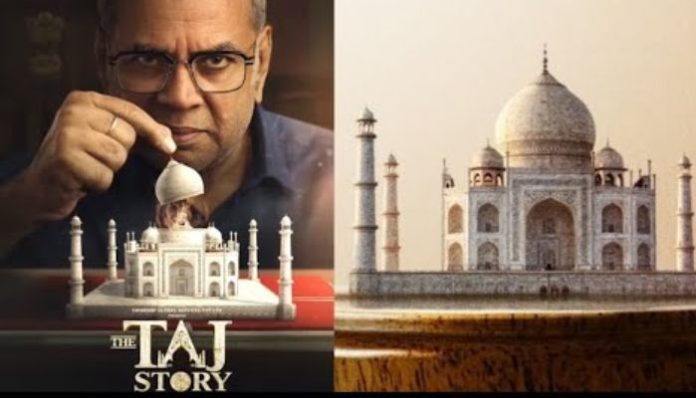
A new movie titled “The Taj Story” is facing a lot of controversy right before its release on 31st October. A lawyer named Shakeel Abbas filed a case of public interest litigation (PIL) in the Delhi High Court to stop it. He claims the movie is full of fabricated facts and is communal propaganda that could cause fights between different communities.
The lawyer went to court on Wednesday, 29th October, asking for an emergency hearing, trying to get the movie stopped immediately. Appearing in front of the division bench, Chief Justice Devendra Kumar Upadhyaya and Justice Tushar Rao Gedela, the lawyer said the movie’s trailer came out on 16th October, and he realised the movie was distorting historical facts on 22nd October.
The court, however, didn’t think it was such an emergency. The Chief Justice basically asked, “Why today?” He noted the movie isn’t out until the 31st. He told the lawyer the case would be “auto-listed,” which means it will get a hearing date in the normal process and won’t be treated as a special urgent case.
It’s worth noting that Wednesdays are the specific days the Chief Justice’s team is scheduled to hear PIL cases.
The lawsuit names people, including the Ministry of Information, Central Board of Film Certification (CBFC), and the film production company Swarnim Global Services Pvt. Ltd, director Tushar Amrish Goel, writer Saurabh M. Pandey, and even the actor Paresh Rawal.
The lawyer claims these filmmakers are “continuously launching controversial films one by one,” and mentioned movies like The Kashmir Files and The Bengal Files, accusing them of trying to promote a certain political party.
The case claims the filmmakers are trying to mislead history by spreading misinformation about the Taj Mahal and that the government and the CBFC are just acting as “mute spectators” and letting it happen.
What does the lawsuit want
It’s asking the court to order the CBFC to review the movie’s certification. It suggests the film might need an adult rating or that certain scenes should be cut to protect communal harmony. It also wants the filmmakers to be forced to put a clear disclaimer on all promotions, stating that the movie is a contested narrative and not a definite historical account.
Finally, it asks the authorities to take steps to prevent any communal violence when the film is released, especially around the Taj Mahal in Agra.
