

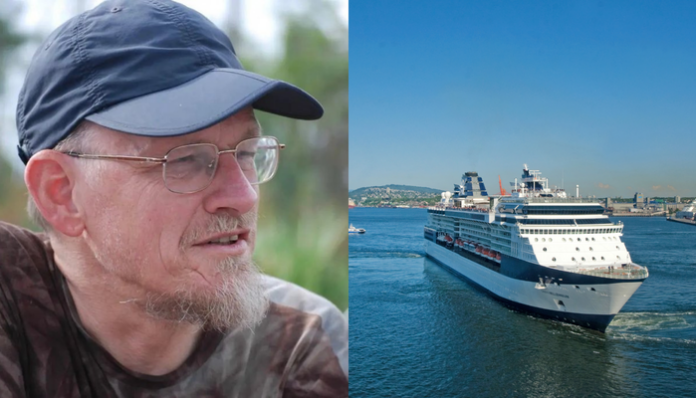
On April 24, 2026, Mirjam got off the ship with Leo’s dead body during a planned stop on the Atlantic island of Santa Helena. Then she flew to Johannesburg in South Africa and transferred to a KLM flight bound for the Netherlands. However, she was removed from the flight after the crew found her too sick to fly. She collapsed at the airport and died the next day. Three deaths have been confirmed so far because of Hantavirus, after a German national died a few days later.
Leo and his wife caught the virus at a landfill site in Ushuaia
In Argentina, they visited a landfill in Ushuaia in search of a rare creature, the white-throated caracara, nicknamed Darwin’s caracara. The landfill is said to be overrun with trash and is even avoided by locals. The Argentinian authorities suspect the couple inhaled particles from the faeces of long-tailed pygmy rice rats at the landfill site. The rodents are known to carry the Andes strain of the hantavirus, the only form known to transmit from human to human. The virus spreads through contact with the infected rodents’ urine or faeces.
The couple, residents of Haulerwijk village in the Netherlands, were birdwatchers who had embarked on birdwatching trips across the world in the past. They were popular in the Dutch birdwatcher community. The couple had co-authored a study on pink-footed geese for Het Vogeljaar, the Dutch ornithological magazine, in 1984.
The cruise ship docked in Spain
On Sunday morning (10th May), MV Hondius docked at the Spanish Island of Tenerife carrying 147 people. Ahead of the ship’s arrival at the Spanish coast, the European Centre for Disease Prevention and Control on Saturday declared all the passengers on the cruise ship as high-risk contacts as a precautionary measure. The agency said that passengers with symptoms will be repatriated for self-quarantine through specially arranged transport, not regular commercial flights, by their respective countries.
Compounding concerns, around 29 to 40 passengers, reports vary slightly between the ship operator’s figure of 29 and the Dutch Foreign Ministry’s estimate of about 40, disembarked at Saint Helena on 24 April without formal contact tracing, as the hantavirus link had not yet been established. This group included the deceased Dutch man’s wife, who later died in South Africa. Health authorities have since initiated tracing efforts for these individuals and others who left the vessel earlier.
According to the World Health Organisation (WHO), eight people have fallen ill, including the three who died. Six of the eight people have been confirmed to have contracted the virus.
