

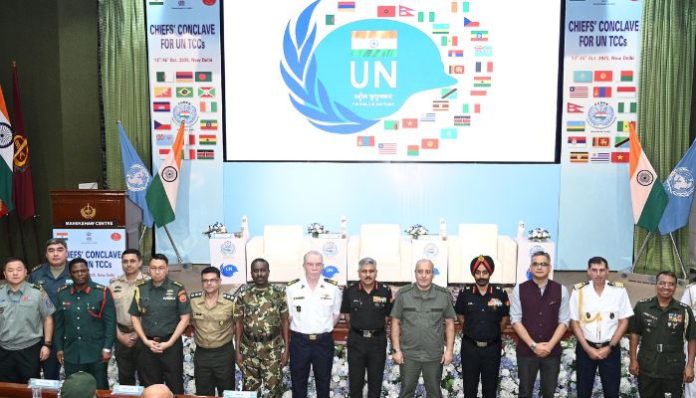
India has once again made it clear that it will not send its soldiers to fight in any foreign conflict zones, whether in Ukraine, Gaza or elsewhere, unless such a move comes with a clear mandate from the United Nations Security Council (UNSC). The clarification came during a briefing held ahead of a major UN peacekeeping chiefs’ meeting, where Indian officials highlighted New Delhi’s strong commitment to UN-led peacekeeping operations.
India is among the largest contributors of troops and police to UN peacekeeping missions.
Vishwesh Negi, an official from the Ministry of External Affairs deputed to the Ministry of Defence, explained that the India’s position has always been clear, its soldiers will only be deployed as part of UN peacekeeping missions, under UNSC approval and in line with the UN Charter.
Negi further stated that is highly unlikely that UN peacekeeping forces will be deployed in Ukraine or Gaza, given the composition of the United Nations Security Council. He was speaking at a press conference of the conclave of army chiefs of United Nations troop contributing countries in New Delhi.
He pointed out that given the divided nature of the UNSC, with its permanent members often at odds, such a mandate for conflict zones like Ukraine or Gaza is very unlikely.
Lt Gen Rakesh Kapoor, a senior Indian military official, further clarified India’s stance, stating, “we only do it under the UN flag; we understand the legitimacy.” India has a storied history as one of the largest contributors to UN peacekeeping. In the past 75 years, India has contributed over 2,90,000 peacekeeping spread across 50 missions.
India will host a conclave in New Delhi between 14th and 16th October involving Army Chiefs and senior military from almost 30 countries contributing troops to UN peacekeeping missions. Besides, the conclave, India will also project its indigenous defence gear used with success in peacekeeping missions.
Lt Gen Rakesh Kapoor also said, “it is indeed a unique forum where the collective experience, wisdom and commitment of militaries and nations will converge to deliberate of shared responsibility of the international community towards maintenance of peace under the UN charter.”
Bangladesh, Nepal, Rwanda, Ghana, Brazil, France, Italy, and many others from Asia, Africa and Latin America are some of the countries that have been invited to the conclave. Pakistan and China have not been invited to participate.
