

In a significant development in the long-running Singur land dispute, the Calcutta High Court on Thursday declined to grant an unconditional stay on a ₹765.78 crore arbitral award passed in favour of Tata Motors Ltd against the West Bengal Industrial Development Corporation Ltd (WBIDC).
Justice Aniruddha Roy ruled that WBIDC failed to make out a prima facie case of bias or fraud warranting an unconditional stay under the Arbitration and Conciliation Act. The court, however, provided a conditional eight-week window for WBIDC to secure the award amount by furnishing details of unencumbered properties or depositing cash. An interim unconditional stay will operate during this period, but it will automatically vacate if security is not provided.
The court also imposed costs of ₹50,000 on WBIDC, payable to the West Bengal State Legal Services Authority, while dismissing its application for an unconditional stay.
Background of the Dispute
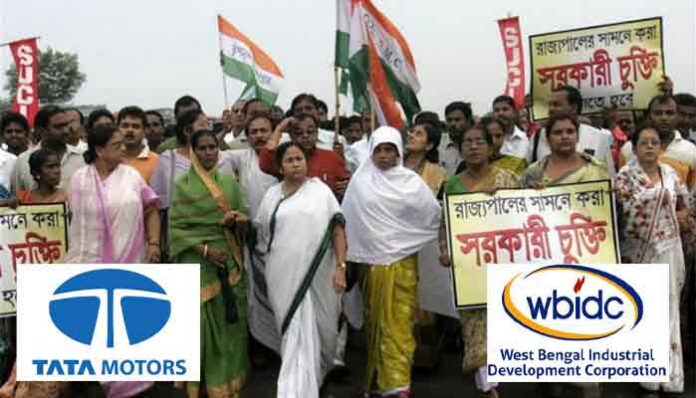
The case stems from the acquisition of land in Singur, Hooghly district, for Tata Motors’ proposed Nano small car manufacturing plant in the 2000s. Massive protests by farmers, backed by the then-opposition Trinamool Congress (TMC) led by Mamata Banerjee, forced Tata Motors to abandon the project in 2008 and relocate to Sanand, Gujarat.
The Supreme Court later declared the land acquisition illegal and ordered the return of the land to farmers. In response, Tata Motors initiated arbitration proceedings seeking compensation for losses incurred. In October 2023, a three-member arbitral tribunal unanimously awarded Tata Motors ₹765.78 crore plus 11% interest per annum from September 1, 2016, along with ₹1 crore in costs.
WBIDC challenged the award in the High Court, primarily alleging bias on the part of the presiding arbitrator, who had allegedly participated in seven Tata Motors-related car launch events. It argued that this constituted fraud under the second proviso to Section 36(3) of the Arbitration Act, which requires an unconditional stay in cases of fraud or corruption.
Court’s Reasoning
Justice Roy found no merit in the bias allegations, noting that the information about the events was in the public domain and should have been known to WBIDC earlier. The company did not raise these concerns during the arbitration proceedings. The court emphasised that any claim of fraud must be “egregious and glaring” to justify interfering with the award at this stage, which was not established here.
“There is no exceptional case for which this Court can stay the award impugned unconditionally,” the court observed.
Senior Advocate Kishore Datta (then Advocate General) represented WBIDC, while Senior Advocates Sudipto Sarkar and Siddhartha Mitra appeared for Tata Motors.
This ruling keeps the pressure on the West Bengal government entity to either secure the substantial award amount or face enforcement proceedings, as the decades-old Singur saga continues in the courts.
