A new form of linguistic chauvinism unknown to Karnataka had been propped up by Siddaramaiah and Congress. This included resistance for Hindi signboards in Bengaluru’s Metro stations and a demand for a separate state flag. The issue of the flag and regional pride were presented as ‘game changing’ moves by media. The momentum of this fake ‘Kannada pride’ had proceeded to an extent where Modi, Amit Shah and Yogi Adityanath were called North Indian imports to Karnataka.
. @BJP4Karnataka by waiting for North Indian imports like PM Modi, UPCM Adityanath is admiting they have no leaders in the state. They have reduced their CM face @BSYBJP to a dummy.
PM may come & go. Here it is Siddaramaiah vs BSY & you know who is winning.#CongressMathomme https://t.co/IatRRstyAe
— Siddaramaiah (@siddaramaiah) April 25, 2018
This is indeed a hilarious proposition because the Congress party was lead for nearly two decades by a woman of Italian origin. The issue of a state flag which was propped up to gain traction among the common people of Karnataka has died down. It is well known that the issue is not considered ‘important’ by the electorate in this election.
I am a Kannadiga. Yes, I love my language, but I have no problem in listening to a speaker of Modi’s stature in Hindi. In fact, my knowledge of Hindi has improved ever since I started following Modi during his 2014 Lok Sabha campaign. I knew that there were many Kannadigas like me who have no qualms about learning Hindi or listening to politicians speak the language. Today, I found visible evidence to this assumption at a Modi rally in Udupi.
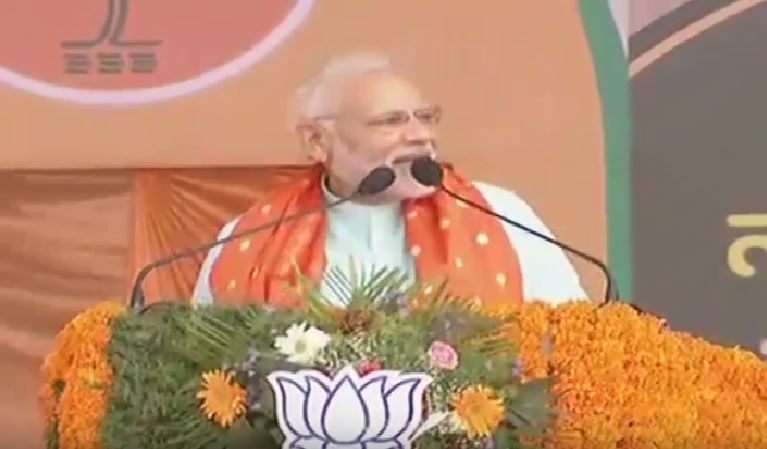
People in the rally were visibly opposed to the Kannada translator interrupting the flow of Modi speech. Modi thanked the crowd for their love and remarked that language had not become a barrier between him and his Kannada speaking supporters.
This is a crisp response to the self-appointed protectors and defenders of Kannada language and local culture. In fact, Congress’ commitment to Kannada itself is questionable. Rahul Gandhi, the president of Congress was incapable of pronouncing the name of Bharat Ratna Sir M Visvesvaraya. He was also incapable of reciting a simple Basava vachana during a speech.
For @RahulGandhi a violent leader like ‘Tipu Sultan ji’ is ‘mahapurush’.Takes his name along with educationist M.Visvesvaraya &hindu ruler KrisnaRaja Wodeyar.
He cant even utter ‘Visvesvaraya’ properly. Fumbles multiple times“Visves .. , viswa..raya ….
. Visvariya.. ? pic.twitter.com/EnXgeMoagS— Un-bhadralok bangali (@goonereol) March 24, 2018
Unlike Rahul Gandhi, Modi pronounces Kannada words perfectly whenever he speaks the language. He can also pronounce names of important icons of Karnataka without major errors. Thus, the issue of ‘Kannada pride’ is not a major one in this election. BJP is in no way an ‘anti-Kannada’ party. Most of us in Karnataka have learnt Hindi voluntarily without ‘imposition’ as claimed by chauvinists/activists. Therefore it would be a fair assumption that a majority of Kannadigas love their language, love Modi and don’t hate Hindi.
And to my Kannadiga brothers who have somehow still fallen for Congress’ language card, let me tell you about a Gujarati guy I know who has learnt Kannada all by himself because he wanted to enjoy our Kannada movies in their original form. That’s how you win the hearts and promote your language.