

HomeNews ReportsDhoti for men and Sarees for women not compulsory for Sparsh-Darshan of Jyotirlinga at...

Dhoti for men and Sarees for women not compulsory for Sparsh-Darshan of Jyotirlinga at Kashi Vishwanath Temple, only discussion happened, clarify authorities

The Commissioner of Varanasi, Deepak Agarwal clarified that this was only a discussion that took place and no formal proposal is with the state for the implementation of dress code.

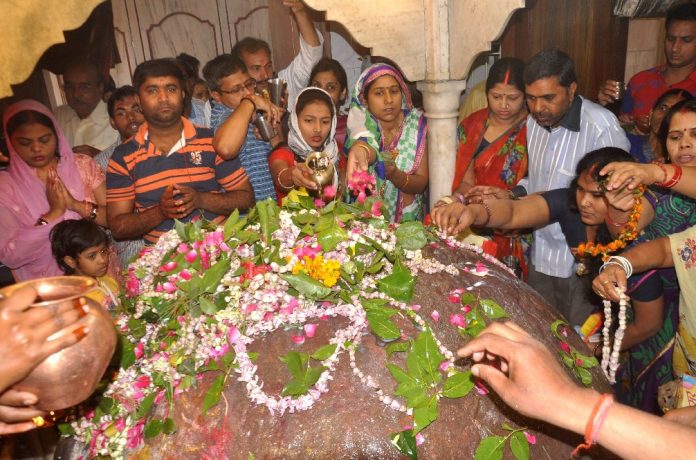
It was reported earlier that the Kashi Vishwanath Temple of Varanasi has announced a new dress code for devotees who seek to enter the sanctum of the shrine. The dress code mandates that men will have to wear the traditional Dhoti-Kurta and women must be in sarees in order to have a ‘Sparsh-darshan’ of the Deity.

The Sparsh-darshan, or touching the Shivalinga by the devotees, will be allowed from the morning Mangala Aarti till the noon Aarti.

However, the Commissioner of Varanasi, Deepak Agarwal clarified that this was only a discussion that took place and no formal proposal is with the state for the implementation of dress code.


He said that the implementation of a dress code for the ‘Sparsh-darshan’ of the Deity was only a suggestion by the Parishad which was discussed. However, there was no formal decision or formal proposal for the implementation of the same.

Note: This article has been updated with new information

Join OpIndia's official WhatsApp channel

  Support Us  

For likes of 'The Wire' who consider 'nationalism' a bad word, there is never paucity of funds. They have a well-oiled international ecosystem that keeps their business running. We need your support to fight them. Please contribute whatever you can afford

OpIndia Staff
OpIndia Staffhttps://www.opindia.com
Staff reporter at OpIndia

Related Articles

Trending now

West Bengal CM Suvedu Adhikari restores general consent for CBI after 8 years: What it means and why Mamata Banerjee withdrew it in 2018

The restoration of general sanction would enable the CBI investigations into offences by central government employees, central public sector undertakings (CPSUs), as well as private persons across West Bengal, without prior case-by-case approval.

When the Allahabad High Court told the Supreme Court that its own judgments don’t bind in cases of habeas corpus

The Allahabad bench ruled that the recent cluster of Supreme Court decisions on illegal arrest and habeas corpus, the second set, did not appear to have taken into account the older, more detailed line of precedents that had sketched out the entire criminal procedure. Because of this, the bench ruled that those newer rulings are not binding precedents and hit by the principles of stare decisis, that is, they cannot overturn the more established, well reasoned position.
- Advertisement -
