

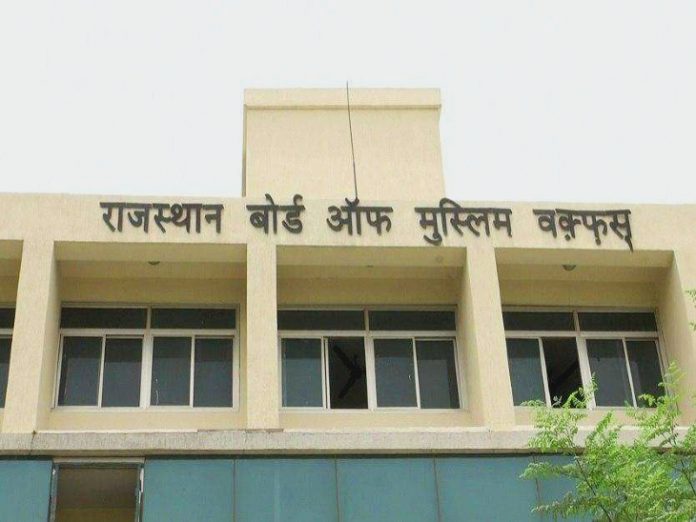
The Rajasthan Board of Muslim Waqf has been requesting financial assistance from the Rajasthan government in order to pay its workers’ salaries. This is in strange contrast to the fact that Waqf Board has more than 18000 properties listed across Rajasthan and it generates income from more than 7000 properties.
According to a report in Times of India, the Rajasthan Board of Muslim Waqf (RBMW) has listed approximately 18,000 properties in the state, making it the state’s most land-rich body/board. There are 2,500 buildings in Jaipur alone, including 400 stores. And, despite being the wealthiest organization, it lacks the funds to pay the wages of its 50 employees.
An official in the Board reportedly said “The rental income is generated from over 7,000 properties, 95% of it goes into the hands of the local committees, legal cases and other developmental works leaving the Waqf board with no corpus fund.”
Rafeek Khan, a member of the RBMW and an MLA from Adarsh Nagar, told TOI that he has identified over 100 properties that might produce Rs 1 crore in annual rent. “Over 100 crores could be earned by just 100 properties in the state. The excess sum can be used for development projects like hostels, commercial properties, and community halls,” said Rafeek Khan.
Officials from the Board claim that low property rent is the cause of poor income and that the majority of the funds are allocated locally before reaching the Board. They claimed that RBMW was dependent on state government help and donations to pay the wages of its 50 workers due to its failure to implement a new rent policy, unregulated encroachments, and the transfer of its assets from the revenue board.
The Rajasthan government had decided on January 18 that it will invest Rs 5 crore in the construction of boundary walls of waqf property or graveyards, madrasas, and schools belonging to the minority population. This comes after CM Ashok Gehlot approved a Rs 98.55 crore package on Monday, specifically for the development of the state’s minority community.


