

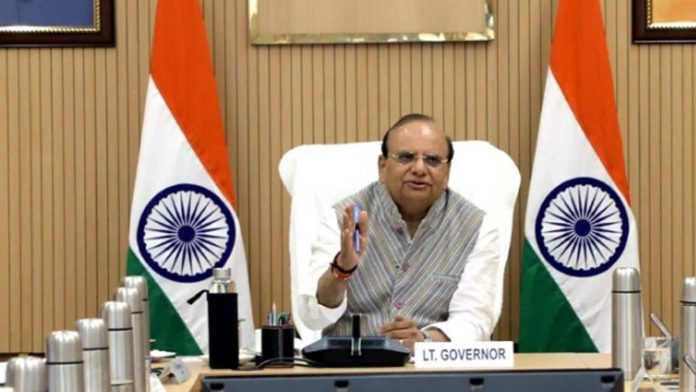
In a communication to the Ministry of Home Affairs, Delhi Lieutenant Governor VK Saxena recommended that action be taken against IAS officer SM Ali for approving “illegal resolutions of the Delhi Waqf Board” while serving as the board’s CEO under the direction of its former Chairman Amanatullah Khan.
Delhi Lt Governor V.K Saxena has recommended to Ministry of Home Affairs to initiate disciplinary proceedings against IAS officer SM Ali for allowing “illegal resolutions of the Delhi Waqf Board” at behest of its then Chairman Amanatullah Khan during his tenure as CEO of DWB. pic.twitter.com/4Qp4xAqaon
— IANS (@ians_india) November 14, 2022
In September, the Delhi Anti-Corruption Branch (ACB) detained AAP MLA Amanatullah Khan in connection with irregularities discovered in the Delhi Waqf Board. On September 28, he was granted bail. An FIR was filed by ACB in the matter two years ago, and an inquiry has been ongoing since then.
The Delhi Waqf Board corruption case
Following a complaint from the revenue department’s sub-divisional magistrate (headquarters), a case was filed against Amanatullah Khan in 2016, saying that appointments to different “existing and non-existing posts” in the Waqf Board were “arbitrary and illegal.”
The complaint, Hafiz Irshad Qureshi, claimed that 33 employees were hired on a contract basis by the Board in flagrant contravention of existing norms or regulations. He further claimed that some of those chosen to the board were linked to Khan and that the majority of them were from his constituency, Okhla.
Four years later, in 2020, the ACB registered an FIR against him under Section 7 (public servant taking gratification) of the Prevention of Corruption Act, and Section 120-B (criminal conspiracy) of the IPC.
The CBI had also booked AAP MLA from Okhla under the prevention of corruption act and other relevant sections of the IPC after a complaint was filed against him in 2016. Khan was also accused of corrupt actions and criminal offences including deliberate and criminal violation of rules, regulations, and misuse of position.
Reportedly, CBI had probed the matter and found substantial evidence against the AAP MLA, following which the CBI sought permission from LG to proceed against him in July 2022.
Apart from Amanatullah Khan, Mehboob Alam, then CEO of Waqf Board was also charged by the premier agency with criminal violation of rules, misusing of position, and causing loss to the public exchequer and other relevant sections.
According to the complaint, the CEO of the new waqf board and over 30 staff members were appointed and employed in contravention of Section 24 of the Waqf Act, 1955 and Delhi Waqf Rules, 1977. The FIR by CBI stated that irregular and illegal appointment of officials had led to the loss of revenue of the Delhi Waqf Board, and the appointments were done by misusing their official positions as public servants. It was alleged that waqf board properties were leased to the tenants and the encroachers were allowed to possess the properties in contravention of lease rules leading to the loss of revenue/assets for the board.


