

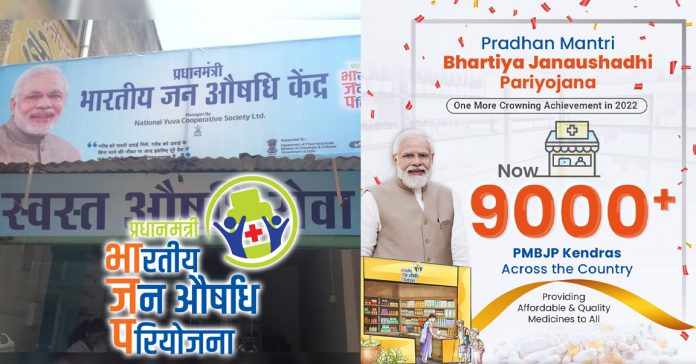
Achieving a major success in making medicine available for the people at lower prices, the Modi government has opened more than 9000 Pradhan Mantri Bhartiya Janaushadhi Kendras under the Pradhan Mantri Bhartiya Janaushadhi Pariyojana (PMBJP). The efforts taken by the government have resulted in the saving of Rs 18000 crores in the last 8 years. This feat has been achieved through more than 9000 stores covering 743 out of 766 districts across the country.
The Pradhan Mantri Bhartiya Janaushadhi Pariyojana (PMBJP) was introduced in November 2008 by the Department of Pharmaceuticals, Ministry of Chemicals & Fertilizers, Government of India, with the goal of providing quality generic medications at reasonable costs to everyone. In December 2017, the goal of opening 3000 medical stores was attained. Additionally, a revised goal of 6000 outlets overall was attained in March 2020. There are currently over 9000 Kendras, up from 8610 in the previous fiscal year, expanding the reach of PMBJP. The government had set the objective of taking this number up to 10,000 by March 2024.
The PMBJP’s product range includes 1759 pharmaceuticals and 280 surgical equipment that span all significant therapeutic categories, including cardiovascular, anti-cancer, anti-diabetics, anti-infectives, anti-allergic, gastrointestinal, and nutraceuticals. Along with this, a number of nutraceutical items have been introduced to the scheme’s product basket, including protein powder, malt-based food supplements, and AYUSH commodities like the Ayuraksha Kit, Balraksha Kit, and Ayush-64 pill, which act as immunity boosters.
The cost of medications offered via PMBJP is 50–90% lower than the price of branded medications. Sales of Rs. 893.56 crores were made in the fiscal year 2021–2022, this resulted in savings for the public of around Rs. 5300 crores as compared to the cost of branded medications. As of November 30, 2022, PMBI had sales of Rs. 758.69 crores for the current fiscal year, 2022–23, which allowed individuals to save almost Rs. 4500 crores. The amazing surge in overall sales demonstrates a greater acceptance of Jan Aushadhi.
This initiative offers a reliable method of self-employment with consistent and sustained income. A one-time additional incentive of Rs. 2.00 lakh (as reimbursement for IT and Infra expenditure) is provided to Janaushadhi Kendras opened in North-Eastern states, Himalayan areas, Island territories, backward areas mentioned as aspirational districts by NITI Ayog, or if they are opened by women entrepreneurs, Ex-servicemen, Divyang, SC & ST, etc.
Jan Aushadhi Suvidha Sanitary Napkins are sold at Rs. 1/- per pad through these 9000 PMBJP kendras across the country. Since inception till 30.11.2022, 31.40 crore Janaushadhi Suvidha Sanitary pads have been sold at Pradhan Mantri Bhartiya Janaushadhi Kendras, across the country. There are four warehouses at Gurugram, Chennai, Guwahati and Surat. These are backed by SAP based inventory management system to facilitate uninterrupted supply and faster delivery to remote and rural areas.


