

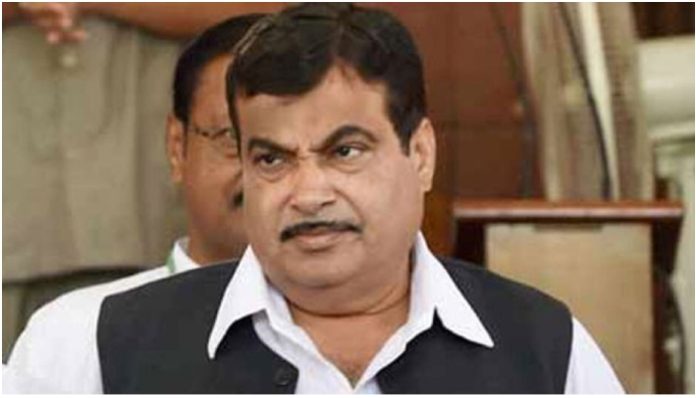
On Tuesday, September 12, Nitin Gadkari, Union Minister for Road Transport and Highways dismissed media reports claiming that he is planning to propose a 10 per cent additional GST on diesel vehicle purchases.
“There is an urgent need to clarify media reports suggesting an additional 10 per cent GST on the sale of diesel vehicles. It is essential to clarify that there is no such proposal currently under active consideration by the government,” Gadkari wrote on social media platform X, formerly known as Twitter.
There is an urgent need to clarify media reports suggesting an additional 10% GST on the sale of diesel vehicles. It is essential to clarify that there is no such proposal currently under active consideration by the government. In line with our commitments to achieve Carbon Net…
— Nitin Gadkari (@nitin_gadkari) September 12, 2023
“In line with our commitments to achieve Carbon Net Zero by 2070 and to reduce air pollution levels caused by hazardous fuels like diesel, as well as the rapid growth in automobile sales, it is imperative to actively embrace cleaner and greener alternative fuels. These fuels should be import substitutes, cost-effective, indigenous, and pollution-free,” he added.
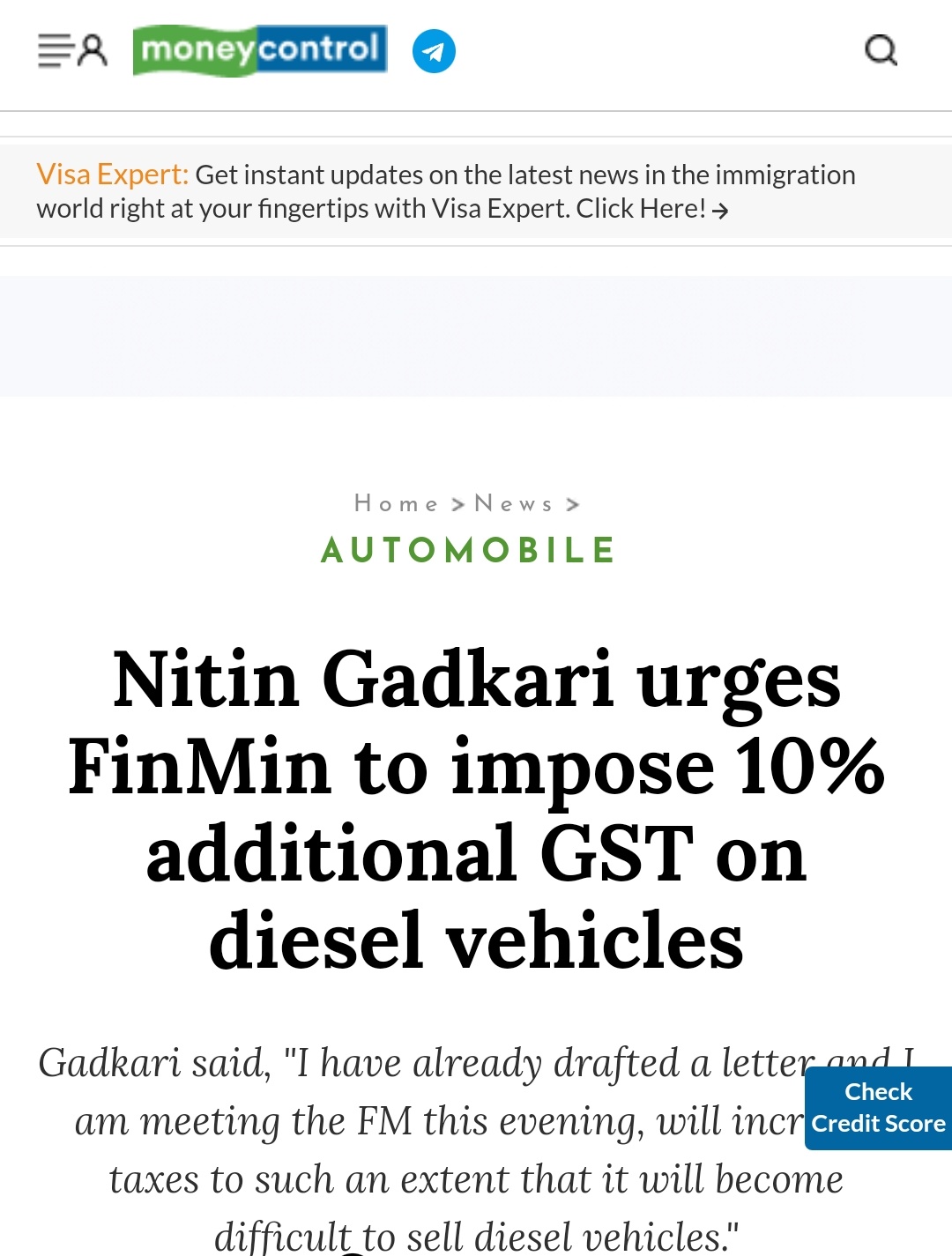
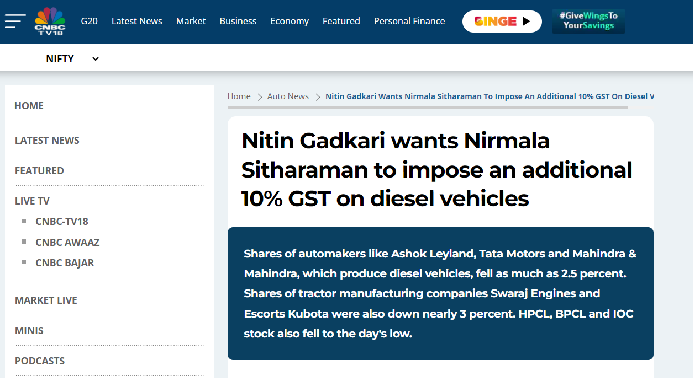
Several media reports like the Times of India, Times Now, CNBC, Money Control, etc. reported that the minister was ready to propose an additional 10 per cent Goods and Services Tax (GST) on the purchase of diesel cars in India. They also claimed that the Minister cautioned automakers about the possibility of further increased levies if they continue to sell highly polluting vehicles.
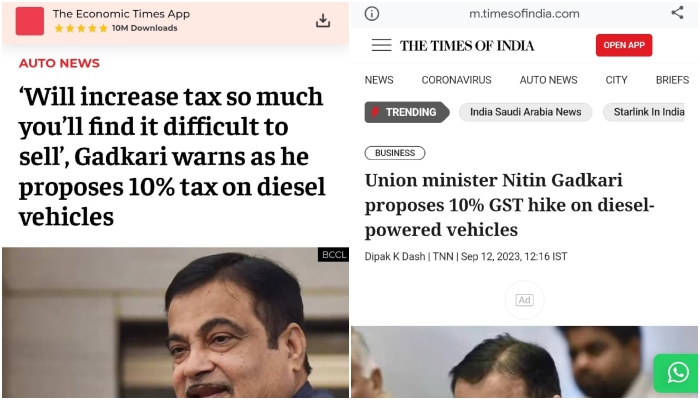
“Say bye to diesel soon, otherwise we will increase so much tax that it will become difficult for you to sell these vehicles … we have to leave petrol and diesel soon and walk on the new path of being pollution free,” Gadkari was quoted as saying by Reuters.
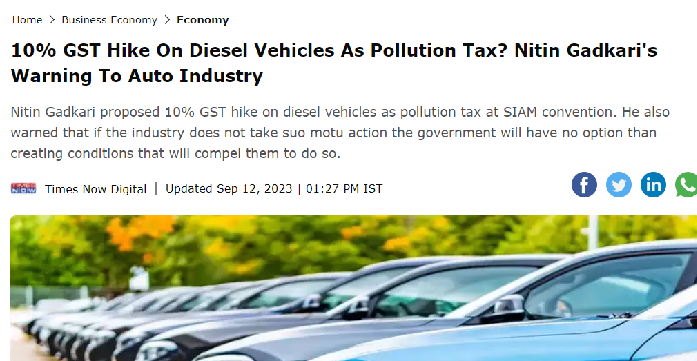
The report by Times Now meanwhile claimed that the aim of the Minister behind proposing additional GST was to discourage the automobile industries from manufacturing vehicles running on the ‘most polluting’ fuel.
Further, a report by CNBC claimed that shares of automakers like the Ashok Leyland, and Tata Motors had slipped by 2.5 percent after Gadkari’s decision, which he later stated that he never made.
According to reports, Gadkari made these so-called remarks during a meeting in New Delhi attended by executives from Tata Motors, Mahindra & Mahindra, Maruti Suzuki, and foreign automakers such as Mercedes and Volkswagen.
Gadkari, according to these reports stated that he would approach Finance Minister Nirmala Sitharaman for an “additional 10 per cent” GST goods and services tax on diesel automobiles due to growing pollution.
Currently, the government levies a 28 per cent tax on diesel vehicles, with an additional cess assessed based on engine capacity.


