

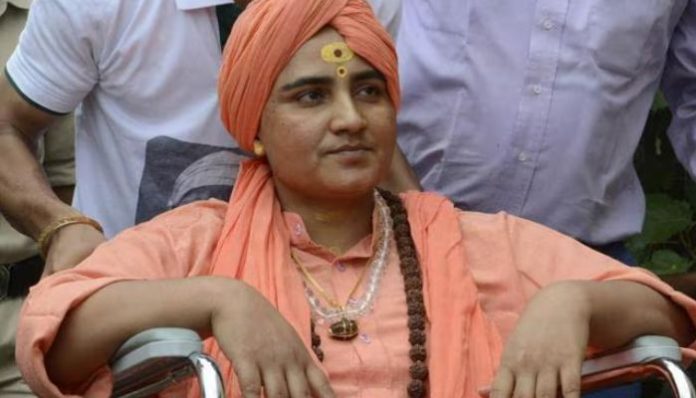
After 17 years, on Wednesday, 31st July, a special Mumbai court has acquitted former BJP MP Sadhvi Pragya Singh Thakur in the 2008 Malegaon blast case due to a lack of evidence. The court stated that there was no evidence to prove that the LML Freedom motorcycle, which was reportedly used in the explosion that killed six and injured more than a hundred, belonged to her. The court further mentioned that the chassis number of the bike had been interfered with, and the doubtful engine number remained.
But more than a court fight, this was a personal ordeal of agony for Pragya Thakur, one marked by years of brutal physical and mental suffering in jail. While the case was one of India’s longest terror trials, it also occasioned grave concern at the treatment of suspects in custody, particularly when basic human rights and dignity are overlooked.
“They beat me from day one without even asking a question”
Sadhvi Pragya was arrested in 2008 by the Maharashtra Anti-Terrorism Squad (ATS) concerning the Malegaon blast. Then, a woman in her late 30s, she was a simple, spiritual seeker. What happened next, in her account, was a nightmare no woman should ever have to face.
They detained me in illegal custody for 13 days,” she had remembered during a public speech in 2019. “On the first day, without asking me a question, they began to beat me with a wide belt. They shot abusive language at me, threatened to hang me upside down and strip me nude. I was tortured day and night for several days.
Pragya cried during the recital of her ordeal in public, not to gain sympathy, she insisted, but so that no woman should have to endure what she had. She testified to having been denied sleep, beaten until her arms and legs puffed up, and forced to submerge her puffed limbs into warm salty water so the beatings could resume.
Pain dismissed, charges overlooked
What made it more challenging for her, she informed, was the silence surrounding her ordeal. Human rights organisations, feminist groups, and political analysts loud on custodial torture and women’s rights kept mum. Although she continued to report physical abuses and humiliation, there was hardly any public outcry or institutional reaction.
The National Human Rights Commission of India in 2014 carried out an investigation into her charges but ruled that there wasn’t sufficient evidence to prove her claims. But Pragya maintains that the trauma was genuine, both physical and psychological.
“They used to make me listen to lewd CDs inside the custody. They didn’t give me sleep for nights. They wanted to shatter my mind so that I would falsely admit and incriminate top RSS leaders,” she claimed. Various narco tests, polygraph tests, and brain mapping tests were performed upon her during this time, but none resulted in a breakthrough.
Public image and political storm
While she was in prison, Pragya Thakur’s name was splashed on media as the “face of Hindu terror” and the title served to isolate her even more. She was ridiculed, judged, and labeled a terrorist before the trial was even initiated. Her religious background and saffron attire were mocked and were used to brand her a ‘Hindu terrorist’.
When she entered politics as a BJP candidate in the 2019 Lok Sabha elections from Bhopal, her past again became a matter of heated political debate. Critics questioned the BJP’s decision to field an “accused terrorist”. What they didn’t mention was that she had never been convicted, and was still awaiting trial. The line between “accused” and “guilty” seemed to blur in public perception.
“Bhagwa has won. Hindutva has won.”
When the court, after several delays, gave out the verdict on Thursday, 31st July, 2025, Pragya Thakur was present inside the courtroom along with co-accused who were also acquitted. Referring to the judge, she stated, “I have consistently maintained that people must be probed only when there is a legitimate reason. I was arrested without reason, tortured, and discredited. I led a monk’s life, but I was turned into an accused and abandoned. Now Bhagwa has triumphed. Hindutva has triumphed. And God will punish the guilty.”
Nine years under custody and a combined 17 years of ordeal later, the court may have finally had its say, but so has she, with a voice tempered by unimaginable suffering and unshakeable faith.


