

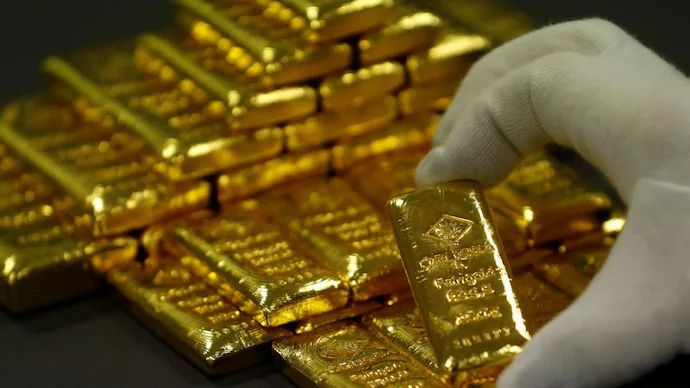
In July 2024, Finance Minister Nirmala Sitharaman stunned markets by slashing India’s gold import duty from 15% to 6%, a surgical strike aimed at dismantling the country’s most entrenched smuggling racket. While the move targeted a national menace, investigative reporting by Palak Shah of Business World reveals it also dealt a body blow to Kerala’s shadow economy, long fuelled by illicit gold.
For decades, Kerala’s four international airports, Thiruvananthapuram, Kochi, Kozhikode, and Kannur, served as prime entry points for smuggled bullion from Gulf nations. The state’s deep diaspora links, proximity to gold hubs like Dubai, and a political climate tolerant of illicit trade created what Shah calls “a smuggler’s paradise.” Between 2020 and 2023, over 3,100 smuggling cases were recorded, but seizures barely dented the estimated 200–400 tons of gold worth $15 billion entering India annually through illegal channels.
High duties made smuggling hugely profitable, up to ₹9 lakh per kg, even after carrier payments. These profits didn’t just enrich gangsters; they lubricated Kerala’s informal economy, funding unaccounted real estate deals, jewellery networks, and hawala operations. In one notable case, a major unlisted jewellery chain allegedly operated with 4,000 shadow investors, far beyond SEBI’s regulatory limits, prompting money laundering suspicions.
Sitharaman’s duty cut collapsed this model almost overnight. Profits per kg fell to ₹3 lakh, carrier fees plunged, and Gulf gold trade to Kerala shrank. The Central Board of Indirect Taxes and Customs confirmed a sharp decline in seizures post-duty cut. Air traffic data shows fewer Gulf passengers, with Gulf Air even cancelling Calicut flights in 2025 due to reduced demand, a sign the smuggling pipeline had been choked.
While legal gold trade surged, the World Gold Council reported an 18% year-on-year jump in Q3 2024, the abrupt disappearance of illicit liquidity hit Kerala’s economy hard. The state’s Gross State Domestic Product growth fell to 6.19% in 2024–25, the slowest in South India, with real estate, construction, and luxury retail all showing marked declines.
According to Shah’s findings, the slowdown exposed Kerala’s dangerous dependence on black money. Property transactions dropped 18%, luxury housing prices corrected by 25%, and construction growth lagged the national average. With Gulf remittances also down 10% in 2024, the state’s twin cash pipelines, legal and illegal, both weakened.
The gold duty cut was more than a fiscal tweak; it was a strategic strike that crippled a criminal ecosystem linked to terror financing and political corruption. As Shah notes, it has forced Kerala to confront an uncomfortable truth: much of its apparent prosperity rested on an illicit trade that could vanish with the stroke of a pen.
Adding to the murky picture are explosive allegations linking Kerala’s political elite to the very smuggling racket Sitharaman’s policy helped cripple. Swapna Suresh, one of the prime accused in the 2020 Kerala gold smuggling case, claimed in 2023 that she was offered ₹30 crore to keep Chief Minister Pinarayi Vijayan’s name out of the case. In a Facebook Live broadcast, she alleged being threatened by the CM himself to leave the country, with CPM state secretary Govindan Master allegedly directing party intermediaries to intimidate her into silence. According to Suresh, she was told to relocate to Haryana or Jaipur with state-backed assistance, including a flat and fake passports to facilitate her exit.
Suresh has repeatedly named CM Vijayan, members of his family, and three cabinet ministers in connection with the smuggling and related hawala transactions. In earlier testimonies, she alleged that in 2016 a bag containing cash was sent to the CM while he was in Dubai, detected during airport scanning under consular protocol. She also claimed that under orders from then principal secretary M. Sivasankar, heavy metal-laden biryani vessels were moved from the UAE Consulate to the CM’s official residence, Cliff House. These claims, which surfaced ahead of the 2021 assembly elections and resurfaced with renewed force in 2024, have kept the political dimensions of Kerala’s gold smuggling scandal very much alive, even as the central government’s fiscal strike has eroded the racket’s economic foundations.


