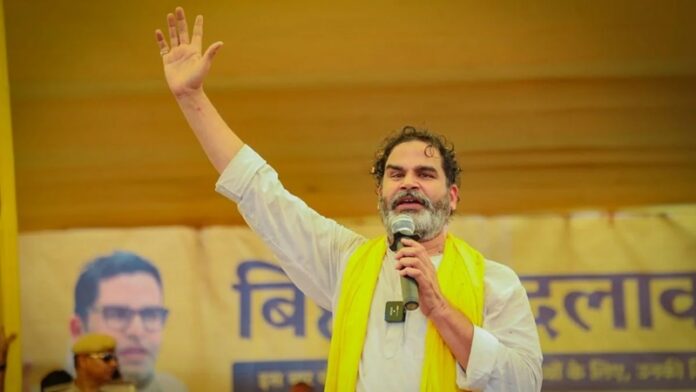
Jan Suraaj founder Prashant Kishor has secured the biggest electoral victory of his political career after defeating the Bharatiya Janata Party (BJP) in the Bankipur Assembly by-election. Kishor defeated BJP candidate Neeraj Sinha by 19,246 votes, securing 63,946 votes against Sinha’s 44,700. The Rashtriya Janata Dal (RJD) candidate finished a distant third with 14,241 votes.
The result is significant not merely because it came in what has long been considered a BJP bastion, but because it appears to reflect a marked shift in Kishor’s own political strategy. Just months ago, after Jan Suraaj’s humiliating debut in the Bihar Assembly elections, Kishor had questioned the integrity of the electoral process. In Bankipur, however, he chose a very different path, focusing on grassroots organisation, local issues and voter outreach instead of questioning institutions.
A humiliating debut for Jan Suraaj
The Bankipur victory comes against the backdrop of Jan Suraaj’s disastrous performance in the 2025 Bihar Assembly elections.
Founded by election strategist-turned-politician Prashant Kishor, the Jan Suraaj Party contested 238 of Bihar’s 243 Assembly constituencies, projecting itself as a serious alternative to both the NDA and the Mahagathbandhan.
The outcome, however, was devastating.
The party failed to win even a single seat. Most of its candidates forfeited their deposits, while the party’s vote share remained insignificant despite months of campaigning through the Jan Suraaj Yatra.
For many observers, the verdict demonstrated that political visibility alone could not substitute organisational depth or booth-level strength.
Questioning the verdict instead of the campaign
Kishor’s immediate reaction to the defeat attracted almost as much attention as the election result itself.
Speaking to India Today TV after the Assembly elections, Kishor claimed that the polls appeared to have been “rigged”, although he admitted that he had no evidence to support the allegation.
“There were some invisible powers at play,” he said, arguing that the election results did not match the feedback collected by his team during months of campaigning.
While he stopped short of alleging EVM manipulation, Kishor maintained that “something went wrong”. He also accused the NDA of influencing women voters through cash transfers during the campaign. At the same time, he acknowledged another political reality, that many voters eventually backed the NDA because they feared that voting for Jan Suraaj could pave the way for the return of what he described as “Lalu’s jungle raj.”
Kishor’s reaction to the Assembly election defeat also echoed a familiar pattern in Indian opposition politics. In recent years, Congress leader Rahul Gandhi and Aam Aadmi Party chief Arvind Kejriwal have repeatedly questioned Electronic Voting Machines (EVMs), the Election Commission or the fairness of the electoral process after suffering electoral setbacks. Although Kishor stopped short of directly alleging EVM manipulation and explicitly admitted that he had no evidence to substantiate his claims, his remarks about “invisible powers” and the polls appearing “rigged” placed him in a similar category of leaders who sought explanations beyond campaign shortcomings.
A different strategy in Bankipur
The Bankipur bypoll, however, appears to have marked a significant departure from that approach.
Instead of revisiting allegations about the electoral process or suggesting that unseen forces had influenced the outcome, Kishor concentrated on strengthening Jan Suraaj’s grassroots organisation, improving booth-level mobilisation and building a campaign around constituency-specific issues.
Rather than blaming institutions, the former election strategist returned to the fundamentals of electoral politics, meeting voters, understanding local grievances and offering himself as an alternative based on governance rather than rhetoric.
The change in emphasis is difficult to ignore. After explaining away defeat through suspicions that could not be substantiated, Kishor appears to have accepted that electoral success depends primarily on political organisation and public trust.
Local issues worked in Kishor’s favour
The political environment in Bankipur was also markedly different from the statewide Assembly election.
The BJP entered the bypoll facing visible local discontent on several fronts. Among the most significant issues was anger among sections of students and youth over the NEET paper leak controversy, which had triggered widespread criticism across Bihar. Education, unemployment, civic infrastructure, administrative transparency and governance-related concerns also featured prominently in local discussions.
Kishor ensured that his campaign remained centred on these constituency-specific issues rather than abstract ideological debates.
Instead of relying on emotional rhetoric or broad political narratives, Jan Suraaj projected itself as a party willing to address everyday governance concerns. The campaign also included extensive door-to-door outreach, ward-level meetings and direct interaction with voters.
Political observers believe that these organisational efforts, combined with local anti-incumbency against the BJP, enabled Kishor to expand his support base beyond Jan Suraaj’s traditional voters.
A lesson from the assembly elections
The contrast between the Assembly elections and the Bankipur bypoll is perhaps the most striking aspect of Kishor’s political journey.
In the Assembly elections, Jan Suraaj relied heavily on statewide messaging and Kishor’s personal credibility built over years as a political strategist. When that strategy failed, Kishor questioned the electoral outcome and suggested that unseen factors may have influenced the verdict.
In Bankipur, however, the emphasis shifted entirely.
The campaign revolved around local issues, voter contact and organisational discipline instead of post-election allegations. While one bypoll cannot conclusively establish a long-term political transformation, the result suggests that Kishor may have recalibrated his strategy after learning from Jan Suraaj’s disappointing debut.
More Than Just a BJP Defeat
It would be simplistic to interpret the Bankipur verdict solely as a rejection of the BJP.
The outcome appears to have been shaped by multiple factors, including local dissatisfaction with the ruling party, the fallout of the NEET controversy, constituency-specific grievances and an energetic campaign by Jan Suraaj.
Equally, it would be difficult to ignore Kishor’s own strategic shift.
Instead of spending the campaign questioning institutions or reviving allegations about the electoral process, he invested in organisational work and constituency-level engagement. That approach stands in contrast to the post-defeat narratives often witnessed in Indian politics, where electoral setbacks are followed by allegations against EVMs or the Election Commission.
The Road Ahead
Whether Bankipur proves to be an isolated victory or the beginning of Jan Suraaj’s political rise will only become clear in future elections. A bypoll is very different from a full-fledged Assembly election, and replicating this success across Bihar will require a far stronger organisational network.
Nevertheless, the bypoll has delivered an important political lesson; not just for Jan Suraaj but for opposition parties in general.
For Prashant Kishor, the biggest takeaway may not simply be that he defeated the BJP in one constituency. It is that after publicly claiming the Assembly elections appeared “rigged” despite admitting he had no evidence, he returned to the electorate with a campaign rooted in issues, organisation and voter engagement. Bankipur suggests that when politics is fought on the ground instead of in post-election explanations, electoral fortunes can change.
Whether this strategic recalibration becomes the defining feature of Kishor’s politics remains to be seen. But if Bankipur is any indication, Jan Suraaj’s first major electoral success came not by questioning the system, but by competing within it more effectively.