


A devotional film made on a reported budget of around ₹2 crore has turned into one of the most surprising box-office success stories of 2026. Vishal Chaturvedi’s Hanuman Ansh, based on the life and spiritual journey of Neem Karoli Baba, started with a limited theatrical release but gradually found a much larger audience.
The film has now crossed the ₹100-crore mark in India and is running strong even in its fifth week. By Day 32, it had collected around ₹132 crore net in India, while its gross collection stood at about ₹156.20 crore. The film’s performance is particularly striking because it began its theatrical journey on 7th August with just 25 screens and an opening collection of only around ₹10 lakh.
From a slow start to a box-office phenomenon
Unlike big-budget releases that usually make most of their money during the opening weekend, Hanuman Ansh took a different route. Its initial weeks were modest, but the film slowly gained attention through word-of-mouth.
The change became clear from its third week. After earning ₹1.08 crore in the first week and around ₹40 lakh in the second week, the film began picking up. It crossed the ₹1-crore mark in a single day during its third week, earning ₹2.50 crore on its third Sunday. It eventually collected ₹10.40 crore in the third week.
The momentum became even stronger in the fourth week, when its weekly collection increased nearly six times. By the fifth weekend, the film was putting up numbers that few expected from a film made on such a small budget.
It earned ₹10 crore on Friday, ₹16.50 crore on Saturday and ₹22.75 crore on Sunday. Its fifth-weekend collection reached ₹49.25 crore. On the following Monday, it added another ₹10 crore despite a 56% drop from Sunday.
By the first four days of its fifth week, the film had already earned ₹59.25 crore. Its fifth-week run also saw it compete strongly with the newer Gurmeet Singh’s action-crime thriller Mirzapur: The Movie.
Bigger than its budget
The biggest talking point around Hanuman Ansh is not just its total collection but the money it has made compared with its production cost.
Made on a budget reportedly less than ₹2 crore, the film has earned more than 60 times its reported budget. Its fifth-week performance even put it ahead of several major blockbusters in terms of fifth-weekend earnings. The film was reported to have recorded the biggest fifth-weekend haul in Indian box-office history, surpassing Dhurandhar.
The film has also been described by trade trackers as one of the most financially rewarding Indian films in recent memory. With its theatrical run continuing, estimates in the source material suggested that its collection could move towards the ₹150-crore mark.
The film is also expanding internationally. Hombale Films has acquired its global distribution rights, with the worldwide release scheduled for 11th of September.
What is Hanuman Ansh about?
Directed and produced by Dr Vishal Chaturvedi, Hanuman Ansh is inspired by his book Divine Detour: That Changed My Life, which focuses on Neem Karoli Baba.
Shobhinaw Satyaa plays Neem Karoli Baba, while Chandan Anand is also part of the lead cast. The film tells the story of Lakshmi Narayan, a young boy living in pre-Independence India. After the death of his mother, he leaves home in search of God. His journey across North India eventually leads to his transformation into Neem Karoli Baba.
The film is planned as the first part of a trilogy inspired by Divine Detour: That Changed My Life. It has been produced by Ragini S, Namrata G Singh, Anupriya A Nagar and Dr Vishal Chaturvedi under Swambhu Media Network and Holy Cow Home Productions.
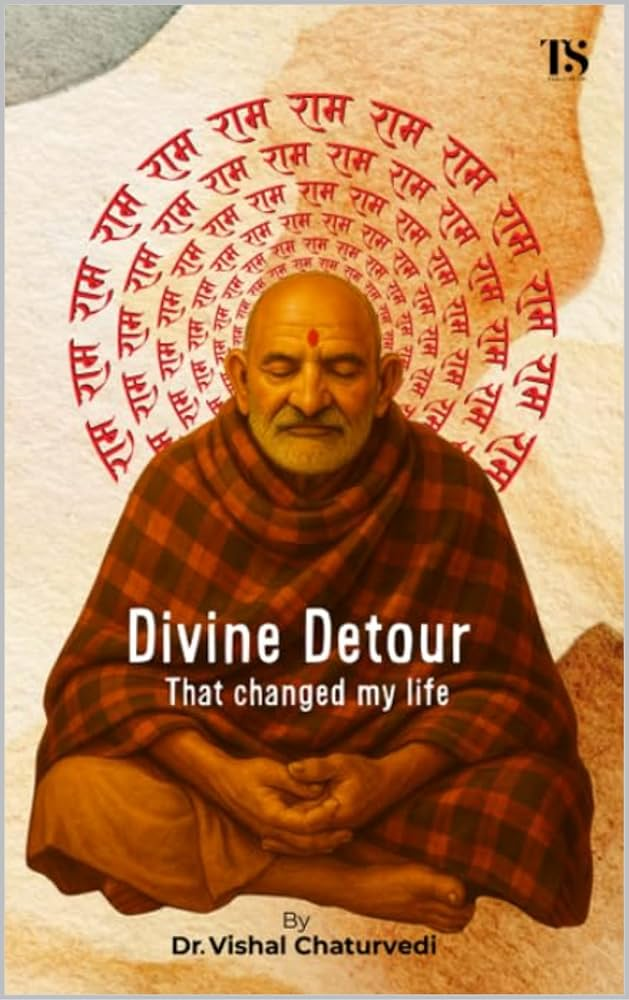
Who was Neem Karoli Baba?
The success of Hanuman Ansh has also brought renewed attention to the life of Neem Karoli Baba, popularly known by his followers as Maharaj-ji.
Neem Karoli Baba was born as Laxman Narayan Sharma around 1900 in Akbarpur village of Uttar Pradesh’s Firozabad district. He came from a wealthy Brahmin family. According to the details shared about his life, he experienced a strong spiritual urge at a young age and left home to travel as a sadhu across northern India.
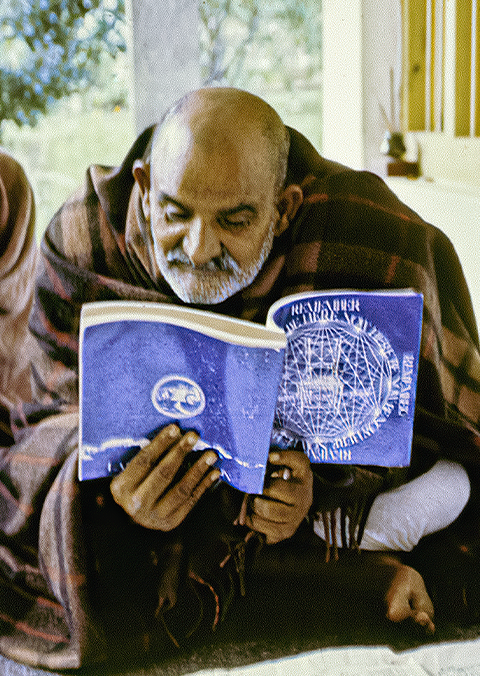
His father eventually found him and persuaded him to return home. Baba later married and had two sons and a daughter. However, his spiritual calling continued. In 1958, he left his family permanently and devoted the final 15 years of his life to serving people and spreading divine love.
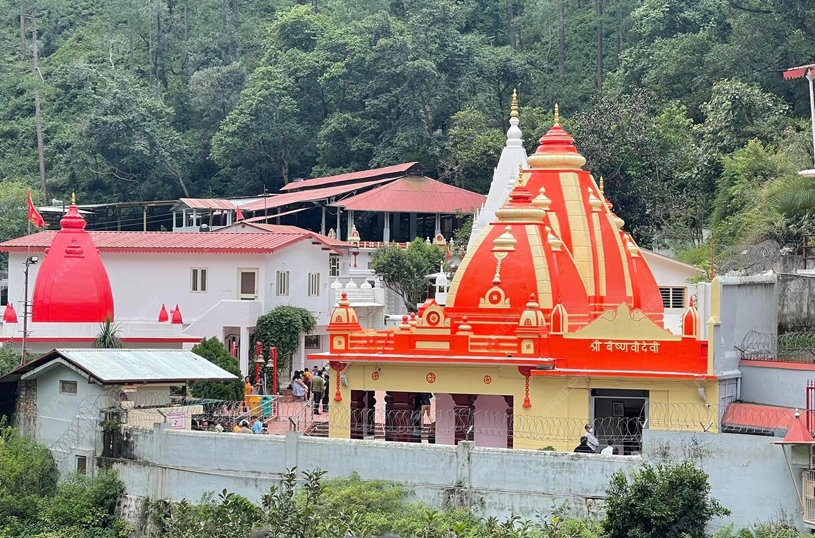
His spiritual journey became closely associated with Kainchi Dham, a temple complex located on the banks of the Kosi River in Uttarakhand’s Kumaon region.
Kainchi Dham and his global influence
Neem Karoli Baba’s influence eventually reached far beyond India. Kainchi Dham became a major spiritual destination, attracting visitors from across the world.
His name also became familiar in global technology and popular culture. Facebook founder Mark Zuckerberg has spoken about visiting the ashram after Steve Jobs recommended the place to him. Zuckerberg had planned to stay for a day but ended up spending two days there.
Steve Jobs himself had visited the ashram with his friend Dan Kottke, although he could not meet Neem Karoli Baba because Baba had already passed away. Hollywood actress Julia Roberts has also spoken about being influenced by him and being drawn towards Hinduism.
Among the foreign devotees and visitors associated with Neem Karoli Baba are spiritual figures such as Ram Dass and Ma Jaya, musicians Jai Uttal and Krishna Das, humanitarian Larry Brilliant, scholar and writer Yvette Rosser, and psychologist Daniel Goleman.
A legacy of temples and service
Neem Karoli Baba also established temples dedicated to Lord Hanuman at several places. The first Hanuman temple associated with him was inaugurated on 15th June, 1964, followed by another temple in Vrindavan. His temples and ashrams later spread to several locations, including Lucknow and Texas in the US. According to his website, Maharaj-ji established at least 108 temples.
In the late 1960s, American spiritual seeker Baba Ram Dass wrote books about Neem Karoli Baba, helping introduce his teachings to a wider Western audience. Hundreds of Westerners subsequently travelled to India to seek his darshan.
Neem Karoli Baba chose Vrindavan as the place for his samadhi. He died on 10th September, 1973. A temple was later built for him at the ashram, and his statue was consecrated on 15th June, 1976.
Why Hanuman Ansh matters
The unusual success of Hanuman Ansh has given a fresh spotlight to a spiritual figure whose influence has continued for decades.
The film’s journey also shows how a small production without a conventional Bollywood star or a massive marketing budget can find an audience when viewers connect with its subject and story. From a ₹2-crore production to more than ₹100 crore at the Indian box office, Hanuman Ansh has become an unlikely theatrical success.
At the centre of that success is the life of Neem Karoli Baba, a spiritual figure whose teachings, temples and legacy continue to draw followers in India and abroad.


