“Divide and Rule,” the tactic, which was officially put into action by the British, has been a prominent feature of their colonial legacy in India. The imperialists exited the country after inflicting a brutal division in 1947 along the same lines, but their nefarious motto continues to be applied even today, often in a more aggressive manner and with a different approach. Certain elements have been using this strategy to exploit the faultlines within the Hindu community, even going so far as to designate many groups as outside this religious fold.
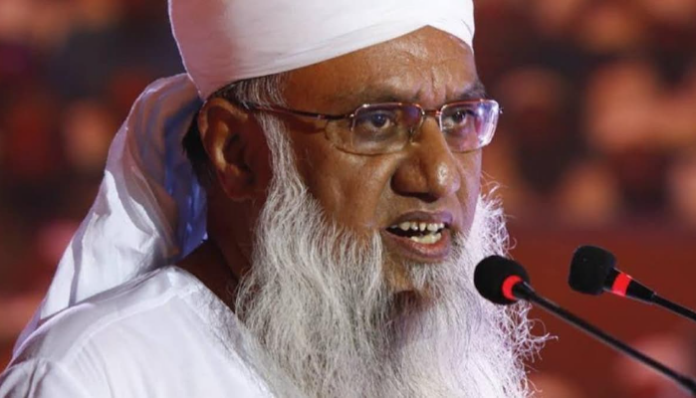
Senior All India Muslim Personal Law Board (AIMPLB) member Maulana Khalilur Rahman Sajjad Nomani recently stated that Hindus are no longer the majority in India during a speech. He argued that the traditional perception of their population is deceptive when diverse groups are viewed separately.
Nomani insisted that tribals, scheduled caste communities, people from Tamil Nadu, Lingayats, some segments of the Jat community and other such categories should not be counted as Hindus because their identities are distinct from the larger community. He announced, “I place my hand on Hajr-e-Aswad and the cover of the Kaaba and say that Hindus are a minority in India. Under no circumstances can Hindus be considered a majority,” to his attentive audience in the viral footage.
He also made an admission, revealing that Hindus were split into two factions to serve the Islamist agenda and expressed disappointment over the scheme’s failure as they all voted for the Bharatiya Janata Party (BJP). “We divided Hindus into secular and fascist units, but both ended up hurting our cause.”
"We have made Hindus a minority in this country too."
— Being Political (@BeingPolitical1) June 18, 2026
– Maulana Khalilur Rahman Sajjad Nomani pic.twitter.com/zd4lz2Hpvv
The statement made by Taliban fanboy Nomani is an open secret. The radical ecosystem and “secular” politicians alike have repeatedly employed such manoeuvres to create rifts within Hindu society and fulfil their ulterior motives. Former Karnataka Chief Minister Siddaramaiah had claimed that Lingayat is a different religion. Similarly, Congress MLA from Madhya Pradesh, Umang Singhar, asserted that “tribals are not Hindus.”
The Rashtriya Janata Dal and Samajwadi Party are known for their “Muslim Yadav (M-Y)” combination to form vote blocs in Bihar and Uttar Pradesh for electoral benefits. The latter’s latest PDA (Pichhda or Backward Classes, Dalit and Alpsankhyak or Minorities) strategy represents another extension of this playbook.
The systematic targeting of the Hindu community, which has been segregated into castes, classes or other segments, remains a defining feature of this effort, while Muslims are consistently perceived as a single entity, despite the presence of multiple sects that have been involved in violent conflicts with each other for decades.
The phenomenon has become so standard that it elicits no response when the largest community in India, instead of being regarded as a cohesive whole, is unceasingly exposed to attempts to foster feelings of separation and isolation to undermine its Hindu foundation. This is regularly observed from discussions analysing voting behaviours to giving “caste colours” to crimes, but never to terror assaults, as that would be “Islamophobic.”
A terrifying scenario is underway
A conspiracy is in motion, transcending vote bank politics, aimed at breaking apart the Hindu community, eroding its strength and weakening its influence, which would ultimately sever the civilisational roots of India, substituting them with a foreign culture, as seen in various parts of the world, from the Arab nations to India’s neighbours.
This illustrates why an offensive against Iran and Gaza triggers massive protests and violence takes place in Mumbai’s Azad Maidan over Rohingya Muslims, but New Delhi’s move to introduce the Citizenship Amendment Act (CAA) to protect the persecuted minorities of Pakistan, Bangladesh and Afghanistan results in unrest and anti-Hindu riots in the national capital.
This is also the reason behind the alarming influx of Bangladeshi and Rohingya intruders into the country, which is facilitated by political parties such as All India Trinamool Congress (AITC or TMC) in pursuit of their short-term political objectives at the expense of the nation’s greater good.
TMC chief and former West Bengal Chief Minister had even threatened that Muslims would encircle Hindus and “completely finish them off” if her party were not in power in the state. Interestingly, this was intended to frighten Hindus into supporting her during the assembly elections, which later led to her humiliating defeat. However, her comment serves as a stark reminder of the imminent threat that has already transformed into a chilling reality from Kashmir to Murshidabad.
The Hindu territory of Kashmir experienced a dramatic decline in its native population as the Muslim population expanded over time. The Kashmiri Pandits had to endure a Pakistan-sponsored brutal exodus in the 1990s and are forced to live as refugees in their own country. Their properties are confiscated by those who were once their neighbours and friends but sided with the jihadis, while the former are unable to return to their homes and have to act as uninvited guests in their own land.
A similar incident unfolded in the Muslim-majority Murshidabad last year, where Hindus had to leave their homes to protect themselves after facing attacks from extremists. The violence resulted in the brutal murders of 72-year-old Hargobindo Das and his 40-year-old son Chandan, leading to the conviction of 13 Muslims in the case. Hindu idols and temples were desecrated and vandalised, while Hindu residences were marked with black ink, bombed and set ablaze by the bloodthirsty mobs.
Multiple such instances have surfaced where Hindus had to sell their homes to evade this unwarranted aggression from Muslims, especially where the latter are predominant or in substantial numbers. Furthermore, Indian courts, including the Supreme Court and legal bodies, have consistently cautioned that unnatural or unchecked demographic changes, particularly through illegal immigration, pose a major threat to national security, constitutional integrity and social stability.
Judge GR Swaminathan of the Madras High Court even remarked that the Indian Constitution would no longer be relevant if the nation’s “demographic profile” is altered. Regions such as Jharkhand have already begun to suffer the repercussions of this development.
A violation of the religious rights of Hindus
These Muslim extremists not only assault Hindus but also react adversely to the latter practising their faith, which “offends” their delicate sentiments. A Durga temple in Asansol was shut down by the TMC government due to pressure from Muslims and remained closed for 15 years as Hindus were not allowed to worship there. It was only reopened after the saffron party came to power.
The Mamata government shut down a Maa Durga temple in Asansol under pressure from Muslims.
— OpIndia.com (@OpIndia_com) May 5, 2026
The temple remained closed for 15 years, with Hindus denied the right to worship.
Following the BJP’s victory, the temple gates have reopened, and saffron flag has been hoisted.… pic.twitter.com/CMHwn4pSiB
Hindus had faced restrictions on conducting religious processions and celebrating prominent festivals, including Durga Puja, when they coincided with Islamic occasions during the TMC regime in Bengal. Calcutta High Court had to intervene against such diktats. However, the trend is widespread in other areas as well. The unyielding objections and assaults on Hindu processions for having the audacity to traverse through “Muslim areas” or even otherwise point to an unsettling degree of intolerance within the second-largest community in the country.
Meanwhile, Hindus have to constantly fight for their fundamental right to observe their beliefs and worship their deities, from Lord Ram in Ayodhya to Lord Murugan at Tiruparankundram Hill. As if this were not enough, the rampant criminal activities, including love jihad and those perpetrated by intruders, which comprise the occupation of government-owned lands such as critical forest and agricultural zones, have resulted in a serious challenge in states like Assam.
Therefore, this remark by Nomani, who is also opposed to sending girls to schools, is not indicative of a radical mindset but rather a meticulously constructed plot reminiscent of the dangerous aspirations expressed in the “India 2047” document of the outlawed Popular Front of India (PFI), which envisioned the country as an Islamic state.
These entities are singularly focused on establishing Muslim dominance in India through any unscrupulous methods, including the division of Hindu society, while “secular” parties are desperate to cater to them for power acquisition while Hindus are in a precarious position facing an existential threat.
Conclusion
It has become imperative to put an end to internal disputes and counter any devious act to attack the Hindu community, which must awaken to reality and stop clashing over matters such as castes, class or language and instead concentrate on the larger picture. They need to showcase a solidified front, just as Muslims do for their community, despite their differences, if they hope to survive against such an organised adversary.
Their dropping growth rate in contrast to that of Muslims, the imposing inflow of Rohingya and Bangladeshi intruders and the Islamo-leftist lobby, has already left them with a very narrow margin against this menace. The odds are stacked against them. Hindus have to defend themselves against an unrelenting global ecosystem on several fronts, and they must recognise and respond to this reality.
It is a fact that Hindus have become politically, culturally and religiously conscious in recent years, but this process must be accelerated and not even a slight opportunity should be afforded to the Islamists to further their agenda, which could be detrimental not only to Hindus but to all of India.