

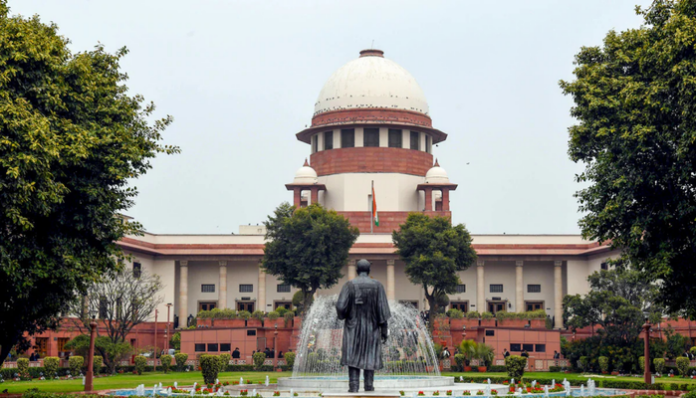
The Supreme Court recently emphasised the need for more robust technological and regulatory measures to identify and remove child sexual exploitation and abuse material (CSEAM) from the internet. A Bench of Justices JB Pardiwala and KV Chandran directed the Centre to set up a comprehensive national database to detect and get rid of such content across all social media platforms.
Taking a serious note of the problem, the Court directed the Centre, through the Ministry of Electronics and Information Technology and the Ministry of Law and Justice, to frame necessary guidelines, standard operating procedures, and IT rule amendments. The government is required to file an affidavit detailing its implementation progress by December 10, 2026, when the next hearing takes place.
The Apex Court expressed concern that the material continues to be available on the internet despite its 2024 directions issued in Just Rights for Children Alliance & Anr. v. S. Harish & Ors. The Court observed that child sexual abuse material continues to circulate on the internet.
Fragmented approach affecting efficiency
The Bench said that the lack of coordination between platforms and a fragmented approach of the regulatory authorities under the existing mechanism are responsible for failing to ensure that such material is detected and removed from across the internet. They said that when one platform detects and removes such abusive content, it does not automatically get flagged and removed from other platforms. The Court said that the current mechanism relies on individual instances where such content is reported and removed. This leads to delays in removing the content, which is not completely eradicated from the internet.
A national database for effective regulation
The Court said that the national database may be set up within the existing Sahyog Portal or as a standalone repository. Emphasising the significance of a national database, the Court said that social media intermediaries would be able to cross-check problematic content on it without having to rely on their individual platforms.
The database will contain hash identifiers and URLs of confirmed CSEAM. The Bench cautioned that the national database must only contain the hash identifiers and URLs of confirmed CSEAM, and not the harmful material itself. Hash identifiers are unique fingerprints of digital images or videos, which enable platforms to identify content even if it is uploaded from different sources. The URL listing will help in the detection of internet addresses hosting CSEAM by platforms, which can then block access to such addresses.
The Court said that all the entries in the national database should be subjected to multiple levels of verification, including technological as well as human intervention. It added that specialised software may be used for preliminary screening, but the final assessment must be conducted by at least three trained human analysts. Each analyst would independently determine whether the material constitutes CSEAM or not.
The Court emphasised that appropriate safeguards must be put in place to prevent erroneous entries and the removal of lawful content. These include maintaining records of assessments, logging access to the database, conducting periodic independent audits and promptly removing incorrect entries.
Intermediaries must report to the police
The Supreme Court directed all social media intermediaries to ensure that no CSEAM is hosted or monetised on their platforms. “Every intermediary must ensure that no CSEAM (Child Sexual Exploitation and Abuse Material), or any other material having the propensity or likelihood to harm children, is offered, hosted, uploaded, promoted or circulated through such paywall or subscription, either directly or indirectly,” the Court said.
The Court asserted that social media intermediaries must be answerable to local law enforcement under Indian law and should not merely remove such content or report it to foreign organisations. It stated that intermediaries must report harmful content to the Special Juvenile Police Unit, local police or the cybercrime portal, as applicable under Rule 11 of the Protection of Children from Sexual Offences (POCSO) Rules, 2020, within a prescribed timeline.
The Bench said that in cases where an intermediary removes CSEAM of unknown origin based on its own due diligence, it must report the removal within two hours. On the other hand, where such removal follows a complaint, the report must be made forthwith after the complaint is resolved and, in any event, within two hours of such resolution, the Court said.
A removal action must be followed by the submission of consolidated reports by intermediaries regarding the removal on a weekly basis to the authority maintaining the national database. To ensure transparency in the entire mechanism, the Court directed intermediaries to display the details of their grievance officers and complaint mechanisms on their websites or applications.
The Court further directed that there must be a distinct reporting category for complaints concerning CSEAM and that it should be easily accessible to users. The complaints raised must be acknowledged within 24 hours with a reference number, and the complainant must be informed of the decision and the reasons for it. The complaint will be reviewed by trained grievance officers at the preliminary stage of screening using automated tools.
The Bench directed the Centre to implement the directions, including accountability requirements through appropriate amendments to the IT Rules. It added that the upgraded framework must have provisions for imposing exemplary monetary penalties on intermediaries that breach their obligations under the Information Technology Act and the IT Rules. The penalties to be imposed on defaulting intermediaries should be imposed after taking into consideration the gravity, duration and recurrence of the default, and turnover of the intermediary.
The Court also called for paywalled and subscription-based content to be subjected to rigorous scrutiny to ensure that CSEAM or other prohibited material is not hosted, promoted or circulated through such services. It directed the Centre to frame guidelines for the examination of such content. The Court also directed the government to consider whether the framework should provide for the forfeiture of the money made by intermediaries from the circulation of CSEAM through paywalls or subscriptions.
Digital safety awareness for children
In addition to the technological safeguards, the top court asserted that children need to be made aware to recognise danger, report abuse, and adopt safe practices on the internet. It said that children should be imparted age-appropriate education on consent, safe and unsafe touch, healthy relationships, protection of personal data, online exploitation, and the mechanisms available for reporting abusive conduct.
The Court added that children should be taught safe internet practices and that digital safety and age-appropriate education should be included in the core curriculum. The National Council of Educational Research and Training (NCERT) and the State Councils will develop the curriculum in consultation with child psychologists, educators, and parenting experts.


