

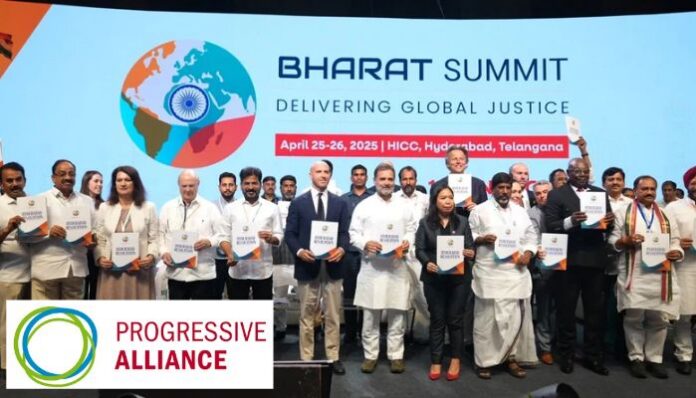
The 2nd Bharat Summit in Hyderabad, organised by the Congress party, has sparked a major political controversy for providing a platform to individuals with well-documented histories of anti-India stances, anti-Hindu rhetoric, and direct connections to networks backed by billionaire investor George Soros. The so-called Bharat summit, its handpicked panellists, and controversial statement made by a European socialist leader directly intervening in Indian domestic politics have proved to be yet another move by the Leader of the Opposition in the Lok Sabha, Rahul Gandhi, toward an “anti-national agenda”.
By inviting numerous foreign speakers and domestic controversial figures known for hostility and hatred toward India and Hindus and the democratic mandate, the event has raised a pressing question: was the summit genuinely a forum for constructive global dialogue, or was it a calculated attempt to garner international backing for narratives aimed at undermining India and its constitutional institutions?
Over 1,000 delegates from 70 countries attend Congress-backed so-called Bharat Summit
The second Bharat Summit was held on 13th and 14th November at the Hyderabad International Convention Centre (HICC). The event brought together more than 1,000 delegates from over 70 countries under the theme ‘Forging a New World’.The summit was convened by the Telangana government and curated by the Samruddha Bharat Foundation.
While the party leadership framed the conclave around lofty themes of global justice, electoral integrity, and social equality, the actual proceedings and guest list quickly sparked a major political firestorm.
The list of panellists invited to this Congress event who carry a history of anti-India and anti-Hindu positions is remarkably long. Beyond domestic critics and anti-Hindu panellists, the roster heavily features individuals tied to organisations funded by George Soros, whose Open Society Foundations (OSF) has long faced criticism for meddling in the internal affairs of sovereign nations.
The list of panellists invited to this Congress-backed gathering is particularly noteworthy. It includes individuals who have made controversial remarks about Hinduism, questioned India’s actions in Kashmir, criticised Operation Sindoor and faced allegations in connection with the 2020 Delhi riots. Among the controversial figures invited are:
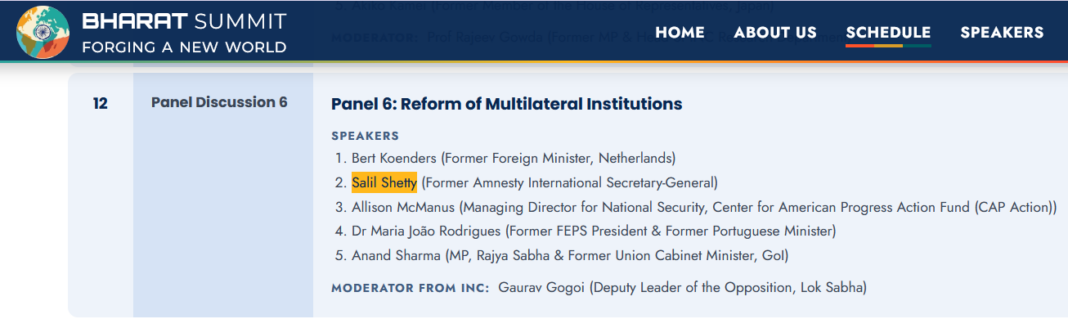
- Salil Shetty
- Kancha Ilaiah Shepherd
- Prof. Sujatha Surepally
- Sir Iqbal Sacranie
- Anies Baswedan
- DU professor Apoorvanand
- Guillaume Long
- Patrick Gaspard
- Giacomo Filibeck
- Jayati Ghosh
- Nurul Izzah Anwar
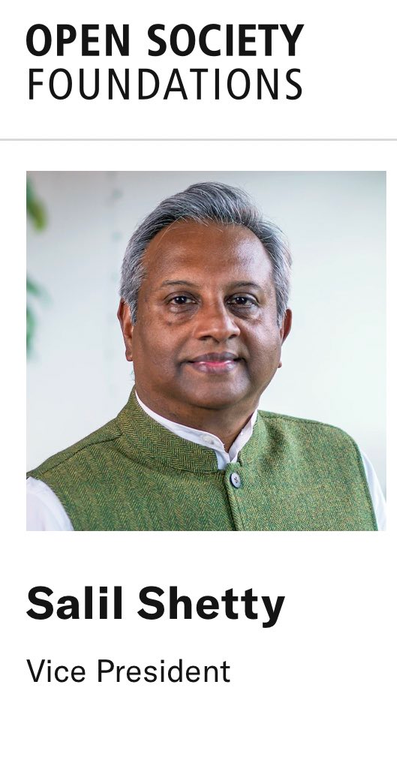
Salil Shetty: Former Open Society Foundations vice-president who joined Rahul Gandhi’s Bharat Jodo Yatra
At the forefront of the controversial guest list at the Bharat Summit is Salil Shetty, former Secretary-General of Amnesty International and former global vice-president of the Open Society Foundations, an organisation founded by billionaire George Soros.
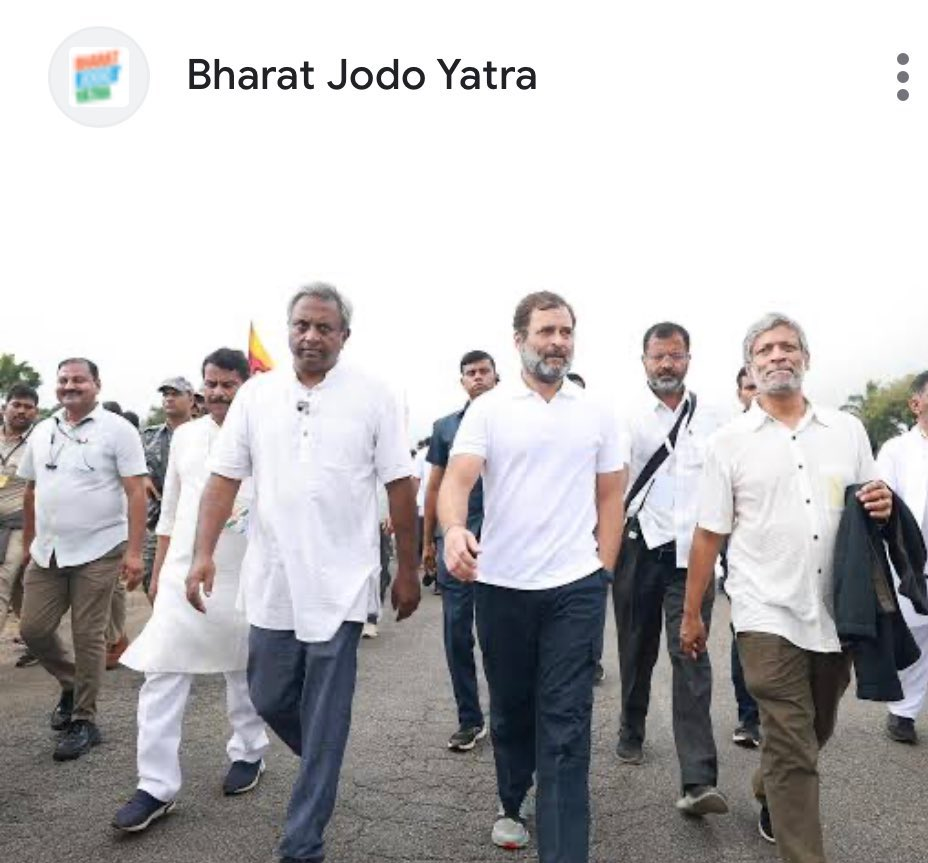
Shetty is no stranger to Rahul Gandhi’s political campaigns, having famously walked alongside the Congress leader during the Bharat Jodo Yatra in Harthikote, Karnataka.
Before assuming his leadership role at the Open Society Foundations, Shetty headed Amnesty International, another left-wing organisation known for its anti-India activities. It eventually halted its India operations amid regulatory scrutiny over foreign funding violations. Shetty’s so-called activism within India extends well beyond walking in rallies.
In 2020, he was actively involved in the nationwide protests against the Citizenship Amendment Act (CAA), participating in and addressing demonstrations across major cities including Bengaluru and New Delhi. Throughout that period, his social media timeline was filled with aggressive attacks against the legislation and the ruling government. When the Government of India officially notified the CAA, Shetty declared on social media, “We will never allow #India to be divided by the Hindutva fundamentalists. We will unmask them.”
Shetty was also seen addressing demonstrators at the controversial Shaheen Bagh protest site in Delhi, where protesters blockaded a major arterial road for months, a prolonged agitation that coincided with intense communal tensions and culminated in the February 2020 anti-Hindu riots in the national capital, which claimed 53 lives.
Furthermore, Shetty has consistently used international platforms to attack India’s internal decisions regarding Jammu and Kashmir. Following the abrogation of Article 370 in August 2019, he appeared in a September 2019 interview with Harvard University’s Lakshmi Mittal and Family South Asia Institute titled “Salil Shetty: Decoding the Kashmir Crisis.”
During that discussion, Shetty accused the Indian government of harbouring majoritarian motives, claiming that New Delhi had “decided to sacrifice the people of Kashmir to achieve its Hindu national hegemonic goals in mainland India.”
His social media activity remains a steady stream of anti- Modi and anti-BJP commentary, leaving little doubt about his ideological alignment and why the Congress leadership welcomed him to its Hyderabad stage.
Kancha Ilaiah Shepherd: His controversial remarks against Hinduism and Brahmins
Another anti-Hindu voice featured at the summit is Kancha Ilaiah Shepherd, an academic and writer whose career has been dependent on criticising Hindus and defined by virulent anti-Hindu and anti-Brahmin rhetoric, an ideological stance the Congress ecosystem has frequently indulged.
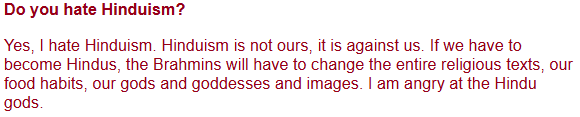
Ilaiah’s hatred toward Hinduism is documented in his own explicit statements over the decades. In a widely cited interview with Rediff on 17th January, 2000, Ilaiah bluntly stated, “Yes, I hate Hinduism, Hinduism is not ours, it is against us.” In that same interview, he directed his anger at Hindu deities and sacred scriptures, saying, “If we have to become Hindus, the Brahmins will have to change the entire religious texts, our food habits, our gods and goddesses and images. I am angry at the Hindu gods.”
Ilaiah has built an entire body of work around demonising the Brahmin community, going so far as to claim that India failed to progress historically because of Brahmins. Through books such as ‘Why I Am Not a Hindu’ and ‘Post-Hindu India ‘, he has sought to deconstruct and invert classical Hindu epics and traditions.
In Why I Am Not a Hindu, Ilaiah reimagined the Kurukshetra war of the Mahabharata as a caste-based conflict, writing, “The hundred Kauravas stood against brahminical dharma and represented Dalit-Bahujans, the majority; whereas the five Pandavas stood for brahminical dharma and represented the brahminical minority.”
In the very same text, he targeted Bhagwan Shri Krishna, arguing that Krishna was politically constructed to defend Brahminical order rather than Dalit-Bahujan interests, suggesting that despite being born a Kshatriya, he was given a Yadava upbringing merely to co-opt the Yadava community into supporting the Pandava side.
Ilaiah’s assertions have frequently veered into bizarre historical claims designed to vilify Hindu customs. He has speculated that ancient Brahmins invented the practice of cremation specifically to destroy archaeological and physical evidence of massacres of Dalit-Bahujans who allegedly revolted against Brahmin hegemony.
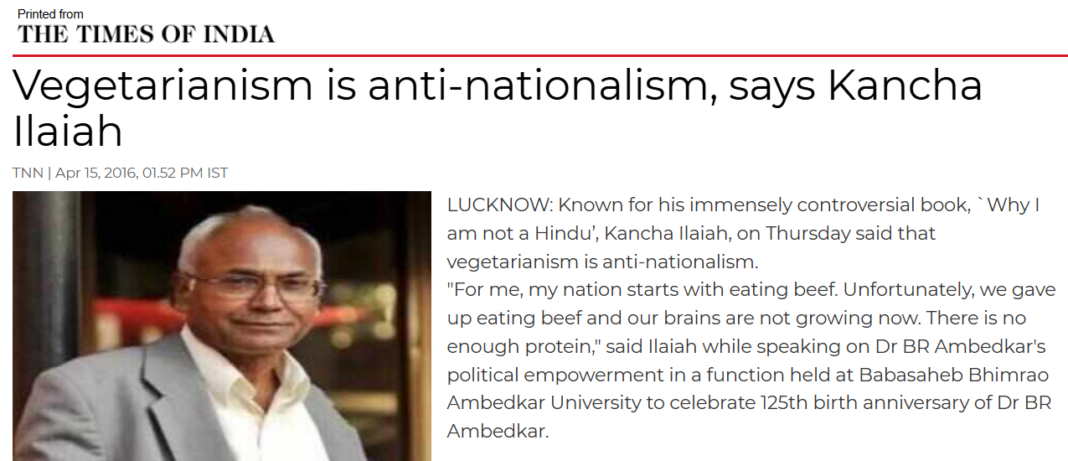
Even Hindu dietary practices have not escaped his attacks. According to a 2016 report by The Times of India, Ilaiah claimed that “vegetarianism is anti-nationalism,” framing a vegetarian diet as something that weakens the Indian population while contrasting it with what he termed B.R. Ambedkar’s concept of “food democracy.”
Prof. Sujatha Surepally: Mocked Operation Sindoor after the Pahalgam terror attack
The Congress party also extended a platform to Dr Sujatha Surepally, Principal of the Arts College at Satavahana University in Karimnagar and a member of the Telangana State Higher Education Council. Dr Surepally drew widespread public outrage following the Pahalgam terror attack, in which Pakistani terrorists murdered 26 innocent civilians after specifically identifying them as Hindus. As the entire nation united in grief and backed the Indian Armed Forces during their retaliatory military strike against Pakistan, Operation Sindoor, Dr Surepally took to Facebook on 7th May to mock the name of the operation and belittle the military response before eventually deleting the post amid mounting backlash.
Known for her active participation in various forums as an Ambedkarite and so-called human rights activist, she has also lent ideological support to Maoist activities and narratives.
Sir Iqbal Sacranie: MCB founder who called for a plebiscite in Jammu and Kashmir
Representing the international Islamist lobby at the Bharat Summit was Sir Iqbal Sacranie, the founding Secretary-General of the Muslim Council of Britain (MCB). Sacranie has a long track record of campaigning against India’s sovereignty over Jammu and Kashmir and maligning the Indian Armed Forces on global platforms.
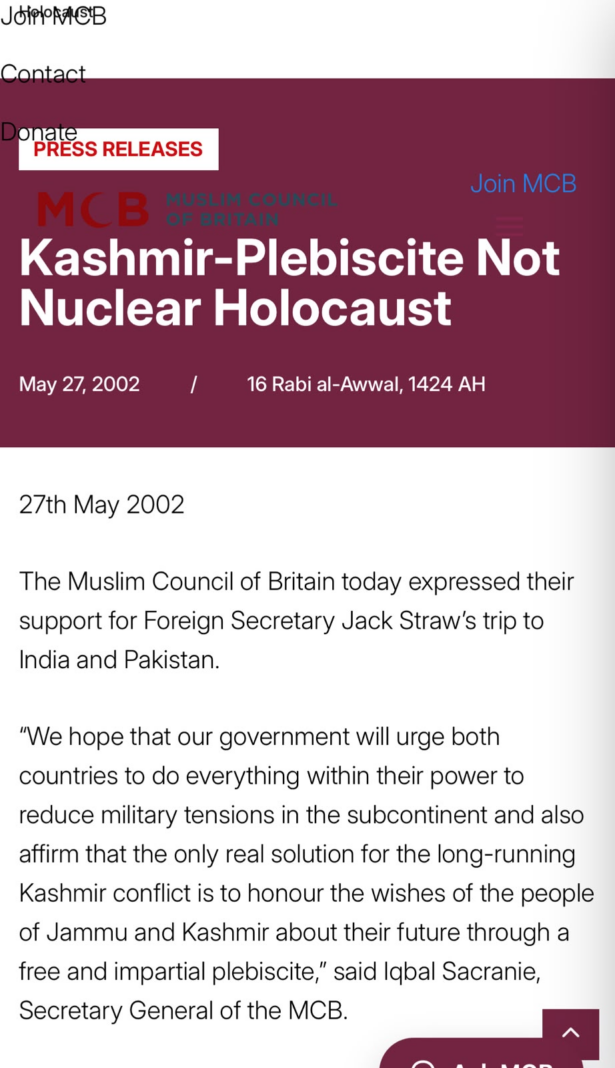
During the heightened India-Pakistan military standoff in May 2002, Sacranie issued an MCB statement dated 27th May, 2002, demanding a “free and impartial plebiscite” in Jammu and Kashmir, echoing Islamabad’s standard diplomatic talking points.
Even earlier, in an MCB statement dated 14th April, 2000, Sacranie levelled severe, unsubstantiated allegations of war crimes against Indian security personnel, stating, “The British Muslim community is appalled at the continuing killing, rape, arson and destruction in Kashmir by 700,000 Indian forces.”
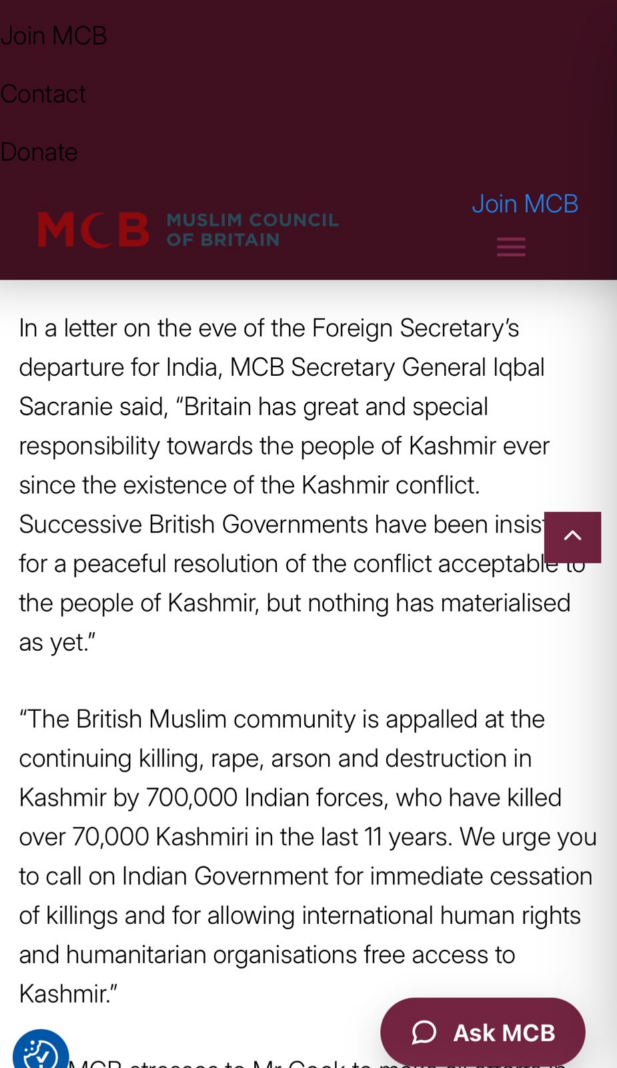
Inviting a figure with such a documented history of accusing the Indian Army of mass atrocities has raised serious questions about the vetting process and intent of the summit’s organisers.
Anies Baswedan: Indonesian politician backed by radical Islamist preacher Abu Bakar Bashir
From Southeast Asia, the Congress invited Anies Baswedan, the former Governor of Jakarta and former Minister of Education and Culture of Indonesia. Baswedan’s political rise in Indonesia was heavily marked by religious polarisation during the 2017 Jakarta gubernatorial election.
During that campaign, Baswedan actively courted hardline Islamist groups, appearing publicly alongside radical outfits notorious for targeting minorities in the country. Those hardline groups relentlessly weaponised religious verses to campaign against Baswedan’s opponent, Basuki Tjahaja Purnama, commonly known as Ahok, who is an ethnic Chinese Christian, ultimately leading to Ahok’s defeat and subsequent imprisonment on blasphemy charges.
More troublingly, during Indonesia’s 2024 presidential elections, Baswedan received the backing of Abu Bakar Bashir, the radical Islamist cleric and terrorist linked to Al-Qaeda who served as the spiritual inspiration behind the 2002 Bali bombings that killed 202 people. Bashir was convicted in 2011 for funding and supporting a militant training camp in Aceh and was released from prison in January 2021. While serving his 15-year sentence in 2014, Bashir had also publicly pledged allegiance to the global terror outfit Islamic State (ISIS).
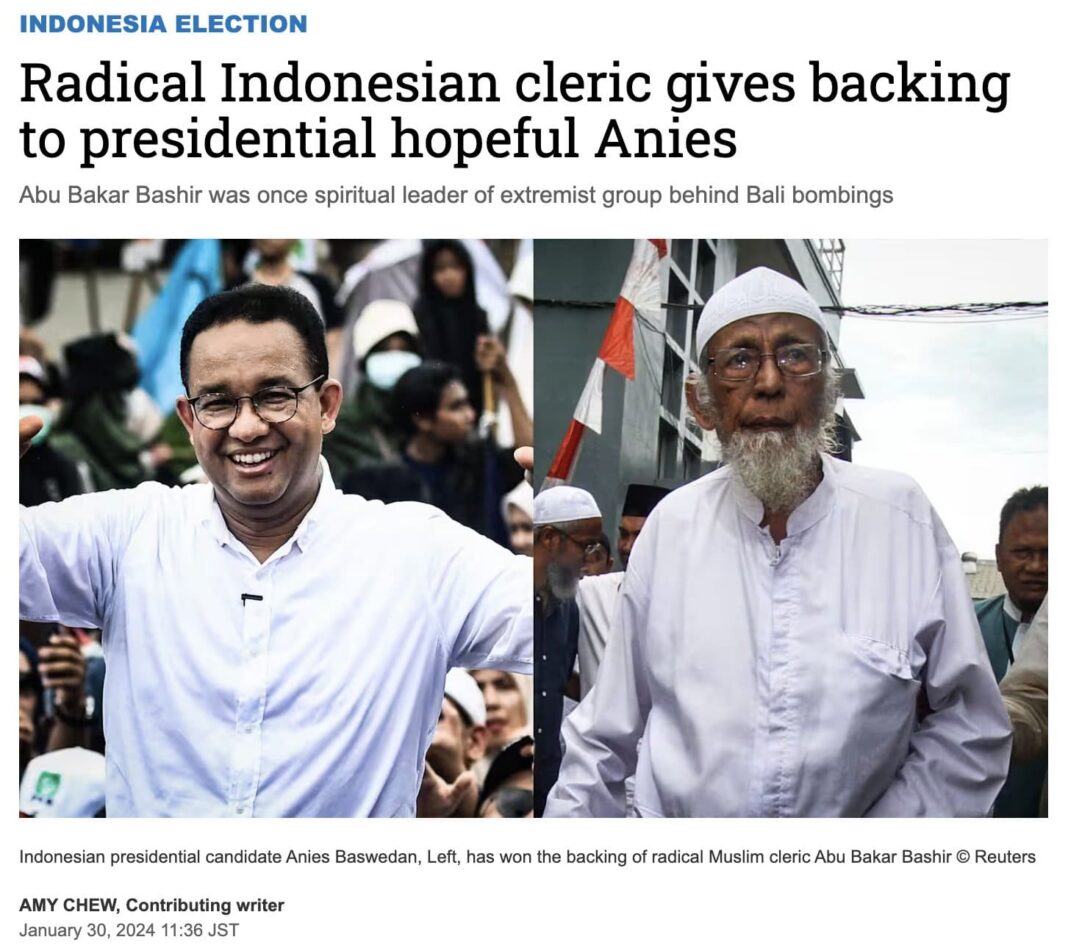
That the Congress party chose to invite an international politician whose campaign was endorsed by a convicted terrorist linked to Al-Qaeda and ISIS underscores the troubling nature of the alliances showcased at the Hyderabad summit.
DU professor Apoorvanand: Named in Delhi riots investigation, controversial remarks against Hindu symbols
Among the domestic academics invited was Delhi University Hindi professor Apoorvanand, whose name surfaced in the Delhi Police investigation into the February 2020 anti-Hindu riots in the national capital. In the chargesheet filed by the Delhi Police, Apoorvanand was named by accused Gulfisha Fatima and a protected witness identified as GAMA, who revealed his involvement in the broader conspiracy that preceded the violence in the National Capital.
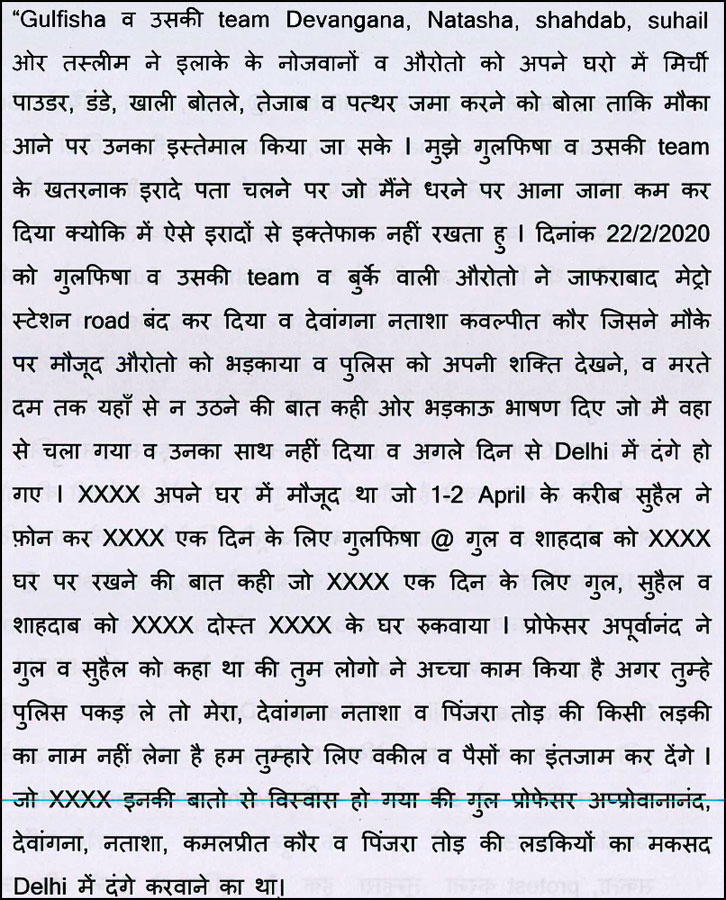
Beyond the police chargesheet, Apoorvanand has a well-documented history of disparaging Hindu religious expressions and political leaders.
In a May 2019 opinion piece published on the left-wing portal The Wire, he characterised the traditional Hindu greeting and chant “Jai Shri Ram” as an “expression of hooliganism.” In that article, he defended West Bengal Chief Minister Mamata Banerjee after she reacted angrily to citizens chanting “Jai Shri Ram” and treated the religious phrase as an abuse hurled at her.
In the same piece, Apoorvanand went so far as to label the Prime Minister of India an “instigator” and referred to veteran BJP leader L.K. Advani as a “bahurupiya” (imposter), alleging that the slogan was manufactured purely to incite hatred against Muslims. Later, in April 2023, while responding on social media platform X to a post by Yogendra Yadav discussing Khalistan, Hindu Rashtra, and Ghazwa-e-Hind, Apoorvanand dismissed the concept of Ghazwa-e-Hind altogether, writing, “Found it disappointing that while discussing Khalistan and Hindu Rashtra, it is thought necessary to bring GEH. Has any Indian organisation, or any individual, given a call for it like the earlier two? GEH is evoked by Hindutvavadis to justify their violence. No Muslim talks about it.”
Guillaume Long: Former Ecuador foreign minister and the George Soros funding controversy
The invitation extended to former Ecuadorian Foreign Minister Guillaume Long triggered a fierce political confrontation between the BJP and the Congress. Long serves as a Senior Research Fellow at the Washington-based Centre for Economic and Policy Research (CEPR), an organisation that received $420,000 in grants from George Soros’s Open Society Policy Centre in 2021. Long himself has been directly linked to these Soros-backed funding streams, while also serving as a Senior Diplomatic Advisor at The Hague Group.
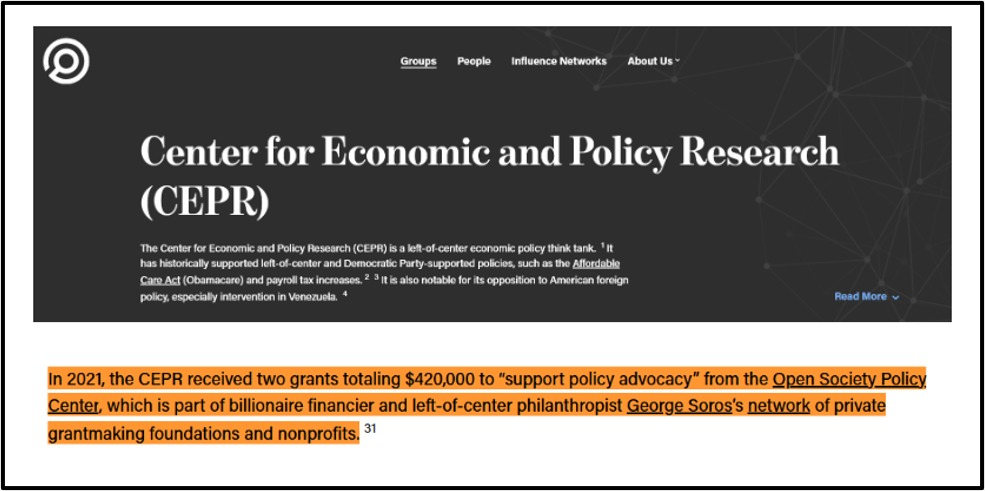
BJP leaders seized upon Long’s presence to accuse Rahul Gandhi of attempting to internationalise domestic political battles with the help of Soros-affiliated networks.
BJP national media convenor Ashish Usha Agarwal took to social media to demand answers, asking, “Congress must answer: What is the agenda behind inviting Guillaume Long to its Bharat Summit 2026 in Hyderabad? Long is a Senior Research Fellow at CEPR, which reportedly received $420,000 in grants from the George Soros-backed Open Society Policy Centre in 2021.”
Congress must answer: What is the agenda behind inviting Guillaume Long to its Bharat Summit 2026 in Hyderabad? Long is a Senior Research Fellow at CEPR, which reportedly received $420,000 in grants from George Soros-backed Open Society Policy Center in 2021. The matter assumes significance as the ED conducted searches at eight Bengaluru premises linked to Open Society Foundations and its beneficiaries in March 2025 in connection with FEMA violations. By inviting individuals like Guillaume Long, is Rahul Gandhi seeking international backing for an anti-India agenda? Is Congress bringing together international forces under the banner of "regime change" to question India’s democratic mandate and weaken its democratic and constitutional institutions? Is there a larger political agenda behind this gathering? Rahul Gandhi must answer the nation. What is Congress’s objective in providing a platform to such individuals and networks? India’s democracy is strengthened by the people’s mandate, not by international networks seeking to undermine it. #AntiIndiaCongress https://t.co/mjNdRbCKsk
— Ashish Usha Agarwal आशीष ऊषा अग्रवाल (@Ashish_HG) November 14, 2026
Agarwal pointed out that this association is particularly sensitive because, in March 2025, India’s Directorate of Enforcement (ED) conducted searches across eight locations in Bengaluru linked to the Open Society Foundations and its local beneficiaries over suspected violations of the Foreign Exchange Management Act (FEMA).
Questioning the opposition’s intent, Agarwal asked, “By inviting individuals like Guillaume Long, is Rahul Gandhi seeking international backing for an anti-India agenda? Is Congress bringing together international forces under the banner of regime change to question India’s democratic mandate and weaken its democratic and constitutional institutions? Is there a larger political agenda behind this gathering?” He added, “Rahul Gandhi must answer the nation. What is Congress’s objective in providing a platform to such individuals and networks? India’s democracy is strengthened by the people’s mandate, not by international networks seeking to undermine it.”
Echoing these concerns, BJP national spokesperson Pradeep Bhandari stated, “Bharat Summit 2026 speakers organised by Congress include individuals with links to George Soros-backed networks and a record of anti-India statements.” Bhandari highlighted Long’s roles at The Hague Group and CEPR, alongside the presence of former Open Society Foundations president Patrick Gaspard, declaring, “Rahul Gandhi wants to bring regime-change operators into India’s political discourse while preaching about democracy.”
🚨 Dirty narrative by Congress EXPOSED! Bharat Summit 2026 speakers organized by Congress include individuals with links to George Soros-backed networks and a record of anti-India statements. Guillaume Long ▪️ Senior Diplomatic Advisor, The Hague Group ▪️ Senior Fellow, CEPR ▪️ CEPR has been linked to George Soros-backed Open Society funding. ▪️ Patrick Gaspard – Former President of Open Society Foundations. Rahul Gandhi wants to bring regime-change operators into India’s political discourse while preaching about democracy! #AntiIndiaCongress
— Pradeep Bhandari(प्रदीप भंडारी)🇮🇳 (@pradip103) November 14, 2026
Patrick Gaspard: Former Open Society Foundations president also invited
Confirming the BJP’s allegations regarding direct links to George Soros’s inner circle, the Congress party invited Patrick Gaspard to speak at the closing session of the Bharat Summit on Saturday, 14th November. Gaspard is not merely a peripheral beneficiary of Soros’s philanthropy; he served as the full-time President of the Open Society Foundations from 2017 to 2020, directly overseeing the billionaire’s global political and ideological grant-making operations.
Having the former chief executive of Soros’s flagship foundation headline the valedictory session of a summit hosted by an Indian opposition party reinforced the event was designed to cement ties between the Congress and the global Open Society apparatus.
Giacomo Filibeck: European socialist leader echoes Rahul Gandhi’s ‘Vote Chor, Gaddi Chhod’ slogan
The controversy surrounding foreign interference reached its peak on Saturday, 14th November, when Giacomo Filibeck, the Secretary General of the Party of European Socialists, addressed the gathering in Hyderabad.
Standing before an audience of international delegates and Congress leaders, Filibeck explicitly echoed Rahul Gandhi’s domestic political attack slogan, chanting “Vote Chor, Gaddi Chhod” (Vote Thief, Leave Your Seat). While Rahul Gandhi smiled and applauded from the stage, the European politician went on to take a partisan stand in India’s internal political rivalry, claiming that, “The Congress Party built the democratic foundation of modern India. Today, it is fighting to protect them. And progressives everywhere stand with you.”
"VOTE Chor.. GADDI Chhod. VOTE Thief.. LEAVE your seat " – Party of European Socialists Secretary General, Giacomo Filibeck at Bharat Summit. https://t.co/UUjSnrLmtN
— Gulte (@GulteOfficial) November 14, 2026
The phrase “Vote Chor, Gaddi Chhod” was coined and popularised by Rahul Gandhi during his domestic election rallies as part of the Congress party’s sustained campaign to cast doubt on the credibility of India’s Election Commission, electronic voting machines, and the mandate won by the BJP-led government. Watching a European political functionary stand on Indian soil and repeat an opposition street slogan against India’s democratically elected leadership drew immediate condemnation as a blatant breach of diplomatic propriety and an open invitation to foreign interference in India’s sovereign electoral discourse.
Jayati Ghosh: Named in Delhi riots disclosure statements, research project supported by Open Society Foundations
The guest list also featured an anti-India academic with close ties to the same ideological and financial network. Economist and professor Jayati Ghosh, whose name appeared in a disclosure statement during the anti-Hindu Delhi riots probe, though she was not chargesheeted, was among the notable participants.
Sitaram Yechury, Yogendra Yadav, Jayati Ghosh named in Delhi riots disclosure statement, but not charged. Read details https://t.co/5OaSvE6EmA
— OpIndia.com (@OpIndia_com) September 13, 2020
Professor Ghosh has an established record of collaborating with and receiving research funding from the Open Society Foundations, including cross-country research initiatives such as a 2018–2019 project examining the “Gender implications of formalising the informal sector.”

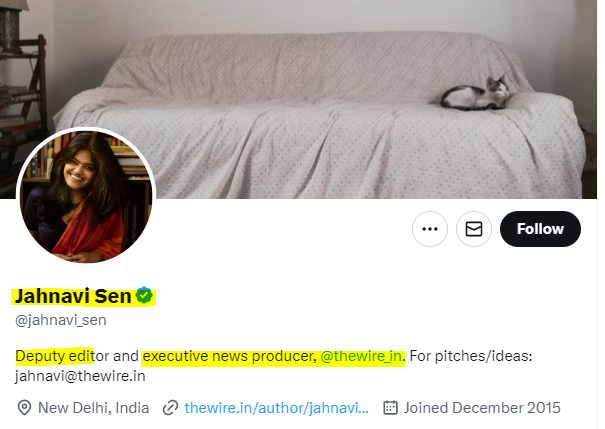
Notably, her daughter, Jahnavi Sen, serves as the deputy editor of the leftist propaganda outlet The Wire, which has frequently amplified anti-government narratives and whitewashed heinous crimes done by Islamists.
Nurul Izzah Anwar: Malaysian politician associated with the Open Society-funded event
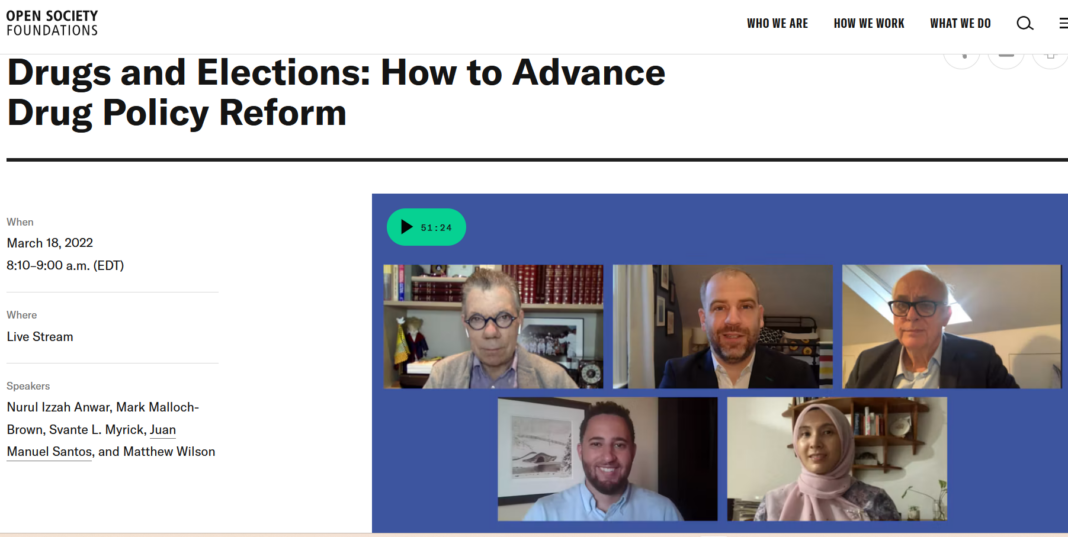
Alongside Ghosh, the summit hosted foreign politician Nurul Izzah Anwar, the Executive Chair of the Suluh Centre and a former Malaysian Member of Parliament. Nurul Izzah has maintained active links with the Open Society ecosystem, having featured as a prominent speaker at an Open Society Foundations-sponsored event as recently as 2025, further illustrating the tight-knit nature of the global progressive circuit assembled in Hyderabad.
Inside the Congress’ propaganda event, Bharat Summit: Brochure language vs. reality
Officially, the Bharat Summit was packaged in sophisticated, statesmanlike language. Running with over 1,000 delegates from 70 countries, the event was billed as an intellectual forum dedicated to discussing a “new global order,” “electoral integrity,” “cooperative federalism,” and countering the “politics of hatred, division and authoritarianism”. Ahead of the event, senior Congress leader Salman Khurshid stated that the deliberations—spanning 12 international sessions, eight sessions focused on Telangana, and the launch of a new policy think tank named ‘Our World’—would showcase “Rahul Gandhi’s vision for India and the world”.
However, looking past the polished brochure reveals a far more coordinated political alignment. The Bharat Summit is closely tied to the Progressive Alliance (PA), a global network of Left and socialist parties founded in Leipzig, Germany, in 2013 after breaking away from the Socialist International.
Bringing together 119 parties from 97 countries, including the UK’s Labour Party, Germany’s Social Democrats, and India’s Congress and Samajwadi Party, the PA is far from a casual debating society. Its stated mission is to share campaign strategies, coordinate international action, and organise against alleged “right-wing populism” and “dangerous authoritarianism.” By embedding itself in an international coalition built to counter nationalist governments, the Congress appears to be using a global stage to recast India’s elected government as a global “threat” that foreign parties must unite against.
Rahul Gandhi is not merely a guest at this table; he sits in its top leadership as one of nine members of the PA’s Praesidium, representing Asia, alongside Congress figures Sam Pitroda and Jothimani Sennimalai on its Board.
His commitment to this foreign network has even outweighed parliamentary duties; in December 2025, he skipped the final day of Parliament’s Winter Session to attend a PA meeting in Berlin.
Rahul Gandhi had attended another event of the Progressive Alliance in 2024 too, as he was present at a meeting of international political leaders in Santiago to “cooperate in the fight against democratic backsliding and rising global uncertainties.” The event was held on 5th and 6th October 2024.
This is not the first time Hyderabad has hosted this alliance. In April 2025, the Congress and the PA jointly organised “Delivering Global Justice” in the city, concluding with the Hyderabad Declaration that accused “far-right leaders and autocratic governments” of supposedly spreading lies, under the pretext of a “strategic dialogue” on India’s foreign policy direction.
Conclusion
Ultimately, the 2nd Bharat Summit in Hyderabad exposed a stark contradiction between the Congress party’s so-called patriotic branding and its actual political alliances. By assembling a roster dominated by anti-Hindu ideologues, defenders of terror-linked figures, domestic riot-accused activists, and top individuals of the Open Society Foundations under the benign banner of the “Bharat Summit,” the Congress attempted to lend domestic legitimacy to an international ideological campaign.
However, the true intent behind the gathering was laid bare by the composition of its delegations and the spectacle of a European socialist leader chanting domestic Congress slogans on Indian soil. Rather than celebrating Bharat or strengthening its democratic institutions, the conclave functioned as an international echo chamber aimed at delegitimising India’s electoral mandate, making it far more accurate to describe the event as a “Soros Summit” designed to whitewash a regime-change agenda aimed at ousting the democratically elected Prime Minister Narendra Modi.
OpIndia has earlier reported how the Progressive Alliance follows regime-change enthusiast George Soros’ ideology, who has openly expressed his dislike of PM Modi. Furthermore, the Indian members of this global ecosystem, such as Neha Bora and Prashant Bhushan, have already stated that the recent opposition protests are aimed at bringing down the democratically elected Modi government, echoing the violent examples witnessed in Bangladesh and Nepal.


