

HomeNews ReportsUttar Pradesh govt considering setting up e-courts to deal with traffic violators

Uttar Pradesh govt considering setting up e-courts to deal with traffic violators

The step will ease the burden and work load on courts and disposal of e-challans is done faster.

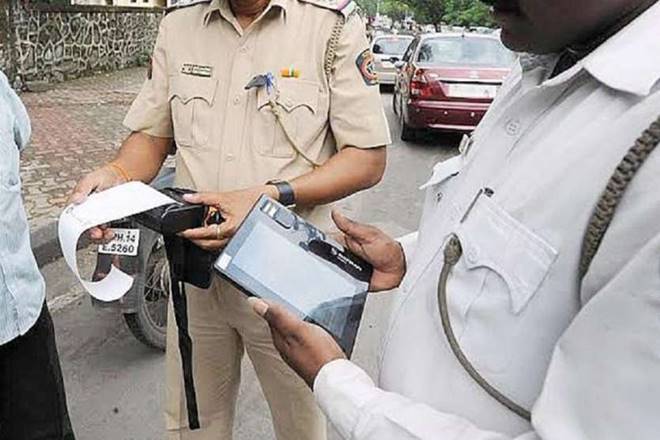
Uttar Pradesh Chief Minister Yogi Adityanath has asked his administration to work on setting up e-courts for faster disposal of e-challans issued over traffic rule violation. These cases of e-challans are piling up at regular courts and increasing the work load, reports say. 

Additional Chief Secretary, Home, Awanish Kumar Awasthi and Principal Secretary, Law, held a meeting on Wednesday to chalk out the details on setting up e-courts so as to bring a uniformity in e-challan system across the state. 

Between January 7, 2019 and December 31, 2020, as many as 1.3 crore e-challans were issued in Uttar Pradesh. Many of these e-challans were disposed of after the violators paid the fines. However, some were sent to the court for further action. As many as 36 lakh e-challans are currently pending in courts. 

The UP Chief Minister has instructed his administration to draw up an action plan for faster disposal of e-challans so that courts are not burdened. Currently, in Varanasi and Faizabad, e-challans are being sent to court through National Informatics Centre (NIC). Similarly, e-mapping is also carried out in Prayagraj by traffic directorate through NIC. The officials say that these system should be studied and implemented across the state for brining in ease and uniformity. 

Join OpIndia's official WhatsApp channel

  Support Us  

For likes of 'The Wire' who consider 'nationalism' a bad word, there is never paucity of funds. They have a well-oiled international ecosystem that keeps their business running. We need your support to fight them. Please contribute whatever you can afford

OpIndia Staff
OpIndia Staffhttps://www.opindia.com
Staff reporter at OpIndia

Related Articles

Trending now

West Bengal CM Suvedu Adhikari restores general consent for CBI after 8 years: What it means and why Mamata Banerjee withdrew it in 2018

The restoration of general sanction would enable the CBI investigations into offences by central government employees, central public sector undertakings (CPSUs), as well as private persons across West Bengal, without prior case-by-case approval.

When the Allahabad High Court told the Supreme Court that its own judgments don’t bind in cases of habeas corpus

The Allahabad bench ruled that the recent cluster of Supreme Court decisions on illegal arrest and habeas corpus, the second set, did not appear to have taken into account the older, more detailed line of precedents that had sketched out the entire criminal procedure. Because of this, the bench ruled that those newer rulings are not binding precedents and hit by the principles of stare decisis, that is, they cannot overturn the more established, well reasoned position.
- Advertisement -
