

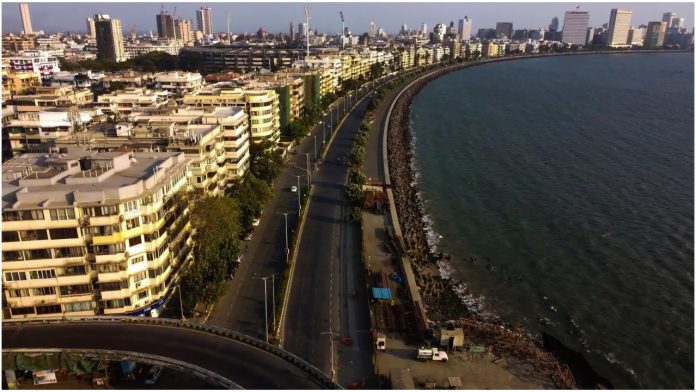
As many as 12 Indian coastal cities, including Mumbai, will be underwater by the end of the century, the National Aeronautics and Space Administration (NASA) of the US has predicted.
According to the reports, NASA has released a study based on the recent report published by the Intergovernmental Panel on Climate Change (IPCC) that analyses climate change, including rising sea-level worldwide.
As communities across the world prepare for the impacts of sea level rise, a new visualization tool provided by @NASAClimate & @IPCC_CH gives users the ability to see what sea levels will look like anywhere for decades to come. Discover more: https://t.co/VAST2xSOyE pic.twitter.com/nePqLntrqv
— NASA (@NASA) August 9, 2021
In its latest report, the Intergovernmental Panel on Climate Change (IPCC) had issued a ‘code red’ for humanity and had warned against imminent climate change in the coming decades due to increased human activity. The IPCC publishes global climate assessments every five to seven years, concentrating on changes in temperature and ice cover, greenhouse gas emissions, and sea levels throughout the world. This is IPCC’s sixth global science assessment since 1988.
Using the IPCC’s publicly available data, NASA’s Sea Level Change Team has created a sea-level projection tool that provides extensive data on the future sea-level rise. The NASA Data has accessed data from satellites and ground equipment, as well as computer simulations, to make their sea-level forecasts.
As per NASA’s analysis, 12 Indian cities – Kandla, Okha, Bhavnagar, Mumbai, Mormugao, Mangalore, Cochin, Paradip, Khidirpur, Visakhapatnam, Chennai, and Tuticorin are projected to witness a rise in sea levels leading to the submergence in low lying areas.
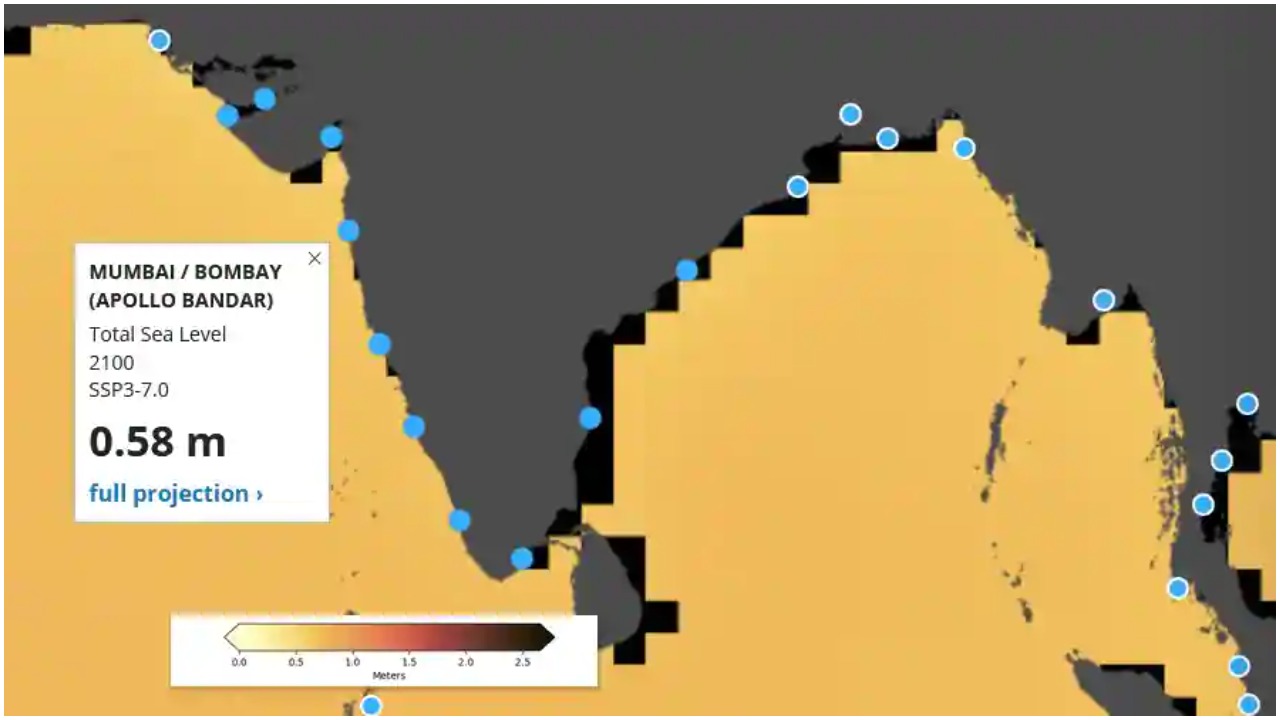
In its landmark report, the IPCC has warned that the planet will warm by 1.5° Celsius in the next two decades without drastic moves to eliminate greenhouse gas emissions. The latest scientific assessment from the UN’s Intergovernmental Panel on Climate Change has put the blame on human actions for rising temperatures. The scientists forecast no end to warming trends until emissions cease.
The report said that modern society’s continued reliance on fossil fuels is heating the world at a rate unprecedented in the past 2,000 years and its effects are already visible as record droughts, wildfires, and floods devastate communities across the globe.
“It is unequivocal that human influence has warmed the atmosphere, ocean and land,” wrote the authors of the IPCC’s sixth global science assessment. The IPCC authors concluded that the crucial warming threshold of 2°C would be “exceeded during the 21st century” without deep emissions cuts in the next decades. The assessment released on Monday is the collective work of more than 200 scientists, approved by delegates from 195 countries.


