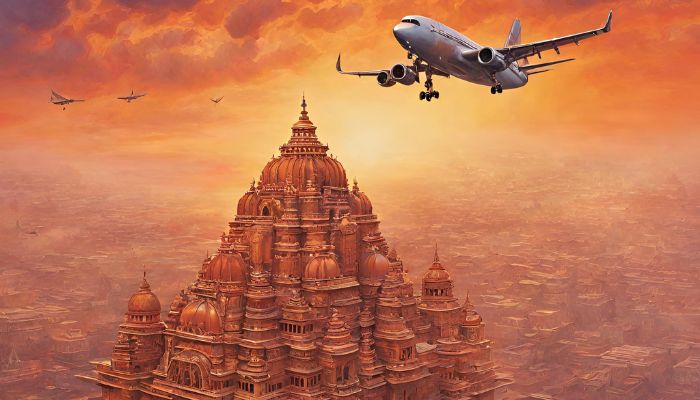
As the sacred city of Ayodhya prepares to host the historic Pran Pratishtha ceremony of the Ram Mandir on 22nd January, the skies above are set to be busy with the arrival of more than 100 private planes at the recently inaugurated Maharshi Valmiki International Airport, Ayodhyadham (MVIAA) and other airports near Ayodhya.
The highly anticipated event, graced by the presence of esteemed VVIPs, celebrities, and dignitaries, presents a logistical challenge as the city braces itself for an influx of high-profile guests. Uttar Pradesh Chief Minister Yogi Adityanath, in a recent announcement, disclosed that the MVIAA has already received over 40 requests for chartered flight landings, signifying the magnitude of the occasion.
The Pran Pratishtha ceremony is scheduled to be a grand affair, with various rituals and traditions taking place to mark the official consecration of the new Ram Mandir. Prime Minister Narendra Modi is expected to lead the ceremonies, which are anticipated to be attended by over 8,000 VIPs, celebrities, actors, industrialists, saints, seers, and other distinguished guests. The sheer scale of the event has led to a surge in private jet travel, with around 100 chartered planes making their way to Ayodhya to partake in this historic moment.
The newly inaugurated MVIAA, operational since 30th December 2023, boasts eight bays (aprons) designed to accommodate single-aisle 200-seater aircraft and smaller planes. However, the grandeur of the event and the limited parking facilities at MVIAA have prompted strategic planning to ensure a seamless experience for both arriving and departing flights. With at least four parking slots expected to be occupied by Prime Minister Modi’s aircraft upon arrival, the Ayodhya airport is making provisions for alternate parking at a dozen airports within a 1,000-kilometer radius.
Airports across five states—Uttar Pradesh, Bihar, Jharkhand, Madhya Pradesh, and Uttarakhand—have been selected to share parking spaces for the private jets. Among the identified airports are Khajuraho, Jabalpur, Bhopal, Dehradun, Lucknow, Prayagraj, Kanpur, Varanasi, Kushinagar, Gorakhpur, Gaya, and Deoghar. This meticulous coordination ensures that once dignitaries are dropped off in Ayodhya, some jets will fly to these alternative airports to make room for incoming flights, adhering to the ‘drop-and-move’ policy.
The Airports Authority of India (AAI) has played a crucial role in orchestrating these parking arrangements. A dozen airports have been strategically chosen to facilitate the night halts of private jets after they drop off their distinguished passengers in Ayodhya. This collaborative effort spans states and aims to accommodate the surge in air traffic expected on the day of the ‘Pran Pratishtha’ event.
The travel times between Ayodhya and the identified airports vary, with a flight to Chaudhary Charan Singh Airport in Lucknow taking approximately 39 minutes and the farthest destination, Raja Bhoj Airport in Bhopal, requiring 1 hour and 16 minutes by flight. This careful consideration of distances ensures efficient travel for the VVIPs and dignitaries who will be flying in on private jets, including the 10-seater Dassault Falcon 2000, Embraer 135 LR & Legacy 650, Cessna, Beechcraft Super King Air 200, and Bombardier.
Club One Air, a prominent luxury charter plane service, has reported bookings for three Falcon 2000 business jets for the temple inauguration, adding to the opulence of the occasion. Despite the challenges posed by limited parking facilities, the coordinated efforts and meticulous planning reflect the commitment to making the Ram Mandir consecration ceremony a seamless and grandiose experience for all attendees.
Ahead of the consecration ceremony of Ram Mandir scheduled to be held on Monday (22nd January), the darshan of the old idol of ‘Ram Lalla Virajman’ has been temporarily stopped.
The murti kept in a makeshift temple will be relocated to the sanctum sanctorum of the newly built Ram Mandir on Sunday (21st January).
According to Satyendra Das, the pujari of ‘Ram Lalla Virajman’ at the makeshift temple, the darshan of the idol is expected to resume from Tuesday (23rd January).
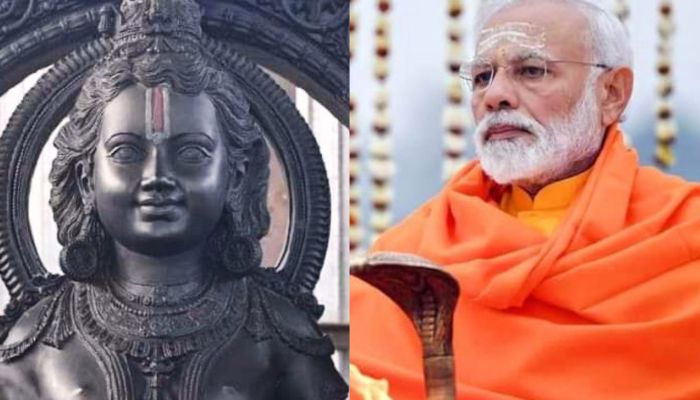
In the meantime, a series of rituals surrounding the new 51-inch idol of Ram Lalla are being completed. This included ‘adhivas’ rituals for the idol’s eyes and adorning the entire frame with various flowers sourced from different parts of the country.
Approximately 50 kg of flowers, including lotus, rose, jasmine, and chrysanthemum, were used in the rituals. During the ‘snapan’ ritual, the sanctum sanctorum of the Ram Mandir was washed with water from 81 “Kalash” or urns.
These urns were gathered from various religious sites and rivers nationwide, including Sitamarhi in Bihar and Nepal, which are regarded as the birthplace of Sita.
The rituals that are being conducted on Sunday (21st January) include ‘Shakradhivas’, ‘Phaladhivas’ and ‘Pushpadhivas’. They involve offerings of sugar, sweets, fruits, and flowers to the idol of Ram Lalla.
PM Modi to visit temples in Tamil Nadu
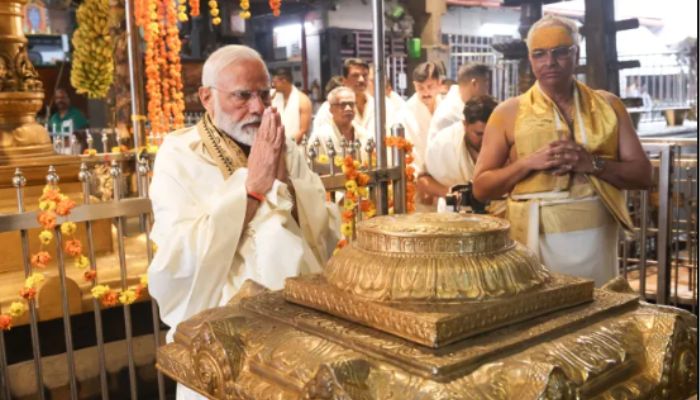
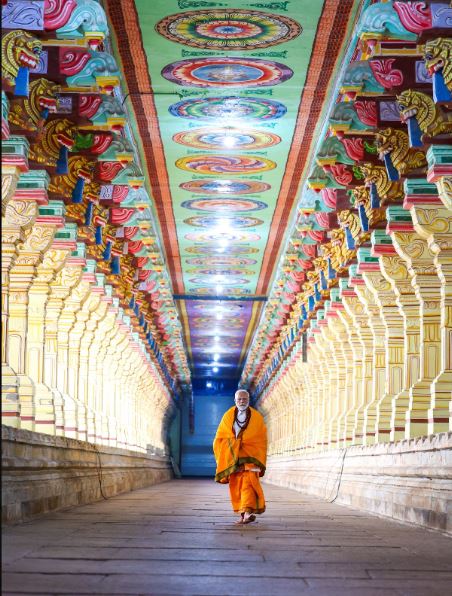
On Saturday (20th January), Prime Minister Narendra Modi visited the Sri Arulmigu Ramanathaswamy Temple in Rameswaram city of Tamil Nadu. The temple, dedicated to Lord Shiva, has one of the longest corridors.
The lingam in the temple was placed by Lord Ram and Maa Sita. The temple is one among the 12 jyotirlingas and one among 4 CharDhams.
Will never forget yesterday’s visit to the Arulmigu Ramanathaswamy Temple. There is timeless devotion in every part of the Temple. pic.twitter.com/bXgbz4VBtm
PM Modi is set to visit the Sri Kothandarama Swamy in Dhanushkodi on Sunday (21st january). It is believed that Lord Ram met Vibishana at this temple and conducted his coronation.
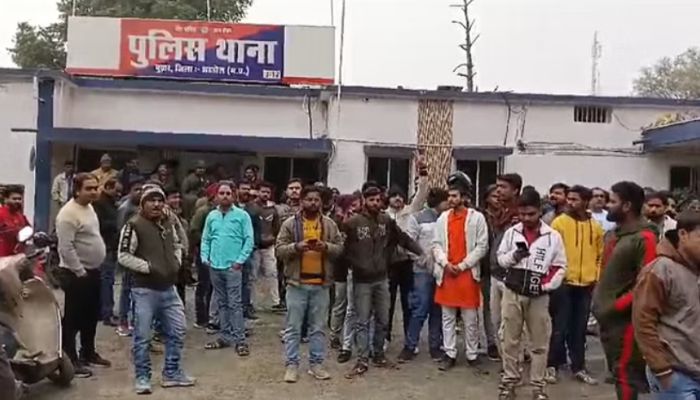
On Saturday (20th January), a teacher named Mohammad Abdul Wahid, in a school at Budhar town in the Shahdol district of Madhya Pradesh, brutally beat a class 7 student for chanting Jai Shri Ram in the classroom. The teacher was arrested after the parents of the student and Hindu organisations staged a protest over this incident. He was booked under various sections of IPC and the Juvenile Justice Act. School’s director Sameer Niyazi was also implicated in this case.
On Saturday morning, a student studying in class 7 was in the class with his friends in Green Bells School located in the Budhar police station area. No teachers were present in the classroom. At that time, some students started chanting ‘Jai Shri Ram’. Hearing the slogans of Jai Shri Ram, teacher Mohammad Abdul Wahid reached there and started questioning the students who were chanting it. A student told the name of the victim student to the teacher. Mohammad Abdul Wahid then brutally beat the student.
After this, the minor student reached his house crying and narrated the incident to his parents and family members. The parents immediately informed the local people about the incident. People started gathering and reached Budhar police station along with the members of Hindu organisations. They surrounded the police station and demanded action against the teacher.
The police registered a case against the teacher and the director of the school under various sections. Sections 153, 323, 34, and 500 of the IPC and section 82 of the Juvenile Justice Act were imposed against the two accused. The accused teacher Mohammad Abdul Wahid has been arrested by the police. People also demanded to cancel the license of the school.
Police station house officer Sanjeev Jaiswal said, “An incident of assault has come to light wherein a student was beaten for chanting Jai Shri Ram in school. A case has been registered against the accused teacher and school operator. Further investigation in this case is going on.”
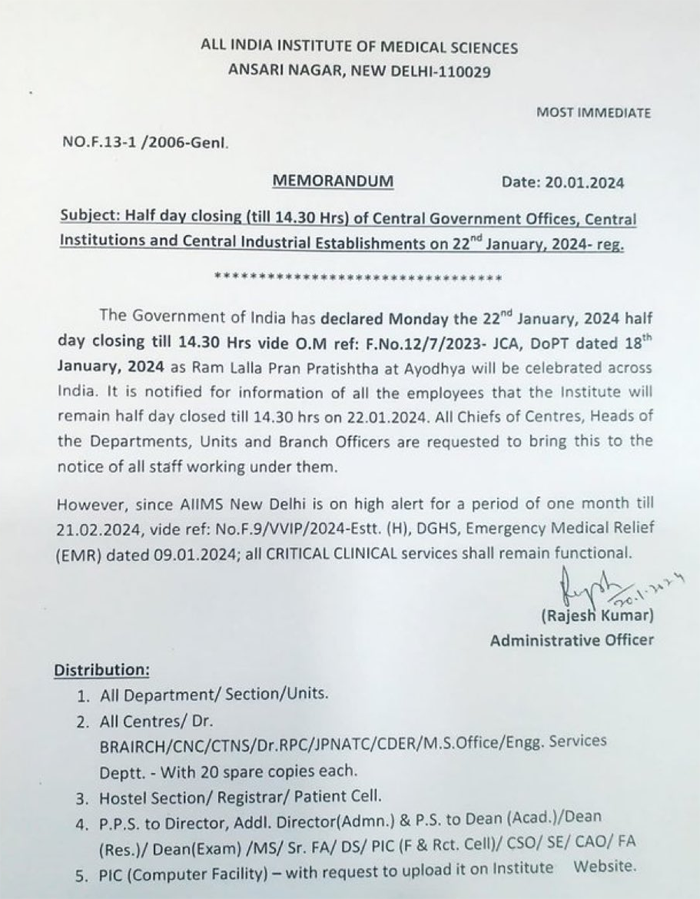
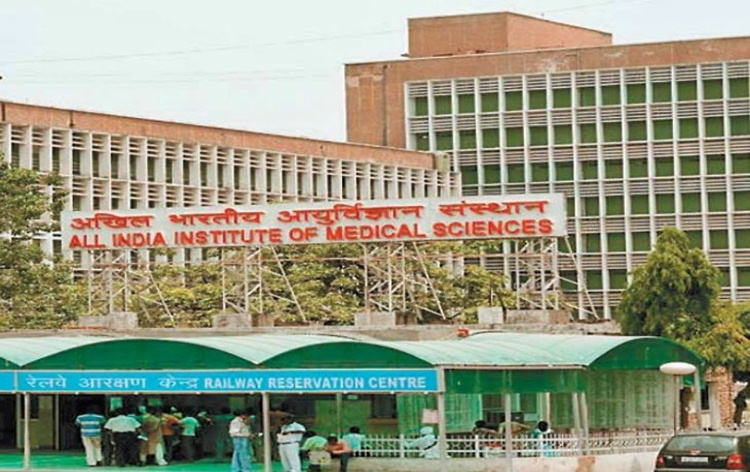
On 20th January, the All India Institute of Medical Sciences (AIIMS) issued a memorandum announcing a half-day closing till 2:30 PM, given Ram Lalla Pran Pratishtha at Ayodhya.
The notice mentioned that as the hospital is on high alert for one month till 21st February 2024, all critical clinical services will remain functional. However, several opposition leaders and left-liberals published posts suggesting emergency services would be shut.
Source: X
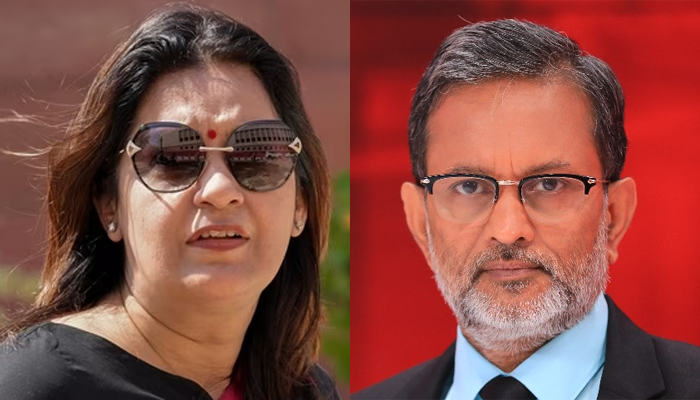
Shiv Sena MP for Rajya Sabha, Priyanka Chaturvedi, wrote, “Hello humans. Please don’t go into a medical emergency on the 22nd, and if you do, schedule it for after 2 PM since AIIMS Delhi is taking time off to welcome Maryada Purushottam Ram. PS: However, wonder if Lord Ram would agree that health services are disrupted to welcome him. Hey Ram, Hey Ram!”
Hello humans
Please don’t go into a medical emergency on 22nd , and if you do schedule it for post 2pm since AIIMS Delhi is taking time off to welcome Maryada Purushottam Ram
PS: However, wonder if Lord Ram would agree that health services are disrupted to welcome him.
TMC MP for Rajya Sabha Saket Gokhale wrote, “India’s largest Govt Hospital AIIMS Delhi will remain closed till 2:30 PM on Monday. People are sleepingThere’s outside in the cold at AIIMS gates waiting for an appointment. The poor & dying can wait because priority is given to Modi’s desperation for cameras & PR.”
India’s largest Govt Hospital AIIMS Delhi will remain closed till 2:30pm on Monday.
There’s literally people sleeping outside in the cold at AIIMS gates waiting for an appointment.
The poor & dying can wait because priority is given to Modi’s desperation for cameras & PR. pic.twitter.com/D8yUjGtHzL
National President of Indian Youth Congress Srinivas BV wrote, “If a hospital like AIIMS remains closed till 2.30 PM due to Pran Pratishtha, so who is to be thanked for those whose lives will be lost due to lack of treatment?”
दोपहर के 2.30 बजे तक प्राण प्रतिष्ठा के चलते अगर AIIMS जैसा अस्पताल बंद रहा,
तो जिन लोगों के प्राण इलाज के अभाव में निकलेंगे उनके लिए किसको धन्यवाद करना है? https://t.co/IEBDuVkSWS
Journalist Nidhi, who was once tricked by scammers that she got job at Havards, wrote, “People from all over wait for weeks, months to get an appointment at AIIMS. It is beyond shocking that India’s leading hospital is shutting down for OPD patients for half a day for a religious ceremony. We have left our brains behind.”
People from all over wait for weeks, months to get an appointment at AIIMS. It is beyond shocking that India’s leading hospital is shutting down for OPD patients for half a day for a religious ceremony. We have left our brains behind
Journalist Zakir Ali Tyagi wrote, “This order is shameful that Delhi’s AIIMS will also remain closed on 22nd January, no department of AIIMS will open till 2.30 PM, if patients die then let them die, there should be no shortcoming in the inauguration ceremony of 22nd January.”
यह आदेश शर्मनाक है कि दिल्ली का एम्स भी 22 जनवरी को बंद रहेगा , ढाई बजे तक एम्स को कोई भी विभाग नही खुलेगा, मरीज़ मरते है तो मरने दो बस 22 जनवरी के उद्घाटन समारोह में कोई कमी नही रहनी चाहिए, @aiims_newdelhi आप भी कमाल करते हो, एक तरफ़ डॉक्टर ख़ुद को भगवान सुनना चाहता है दूसरी… pic.twitter.com/N54hCbvCC4
While all the left-liberals, opposition leaders and journalists called it unacceptable, they forgot that AIIMS OPD remains closed on all national holidays, including Eid, Christmas, Diwali, Independence Day, Republic Day, every Saturday and Sunday and more. Ram Mandir Pran Pratishtha ceremony is one of the biggest events in the history of Independent India and holds utmost importance for Hindus, the majority of the country. The employees, including doctors at AIIMS, have the right to celebrate this day.
AIIMS OPD and all govt / municipal hospital OPDs everywhere in Bharat are closed on Sundays and holidays. Emergencies run 24×7. One would expect a sitting member of parliament to know such basic things. https://t.co/IqgFVmLcty
As the notice mentioned, emergency and critical services will continue functioning at the hospital, and any patient needing immediate assistance will be accommodated.
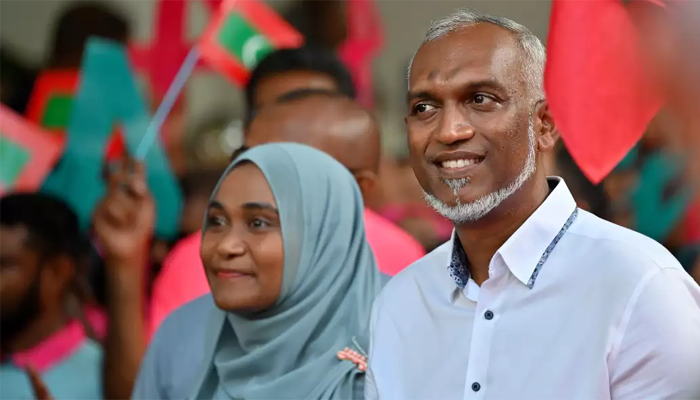
On 20th January, a 14-year-old Maldivian boy died as President Mohammed Muizzu reportedly refused to allow a Dornier aircraft provided by India to airlift him. As per Maldivian media, the boy was suffering from a brain tumour. He had suffered a stroke, after which his family requested an air ambulance to transport him from his residence in Gaaf Alif Villingili to Male, the capital of Maldives.
Maldivian media reported that the family accused the authorities of not providing medical evacuation promptly. Boy’s father told Adhadhu, a Maldivian news agency, that Island Aviation did not immediately respond to the family’s calls. He said, “We called Island Aviation to get him to Male immediately after the stroke, but they did not answer our calls. They answered the phone at 8:30 AM on Thursday. The solution is to have an air ambulance for such cases.”
Maldives MP Meekail Naseem quoted a report on the incident by Mihaaru on social media platform X and said, “People shouldn’t have to pay with their lives to satisfy the President’s animosity towards India.”
The boy was shifted to Male 16 hours after the family requested the emergency evacuation. Aasandha Company Limited, which received the evacuation request, claimed a technical problem with the aircraft led to the delay. The statement read that they had initiated the evacuation process, but “unfortunately, due to a technical problem with the flight at the last moment, the diversion was impossible as planned”. Since Muizzu took charge in the Maldives, Indian helicopters and planes are not used for emergency evacuation. They can be used only by direct permission from the President, which in this case was reportedly not provided.
People shouldn’t have to pay with their lives to satisfy the President’s animosity towards India. https://t.co/PPOOKVXN7v
Responding to the criticism for not using Indian aircraft for medical evacuation, Defence Minister Mohamed Ghassan claimed that 93 per cent of the evacuations were still being carried out by Maldivian Airlines. In a social media post, he said, “The SOPs (standard operation procedures) of medical operations do not require notifying or seeking permission from the President. That is something done through the coordination of relevant institutions.”
India-Maldives conflict
The diplomatic conflict between India and Maldives over social media posts related to tourism has added more tension to the situation. Notably, Muizzu’s party won the election based on the “India Out” movement targeting less than 100 Indian armed forces personnel stationed in the Maldives.
After winning the election, Muizzu gave an ultimatum to the Indian forces to leave Maldives by March 2024. Notably, Muizzu is a pro-China politician and recently visited the country to sign several MoUs. Reportedly, Muizzu is trying to reduce reliance on India and build alternate routes to fulfil the country’s requirements, including medical care.
At the beginning of January 2024, Prime Minister Narendra Modi went to Lakshadweep to launch some projects. During his visit, he promoted the Islands of Lakshadweep as a potential tourist destination. Following PM Modi’s visit, social media users urged Indian citizens to choose Lakshadweep over Maldives.
The social media posts irked a few deputy ministers in Maldives, who posted derogatory comments against PM Modi and the people of India, leading to a massive backlash from Indian users. The Maldivian government suspended three deputy ministers amid the backlash not only from Indians but also from those who are connected to the tourism industry in Maldives and the opposition.
Days ahead of the much-awaited Ram Mandir Pran Pratishtha, BJP stalwart LK Advani who spearheaded the Ram Mandir movement, had asserted that destiny had decided that Ram Mandir would be built and PM Modi would represent every Indian citizen at the Pran Pratishtha in Ayodhya.
On his part, PM Modi has been following strict rituals as per the Hindu scriptures before stepping into the Ram Mandir premises to carry out the Puja for the mega-consecration ceremony. In line with that, he had earlier announced on 12th January that for the next eleven days he would undergo strenuous rituals of ‘Yama Niyama’ which are described as ethical guidelines in the Bhagwad Gita. As per reports, his dietary intake only includes coconut water and he has been sleeping on the floor on a blanket for this entire duration. Additionally, he has been doing Gau-pooja, feeding cows daily, and various other forms of ‘daan’ like ‘annadaan’ and giving away clothes.
Back then, PM Modi had asserted, “It is said that to participate in a ceremony like the consecration, one must try to feel a part of the divine force within oneself.”
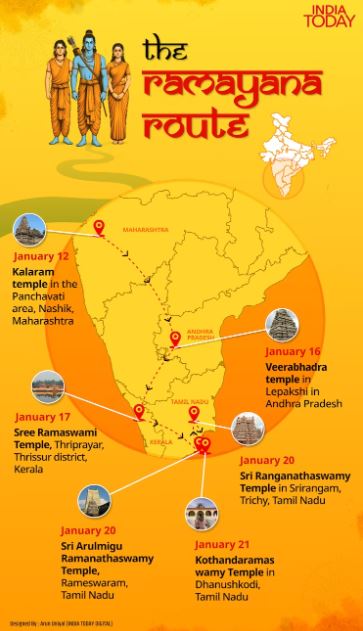
In addition to that, PM Modi has been visiting several revered temples in several states including Maharashtra, Andra Pradesh, Kerala, and Tamil Nadu. Conspicuously, his spiritual tourism – which comes alongside announcements of welfare and developmental schemes in these states – follows the sequence of events in the Ramayana and has a deep connection with the revered Hindu epic.
Panchvati in Nasik, Maharashtra
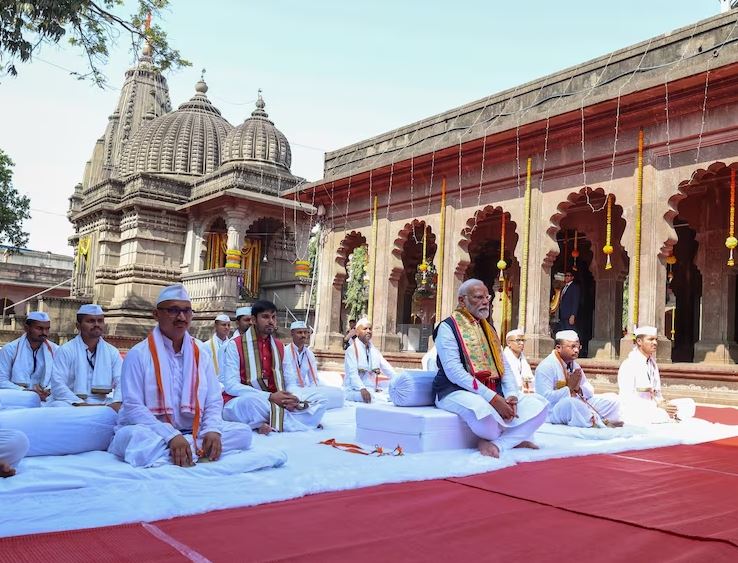
After announcing that he would follow ‘Yama Niyama’, PM Modi embarked on a visit to Panchvati in Nasik, Maharashtra. Strikingly, Panchavati came in the Dandakaranya, a deep forest in Central India where Shri Ram, Maa Sita, and Laxman ji lived for the first few years of their 14-year exile period. Additionally, the name Panchavati means the land of five banyan trees.
At the Shree Kalaram Temple, I had the profound experience of hearing verses from the Bhavarth Ramayana written in Marathi by Sant Eknath Ji, eloquently narrating Prabhu Shri Ram's triumphant return to Ayodhya. This recitation, resonating with devotion and history, was a very… pic.twitter.com/rYqf5YR5qu
As per Ramayana, Shri Ram ji settled here first with Sita and Laxman as the prime location falls on the banks of river Godavari.
In Panchavati, PM Modi offered prayers at the famous Kalaram temple and performed ‘Jal Pujan’ and ‘Aarti’. He also listened to the verses of ‘Bhavartha Ramayana’ written in Marathi. It is believed that the Kalaram temple was built exactly at the same place where Shri Ram ji had set up his hut with Sita ji and Lakshman ji.
(PM Modi at Kalaram temple in Nasik)
It was rebuilt after it was destroyed by the Mughals in 1700. It is believed that here Shri Ram slayed 14,000 demons in just 1.5 minutes. And since Shri Ram invoked his ‘kala roop’ or ‘dark side’ to slay the demons, it is called ‘Kalaram’. As the idol is curved out of black stone, its colour is attributed as the other reason for the same.
Furthermore, it is believed to be the same place from where demon king Ravan abducted Mata Sita through deceit while seeking daan in a Sadhu roop.
Veerbhadra Temple in Lepakshi, Andra Pradesh
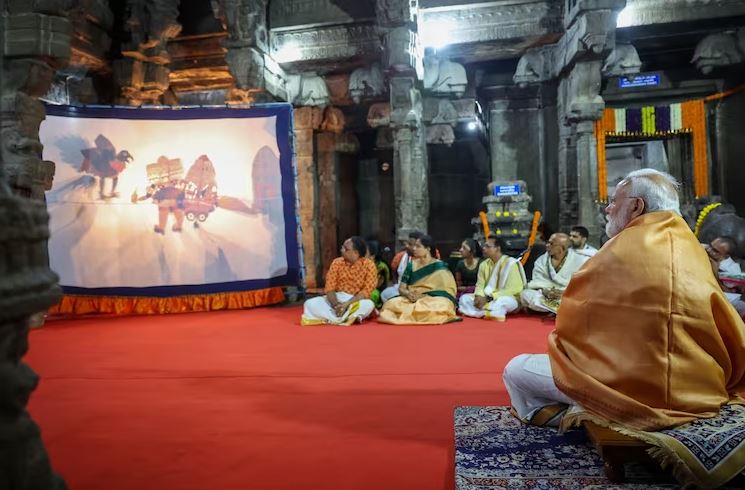
From Panchavati, PM Modi headed southwards to Lepakshi in Andhra Pradesh on 16th January where he visited the Veerbhadra Temple. Notably, Lepakshi means ‘Rise, oh bird’ in Telugu and it holds a special significance in Ramayana. As per Ramayana, it is here in Lepakshi that Jatayu fell to the ground after fighting valiantly with Ravana who had abducted Mata Sita. During the fight, Ravan had slashed Jatayu’s wings.
(Image Source- PM Narendra Modi’s X handle)
#WATCH | Prime Minister Narendra Modi sings 'Shri Ram Jai Ram' bhajan at the Veerbhadra Temple in Lepakshi, Andhra Pradesh pic.twitter.com/6F0lyyQSXN
When Shri Ram and Laxman ji came looking for Mata Sita, they met Jatayu who informed them about Mata Sita’s abduction and that Ravan had moved southwards. Subsequently, Shri Ram granted him moksha – liberation from the cycle of death and rebirth. There is also a belief that the Lepakshi temple has preserved footprints belonging to Goddess Sita.
During his visit to Veerdbharda Temple here, PM Modi chanted ‘bhajans’ and also heard verses from the ‘Ranganatha Ramayan’, the Telugu rendition of the Ramayana.
Sri Ramaswami Temple in Thrissur, Kerala
After that on Wednesday, 17 January, PM Modi paid a visit to the revered Triprayar Sree Ramaswamy temple in Thrissur, which is located on the Karuvannur River, also called the Theerva River. This temple is often referred to as the Ayodhya of the South. It is one of the prominent temples in the state with Lord Ram as the main deity.
The image of Lord Ram (Triprayar Thevar) resembles the Chaturbhuja Vishnu form with four arms, bearing a conch(Panchajanya), a disc (Sudarsana), a bow (Kodanda) and a garland respectively. It is believed that the deity worshipped here possesses some of the aspects of Shiva too. It was after killing the asura, Khara that Sri Rama got both the Shaiva and Vaishnava aspects. Thus Triprayar Thevar is also called Khara Samhara Moorthy.
The temple has a unique worship done with the bursting of crackers called ‘vedi vazhipadu’ which is performed to commemorate the return of Hanuman from Lanka after he met Sita and brought her ornament.
A significant highlight at the temple includes the traditional performing art known as ‘Chakyar Koothu.’ This art form depicts a pivotal episode from the Ramayana known as ‘anguliyangam,’ portraying the moment when Hanuman encounters Sita in Lanka and takes a piece of ornament given by her to Lord Ram.
Enacted over 12 days, the performance is mainly devoted to the conversation between Hanuman and Sita. PM Modi’s visit resembles the sequence as is mentioned in the Ramayan.
Ranganathaswamy Temple in Trichy
As part of his spiritual tourism, PM Modi also visited Sri Ranganathaswamy Temple in Srirangam in Tamil Nadu’s Trichy on Saturday, 20th January. Lord Vishnu is the primary deity worshipped at the Sri Ranganatha Swamy Temple. Lord Vishnu was worshipped by Lord Ram and his ancestors.
Notably, PM Modi is the first Prime Minister of India to visit Sri Ranganatha Swamy Temple in Tiruchirappalli. At the temple, PM Modi heard verses from Ramayana.
As per Ramayana, the temple finds mention after Shri Ram had slayed Ravan. It is believed that here Shri Ram gave Vibhishan his own dynasty’s Aradhana Murthy which is an idol of the reclining Vishnu. It was a sign of gratitude for his contribution and help in the fight against his brother, Ravan.
(Pictures shows PM Modi’s spiritual tourism following Ramayana circuit, Image Courtesy – India Today)
Lord Ram had warned Vibhishan that if he kept the idol anywhere on the ground during his travel, the idol would become permanently fixed there, and he wouldn’t be able to take it to Lanka.
Upon reaching Tiruchirapalli, Vibhishan went for a bath in the Kaveri river to perform his daily worship. During this time, he entrusted the idol to a local boy he met along the riverbanks. Upon Vibhishan’s return after completing his rituals, he found the idol fixed permanently on the ground, where it has remained ever since. According to legend, the boy was none other than Ganesha, and it was done to prevent the idol from leaving Indian soil. The idol was rediscovered thousands of years later by a Chola dynasty king, who then established the Sri Ranganathaswamy Temple.
Rameswaram
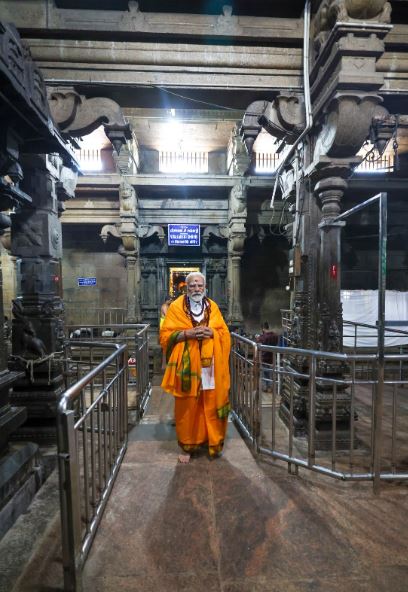
After Trichy, PM Modi moved further southward where he sought blessings and darshan at Rameswaram on Saturday. He visited the famous Arulmigu Ramanathaswamy Temple which is one of the Char Dhams. Sri Ramanathaswamy, a form of Lord Shiva is the principal deity in the temple which is also among the 12 Jyotirlingas and is famous for its architecture.
(From PM Modi’s X handle)
Prayed at the Arulmigu Ramanathaswamy Temple for the good health and well-being of 140 crore Indians. pic.twitter.com/mfd3yu4kUx
Here PM Modi participated in the programme ‘Shri Ramayana Paryana’ at this temple. He took Holy dip at ‘Angi Theerth’ beach in Rameswaram and had bath at all 22 wells in the temple premises.
PM Modi took holy dip in sea and then 22 wells before offering payers at Sri Ranganathaswamy Temple ? pic.twitter.com/VtC4rGC69O
According to the Hindu epic, when Lord Ram was returning to India from Lanka, he sought to atone for the sin of killing a Brahmin (Ravan). In response, Lord Shiva advised him to install a Shivling and perform puja. Lord Ram then assigned Hanuman the task of finding a Shivling on Mount Kailasa. However, when Hanuman did not return on time, Sita used sand from the seashore to construct a Shivling.
Dhanushkodi
On 21st January (tomorrow), PM Modi will conclude this spiritual tourism and his circumambulation of Ram temples by visiting the Kothandaramaswamy Temple in Dhanushkodi, near Rameswaram. The temple dedicated to Lord Ram is located near the southern end of the Rameswaram island.
PM Modi will also visit Arichal Munai point in Dhanushkodi. It is believed that the construction of the Ram Setu was started from Arichal Munai.
The Kothandaramaswamy Temple temple is devoted to Sri Kothandarama Swamy, where ‘Kothandarama’ translates to ‘Rama with the bow.’ The name reflects the belief that Lord Ram, after the war, used his bow and arrow to break the ‘Ram Setu,’ the bridge constructed by his Vanar Sena to reach Lanka. Additionally, it is said that Lord Ram performed the coronation of Vibhishan at this sacred site.
As per schedule, eight distinct traditional Mandalis will narrate the Ramkathas, recounting Shri Rama’s return to Ayodhya, in Sanskrit, Awadhi, Kashmiri, Gurumukhi, Assamese, Bengali, Maithili, and Gujarati. The Kothandaramaswamy temple holds significance as the place where Vibhishana is believed to have initially met Lord Ram and sought refuge.
Furthermore, earlier this week, PM Modi visited Guruvayur Sree Krishna Temple and Sree Rama Swami Temple in Kerala’s Thrissur. The temple is dedicated to Lord Ram and the idol resembles Chaturbhuja Vishnu. It has four arms holding a conch, a disc, a garland, and a bow.
After offering prayers in all the temples that fall on the Ramayana circuit, PM Modi will perform the consecration ceremony on 22nd January which is just two days away.
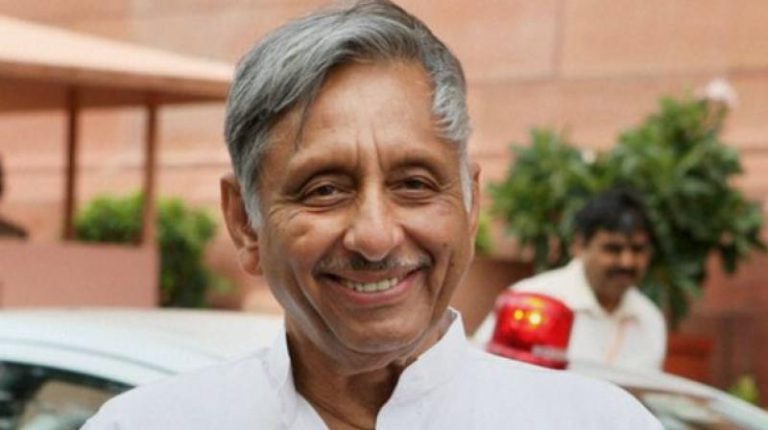
Mani Shankar Aiyar, a prominent leader within the Congress party, has stated that the responsibility for unlocking the gates of the Babri Masjid lies with the party itself, not with former Prime Minister Rajiv Gandhi. Aiyar further asserted that Arun Nehru, whom he referred to as “BJP-planted,” played a role in this decision.
Aiyar additionally expressed his belief that if Rajiv Gandhi had been alive and serving as the prime minister instead of P V Narasimha Rao, the Babri Masjid would likely still be standing. According to Aiyar, Gandhi would have provided a fitting response to the BJP and found a resolution similar to the one eventually reached by the Supreme Court years later.
He commended the leadership of the Congress for opting not to attend the consecration ceremony of the Ram temple scheduled for January 22.
Aiyar made these remarks on Friday during the unveiling of his book titled “The Rajiv I Knew And Why He Was India’s Most Misunderstood Prime Minister,” published by Juggernaut.
Speaking at the event, Aiyar highlighted, “He (Gandhi) advocated keeping the masjid and constructing the temple. The Supreme Court, in a way, echoed a similar sentiment by suggesting the construction of the temple and relocating the masjid. In essence, the judgment aligns with the conclusion Rajiv was leaning towards.”
In a candid conversation with ‘journalist’ Vir Sanghvi, tainted in the Niira Radia scam, Aiyar noted that during the final years of Congress governance, challenges escalated with a prime minister unable to make decisive decisions. This void, he argued, allowed the BJP under Modi’s leadership to step in.
As the Ram temple consecration ceremony approached, Aiyar and Sanghvi focused much of their conversation on the Ram Janmabhoomi issue. Regarding the opening of locks on the Babri Masjid gates in 1986, Aiyar attributed the decision to Arun Nehru and emphasised that Rajiv Gandhi, with a significant parliamentary majority, had no need to appease any particular group.
Aiyar claimed that Nehru, who later joined the BJP, orchestrated the unlocking by supporting the election of Veer Bahadur Singh as the chief minister. According to Aiyar, Singh then obtained a petition claiming that the locks were not judicially ordered but were executed by an administrative directive. Consequently, the locks were opened, and a large gathering of Hindu pilgrims surged in without Rajiv’s knowledge.
Aiyar insisted that while there was Congress involvement in unlocking the gates, the person responsible intentionally kept it hidden from Rajiv, who would not have approved such an action. He labeled Arun Nehru as a “BJP plant.”
On January 20, Delhi’s All India Institute of Medical Sciences (AIIMS) announced its closure until 2:30 pm on January 22 in observance of the inauguration of the Ram Temple in Ayodhya.
The hospital in the national capital also directed all chiefs of centres, heads of departments, units, and branch officers to ensure that this information is communicated to all staff working under their supervision.
According to the memorandum from AIIMS, it stated, “The Government of India has officially announced a half-day closure on Monday, January 22, 2024, until 14:30 Hrs, as per Office Memorandum reference: F.No.12/7/2023- JCA, DoPT dated 18th January 2024, due to the celebration of Ram Lalla Pram Pratistha at Ayodhya, to be observed nationwide.”
AIIMS announced, “For the information of all employees, the institute will observe a half-day closure until 14:30 hrs on 22.01.2024.” Additionally, the central government hospital requested, “All chiefs of centres, heads of departments, units, and branch officers are urged to communicate this information to all staff working under their supervision.” However, the statement clarified that all critical clinical services will continue to operate as usual.
Following AIIMS, Delhi’s Ram Manohar Lohia Hospital declared a half-day holiday until 2:30 pm on January 22, 2024, in observance of the Pran Pratishtha of Ayodhya Ram Temple. The announcement specified that emergency services would continue to operate, and OPD registration counters would open at 1:30 pm.
Earlier on the same day, Delhi Chief Minister Arvind Kejriwal had issued an order for the closure of government offices until 2:30 pm on January 22.
A memorandum from the services department stated, “The Lt Governor of the National Capital Territory of Delhi is pleased to announce a half-day closure until 14:30 hours on January 22 for all Delhi government offices, autonomous bodies, boards, corporations, local bodies, and undertakings under the Government of the National Capital Territory of Delhi. This is to facilitate the participation of employees in the celebrations.” A Raj Niwas official confirmed that Lieutenant Governor V K Saxena has approved a half-day holiday for all Delhi government offices, civic bodies, and other undertakings on January 22 in light of the “Pran Pratishtha” ceremony.
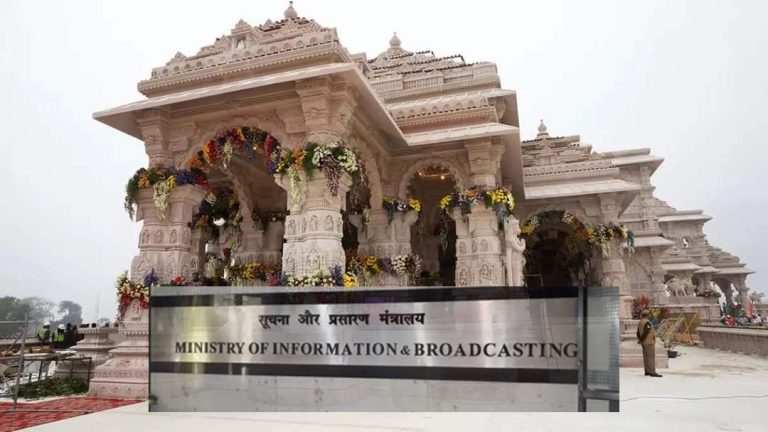
Union Information and Broadcasting Ministry on Saturday, 20 January, issued an advisory to all media platforms asking them to refrain from publishing fake news related to Ram Mandir and the upcoming Pran Pratishtha ceremony. In a statement, the ministry said that it has overserved that certain unverified, provocative and fake messages related to the Ram Mandir Pran Pratishtha ceremony are being spread, especially on social media, which can disturb communal harmony and public order.
Therefore, the ministry has issued advisories to all media platforms asking them to refrain from publishing or telecasting any content linked to or about Shri Ram Janmbhoomi Mandir in Ayodhya that may be “false, manipulated or has the potential to disturb communal harmony or public order”.
The advisory further invited attention to the relevant provisions of the Programme Code under the Cable Television Networks Regulation Act, 1995, and Norms of Journalistic Conduct laid down by the Press Council of India under the Press Council Act, 1978, a reference to which has also been made in the Information Technology (Intermediary Guidelines and Digital Media Ethics Code) Rules, 2021.
In regard of the laid down codes, “newspapers, private satellite TV channels and publishers of news and current affairs on digital media are advised to refrain from publishing/telecasting any content that may be false or manipulated or has the potential to disturb communal harmony or public order in the country,” the statement said.
Further, as part of their due diligence obligations, the social media platforms have been advised to make reasonable efforts to not host, display or publish information which can be false or manipulated.
The ‘Pran Pratishtha’ of Shri Ram Lalla at Ayodhya’s temple will take place on Monday, 22nd January.
The idol of Lord Ram was placed inside the sanctum sanctorum of the temple in Ayodhya on 18 January. The idol of ‘Ram Lalla’ is carved by Mysuru-based sculptor Arun Yogiraj. The idol is 51 inches tall and weighs 1.5 tonnes. The idol portrays Lord Ram as a five-year-old child standing on a lotus also crafted from the same stone.
Prime Minister Narendra Modi will perform rituals to mark the ‘Pran Pratishtha’, while a team of priests led by Lakshmikant Dixit will lead the main rituals. Several celebrities and noted personalities have also been invited to the ceremony.
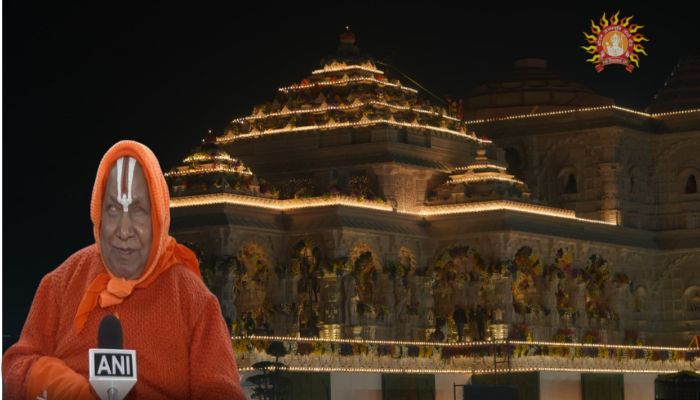
Jagadguru Swami Rambhadracharya Maharaj, whose testimony played a crucial role in the Supreme Court’s verdict in the Ram Janmabhoomi case, has been expressing boundless happiness over the upcoming Ram Mandir Pran Pratishtha ceremony, which is just two days away.
In a host of interviews with various media channels, the Hindu spiritual leader has shared his insights about the historic event. In one such interview with Republic TV, Jagadguru dubbed the Pran Pratishtha ceremony as the descent of Treta Yuga. In his interaction with media persons, he has been describing the auspicious 84-second Muhurat on 22nd January as one of seminal significance as ‘they have a shadow of Treta Yuga’ (Treta Yuga ki Chaya).
Notably, according to Hindu scriptures and the belief system, there are four Yugas – Treta Yuga, Satya Yuga, Dwapar Yuga, and Kali Yuga. Currently, we are in the last phase of this cyclical time system.
Meanwhile, speaking with Republic TV, Jagadguru Swami Rambhadracharya made an emotional pitch to all political leaders and Shankaracharyas. He asked all of them to set aside their egos and attend the grand consecration ceremony in Ram Mandir in Ayodhya.
Responding to the allegations that politics has taken centre stage, Jagadguru told Republic, “No need for any shararat (prank). Everyone’s ego should take a backseat for ‘Rashtra dharma.’ Even without invitation, one should come (referring to the Shankaracharyas).”
Regarding reports that all four Shankaracharyas will not attend the event, Jagadguru said, “On January 22, Treta Yuga will fall upon Kali Yuga. The Shankaracharyas can’t even grasp that.”
He launched a stinging criticism against the opposition parties and political leaders who have announced not to attend the major event. Slamming the opposition I.N.D.I. bloc, he recalled the old Hindi adage saying, “Vinaash Kaale Vipreet Buddhi“. (Translation – A person on the brink of destruction, takes all the wrong decisions as if intellect is working to do exactly the opposite of what is needed.)
On the query about his equation with Prime Minister Narendra Modi, Jagadguru said, “He is a sweet friend.” In his interactions with media persons, he has prophesied that PM Modi will become the Prime Minister of India for the third consecutive time in 2024.
Recalling the long drawn-out struggle and battle for reclaiming Ram Janmabhoomi, Jagadguru said, “Nearly two lakh Hindus’ lives have been sacrificed. Nearly one lakh seventy-five thousand people Hindus died protecting the Ram Mandir against Babur’s aggression. Since then, at least 25,000 more Hindus have laid down their lives. I am here since 1984. Very few people were involved in the movement, including VHP stalwart Ashok Singhal. We all had one thing in mind – either our body remains will be there or we will be at war.”
Praising Prabhu Shri Ram’s beauty, Jagadguru said, “It feels as if He is standing in front of me with those pretty eyes and the sweetest of smiles.”
In an earlier interview with ANI, Jagadguru had lambasted the opposition for boycotting the Ram Mandir Pran Pratishtha stating that the grand old party is doing ‘murkhneeti‘ not ‘rajneeti’.