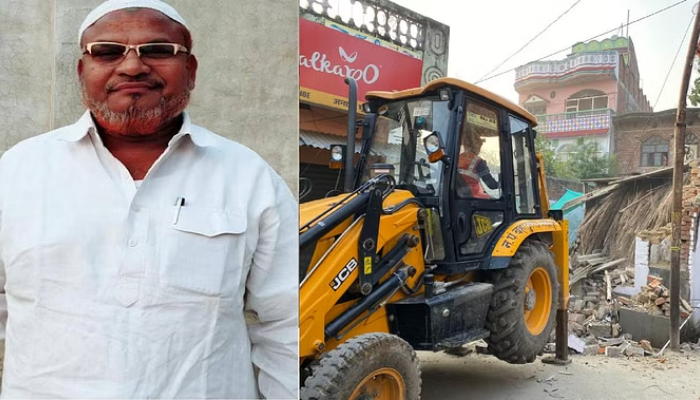
The Yogi Adityanath government’s bulldozer has been relentlessly pursuing Mukhtar Ansari and his associates from interprovincial gang 191. On the 10th of December morning, the Nagar Panchayat President and the mafia’s main assistant Riyaz Ahmed Ansari’s house located at Mauza Abdulpur in Ghazipur’s Bahadurganj was the target of police action. He also used to run his camp office from here.
He is accused of abusing his position to build an illegal construction without obtaining the necessary permits on his wife Nikhat Parveen’s property which was bulldozed by a combined police and revenue team before sunrise at 5 am. The unauthorised portion was built on 760 square feet of land without approval of the construction map.
The action was initiated on the report of the Administrative Officer, Nagar Panchayat, Bahadurganj in the presence of Deputy Collector Kasimabad and other officials. The perpetrator is currently absconding and authorities also announced a reward of Rs 25 thousand on him on 9th December. Cops have already arrested his wife.
Furthermore, he is also charged with conniving with others to get his wife who is also a former municipal chairman of Bahadurganj appointed as a junior teacher in a madrassa on the basis of a fake mark sheet. A First Information Report (FIR) was registered against her after the departmental inquiry found the complaint to be true. She is at present on bail in this issue.
The offenders, in this case, include Riyaz Ansari, the then chairman of the selection committee Parvez Jamal, the then manager Nazir Ahmed and the then principal Ziaul Islam. The local police squad and Special Operations Group (SOG) have teamed up to capture them. On the order of the court on 2nd December, the police passed notices of section 82 on the houses and public places of these individuals.
A day before the bulldozer action, Riyaz Ansari and his three companions were declared fugitives by the police who also announced a reward of Rs 25,000 each. Their property information has been looked up so that, if they fail to show up within the allotted time, attachment proceedings could be launched.
The Yogi government is waging an aggressive fight against mafias that get cash, real estate and other assets through illicit means. As a result, Riyaz Ansari a principal ally of the don had to face the administrative action.
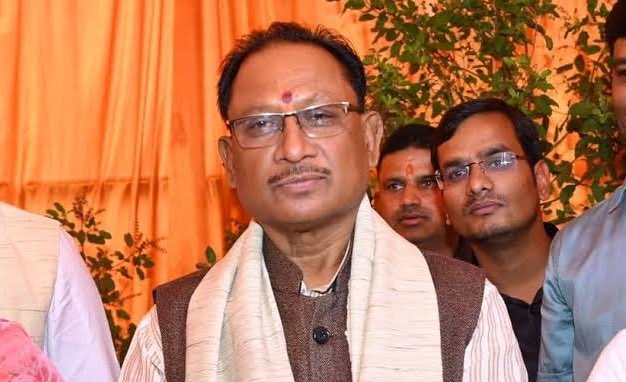
The suspense over the next Chief Minister of Chhattisgarh is over, as the Bharatiya Janata Party has decided that Vishnu Deo Sai will be the next CM of the state. After BJP defeated the ruling Congress in the assembly polls, names of several BJP leaders had emerged as frontrunners for the post, including former CM Raman Singh.
Former union minister Vishnu Deo Sai, a tribal leader, was selected after a team of central observers of BJP reached Raipur. Union health minister and BJP’s Chhattisgarh co-incharge Mansukh Mandaviya, along with senior party leaders Sarbananda Sonowal and Arjun Munda were among the leaders who were sent by the party to the state to decide on the name of the Chief Minister.
59-year-old Vishnu Dev Sai is a former union minister of state and former Chhattisgarh BJP president. He was president for four years between 2018 and 2022, and has won the elections from Kunkuri in north Chhattisgarh, a region the BJP has swept. Vishnu Deo Sai was a member of the 16th Lok Sabha representing the Raigarh constituency of Chhattisgarh. He was Union Minister of State for Steel and MoS for Mines in the first Modi government.
Sao hails from the influential Sahu (Teli) community which has a sizable presence in the Durg, Raipur and Bilaspur divisions. The OBCs account for around 45 per cent of the state’s population
Sai was chosen over Raman Singh, a three-time Chief Minister of Chhattisgarh. 71-year-old Raman Singh governed the state from 2003 to 2018, and before that he was a union minister. However, he was victim of anti-incumbency after ruling for three terms, and BJP had lost badly in 2018. Other major contenders for the top post were Renuka Singh, who resigned as Union minister after being elected as an MLA, former state ministers Ramvichar Netam and Lata Usendi, and Gomti Sai, who resigned as an MP after being elected to the assembly.
Legislative Assembly elections were held in Chhattisgarh in two phases on 7 November and 17 November 2023, and the votes for 90 seats were counted on 3rd December 2023. Proving most exit polls wrong, BJP won clear majority by winning 54 seats, while ruling Congress won 35 seats in a two-way contest. Only one MLA in the house is not from either of the party, as Gondvana Gantantra Party has won one seat.
BJP is expected to announce names of chief ministers of Madhya Pradesh and Rajasthan also soon.
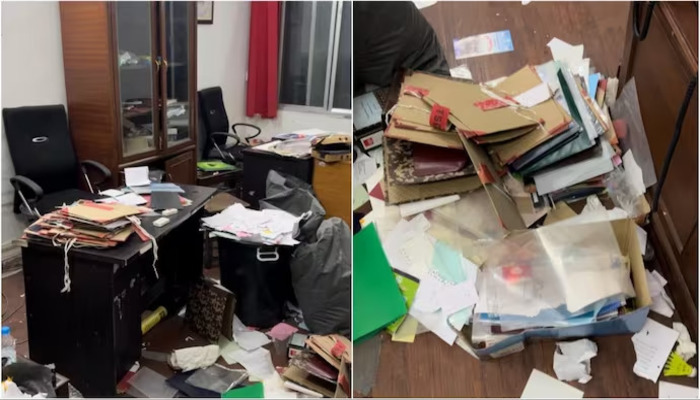
On Saturday (December 9), a former officer on special duty (OSD) of ex-Telangana minister and Bharat Rashtra Samiti (BRS) leader Talasani Srinivas Yadav, and four others were charged with trespassing into the state’s animal husbandry department office. They are accused of allegedly damaging documents and destroying CCTV cameras and furniture, in addition, the digital video recorder (DVR) cables had also been severed. The accused persons have been detained.
According to Nampally police, a watchman at the office in Shantinagar was on his regular rounds on Friday evening when he discovered ex-OSD Kalyan Kumar’s room unlocked. Upon checking through the window the watchman found “all documents spread around, as well as some documents kept on a black cover”.
The police have registered a case against ex-OSD Kalyan Kumar, Kumar’s computer operators Elijah and Mohan, and attenders Venkatesh and Prasanth under IPC sections 409 (criminal breach of trust by public servant), 427 (mischief causing damage to the amount of Rs 50), 448 (punishment for house trespass) and 477 (fraudulent cancellation, destruction, etc. of will, authority to adopt or valuable security).
“On verification, I came to know that Kalyan, computer operators Mohan and Elijah, and attenders Venkatesh and Prasanth came to the office. I suspect that Kalyan, with the help of the other four, might have taken away some documents,” the watchman stated in his complaint.
During the probe, police found many damaged papers, all dumped in polythene bags, and the room was completely ransacked according to police officials.
“The room was in a mess. When we tried to contact the director of animal husbandry Ram Chander, he did not respond despite several calls,” an officer said.
Notably, in a similar attempt, unidentified people allegedly tried to steal documents from the education department’s office near LB Stadium in the city. Police arrived on the scene on Saturday night, however, no case has been filed.
On Saturday (9th December), the National Investigation Agency (NIA) cracked down on an ISIS module, running in the State of Maharashtra. The central agency conducted raids at 44 locations and apprehended a total of 15 people. One of the arrested men is a former terrorist named Saquib Nachan.
According to the NIA, the 63-year-old is the kingpin of the newly busted ISIS module. Saquib Nachan had himself administered the ‘oath of allegiance to the Caliphate’ to the recruits of the terror outfit. Under his guidance, the ISIS module was planning to carry out violence and destruction in the country.
Saquib, a native of Borivli Village in Padgha town of the Thane district of Maharashtra, reportedly wanted to disturb the communal peace in the country and wage war against the Governmnent of India. He was pursuing the path of Khilafat, ISIS and violent jihad.
National Investigation Agency (#NIA) has detained a businessman from #Bengaluru and a few more persons after arresting 15 people, including Mohammad Saquib Abdul Hamid Nachan, who was convicted for possession of firearms in connection with three train bomb blasts in #Mumbai.
Saquib Nachan and his involvement in 3 bomb blasts
Saquib Nachan is not new to the world of terror. As per a report by The Times of India, he has been at the helm of carrying out 3 bomb blasts within a span of 4 months (6th December 2002 to 13th March 2003).
He targeted busy railway stations and markets to maximise the impact of his terror plots. The first blast took place on 6th December 2002 at a McDonald’s joint in the Mumbai Central railway station. Although no one was killed, a total of 25 people sustained injuries.
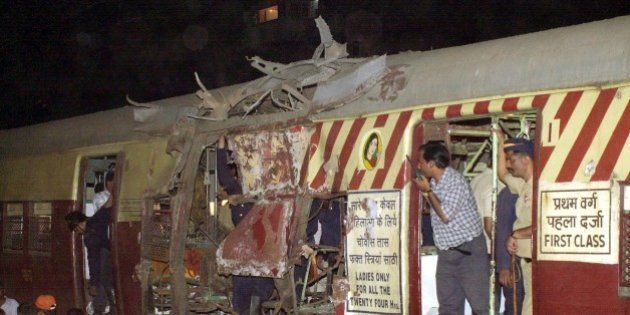
Saquib Nachan orchestrated the second attack in a market in Ville Parle (East) on 27th January 2003. In that blast, one person and 25 others were injured. The third attack, which was carried out by Saquib inside a train coach at the Mulund station on 13th March 2003, was the deadliest of all.
A total of 11 people were killed and 82 others were injured in the blast. Saquib was arrested by Mumbai police on April 10, 2003, and served 8 years in jail. He was thereafter released on bail on a bond of ₹1 lakh.
Aftermath of bomb blast at Mulund railway station, image via AP/ Rajesh Nirgude
The Maharashtra police arrested the terrorist yet again on 4th August 2012 in connection to an attempted murder of Vishwa Hindu Parishad (VHP) activist Manoj Raicha. He was released on bail in August 2014.
His conviction in the blast case finally came in March 2016. Saquib spent less than 2 years as a convict before being freed in November 2017. His release came 5 months earlier than expected on account of being ‘disciplined’ in jail.
On being released from jail, he remarked, “I respect the judiciary system and after my release I wish to spend quality time with my family members…The prison authorities and conditions in the jail are proper. Now, as a grandfather, I would bring up my grandchildren.”
Saquib Nachan and his involvement in terror activities before 2000s
As per a report by The Indian Express, Saquib Nachan has been involved in terror activities since 1991. He is ranked 3rd in the country in terms of masterminding the maximum number of bombings.
He has been accused of fighting alongside other Mujahideen during the Afghan Jihad and sending Indian Muslims to receive training in terrorism from Pakistan.
Saquib Nachan holds a B.Com degree and has served as the general secretary of the banned Islamic terror outfit, SIMI. He was part of the radical Jamaat-e-Islami (JeI) in his formative years.
A CBI chargesheet dating back to 1992 read, “During 1990, he visited Pakistan twice. His real purpose was to meet Salahuddin Sudani and Abdur-Rahim-Rasool Sayyef to discuss ways and means to train Muslim youths in arms, ammunition and explosives. Till 1991 he was sending Sikh youths to Pakistan for military training.”
Saquib Nachan was accused of being involved in the murder of 2 Hindu lawyers and a Muslim for supposedly working against the ‘Muslim community.’ He is believed to be a part of Pakistani ISI’s plan to strengthen the Khalistani separatist movement in India.
In mid-1992, he was convicted by Gujarat court and then the Supreme Court for involvement in terrorism.
NIA uncovers Maharashtra ISIS module
On 9th December 2023, Saquib Nachan was arrested by the NIA for heading an ISIS module in Maharashtra.
As per the initial investigation by the central agency, the former terrorist had self-declared the village of Padgha in rural Thane as a ‘liberated zone‘ and as ‘Al-Sham’. Seemingly areas in Syria are referred to with such notations.
NIA revealed in its official press release that he was at the helm of motivating impressionable Muslim youth to relocate to Padgha from their place of residence to strengthen the Padgha base.
Son of Saquib Nachan arrested by NIA
On 11th August this year, the National Investigation Agency arrested Shamil Nachan, the son of terrorist Saquib Nachin, in connection to a Pune ISIS module. As per reports, the central agency discovered incriminating evidence from his home in Thane.
Pune ISIS module case | Accused Shamil Nachan, arrested by NIA, sent to custody for seven days
Shamil was sent to judicial custody by a special court. He along with other five other accused assembled Improvised Explosive Devices (IEDs) at a house in Pune. He had also organised a bomb (IED) assembly and training workshop in the same location in 2022.
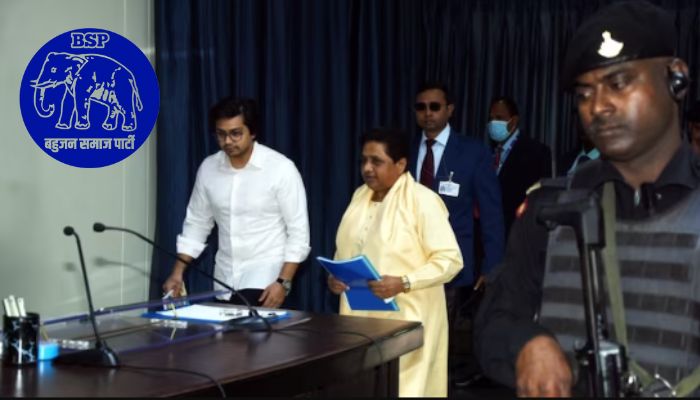
On 10th December (Sunday), Bahujan Samaj Party (BSP) supremo and former Chief Minister of Uttar Pradesh Mayawati named 28-year-old nephew Akash Anand as her successor. The announcement was made at the party meeting held in Lucknow on Sunday. The meeting was presided over by Mayawati, and she was accompanied by her nephew Akash Anand. It was called to plan the party’s preparations for the upcoming Lok Sabha 2024 polls.
Speaking with ANI about the party meeting, BSP leader Udayveer Singh said, “BSP chief Mayawati has announced Akash Anand as her successor.”
#WATCH | Lucknow, Uttar Pradesh | Bahujan Samaj Party (BSP) leader Udayveer Singh says, "BSP chief Mayawati has announced Akash Anand (Mayawati's nephew) as her successor…" pic.twitter.com/nT1jmAMI29
Reacting to the development, BSP UP president Vishwnath Pal said, “The whole ‘Bahujan Samaj’ is happy.”
VIDEO | "The whole 'Bahujan Samaj' is happy," says BSP UP president @PalVishwnathbsp in response to a media query on Mayawati declaring her nephew Akash Anand as her successor. pic.twitter.com/8lsYijAcEk
Notably, Akash Anand is the son of Mayawati’s younger brother, Anand Kumar. Currently, Akash holds the official position of BSP’s national coordinator. As per his official X account, he describes himself as “A young supporter of Baba Saheb’s vision”.
For several years now, he was perceived as the successor of BSP Supremo. It was considered that he would succeed the incumbent BSP Supremo as the party President, as he was also said to be in charge of party affairs since last year.
Akash Anand joined the Bahujan Samaj Party in 2016. During the Lok Sabha elections in 2019, he was listed as one of the star campaigners for his party. He held major responsibilities in the recently concluded four state assembly elections, particularly in Madhya Pradesh and Rajasthan. The party gained success to a considerable extent in holding its support base and secured two seats in Rajasthan.
Anand’s visibility within the BSP circle, along with his padayatra in Rajasthan’s Alwar in 2022, elevated his prominence. These reports of his elevation further gained momentum within the party, as they look ahead to the 2024 Lok Sabha elections, which are now just five months away.
For those unversed, on the birth anniversary of Dr BR Ambedkar in 2022, 28-year-old Akash Anand participated in a 13-km “Swabhiman Sankalp Yatra” in Alwar. He was actively involved in BSP’s election campaign in Rajasthan in 2019, rallying support for the Samajwadi Party-BSP-Rashtriya Lok Dal alliance.
Earlier, he also led the party’s 14-day ‘Sarvajan Hitay, Sarvajan Sukhay Sankalp Yatra’.
He came into the media spotlight when Mayawati announced the inclusion of her nephew in the Bahujan Samaj Party movement. His debut political rally took place in 2019, where he urged voters to support the Samajwadi Party-BSP-Rashtriya Lok Dal alliance. It coincided with a 48-hour campaign ban imposed on Mayawati by the Election Commission.
In Gurugram Haryana, a 13-year-old domestic maid helper has been the victim of atrocities by her employer’s family. The culprits subjected her to dog bites and also stripped her in front of her family. They had also locked the victim girl in a room. On Saturday (9th December), the girl’s mother freed her with the help of some people and complained to the police station.
The 13-year-old girl was allegedly beaten up by the members of the family for which she worked in the Sector 57 area, police said on Saturday. Then the minor victim was subjected to dog bites and stripped in front of her family members.
According to the complaint lodged by the girl’s mother, the woman of the house where the girl worked would often beat her with an iron rod and hammer. The woman’s two sons stripped her, videographed her nude, and touched her inappropriately.
The girl was held hostage in a room with her mouth taped. She was rescued by her mother with the help of others on Saturday. The mother said her daughter was served food only once in 48 hours and her mouth was taped to stop her from making noise.
According to the FIR lodged at Sector 51 women’s police station in Gurugram, the owner of the house, where the girl worked, used to pour acid on her hands. They used to threaten to kill the girl if she told anyone about this incident.
The victim girl is originally from Bihar. Her mother said that on 27th June, with the help of a vehicle mechanic in the nearby area, she got her daughter a job as a maid at the house of Shashi Sharma, a resident of Sector 57 of Gurugram. The girl was employed there at a salary of Rs 9000 a month, to live with them and work in the house. The victim’s mother alleged that she had received money for her daughter’s work only for the first two months.
She said, “I went to meet my daughter several times but neither they (the accused family) allowed me to meet my daughter nor was she allowed to talk on the phone.”
Following the complaint, Shashi Sharma and his two sons have been booked on charges of causing hurt and outraging the modesty of women, cruelty to children, and criminal intimidation. The three have also been booked under Section 10 of the POCSO Act and Section 75 of the Juvenile Justice Act, the police said.
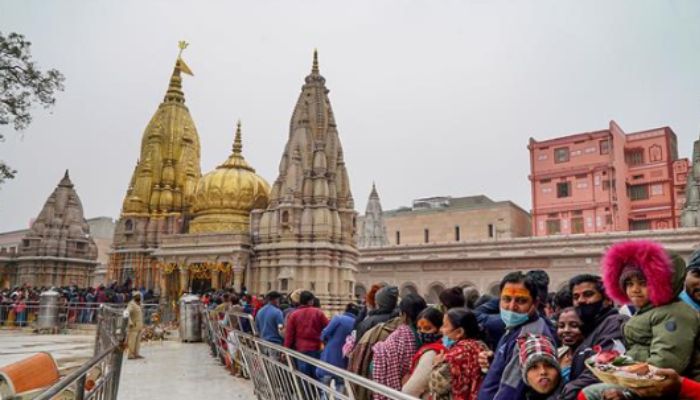
The Shri Kashi Vishwanath Dham in Varanasi has become one of the top pilgrimage spots in India as a record 12.92 crore devotees visited the holy shrine in two years. Notably, the expanded Kashi Vishwanath Dham will soon complete its two years on 13th December. Prime Minister Narendra Modi inaugurated the Kashi Vishwanath Dham corridor on 13th December 2021, and since then, the number of devotees of Mahadev has increased manifold. The official added that the number is soon expected to breach the 13 crore mark.
The Chief Executive Officer (CEO) of the temple trust, Sunil Kumar Verma said, “Shri Kashi Vishwanath Dham was inaugurated on 13 December 2021. From then till 6 December 2023, more than 12 crore, 92 lakh and 24 thousand devotees have taken darshan of Baba. By the end of December, this number is expected to cross 13 crore.”
During the auspicious month of Shrawan and other special occasions and festivals, a huge influx of devotees throng the temple premises.
As per the official data, during the months of Shrawan alone, more than 1.6 crore devotees visited the temple. This year, because of Adhik maas, the Sawan month was 59 days long. In July, the temple saw a footfall of over 72 lakh devotees and the number increased to 95.6 lakh in August. From January 2023 till 6th December this year, the temple witnessed a total of 5.3 crore devotees.
The CEO noted that in the past two years, Kashi Vishwanath Trust has increased the facilities for tourists and devotees. The official added that such changes have made the devotee visits hassle-free.
Notably, earlier, the temple premises had an area of only 3000 square feet. It was enlarged in 2021 to about 5 lakh square feet. This has allowed a capacity of 50,000 – 75,000 devotees in the temple premises.
According to CEO Sunil Kumar Verma, efficient management is being done in the temple for the convenience of the devotees. Arrangements like German hangers to protect from the scorching sun in summer, cold, and rain, mats to prevent feet from getting burnt, coolers, pure drinking water, free wheelchairs for disabled people in the month of Shrawan, medical treatment for all, etc. have helped the devotees of Shiva. The path to reach the temple has been made easy.
Meanwhile, around 10 crore devotees are expected to visit Ayodhya’s Ram Mandir in 2024 after the consecration ceremony by PM Narendra Modi on 22nd January 2024.
Nine individuals who were found abusing social media in Kashmir’s Anantnag, Pulwama, Budgam, Baramulla, Bandipora and Ganderbal districts were the target of legal action by the Jammu and Kashmir Police on 9th December, according to a statement from the police.
The action was taken only a few days after the corresponding district magistrates in the valley warned to initiate legal proceedings against anyone disseminating false information, anti-national narratives and other materials that would disturb the tranquil atmosphere of the society. The instruction was issued last week under Code of Criminal Procedure (CrPC) Section 144 to prevent the transmission of anything that is sensitive to certain communities or that encourages terrorism and secessionism.
Legal action has been initiated against the accused for uploading hateful and abusive content as well as spreading rumours online. According to cops, three people have been identified by police named Salman Mushtaq Kuttay, a resident of Check Wangund Dooru along with Rameez Ashraf Hadi from Watnad Kokernag and Umer Farooq Ganie alias Ghazi Sir of Ratherpora Khairbugh Srigufwara.
The cops mentioned that the videos posted by them on social media platforms consisted of seditious and provocative elements. A resident of Wani Mohalla Baliharan Pattan named Bilal Ahmad Wani was named by the Baramulla Police as a provocateur and rumour monger.
Police in the Pulwama district’s Awantipora area filed a lawsuit against Sheeraz Ahmed Beigh of Beighpora, Awantipora for spreading inflammatory and inciting material on social media, according to the officials. According to them, the Budgam authorities in an effort to maintain peace and order enforced severe penalties on anyone who used social media sites to propagate rumours.
They added that two miscreants had been apprehended and brought before the magistrate and that investigations into the matter were still underway. In a similar vein, authorities in Ganderbal filed charges against two people for posting and transmitting offensive material on social media. They were recognised as Waseem Mushtaq Malik from Safapora and Nunner Ganderbal’s Aadil Ahmed Rather. Authorities noted that it was discovered that the people were disseminating offensive material on social media and legal action has been started against both of them by the District Magistrate’s most recent order.
Speaking to media in Bandipora, Inspector General of Police (IGP) Kashmir V K Birdi cautioned that anyone seen purposely or inadvertently spreading narratives linked to terrorism or anti-national sentiment as well as causing disturbances to public order would be liable to severe police action. He urged parents to keep an eye on their kids to prevent them from mistakenly or purposely spreading rumours online.
Director General of Police (DGP) J&K Police RR Swain highlighted, “Under 144 Code of Criminal Procedure, we will bring a law under which any content message, video, photo, audio that can harm communal sensitivity or can threaten anyone will be a crime. You can’t forward such things too.” Kashmir Police asserted, “We urge the public to be vigilant against such individuals who spread hateful content on social media. Anyone found engaging in such activities will be dealt strictly with in accordance with the law.”
Furthermore, Deputy Commissioners issued orders under section 144 of CrPC which forbids and directs the public to desist from “posting,” “uploading,” or “propagating” messages or content that glorifies terrorists and their actions, intimidates and terrorizes individuals, the general public, or specific groups within the public, and encourages or exhorts members of the public to resort to violence by inciting, encouraging, and spreading disaffection and hatred, propagates false narratives and terrorist and secessionist ideology, fosters feelings of hatred and ill-will based on religion, and is likely to disturb peace and order.
Two separate cases of beheading sent shockwaves across Uttar Pradesh and Odisha on Saturday (9th December). In the Sitapur district of Uttar Pradesh, a man named Dinesh killed his mother Kamala Devi because she was not transferring land to him. After this, he roamed the village for some time with the severed head of his mother in one hand and a weapon in the other. Similarly, one Arjun Bagha in the Nayagarh district of Odisha killed his wife on the suspicion of an extramarital affair. Arjun carried the severed head in a bag to the police station where he surrendered.
Beheading in Sitapur Uttar Pradesh
In Mejapur village under the Talgaon police station area of Sitapur, Dinesh Pasi cut his mother’s head with a shovel and hid the headless body in the house. The police revealed this murder case.
Kamla Devi (65) of Mirzapur in Talgaon was sitting outside the house. In the afternoon, her son Dinesh came with a shovel and ran to attack his mother. Seeing him in this condition, the mother started running. Dinesh caught Kamala on the road and beheaded her with a shovel.
After this beheading, with the severed head in one hand and a weapon in the other, he roamed the village for some time before he ran towards the forest. After searching for three hours, the police caught the accused with the weapon used in the murder. The severed head was also recovered from him. Superintendent of Police Chakresh Mishra said that the accused was under the influence of alcohol.
Murder in Nayagarh Odisha
In the Bidapaju village under Banigochha police station in the Daspalla of Nayagarh district, Arjun Bagha suspected that his wife was having an extra-marital affair. The couple had many quarrels in the past. On 9th December, the couple quarrelled again when Arjun lost his temper and beheaded his wife using an axe.
After committing this beheading, Arjun Bagha packed the severed head in a bag and carried it to the police station where he surrendered. The authorities authorities confiscated the bag, apprehended Arjun, and commenced an interrogation. An investigation into the incident has been officially launched by the police.
The Enforcement Directorate (ED), Central Bureau of Investigation (CBI), and Income Tax (IT) Department conduct multiple raids every year, resulting in the recovery of unaccounted cash worth crores. With swanky photographs of seized money arranged to form letters like “E” and “D” to denote ED during raids, the question arises: What happens to the cash recovered by the agencies during raids?
When the ED, CBI, or IT Department seizes unaccounted money, they cannot just keep it on their office premises. First of all, the accused gets a chance to explain where the cash came from. If the accused fails to give a satisfactory answer, the money is considered ill-gotten and seized under the Prevention of Money Laundering Act (PMLA) provisions.
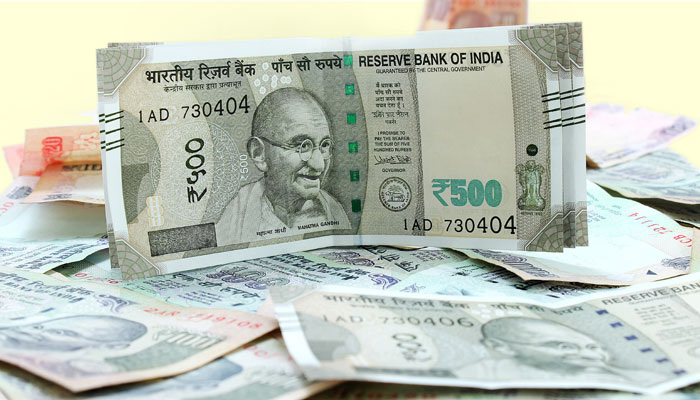
The actual process of seizing the cash starts from here. The State Bank of India is called in to count the seized cash. Simultaneously, a list of seized cash is prepared with the details of the recovered amount in specific denominations such as Rs 500, Rs 200, Rs 100, Rs 50 and so on. Based on the amount, the bank deploys multiple cash counting machines to ensure smooth and quick completion of the counting process.
Once the counting is complete, the cash is sealed in the boxes in the presence of independent witnesses. The cash is then taken to the SBI branch, where it is deposited under the agency’s Personal Deposit (PD) account. Later, the cash is moved to the central government’s treasury.
Notably, cash can be used only once the case is over in the court of law. Neither the ED, nor the bank, nor the government has the right to use the money for any purposes while the case is sub-judice. The agency issues a provisional attachment order, and an adjudicating authority must confirm the attachment within six months. This order ensures that the accused cannot benefit from the seized cash. Notably, the agency can only hold onto the cash for 180 days. During that time, the agency has to prove the validity of the seizure. In case the agency fails to do so, the money gets returned to the accused automatically.
How the money will be used depends on the outcome of the case. If the accused acquits, the cash gets returned; otherwise, if convicted, the money becomes government property.