Home Blog Page 2109

‘You have made a significant impact on everything’: Read why US President Joe Biden told PM Modi that he wants to take his autograph

After learning about how Prime Minister Narendra Modi has been handling enormous audiences, US President Joe Biden reportedly requested his autograph on Saturday.

The US President approached the Indian Prime Minister during yesterday’s Quad meeting and explained that he had been overwhelmed with requests from notable persons to attend the latter’s programme.

The Australian Prime Minister Anthony Albanese, who was also there, reacted by stating that despite Sydney’s community reception’s 20,000 capacity, he is still unable to meet all of the requests he is receiving.

PM Albanese and President Biden both complained to PM Modi about their anomalous challenges. The former also recalled how the Indian PM was received by over 90,000 spectators at the Narendra Modi stadium during the victory lap. Joe Biden responded to PM Modi by commenting “I should take your autograph.”

“You are causing me a real problem. Next month we have a dinner for you in Washington. Everyone in the whole country wants to come. I have run out of tickets. Do you think I am kidding? Ask my team. I am getting phone calls from people I have never heard of before. Everyone from movie stars to relatives. You are too popular,” he added.

He also lauded the Indian PM for his efforts. “Mr Prime Minister, you have made a significant impact on everything, including what we are doing in the QUAD. You also made a fundamental shift in climate. You have influence in the Indo-Pacific. You are making a difference.”

Narendra Modi was seated among other leaders of G7 countries when President Joe Biden walked up to him and the two shared a warm hug. The bonhomie displayed by the two leaders is being viewed as a positive sign for the summit-level bilateral interaction scheduled next month when the Indian PM visits Washington DC.

Notably, The US President and First Lady Jill Biden will also host Modi at a state dinner on June 22.

Narendra Modi is presently in Japan at the invitation of his Japanese counterpart, Fumio Kishida. The invitation to visit the nation came from Fumio Kishida, his Japanese counterpart.

The G7 meeting is being convened in the East Asian country since it is currently in charge of the influential alliance which includes the US, Canada, France, Germany, Italy, Japan, the United Kingdom as well as the European Union. PM Modi is in Hiroshima for the summit from May 19 to 21.

Narendra Modi is on a three-nation tour where 40 engagements have been lined up for him. On May 22, he and Papua New Guinea’s Prime Minister James Marape will co-host the third summit of the Forum for India-Pacific Islands Cooperation (FIPIC) in Port Moresby which will be attended by leaders from 14 countries, after the former depart from Japan.

The Indian PM will then go to Australia for the third and last leg of his journey, where he will meet with the country’s prime minister and speak at a diaspora event scheduled on May 23.

Even as Pakistan descends into chaos, the failed state starts writing letters to OIC nations asking them to boycott the G-20 meet in India: Details

Ahead of the G20 meeting in Srinagar, Jammu and Kashmir, scheduled for May 22 to May 24, Pakistan has reportedly written a letter to the Organisation of Islamic Cooperation (OIC) nations urging them to ‘boycott’ the G20 tourism working group meeting. Pakistan is writing these letters even as the failed state has descended into abject chaos with riots and looting being reported from across the country after the incarceration of Imran Khan.

Turkey, Indonesia, and Saudi Arabia are members of both the G20 and the OIC, an organisation of 57 countries. Bangladesh, Egypt, Nigeria, Oman, and the United Arab Emirates are among India’s special invitee countries.

Pakistan claimed, in its usual rant, Jammu and Kashmir was an “internationally recognized disputed territory,” citing the United Nations Security Council (UNSC) and Organisation of Islamic Cooperation (OIC) decisions.

It pointed to the repeal of Article 370 and informed the OIC member countries that G20 meetings or events in Kashmir demonstrated “blatant disregard for relevant UN Security Council resolutions.” According to sources, the UN Security Council resolutions required Pakistan to take the initial step of vacating Pakistan-occupied Kashmir (PoK) and Gilgit-Baltistan. Pakistan was concerned that participation in the G20 summit or activities in Kashmir would offer “legitimacy” to India and had expressed this concern to the OIC.

It is notable that despite Pakistan’s desperate moves, the tourism secretary has said that the OIC member countries like Bangladesh, Indonesia, Oman, and UAE have confirmed their participation in the G20 event. However, Turkey, known for its inclination towards Pakistan, Saudi Arabia and Egypt are yet to confirm their attendance. 

While this is being reported, it is pertinent to note that on May 18th, it was also reported that Saudi Arabia had decided to snub Pakistan and back India’s decision to hold G20 in Srinagar by sending its delegate.

On May 5, Pakistan’s foreign minister Bilawal Bhutto who received a ‘cold’ welcome in India for the Shanghai Cooperation (SCO) summit in Goa, had issued a veiled threat to India over the G20 meeting scheduled to be held in Srinagar.  When asked about India holding a G20 summit in Kashmir, he said, “Waqt aane par aisa jawab denge jo yaad rahega. It shows pettiness. It is a show of arrogance that to hell with international laws, to hell with United Nations Security Council resolution, they will hold their events.”

In a befitting response to Bhutto, External Affairs Minister S Jaishankar had said that Pakistan has nothing to do with G20 and that they also have nothing to do even with Srinagar and Kashmir. He also added that Pakistan should talk about when will they be vacating the illegally occupied Jammu and Kashmir (PoK).

“Pakistan has nothing to do with Kashmir or even with Srinagar. The only issue to discuss with Pakistan on Kashmir is when they will vacate Pakistan-occupied Kashmir,” EAM Jaishankar said.

Uttarakhand: Mohammed Ikhlash poses as Manoj to lure a Hindu woman, rapes and extorts money using objectionable video

A case of grooming jihad has come to light from Dehradun in Uttarakhand. On May 18, Kotwali Police arrested Mohammed Ikhlash for raping and blackmailing a woman. As per reports, Ikhlash posed as Manoj to lure a Hindu woman. He promised her marriage and then proceeded to rape her. Ikhlash also made an objectionable video of the woman and blackmailed her to extort money.

The victim met Ikhlash online in 2019. He identified himself as Manoj and told her that he was studying at GD Goenka University, Gurugram. They started talking regularly. During their relationship, Ikhlash visited Dehradun multiple times and forced her into a physical relationship. He promised her that he would marry her as soon as he completed his college.

During that period, Ikhlash asked for money from the victim, and she transferred the same via online transfer. A few days later, he told her that he was sick and needed more money.

In September 2020, the victim got suspicious and visited him to discover the reality. He took her to a hotel and showed her his ID on which Ikhlash’s real name was imprinted. The woman came back to Dehradun. As Ikhlash had sexual videos of her, he continued to blackmail her saying he would publish them online. He extorted money and blackmailed her to have physical relations with him. The victim said in her complaint that Ikhlash took around Rs 5 lakh from her.

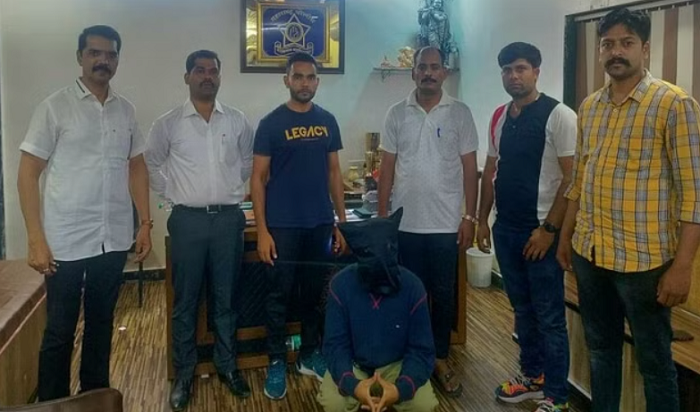
On May 17, the woman approached Kotwali police station and filed a complaint against Ikhlash. Based on her complaint, an FIR under Sections 376 and 419 was registered. SHO Vidhya Bhushan Negi said a team was sent to Palwal, Haryana, to arrest the accused on May 19. Ikhlash was arrested from Hatheen Colony in the Hatheen police station area, district Palwal, Haryana. He was produced in court on Saturday and sent to custody. Further probing into the matter is underway.

Saket Gokhale does it again, misleads the public about the newly introduced 20% TCS on credit cards

On Saturday (May 20), Trinamool Congress (TMC) spokesperson Saket Gokhale courted controversy after he spread disinformation about the 20% TCS (Tax Collected at Source), introduced by the Indian government, over the use of credit cards for international purchases.

Despite the clarification by the Union Finance Ministry that TCS will only be applicable if the expenses on a credit card in foreign countries cross ₹7 lakhs in a year, Gokhle claimed that the exemption up to ₹7 lakhs is an eyewash.

In a tweet (archive), the TMC spokesperson alleged, “Banks cannot verify whether you’ve spent less than 7 lacs in a year. Ergo, u will be charged 20% TCS on EVERY transaction. Just that if your annual spends are less than 7 lacs, you can claim refund.”

Screengrab of the tweets by Saket Gokhale

Gokhale further accused the BJP and Modi government at the Centre of misleading the public. He claimed, “Nothing has changed with the “new” announcement – you will continue to be taxed 20% on every transaction, that amount will be blocked & billed to your card, & you will be able to claim a refund only when you file returns.”

What is the Truth

Soon after, the Press Investigation Bureau (PIB), a nodal agency under the Indian government’s Ministry of Broadcasting and Information Technology, took to social media to debunk the outrageous claims made by the TMC spokesperson.

“This claim is false. Liberalised Remittance Scheme (LRS) spends of an individual are compiled & monitored by @RBI,” it said. “Any payments by an individual using their international Debit or Credit cards upto Rs 7 lakh per financial year will be excluded from the LRS limits and hence, will not attract any Tax Collection at Source (TCS),” PIB further added.

On 16 May, the ministry issued a gazette notification, which said that rule 7 of the Foreign Exchange Management (Current Account Transactions) Rules, 2000 has been omitted.

Rule 7 of the FEMA (CAT) Rules, 2000 said, “Nothing contained in rule 5 shall apply to the use of International Credit Card for making payment by a person towards meeting expenses while such person is on a visit outside India.”

This means, under rule 7, the usage of international credit cards for making payments for fulfilling expenses during travel outside India was not included in the LRS limit earlier, but now they will be included in the same as the exemption granted to international credit card payments has been withdrawn.

Under the liberalised remittance scheme of the RBI, Indian residents are allowed to remit up to $250,000 per year without any prior approval from the RBI. Earlier, only debit cards, forex cards, and bank transfers were included in the LRS, and now credit card payments are also allowed under LRS.

But this has also meant that there will be a tax collected at source (TCS) on international credit card payments. The rate of TCS will be 20% from July 1, while the same will be 5% from now till July 1.

The TCS amount thus paid will be refunded by the government after the user files the tax return after the end of the financial year and is eligible for such returns.

While initially not known, the finance ministry also clarified later that the TCS will not be applicable to transactions. It will be applicable only if the expenses on a credit card in foreign countries cross ₹7 lahks in a year.

It is notable that Tax Deducted at Source (TDS) and Tax Collected at Source (TCS) are different. TDS is deducted from earnings, like salary, interest and other payments received, while TCS is collected at the time of spending money to make purchases etc.

However, the TCS is different from other taxes paid at the time of purchase, like GST and excise. For end consumers, GST and excise are essentially part of the price which can’t be reclaimed, while businesses can claim credit for GST.

On the other hand, TCS is linked to an individual’s PAN and it can be claimed back while filing the income tax return, and therefore it is not a final tax payment.

Saket Gokhale spread fake news about the Morbi tragedy

In December last year, the Trinamool Congress leader was caught sharing fake news about an RTI query and its response, which did not exist.

He had claimed that ₹30 crores were spent on PM Modi’s Morbi visit, sharing a purported news clipping from Gujarat Samachar. Soon after, Gujarat Samachar made it clear that they did not publish such a report. Citing the fabricated report, Gokhale claimed that ₹ 5.5 crore was purely for “welcome, event management, & photography”.

Saket Gokhale’s tweet spreading fake news

He also claimed that “Modi’s event management & PR costs more than life of 135 people”, as the families of the 135 victims of the tragedy were given ex-gratia of ₹4 lakh each, totalling ₹5 crore. He was later arrested by the Gujarat police for peddling fake news.

‘Theatre owners are getting threats’: The Kerala Story producer Vipul Amrutlal Shah says there is an ‘illegal ban’ on the film in West Bengal

In a recent press conference organized in Kolkata, Vipul Amrutlal Shah, the producer of the film ‘The Kerala Story’ has alleged that the West Bengal police and administration have imposed an illegal ban on the film despite the Supreme Court stayed the ban. Shah said that he is “absolutely shocked” even after the Supreme Court’s judgment there is an illegal ban imposed in West Bengal theatres adding that theatre owners are getting threats.

“The theatre owners are getting threats from the police and the administration that if they open the booking station, the theatres will not be safe. Theatre owners are not able to run the film,” Shah said.

Shah added that the theatre owners are so scared that they are not able to come out and issue any statement to this effect. Shah further claimed that the theatre owners want to show the film but are not allowed to do so.

“Theatres owners are getting threatening calls not to showcase the film, and I find it very objectionable because once the honourable Supreme Court passed the judgement it is incumbent for everybody to follow that order in its totality. We are complying with what we have been directed to do. I’m surprised that the Supreme Court order is not being followed in West Bengal. This is a serious matter.

The Kerala Story producer also stated that if the illegal ban on the film in the state is not lifted, he will move Supreme Court again as it is people’s right to watch the film and the apex court has given it. 

Moreover, he said that the Supreme Court has directed the police to provide security to the moviegoers even after this if the security is not being provided then it is a serious situation prevailing in the country.

“I am shocked at the people who claim to be the champions of democracy. Both the states are behaving in an undemocratic way and it’s shameful to stop the film’s screening after a Supreme Court order,” Shah added.

It is notable that on 8th May 2023, the Supreme Court intervened and halted the ban imposed by the West Bengal government on the screening of the film ‘The Kerala Story’. The movie is continuing its dream run elsewhere as it has crossed 200 crores at the Indian box office.

The multilingual project, featuring Adah Sharma and written and directed by Sudipto Sen, has garnered a lot of attention since the makers released its trailer. Liberals and the opposition, particularly the Left and the Congress, have labeled it as a propaganda piece and demanded a ban on its screening.

The movie revolves around Shalini Unnikrishnan, played by Adah Sharma, an innocent Hindu woman from Kerala, who is brainwashed by her Muslim friend and gets converted to Islam and marries a Muslim man. The lead actress soon realizes that she has been trapped in a huge terrorist web after she is raped, separated from her only child, and then forced to serve as a sex slave.

IAF temporarily grounds MiG-21 fleet for safety checks as probe in the crash resulting in the death of three continues

On May 20, Indian Air Force (IAF) grounded the entire fleet of MiG-21 jets. The decision came two weeks after the crash in Rajasthan that killed three. The ageing fleet of Soviet-origin aircraft is set to be phased out by the year 2025. There are around 50 MiG-21 aircraft in three MiG-21 squadrons of the IAF. Notably, since its induction in the Air Force, the aircraft has been involved in 400 accidents.

MiG-21 has been part of IAF since the early 1960s. A total of 700 fighter jets were procured during that period to boost the over-combat capabilities of the Air Force.

Keeping the aim of modernising the Air Force’s combat capabilities, the Government of India has already procured 36 Rafale jets. In February 2021, Hindustan Aeronautics Limited (HAL) was given an order of 83 Tejas jets. The deal was worth Rs 48,000 crores. The Air Force is currently in the process of acquiring 114 Medium Role Fighter Aircraft (MRFA).

MiG-21 crash killed three

On May 8, a Mig-21 Bison aircraft airborne from Suratgarh air base crashed over a village in Hanumangarh in Rajasthan. As per reports, the aircraft was on a routine training sortie when it crashed. The pilot suffered minor injuries. Three people were killed in the accident. The IAF initiated a probe to find the exact cause of the crash.

Mysterious letter appears on Delhi education minister Atishi’s website alleging ‘deficiency scam’ in teacher recruitment, the AAP leader removes link from Twitter bio

On 20 May, AAP leader and Delhi education minister Atishi removed the link to her website from her Twitter bio after the content in it was found to be altered. The website atishi.in now shows a letter from someone who is waiting to join as a Computer Science teacher in the Department of Education in Delhi.

The website originally hosted news and events related to Atishi, along with photographs. But only the plain text webpage is seen on the site. The letter says that the person was selected for the post by Delhi Subordinate Services Selection Board and the relevant dossier was sent to the Department of Education (DOE) a year ago, there is no update from the department.

It states that it is not an isolated incident, and several candidates are facing similar situations, as their files are kept on hold and no information has been provided. The letter further alleges that this is a ‘deficiency scam’, where officials are claiming deficiencies in the documents of the candidates, and demanding money to clear the ‘deficiency’. It states that the selected candidates are getting calls on WhatsApp from a man demanding money.

“I have call recordings and other strong evidence that proves there are corrupt officers in DOE,” the letter states.

The letter also says that it takes 10-12 years to get a job in DOE of the Delhi govt, adding “I urge you to immediately ask DOE why it takes so long for the selection process and to take steps to address this issue.”

The text on the website says, “This is a matter of serious concern and requires your attention,” requesting to look into this matter and take necessary action to address these issues.

The letter states:

I am writing to bring to your attention a serious issue I am facing regarding my joining as a TGT(91/20) Computer Science teacher in the Department of Education(DOE) of Delhi. Although I was selected for the position by the DSSSB and my dossier was forwarded to DOE almost a year ago, I have not yet joined my post. I was informed by the DOE of some deficiencies in my application, which I successfully addressed. However, since then, I have not received any updates or outcomes from the DOE. As a result, I have been suffering for the past one year, and for over three years since I first applied for this post(91/20).

Unfortunately, this is not an isolated incident, as there are many selected candidates whose files are on hold, and the department has not informed them of any notice. It appears to be a part of a deficiency scam run by DOE. I urge you to investigate this matter and ask the DOE how many deficiencies they have given to selected candidates and why they have not uploaded this information to the DOE official website. After candidates successfully submit the required documents, their deficiencies are not removed, and no notice is given. However, selected candidates receive a WhatsApp call from a man demanding money (10-12 lakh) to clear the deficiency. I have call recordings and other strong evidence that proves there are corrupt officers in DOE.

Furthermore, it has come to my attention that some corrupt officers and staff were transferred earlier from E-IV Branch, but the issues they created have not been solved to date. It takes candidates 10-13 years to get a job in DOE, which is too long. I urge you to immediately ask DOE why it takes so long for the selection process and to take steps to address this issue.

DOE staff misguide the RTI Act and do not provide any information in RTI. This is a matter of serious concern and requires your attention.

I sincerely request you to look into this matter and take necessary action to address these issues. Thank you for taking the time to read This.

Screenshot of the site

At first glance, it appears that the website was hacked by someone selected for the post of computer teacher in Delhi. But a basic analysis of the domain reveals that it was registered only a month ago, on 22 April. But the website of Atishi is in existence for a long time, and the earliest archive of the website is from October 2018.

This suggests that the domain name Atishi.in expired some time ago, and the Delhi education minister or her team failed to renew it on time. Someone could have seen this opportunity, bought the domain, and uploaded the text on the website. Therefore, this could be a simple case of buying an expired domain, and not hacking.

If that is the case, it will be difficult for Atishi to recover the domain name atishi.in.

Atishi was made the education minister of Delhi after former minister Manish Sisodia was arrested in the Delhi excise policy scam case.

Journalist Carole Cadwalladr asked to pay £1.2 million to Brexit sponsor Arron Banks for claiming he had ties to Russia, Guardian and other liberals come in her support

Observer and Guardian journalist Carole Cadwalladr has been ordered to pay Arron Banks, a British businessman and co-founder of the Brexit campaign, 60% of the cost he incurred in a long-running defamation suit after he won it partially on Friday. The ruling said she must also issue an apology and delete some tweets.

According to Banks, the 60% of his costs Cadwalladr must pay will come to around £1.2 million. 

The issue revolved around comments made by Cadwalladr in an April 2019 Technology, Entertainment, and Design (TED) talk in which she accused Banks of lying about “his covert relationship with the Russian government,” as well as a tweet linked to the speech.

Banks, a major donor to the Leave campaign in the run-up to the 2016 referendum, sued Cadwalladr for defamation. Banks argued the statements made by Cadwalladr were “false and defamatory” and sought damages and an injunction to restrain the continued publication of the remarks, which are still available to view online.

Initially, Arron Banks had lost the case, as the court had ruled that the 2019 Ted Talk by Carole Cadwalladr was both in the public interest and lawful. However, things changed later after a probe found no truth in her allegations against Banks.

The Electoral Commission announced in April 2020 that a National Crime Agency investigation concluded there was no evidence to support the allegations against Banks or his companies. But a court of Justice Steyn ruled in favour of Cadwalladr in a June 2022 ruling, stating that the journalist had a “reasonable belief” that her comments were in the public interest prior to the April 2020 declaration.

While the court said that the public interest defence fell way after the allegations were found to be false, it said that Banks had not suffered severe harm to his reputation due the comments. The court also ruled that Carole Cadwalladr has no control over the TES website which carried her false allegations against Banks.

Arron Banks appealed the decision to the Court of Appeal, claiming that the judge miscalculated the damage to his reputation and misread defamation law.Banks had not proved that what Ms Cadwalladr tweeted had caused or was likely to cause “serious harm to his reputation”.

Three senior judges ruled in February that the appeal should be allowed in relation to the TED talk’s publication after April 29, 2020, but upheld Justice Steyn’s other decisions. The court retained the ruling that Banks had not proved that what Cadwalladr tweeted had caused or was likely to cause “serious harm to his reputation”.

Later the court documents showed that Banks “was the successful party on the appeal and overall, ruling that Cadwalladr must pay 60% of his legal costs in the case. She must also repay almost £800,000 in costs that Banks paid her after he initially lost the case. Along with that, she has been ordered to pay a third of his costs at the Court of Appeal, which is £52,000. Given that she will also has to pay her own legal costs, it is estimated that she will have to pay around £2 million.

Interestingly, the text of the court order indicates that she had accepted that her allegations were not true. It states that the defendants accepted that the allegations were not true, and can no longer be defended using public interest defence.

“The Claimant was the successful party on the appeal and overall. He has established that the Defendant was responsible for the unlawful publication to 100,000 or more people in this jurisdiction of a serious imputation, which caused serious harm to the Claimant’s reputation, which the Defendant accepts was not true, and which (as she also accepted on appeal) was no longer defensible in the public interest. He has established a right to substantial compensation, now agreed in the sum of £35,000. He has also secured an apology, an acknowledgement of the falsity of the meaning complained of, the amendment of the TED Talk, an undertaking not to repeat the allegation complained of, and the removal of some Tweets…,” the court said, clearing the way for Banks to seek compensation.

Responding to the judgement, Arron Bank tweeted today, “The overall balance was that the judge said I won & awarded costs to me. Carole paid damages, apologised & agreed never to repeat what she had said. Facts matter in a world of fake news, Alan ..”

On the other hand, Carole Cadwalladr described it as a ‘dark day for press freedom in the UK.’ “This decision has huge ramifications for any news organisation or journalist who believes that the overwhelming public interest of a story will enable them to speak truth to power,” she said, adding that “many abuses of power” in the UK go untold because “our defamation laws are among the most repressive in the world”.

A barrage of leftist liberals and media outlets also rallied to her defence. Media and journalist organisations are virtually saying that journalists should not be punished for spreading false information in the ‘public interest’. According to them, the fact that the court had initially found the comments were in the public interest is the only thing that matters.

Later the same court said that the defence of public interest was no longer after her comments were found to be false. While the court had said that there were doubts whether Banks had suffered harm in his reputation, it had categorically said that there is no public interest in spreading false information. But ignoring these facts, the left liberals chose to attack the court order.

Guardian released a statement in support of its journalist Carole Cadwalladr stating that the Appeal Court ruling in favour of Arron Banks and the high level of costs awarded to Banks sets a ‘chilling precedent and represents a major blow to public interest journalism.’ It is notable that Cadwalladr is a features writer for The Observer, the sister publication of the Guardian.

Reporters Without Borders said that the huge cost awarded by the court will “send a chilling message to journalists everywhere.”

European Centre from Press & Media Freedom (ECPMF) expressed concern over the court decision saying that it would have a ‘chilling effect on critical journalism worldwide.’

“We stand in full solidarity with Carole Cadwalladr and call on the UK government to immediately adopt national Anti-SLAPP law to ensure other journalists will not have to go through this injustice,” ECPMF tweeted further.

“Don’t let journalists be intimidated by these kinds of fines. Support @carolecadwalla and help cover her expenses and stand for press freedom,” tweeted a columnist working for the British daily business newspaper Financial Times.

The International Press Institute (IPI) also expressed solidarity with investigative journalist, Carole Cadwalladr after the court ruling.

Independent media outlet opendemocracy.net also wrote a long article expressing solidarity with the Guardian journalist.

Independent ‘journalism’ organisation The Citizens also published an article in support of Carole Cadwalladr. “A dark day for democracy and truth-telling, indeed. Support @carolecadwalla by contributing to her crowdfunder here: https://gofundme.com/f/democracy-the-fight-back.”

It’s notable here how many Cadwalladr supporters portrayed the journalist as a victim on social media, lamenting how she had set up a crowdfunding campaign to pay her legal bills. Many came forward to share the crowdfunding link to support her.

Quad leaders issue joint statement after the third in-person summit in Japan, use PM Modi’s ‘not an era of war’ comment

On 20th May 2023, leaders of the QUAD countries held a meeting. This was the third in-person meeting of the leaders of the four nations India, Japan, Australia, and the United States of America, held in Hiroshima, Japan, on the sidelines of the G7 meet. Prime Minister Anthony Albanese of Australia, Prime Minister Narendra Modi of India, Prime Minister Kishida Fumio of Japan, and President Joseph R. Biden, Jr. of the United States — met for the third in-person Quad Leaders’ Summit, hosted by Prime Minister Albanese.

After the summit, Prime Minister Narendra Modi aid that India will be happy to host the Quad Summit in 2024. He also emphasized that the “Quad will continue to make efforts towards global good, the welfare of the people, prosperity, and peace.”

The four leaders issued a joint statement after the meeting. The statement mentioned the ‘not an era of war’ comment by Prime Minister Narendra Modi which he had told to Russia’s president Vladimir Putin in September 2022 during a SCO summit. Narendra Modi’s phrase was used in the 31st point of the 35-point joint statement. The joint statement said, “Conscious that ours must not be an era of war, we remain committed to dialogue and diplomacy,” while expressing deep concern about the ongoing conflict in Ukraine.

The joint statement is as follows:

1. Today, we — Prime Minister Anthony Albanese of Australia, Prime Minister Narendra Modi of India, Prime Minister Kishida Fumio of Japan, and President Joseph R. Biden, Jr. of the United States — met for the third in-person Quad Leaders’ Summit, hosted by Prime Minister Albanese.

2. Together, we reaffirm our steadfast commitment to a free and open Indo-Pacific that is inclusive and resilient. The global strategic and economic environment is changing rapidly – with direct impacts on countries in the region. We believe we should navigate this time of uncertainty and opportunity together, working closely with our Indo-Pacific partners. We believe all countries have a role in contributing to regional peace, stability, and prosperity, as well as upholding international law, including the principles of sovereignty and territorial integrity, and the rules-based international order. We seek a region where no country dominates and no country is dominated – one where all countries are free from coercion, and can exercise their agency to determine their futures. Our four countries are united by this shared vision.

3. As Indo-Pacific countries, Quad partners are deeply invested in our region’s success. Harnessing our collective strengths and resources, we are supporting the region’s development, stability, and prosperity through the Quad’s positive, practical agenda. Our work is guided by regional countries’ priorities and responds to the region’s needs. We are and will continue to be transparent in what we do. Respect for the leadership of regional institutions, including the Association of Southeast Asian Nations (ASEAN), the Pacific Islands Forum (PIF), and the Indian Ocean Rim Association (IORA), is and will remain at the centre of the Quad’s efforts.

4. The Quad Leaders’ Vision Statement we have issued today sets out our shared vision for the Quad and the Indo-Pacific region based on these principles.

5. Today we reaffirm our consistent and unwavering support for ASEAN centrality and unity. We are committed to ensuring the Quad’s work is aligned with ASEAN’s principles and priorities and continues to support the implementation of the ASEAN Outlook on the Indo-Pacific (AOIP). We underscore ASEAN’s regional leadership role, including in the East Asia Summit, the region’s premier leader-led forum for strategic dialogue, and the ASEAN Regional Forum. We strongly support Indonesia’s 2023 ASEAN Chairmanship and its Chair theme “ASEAN Matters: Epicentrum of Growth”. We will continue to strengthen our respective relationships with ASEAN and seek opportunities for greater Quad collaboration in support of the AOIP.

6. We recommit to working in partnership with Pacific island countries to achieve shared aspirations and address shared challenges. We reaffirm our support for Pacific regional institutions that have served the region well over many years, foremost the PIF, and warmly welcome Cook Islands assuming the PIF Chair in 2023. We continue to support the objectives of the 2050 Strategy for the Blue Pacific Continent and commit to working with partners, including through Partners in the Blue Pacific, to support engagement with these objectives. We welcome the 3rd Summit of the Forum for India-Pacific Islands Cooperation and the U.S. – Pacific Island Forum meeting, both to be held in Papua New Guinea in the coming days. We also applaud Japan’s longstanding engagement with Pacific island countries through the Pacific Islands Leaders Meeting (PALM), and Australia’s deep and enduring commitment to the Pacific as part of the Pacific family, including as a founding member of the PIF.

7. In these efforts, Quad Leaders will listen to and be guided at every step by Pacific priorities, including climate action, ocean health, resilient infrastructure, maritime security and financial integrity. In particular, we acknowledge climate change remains the single greatest threat to the livelihoods, security and well-being of the peoples of the Pacific and applaud Pacific island countries’ global leadership on climate action.

8. We remain committed to strengthening cooperation in the Indian Ocean region. We welcome the work of IORA as the Indian Ocean region’s premier forum for addressing the region’s challenges. We recognise India’s leadership in finalising the IORA Outlook on the Indo-Pacific (IOIP) and express our support for its implementation. We thank Bangladesh for its term as IORA Chair and commit to working with Sri Lanka and India as they assume the roles of IORA Chair and Vice Chair respectively this year.

9. We, the countries of the Quad, will work together to be a global force for good. We will bring our combined resolve to support each other’s international leadership in 2023 including Australia’s hosting of the Quad, Japan’s G7 presidency, India’s G20 presidency and the United States’ APEC host year.

  1. The Quad’s positive, practical agenda

10. We recognise the urgent need to address the climate crisis, which poses tremendous environmental, social, and economic challenges for our region. Today we underline our dedication to taking significant action on climate change – individually and collectively. We will continue to support climate mitigation, adaptation, and resilience efforts in alignment with the United Nations Framework Convention on Climate Change and the Paris Agreement as well as regional architecture, including ASEAN, the PIF, and IORA. We will continue to collaborate on green shipping and ports, disaster risk management, exchanging climate information, and capacity-building support for Article 6 implementation of the Paris Agreement. Under the Climate Information Services Initiative, we plan to coordinate our collective resources to support early warning systems in the Indo-Pacific, including through the Pacific-led Weather Ready Pacific initiative and the longstanding leadership of the Pacific Meteorological Council. We also intend to provide support through global partnerships such as the Coalition for Disaster Resilient Infrastructure (CDRI) and its Infrastructure for Resilient Islands States (IRIS) initiative.

11. We recognise that achieving sustainable consumption and production is a key component of global efforts to achieve the 2030 Agenda and Sustainable Development Goals (SDGs), environment and climate ambitions. We will work together to seek meaningful outcomes on climate action and the clean economy transition in the Indo-Pacific Economic Framework for Prosperity (IPEF).

12. The latest Intergovernmental Panel on Climate Change report makes clear that rapid and far-reaching transitions are needed across all sectors and systems. As we move to a net zero world, we underscore that it is critical to strengthen our cooperation to ensure better access to affordable, reliable and secure clean energy in the Indo-Pacific. We will work together to increase the region’s access to climate finance and climate-smart technology. Under the Quad Climate Change Adaptation and Mitigation Package (Q-CHAMP), launched in 2022, we continue to work together with Indo-Pacific partners to enhance climate and clean energy cooperation as well as promote adaptation and resilience. In this regard, we welcome the Sydney Energy Forum and the Quad Clean Hydrogen Partnership meeting hosted by Australia and India respectively in July 2022.

13. Building on those foundations, today, we are issuing a Statement of Principles on Clean Energy Supply Chains in the Indo-Pacific, which provide a basis for our engagement in the region on clean energy supply chain development. The principles are designed to promote diverse, secure, transparent and resilient clean energy supply chains and support a sustainable, and inclusive clean energy transition. We also announce a Clean Energy Supply Chains initiative designed to accelerate the Indo-Pacific’s clean energy transition. Working with Indo-Pacific partners, the initiative will facilitate research and development and feasibility study projects to lower clean energy manufacturing and deployment costs, enhance regional energy security, and expand and diversify the regional production of necessary materials and technologies.

14. The COVID-19 pandemic has shown us how important health security is to our societies, our economies, and the stability of our region. In 2021 and 2022, Quad partners stepped up to help meet the region’s most pressing need, delivering more than 400 million safe and effective COVID-19 vaccine doses to Indo-Pacific countries and almost 800 million doses globally, bilaterally and in partnership with COVAX.

15. Today, we announce the evolution of our Quad Vaccine Partnership into a broader Quad Health Security Partnership. Through this partnership, we will strengthen our coordination and collaboration in support of health security in the Indo-Pacific. We plan to implement a suite of activities to build the region’s capacity to detect and respond rapidly to outbreaks of diseases with epidemic and pandemic potential. These activities include support for health workforce development, disease surveillance, and electronic health information systems and coordination of outbreak responses, such as the Quad Pandemic Preparedness Exercise.

16. We will continue cooperation with Indo-Pacific partners to meet the region’s infrastructure priorities. Delivering on our commitment at the 2022 Quad Leaders’ Summit, we will continue to support access to quality, sustainable and climate-resilient infrastructure investments in our region. We aim to ensure the investments we support are fit for purpose, demand-driven and responsive to countries’ needs, and do not impose unsustainable debt burdens. We will build on ongoing programs for Indo-Pacific countries including training and capacity-building focused on digital and economic connectivity, clean energy, and climate-resilient power sector infrastructure. We continue to strengthen our capacity to manage debt issues, including under the G20 Common Framework and promote debt sustainability and transparency.

17. Today, we announce a new initiative to boost infrastructure expertise across the Indo-Pacific: the ‘Quad Infrastructure Fellowships Program’. The initiative aims to empower more than 1,800 of the region’s infrastructure practitioners to design, build and manage quality infrastructure in their home countries.

18. The Quad is committed to improving the region’s connectivity through the development of resilient infrastructure. We recognise the urgent need to support quality undersea cable networks in the Indo-Pacific, which are key to global growth and prosperity. Today we announce a new ‘Quad Partnership for Cable Connectivity and Resilience’. The Partnership will strengthen cable systems in the Indo-Pacific, drawing on Quad countries’ world-class expertise in manufacturing, delivering and maintaining cable infrastructure.

19. Quad partners’ export credit agencies make an important contribution to the prosperity of the Indo-Pacific. We welcome ongoing efforts to enhance cooperation among Quad partners’ export credit agencies, including through a Memorandum of Cooperation between ECGC Limited of India, Export Finance Australia (EFA), Nippon Export and Investment Insurance (NEXI) of Japan, and Export-Import Bank of the United States (USEXIM).

20. We recognise the transformative power of technology, including digital public infrastructure, to support sustainable development in the Indo-Pacific and deliver economic and social benefits. We are stepping up our efforts to strengthen supply chain resilience and improve the region’s digital connectivity through access to critical and emerging technologies and advanced telecommunications technology, including 5G networks.

21. Today, we announce cooperation with Palau to establish a deployment of Open Radio Access Networks (Open RAN), the first in the Pacific. The Quad is committed to ensuring regional countries are not left behind as telecommunications markets and network architectures evolve. We support access to innovations, such as Open RAN, that enable greater vendor choice for countries to expand and modernise their telecommunications networks. We also welcome the release of the Open RAN Security Report which is expected to promote industry investment in approaches to telecommunications that are demonstrably open, interoperable, trusted and secure.

22. The Quad International Standards Cooperation Network and the Quad Principles on Critical and Emerging Technology Standards, released today, reflect our support for industry-led, consensus-based multi-stakeholder approaches to the development of technology standards.

23. We welcome the launch of the private sector-led Quad Investors Network (QUIN), which aims to facilitate investments in strategic technologies, including clean energy, semiconductors, critical minerals, and quantum.

24. We intend to support joint research to advance innovation in agriculture through emerging technologies designed to empower farmers everywhere to increase yield and resistance.

25. We reaffirm our commitment to more secure cyberspace and to fostering an international digital economy that works for everyone. Quad partners will continue collaborating to enhance regional capacity and resilience to cyber incidents and threats. We welcome the first Quad Cyber Challenge, held earlier this year to promote cyber awareness and empower participants across the Indo-Pacific to protect themselves online. We also welcome the Quad Joint Principles for Secure Software and the Quad Joint Principles for Cyber Security of Critical Infrastructure, and efforts to develop a guiding framework for ensuring supply chain security and resilience. These principles are designed to strengthen our region’s defences against cyber threats to the software supply chain and critical infrastructure and services.

26. We recognise the importance of space technologies and space-related applications in responding to climate change and disasters and enhancing the sustainable use of oceans and marine resources. We reaffirm our commitment to supporting capacity building for countries in the region. The Quad Space Working Group will explore avenues to deliver Earth Observation data and other space-related applications to assist nations across the Indo-Pacific to strengthen climate early warning systems and better manage the impacts of extreme weather events. We commit to the open sharing of civil Earth Observation data. We will continue to consult each other and the region on the peaceful, safe and sustainable use of outer space. We announce our intention to share expertise and experience in space situational awareness. We commit to strengthening our commercial space cooperation, including convening a commercial space business forum in 2023.

27. We are pleased the Indo-Pacific Partnership for Maritime Domain Awareness (IPMDA), announced at the 2022 Tokyo Quad Leaders’ Summit, is underway in its pilot phase. Through IPMDA, we are providing near-real-time, integrated and cost-effective maritime domain data to maritime agencies in Southeast Asia and the Pacific, and will expand coverage to partners in the Indian Ocean region in the coming months. This supports our regional partners in combatting a wide range of illicit maritime activities, including illegal, unreported and unregulated fishing and responding to climate-related and humanitarian events. We are committed to deepening engagement with regional partners to support maritime safety and security and uphold international law.

28. At the 2021 Quad Leaders’ Summit in Washington, we launched the Quad Fellowship. This year, we welcome the first cohort of Quad STEM Fellows, who will begin their studies in the United States in August 2023. Our one hundred Quad Fellows from all four Quad countries represent the best and brightest of our next generation. The diversity and dynamism of this inaugural class will help to ensure our nations remain at the forefront of innovation and we wish them well.

Global and regional issues

29. We remain fully resolved to uphold peace and stability in the Indo-Pacific maritime domain. We strongly oppose destabilising or unilateral actions that seek to change the status quo by force or coercion. We emphasise the importance of adherence to international law, particularly as reflected in the United Nations Convention on the Law of the Sea (UNCLOS), and the maintenance of freedom of navigation and overflight, in addressing challenges to the maritime rules-based order, including those in the East and South China Seas. We express serious concern at the militarisation of disputed features, the dangerous use of coastguard and maritime militia vessels, and efforts to disrupt other countries’ offshore resource exploitation activities. We emphasise that disputes should be resolved peacefully and in accordance with international law, without threat or use of force.

30. Together, with our global and regional partners, we will buttress international institutions and initiatives that underpin global peace, prosperity and development. We reiterate our unwavering support for the United Nations (UN) Charter and the three pillars of the UN system. In consultation with our partners, we will work collectively to address attempts to unilaterally undermine the integrity of the UN, its Charter and its agencies. We seek to strengthen and reform the multilateral system so it may better reflect contemporary realities and meet the aspirations of the Indo-Pacific region. We remain committed to a comprehensive UN reform agenda, including through expansion in permanent and non-permanent categories of membership of the UN Security Council. We reaffirm our commitment to the implementation of the 2030 Agenda and the achievement of its Sustainable Development Goals (SDGs). We underscore the importance of achieving the SDGs in a comprehensive manner without selectively prioritising a narrow set of such goals and reaffirm that the UN has a central role in supporting countries in their implementation.

31. We stand for adherence to international law, peaceful resolution of disputes and respect for principles of the UN Charter, including territorial integrity and sovereignty of all states. In this context, today we express our deep concern over the war raging in Ukraine and mourn its terrible and tragic humanitarian consequences. We recognise its serious impacts on the global economic system including on food, fuel and energy security and critical supply chains. We will continue to render humanitarian assistance to Ukraine for its recovery. Conscious that ours must not be an era of war, we remain committed to dialogue and diplomacy. We support a comprehensive, just and lasting peace consistent with the UN Charter. In this context, we concur that the use, or threat of use, of nuclear weapons is serious and inadmissible.

32. We condemn North Korea’s destabilising ballistic missile launches and pursuit of nuclear weapons in violation of multiple UN Security Council resolutions (UNSCRs). These launches pose a grave threat to international peace and stability. We urge North Korea to abide by all its obligations under the UNSCRs, refrain from further provocations and engage in substantive dialogue. We urge North Korea to resolve the abductions issue immediately. We reaffirm our commitment to the complete denuclearisation of the Korean Peninsula consistent with relevant UNSCRs and call on all countries to fully implement these UNSCRs. We stress the importance of addressing the proliferation of nuclear and missile technologies related to North Korea in the region and beyond.

33. We remain deeply concerned by the deteriorating situation in Myanmar and again call for an immediate cessation of violence. We call for the release of all those arbitrarily detained, unhindered humanitarian access, the resolution of the crisis through constructive dialogue, and the transition of Myanmar towards an inclusive democracy. We reaffirm our consistent support to ASEAN-led efforts, including the work of the ASEAN Chair and Office of the Special Envoy. We call for full implementation of all commitments under the ASEAN Five-Point Consensus.

34. We unequivocally condemn terrorism and violent extremism in all its forms and manifestations including cross-border terrorism. We are committed to international cooperation and will work with our regional partners in a comprehensive and sustained manner to strengthen capability to prevent, detect and respond to threats posed by terrorism and violent extremism, consistent with international law. We are committed to working together to promote accountability for the perpetrators of such terrorist attacks. We reiterate our condemnation of terrorist attacks, including the 26/11 attacks in Mumbai and in Pathankot, and our commitment to pursuing designations, as appropriate, by the UN Security Council 1267 Sanctions Committee. We will strengthen our cooperation through the new Working Group on Counterterrorism announced during the Quad Foreign Ministers’ Meeting in March 2023.

35. We endorse the outcomes of the 3 March Quad Foreign Ministers’ Meeting in New Delhi and the Ministers’ Joint Statement committing to deepening practical and positive cooperation for the benefit of the Indo-Pacific region. India will host our next in-person Quad Leaders’ Summit in 2024.

36. We, the Quad Leaders, remain firm in our resolve to meet the challenges facing our region and clear in our vision for a free and open Indo-Pacific that is stable, prosperous and inclusive. In doing so we are committed to working in partnership with Indo-Pacific countries – large and small – in deciding our future and shaping the region we all want to live in.

Gujarat: Dargah caretaker Ikbal and truck driver Siddik arrested on the charges of raping and impregnating a young mute and deaf woman

A 33-year-old mute and deaf woman from Gondal in Gujarat was raped and impregnated, allegedly by two men named Ikbal and Siddik. She was admitted to Rajkot Civil Hospital with abdominal discomfort, where her pregnancy was discovered. Due to her condition of being mute, deaf, and unmarried, the medical staff notified the police about the possibility of sexual assault. The Gondal police have finally uncovered this heinous crime. During the preliminary investigation, the name of a Dargah’s caretaker and a truck driver emerged in connection with the case.

Following relentless efforts for three days, the Gondal City Police successfully nabbed Ikbal, also known as Iku Ahmad Chauhan (52 years old), and Siddik Akara Siddiki (50 years old) near a Dargah in Gondal. These individuals had been regularly visiting the Dargah premises over the past three years. They raped the woman in a secluded room.

SP Jayapalsinh Rathod of Rajkot took prompt action to uncover the details of the crime and instructed the authorities to initiate legal proceedings against the suspects. As a result, under the guidance of DYSP K. Jhala and PI Mahesh Sangada from the Gondal Division, the staff of Gondal City Police meticulously conducted the investigation.

Police Inspector Sangada informed that as the victim woman was mute and deaf, it was extremely challenging to determine who had committed the crime against her. After a thorough investigation, the assistance of sign language teachers Kashyap Pancholi and Jaysukh Suraani from the Rajkot School for the Deaf was sought to communicate with the victim effectively.

The woman had her father, brother, and sister-in-law in her family. Therefore, it was crucial to interrogate the sister-in-law in connection with the accused. Since the woman could not communicate through sign language, it was challenging to gather information. However, after several demonstrations, the primary details of the accused were obtained.

The victim woman was shown photographs of several individuals, through which she identified the accused. Subsequently, the accused were apprehended and brought face to face with the woman for identification. Following three days of continuous proceedings, charges were filed against them under IPC 376(2)(J)(N) and other relevant sections. As per the complaint, the woman’s mother had passed away two years ago.

The young woman lives with her father, brother, and sister-in-law. There is a Dargah located near her house. She would regularly visit the Dargah for worship and to burn incense and fragrant sticks. In the vicinity of Gondal’s Dargah, there is a room where the accused Ikbal lives. Taking advantage of the woman’s regular visits to the Dargah and her hearing impairment, Ikbal would come up with excuses to take her to the room where he would rape her.

The second accused, Siddik, is a truck driver for the main butcher in the nearby area. He was acquainted with the woman’s father and brother. Siddik had ill intentions towards the hearing-impaired woman. Three years ago, he started stalking the woman. Siddik would lure the woman to a secluded house near his residence, where he would rape her. Currently, the police have apprehended the accused and are taking further action.

After registering the victim’s statement with the help of family members and sign language experts, samples will be taken for DNA testing from both the arrested individual. Once the woman gives birth to the child, a DNA test will also be conducted to determine who impregnated her. Currently, the police have successfully apprehended the accused individuals.