Home Blog Page 2151

US State Department working with media houses and global ‘fact-checkers’ to peddle its narrative. Here is what we know so far

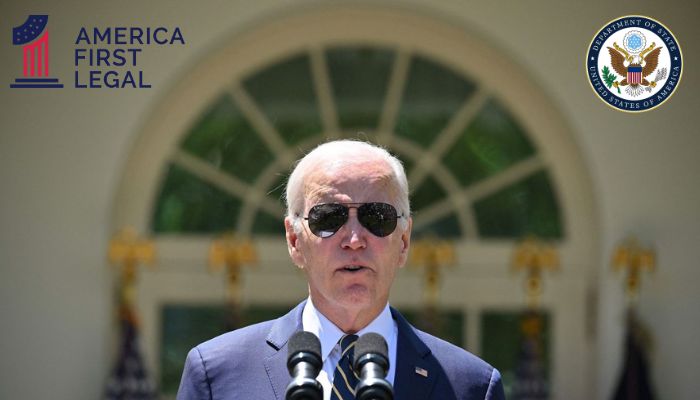
On Wednesday (May 24), ‘America First Legal’ (AFL) took to Twitter to expose how the Global Engagement Centre (GEC) of the US State Department is working with private media outlets to peddle deep state propaganda.

A centre-right non-profit organisation, AFL, secured documents against the GEC under the Freedom of Information Act (FOIA). Earlier this month, it filed a lawsuit against the ‘private parties’ which conspired with the US federal government to conduct mass surveillance and censor the free speech of American citizens.

AFL noted that millions of conservative Americans were targeted for their social media posts on vaccine mandates, election integrity, and Covid-19 vaccines.

The organisation revealed that the Global Engagement Centre (GEC) of the US State Department continues to work closely with George Soros-funded ‘fact checkers’, associated with the International Fact-Checking Network (IFCN) to control the global media narrative.

America First Legal pointed out that the fact-checkers, currently coordinating with GEC, are also funded by the likes of Omidyar Network, Google, Facebook, and the Bill & Melinda Gates Foundation.

Opindia reported in May 2021 that a concerted manner by the Left ecosystem, in cahoots with their big business masters, was underway. We emphasised how they prop up dubious networks such as IFCN to hijack a particular phenomenon and sustain their monopoly over the narrative.

IFCN also received its initial funding from the National Endowment for Democracy, which is in turn funded by the US State Department.

“Members of this vast cartel range from independent foreign journalists to professional fact-checkers to American mainstream media organizations like the Associated Press and USA Today. Notably, Poynter’s IFCN received a 2021 Nobel Peace Prize nomination,” AFL pointed out.

The GEC has been working with IFCN affiliates in countries such as Tunisia and propagating their ‘fact-checking methods’ to censor politically incorrect narratives. According to America First Legal, email exchanges show IFCN pestering the US State Department to ‘fund’ more of their programmes in Egypt.

AFL highlighted how the cabal of media outlets discredit those who are not willing to toe the narrative of the Biden administration. It highlighted how one David Mikkelson of Snopes, infamous for rampant plagiarism, wanted to kick out right-wing news outlet Daily Caller from a Google group on combating fake news.

This was despite the fact that another member in the same group pointed out that leftist news organisations such as MSNBC and CNN had the same ‘source credibility’ as Daily Caller.

“The work of the international fact-checking cartel might be admirable if it actually lived up to its “commitment to Non-partisanship and Fairness,” but their methods appear strongly biased towards the promotion of State-approved talking points,” AFL noted.

‘America First Legal’ pointed out that news organisations, which were earlier known for investigative journalism began to treat the Global Engagement Centre (GEC) of the US State Department as the ultimate harbinger of truth.

It pointed out the case of The Washington Post, which maliciously attempted to discredit the Hunter Biden story covered by The New York Post. The explosive story was about Hunter Biden’s problematic emails with a Ukrainian gas company executive from Burisma in the run-up to the 2020 US Presidential elections.

AFL also highlighted how The Washington Post was more than willing to allude to the dubious ‘Russian disinformation’ conspiracy theory, which was fed by the GEC.

“Mainstream media outlets eagerly rely on the GEC as an authoritative source based on its credibility and presumed access to accurate intelligence,” AFL emphasised.

It stated how a GEC officer persuaded a journalist named Michael Gordon, working for The Wall Street Journal (WSJ), to cover the US State Department’s talking points on the Covid-19 vaccine and so-called Russian disinformation.

The development took place, one day before the official transfer of power to the Biden administration. In another instance, a New York Times (NYT) reporter was introduced to the GEC for his story on ‘Russian anti-vax disinformation.’

Email transcripts, accessed by America First Legal, show the GEC threatening journalists to compile its talking points in the form of a report and publish it imminently.

AFL stated, “The GEC’s financial support of these media organizations also implicates the supposed “independence” of their reporting.” It pointed out how news outlets such as New York Times and Associated Press are dependent on funds from the US Department of State.

While speaking about the development, the Vice-President of AFL Gene Hamilton said, “Over the last two years, we have proven to the American people that there is–in fact–an intricate web of individuals and organizations that influence everything you see presented as objectively ‘true’ or ‘fact’ in the media.”

“While it is undeniably true that all governments throughout history have conducted campaigns to influence foreign audiences, it is now undeniably true that the same tactics and techniques are being used to influence perceptions amongst the American people domestically,” he added.

“We will continue to expose this influence operation to the American people and to bring accountability where we can,“ Gene Hamilton concluded.
US House Select Committee on China recommends including India in NATO Plus

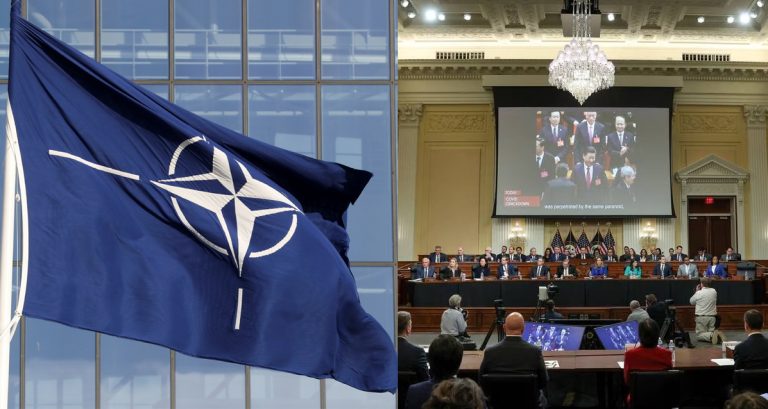
Ahead of Prime Minister Narendra Modi’s US visit, the US House Select Committee on Chinese Communist Party (CCP) has recommended that India should be made a part of NATO Plus. 

NATO Plus, now known as NATO Plus 5, is a security agreement that brings together NATO and five associated states – Australia, New Zealand, Japan, Israel, and South Korea – to strengthen global defence cooperation.

Bringing India on board would allow for smooth intelligence exchange between these countries, as well as quick access to cutting-edge military technologies.

The House Select Committee on the Strategic Competition between the United States and the Chinese Communist Party (CCP), chaired by Mike Gallagher and ranking member Raja Krishnamoorthi, unanimously adopted a policy proposal aimed at bolstering Taiwan’s deterrence and expanding NATO Plus to include India.

The committee holds that imposing economic sanctions on China in the event that it plans to attack Taiwan is the most effective way for key allies such as the G7, NATO, NATO+5, and Quad members to participate and negotiate a joint response and that broadcasting this message publicly has the added benefit of bolstering deterrence.

“Much as we do joint contingency planning for warfighting, we need to coordinate with US allies in peacetime.” To achieve this, the Committee recommended that Congress approve legislation akin to the STAND with Taiwan Act of 2023, which requires the crafting of an economic sanctions package to be used in the event of a PRC attack on Taiwan.

The committee also recommended that the United States support Taiwan’s participation in international organisations and amend the TAIPEI Act.

“Winning the strategic competition with the Chinese Communist Party and ensuring the security of Taiwan demands the United States strengthen ties to our allies and security partners, including India. Including India in NATO Plus security arrangements would build upon the US and India’s close partnership to strengthen global security and deter the aggression of the CCP across the Indo-Pacific region,” the Select Committee recommended.

Indian-American Ramesh Kapoor, who has been working on this proposal for the past six years, said this is a crucial development. He hoped that the recommendation will be included in the National Defence Authorisation Act, of 2024, and eventually become law. 

About the Select Committee 

The Select Committee on the CCP, according to its official website, is “committed to working on a bipartisan basis to build consensus on the threat posed by the Chinese Communist Party and develop a plan of action to defend the American people, our economy, and our values.”

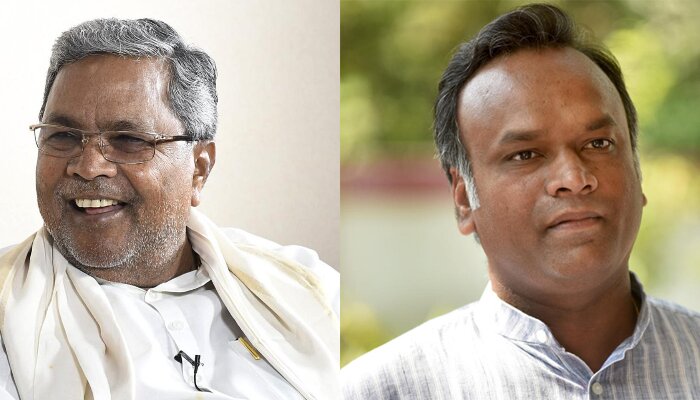
Karnataka Congress takes a U-turn after minister Priyank Kharge talked about banning RSS, CM Siddaramaiah says the party didn’t talk about it

Days after Congress MLA from the Chittapur assembly, Priyank Kharge, caused a massive controversy by claiming that the Congress government will not hesitate to ban Rashtriya Swayamsevak Sangh (RSS), the newly elected Congress government in Karnataka has taken a significant U-turn on Saturday by denying the previous statement.

No one other than the chief minister Siddaramaiah himself has rejected any such assertion. Siddaramaiah declared that any outfit disrupting social peace and harmony will face harsh punishment and clarified that the party has not discussed outlawing RSS. He made these remarks while talking to the media.

Congress President Mallikarjun Kharge’s son and a member of the state cabinet Priyank Kharge had equated RSS and Bajrang Dal with the Popular Front of India (PFI) and warned to ban the two Hindu outfits in the state.

“We will not hesitate to ban organisations which indulge in moral policing. It might be RSS or Bajrang Dal or any other communal organisation,” the minister threatened. “We will change the laws brought by the BJP government. If any individual, organisation threatens peace and acts against the constitution, the government has the capacity to initiate proper action against them,” he had emphasised earlier.

Kharge also said that the Congress govt will withdraw the ban on hijabs in govt colleges which have uniform norms.

Basavaraj Bommai, Bharatiya Janata Party leader and former chief minister, asked Congress to prohibit the RSS if they had the courage to do so. Nalin Kumar Kateel, the state head of the BJP in Karnataka, insisted that the Congress administration wouldn’t last if any attempt was made to ban the RSS or the Bajrang Dal.

In response to the proposed ban on the two organisations, senior BJP leader and former minister R. Ashoka issued a challenge to the newly elected Congress administration, declaring that if they closed even one RSS branch, the party would have no presence in Karnataka.

“Your father was unable to ban RSS. It was not done by your grandmother. Even your great-grandfather wouldn’t do anything. What can you do now,” he questioned.

He maintained that there were 15 to 20 Congress governments in the nation and the party held a majority in Parliament. He proclaimed that Congress is currently in a pitiful situation across India and is rapidly disappearing. He then dared the government, if it had the guts, to abolish RSS. “Your government won’t last long for three months,” he declared.

Notably, Congress had compared Bajrang Dal with PFI and Students’ Islamic Movement of India (SIMI) and promised to ban the group in its Karnataka election manifesto which led to a major backlash and the party tried to do damage control with the help of its senior leaders including former Karnataka chief minister M. Veerappa Moily and present deputy chief minister D. K. Shivakumar.

In addition, Vishva Hindu Parishad (VHP) and Bajrang Dal sent a defamation notice to the party for aligning Bajrang Dal with outlawed terrorist organisations and demanded compensation in the amount of Rs. 100 crore.

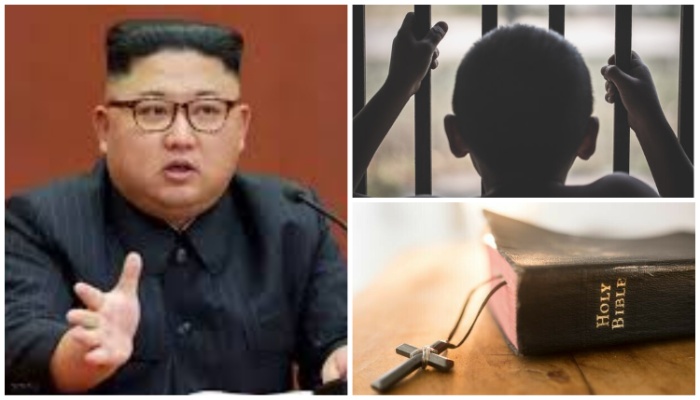
Two-year-old sentenced to life imprisonment after North Korean officials catch his parents with a Bible: Report

The US State Department released its 2022 International Religious Freedom Report on May 15, wherein it revealed how the communist government in North Korea imprisoned a two-year-old toddler for life after the authorities found a Bible in the possession of his parents. The child along with his entire family was jailed in a political prison camp in North Korea in 2009, the report read.

The report also documented several additional incidents of Christians being killed in North Korea, including the execution of a woman and her grandchild in 2011 by North Korea’s firing squad.

Some other Christians were subjected to “pigeon torture,” in which they were suspended for days with their hands tied behind their backs, unable to sit or stand.

Some were tortured with sleep deprivation, including a lady in solitary confinement who committed suicide in 2020 after jail officers refused to let her sleep.

The report read that these atrocities on Christians happen in North Korea as they are perceived as a “hostile class” and a “serious threat to loyalty to the state.”

Notably, while North Korea’s constitution provides religious freedom to its citizens, the Kim Jon-un administration continues to restrict religious activity in the country. Shamanic practitioners in North Korea face punishments ranging from six months in a forced labour camp to three or more years in reeducation camps. Christians, on the other hand, risk execution or sentences ranging from 15 years to life in a prison camp, imposed on up to three generations of the immediate family of the person found guilty.

The report provided estimated figures on such incidents, stating that approximately 70,000 Christians, as well as individuals from other faiths, are imprisoned in North Korea.

It further stated that Christians imprisoned in these camps have described harsh conditions and different sorts of physical abuse. According to the report, 90% of reported human rights violations against both Shamanic believers and Christians were committed by the Ministry of State Security.

The State Department, citing a report by Korea Future, a non-profit organisation in North Korea said that the North Korean government persecutes individuals who engage in religious practises, possess religious items, have contact with religious people, or share religious beliefs. Individuals who are persecuted may be imprisoned, detained, forced to work, tortured, denied a fair trial, deported, denied the right to life or subjected to sexual abuse.

The report by Korea Future, which interviewed 151 Christian women who were abused, discovered that the most common forms of abuse in North Korea were arbitrary arrest, torture, deportation, forced labour, and sexual violence.

Several refugees who had fled North Korea recounted textbooks that featured sections on Christian missionaries. The missionaries were accused of a variety of “evil deeds,” including “rape, blood-sucking, organ harvesting, murder, and espionage,” according to the textbooks.

Such atrocities on people living in North Korea are very common. The communist country strictly controls the lives of its citizens.

North Korea publicly executes two teenagers for watching and distributing South Korean films

Last year, the North Korean government publicly executed two teenagers for watching and circulating South Korean drama shows among their friends, media outlet Radio Free Asia quoted two eyewitnesses as confirming. The execution of the minors aged 16 or 17 was carried out in October 2022.

According to the report, the teenagers were taken before the public, sentenced to death, and then shot down by a firing squad at an airfield in the city while residents in the area were forced to watch the execution.

In 2021, a North Korean man had been sentenced to death for smuggling the South Korean Netflix series ‘Squid Game’ on USB through China and sold their copies after seven high school students were caught watching the show. 

A student who bought the USB from the smuggler is given a life sentence while six others who saw it with him have been sentenced to five years of hard labour. Teachers and school administrators are also fired and banished to work in remote areas in mines, the report said citing sources.

West Bengal: CM Mamata Banerjee apologises for the Egra Blast after 11 days, says ‘could have avoided it’

On Saturday, 27th May 2023, West Bengal’s chief minister and Trinamool Congress Party supremo Mamata Banerjee apologised to the people of the East Medinipur district for the blast in an illegal firecracker factory in Egra that took place on 16th May 2023. She said that the blast that took 12 lives could have been avoided.

Eleven days following the explosion, the TMC chief arrived at Khadikul village. During her visit, she personally distributed compensation cheques to the families who had lost their loved ones and those who were injured in the tragic incident.

During this time, she said, “Today, my eyes have been opened, and I bow my head and humbly apologise for this incident. It is clear that had the intelligence system functioned effectively, this unfortunate accident could have been averted.”

Mamata Banerjee further said, “The families of the victims who lost their lives in the explosion at the firecracker factory in Egra will receive a compensation of Rs 2.5 lakh. Additionally, one family member will be offered a job as a home guard. I have brought the appointment letters of the same. Furthermore, in the unfortunate event of a lightning-related fatality, a support amount of Rs 2 lakh will be extended to the bereaved family.”

Mamata Banerjee added, “Our government has decided that a report will be prepared under the leadership of the Chief Secretary in the next two weeks regarding this incident. Under this, a cluster of green crackers will be created. The owner of the illegal factory and two members of the family of the main accused have been arrested.”

On May 16, seven people died, and several got injured in a blast at an illegal firecracker factory in Egra of district Medinipur, West Bengal. The factory building collapsed after the explosion. five more people died during the treatment.

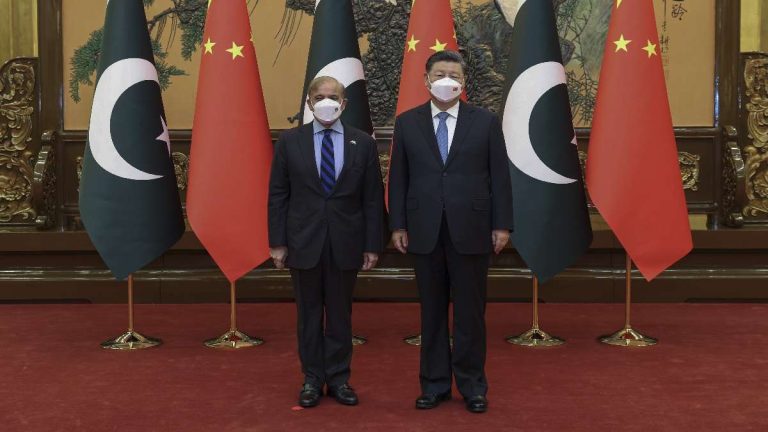
China will save Pakistan from bankruptcy, Imran Khan to blame for the current financial crisis: Pakistan PM Shehbaz Sharif

On Friday, May 26, Shehbaz Sharif, Pakistan’s prime minister, stated that an agreement with the International Monetary Fund (IMF) has not been reached, but that China’s backing will be critical in keeping the country from default.

PM Sharif stated in his address to industrialists and businesses in Karachi that Pakistan has ‘successfully fulfilled all of the rigorous conditions imposed by the International Monetary Fund (IMF)’, underscoring the government’s commitment to complete the IMF programme.

Lauding China, Shehbaz Sharif stated that China has shown its support for Pakistan’s growth by rolling over its commercial debt. It is notable that in March this year, China rolled over a $2 billion loan to protect Pakistan from an economic collapse. 

“In the understanding of our Ministry of Finance, the gap in IMF conditions was of x amount but for them (IMF) it was x+1, but even that gap was filled with the help of our ‘dost mumalik’ (friendly nation) China. As I speak, it is done and only some paperwork is left,” Sharif said. 

He further added that China also rolled over commercial loans of over $1.3 billion for Pakistan. 

“They completed all the procedures for these rollovers two or three months ago. I have not seen such friendship and brotherhood,” Sharif said.

He went on to say that Pakistan draws positive sentiments from friendly nations, demonstrating a shared desire to see the country flourish.

The Pakistani Prime Minister did not miss the opportunity to attack former Prime Minister Imran Khan and his government, pointing out that the previous government had flouted the IMF agreement.

“You all know that the previous government violated the IMF agreement,” PM Sharif said. 

For the past year, the country has been plagued by political uncertainty, which has continued even now. This prevailing instability caused price rises, worsening the problem of inflation.

The Pakistani PM also emphasised the importance of investors willing to take risks and invest in Pakistan, referring to them as ambassadors for the country.

Meanwhile, Pakistan has also sought US intervention for the completion of the IMF bailout programme, as it has requested the US to convince IMF to strike the staff-level agreement which earlier could not be reached.

According to Pakistani media reports, finance minister Ishaq Dar informed the US envoy that the current Extended Fund Facility (EFF) arrangement would expire on June 30, 2023. Consequently, the IMF would have to make a decision to complete the pending 9th Review under the EFF programme.

Bihar: Snake found in mid-day meal served to students in a school in Araria, dozens fall sick after over 100 students consume the ‘Khichdi’

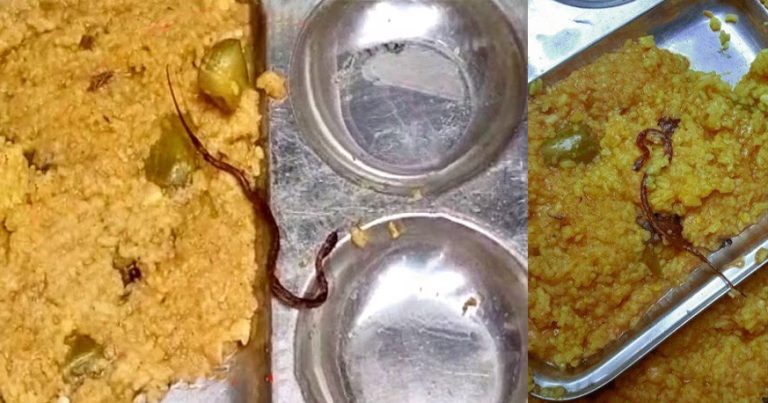
On Saturday, 27th May 2023, a severe problem occurred at a government school in Forbesganj, Araria district, Bihar, when a snake was discovered in the mid-day meal provided to the children. Numerous students fell ill after consuming the food and were hospitalized in Forbesganj for necessary medical care.

Before the incident came to light, over 100 children had already consumed the food. The ‘Khichdi’ meal was served to a total estimated number of more than 150 students at Amauna Middle School, which is operated by Jogbani Municipal Council. As soon as the snake was discovered in the mid-day meal, pandemonium ensued within the school premises, leading to the arrival of numerous parents seeking information and assistance.

At approximately 9 am, an NGO delivered cooked food to the school, which was then consumed by approximately 150 children. Meanwhile, the remaining children were in the process of being served from the NGO’s pot. Subsequently, dozens of students who had consumed the meal fell ill and started vomiting, and they were immediately rushed to the Forbesganj hospital.

In the meanwhile, the atmosphere in the school quickly turned chaotic when a dead snake was discovered within the food, causing a commotion among the students and staff.

Word of the incident quickly spread, resulting in a significant gathering of parents and local residents within the school premises. Faced with the escalating situation, the school teachers took the precautionary measure of closing the entrance from the inside. Meanwhile, enraged individuals outside the school were attempting to forcibly break through the gate.

Senior officers including the SDM, the SDO and the DSP reached the spot to take stock of the situation. An investigation into the incident has started.

PM Modi acknowledges the 9 achievements of his govt in the last 9 years picked by netizens, here are the top 9 of them selected by most people

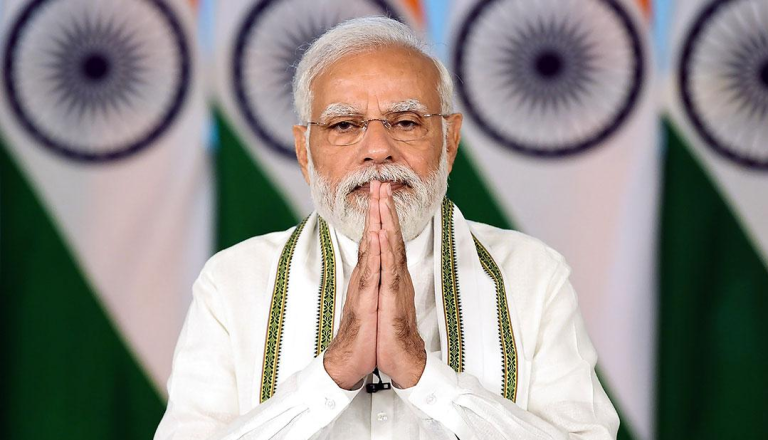
The Narendra Modi government will complete 9 years in office in two successive terms on 30 May. Bharatiya Janata Party has planned a month-long mass reach-out programme across the country.

Amid the celebrations of the 9th year anniversary of the govt, social media users are posting their top 9 picks for the achievements of the Modi government in the last nine years. The hashtag #9YearsOfModiGovernment was trending on Twitter as a result;

PM Modi today quote tweeted some of the tweets, saying that since morning he has been seeing many tweets on the hashtag #9YearsOfModiGovernment, in which people are highlighting what they have appreciated about the government since 2014.

“It is always humbling to receive such affection and it also gives me added strength to work even harder for the people,” he added. The PM then quoted several tweets from people who have picked the top 9 achievements of the Modi government.

“We have covered much ground in the last 9 years and we want to do even more in the times to come so that we can build a strong and prosperous India in the Amrit Kaal,” he said, quoting such a tweet.

PM Modi said that his government has been able to deliver because people elected a stable government. “This unparalleled support is a source of great strength,” he said. Responding to another tweet, he wrote, “You have highlighted key infrastructure and ‘Ease of Living’ projects which have been very impactful at the grassroots level.”

We looked at the tweets posted under hashtag #9YearsOfModiGovernment by users with considerable followings and engagements, apart from the tweets quoted by PM Narendra Modi, to gauge which accomplishments of the Modi government are most popular among Twitter users. Here are the top 9 achievements of the government in the last 9 years, on the basis of the tweets posted by people.

1. Abrogation of Article 370

Abrogation of Article 370, along with Article 35A, the two articles in the Constitution of India that gave a special status to the former state of Jammu and Kashmir. The special status implied that Jammu and Kashmir was different from rest of the country, and was instrumental in fuelling separatism. The two articles were abrogated by the Modi government in 2019, fulfilling a poll promise.

Article 35A gave the state the right to determine who is a permanent resident of the state, which was added to the constitution by a presidential order, not by an amendment. Article 370 said that all the provisions of the Constitution of India do not apply to the state of Jammu and Kashmir, and had listed the provisions that applied. While article 35A was abrogated and it no longer exists, article 370 was amended, and it remains in the constitution, saying that all the provision of the constitution also applies to the constitution.

Along with this, the state of Jammu and Kashmir was also bifurcated into two union territories, Jammu and Kashmir, and Ladakh.

2. Ram Mandir construction, Kashi Vishwanath Corridor and others

For BJP, the construction of a grand Ram Mandir in Ayodhya and freeing other ancient Hindu temples converted to mosques by Islamic rulers always have been a major promise. The dream of crores of Hindus came true on 2019, and the Supreme Court of India delivered its verdict in decades on Ram Janambhoomi – Babri Masjid title dispute, handing the entire disputed premises to Hindu parties.

Following the order, while the Hindu petitioners started the construction of the temple, the Modi govt contributed by facilitating the process. Less than a year later in August 2020, Narendra Modi conducted the Bhoomi Poojan of the Ram Mandir.

Another important achievement of the Modi government, according to social media users, was the freeing the Kashi Vishwanath temple and its surroundings from encroachments. The Kashi Vishwanath corridor was inaugurated in December 2021, which connects the iconic Kashi Vishwanath temple with the holy ghats along the river Ganga.

During the demolitions for the project, several ancient temples were also discovered, which was hidden by constructions around them. Some such constructions were done deliberately to hide the Hindu temples so that they are not demolished like the original Kashi Vishwanath temple by Islamic rulers, but with time, those hidden temples were forgotten.

The Modi government has also taken up projects rejuvenate many other old temples across the country, which has been listed as an achievement by people.

3. Covid handling, vaccine

Almost all people who listed achievements of the Modi government thinks that its handling of the Coronavirus pandemic was a success. They appreciated how the govt acted swiftly after the pandemic hit the country, and how several vaccines were developed in the country with active participation of the government.

After that, the government of India ran world’s largest free immunisation program, under which over 200 crore doses of made-in-India Covid-19 vaccines have been administered. The Cowin platform developed to administer the vaccination program has been another success.

The Covid pandemic also saw India becoming self-reliant in medical items like personal protection equipment, which mainly were imported earlier.

4. UPI, digital economy

Social media users have pointed out that India’s transformation into a digital economy, primarily led by UPI of the NCPI, is one of the major achievements of the government. Today, India leads in terms of using digital translations, where even roadside vendors accept digital payments even for very small amounts.

The QR code which has become an integral part of India’s retail businesses have been widely covered by international media, marvelling how one can shop anything in India without the use of cash. People also listed demonetisation as one of the successes, as the temporary shortage of cash after withdrawing ₹500 and ₹1000 notes had accelerated the growth of the use of online transactions.

Today UPI is the most successful payment system in the world, with millions and users and billions of transactions every month.

5. Financial inclusion

The next achievement of the government, according to social media users who listed top 9 achievements of the govt, is the various steps taken by the govt for financial inclusion of people, most of those who were not associated with the banking system earlier. The JAM trinity, Jan Dhan-Aadhaar-Mobile, has been one of the major successes of the govt in bringing people into the formal financial system.

Under Jan Dhan Yojana, almost 50 crore people have got their bank accounts made. Apart from this, people also listed the Mudra loan scheme, and the Direct Benefit Transfer of subsidies as other achievements in the sector.

One major instrument in financial inclusion has been the Rupay card, which has been able to displace global majors like Visa and Mastercard in payment systems.

6. Infrastructure

Another major achievement of the government that most people have included in their lists is the massive development in the infrastructure sector in the country. People have noted the rapid construction of highways, expressways and other roads, massive expansion of the railway network and introduction of the made-in-India Vande Bharat Express train, and the Udaan scheme in civil aviation.

7. Swach Bharat, Jal Shakti

From day one in the office, PM Modi has been stressing on sanitation, clean water, and end of open defecation. According to people, the government has succeeded in its mission of cleaning India and providing clean water to people.

Under the Swachh Bharat mission, over 3 lakh villages have declared open defecation free, over 2.5 lakh villages have liquid waste management facilities, and almost 2 lakh have solid waste management arrangements.

Several schemes have been launched under Jal Shakti to improve the availability and quality of water in the country.

8. GST, Economy

Many people believe that the govt has succeeded in reforming the financial system and improving the economy. Implementation of the GST was a major milestone, which made doing business much easier by removing several different taxes and included them in Goods and Services Tax. It also eliminated barriers to inter-state trade by removing taxes.

Similarly, the PLI and other schemes have been lists as successes by the people in enhancing investment in the country. Several people have included financial stability, increasing GDP as major successes of the government.

9. Welfare schemes

Successful welfare schemes have a major hallmark of the Modi government, and many people have included it in their top 9 achievement lists. Schemes like the Ujjwala Scheme, Ayushman Bharat scheme, Housing scheme, monetary benefits given to farmers have benefited large number of people.

Apart from these nine picked by most people, many also listed development and better inclusion of northeastern states, foreign policy, indigenisation of the defence sector etc as the major achievements of the govt.

Madhya Pradesh ATS carried out a RAW and IB-style operation to bust the HuT terror module

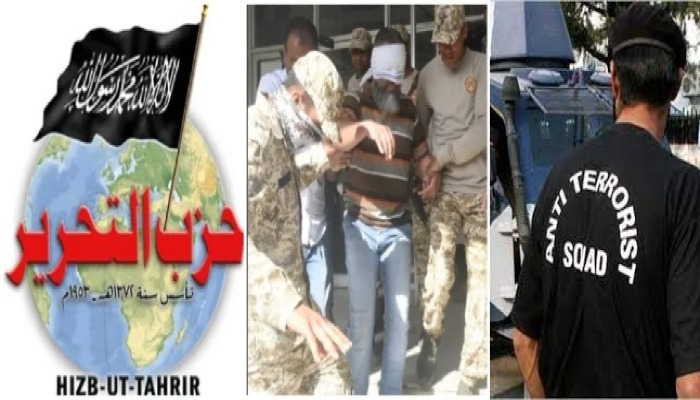
Days after Madhya Pradesh Anti-Terrorist Squad (ATS) busted the Bhopal-Hyderabad terror module of the Islamist terrorist organisation Hizb-Ut-Tahrir (HuT), it has been disclosed that the MP ATS conducted a RAW and IB-style operation to nab 16 HuT terrorists on May 9.

According to a Nai Dunia report, the MP ATS deployed one of its officials as a spy in order to keep tabs on the alleged HuT member. As part of the plan of operation, the ATS guard became friends with the suspect and gradually ‘joined’ the terror organisation. This ATS officer was instrumental in exposing the HuT terror module. The operation stretched over four months.

It is worth noting that the case was taken over by the National Investigation Agency (NIA) on Friday.  The ATS apprehended 16 people from various locations, including ten in Bhopal, one in Chhindwara, and five in Hyderabad. The arrested persons are currently held in judicial custody.

The ATS guard entrusted with spying on HuT members became friends with one of the suspects, who used to go to a gym in the morning every day. He told the HuT member that he has a private job. Gradually, he won the trust of the HuT operatives with his effective communication skills.

Following this, the ATS officer began attending meetings with the Islamic fundamentalists. He stated that, while he is a Hindu, he is more drawn to Islam as unlike Hinduism, Islam brings people together. He also told the terrorists about changing his religion. He was frequently invited to the group’s secret meetings since he had earned the confidence of the HuT members. He was also given literature to read on Islamic extremism. Meanwhile, he kept the ATS updated on the operation’s progress and any additional feedback.

Once the complete information was prised out and the total number of terrorists active was determined, the ATS chalked out a master plan to nab all the Hizb-Ut-Tahrir terrorists simultaneously.

When the ATS official was almost exposed in front of the HuT terrorist

According to Nai Dunia’s report citing an ATS source, there was a point when the ATS official working undercover was nearly exposed in front of the HuT member. A police officer once noticed a HuT member strolling with the ATS guard and questioned him why the police were looking for him. The HuT member, however, did not take the question seriously. Following this, the arrest of HUT members was postponed for almost a month as a precautionary measure.

According to the MP ATS, as many as eight of these terrorists converted to Islam. There are three arrested from Bhopal who married Hindu girls and later forced them to convert to Islam. The terror module was commanded by Mohammad Salim, who was formerly Saurabh Rajvaidya Jain. He worked as a professor at AIMIM leader Asaduddin Owaisi’s Deccan Medical College in Hyderabad.

Saurabh converted to Islam in the year 2010. His parents and the rest of the community were opposed to his conversion. Saurabh’s wife afterward converted to Islam in 2012. Yasin Khan, another arrested terrorist, worked as a gym trainer in Bhopal.

ATS asserted that the organization’s strategy was to identify susceptible and vulnerable non-Muslims and influence them to convert to Islam by brainwashing them with provocative speeches and lectures. They intended to foment terrorism and wage war against the country.

The MP ATS team also recovered anti-national documents, technical equipment, radical literature and other materials from the accused at the time of the arrest. 

A case was registered against these accused under UAPA (Unlawful Activities (Prevention) Act, 1967) and other relevant sections. Notably, the Bhopal NIA court had sent these accused to judicial custody till June 2. 

‘We gave our 75% vote,’ Banjara community protests after their leader is not given ministerial post in Siddaramaiah cabinet

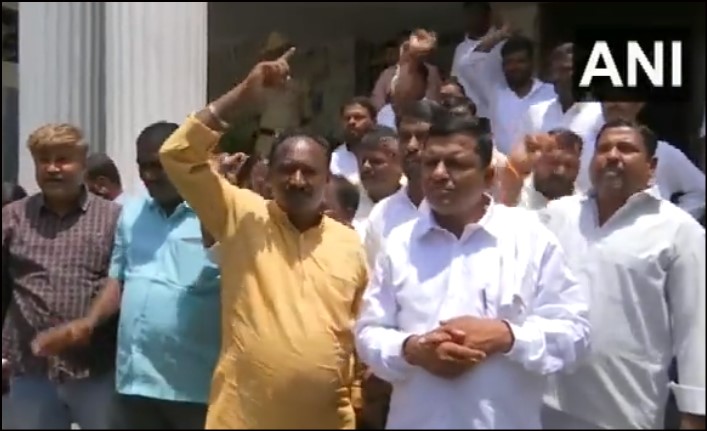
Ahead of the swearing-in-ceremony in Karnataka on Saturday, the supporters of Congress leader Rudrappa Lamani staged a dharna (protest) outside Karnataka Pradesh Congress Committee (KPCC) office. The supporters of Lamani, who represents the Banjara community, protested by raising slogans against the Siddaramaiah government for not giving their leader a ministerial post in the cabinet.

The Congress workers were miffed that not even one minister representing their community found a place in the cabinet, despite Chief Minister Siddaramaiah ensuring a caste and region-wise representation in his cabinet.

A week after taking over, the Congress government led by Chief Minister Siddaramaiah carried out a cabinet expansion exercise by inducting 24 legislators at the Raj Bhavan in Bengaluru on Saturday. However, the list of inducted ministers did not include Congress MLA Rudrappa Lamani.

Rudrappa Manappa Lamani, who represents the Banjara community in the state had won the 2023 Karnataka Assembly elections from Haveri constituency.

Chief Minister Siddaramaiah had ensured caste and region-wise representation in his cabinet, but when Rudrappa Lamani, who represents the Banjara community in the state, did not find a place in his cabinet, his supporters expressed disappointment and staged a protest outside the Karnataka Pradesh Congress Committee (KPCC) office.

Expressing displeasure over Congress’ list of leaders who will be sworn in as Ministers, one of the supporters of Lamani stated, “Our Banjara community leader Rudrappa Lamani’s name was there on the list till last night, but today we saw that his name was not there on the list. If our leader will not get the ministerial post, we will protest against this because we gave our 75% vote to Congress in the election, so there should be at least one leader from our community.”

Notably, three days ago, supporters of Congress MLA D Sudhakar held a protest on Wednesday outside Karnataka Chief Minister Siddaramaiah’s residence here demanding a ministerial post for him. However, he was later given a ministerial post.

Karnataka cabinet expansion, 24 Congress MLAs take oath

On May 26, the Congress party in Karnataka released a list of 24 legislators who will take over as ministers on Saturday (May 27). The Karnataka government can have 34 ministers. Ten of them, including Chief Minister Siddaramaiah and his deputy DK Shivakumar, were sworn in on May 20. The rest 24 legislators would be sworn in today (Saturday, May 27).

According to reports, Siddharamiah arrived in the national capital on May 24 to discuss Cabinet expansion with party leadership. On May 26, the Karnataka CM arrived at 10 Janpath in Delhi on May 26 to meet Congress Leader Sonia Gandhi. This was the first time Siddaramaiah met Sonia Gandhi after he took oath as Karnataka CM. He met Sonia Gandhi and Rahul Gandhi to discuss Cabinet expansion.

After several rounds of discussion with the party’s top leadership, including AICC general secretaries K C Venugopal and Randeep Surjewala, the names of the 24 MLAs were decided. Congress president Mallikarjun Kharge and former party chief Rahul Gandhi gave the final nod to the list. Reports suggest that some differences between Siddaramaiah and Shivakumar had emerged over names of probable ministers but it was eventually sorted out during the course of discussions.

MLAs H K Patil, Krishna Byregowda, N Cheluvarayaswamy, K Venkatesh, H C Mahadevappa, Congress working president Eshwar Khandre and former state Congress president Dinesh Gundu Rao are among those who will take oath on Saturday noon.

Others on the list are Kyathasandra N Rajanna, Sharanabasappa Darshanapur, Shivanand Patil, Ramappa Balappa Timmapur, S S Mallikarjun, Shivaraj Sangappa Tangadagi, Sharanaprakash Rudrappa Patil, Mankal Vaidya, Laxmi Hebbalkar, Rahim Khan, D Sudhakar, Santosh Lad, N S Boseraju, Suresha B S, Madhu Bangarappa, M C Sudhakar and B Nagendra.

Amongst those who have been named few ministers namely Lakshmi Hebbalkar, Madhu Bangarappa, D Sudhakar, Cheluvaraya Swami, Mankul Vaidya and M C Sudhakar are reported to be very close to Deputy CM Shivakumar.

As per the list released, nine SC/STs, eight Lingayats, five Vokkaligas, one Muslim, one Christian, one Jain and one Brahmin leader have found places in the cabinet, which is why, now the supporters of the Banjara community have started protesting questioning the Congress government why their representative did not find a place in the cabinet.