Home Blog Page 2170

China is ruining the economy of poor countries like Pakistan through its debt trap: Here is how

The People’s Republic of China (PRC) has been pushing poor countries to the brink of economic ruin through its well-thought-out ‘debt trap’ and its unforgiving nature when it comes to the recovery of loans.

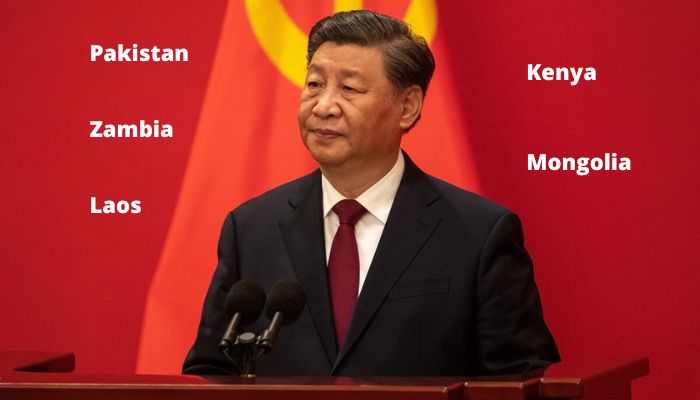
As per an exclusive report by Associated Press (AP), countries such as Kenya, Laos, Zambia, Pakistan, and Mongolia are now faced with the tough choice to keep schools running and provide electricity to the public or pay back their debt to China.

These nations have depleted a large chunk of their foreign currency reserves in loan repayment and are now left with only a few months worth of resources. Associated Press found that the above-mentioned countries owe more than 50% of their foreign loans to one nation, China.

More than 1/3rd of the revenue in these countries is channelised to pay off the debt, which these nations borrowed to build power plants, mines, and ports. So far, Zambia and Srilanka have defaulted on loan repayment.
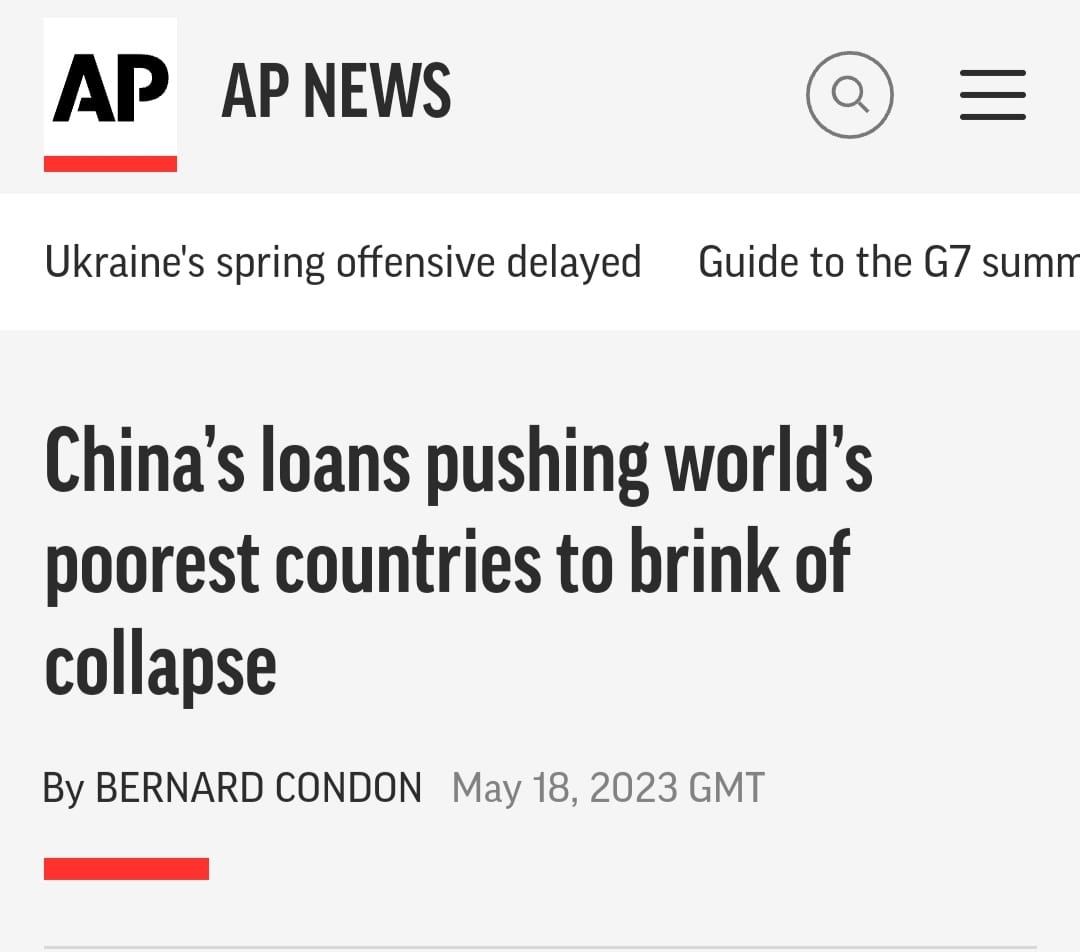
Screengrab of the news report by Associated Press

The economic situation in Pakistan and Kenya has been grim as well, with millions being laid off or their payments withheld to pay foreign loans. Associated Press pointed out the case study of Zambia, an African nation that borrowed money from China to fund its infrastructure projects.

While it received an initial economic boost, the Zambian government had to soon cut corners to be able to pay off foreign debt. It decreased spending on social services, healthcare, and subsidies to farmers. The Chinese government ‘insisted on confidentiality’ and maintained secrecy around the terms and conditions of the loan.

As such, non-Chinese lenders and big government leaders did not come to Zambia’s rescue when it defaulted on payments in November 2020. It later came to light that the African nation owed $6.6 billion to Chinese banks.

“Inflation in Zambia has since soared 50%, unemployment has hit a 17-year high and the nation’s currency, the kwacha, has lost 30% of its value in just seven months. A United Nations estimate of Zambians not getting enough food has nearly tripled so far this year, to 3.5 million,” the report by Associated Press noted.

It pointed out that foreign cash reserves have dropped more than 50% in countries such as Pakistan and the Republic of Congo, which had borrowed money from China. Without external aid, Pakistan is likely to default in the next 2 months.

A similar fate awaits Ethiopia and Mongolia. The condition of these poor nations has also been exacerbated by corruption, governmental mismanagement, the Russia-Ukraine war, an increase in interest rates by US Federal Reserve, and so on.

Meanwhile, China has refuted the allegations and claimed to help developing nations ‘overcome difficulties.’ Its Foreign Ministry has said that it offers extended loan maturities and emergency loans to such ‘poor nations.’

China also claimed to have waived off interest payments during the Covid-19 pandemic. Some experts have also suggested that it is ‘undoing’ its debt trap diplomacy wherein it would seize loan strategic assets (such as ports and mines) for default on loan repayment.

Aid Data finds $385 billion of ‘hidden’ Chinese debt in 88 countries

The Executive Director of Research Lab AidData, Brad Parks, who worked in close coordination with the Associated Press, has been investigating Chinese financing patterns since 2011. At that time, the Chinese government was eyeing to secure supplies of minerals, form strategic alliances abroad, and hoard US dollars.

China began lending money to poor nations as part of its ‘Belt and Road Initiative (BRI)’. The countries, which fell into the Chinese debt trap, were eager to build roads, ports, power plants, infrastructure and expand mineral mining operations.

When these poor nations were heavily burdened by Chinese government loans, the Communist nation shrewdly set up shell companies to lend them money instead of handing it out directly. Such a cunning practice was witnessed in the case of Zambia and Indonesia, where these loans were never recorded in govt books.

“When these projects go bad, what was advertised as a private debt becomes a public debt…There are projects all over the globe like this,” Brad Parks stated. In 2021, he discovered $385 billion of ‘underreported’ and ‘hidden’ Chinese debt in 88 nations.

China set up secret escrow accounts

Brad Parks also found that most Chinese-funded projects were located in regions that were favored by powerful politicians of the respective countries, even if it made little economic sense. The projects were also frequently sanctioned around the time of the elections.

Aid Data studied Chinese loan details and found a clause that mandated borrowing nations to deposit US dollars in ‘secret escrow accounts (third party contractual arrangement)’. That way, China could still recover its money even if the countries defaulted on interest payments.

With the looming confidentiality around the loan clauses, China has been successful in jumping the line for payment while keeping other lenders oblivious.

“The other creditors are saying, ‘We’re not going to offer anything if China is, in effect, at the head of the repayment line…It leads to paralysis. Everyone is sizing each other up and saying, ‘Am I going to be a chump here?'” Brad Parks told Associated Press.

The introduction of ‘swap’ loans

In its bid to keep lending a hidden affair, China’s central bank has been financing billions of dollars in loans through foreign currency exchanges (popularly known as swaps).

Foreign currency exchanges help nations easily borrow US dollars to check temporary shortages in foreign currency reserves and maintain liquidity. But China has been using these swaps as loans and charging more than normal interest rates.

In that way, they do not reflect in the government’s books as loans owed by another country. Reportedly, Mongolia ($1.8 billion), Pakistan ($3.6 billion), and Laos ($300 million) have borrowed money in such swaps for years.

“The swaps can help stave off default by replenishing currency reserves, but they pile more loans on top of old ones and can make a collapse much worse, akin to what happened in the runup to the 2009 financial crisis when U.S. banks kept offering ever-bigger mortgages to homeowners who couldn’t afford the first one,” The Associated Press noted.

“Somehow they’ve managed to do all of this out of public view…So unless people understand how China lends, how its lending practices work, we’re never going to solve these crises,” Parks concluded.

China exerting pressure on a reluctant Nepal to join the Belt and Road Initiative

China has been trying to get the support of Nepal for its ambitious Belt and Road Initiative (BRI). Still, the Himalayan country is reluctant to join as it also seeks support from the US and India which oppose Chinese policies, a Kathmandu-based online magazine Epardafas reported.

The Epardafas report claims that Nepal has not yet agreed to enter into BRI but there are still questions that the projects offered by China are really beneficial.

The inauguration of Pokhara Regional International Airport in August last year is an example of the pressure that China is trying to exert on Nepal.

During that time, the Acting Chinese Ambassador to Nepal Wang Xin said that the airport was under the BRI plan. However, in reality, the airport was actually built with investments from the Nepal government and the loan investment of a Chinese Export-Import Bank, according to the Epardafas report.

China and its strategic interest in neighbouring Bangladesh

Earlier, four state-owned Chinese companies had expressed interest in building a ‘Smart City’ and a metro rail network in Chittagong. China is known to push developing countries into debt by lending money for building infrastructure projects with marginal or no economic returns.

While Bangladesh is relatively safe for now, things may spiral out of control if the Sheikh Hasina government fails to keep inflation and the associated unrest in check. It will then be an uphill task for India to support both Bangladesh and Sri Lanka at the same time.


USA: Indian-origin woman arrested for abandoning her daughter dubbed “baby India” like trash four years ago

On Friday, May 19, Georgia Police after four years solved the mystery of a newborn left to die in the wood as they arrested the Indian-origin mother of the baby girl.

According to the Atlanta Journal-Constitution report, Forsyth County Sheriff Ron Freeman revealed on Friday that Karima Jiwani was identified as the baby’s mother through DNA testing and faces charges of attempted murder, cruelty to children, and abandonment.

While revealing the arrest, Freeman referred to her as “the biological parent,” saying, “I have trouble with the word ‘mother,’ (for someone) who inexplicably, intentionally left her newborn infant to die.” “This child was tied up in a plastic bag and thrown into the woods like a bag of trash,” he recalled, adding, “I called it divine intervention back then, and I still believe that today.”

When she was found,  the hospital staff nicknamed her “Baby India.” She was adopted, and Freeman described her as a “healthy, happy child.”

Officials did not identify her or provide any information to safeguard her privacy. According to Freeman, the child’s father was discovered through DNA about 10 months ago, and her mother was then located.

According to him, the father, who has not been identified, had no idea the woman was pregnant and has not been charged in connection with the abandonment.

Reportedly, Jiwani is said to have a history of “surprise births” and “hidden pregnancies.”

Freeman also said that Karima Jiwani has other children ranging in age from school-going to “near adulthood”.

The Safe Haven Law in Georgia permits women to leave their newborns at medical facilities or police and fire stations without facing criminal prosecution.

According to Appen News, Jiwani made no attempt to take use of the law’s provisions. He stated that she most likely gave birth in a vehicle before abandoning the child.

According to the Journal-Constitution, a family near the woods heard a baby crying and alerted the sheriff’s deputies. They rescued the baby and administered first aid.

‘Will begin with cooperation in manuscripts’: Govt on reports of launching a diplomatic campaign to reclaim Koh-i-Noor and other treasures from Britain

Days after UK’s The Telegraph newspaper reported that India will wage a diplomatic campaign to reclaim the Koh-i-Noor diamond and thousands of other treasures from Britain in a “reckoning” with the colonial past, the Ministry of Culture has refuted the report calling it an “overstatement” and said that India will initiate repatriation of objects beginning with “cooperation in manuscripts”.

The Telegraph in its report published on May 12 titled, “India to force Britain into colonial ‘reckoning’ with treasure demands,” claimed citing a source that the Indian government is planning to mobilise its ministerial and diplomatic staff to “secure the return of potentially thousands of artefacts taken to Britain during the days of the empire, in its reckoning with the past.”

It claimed that New Delhi’s campaign would be “the largest repatriation claim faced by the UK, on a scale that would dwarf Greece’s demands for the Elgin Marbles”

It added that the Narendra Modi government is aiming to secure Koh-i-Noor diamond and Amravati Marbles, highlighting that reclaiming the artefacts taken from India is one of the priorities of the Modi government. 

Quoting Govind Mohan, Secretary of the Ministry of Culture, The Telegraph claimed that returning antiquities would form a key part of India’s policy-making stressing that the thrust of artefacts’ repatriation stems from PM Modi’s personal commitment.

Reportedly, the Indian government has called the report an “overstatement” saying that while the government is pursuing the restitution of artefacts taken from India, the report is a “significant overstatement” in terms of how it represents the government and its approach to the United Kingdom.

This comes after the first G20 working group meeting was held on February 24, at Maharaja Chhatrasal Convention Centre (MCCC), Khajuraho, Madhya Pradesh, wherein India underlined that displaced antiquities must be restored to their country of origin as artefacts have no relevance outside of their cultural contexts. Govind Mohan, secretary, ministry of culture also had laid emphasis on the urgency to work together and protect the shared heritage of G20 nations. 

Quoting a representative, Politico reported that Govind Mohan is focused on “low-hanging fruits” such as the return of manuscripts from the UK. 

“India remains committed to working with international partners to build holistic and cooperative ties, with our shared history serving as an important but not sole pillar,” the  Indian government responded.

It is notable that the Modi government has been working relentlessly to bring back displaced artefacts. Since 2014, the Modi government has brought back more than 200 displaced artefacts. 

On Thursday this week, PM Modi noted at the launch of the International Museum Expo in New Delhi that 240 antique relics have been recovered and returned to India in the last nine years, compared to less than 20 for several decades following Independence. Interestingly, during its ten years of rule, the UPA government could bring just one artefact back to the country, according to the Archaeological Survey of India (ASI).

West Bengal: Mamata Banerjee’s nephew and TMC MP Abhishek Banerjee questioned by CBI in SSC teachers recruitment scam

Mamata Banerjee’s nephew and national general secretary of Trinamool Congress continues to face trouble in the ongoing recruitment scam case in West Bengal. Today he appeared before the Central Bureau of Investigation (CBI) at its Kolkata office this morning, where he had been called as part of the agency’s probe into the school jobs scam.

He travelled to the agency’s offices at Nizam Palace, where there was a lot of security in place, at 10:58 in the morning, and went to the personnel tasked with investigating the scandal.

Sujay Krishna Bhadra’s residence was raided earlier in the day by the Enforcement Directorate as part of its investigation into the school employment scam.  He is considered to be close to TMC’s top brass. The raid was conducted at the Behala house of  ‘Kalighat er Kaku’s’ (Kalighat’s uncle) as he is popularly known.

He had testified before the CBI on March 15 regarding his alleged participation in wrongful appointments made in several state-run and state-aided institutions in the state.

The Enforcement Directorate is investigating the money trail connected to the anomalies in the recruitment at schools while the CBI is looking into the criminal component of the fraud.

The MP from Diamond Harbour who was campaigning in the western city of Bankura, hurried back to Kolkata on Friday night to respond to the central investigating agency’s summons.

A letter sent by a deputy superintendent of the CBI to Abhishek Banerjee’s Harish Mukherjee Road address on Friday directed the latter to appear before him on Saturday, at 11 am.

Later on Friday, the TMC leader dared the central agency to arrest him if it had any evidence of corruption or wrongdoing against him in a speech he made from atop his vehicle. Abhishek Banerjee remarked, “I dare the CBI to arrest me if they have any proof of corruption against me,” during a gathering in Bankura.

On Thursday, the Calcutta High Court rejected his plea seeking the recall of a prior judgement of the court authorising the CBI and ED to interrogate him about the teacher recruitment fraud.

His name appeared in a complaint put out by Kuntal Ghosh, one of the scam’s accused. The authorities, according to the latter, put pressure on him to implicate Abhishek Banerjee in the school fraud case.

On Friday, his efforts to have a division bench and then the chief justice of the Calcutta High Court hear his revision case were unsuccessful. The case may now be heard by a High Court vacation bench, which will convene on Monday.

Notably, he was previously summoned by the CBI on April 17, however, the member of parliament pointed out that the High Court’s order was nullified by the Supreme Court and accused the BJP of ‘harassing’ him through central agencies. He is currently on his ‘Jono Sanjog Yatra’ since April 25 and said that the march will resume on May 22 from his current location in Bankura. 

Additionally, he protested in a letter to the CBI on Saturday that he had not been given enough time to abandon the state-wide public outreach programme he was carrying out in rural West Bengal.

Sources within the organisation revealed that he was questioned by a four-person CBI team starting at 11.30 am. The whole session was videotaped, and the leader’s answers were recorded and countersigned.

The probing team comprised Wasim Akram, the CBI’s investigating official along with three of the special investigation team’s seven members, who were officers of the levels of Superintendent of Police (SP), Deputy superintendent of Police (DSP) and Inspector of Police.

Three TMC leaders, MLA from Nadia district, Manik Bhattacharya, MLA from Burdwan constituency, Jiban Krishna Saha and former education minister, Partha Chatterjee have already been arrested in the case so far. 


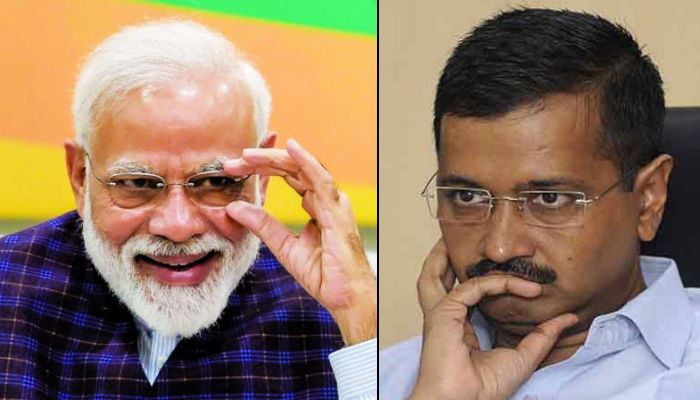
As the Centre brings ordinance to amend the GNCTD act, read how it has a legal basis in Supreme Court’s judgment itself

On Friday (May 19), the Centre issued an ordinance [pdf], which effectively reinstates the power of the Lieutenant Governor (LG) over ‘administrative services’ in the Delhi government (also called GNCTD).

The ordinance, which has now been approved by the President of India, empowers the LG to oversee the posting, transfer, and disciplinary proceedings against officers of the Delhi government

This has been done through the constitution of a new ‘National Capital Civil Services Authority’, which will include the Delhi Chief Minister, Chief Secretary, and Home Secretary of the Delhi government.

As per the ordinance, the ‘Authority’ headed by the Delhi CM will recommend the Lieutenant Governor on the transfer and posting of officers serving in the Delhi government. The recommendations will however need the approval of the LG.

The Lieutenant Governor has also been given the power to send the recommendations back to National Capital Civil Services Authority for reconsideration. “Provided also that in case of difference of opinion, the decision of the Lieutenant Governor shall be final,” the Ordinance made it clear.

“Notwithstanding anything contained in any judgment, order or decree of any Court, the Legislative Assembly shall have the power to make laws as per Article 239AA except with respect to any matter enumerated in Entry 41 of List II of the Seventh Schedule of the Constitution of India or any matter connected therewith or incidental thereto,” it emphasised.

The Background of the Controversy

On May 11, 2023, a five-judge Constitution bench led by Chief Justice of India (CJI) DY Chandrachud pronounced the verdict in the Government of NCT of Delhi vs Union of India case [pdf].

The apex court ruled that the Delhi government has both executive and legislative power over ‘administrative services’ in the National Capital. However, It noted that GNTCD cannot exercise its powers in matters related to police, land and public order. At the same time, the apex court stated that the Lieutenant Governor is bound by the decisions of the Delhi government.

“Under Entry 41 List 2, the Lieutenant Governor shall be bound by the decisions of GNCTD on services as explained above. To clarify, any reference to Lieutenant Governor over Services excluding services relating to public order, Police and land in relevant rules shall mean Lieutenant Governor acting on behalf of NCTD,” the Supreme Court ruled.

CJI DY Chandrachud even stated, “If a democratically elected government is not given the power to control the officers, the principle of triple chain of accountability will be redundant.”

He continued, “If the officers stop reporting to the Ministers or do not abide by their directions, the principle of collective responsibility is affected.” The CJI further added that if the officers felt they were insulated from the control of the government that would dilute accountability and affect governance.

Legal basis of the Ordinance by the Centre

It must be mentioned that the Union government can bring in an Ordinance (a law that can make legislative changes) when the Parliament is not in session and immediate action is required on a matter. However, it must be passed by the Parliament within 6 weeks (42 days) of the commencement of the next session or it will lapse.

While there is a hullabaloo over the ordinance issued by the Centre, reinstating the power of LG over ‘administrative issues’, it must be mentioned that such a provision was made in the Government of NCT of Delhi vs Union of India verdict of the Supreme court.

In Part C, Section 20 of the Judgment copy, it is clearly stated –

The judgment of the majority, however, clarified that if Parliament makes a law in relation to any subject in List II and List III, the executive power of GNCTD shall then be limited by the law enacted by Parliament.

Again in Part I, Section 95 of the verdict, it has been made clear –

“…If Parliament enacts a law granting executive power on any subject which is within the domain of NCTD, the executive power of the Lieutenant Governor shall be modified to the extent, as provided in that law. Furthermore, under Section 49 of the GNCTD Act, the Lieutenant Governor and the Council of Ministers must comply with the particular directions issued by the President on specific occasions.

Moreover, Article 239AA of the Indian Constitution provided an assembly to Delhi to address local aspirations and was not intended to give complete control of the Union Territory to the Delhi government (over the existing control of the Union Government).

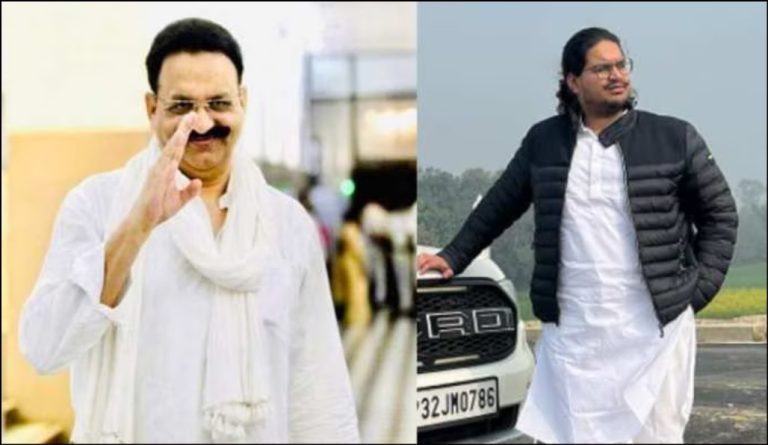
Non-bailable warrant issued against younger son of Mukhtar Ansari: Read why

The trouble for Mukhtar Ansari, the jailed mafia-turned-politician, is only about to get worse, as a non-bailable warrant has been issued against his younger son Umar Ansari for failing to appear in court on Friday (May 19). The order was passed when the court was hearing cases pertaining to the violation of the model code of conduct registered in Mau during the 2022 assembly elections.

In this case, the police had filed two separate complaints in Nagar Kotwali against Mau Sadar MLA Abbas Ansari and his younger brother Umar Ansari, as well as nine other people. Charges against all these accused were to be framed in the trial in the MP MLA court of Mau on Friday.

During the proceedings of the court, Abbas Ansari appeared through video conferencing from Kasganj Jail. The rest of the accused were present in the court in person. Umar Ansari, the younger son of Mukhtar Ansari, however, remained absent from the court.

Chief Judicial Magistrate MP / MLA Court Shweta Chowdhary issued a non-bailable warrant against Umar Ansari in his absence and fixed June 2, 2023, as the next date for the hearing.

It is pertinent to note here that Umar Ansari has six ongoing cases against him. Four cases concern violations of the model code of conduct, while the other two cases concern cheating and hate speech. Four cases are registered in the Mau police stations, whereas the other two are registered in Ghazipur and Lucknow. Chargesheets have been filed in all six cases and trial has begun.

Notably, Umar Ansari is the younger son of mafia-turned-politician Mukhtar Ansari, who was elected from the Mau Assembly constituency for five consecutive terms. For the last more than 15 years, this former ‘lawmaker’ – ill-known more for breaking the laws rather than making one – is lodged in jail.

In April and May, the OpIndia team conducted an investigation tour into the criminal record of Mukhtar Ansari, a notorious mafia who has been leading criminal activities in Uttar Pradesh for many years. During this period, we spoke with several individuals who had been victims of Mukhtar’s atrocities, each sharing their unique experiences. In addition to being implicated in cases involving murder, attempted murder, land grabbing, and extortion, Mukhtar Ansari also faces allegations of tampering with files related to the charges filed against him, causing them to go missing.

It is pertinent to note that Ghazipur MP/MLA Court sentenced Mukhtar Ansari to 10 years imprisonment and imposed a Rs 5 lakh fine for his involvement in BJP MLA Krishnanand Rai’s murder case in 2005.

Furthermore, Mukhtar Ansari’s brother and BSP MP Afzal Ansari was also sentenced to 4 years imprisonment in the same case and is set to lose his MP seat.

Mukhtar Ansari’s wife Afsha Ansari is wanted in various criminal cases, including ones under the Uttar Pradesh Gangsters and Anti-Social Activities (Prevention) Act (Gangster Act). It is pertinent to note that there is a Rs 75,000 reward for Afsha Ansari.

The Uttar Pradesh Police is conducting raids to trace gangster-turned-politician and former BSP MLA Mukhtar Ansari’s wife and son concerning ongoing criminal cases against them.

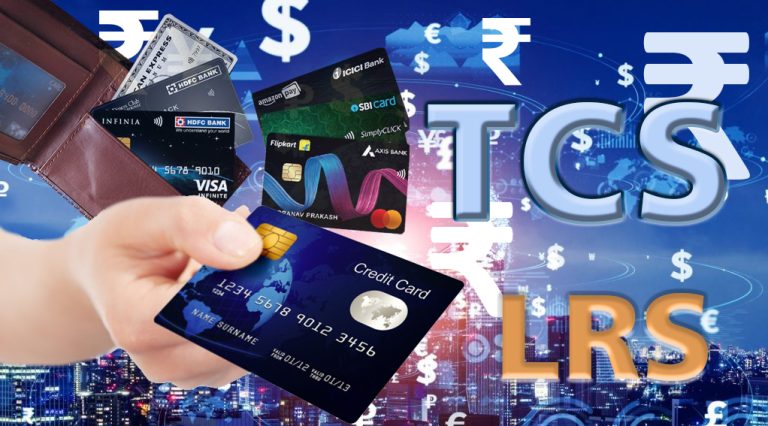
20% TCS on international credit cards: What it is, why it was needed, and how it will impact foreign visits – everything you needed to know

A new rule introduced by the finance ministry over the use of credit cards has created quite a storm, which introduces 20% TCS (Tax Collected at Source) over the use of credit cards for international purchases. This was done by including the foreign spending on credit cards in the RBI’s liberalised remittance scheme (LRS).

On 16 May, the ministry issued a gazette notification, which said that rule 7 of the Foreign Exchange Management (Current Account Transactions) Rules, 2000 has been omitted. Rule 7 of the FEMA (CAT) Rules, 2000 had said, “Nothing contained in rule 5 shall apply to the use of International Credit Card for making payment by a person towards meeting expenses while such person is on a visit outside India.” This means, under rule 7, the usage of international credit cards for making payments for fulfilling expenses during travel outside India was not included in the LRS limit earlier, but now they will be included in the same as the exemption granted to international credit card payments has been withdrawn.

Under the liberalised remittance scheme of the RBI, Indian residents are allowed to remit up to $250,000 per year without any prior approval from the RBI. Earlier, only debit cards, forex cards, and bank transfers were included in the LRS, and now credit card payments are also allowed under LRS.

But this has also meant that there will be a tax collected at source (TCS) on international credit card payments. The rate of TCS will be 20% from July 1, while the same will, be 5% from now till July 1. The TCS amount thus paid will be refunded by the government after the user files the tax return after the end of the financial year and is eligible for such returns.

While initially not known, the finance ministry also clarified later that the TCS will not be applicable to transactions. It will be applicable only if the expenses on a credit card in foreign countries cross ₹7 lakh in a year.

It is notable that Tax Deducted at Source (TDS) and Tax Collected at Source (TCS) are different. TDS is deducted from earnings, like salary, interest and other payments received, while TCS is collected at the time of spending money to make purchases etc. However, the TCS is different from other taxes paid at the time of purchase, like GST and excise. For end consumers, GST and excise are essentially part of the price which can’t be reclaimed, while businesses can claim credit for GST. On the other hand, TCS is linked to an individual’s PAN and it can be claimed back while filing the income tax return, and therefore it is not a final tax payment.

Justifying the move, the finance minister has said that “due to the exemption under erstwhile Rule 7, expenditures through credit cards were not accounted for under the specified LRS limit, which has led to some individuals exceeding the LRS limits.”

According to the clarification issued, “data collected from top money emitters under LRS reveals that international credit cards are being issued with limits in excess of the present LRS limit of USD 2,50,000. The differential treatment between debit cards and credit cards needed to be removed in the interest of uniformity and equity in the treatment of modes of drawl of foreign exchange and for capturing total expenditures under LRS for prudent foreign exchange management and to prevent by-passing of LRS limits.”

The ministry said that the RBI has written to the govt several times asking to remove the differential treatment of debit cards and credit cards.

The introduction of TCS on international credit card payments has created a lot of backlash on social media, across political circles. Just like many other decisions of the finance ministry, this decision is also being criticised by traditional BJP supporters on social media, apart from the opposition. Apart from criticism, many people also raised questions seeking clarification on the impact of this new rule.

The finance ministry issued a clarification on 17 May in an attempt to address the concerns raised by people. While it did address some concerns, some were left unanswered. Here is an attempt to break down the entire matter in simple terms, and address some concerns raised on social media.

What is the change

The abolition of rule 7 of the FEMA (CAT) Rules, 2000 means that credit card payments made while travelling abroad will attract 20% TCS. This means every international spent using a credit card will increase the outgo by 20%, a considerable increase in expense.

It is important to note that the TCS was already applicable if payment was made using debit cards or other methods, and only credit card payments were exempt. Now that exemption has been withdrawn.

However, as explained above, this is not a final tax payment, and it can be reclaimed, and the amount paid can be adjusted with overall income tax liability while filing the income tax return. Just like TDS, the TCS amounts paid by a taxpayer are also reflected in Form 26AS issued by the income tax department, and the same can be used in filing the ITR.

Yesterday the Finance Ministry amended the change, setting a threshold of ₹7 lakh in a year for the applicability of the TCS. Therefore, the TCS will be collected on international credit card uses only if the payment amount exceeds ₹7 lakh in a financial year.

The notification by the ministry said, “to avoid any procedural ambiguity, it has been decided that any payments by an individual using their international Debit or Credit cards upto Rs 7 lakh per financial year will be excluded from the LRS limits and hence, will not attract any TCS.”

This comes as a big relief for people who do not spend much on credit cards during their travel abroad. The ₹7 lakh limit should cover most expenses by regular travellers, and if the flight and hotels are booked using Indian tour operators, the entire amount of ₹7 lakh could be used for other spends like shopping and entertainment without requiring to pay 20% tax.

Why it was needed

Several people have argued that credit card payments are already documented as they go through the networks of credit card companies and banking systems, and therefore there is no need to impose the TCS to trace high-value foreign transactions using credit card. Many people are also arguing that the govt’s justification of introducing the TCS to curb money laundering is wrong, as nobody uses credit card to launder money or for any illegal transactions.

While these are basically fair arguments, there some issues, as explained by finance ministry officials. According to data collected by RBI from top money remitters under the LRS has revealed that many people were using credit cards to make international remittances over the $2,50,000 limit. The Reserve Bank of India has been requesting the finance ministry to withdraw the exemption given to credit cards, and to bring them at par with debit cards and payment instruments.

Moreover, the difference between debit and credit cards in this regard was required to be removed to bring uniformity and equity between them. This was needed obtain the total expenditures made under LRS so that the foreign exchange management can be improved. The exemption for credit cards also provided a loophole to bypass the LRS limit, which needed to be plugged.

According to finance ministry sources that OpIndia talked to, several instances were discovered where disproportionately high payments under LRS were made compared to disclosed incomes. Analysis of the credit card spends abroad showed that several high-net-worth individuals were remitting amounts much more than the LRS limit of $2,50,000 (over ₹2 crore), by using credit cards issued in the names of different members of a family. For example, if a family has 5 credit cards, they were able to remit ₹10 crore in total, far exceeding the LRS limit.

The total remittance from India in the year 2021-22 was ₹19.61 billion under LRS, up from $12.68 billion, and it rose to e to 24 billion in 2022-23.

Why 20%

A very common question is being asked is that if the reason to bring credit cards under LRS was to trace high spends, what was the need to impose 20% tax, as the same purpose could be fulfilled by imposing a 1% tax also. This will lessen the impact on the individuals and will left more money in their hands to spend, it is being argued.

To this, the ministry has responded by saying that the rate of 20% is comparable to prevailing income tax rates. If the person using credit card abroad is not a taxpayer, then the 20% tax on the card spends abroad will not be very high for the presumed income of the individual. In the current income tax slabs, the income tax rate of 20% is applicable for taxable income above ₹12 lakh, and the same is 30% for taxable income above 30%.

Generally, only high-income individuals use the RBI’s Liberalised Remittance Scheme, and they fall in the highest slab of tax, which is 30%. The rate of 20% has been fixed considering these aspects. The TCS paid on international credit card spends can be treated as advance tax paid.

Honest taxpayers punished more?

A common argument against any new tax proposal is that they tend to punish honest taxpayers, leaving tax evaders out of the net. The same argument is also being made in this case.

To this, the ministry has said that the change to the rule is part of a larger policy-based approach to prevent bypassing the LRS limits using credit cards, and to trace individuals who are remitting high amounts of money using this method. Therefore, this rule is designed to catch those who are violating the rules of remittance.

The TCS on credit card spends abroad will mainly impact investments by HNIs in foreign countries, in instruments such as real estate, shares, bonds etc, and will not impact common people who use the cards in shopping and travelling. While there will be no TCS upto ₹7 lakh, any tax paid on spend beyond that limit can be claimed while filing the ITR.

It also does not limit the credit card use of individuals by bringing it under LRS, as the Liberalised Remittance Scheme (LRS) limit at over ₹2 crore per year is already quite high. It will not impact low and middle-income individuals; only upper-income earners will be most impacted by this limit on their credit card spending abroad.

The liquidity issue

Several people are arguing that even if one can reclaim the amount, it locks the amount for a considerable amount of time. If someone uses credit card to make international payment at the beginning of the financial year, the TCS amount gets locked for over a year, till the ITR is filed in the next FY, and the amount is credited by the department. It is being argued that it creates a liquidity problem as the cash gets stuck with the government.

It is true that any TCS collected will be refunded only after the financial year is over, which means it is true that the money will be stuck for a period ranging from a couple of months to over a year.

However, taxpayers can reduce their advance tax payments by the TCS amount so paid. Similarly, salaried taxpayers can get their TDS deduction reduced to that extent. As a result, the impact of the TCS collected can be neutralised.

Foreign visits paid by employer

A large number of foreign visits are business trips paid for by companies, and the TCS rule will not apply to the amount spent by the companies in such visits. This means, where a business pays the costs of air travel, hotel bills, and any other expenses using the company’s credit card, there will be no TCS on the same.

This is because international expenses made by businesses are treated as residual current account transactions outside the LRS limit. Companies may be allowed such payments without any limit, provided it is verified to be a bona fide transaction.

However, for any expense done using personal credit cards during such official foreign visits, such as shopping, eating, or any expense not paid by the employer, the TCS will be applicable, if the total spend exceeds ₹7 lakh.

The ministry will frame appropriate rules for remittance by corporate entities in due course of time. The ease of doing business principles will be kept in mind while making the rules, the ministry officials have assured.

What happens to subscriptions

A major concern among many is whether this TCS will be applicable to payments made to foreign entities for online purchases, such as streaming content, data services, web services and similar purchases. Many Indians subscribe to foreign streaming services, media houses etc.

Similarly, individuals and businesses pay foreign vendors for web hosting, domain services, cloud computing, productivity suits and many other online services, and many of them only accept credit cards. Individuals and businesses also purchase goods from outside India using credit cards. It is a concern among many that the TCS will have a negative impact on such businesses.

However, the finance ministry has clarified that the TCS will not be applicable to credit card payments made in India, even if they are paid to foreign entities. There will be no TCS on subscriptions or purchase of content, software, games or streaming services using credit cards. Similarly, there will be no TCS on goods ordered from foreign countries using credit cards.

It is also notable that many of the online service providers, like Amazon Web Services, Azure Cloud Services, Google Workplace etc now accept payments in Indian currency.

Medical & educational expenses

The finance ministry has clarified that the status quo prevails for medical and educational expenses made abroad, which means the 20% TCS will not be applicable to credit card payments abroad for medical and educational expenses.

However, a detailed guideline from the ministry in this regard is awaited, as it needs to be clarified how such expenses will be verified. It is expected that the people will have to be careful in making payments to healthcare or educational instructions abroad, as they will need to make sure that such institutions are recognised by the Income Tax Department so that the 20% tax is not collected.

How to avoid the 20% TCS

While the TCS will applicable to all uses of credit card during foreign travel if the use crosses ₹7 lakh, it can be avoided with a little planning. The TCS is applicable only if the payment is made outside India. Therefore, if the travellers book their flights and hotels using Indian tour operators such as MakeMyTrip, Agoda, Goibibo etc, and make payments using credit cards, there will be no TCS on such payments.

In conclusion, while new tax proposals are never popular, the govt has clarified that this was needed to curb the illegal remittance of money by misusing credit cards due to the exemption. However, with the ₹7 lakh threshold, this will not impact most travellers, and only a small number of HNIs who use credit cards to make large purchases and investments in foreign countries will be impacted.

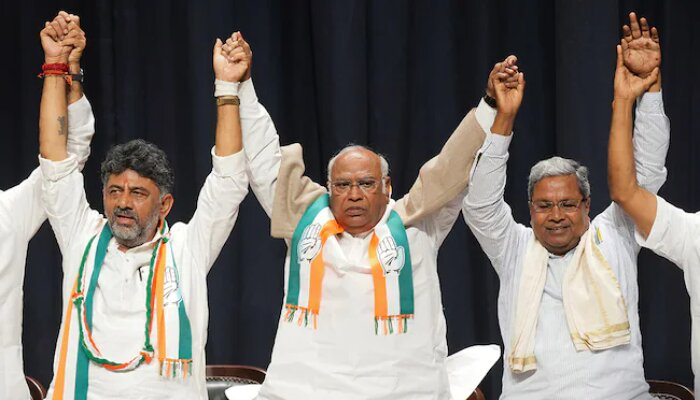
Karnataka: 8 ministers to be sworn in along with CM Siddaramaiah and deputy CM DK Shivakumar, party president Kharge’s son among the chosen ones

After Congress’ stunning victory in the recently concluded Karnataka elections, followed by the tussle over the chief ministerial position, party president Mallikarjun Kharge today approved the first list of eight Cabinet Ministers in the state government. The development was confirmed hours ahead of the swearing-in ceremony in Bengaluru.

Siddaramaiah, the chief minister-designate of Karnataka, and DK Shivakumar, the deputy chief minister-designate, reportedly shortlisted names of ministers and their portfolios after discussing the modalities of forming the state’s cabinet with the party leadership in Delhi on Friday night.

G Parameshwara, KH Muniyappa, KJ George, MB Patil, Satish Jarkiholi, Priyank Kharge (AICC President Mallikarjun Kharge’s son), Ramalinga Reddy, and BZ Zameer Ahmed Khan will take the oath of office along with Siddaramaiah and DK Shivakumar.

“Today is the swearing-in ceremony of the Chief Minister, Deputy Chief Minister, and eight MLAs who will take oath as the ministers (in the state cabinet), everyone is attending it. I am going for the same. It is a matter of delight that a new and strong Congress government has come to power in Karnataka. This will benefit Karnataka, and it is creating a good environment in the country,” informed Mallikarjun Kharge.

At the swearing-in event, which is taking place from 12.30 PM at Sree Kanteerava Stadium, Governor Thawarchand Gehlot will administer the oath of office and secrecy to the chief minister and his cabinet. Siddaramaiah took oath here in 2013 as well, when he became chief minister for the first time.

Mallikarjun Kharge has invited the leaders of various like-minded parties including Farooq Abdullah-led National Conference, Mehbooba Mufti-led Jammu and Kashmir Peoples Democratic Party (PDP), Akhilesh Yadav-led Samajwadi Party, Jayant Chaudhary-led Rashtriya Lok Dal (RLD), Janata Dal-United, Rashtriya Janata Dal and Mamata Banerjee-led Trinamool Congress among others to the occasion. The gathering might serve as an opposition party show of force as they once again try to work together to defeat the BJP in the 2024 Lok Sabha elections.

The Congress had triumphed in Karnataka assembly polls by winning 135 out of 224 seats in the southern state while the ruling BJP was reduced to 66 seats. The results of the May 10 assembly elections were announced on May 13.

Bihar: Shabana Khatoon marries Abhishek Kumar, seeks police protection due to threats to her husband and his family from Islamists

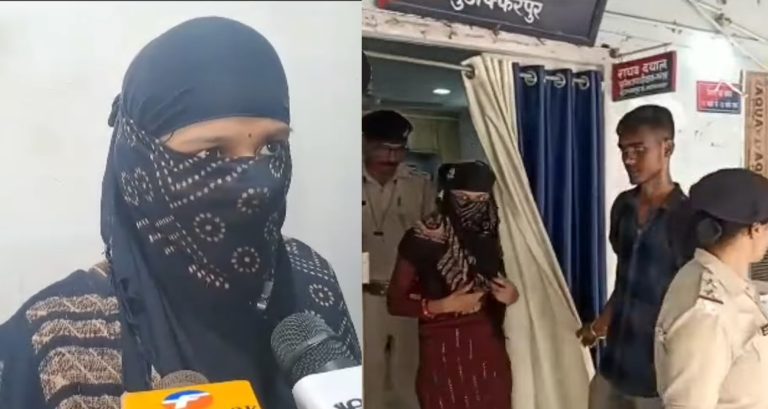
A Muslim girl from the Muzaffarpur district of Bihar has been receiving threats after she married a Hindu man. The girl named Shabana Khatoon, who is an adult, has alleged that there is a threat to her and her husband’s lives from the Islamists. The girl has stated that she wants to stay with her Hindu husband Abhishek Kumar. She had eloped with her lover 42 days back. Following this, the girl’s family members filed a kidnapping case against the Hindu man and five members of his family including his parents. 

Reportedly, the matter pertains to the Ahiyapur police station precinct in Muzaffarpur district, wherein a Shahbazpur resident named Shabana Khatoon stated that she had known Abhishek for four years, adding that Abhishek was her neighbour and the two soon became friends. Later, the two decided on getting married and told their families about their relationship. 

This, however, did not go well with Shabana’s father Noor Mohammad who opposed their relationship since Abhishek is a Hindu. He also stopped his daughter from meeting Abhishek. However, during the month of Ramzan, Shabana escaped to Delhi with Abhishek. After Shabana left, her family filed a complaint against Abhishek and five members of his family accusing them of kidnapping Shabana. On the basis of their complaint, police began searching for her. Meanwhile, Abhishek and Shabana had a court marriage at Delhi’s Tees Hazari Court. 

Speaking to the media, Shabana told that there is a threat to her life, that of her husband, and her family members and also demanded protection from the police. She said that she and Abhishek knew each other for 4 years, and after a relationship developed between them, they decided to marry. But her family didn’t agree as Abhishekh is a Hindu.

She said that after getting married at Tees Hazari Court in Delhi, she has approached the police station because the lives of her husband and his family are under threat, and therefore require police protection. She confirmed that the kidnapping case filed by her parents is false, and she went with the Hindu man of her own will.

Deputy SP Raghav Dayal stated that Shabana is an adult who entered into a court marriage with Abhishek of her own free will based on the information provided by the girl. According to the DSP, the girl in her statement under 164 of the CrPC given to the magistrate has stated that she married Abhishek of her own free will and wants to stay with him. The police added that she has finished documents proving that she is above 18 years of age and can marry on her own will.

Madhya Pradesh: Faizan Khan threatens to kill his Hindu girlfriend and her family for not converting to Islam

A new incident of love jihad has emerged from the Khajrana police station area in Indore, Madhya Pradesh. The accused, Mohammad Faizan Khan son of Farid Khan, and resident of Haroon Colony Khajrana, befriended a girl who lives in Nanda Nagar, in a coaching class and engaged in physical relations with her on the pretext of marriage.

Later, Faizan started pressurizing the girl to accept Islam and when she refused, he started fighting with her. Faizan warned her of dire repercussions and threatened to kill her, her brother, and her mother. The police have already registered a case under sections of rape and the MP Religious Freedom Act.

The victim stated in the complaint that she first met Mohammad Faizan Khan in coaching classes around four years ago. He befriended her, coaxed her to change her house and when she started living alone, he established sexual relations with her under the pretext of marriage.

The victim reported that he started pestering her to embrace Islam after a few days. On May 18, he told her to tell him straight away whether she is going to accept Islam or not. He beat her and threatened to kill her if she didn’t become a Muslim. He also made death threats against her mother and brother. Now, a case has been lodged and an investigation is underway.

Another instance in the city’s Lasudia neighbourhood has also come to light. Here, a man by the name of Shahadat Mansuri abducted and sexually assaulted a minor. The victim’s father filed a complaint against the accused at the police station as soon as he learned about the incident.

The girl charged that the culprit first seduced her and then forcibly had sex with her. The offender was then identified by the police and the stringent section of rape was invoked against him.