Home Blog Page 2423

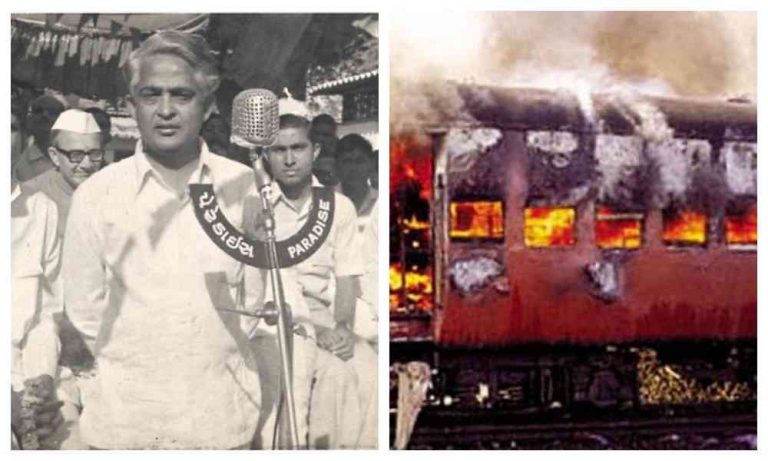
Ehsan Jafri fired his gun and provoked the mob that killed him, court said. Read about uncomfortable truths about Godhra carnage and subsequent riots

28 February 2023 mainstream media and social media were full of reports on the 2002 Gujarat riots. They were specifically focused on the death of Congress leader Ehsan Jafri who was killed by a rioting mob at his residence in Ahmedabad’s Gulbarg society on 28 February 2002. Politicians, too, invoked Jafri to make a veiled attack on the RSS and Narendra Modi led government. Prime Minister Modi was the Chief Minister of Gujarat when the riots took place. Here are some of the headlines, tweets by media houses and politicians.

AIMIM’s Asaduddin Owaisi tweeted that Jafri was killed by ‘Hindutvadi mob’ during ‘Gujarat pogrom’. He also talked about one ‘decades old battle for justice’ which his widow Zakia Jafri fought but lost.

Kerala Chief Minister Pinarayi Vijayan also remembered Jafri and dragged in the Sangh Parivar. He also tweeted about Zakia’s fight for justice and demanding accountability for ‘unspeakable crimes’.

Random but influential Twitter accounts of Muslim Twitter users, quite likely funded by the ummah, also tweeted about Jafri. The news clipping shared above refers to the Sabarmati Express train set on fire by Muslim mob that burnt alive 59 karsevaks returning from Ayodhya as ‘Godhra train fire’. This tweet had over 650 retweets, 1600 likes and over 41.2k views.

Propaganda website The Caravan also cited one unnamed ‘eyewitness’ who claimed that Jafri had called the then Gujarat CM Modi who ‘abused’ Jafri and denied help. There is no such record of such ‘abuses’ by Modi.

Nothing gives Indian media the pleasure when their views get validated by a foreigner who would say exactly what they would like to hear and want their readers to read: Modi is evil.

More Muslim influencers tweeted about Jafri. This Twitter user claimed Jafri went out of his house and folded his hands and begged the crowd to have mercy. He claimed that Jafri even offered himself to the mob to kill him and spare others and return.

Except, that is not what happened.

Ehsan Jafri provoked the mob that killed him, court observed

In 2016, a Special Court in Ahmedabad had ruled out any conspiracy angle in Ehsan Jafri death case. The court had observed that Jafri had fired his gun at the frenzied mob that had gathered outside his residential society that led to death of one person. This provoked the mob. The court had asserted that the firing cannot condone the act of the mob.

Special SIT court judge P B Desai had observed that Jafri’s private firing at the mob acted as a catalyst which infuriated the mob that killed him. The limited police force had no means to disperse the mob. Jafri had fired eight rounds from his gun which killed one and injured 15 people in the mob.

The court had observed that no untoward incident had taken place between 9:30 am and 1:30 pm when the violence was breaking out across Gujarat. Suddenly at 1:30 pm, as if a ‘tap was turned on’, the violence got out of control. Jafri fired his weapon at around that time. The court had added that this act of Jafri of firing his private weapon at the mob cannot be an excuse to condone the act of mob.

In June 2022, the Supreme Court of India had upheld the clean chit given by SIT. Hearing a plea by Jafri’s widow Zakia Jafri challenging the clean chit by SIT court, the SC said that Jafri’s appeal is ‘devoid of merits’. A bench headed by Justice A M Khanwilkar refused to order a probe into allegations of a “larger conspiracy” behind the Gujarat riots.

No one burnt the train killing 59 karsevaks

What is tragic is that while the riots are condemned every year and those who lost their lives mourned, and rightly so, the Godhra carnage is almost never talked about. None of the politicians above or media houses mourned the loss of lives of 59 karsevaks returning from Ayodhya who were burnt alive by a frenzied Muslim mob at Godhra railway station. Is it because the victims there were Hindus and perpetrator of these unspeakable crimes Muslims?

Further, if by any far off chance they do mention the Godhra carnage, they always have qualifiers. It is ‘Godhra train incident’ or ‘Godhra fire incident’ and then ‘no one knows how the train caught fire’. Well, it was set on fire by a Muslim mob. Eyewitnesses have said that in recorded statement with the Nanavati commission. A copy of the report can be read here [pdf].

In fact, that is not it. ‘Activists’ have over the years taken advantage of media’s inherent Modi hatred to perpetuate lies. Here are some of the ones debunked by investigating authorities which media will never tell you.

‘Karsevaks ‘abducted’ Muslim girl at Godhra’, ‘pregnant woman raped, belly cut open and foetus flung on sword’ and other lies

Here are some of the myths perpetuated around Godhra carnage and subsequent violence:

Myth 1: Pregnant Kausar Bano was raped and her fetus was pulled out of her womb and flung into the fire

In the aftermath of the Godhra train burning incident that triggered widespread violence across Gujarat, many media outlets at that time ran a story that a pregnant Muslim woman was raped by a Hindu mob, her pregnant belly slit open and her foetus flung into the fire. Some versions also included that the above act was done with a sword.

Most reports cited Saira Bano, Kausar Bano’s sister-in-law who claimed “What they did to my sister-in-law’s sister Kausar Bano was horrific and heinous. She was nine months pregnant. They cut open her belly, took out her foetus with a sword and threw it into a blazing fire. Then they burnt her as well.” Some versions of the story narrated horrific versions of the fate of the foetus. In other versions, the foetus was slaughtered with the sword, while in some, the foetus was swung on the point of the sword and then thrown into a fire.

However, the postmortem of Kausar Bano told a different story.

A 2010 report states that the doctor who conducted a post-mortem on Kauser found the foetus intact. Dr J S Kanoria, who had conducted the autopsy on 2nd March 2002 presented supporting documents to the special court and said that the foetus was intact in the woman’s womb. The foetus weighed 2,500 gms and was 45 cms long.

Further, during the postmortem and cross-examination of the witness, it had come to light that Kausar Bano died of suffocation, fear and shock and her body bore no external or internal injuries. As per reports, during his deposition, Kanoria stated that Bano’s body bore no internal or external injury; moreover, there was no sword injury on her body. Dr Kanoria was working at the government civil hospital during the riots and had given a statement that Kausar Bano’s foetus was removed after the post-mortem. The post-mortem was conducted on 1st March 2002.

Myth 2: A stove spill caused the fire inside the Sabarmati express

Another popular myth that was widely shared by propagandists and even media outlets is the “accidental fire” theory that said the Godhra train burning was an incidental fire caused from within the bogey and not by a bloodthirsty mob of Islamists, who harboured deep antagonism for the passengers of the Sabarmati express since they had been to Ayodhya for karseva of the Ram Temple to be built at its original place.

However, the Nanavati-Mehta commission, a commission of inquiry appointed by the government of Gujarat to probe the Godhra train burning incident of 27 February 2002, squarely rejected the claims that fire happened inside the compartment after some inflammable liquid from a stove spilt after some karsevak tried to cook a meal in the compartment. The Commission report said, “The witness has denied that such fire could have taken place in the coach as a result of inflammable liquid in a vessel getting spilt in the coach. This witness has produced photographs taken by his office at the time of examination of that coach.”

Further, Mukesh Joshi, Scientific Officer at FSL, had gone to Godhra thrice in 2002 and he had observed, “n hit marks on the outer side of coach S/6 caused by stones hitting the coach. There were burn marks also on the outer side of coaches S/6 and S/7.”

The Nanavati-Mehta Commission report then talked about the statements of various eyewitnesses. Multiple eyewitnesses narrated how the mob started pelting stones from the left side of the compartment as the train started to move away from the platform. “Sajjanlal Raniwal has stated that as soon as the train had moved out of the platform, a mob standing on the left-hand side had started throwing stones at it and for that reason, he was required to close the door and shutters of the windows of their compartment. If really that had not happened, there was no other reason for Sajjanlal to say so. He would not have closed the windows unless he was compelled by the circumstances to do so.”

“The passengers have also said that as the persons on the left-hand side of the train had started throwing stones at the train, they were required to close the windows of their coach. Some of the witnesses have stated that stones which were thrown on the train had a broken glass of one or two windows and therefore, the passengers in the coach were required to close the tin/metal shutters of the windows on that side. Hariprasad has also clearly stated that right from the time the train had moved out of the station, pelting of stones on the train had started and because of that passengers had closed the windows of their coach. There is no reason to doubt this part of their evidence. Hariprasad and other witnesses would not have said so unless it was true as they had nothing to gain by saying something that which was not correct,” the commission further said.

Myth 3: Short circuit caused a fire inside the train

Another conspiracy theory about the fire that was floated by Mukul Sinha’s Jan Sangharsh Manch was ‘short circuit’. The Nanavati-Mehta Commission had this to say about the claims: “A short circuit is another probability canvassed by the Jan Sangharsh Manch. No evidence has been led and no material has been produced before the Commission to show the possibility of a short circuit has occurred in the coach. The reason given in support of this possibility is that there was smoke in the coach at first and flames were seen after some time. Not a single passenger of coach S/6 examined by the Commission was asked if anything like short-circuit had happened in the coach.”

Further, the report said, “During the inspection by the Commission in presence of advocates appearing for the parties it was noticed that the electric wires were in the upper parts of the coach. If there was a fire because of a short circuit the passengers who were near that place would have immediately come to know about it. In that case, the passengers who were sitting on the lower seats would not have climbed up on the upper berths to protect themselves. On the contrary, those who were sitting on the upper berths would have immediately come down for saving themselves from fire and electric shock. The passengers would have left the coach immediately through all the four doors and so many persons would not have lost their lives.”

While motivated individuals tried to paint the Godhra train burning incident as an accidental fire from within the bogey, the Justice Nanavati-Mehta Committee report [pdf] talked about what actually conspired in Godhra that led to the deaths of 59 Hindus. Right after the Godhra platform and boundary, there is a road and a locality named ‘Signal Falia’. “It extends up to the culvert and goes further towards A cabin. It is a locality mainly inhabited by Ghanchi Muslims,” the report mentions. When the train arrived, a lot of unauthorised vendors, mainly Ghanchi Muslims, would come on the platform and sell snacks, cold drinks, bidis, etc.

The report further states that the train arrived at the platform at 7:43 AM as it was running about 5 hours late and there was a halt of about 5 minutes. In its evidence portion, the report cites media reports from 28th February 2002, the day after the carnage, where leading mainstream media had reported that a mob has set Hindus on fire. They mentioned how Hindus were returning from karseva and how the mob set the train coaches on fire with petrol.

The Times of India had mentioned how the train was stopped at Signal Falia where someone had pulled the chain and after initial pelting of stones on coach S6 and S7, windows were broken and petrol bombs were thrown inside. The Indian Express, too, carried eyewitness statements on how the mob had set the coach ablaze after pelting stones.

Myth 4: Karsevaks attempted to abduct a Muslim girl that goaded the mob into burning the train

Yet another fictional tale talks about a “scuffle” following which ‘karsevaks’ tried to abduct a Muslim girl, raising the hackles of the Muslim mob and eventually leading them into doing what occurred at Godhra. However, the Nanavati-Mehta commission rejected the hypothesis, stating that the claims of karsevaks abducting a Muslim girl were far-fetched and did not belong to the realm of reality.

“From the evidence of all these witnesses and other material on record it becomes clear that except overcrowding in the train and occasional raising of slogans inside the train and on platforms of the intervening stations, the Ramsevaks had not done anything and no incident had happened earlier which could have led to the incident which later on happened at Godhra,” the commission concluded on the rumours of a scuffle that triggered the train burning.

Regarding the ‘attempted’ abduction of a Muslim woman following the “scuffle”, the Commission comes to the conclusion that the version given by the lady did not appear to be true. “If they had really gone to the station for going to Vadodara, they would have boarded the Sabarmati Express train as it would have taken them to Vadodara earlier, but they had not done so. The alleged attempt to abduct her was made while they were near the bookstall. That would mean that they were almost in the middle of the covered portion of the platform and very close to the offices of the railway staff,” the commission observed.

“The evidence discloses that there were many persons on the platform. Apart from passengers, many Muslim vendors were there. The railway staff was present in their offices. Some policemen were also present. If she had raised shouts to save her then they would have been heard at least by some persons who were near about but not a single vendor or anyone else has come forward to support her version,” the commission noted while debunking the testimony of the Muslim woman.

“According to her evidence, they had then gone inside the office of the booking clerk. They did not inform anyone there about what had happened. When inside that office, they had no reason to be afraid of anything thereafter and return immediately to their relative’s place instead of waiting for the Memu train which was about to arrive. Her explanation that she was much frightened and had giddiness and, therefore, they had decided not to go back to Vadodara on that day, does not appear to be true,” the Nanavati Mehta Commission report stated.

Myth 5: Tainted former IPS officer Sanjiv Bhatt met CM Narendra Modi at his residence on 27 February 2002

Another popular myth that is widely shared among liberal circles is that former IPS officer Sanjiv Bhatt met with CM Narendra Modi in the latter’s residence on 27 February 2022. This meeting is especially highlighted to implicate PM Modi for being complicit in the carnage that followed in the wake of the Godhra train burning incident.

However, the Nanavati-Mehta commission concluded that the former IPS officer Sanjiv Bhatt, who is currently serving life imprisonment in a custodial death case, had lied and made up stories about him attending a meeting at the then Chief Minister Narendra Modi’s residence on February 27, 2002.

Bhatt, who became a big face of the anti-Modi lobby, alleged in 2011 that during the 2002 post-Godhra riots, the then Chief Minister Narendra Modi had called a meeting at his residence on 27 February 2002 to “let Hindus vent out their anger against Muslims so that repeat of Godhra-like incident never happens in the state”.

Bhatt, in an affidavit submitted to the Supreme Court, had claimed that this meeting took place following the Sabarmati Express burning incident in which 59 Ayodhya Kar Sevaks had died.

At the time of the alleged meeting, Bhatt was the deputy commissioner of the state intelligence bureau. He further stated in the affidavit that the meeting was attended by eight top police officers. Bhatt also alleged that the SIT constituted to probe the riots was trying to protect the Gujarat government.

The Nanavati-Mehta commission report has, however, rubbished Bhatt’s allegations saying that he used a false document, a fax message, to support his presence at the meeting. “On consideration of the evidence, it clearly appears that Bhatt is not telling the truth with regards to what happened in the meeting held on February 27, 2002, at the CM’s residence. Claims made by him of being present in the meeting appear to be false,” stated the second part of the report of the ‘Commission of Inquiry’ by Justice G T Nanavati and Justice Akshay Mehta.

The report adds that Bhatt’s claims about chief minister Modi’s statements were a story made up by him and “deserve to be discarded as false.”

The commission stated that the copy of the fax message, which Bhatt had used to claim he was present in the February 27, 2002 meeting with the then Gujarat CM Modi, was, in fact, sent on March 2, 2002, by one PP Upadhyay, about an incident in Pandarva, Panchmahal.

Myth 6: Dead bodies of Godhra carnage were paraded to stoke violence

The mortal remains of those who were burnt alive in Godhra carnage were eventually sent off to their hometowns for proper cremation with full respect. The Civil Hospital in Ahmedabad, which would have been an obvious choice to bring home the deceased, was skipped. The Civil Hospital is situated in Asarwa, Ahmedabad which is a communally sensitive area. Years later, in 2008, the same civil hospital in Ahmedabad was the target of a terror attack that claimed the lives of 56 people and left over 240 injured.

On 28th February, 2002, during the wee hours of morning at 3:35 am, the bodies of the deceased were brought to Ahmedabad’s Sola civil hospital. Sola civil hospital is on the outskirts of the city in an isolated area. The decision to bring bodies there instead of main civil hospital in Asarwa was to avoid further escalation of communal tension. The Times of India report from that day mentions that the bodies were brought in a convoy of five trucks being piloted by a Police Gypsy.

Small bundles, bodies of children, were handed over to their relatives and the atmosphere was sad. Remains of some victims were placed on ice slabs and they were charred beyond recognition. Emotions were high, obviously, as they saw the disfigured corpses of their loved ones burnt alive. Their fault? They were Hindus on pilgrimage to Ayodhya.

Bodies were brought in at 3:30 am, not during daytime. They were brought in middle of the night to avoid further escalation of tension. They had to be brought to Ahmedabad because most of the passengers were from Vadodara and Ahmedabad and surely they deserve a more dignified cremation. They were brought quietly without any ceremonial procession, so that further tension is not escalated.

That is one of the first reports on bodies being brought to Ahmedabad. Nowhere it mentions they were ‘paraded’. But eventually someone, somewhere lied, and the lie continues to shame Hindus even in their death.

And while we’re at the conspiracies, let’s get back to Ehsan Jafri’s widow Zakia Jafri who was one of the first to claim the dead bodies of Godhra carnage victims were paraded. The Supreme Court last year dismissed Zakia’s petition and accused ‘activist’ Teesta Setalvad, one of the co-petitioners, of keeping the pot boiling for years just for their political agenda. These people were playing politics over dead bodies of Hindus.

The Supreme Court has categorically rejected allegations that the post-mortem of bodies was conducted in the open in a railway yard and the bodies were paraded from Godhra to Ahmedabad and called it proof of larger conspiracy, terming them “pure conjectures and surmises” and “devoid of merits”. Interestingly, in the judgment, the Court mentioned alleged rights activist Teesta Setalvad to have exploited the emotions of the petitioner Zakia Jafri for her own ‘ulterior motives’. 

On page 117, the court noted that in her evidence dated October 22, 2010, Zakia Ahsan Jafri admitted to the fact that RB Shreekumar and Teesta Setalvad were working together for an NGO. Teesta was convener of the Private Citizens Commission, an NGO headed by former Supreme Court Judges. The court observed that she was in a position to influence Zakia.

The court noted, “It is submitted that Ms Teesta Setalvad, for reasons best known to her and out of vengeance, was interested in continuing with her tirade and persecution on the basis of unsubstantiated allegations in the complaint in the name of the quest for justice with real purpose to keep the pot boiling and sensationalise and politicise the crime.”

On Page 118, the court observed that Zakia had admitted to concealing the fact that she had known Teesta for some time. She admitted during her cross-examination that the statement that she gave to Nanavati-Shah Commission was tutored by Teesta Setalvad. 

Riots unfortunate, but propagandists have built their careers on corpses

Riots were unfortunate as was the Godhra carnage. Nothing justifies violence. However, when you condemn one and do not even acknowledge the other, you are being dishonest. If Ehsan Jafri’s death is mourned, so should be the death of those 59 karsevaks, who have been forgotten for being Hindus.
Bihar love quadrangle: A tale of two Ruby Devis and their bizarre love stories

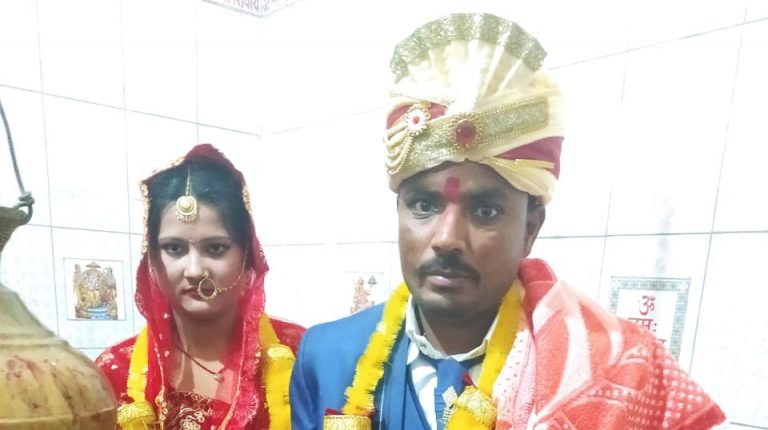
In Bihar’s Khagaria district, a unique love story has become the talk of the town for its dramatic twists and turns. A married woman named Ruby Devi and another married woman reportedly of the same name fell in love with each other’s husbands and also tied the knot. 

This dramatic love cross-connection involves two families.  A person named Neeraj Kumar Singh got married to one Ruby Devi belonging from Pasraha village in Chautham Police Station area in 2009. The couple had four kids over the years. Meanwhile Ruby Devi, the mother of four, however, fell in love with one Mukesh Kumar Singh, a resident of her native Pasraha village. Mukesh Kumar Singh was also married, interestingly, to another woman named Ruby Devi. Let’s call her Ruby Devi 2.

Mukesh Singh and Ruby Devi 2 had 2 children.

On February 6, 2022, Ruby Devi 1, wife of Neeraj Singh eloped with Mukesh along with her two sons and one daughter and tied the knot with Mukesh. Neeraj was left with his one daughter and on the other hand, Mukesh Kumar Singh’s first wife Ruby Devi 2 was also left alone with her 2 children. 

One day, Neeraj somehow got the phone number of Mukesh’s first wife Ruby Devi 2 and the two started talking regularly. The two soon fell in love and on February 11, they fled from their homes subsequently, on February 18, the two performed a court marriage, exactly a year after they were left alone by their respective spouses. 

Reportedly, both couples are now residing in different towns in Madhya Pradesh. Neeraj is said to be working in Tata company while Mukesh is a daily wage labourer. Neeraj has also adopted both of Mukesh’s children. So basically, Ruby Devi 1 and Mukesh have 3 children with them while Neeraj and Ruby Devi 2 also have 3 children with them.

As per an ETV Bharat report, Neeraj had filed a case of kidnapping against Mukesh after his wife had fled with him in February last year. Neeraj in his complaint stated that a village Panchayat was also called to decide the matter, however, Mukesh did not comply with the decision of the Panchayat and left. The report states that Neeraj started an affair with Mukesh’s first wife to take revenge. 

ISIS women force boys as young as 13 to impregnate them to increase Islamic population, gave them Viagra-like substance

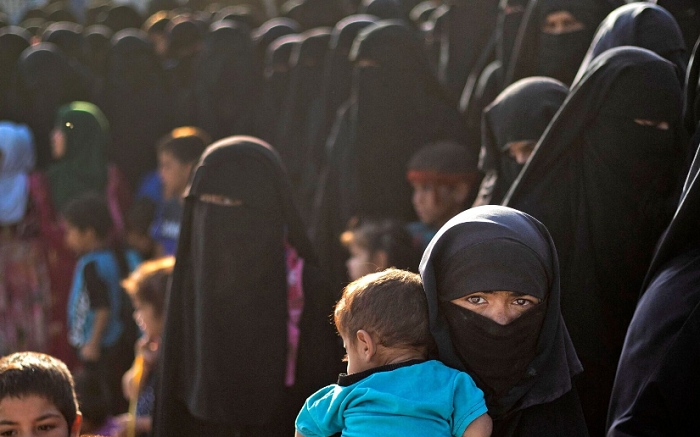
In a horrific incident, teenage boys at Camp al-Hawl in northeast Syria were forced to have intercourse with dozens of ISIS women held in Syrian detention camps. The women forced young boys to forcefully impregnate them to enhance the Islamic population.

The incident came to the fore when two young boys named Ahmet, 13, and Hamid, 14, approached the guards at the camp and said, “We are being forced to have sex with the ISIS women, to impregnate them. Can you get us out of here?”

After ISIS was defeated in 2019, the Syrian government detained roughly 8,000 women and children who were associated with the terrorist organization. Adult male ISIS terrorists are however housed in separate camps.

While some of these women no longer want anything to do with ISIS, others remain steadfast in their violent devotion to the Islamic state, insisting on upholding ISIS’s misinterpretation of Islamic law. Some of these ardent supporters of ISIS have objected to their children’s voluntary return, which is permitted by their countries of origin.

Ahmet and Hamid disclosed to the personnel of the recently established Orkesh rehab facility that they had been the victims of sexual exploitation by several ISIS women. One of the boys was made to have intercourse with eight ISIS women in a matter of days, according to center workers.

According to officials, the ISIS women allegedly informed the teenagers that they wanted to get pregnant in order to boost the population of the Islamic State. Some of the boys were only found and saved after the SDF entered the camp and discovered them buried by the women in underground tunnels.

The Daily Beast reports mention that the victim boys were given viagra like drugs to boost their energy levels to execute the task. One of them even collapsed and had to be hospitalized. There were numerous pregnancies in the camps, according to SDF intelligence who monitored the camps, however, no one is sure about the precise number.

Some ISIS women in Camp al Hawl conceal this practice by giving birth without the assistance of the camp’s authorized medical staff but with the help of other inmates who work as physicians and nurses.

Security personnel confirmed that teenage boys in Camp al-Roj, located in the same northeastern region of Syria, had experienced a similar form of exploitation. Several mothers at the Roj camp pleaded with the camp officials to send their kids to treatment facilities so they could keep them away from these ladies.

The UN meanwhile, criticized SDF and Autonomous Administration of North East Syria (AANES) for their action saying, “We are extremely concerned that serious harm may befall these boys and fear they may be forcibly disappeared and subject to sale, exploitation and abuse, torture, inhuman and degrading treatment or punishment.”

The boys were, according to the camp director, always formally transferred from camp authority to the AANES’s judicial and reforming authorities. The director stated that they will thereafter be sent to the rehabilitation facility and declared that “the boys are definitely not for sale.”

Nagpur police alerts Mumbai police after anonymous caller threatens to blow up houses of Mukesh Ambani, Amitabh Bachchan and Dharmendra

0

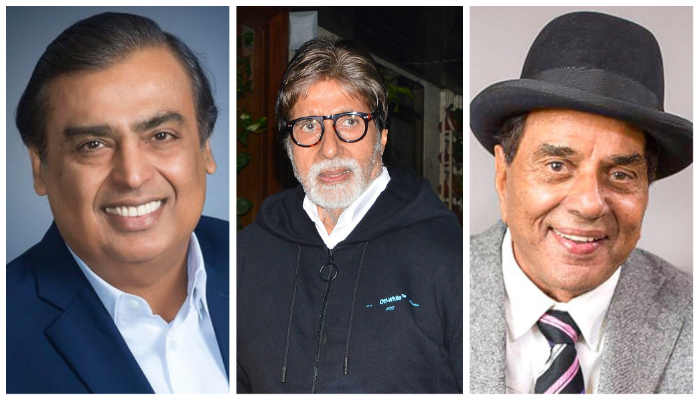
On Tuesday, February 28, the Nagpur police control room received a call from an anonymous caller, who claimed that he had planted bombs near business tycoon Mukesh Ambani’s house Antilia and Bollywood actor Amitabh Bachchan and Dharmendra’s residence, reported Mid-Day.

According to officials, the caller also claimed that 25 people had arrived in Dadar, Mumbai, armed with weapons to carry out terror attacks in the commercial capital of India.

As soon as the call was received, Nagpur police passed on this information to the Mumbai Police, following which the latter immediately dispatched bomb squad teams to carry out searches at all the places.

Notably, in 2021, two people were detained by the Crime Intelligence Unit of the Mumbai Police in connection with a hoax bomb scare at 3 railway stations and at Amitabh Bachchan’s residence. The accused were arrested from Thane.

In the month of February 2021, the Antilia bomb scare took place, when a car holding 20 gelatine sticks was discovered near Mukesh Ambani’s mansion in Mumbai. The bomb scare was notable for the chain of events which followed, forcing several high-profile officials to resign.

The vehicle was tracked down to Mansukh Hiren, a Thane-based car-decor shop owner who reported it stolen the week before. Hiren was discovered dead in a Mumbai creek a week later.

The controversial cop and former Shiv Sena leader Sachin Vaze is accused of murdering Mansukh Hiren, an important witness in the case. After his arrest by NIA, Mumbai police commissioner Param Bir Singh has also been transferred from his post.

From the recovery of an explosives-laden vehicle outside Ambani’s residence to the transfer of the Mumbai Police Commissioner, the case has turned out to be one of the most controversial cases in recent history. OpIndia chronicled a complete timeline of the events that had unfolded in the Antilia bomb scare case

Wikipedia removes page of Hindu braveheart Gopal Patha who avenged the great Calcutta killings. Here is the Pakistani connection

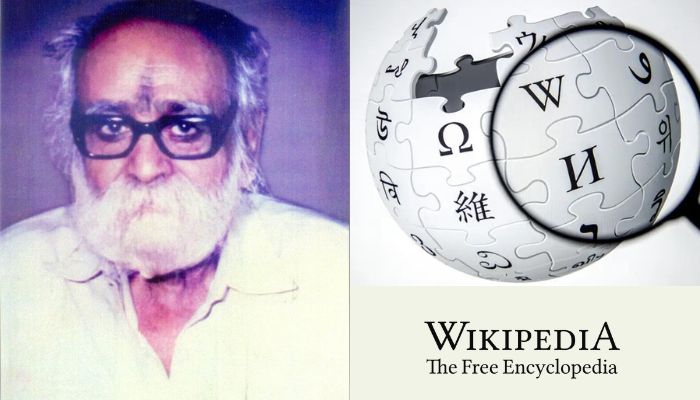
The Wikipedia page of Gopal Chandra Mukherjee aka ‘Gopal Patha’, who played a crucial role in avenging the 1946 Great Calcutta Killings orchestrated by the Muslim League, has been removed in its entirety by Wikipedia.

The matter came to light on Tuesday (February 28) when author Monidipa Bose posted about the development on Twitter. She wrote, “Hello Wikipedia, why have you removed your page on Gōpāl Chandra Mukherjee/Gōpāl Patha?”

She further added, “During the Muslim League initiated & British supported ‘Direct Actions Day’ riots he had single-handedly organized groups that would go on to save lives of many Hindu men & women in Kolkata.”

A Twitter user named ‘Azazel (@TitanX897)’ pointed out how the Wikipedia page of Gopal Patha was removed by a group of ‘motivated’ Editors.

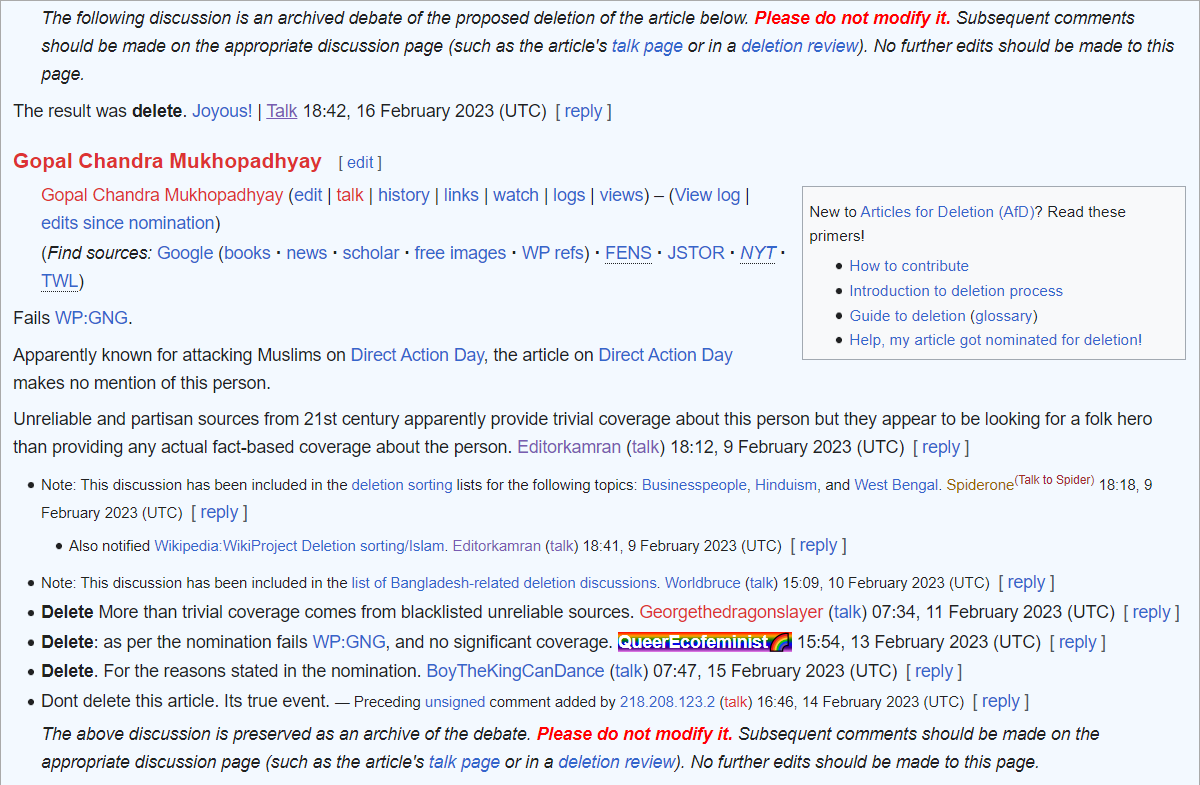
As per the archives of the discussion surrounding the deletion of the page, it becomes clear that the idea was floated by one ‘Editorkamran’ on February 9 this year. He claimed, “Apparently known for attacking Muslims on Direct Action Day, the article on Direct Action Day makes no mention of this person.”

“Unreliable and partisan sources from the 21st century apparently provide trivial coverage about this person but they appear to be looking for a folk hero than providing any actual fact-based coverage about the person,” he further added.

Interestingly, ‘EditorKamran’, who nominated the Wikipedia page of Gopal Patha for deletion, hails from the neighbouring country of Pakistan. His nomination was supported by another Wikipedia editor ‘BoyTheKingCanDance’, who too happens to be a member of ‘WikiProject Pakistan.’

As per his user profile, ‘BoyTheKingCanDance’ is a Sunni Muslim “who believes in one God called Allah”. One deleted user ‘Georgethedragonslayer’, who had previously been flagged for disruptive editing, also supported the removal of Gopal Patha’s Wikipedia page.

He remarked, “More than trivial coverage comes from blacklisted unreliable sources.” It must be mentioned that Wikipedia had earlier blacklisted non-left media portals, including Swarajya and Opindia.

An Indian Wikipedia Editor ‘QueerEconomist’, who hails from Pune in Maharashtra and identifies as a ‘queer’ also recommended the deletion of the page of the Hindu braveheart, citing ‘no significant coverage.’

Interestingly, the discussion was included in the list of ‘Bangladesh-related deletion discussions’ by a member of ‘WikiProject Bangladesh’ named ‘WorldBruce’

Gopal Patha and the Direct Action Day

In 1946, the massacre of Hindu community in Bengal was intricately planned. Jinnah is recalled as having said that he will either have India divided or India burnt and that he had given up on Constitutional methods to demand the creation of Pakistan.

Jinnah had chosen the 16th of August as Direction Action Day because it was the 18th day of Ramzan, the day when the Battle of Badr was fought and won – a war fought by Prophet Muhammad himself, against the Kaffirs, and is considered to be won by Allah’s divine intervention by Muslims.

The battle led to the violent occupation of Mecca. On the 16th of August, Calcutta was littered with posters lionising Jinnah and reminding Muslims that they had to follow in the footsteps of the Prophet.

It is reported that Syed Muhammad Usman, mayor of Calcutta, had issued a widely circulated leaflet that said: Kafer! Toder dhongsher aar deri nei! Sarbik hotyakando ghotbei! (Infidels! Your end is not far away! You will be massacred!).

The aim was to make Bengal ‘land of the pure’ and rid it of the Kaffirs (Hindus). The aim was to wage another Battle of Badr, in which the Muslims would conquer the heathens. 

What followed on the 16th right after the Jumma Namaz is Muslims going on a rampage, beheading Hindus, chopping their limbs off and raping Hindu women. Several women were taken as sex slaves by those who were fighting with the religious fervour of the Battle of Badr.

In the Kesoram Cotton Mills at Lichubagan in the Muslim-dominated Metiabruz area, Muslim mobs entered and beheaded over 600 labourers. The Hindus, neutered and asked by Gandhi to die with smile on their face hardly fought back.

There was a mass exodus from Bengal that marked millions fleeing because the massacre seemed too brutal to fight against. During the Direct Action Day, on the 17th of August after 2 days of Hindus being massacred, Gopal Chandra Mukhopadhyay rose like a phoenix.

Gopal Patha (Patha means ‘lamb’. He was called so because he ran a mutton shop) had already founded the Bharat Jatiya Bahini, an organisation of young men to help fellow citizens during a natural calamity.

On the 17th, Gopal Patha turned from a philanthropist to a warrior, ready to defend his people. Throughout the night, Gopal Patha, along with his young men from the Bharat Jayati Bahini worked on a plan on how they could defend Hindus from the Muslim barbarians.

The marwaris offered finances, others spent the night making weapons for them. Muslim League chief minister of Bengal, Huseyn Shaheed Suhrawardy and the Muslim League goons had decided on the 17th that they were going to take two more days to complete the annihilation of Hindus.

But they had not taken into consideration their greatest roadblock – Gopal Patha. From the 18th to 20th, Gopal Patha and his men put up a brave fight, paying the Muslim League goons back in equal measure, if not more.

Historian Sandip Bandopadhyay wrote, “They faced resistance everywhere. Hindu youths counter-attacked with such ferocity that the Muslim League men had to flee. Many were killed. Emboldened by their success in taking on and defeating their Islamist attackers, Hindu youths took the fight to Muslim-majority areas and started killing Islamist men. They did not, however, touch Muslim women and children or the aged and the infirm”. 

By the 19th of August, suddenly, the Muslims started feeling unsafe. Only two days of retribution, of self-defence, and the Muslim League started running with tail between their legs.

It was only on the 21st of August when the Muslims had started feeling unsafe because the Hindus dared to defend themselves, did Viceroy’s rule come into action in Bengal. 

The rise of Amritpal Singh, his ascension to the head of Waris Punjab De, and becoming the face of ‘Khalistan’ in 6 months

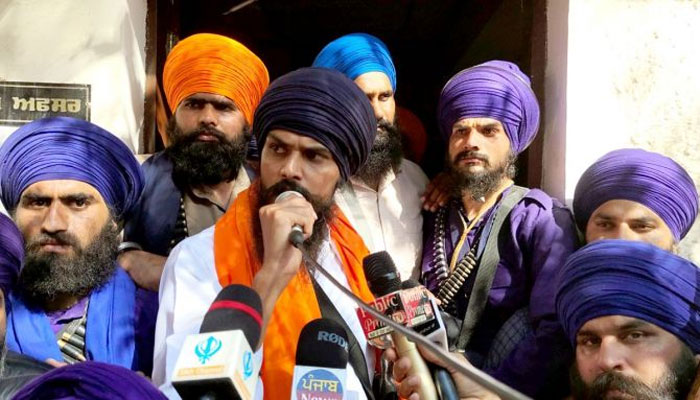
As Waris Punjab De’s chief Amritpal Singh gains popularity among pro-Khalistani elements across the globe, more details about his history are emerging. Amritpal recently made headlines following a clash between his supporters and Punjab Police personnel at Ajnala Police Station in Punjab. He is being criticized for taking Shri Guru Granth Sahib to the site and using it as a shield against the police personnel.

Twitter user The Hawk Eye recently dug up the history of this “rising star” of Khalistanis.

So who is Amritpal Singh Sandhu? He is a 30-year-old pro-Khalistan leader who leads an organization named Waris Punjab De. Within six months of his arrival to India and taking over the organization started by late actor-turned-activist Deep Sidhu, Amritpal has reached the point where he can mobilize thousands of supporters and direct them to barge into a police station to get his aide released. The Hawk Eye investigated whether his popularity among the masses was organic or planted.

Amritpal Singh was born in Jallupur Khera, Amritsar, in 1994. In 2012, he moved to Dubai to join his family’s transport business. Amritpal’s LinkedIn page shows he was the operations manager at Sandhu Cargo, and his mail ID was [email protected]. Amritpal did his Bachelor of Engineering (BE) in Mechanical Engineering from Lord Krishna Polytechnic College, Kapurthala, Punjab, per his LinkedIn page. OpIndia checked and confirmed the existence of the LinkedIn page that can be accessed from here.

Amritpal Singh remained active on social media throughout his time in Dubai and propagated his ideology extensively via his posts. He used a specific ID, sandhuamrit10, on Twitter to spread the propaganda. That Twitter account has now been deleted. However, its archive is available here, here, here, here, and here.

In February 2022, there were several posts where Amritpal targeted women, the Left, and liberals in his tweets. He consistently propagated extremist views and used hashtags like #SikhGenocideContinues and more. Interestingly, famous liberals like Kawal Preet and AISA activists were his target.

Amritpal also targeted women from Punjab and called feminism ‘fake activism’ as some of them spoke against Khalistan. The Hawk Eye noted, “There are several such exchanges with a left ideologue, specifically female handles ridiculing as fake activists who must be “exposed”. Apparently, they are the subject of Amritpal’s hate because they support every other cause like Hijab, Philistines, BLM but not voicing for Khalistan.”

His hate extended extensively to the Hindu community, as shown in several tweets. He posted against Prime Minister Narendra Modi, Bharatiya Janata Party, former Prime Ministers, AAP’s Arvind Kejriwal, Bhagwant Mann, and Congress leaders like Rajiv Gandhi, Indira Gandhi, and many others.

After the death of Deep Sidhu, in a social media post, Amritpal Singh was declared heir of Waris Punjab De. However, the family of Deep Sidhu denied any connection to Singh. Interestingly, the social media handles included in Singh’s posts had a “typo” in the name of Waris Punjab De, possibly because Singh and his associates could not access the original social media pages.

In May last year, Deep Sidhu’s relative came out as the chief of “real” Waris Punjab De, but it did not gain the traction Amritpal Singh managed to get.

Our investigation into old replays of Deep Sidhu’s discussions on Clubhouse has revealed there was always a plan for Khalistan under the banner of ‘Waris Punjab De’.

Amritpal Singh came to India in September 2022. He went to Georgia before coming to India, and intelligence agencies hinted at a possible connection to ISI in their reports.

Soon after reaching India and officially taking over Waris Punjab De, Amritpal organized a march across Punjab and named it “Khalsa Vaheer”. His march made it possible for him to reach the masses. Amritpal used social media platforms extensively to reach out to the masses. Recently, his accounts were restricted in India post Ajnala Police Station incident in Punjab, where his supporters attacked police personnel in an attempt to get his aide freed.

Speaking to OpIndia, The Hawk Eye said, “Dubai returned Amritpal Singh Sandhu’s meteoric rise is no less than a film script. From a troubling Twitter handle with two thousand followers to “Bhai Amritpal Singh” with thousands of real-time followers on the ground and hundreds of fan accounts on social media is an artificially pumped-up campaign. Intel agency’s warning make sense that Pakistan spying agency is trying to infiltrate again to bring Punjab Militancy 2.0.”

Our reporting on Amritpal Singh and his rise as a pro-Khalistan leader can be accessed here.

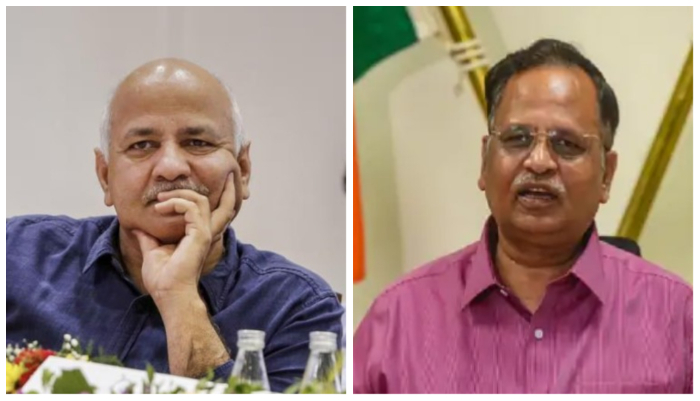
Jailed Delhi ministers Manish Sisodia and Satyendra Jain both resign from their posts in state cabinet

On Tuesday, February 28, the jailed Delhi ministers and AAP leaders Manish Sisodia and Satyendar Jain both resigned from their posts in the state cabinet. According to the news agency ANI, CM Arvind Kejriwal has accepted their resignation.

The news of the resignation came in soon after the Supreme Court’s decision to decline a plea by arrested Delhi Deputy Chief Minister Manish Sisodia challenging his arrest by the CBI in an alleged case of corruption in the now-withdrawn Delhi liquor policy.

Notably, both ministers are currently in jail. While Sisodia was arrested by the CBI on Sunday, February 26, for alleged corruption in the formulation and implementation of the liquor policy for 2021–22 in the national capital, Jain was arrested by the Enforcement Directorate in May last year for his alleged involvement in a money laundering case.

If sentenced to two years or more in jail, both Sisodia and Jain may lose their seats and can’t contest polls for six years.

AAP leader and Delhi Deputy CM Manish Sisodia arrested by CBI in Liquor policy scam case

On Sunday, the Aam Aadmi Party (AAP) leader appeared for questioning at the CBi office in Delhi and was eventually arrested by the central agency. It is alleged that Manish Sisodia waived off ₹144.36 crores on the license fee, to be paid by the private liquor vendors, under the garb of the Coronavirus pandemic, incurred loss to the Excise Department and benefitted liquor licensees by waiving the import pass fee of ₹50 per beer case.

All these changes were made without the final approval of the Lieutenant Governor and thus considered illegal under the Delhi Excise Rules of 2010 and Transaction of Business Rules of 1993.

Thus, the Delhi government made a U-turn on its new excise policy in July 2022. A month later, CBI booked Manish Sisodia, ex-Only Much Louder (OML) CEO Vijay Nair and 13 others in an FIR for irregularities in the implementation of the Delhi Excise Policy 2021-2022.

AAP leader Satyendar Jain charged with money laundering

Notably, Sisodia’s cabinet colleague Satyendar Jain, who has been in jail for several months following his arrest by the Enforcement Directorate in a money laundering case, also resigned. 

On May 30, 2022, the ED arrested Satyendar Jain under the provisions of the Prevention of Money Laundering Act. On May 31, the trial court remanded him to the custody of ED. The agency raided the residence and other places associated with Satyendar Jain on June 6 and 7. Following the raid, the agency confiscated Rs. 2.85 crores in cash and 133 gold coins weighing 1.80 kg in total.

The Health Minister of Aam Aadmi Party’s Delhi government was charged with money laundering in August 2017 by the Central Bureau of Investigation (CBI). Based on the FIR made by the Central Bureau of Investigation (CBI), the ED initiated a criminal case against Jain, alleging that he could not explain the source of income received by four firms in which he was a stakeholder. From 2010 to 2014, the firms allegedly laundered Rs 16.39 crores in cash.

The Home Ministry authorised the prosecution of Delhi minister Satyendar Jain in these matters, including disproportionate assets and money laundering, in November 2019. Under the PMLA, 2002, the Enforcement Directorate temporarily attached immovable assets worth Rs. 4.81 crores owned by Akinchan Developers Pvt. Ltd, Indo Metal Impex Pvt Ltd, and others in April of this year. This step was taken in connection with the case filed against AAP minister Satyendar Jain, his wife Poonam Jain, and others for disproportionate assets and money laundering.

Ghar Wapsi in Assam: 11 Christian families of Tiwa tribe revert to Hinduism, hundreds of tribals coming back to the Hindu fold in several districts

0

Weeks after Assam Chief Minister Himanta Biswa Sarma appealed to the Tiwa population in the Morigaon district of Assam to remain rooted in their culture and identity and maintain a safe distance from the trend of religious conversions, hundreds of members of the community, who had earlier converted to Christianity, did ‘Ghar Wapsi’ and returned to the folds of Hinduism on Monday, February 27.

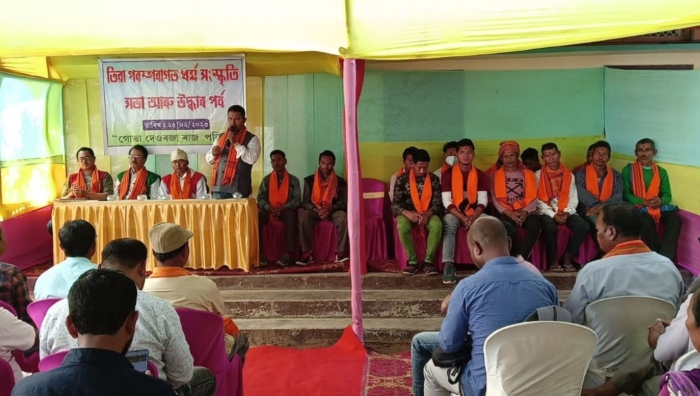
In an event organised by Jur Singh Borodolai, the general secretary of Goba Deoraja Raj Parishad on Monday (February 27), as many as 43 people from 11 Christian Tiwa families reverted to Hinduism. The event called ‘Bhasha Sanskriti Aru Udyog Parv’ was held in the Jagiroad area in the Morigaon district in Assam. The families reverted to their roots to Hinduism in a traditional ceremony observed at the court of the Gova (Tiwa) king.

Speaking about the event, Jur Singh Borodoloi said that around 142 people returned to the Sanatan Dharma on February 27 at a religious event held in Tiwa Shong village in Jagiroad, Assam.

“We have already conducted Abhiyan and residents of 2 villages in Kamrup have come back to their original Hindu religion. Today Goba Deoraja Raj Parishad has organised a programme named Tiwa Bhasha Sanskriti Aru Udyoga Parva. 11 families (43 people) of Tiwasong who earlier converted to the Christian religion, come back to the Tiwa community (Hindu religion) as per their wish.”

Speaking exclusively to India Today NE, the general secretary of Goba Deoraja Raj Parishad, Jur Singh Bordoloi said, “around 1100 families originally from the Tiwa tribe who have earlier converted to Christianity have decided to return to Sanatan Dharma.”

Further, he said that the people have willfully co-operated with the parishad, adopted the religion, and promised to stay with the Hindu faith, adding, “The people returned to Tiwa culture and tradition leaving their Christian identity behind.”

According to the general sectary, the Tiwa people who have chosen to embrace Hinduism were originally Hindus by birth, but few of their forefathers and fathers converted to Christianity due to economic hardships and a lack of education.

He further said that the state government has provided tremendous support and that Tribal councils have established schools to ensure that children receive a proper education.

70 people revert to Hinduism in a Ghar Wapsi event organised in Anglong, Assam

Similarly, at Keyabat village in West Karbi Anglong’s Hamren subdivision, under the initiative of Hindu Suraksha Samity, 70 Tiwa community members who had converted to Christianity, returned to the folds of Hinduism.

According to Narayan Radu Kakoti, the chief organiser of the Hindu Suraksha Samity, Assam unit, poor tribal people living in Assam’s plains and hills districts have become an easy target for Christian missionaries attempting conversion to Christianity.

“The problem is quite acute in hill districts. Since 1951, Christian Missionaries and other Christian organisations have been working together to convert Hindu tribal people to Christianity. Now many tribal people have been realising their mistake and want to come back to their respective original religious beliefs. We are to protect their original religious beliefs and culture,” said Kakoti.

He added that at the Koyabat village reconversion ceremony yesterday, Karbi Samaj (a socio-economic body of the Karbi tribals in West Karbi Anglong district) claimed that around 100 Karbi Christians would soon switch from Christianity to their original tribal religion belief.

“We have been trying to unite tribal people living in the North Eastern states. We have to foil the Christian Missionaries’ evil design to convert innocent and poor tribal people to Christianity. On March 12, 2023, under the banner of Janajatiyo Suraksha Manch, a mega event will be held at Guwahati, where all the senior leaders will address the gathering. Tribal people from all the states of the NE region will participate in the meet,” Kakoti added.

Meanwhile, the Hindu Suraksha Samity has chosen 2025 as the target year for completing their mission of bringing back Christian tribal converts to their original religious belief of Hinduism in Assam.

It is important to recall here that in the month of January this year, Assam Chief Minister Himanta Biswa Sarma while addressing people at the historic Jonbeel Mela in Morigaon, appealed to the Tiwa population to remain rooted to their culture and identity and maintain a safe distance from the trend of religious conversion as has been seen in recent times. CM had said that ethnicity cannot thrive for long if it loses touch with its cultural roots.

Chhattisgarh: 6 detained for deceptively converting villagers to Christianity under the guise of medical treatment

0

The Chhattisgarh Police, on Monday, February 27, detained around 6 people, including women, for conducting a gathering to forcefully convert people to Christianity. The accused persons had organized a religious gathering under the pretext of curing the diseases of the attendees in the Kurdeg village of Jashpur, Chhattisgarh.

According to the Dainik Bhaskar report, the villagers caught the organizers red-handed while they were attempting to convert the attendees to Christianity. The locals then informed the Police who immediately detained 6 persons for deceptively converting people to Christianity.

Sub-Divisional Police Officer Sandeep Mittal confirmed the development and stated that appropriate action will be taken post-investigation in the case.

A similar case was reported from Chhattisgarh in November last year wherein a group of non-Christians was being encouraged to convert to Christianity by pastors. The incident was reported from the Rajpur block division in the Balrampur district in Chhattisgarh.

On November 23, a group of four evangelists was attempting to persuade vulnerable and innocent Hindu villagers to embrace Christianity by offering various kinds of allurements such as money, medicines, and the promise to revive their deceased family members.

When locals and Bharatiya Janata Yuva Morcha (BJYM) members came to know about the incident, they went to the house where the illegal conversion was taking place, detained the four pastors, and handed them over to the police.

Chhattisgarh has recently become a hotbed of forced religious conversions, wherein Christian missionaries lure susceptible and marginalized Hindus and other non-Christians with enticements like money, medical aid, education, food, clothes etc to bring them into their fold. Only last year, OpIndia, in a series of ground reports, exposed the nexus between the state government and Christian missionaries in land grab operations and the menace of forced religious conversion pervasive in the state.

Manish Sisodia’s bail plea rejected by SC in Delhi liquor scam case, asked to approach HC

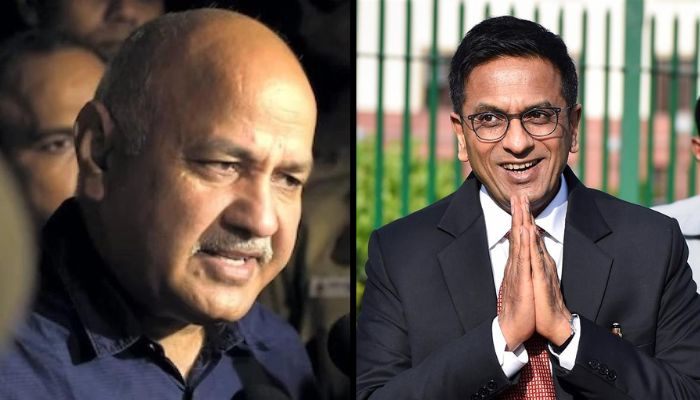
A day after Rouse Avenue Court in Delhi remanded Aam Aadmi Party (AAP) leader Manish Sisodia to 5 days in CBI custody, the Supreme Court turned down his plea for interim protection in the liquor policy scam case.

The matter came up for hearing before a 2-Judge Bench of Chief Justice DY Chandrachud and Justice P. S. Narasimha. When the counsel for Manish Sisodia, Dr Abhishek Manu Singhvi tried to rake up the cases of journalists Vinod Dua and Arnab Goswami, the apex court refused to entertain the line of argument.

The Chief Justice of India noted, “You have full remedy in form of bail before Delhi HC, The Vinod dua case was of a journalist facing a case of sedition after a statement on COVID 19 issue and Arnab was also a different case

“Just because an incident happens in Delhi does not mean this case will come to the Supreme Court”, added Justice P.S. Narasimha.

CJI DY Chandrachud emphasised that Manish Sisodia has been booked under the Prevention of Money Laundering (PMLA) Act and that it cannot be conflated with the case of ‘journalist’ Vindo Dua, where freedom of speech and expression was at stake.

The CJI stated that the Delhi Deputy CM has alternate remedies and that the apex court is not inclined to entertain the petition. “Petitioner has efficacious alternate remedies.. we are not inclined to entertain this under Article 32 (right to constitutional remedies),” he added.

The Background of the Case

On Monday (February 27), a Delhi court remanded Deputy Chief Minister Manish Sisodia to 5 days in Central Bureau of Investigation (CBI) custody in connection to the liquor policy scam case.

A day earlier, the Aam Aadmi Party (AAP) leader appeared for questioning at the CBi office in Delhi and was eventually arrested by the central agency.

Delhi Excise Policy 2021-2022 was first proposed in September 2020 but came into effect only in November 2021. It changed the manner in which alcohol was being sold in the National Capital.

Moreover, it Introduced private players in the market and marked the exit of government-owned liquor vendors. While the objective of Excise Policy 2021-2022 was to end black marketing and the liquor mafia, the Delhi government soon came under fire over allegations of corruption.

Chief Secretary of Delhi, Naresh Kumar, found irregularities and procedural lapses in the new liquor policy. Lieutenant Governor VK Saxena ordered a CBI probe on the recommendation of Naresh Kumar.

Manish Sisodia waived off ₹144.36 crores on the license fee, to be paid by the private liquor vendors, under the garb of the Coronavirus pandemic. Incurred loss to the Excise Department and benefitted liquor licensees by waiving the import pass fee of ₹50 per beer case.

All these changes were made without the final approval of the Lieutenant Governor and thus considered illegal under the Delhi Excise Rules of 2010 and Transaction of Business Rules of 1993.

Thus, the Delhi government made a U-turn on its new excise policy in July 2022. A month later, CBI booked Manish Sisodia, ex-Only Much Louder (OML) CEO Vijay Nair and 13 others in an FIR for irregularities in the implementation of the Delhi Excise Policy 2021-2022.