Home Blog Page 2498

Hate against Ramcharitmanas: FIR in Gwalior against SP leader Swami Prasad Maurya and 8 others

0

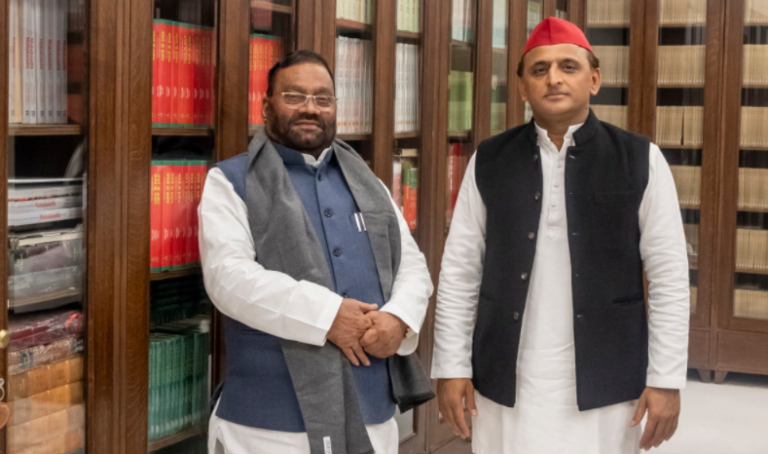
A case has been registered in Gwalior, Madhya Pradesh against Samajwadi Party leader Swami Prasad Maurya and eight others for hurting religious sentiments and disturbing social harmony over his controversial remarks against Ramcharitmanas.

Acting on a complaint of Akhil Bhartiya Hindu Mahasabha office bearer Praveen Chaudhary, the case was registered at the Gwalior Crime Branch police station yesterday. According to an FIR, a copy of which is with ANI, Chaudhary submitted a written complaint demanding legal action against the said persons. Acting on it, the case was registered under IPC sections 153A and 295 at the Gwalior Crime Branch police station.

On Thursday, Hindu Mahasabha national vice president Jaiveer Bharadwaj has also submitted a memorandum to Gwalior Senior Superintendent of Police (SSP) Amit Sanghi demanding action against Maurya.

Later, Bharadwaj said that action had been taken against those who insulted Ramcharitmanas and a case had been registered. They would have to apologise.

“I thanked the police administration and the district administration for taking action,” he added.

Last month, Maurya sparked a controversy after he demanded the deletion of “insulting comments and sarcasm” targeted at particular castes and sects in Ramcharitmanas, a poem based on the epic Ramayana. Maurya further claimed that in the Ramcharitmanas, which was composed by Tulsidas, there are words hurting the sentiments of the Dalit community.

Earlier, Hindu Mahasabha also sent a letter ‘written in blood’ to Uttar Pradesh Chief Minister Yogi Adityanath demanding action against SP leader Maurya over his remarks against Ramcharitmanas.

The Hindu Mahasabha cannot and will not tolerate the disrespect of Ramcharitmanas and the Hindu saints, said Bharadwaj here on Wednesday while talking to ANI.

“The Hindu Mahasabha in Lucknow also lodged an FIR against the SP leader Swami Prasad Maurya but till now the Uttar Pradesh government has not arrested him. By writing a letter in blood, we demand Swami Prasad Maurya’s immediate arrest,” he then said.

On January 30, Maurya also took a jibe at Mahant Raju Das by stating that he could have just cursed him instead of spending Rs 21 lakh to get him killed.

In his tweet, SP MLC Maurya stated, “A baba (seer) who claims to do the impossible is very popular nowadays. What kind of a baba are you? Despite having the most powerful back, you are offering a bounty to get me killed. You could have simply cursed. You could have also saved Rs 21 lakh and people could see your real face.”

On January 28 too, the SP leader said he will continue to oppose the “conspiracy to humiliate tribals, Dalits-backwards and women” in the name of religion. “Just as an elephant does not change its gait due to barking of dogs, in the same way, I will not change my point until they are given their duly respected,” he said in a tweet. 

(This news report is published from a syndicated feed. Except for the headline, the content has not been written or edited by OpIndia staff)

‘Govt should take our responsibility’: Father of slain Ankit laments they are still awaiting financial assistance

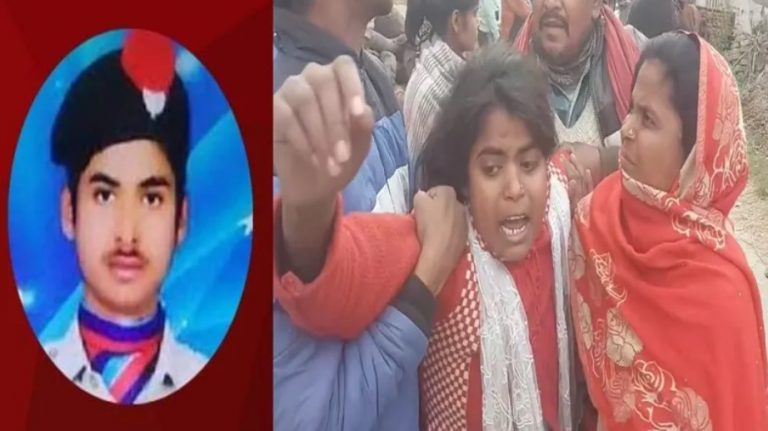
On January 27, 2023, two youths named Ankit and Hariom were stabbed by two other youths, Mohammad Shahadat and Mohammad Sonu Miyan, in Gopalganj, Bihar, following an altercation over a cricket match. Ankit died on the spot while Hariom was fighting for his life in a hospital in Gorakhpur where he was admitted in critical condition.

Notably, several media houses had at first mentioned that the dispute was during Saraswati puja immersion. However, later, reports were updated with the Bihar police version that the scuffle was over a cricket match.

The district administration has confirmed that nine accused have been arrested while three other accused have surrendered in court.

Ankit’s father, on the other hand, is concerned about his family’s future as Ankit was the sole breadwinner of his house. In this situation, Hindu organisations attempting to contact the victim’s family to offer help, have claimed they are not being permitted to visit the deceased’s home.

Nine accused arrested, three surrendered: Bihar Police

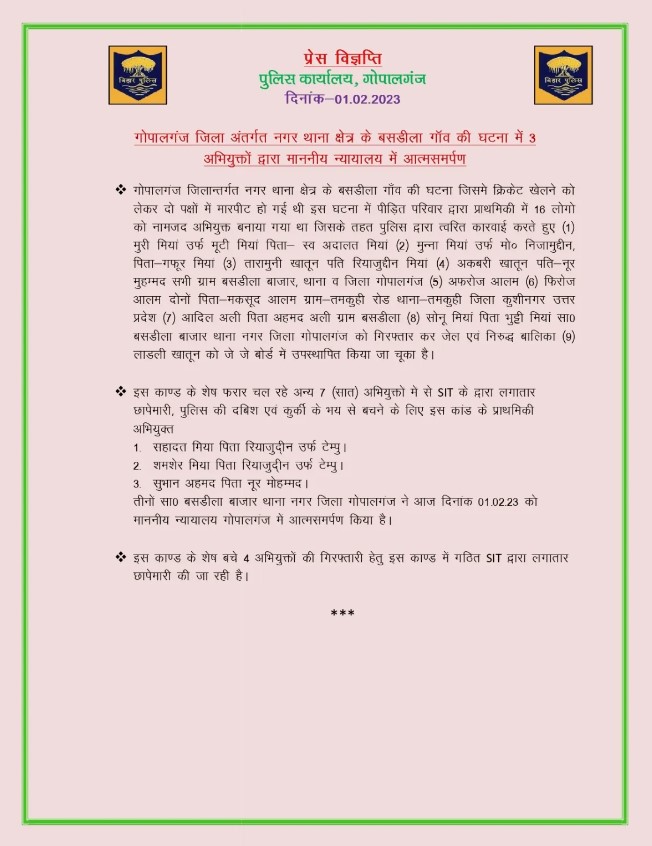
The SIT team constituted to probe the case confirmed that nine accused namely, Muri Miyan, Munna Miyan, Taramuni Khatoon, Akbari Khatoon, Afroz Alam, Firoz Alam, Adil, Sonu Miyan and a minor girl Ayesha Khatoon (name changed) have been arrested so far.

According to authorities, three other accused have surrendered in court, fearing the attachment of their properties by the police. They have been identified as Shahadat Miyan, Shamsher Miyan, and Subhan Ahmed. Shahadat and Shamsher are biological brothers, and their father’s name is Tempu. In this case, four accused are still at large; efforts are being made to apprehend them.

Bihar police press note

Return my son if you wish to see us happy: Ankit’s father

OpIndia spoke with Ankit’s father, Mohan. Devastated by his young son’s death, Mohan remarked that no action taken by authorities would ever be sufficient because his child would never return. “Return my son if you wish to see us happy,” Mohan lamented.

Mohan Kushwaha, who described himself as ill and Ankit as the sole breadwinner of the household, stated that no one knows what the future holds for him and his family. He stated that he has received no financial assistance from the Bihar government other than assurances from officials and that it is now the government’s responsibility to run his home and family.

Ankit was the sole breadwinner of the family

Mohan, the deceased Ankit’s father, further told us that he wants a statue of his son installed so that Ankit’s memory is preserved and his family can continue to revere him. Mohan is unaware of any FIR or legal action was taken by the administration against his family. He stated that he has yet to get any notice or official paper in this regard.

During the conversation, he inquired if the government can take action against his family, why can’t they simply question the authorities? Ankit’s father, who identified himself as a farmer, added that he is no longer concerned about the police filing a case against him or losing his life.

According to a villager, Ankit’s father is paralysed, and Ankit used to bear all his medical expenses as well as take care of the household expenses.

Controversy erupts over every Hindu religious event in the village

Upendra Kumar, the Lok Janshakti Party district president in Ankit’s neighbourhood, spoke with OpIndia. Upendra remarked that every time there is a Hindu religious celebration in his area some controversy is sure to develop, but this was the first time such a horrifying incident occurred.

Upendra, who confirmed that the village is still under strict police surveillance, added that the Bihar government has only offered Ankit’s family verbal assurances and condolences, which he says is not enough. He stated that the government has so far provided no financial assistance to the aggrieved family, whose lives have been devastated by their son’s untimely death.

25 per cent of the village’s population is Muslim

Upendra told us that despite the Muslim population in his village is 25 per cent, they continue to conduct their religious ceremonies freely.

Meanwhile, Ankit is survived by his parents and younger brother Raman. Upendra told us that the Muslim population in his village is 25% and that they are free to practise their religion. Ankit has only one brother remaining, Raman. We were told that Ankit has taken care of his family from a very young age and that his family has now given up all hope. Upendra, who described the assailants as hardcore criminals, told us that a section of their community has been involved in crimes such as looting and theft in the village.

Second victim Hariom out of danger, recuperating in his house

Upendra informed us that Hariom, who was injured in the attack, has returned home from the hospital and is in stable condition. He stated that Hariom was admitted to the ICU ward of a hospital in Gorakhpur. Upendra described Hariom’s family members as “very scared and upset,” adding that they are unable to speak to anyone right now.

Chhattisgarh: ED files second chargesheet in coal levy scam case, names CM Baghel’s deputy secretary as key link with prime accused

0

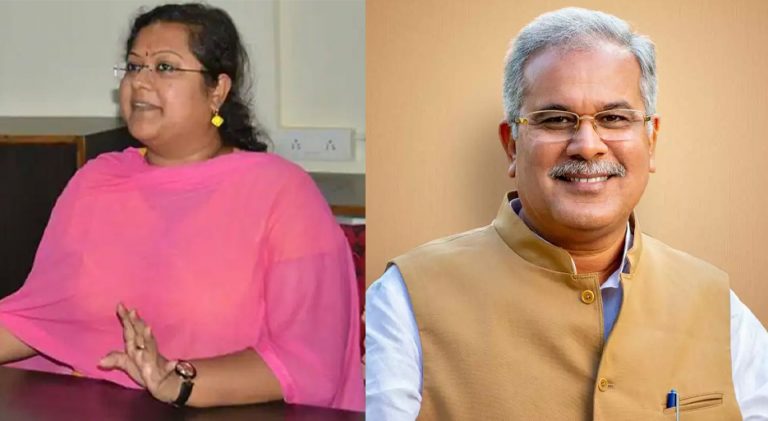
On Thursday, the Enforcement Directorate (ED) filed a second chargesheet before a special Prevention of Money Laundering Act (PMLA) court in Raipur in the coal levy scam case and stated that a Chhattisgarh civil services officer Saumya Chaurasia, then employed as deputy secretary to CM Bhupesh Baghel, is the suspected key individual in creating the syndicate led by the main accused Suryakant Tiwari and that she directly obtained profits of crime to the tune of more than Rs 30 crore.

However, accused officer Saumya Chaurasia has denied the charge levelled against her by the ED, according to the reports. “There is no evidence against my client. This is a politically motivated case to destabilize the (Congress-led) Chhattisgarh government. We will apply for her bail in a week,” claimed Faizal Rizvi, her lawyer.

The ED has stated that Tiwari obtained an apartment in Bhilai next to Saumya Chaurasia’s house, from where unlawful money transactions may have taken place. According to the prosecution case, three IPS officers and several other government employees reportedly gave material to Tiwari on Chaurasia’s orders. According to the ED’s 5500-page chargesheet, this syndicate extorted Rs 25 for each tonne of coal delivered in Chhattisgarh more than the authorized rate set by South Eastern Coalfields Limited, a Central PSU.

The scam has resulted in the arrests of IAS officer Sameer Vishnoi, businessman Sunil Agrawal, Laxmikant Tiwari, Suryakant Tiwari, and Saumya Chaurasia, as well as other accomplices including mining department officials in Chhattisgarh to date. 

The ED claims Tiwari collected the money from carriers, the agency claims transporters obtained delivery instructions from the state government only after Tiwari gave the green light. According to the agency, the syndicate extorted approximately Rs 540 crore from coal transporters and other state businessmen.

The second charge sheet names Saumya Chaurasia, her brother Anurag Chaurasia, Suryakant Tiwari’s brother Rajnikant Tiwari, his mother Kailash Tiwari, mining inspectors S S Nag and Sandeep Kumar Nayak, and one Rajesh Choudhary as defendants. The ED claimed that Tiwari used Saumya Chaurasia’s name to put pressure on various officers to commit illegal acts.

As stated in the ED’s charge sheet, investigators also seized two diaries containing 950 entries recording transactions totalling Rs 540 crore. The diaries show that Rs 170 crore was allegedly used to acquire Benaami assets, Rs 36 crore was given to Chaurasia through one Manish Upadhyaya, Rs 52 crore was compensated to a senior politician, and Rs 4 crore was paid to some MLAs in Chhattisgarh, among other exchanges.

“There are various outgoing entries in the diaries relating to the payment of cash to one Manish Upadhayay, who was close to Chaurasia. Upadhyay was a relative of Suryakant Tiwari, who planted a flat right opposite the flat of Chaurasia…The ED investigation revealed that whenever Chaurasia needed cash from Tiwari’s coal cartel, the money was sent to Upadhyay and entered in the diaries under the name MU, which has been corroborated by the timings of the sale deeds & admissions by the employees of this coal cartel,” the chargesheet reads.

The ED also stated that they investigated the financial trail, looked at land deals made in the name of the Chaurasia family, and verified that funds relocated from Tiwari to Chaurasia via Upadhyaya. “The analysis of seized diaries show that Saumya Chaurasia had received amounts over ₹30 crores from the illegal extortion done by Tiwari,” the ED reiterated.

The agency also stated that the entire extortion racket would not have been possible without the active participation of the mining officers. “The extortion racket would not have occurred, if the mining officers had followed the rule book and expeditiously issued the manual NOCs,” it added.

NSE places Adani firms under Additional Surveillance Mechanism framework: Here is what it means

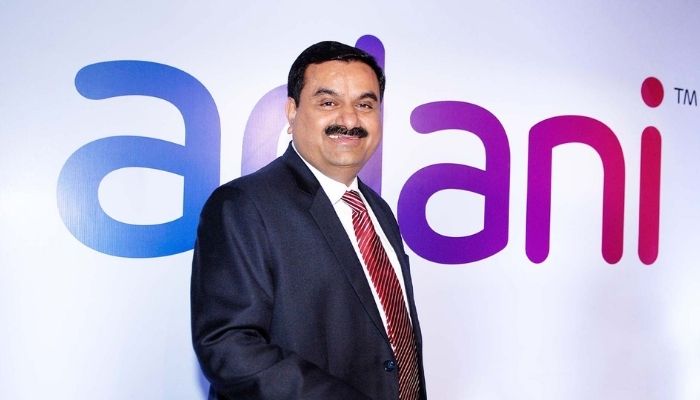
On February 2, Thursday, India National Stock Exchange (NSE) put  Adani Enterprises, Adani Ports, and Ambuja Cements under Additional Surveillance Mechanism (ASM). With this, trading in the shares of these firms will necessitate a 100% margin. This is meant to curb speculation and short selling.

This comes after a Hindenburg Research report claimed that the Indian giant had participated in a clear stock manipulation and accounting fraud scheme over decades.

Additional Surveillance Mechanism

If stock prices become volatile, market regulators around the world frequently become concerned. In India, the stock markets frequently impose restrictions like price bands, periodic call auctions, and circuit filters to protect investors from excessive stock volatility.

The Securities and Exchange Board of India (SEBI) and the domestic exchanges have implemented Additional Surveillance Measures (ASM) in a bid to curb short selling and stock volatility. ASM framework came to effect on March 26, 2018.

The National Stock Exchange on its website mentions the ASM framework as, “In continuation to various surveillance measures already implemented, SEBI and Exchanges, pursuant to discussions in joint surveillance meetings, have decided that along with the aforesaid measures there shall be Additional Surveillance Measures (ASM) on securities with surveillance concerns based on objective parameters viz. Price / Volume variation, Volatility, etc.”

The Securities and Exchange Board of India (SEBI) and exchanges jointly decide on the selection criteria for securities to be placed in ASM, which include “high low variation, client concentration, PE, close-to-close price variation, market capitalization, volume variation, delivery percentage, and the number of unique PANs.

As per the NSE FAQs, the investors are alerted by an ASM shortlisting that the stocks have experienced unusual activity. It should not be interpreted as an unfavourable or adverse action against the concerned company or entity since the “shortlisting of shares under ASM is solely on account of market surveillance.”

On February 1, Bloomberg reported that Gautam Adani’s wealth plummeted from $120 billion to $72 billion amidst slumping shares. The latest Bloomberg Billionaires Index records Adani’s net worth at $61.3 billion.

Despite the allegations, Adani group went ahead with its plan and rolled out its Rs 20,000 crore Follow-on Public Offering (FPO) which was oversubscribed by 1.02 times on its final day, due to high demand from non-institutional and qualified institutional investors. Retail investors, however, abstained from subscribing due to the large gap between the stock price and the FPO price range.

However, Gautam Adani in a video message announced the decision of the  Board of Adani Enterprises Ltd (AEL) not to go ahead with the fully subscribed FPO.

Gautam Adani, Chairman, Adani Enterprises Ltd referred to the volatility in the stock over the last week and said the interest of the investors is paramount and to insulate them from any potential financial losses, the Board has decided not to go ahead with the FPO.

“The Board takes this opportunity to thank all the investors for your support and commitment to our FPO. The subscription for the FPO closed successfully yesterday. Despite the volatility in the stock over the last week, your faith and belief in the Company, its business, and its management have been extremely reassuring and humbling. Thank you,” Adani said.

“However, today the market has been unprecedented, and our stock price has fluctuated over the course of the day. Given these extraordinary circumstances, the Company’s board felt that going ahead with the issue will not be morally correct. The interest of the investors is paramount and hence to insulate them from any potential financial losses, the Board has decided not to go ahead with the FPO,” he added.

Even after this, the five group stocks all closed in a lower circuit on Thursday. Adani Enterprises, the company’s flagship, fell 26.7% and finished at a one-year low of $1,565.

In another development, following Credit Suisse’s decision to cease accepting bonds issued by Adani Group firms as collateral for margin loans to its private banking clients, Citigroup’s wealth unit has also stopped offering its clients margin loans secured by securities issued by Adani Group companies.

RBI steps in

A day after the conglomerate withdrew the Rs 20,000-crore FPO of its flagship firm Adani Enterprises amid the sharp decline in its stock prices, the Reserve Bank of India (RBI) reportedly sought information regarding lenders’ exposures to the Adani Group.

Meanwhile, Dinesh Kumar Khara, the chairman of State Bank of India, the largest financier is said to have given loans totaling up to $2.6 billion to companies affiliated with the Adani conglomerate, stated that he sees no “challenge” to the bank’s current lending to the group.

“We have not experienced any conflict default from this entity and we don’t expect to have any challenge because the assets have robust cashflow so as far as our (SBI) lendings are concerned we don’t see any such problem and don’t expect any kind of pressure on the group companies as far as liquidity is concerned and as far as their ability to honour their commitment is concerned,” Khara said.

Hindenburg Report

Hindenburg Research, which claimed of having conducted an investigation for the last two years, said Gautam Adani, the founder and chairman of the Adani Group, has a net worth of approximately $120 billion, mainly due to an 819% average stock price growth in the group’s seven most significant publicly traded companies over the last three years.

Adani Group trashes Hindenburg Report

Calling the short-seller a ‘malicious combination of selective misinformation and stale, baseless and discredited allegations’, the Adani Group had questioned the timing of the Hindenburg report as the group was to roll out its Follow-on Public Offering from Adani Enterprises.

Adani Group in its 413-page response to the Hindenburg Report said the recent report by Hindenburg Research was not an attack on any specific company but a “calculated attack” on India, its growth story, and ambitions. It added the report was “nothing but a lie”.

Supreme Court refuses interim order against union govt’s decision to block propaganda BBC documentary, asks centre to produce original records

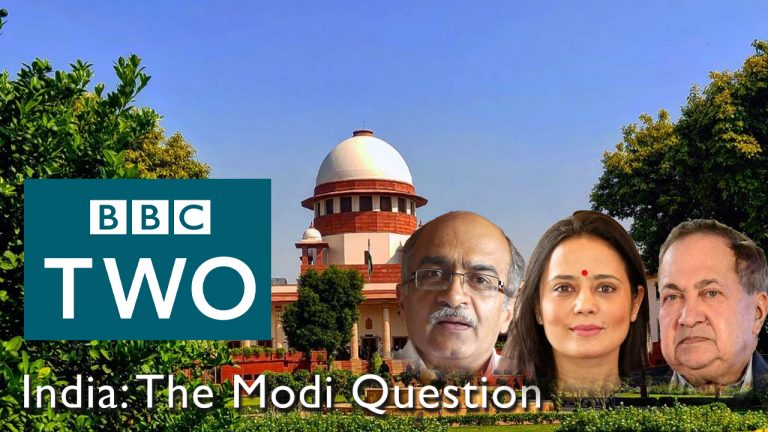
The Supreme Court on Friday refused to issue interim order against the central government’s decision to ban the controversial propaganda BBC documentary on PM Narendra Modi. Hearing two petitions filed in the matter, a bench of Justices Sanjiv Khanna and MM Sundresh said that no order can be issued without getting a reply from the centre first.

“Issue notice.. list in April 2023,” the Supreme Court bench ordered. The bench also directed the govt to produce original records on the next date of the hearing in April this year.

Two petitions were filed against the union govt’s directive to remove the videos and links of the BBC Channel 2 documentary ‘India: The Modi Question’ from YouTube and other social media platforms. One of the pleas was filed by Advocate Prashant Bhushan, Trinamool Congress MP Mahua Moitra and journalist N Ram. The other plea was filed by serial petitioner advocate Manohar Lal Sharma.

In an earlier hearing, while appearing for N Ram and Prashant Bhushan, senior advocate CU Singh had said that the tweets of his clients containing links to the videos were removed allegedly using emergency powers. ML Sharma contented in his petition that the ban on the documentary is “malafide, arbitrary and unconstitutional”.

Today advocate CU Singh said that Emergency powers have been invoked by the govt without putting the powers in the public domain. He said that powers were used under the IT rules for intermediaries, which are under challenged. He also alleged that on the basis of ‘secret order’, universities are taking actions against students for screening the documentary.

Therefore, he sought an interim stay order against the ban of the documentary. However, the court refused to grant any interim relief. “Can we allow the interim prayer without hearing them?” the bench said.

The court ordered to issue notice to the centre, returnable in April. While CU Singh sought an earlier date for the next hearing, the court said that it is not possible, and April is the shortest date possible.

The court also gave 3 weeks of time to file a counter-affidavit, and after that 2 weeks to file rejoinders.

When the petitioners argued that universities are rusticating students for screening the videos, the court said that it is separate issue. The court also asked why the petitioners approached it directly without going to high court first. Advocate CU Singh said that this is because the union govt goes before the HC and seeks stay. Apart from seeking a lifting of the ban, Sharma also sought an investigation into those responsible for failing to contain the Gujarat riots.

ML Sharma said that his PIL is for the citizens of India, while the other petition is on personal grievances as their tweets have been deleted on the orders of the govt. But the court refused to treat it as a different issue, and tagged ML Sharma’s petition with the earlier petition by Bhushan, Ram and Moitra.

The Supreme Court bench also noted that despite the ban order, people have been accessing the documentary..

Why Muslims of the Indian subcontinent are always on the streets over alleged ‘blasphemy’ but Gulf Muslims never take to the streets

Recently, Rasmus Paludan, the leader of the Danish far-right political party Hard Line, burnt a copy of the Quran in Sweden. The act outside the Turkish embassy was supposedly a protest against Turkey and its opposition to Sweden’s entry into NATO, but it offended Muslims worldwide. A couple of days later, the Dutch leader of the far-right group, Patriotic Europeans Against the Islamisation of the West (PEGIDA), destroyed a copy of the Quran in the Netherlands before setting it on fire.

Predictably, the Quran burning in Sweden led to public protests in Turkey since it was aimed at them. Countries like Egypt, Iraq, Iran, Lebanon, and Indonesia also saw such protests against the incident. When it comes to protests against Quran burnings, one name you can always rely on to appear, yes, Pakistan saw public protests as well. Just like Pakistan is always certain to appear in this list, there is one influential group that is almost certain never to appear, the Gulf countries.

The Gulf Co-operation Council (GCC) comprises 6 countries, Saudi Arabia, UAE, Qatar, Kuwait, Bahrain, and Oman. Together, they are one of the most influential countries in the world. All 6 countries are Islamic, and in Saudi Arabia, one of the members is the Custodian of the Two Holy Mosques as well. After incidents of Quran burnings elsewhere or any other blasphemy against Islam religion, even if the governments of these countries express their displeasure, the people never come out to protest on the streets.

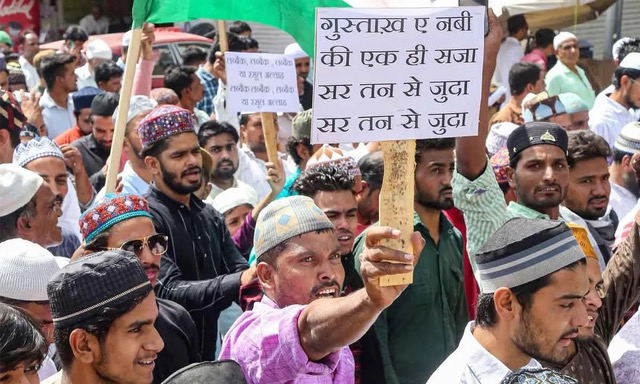
Unlike the Indian subcontinent, where Muslims in India, Pakistan, and Bangladesh are always out on the streets any time such ‘blasphemy’ occurs, Muslims in these countries are never on the streets shouting ‘sar tan se juda’ slogans, never burning effigies to express their anger, and most certainy never damaging any public property over it.

Even during the Nupur Sharma episode in 2022, when the former BJP spokesperson was accused of ‘blasphemy’, all GCC countries officially expressed their displeasure and wrote to the Indian government, there were no public protests in these countries by locals. If anyone protested, like the one protest in Kuwait where Indians protested, they were swiftly deported.

On the other hand, India saw protests every Friday for weeks, most of them violent in nature, over the same issue. Pakistan and Bangladesh also saw massive public protests full of angry Muslims demanding death for the ‘blasphemer’.

This got me thinking, why do Muslims in only some countries, like the Indian subcontinent, always take to the streets, and why Muslims in some Islamic countries never do the same? Some of the reasons that lead to this dichotomy could be as follows:

The difference in general law & order

Law and Order situation in Gulf countries is infinitely better than the situation in India. With all the riches of petrodollars, GCC countries can afford to spend significant sums on their local police force and provide them with the best equipment that money can buy. The much smaller populations compared to the countries in the subcontinent also make implementing law and order easier.

On the other hand, in the subcontinent, the police force is already stretched thin as it is, and this additional burden of controlling such protests gets a little overwhelming for the cops. During Islamic protests in India, if stone-pelting breaks out, we frequently see policemen wearing bike helmets to save their heads. That is the only anti-riot gear most of them are equipped with.

Interestingly, with this strict implementation of law & order, even the Muslims from the sub-continent don’t take to the streets while living in these countries. They know that they can’t riot with impunity there and any protest will mean a quick deportation or jail or fine, or all 3!

No political backing to violent protests in Gulf

In the Indian subcontinent, whenever any violence happens during such protests, one can always trace their links to a political party. In Pakistan and Bangladesh, they can do it directly and openly, while in India, most of them provide logistical support while trying to remain in the background. This political support ensures them the votes in return of those people, while the protesters get to run riot with impunity knowing that they will be saved by their political backers and their battery of lawyers if the need arises.

All the Gulf countries are monarchies, there is no democracy to speak of in these countries so nobody needs to play such gambits to ensure votes. There are some local elections for Shura Councils but at the end of the day, Royal decrees announce all the important decisions and the King rules with unchecked powers.

No complex, and hence no need to prove themselves as the “True Muslims” in Gulf

Even if Pakistanis keep tracing their ancestry to Turkey or the Arab world or some other part from time to time, the fact is that most of the Muslims in the Indian subcontinent are the ones whose forefathers converted during Islamic invasions. Unlike the Gulf, where Islam originated and most of the early adherents of Islam came from there, who then spread it around the world.

There is a saying in Hindi “Naya Mulla jyada pyaz khata hai”, which basically means that a new convert always tries to show that he is even better. The Muslims of the sub-continent are always eager to show that they are even more Muslims than the Arabs, so they go the extra mile to prove their Muslim identity. This involves taking personal offense after every alleged blasphemy around the world and then taking to the streets to protest for the same.

The desire to exhibit street power among Muslims in Indian sub-continent

For varying reasons, Muslims in the Indian sub-continent always have the desire to exhibit their street power. From taking up roads and public spaces for their prayers to blocking entire roads during these regular protests and stone-pelting, the exhibition of street power is always at play. When an Akbaruddin Owaisi says “remove police for 15 minutes”, it is not appearing out of thin air. It stems from the belief that they do have street power.

On the other hand, in Gulf, there is no such desire to exhibit on the streets who has all the power, that is pretty much settled.

So, to conclude, what we see is that Islam is there same everywhere, but Islamic protests are not. This is not to assume that the Muslims in the Gulf are not offended by or harbour the same sentiments as the subcontinent Muslims – perhaps more so.

However, they don’t come out on the streets because they are already in an Islamic nation that adheres to the principles of Islam rather strictly – that coupled with the fact that they have no interest in proving that they are “true Muslims”, given that they actually are, and with their economic affluence, they have no motivation to come out on the streets and protest.


Centre clears the deck for a 78-km highway in Arunachal Pradesh, reaching 4km close to India, China, and Myanmar tri-junction: Report

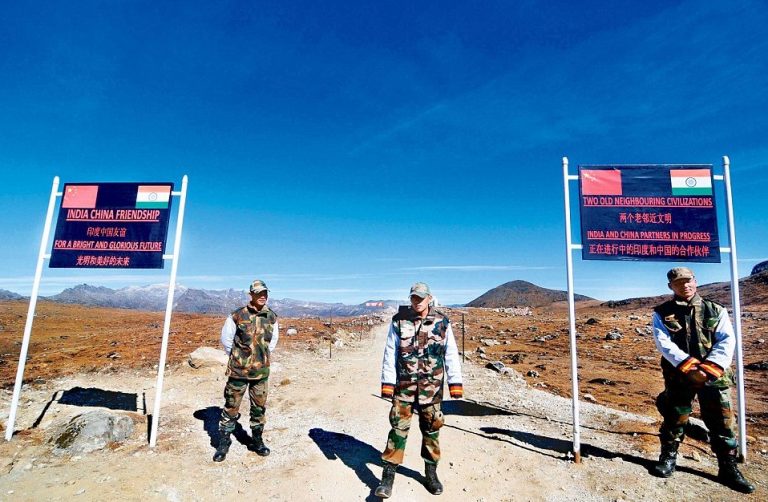
India is building a 78-km strategic road in its easternmost village of Arunachal Pradesh, reaching as close as 4 km from the Line of Actual Control (LAC), near the crucial tri-junction of India, China, and Myanmar, an exclusive report by CNN News18’s Aman Sharma said.

On February 1, the Centre embarked on the construction of a new road connecting Dong village to Jachep camp in Arunachal Pradesh by inviting bids with a deadline of three years. The road holds importance as Dong is India’s easternmost village and the new highway will reach Jachep, situated 4 km from China and 20 km from Myanmar’s borders.

With a cost of close to Rs 200 crore, the 3.75-meter-wide highway would be critical for transporting personnel, weapons, and ammunition near the LAC and the tri-junction with China and Myanmar. A helipad is also planned along the road, which will traverse steep terrain with a maximum speed limit of 30-40 km/hr.

The project begins in Dong, where the Lohit and Seti rivers converge in Arunachal Pradesh, and ends at Jachep camp, 4 km before the Line of Actual Control. The road route starts at an altitude of 1,255 meters in Dong and rises to a height of 4,500 meters near the tri-border area of China, India, and Myanmar.

As per the CNN News18 report, the major part of the highway has to navigate through snow-clad mountain tops to counter the steep rise in elevation near Patthar camp.

A greenfield project, the road will be built in accordance with the single-lane national highway specifications.

In the last few years, Indian and Chinese Armed forces have locked horns in the forward positions along the border in Arunachal Pradesh. In December 2022, Defense Minister Rajnath Singh announced that Chinese soldiers tried to cross the LAC in the Tawang sector’s Yangtze area to unilaterally alter the status quo but were driven back by Indian troops’ prompt response.

Before that, in October 2021, a large contingent of Chinese forces tried to violate the LAC at Yangtze, resulting in a major confrontation between the two sides. It reportedly culminated in the temporary detainment of Chinese troops in the region. The Chinese soldiers also attempted to destroy some unoccupied bunkers at the Bum La and Yangtze border crossing near the Arunachal Pradesh LAC.

Earlier last month, News18 had exclusively reported that a new single-lane highway of around 135 kilometres will be built alongside the Line of Actual Control (LAC) from Chushul to Demchok in Ladakh in the coming two years. The road was billed as a major strategic asset for the country to counter China. This road construction project will provide a second boost to infrastructure in the Leh region, following the Indian Border Roads Organization’s invitation to bid on the construction of the Nyoma Airfield in Ladakh last month. The airfield will feature an advanced landing ground, enabling fighter planes to land quickly.

Chinese ‘spy balloon’ spotted flying high over Montana in USA, Pentagon says its keeping watch

Only days before a rare visit to Beijing by the US Secretary of State Anthony Blinken, the Pentagon announced on Thursday that it was tracking a Chinese spy balloon that was floating high over the United States. The incident accelerated tensions between the two sides.

Defense Secretary Lloyd Austin and senior military leaders discussed shooting down the balloon at President Joe Biden’s request but ultimately determined doing so would put too many people in danger on the ground, a senior defence official told reporters on Thursday.

The official, who spoke on the condition of anonymity, stated that it is obvious that the purpose of the balloon is for surveillance.

The balloon had flown over important airbases and strategic nuclear missiles in underground silos in the northwest of the country, the official continued, but the Pentagon did not consider it to be a particularly severe intelligence threat.

From the standpoint of intelligence gathering, we believe that this balloon has little added value, he added.

According to defence authorities, the balloon has been monitored for a few days after it entered US territory and began flying at a great height. It has been traced recently when it passed over Montana, which is home to some of the US’s silo-based nuclear missiles, and has been observed using a variety of techniques, including manned planes. Flights from Billings Logan airport were halted on Wednesday out of caution.

The Pentagon released a statement saying, “The balloon is currently travelling at an altitude well above commercial air traffic and does not present a military or physical threat to people on the ground.”

“Instances of this kind of balloon activity have been observed previously over the past several years. Once the balloon was detected, the US government acted immediately to protect against the collection of sensitive information.”

According to a senior US defence official, the US has “engaged” Chinese authorities through a variety of channels and conveyed the gravity of the situation.

Joe Biden was informed of the situation, as per Pentagon officials, who stated that there was “high confidence” that it was Chinese. The president sought military options, but it was decided against them because of the likelihood that falling debris might hurt people on the ground.

Flying over nuclear missile bases?

One of the three nuclear missile silo fields in the country is located in Montana at Malmstrom Air Force Base. On Wednesday, from 1:30 to 3:30 p.m., all aviation traffic was suspended at Billings Logan International Airport in Montana as the military prepared fighter jets and gave the White House alternatives.

On Thursday afternoon, the subject was briefed to congressional leaders. Kevin McCarthy, the speaker of the House, later tweeted, “China’s brazen disregard for US sovereignty is a destabilizing action that must be addressed.”

According to a statement from the governor and spokesperson Brooke Stroyke, Montana Governor Greg Gianforte stated that he was briefed on the issue on Wednesday after learning that a military operation was in progress in the state’s airspace.

Before making an appearance over the city of Billings, Montana, on Wednesday, the object first soared over Alaska’s Aleutian Islands and through Canada, according to officials.

According to military analysts, the usage of high-altitude balloons is anticipated to grow in the upcoming years. They are significantly less expensive than espionage satellites, difficult to detect with radar and tough to knock down, and occasionally continue to exist for days after being damaged. Using computers to estimate how to take advantage of winds blowing in various directions at various layers of the atmosphere, they can “steer” by altering altitude. In times of conflict, they could carry bombs in addition to surveillance equipment.

The incident occurred just days before Antony Blinken is anticipated to travel to China this weekend, during which time it is anticipated that the US secretary of state will meet Xi Jinping.

Assam govt launches massive crackdown on child marriage, over 1800 arrested so far in 4004 cases filed

0

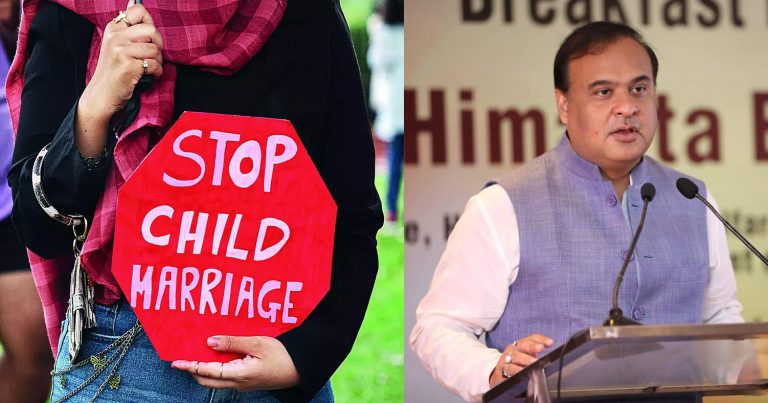
Launching a massive crackdown on child marriage, Assam Police have arrested over 1800 accused so far across the state. Assam Chief Minister Himanta Biswa Sarma informed on Twitter today that 1800+ people have been arrested so far for violating provisions of the Prohibition of Child Marriage Act.

“I have asked Assam Police to act with a spirit of zero tolerance against the unpardonable and heinous crime on women,” the CM further added. It is notable that Assam police have registered 4004 cases of child marriage in the state, and it is expected that most of the arrests will be completed in three days.

Giving a district-wise break up of cases filed, Himanta Biswa Sarma informed yesterday that action on the cases will begin from February 3, and accordingly, police started arresting people named in the cases from last night itself. The CM also informed that more cases are likely to be filed by the police in the coming days.

According to the data provided by the CM, among the 4004 cases, the largest number, 370, has been registered in the Dhubri district. Following that are 255 in Hojai, 235 in Uddalguri, 224 in Morigaon, 204 in Kokrajhar, and 192 in Guwahati. Hailakandi has the lowest case with just 1.

Speaking to the media earlier in the day, CM Sarma said, “Till 8 am today, a total of 1800 people have been arrested in connection to child marriage-related cases in various districts of the state. The police will continue extensive statewide operations in the next three to four days. The exact details on the arrests will be further clarified by the DGP in the evening.”

The crackdown on child marriage was started after the Assam govt in a January 23 cabinet meeting announced that strict measures will be implemented across the state to keep a check on the spike in child marriages in the state. The government had said that legal action against men who marry girls below 14 years of age would be initiated under the POCSO Act and the Prohibition of Child Marriage Act. Similarly, action will be taken under the prevention of child marriage act in cases where the age of the bride is between 14 and 18 years.

The cabinet also decided to designate all 2,197 Gram Panchayat Secretaries to as ‘child Marriage Prevention (Prohibition) officers’ under The Prohibition of Child Marriage Act, 2006 to reduce Infant Mortality Rate & Maternal Mortality Rates and prevent child marriages in rural areas. The CM said that the move was based on a thorough discussion of the National Family Health Survey (NHFS) 5 by the state government.

Ahead of the start of the police action, Chief Minister Himanta Biswa Sarma on Thursday night chaired a video-conference meeting with senior officials of the police department, including Superintendents of Police of all districts, regarding the police actions that would be launched state-wide from today onwards against the practice of child marriage in the state.

The Chief Minister appealed to the people to support the government’s action to rid the state of the evil practice of child marriage. He has also stated that the police will book everyone who has engaged in child marriage in the previous seven years, with a specific emphasis on “mullahs, Kazis, and pujaris” who perform these weddings.

Talking about the 4004 cases filed so far, he said, “these many cases have been registered within nine days; by tomorrow this number might cross 8,000 or 9,000. From Friday, our arrests and action will begin. People will be picked up from across the state. It will be a massive action… All the people who were involved in child marriage in the last seven years will be booked retrospectively. Our main targets will be the mullahs, kazis or pujaris who encourage these marriages,” he said on February 2.

Even though Dhubri and Morigaon are Muslim-majority districts, while Hojai and Nalbari house significantly huge Muslim populations, Sarma maintained his prior declaration that the crackdown will not be directed against any specific community. “Action will be taken against everyone, regardless of caste, creed, or religion,” he stated.

Even as Assam police started nabbing people accused in child marriage cases, some people attempted to flee from the state. 58 people heading towards Kerala in a bus were detained by the police in Rupahi. Similarly, many Qazis accused of performing the marriage of minors have disappeared from several places.

As AAP tries to play up the ‘corruption’ plank, targeting Adani, here are 7 questions they must answer about ED’s chargesheet in liquor scam

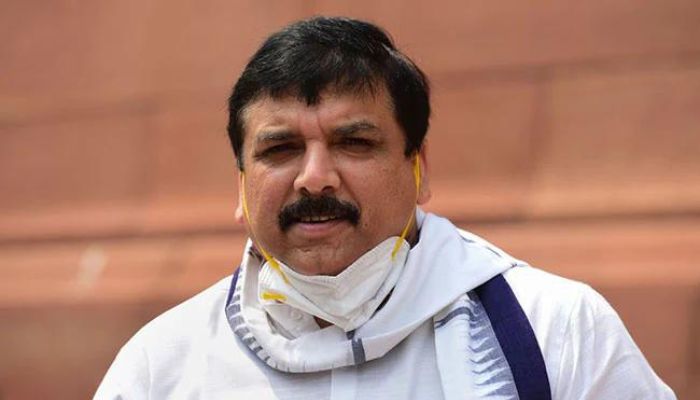
A week after Hindenburg Research published a report about the Adani Group, Aam Aadmi Party (AAP) leader Sanjay Singh sought to exploit the precarious situation to target the Modi government.

On Thursday (February 2), he wrote a letter to the Indian Prime Minister, demanding the confiscation of the passport of businessman Gautam Adani. He further accused the Adani Group of committing fraud and peddling lies.

“Adani’s mountain of lies and fraud is crumbling like a pack of cards. Crores of investors in the country are worried. Those who have invested in LIC, and SBI because both of them have given loans worth crores of rupees. The Prime Minister should come forward and address the issue,” he claimed.

Singh further added, “The Finance Minister should tell what the RBI, ED, and CBI are doing. Why is the government silent on such huge corruption? FPO is just the beginning, the mountain of lies will fall.”

Despite the allegations being trashed by the Indian conglomerate, Singh told ANI, “I have written a letter to PM, ED, and CBI demanding the confiscation of Adani’s passport, or else If he also flees from the country like other industrialists and capitalists, then crores of people of this country will be left with nothing.”

He also claimed that entities such as Life Insurance Corporation of India (LIC) and State Bank of India (SBi) continue to invest in the Adani Group, despite allegations of ‘money laundering’ and ‘theft’.

AAP cannot evade questions on Delhi liquor policy scam

While Sanjay Singh has been raising ‘corruption bogey’ and falsely trying to implicate the Union Government of being hands-in-gloves with the Indian businessman, it must be mentioned that the Enforcement Directorate has already filed a supplementary chargesheet into the ‘Delhi liquor policy scam.’

As such, the AAP leader must answer 7 key questions pertaining to the scam and the allegations surrounding the use of funds to fuel the party’s campaign in the State of Gujarat.

  1. Did AAP leader Vijay Nair hire an associate to arm-twist liquor business operators in Punjab?
  2. Did he use the ₹100 crores, obtained as a kickback from the ‘South Group’ for implementing the new liquor policy, to fund AAP’s election campaign in Goa?
  3. What was the role of Chariot Productions in the money laundering scheme?
  4. Did the entity specifically make cash payments for PR/ Advertising related work in Goa?
  5. How did businessman Dinesh Arora secure kickbacks for AAP from South Group?
  6. What was the role of Manaswani Prabhune in the Goa election campaign?
  7. Why did a Punjab-based businesswoman pay 51 lakhs to the State’s CM Relief Fund?

Understanding the Delhi liquor policy scam

The now-scrapped liquor policy of the Delhi government was originally proposed in 2020. After coming into effect in November 2021, it changed the manner in which alcohol was sold in Delhi.

Until then, only government-owned liquor vendors were permitted to sell alcohol. The Delhi Excise Policy 2021-2022 introduced private players in the market. The National Capital was divided into 32 zones and a total of 27 private vendors were to ply in each zone.

Every municipal ward had 2-3 liquor vendors operating in the area. The private liquor shops were allowed to attract crowds by offering discounts on the Maximum Retail Price (MRP). They could deliver liquor at home, and even keep shops open till 3 am in the morning.

The drastic policy change resulted in a 27% increase in government revenue to ₹8900 crores. At the same time, it marked the complete exit of the Delhi government from the liquor business.

While the objective of Excise Policy 2021-2022 was to end black marketing and the liquor mafia, the AAP government soon came under fire over allegations of corruption. Naresh Kumar, who was appointed the Chief Secretary of Delhi in April 2022, found irregularities and procedural lapses in the new liquor policy. 

The Chief Secretary prepared a report and sought the response of Delhi’s Deputy Chief Minister Manish Sisodia, the head of the Excise Department. The report blamed the Deputy CM for making changes to the excise policy without the authorisation of the Lieutenant Governor and providing ‘undue benefits’ to the liquor vendors.

Manish Sisodia reportedly waived off ₹144.36 crores on the license fee, to be paid by the private liquor vendors, under the garb of the Coronavirus pandemic. He also caused loss to the Excise Department and benefitted liquor licensees by waiving the import pass fee of ₹50 per beer case.

All these changes were made without the final approval of the Lieutenant Governor and thus considered illegal under the Delhi Excise Rules of 2010 and Transaction of Business Rules of 1993. The CBI had therefore registered a case against Vijay Nair and 14 others and later arrested Nair in September 2022.