Home Blog Page 2506

AMU: Ahtisham Zakir Chisti assaults Hindu student in AMU hostel, victim tells OpIndia that Hindu students are deliberately targeted. Read what happened

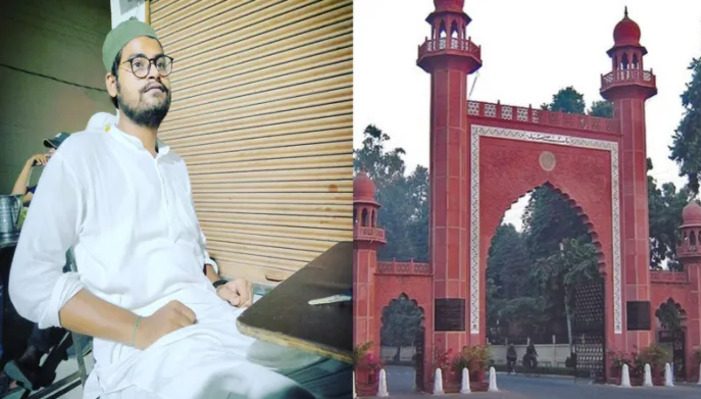
On Monday, January 30, a Hindu student of the Aligarh Muslim University (AMU), in the Aligarh district of Uttar Pradesh was brutally thrashed by a Muslim student in the varsity hostel. A student named Ahtisham Zakir Chisti beat up Sahil Baghel, another student. The victim has alleged that Zakir was pressuring the victim to drop the earlier FIR he had filed against one Rehbar. The Hindu student informed the university administration and filed an FIR with the police.

The reported incident is from the Civil Lines Police Station area. Sahil Baghel, the victim, resides here at the university’s Nadeem Tareen Hostel. In the police complaint, the victim stated that Ahtisham Zakir visited his hostel room along with his friend on Monday. According to the complaint, Ahtisham then punched Sahil hard, causing the victim to bleed profusely.

It is reported that during the assault, the accused Zakir threatened Sahil to drop the case he had filed against Rehbar. Zakir also threatened to kill Sahil if he refuses to do so.

In his complaint, the victim stated that Zakir had threatened to shoot him while telling him about the time when the victim goes to and returns from his college.  According to the complaint, Ahtisham Zakir also allegedly shoved a pistol in the victim’s mouth. The victim accused Sahil of opening fire on the hostel premises a few days earlier. Sahil expressed his fear and sought action in the complaint.

The Aligarh Police have filed an FIR under sections 323 and 506 of the IPC naming Ahtisham Zakir and his friend on the basis of victim Sahil’s complaint.

OpIndia has accessed a copy of the FIR. On social media, a video where Sahil is seen seriously injured is also going viral on social media. In the video, Sahil reiterated the information he mentioned in the FIR. Meanwhile, the Aligarh police have registered a case and notified them about taking action.

‘Being a Hindu is my fault’

OpIndia spoke to the victim student Sahil Baghel. Sahil informed us that people like Zakir intentionally target Hindu students at Aligarh Muslim University. Speaking about the attack on him, Sahil said that his only fault is that he is a Hindu and studies at Aligarh Muslim University. Even after the FIR was filed, according to Sahil, Zakir continued to roam freely and even came to the hostel. The victim alleged that there was no hope from the university administration stating that AMU’s administrative officials are backing people like Zakir.

Zakir backs JNU from AMU

When OpIndia analyzed the Facebook profile of Ahtisham Zakir, the main accused in the attack, he turned out to be an opponent of the CAB. Along with this, JNU-related posts can be seen on his profile. In addition to this, Zakir also posted images of several other contentious personalities. Additionally, there are pictures of Zakir and Dr. Kafeel Khan, who is the main accused in the Gorakhpur BRD College oxygen scandal.

Australia: Tiktok flooded with pro-Khalistani videos of so-called Referendum voting in Melbourne, London-based Pakistani reporter most active in spreading propaganda

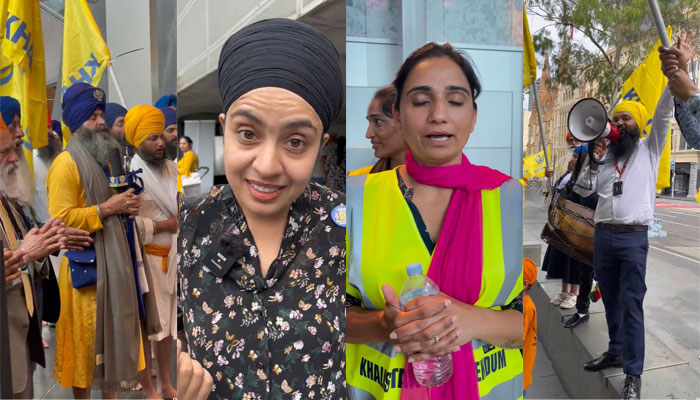
On January 29, the banned Khalistani terrorist organisation Sikhs For Justice (SFJ) organised the so-called Referendum 2020 voting in Melbourne, Australia. At the voting centre, a pro-India group went to peacefully protest against the voting. However, the pro-Khalistani Sikhs present at the scene hackled and assaulted them with batons and fists. The social media platform TikTok, which is banned in India, was flooded with videos of pro-Khalistani Sikhs making tall claims about the success of the voting.

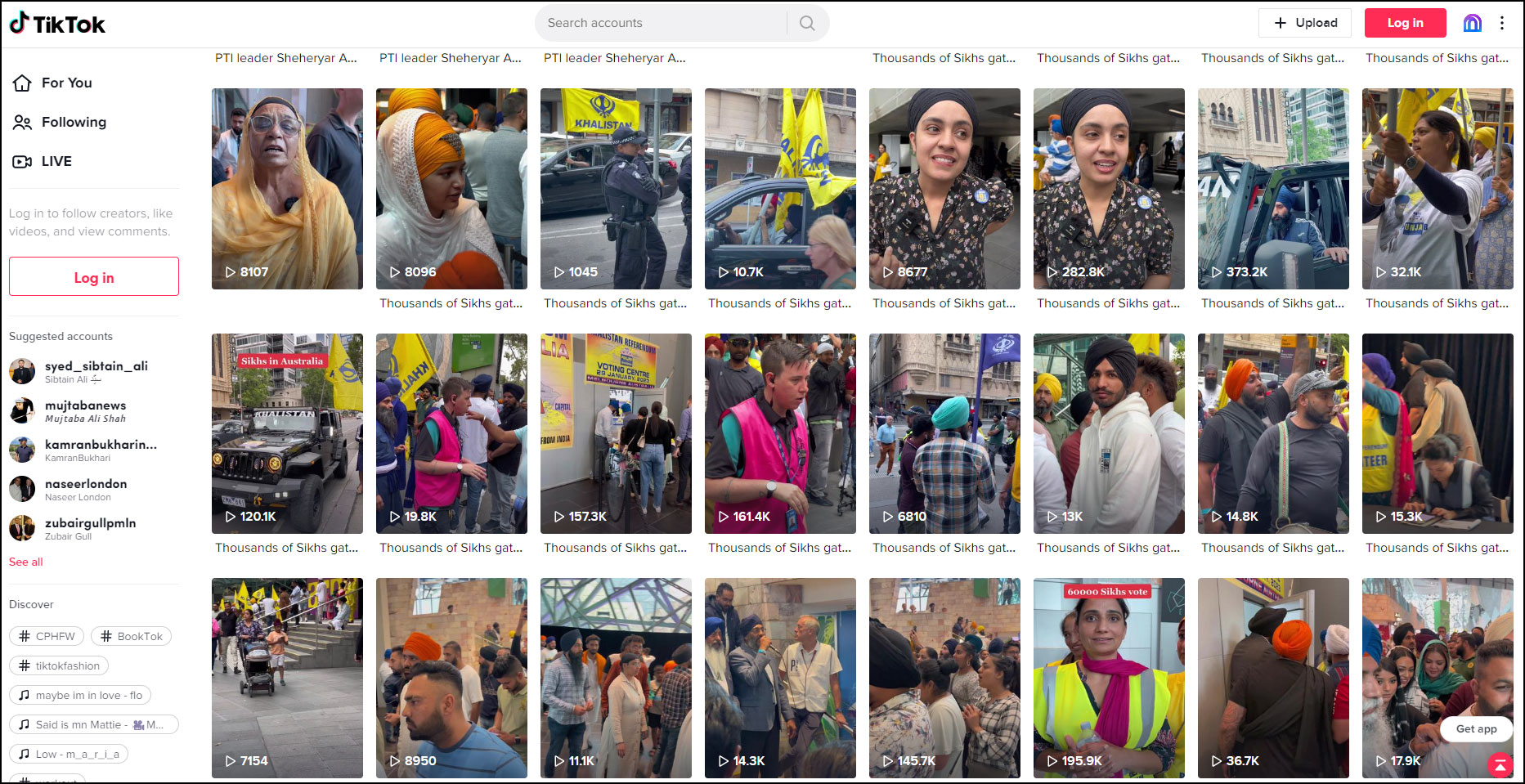
OpIndia accessed a few videos that are being shared widely on TikTok. A London Based reporter from Pakistan named Murtaza Ali Shah was one of the most active TikTok users to share the videos of the voting on social media.

Hundreds of videos of so-called referendum surfaced on TikTok. Source: TikTok

Notably, his Twitter account MurtazaViews has been withheld in India in response to a legal demand. It is well-known fact that Pakistan supports Khalistani elements and Sikhs For Justice has approached and favoured Pakistan on many occasions.

Murtaza’s Twitter account is withheld in India. Source: Twitter

Murtaza published the videos not only on TikTok but also on Instagram and other platforms. One of the most viewed videos was of a Sikh woman in Australia who claimed that over 60,000 Sikhs went for voting in Melbourne. In the video, she said, “We came to vote for Khalistan Referendum. Around 60,000 Sikhs comprising men, women and elders voted for the Referendum. Around 15,000-20,000 people could not vote. They were heartbroken but there is nothing to feel that way. We will conduct a second voting round. Everyone was excited starting from 6 AM till 5 PM. It was a great feeling.”

In a post debunking the claims, Dr Amit Sarwal, co-founder of The Aus Today, said, “Gems of TikTok – 60k #Khalistanis came to vote at Federation Square in #Melbourne where max capacity is 10k people due to safety – bogus referendum, bogus ideology, supported by Pakistani media.”

In another tweet, he said, “In just 28,800 seconds 80,000 Khalistanis voted in Melbourne ie 2.77 khalistani voting per second at a venue that officially can cater to only 10k – Flash has some competition.”

In another video, a woman wearing Turban claimed Sikhs face discrimination in India. She said, “The thing is, Indians are being unfair to Sikhs because we don’t have the rights. Like in the metro, we don’t have the right to wear Kirpan more than 9 inches, that’s the main thing. There are other things like Turban… In India, we are bullied due to Turban. In Punjab it is fine, but all over India we are bullied due to Turban.” The claims made by the woman are highly objectionable. Across India, Sikhs are respected for their contribution towards nation-building and are often trusted for their zeal and dedication towards the work culture.

The funny thing was Australians and people of other ethnicities were hired by Sikhs For Justice to insinuate these communities were in favour of the so-called referendum.

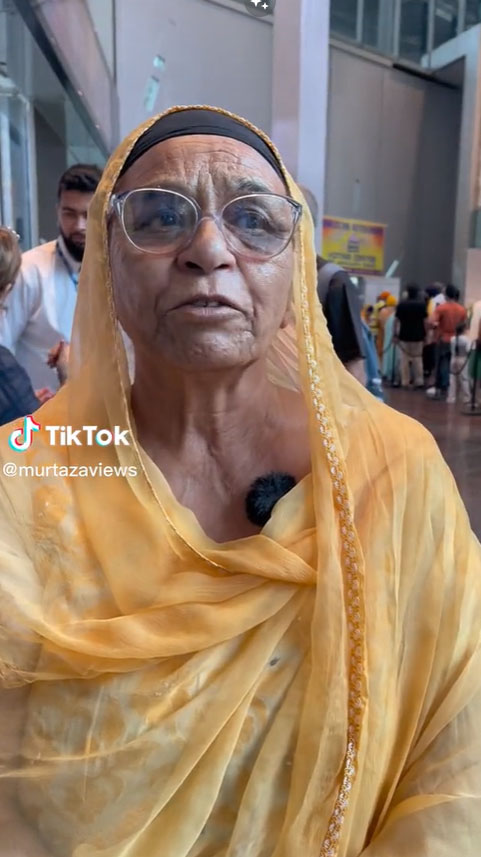
In one of the videos shared on TikTok, an elderly woman claimed that when partition happened and the British left India, the Indian leaders promised Sikhs that they would get an autonomous state but later Nehru denied it. She further claimed Sikhs are facing atrocities and discrimination in India. “This is why we are demanding Khalistan”, she said. Interestingly, Murtaza largely avoided posting the videos on Twitter.

Source: TikTok

The hashtags that were used in such posts were #KhalistanReferendum2023 (3.1 million views), #KhalistanReferendun (2.9 million views), #Khalistan (128.4 million views) and more. All the views mentioned here are from TikTok. Notably, the Khalistan hashtag has many videos of controversial pro-Khalistan Sikh leader Amritpal Singh as well.

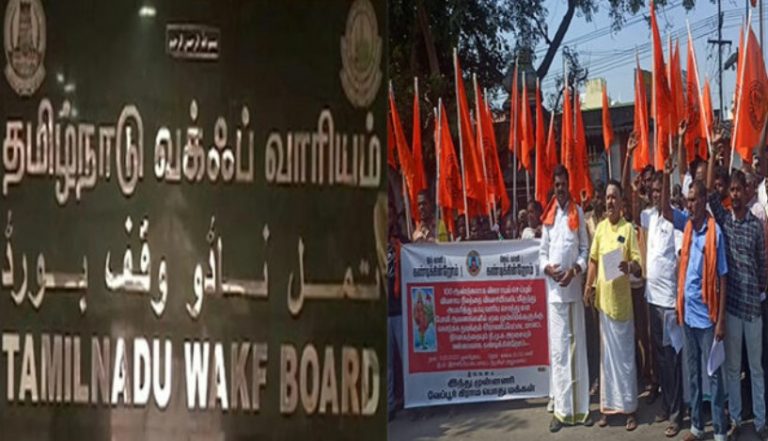
Tamil Nadu: Waqf Board usurps 57 acres of Hindu farmer’s land, DMK misclassifying land ownership led to this, says Hindu Munnani

Hindu Munnani, a Tamil Nadu-based Hindu organisation, has initiated a protest against the MK Stalin-led DMK government in Tamil Nadu, accusing it of wrongdoing in connivance with the Tamil Nadu Waqf Board, which resulted in the latter claiming ownership of 57 acres of a Hindu farmer’s land near Vellore.

According to TV Rajesh, the Ranipet district president of Hindu Munnani, DMK Minister R Gandhi and the district collector deceptively took away the agricultural lands of Hindu farmers without notice, despite objections from the impacted families.

The incident reportedly occurred recently in the Veppur hamlet in the Arcot Union in Ranipet District, near Vellore, Tamil Nadu.

Hindu Munnani district president TV Rajesh said, “In the 1900s, a land parcel of nearly 57 acres was held by one Wahab and divided among his four wives, who, after his death, mortgaged it to Hindus and failed to pay the amount they took from them. A case related to this was decided in favour of the Hindus in Chengalpet court, and pattas were issued to them. They had been farming there for the last forty or fifty years. This 57-acre parcel of land is now owned by nearly 30 families.”

“Ranipet MLA and Tamil Nadu Minister Gandhi, a District Collector armed with police and revenue officials, descended on the village without following due process of law and issuing notices, only to inform them that the lands are Waqf properties. They have no authority over them,” Rajesh added.

Referring to a video that was first uploaded on social media on January 7, 2023, but recently went viral, Rajesh went on to explain how these poor Hindu farmers implored authorities to reverse their decision, but to no avail.

“In a video, villagers can be seen pleading with authorities and ministers to reconsider their decision. Some even begged the authorities because it is their sole source of income. Some have even questioned the illegal action, stating that they are prepared to submit documents if permitted, and have requested a meeting with authorities. The words and wailing of the helpless Hindus fall on deaf ears. Another minority appeasement measure,” TV Rajesh added.

In the above video, the government official is heard saying, “I don’t know in whose name the lands were till yesterday or the day before yesterday. But today the land is under the control of the Waqf Board. Since it is under Waqf Board, they’ve asked us to survey the land.”

When the people confront the official asking, “Consider the patta has been changed in 3 days. Did you check the names on the patta prior before that?”, the official can be seen evading the question.

“How can the name on the patta change in just a matter of 3 days?”, the people inquired. They also complained that the RDO has been unreachable.

TN govt insidiously took over 56 acres of Hindu land and turned it over to the Waqf Board: BJP

Condemning the exploitation of poor Hindu farmers by the DMK government and the Waqf Board, BJP national secretary H Raja highlighted how the TN government unscrupulously took over 56 acres of Hindu land in Veppur village and turned it over to the Waqf Board.

He claimed to have visited these Hindu farmers, who informed him that the Hindus had obtained their properties through the courts from the four wives of one Wahab who had failed to repay his debts. “Wahab was altered as Waqf by the TN authorities after which the Waqf Board asserted claim on these properties, said H Raja, calling it a huge scam.

“DMK control is Malik Kafur rule,” H Raja added, slamming the DMK government for exploiting destitute Hindu farmers for appeasement politics.

BJP accuses the DMK government of engaging in appeasement politics

Meanwhile, in a statement released by Hindu Munnani state president Kaadeswara Subramanium pertaining to this looming issue in various parts of Tamil Nadu, he said, “In Tamil Nadu, there are 53,834 properties owned by 7,452 Waqf Boards, the majority of which are encroached properties or illegally converted by fake documents. Certain Waqf Board properties have titles in the names of third parties. Section 51 (1A) of the Waqf Act, 1995, read with Section 104A, provides that any sale, gift or transfer, mortgage, or change of name of Waqf property is invalid from the start of the transaction.”

He added, “the Waqf Board has the authority to decide whether a property in dispute is a Waqf property or not, according to Section 40 of the Waqf Act. Furthermore, Waqf properties are declared public properties under the Properties (Removal of Unlawful Occupiers) Act of 1975. Registration of the sale of Waqf properties is prohibited under the Registration Act of 1908. The Waqf Board administrators who manage the Waqf Board properties illegally sold and kept it with them without proper documentation.”

He further accused the DMK government of transferring ownership of the government-owned and private property to the Waqf Board under the pretext of expediting the process of classifying and measuring Waqf Board lands in order to garner Muslim votes.

He further said, “Hindu people are now in danger of losing their own land, which they have owned for generations, due to government misclassification. Regrettably, the Department of Registration does not have complete information on the locations of lands under this Board. This problem affects thousands of families in many districts, including Coimbatore, Tirupur, Trichy, and Vellore.”

Tamil Nadu Waqf Board claims ownership of 7 Hindu-majority villages and a 1500-year-old temple

It must be recalled here how last year, OpIndia reported how the Tamil Nadu Waqf board had claimed ownership of 7 Hindu villages in the state. The villagers had additionally, alleged that the Waqf Board also claimed that the 1500-year-old Sundareswarar Temple belongs to them. Notably, the Waqf Board has placed posters across the villages claiming ownership of the village land.

Tamil Nadu Waqf Board claims ownership of a Hindu-majority village

This news came days after it was reported that the Waqf Board had encroached on an entire hamlet with a Hindu majority population in Tamil Nadu. On September 11, OpIndia reported how Thiruchenthurai village near Trichy, Tamil Nadu has been designated as a waqf property by the Tamil Nadu Waqf Board. Thiruchenthurai is a village situated on the south bank of the Cauvery river in Tamil Nadu.

When this subject was brought to the District Collector’s attention by the villagers, he stated that the matter will be investigated and action will be taken after that.

How Waqf Boards have been insidiously claiming ownership of various properties in India

In India, the issue of illegal land encroachment in the name of religion is not new. A slew of instances has clearly proven how establishments such as the Central Wakf Board may be illegally taking ownership of land by labelling it as ‘Waqf’ property. The same board has been accused over and again of fraudulently obtaining lands and public spaces, and the relevance of their actions has rightly remained questionable.

The country today has up to 30 Waqf Boards, which have thus far infringed on many properties and temple lands, with the pattern of operation being consistent in most cases. Muslims usually first start performing namaz on these lands. Then, villages are constructed around it after declaring it a religious site. It then becomes easier to sell or lease land near these illegal settlements.

There are currently 50,000 Waqf properties in the country, covering 6,00,000 acres. These properties have earned 150 crores in revenue thus far and consistent efforts are being made to increase this.

OpIndia last year chronicled 21 such instances when the Waqf Board in India has mismanaged assets, encroached, illegally disposed of and infringed on various properties in the last few years.


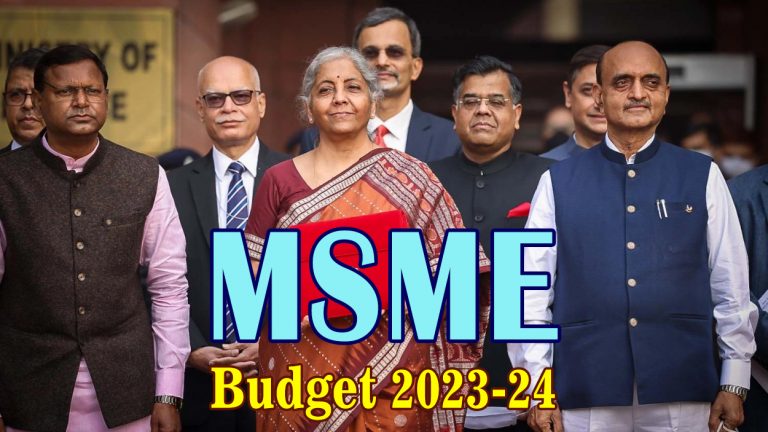
Budget 2023: MSMEs to receive additional ₹2 lakh crore in collateral-free finance as credit guarantee scheme revamped with infusion of ₹9000 crore

In the budget for the financial year 2022-23 presented today by Finance Minister Nirmala Sitharaman, a slew of measures to help bolster India’s Ministry of Micro, Small & Medium Enterprises (MSME) sector have been announced. The Finance Minister while presenting the Union Budget announced revamping the credit guarantee scheme for the MSME sector and allotted Rs 9000 crores of capital towards the scheme.

The introduction of a new credit guarantee scheme would provide MSMEs with an extra Rs 2 lakh crore in collateral-free finance. As a result of this, the cost of credit for the MSME sector will reduce by 1%. The scheme would take effect from April 1, 2023.

“Last year, I proposed revamping of the credit guarantee scheme for MSMEs. I am happy to announce that the revamped scheme will take effect from 1st April 2023 through infusion of Rs 9,000 crore in the corpus. This will enable additional collateral-free guaranteed credit of Rs 2 lakh crore. Further, the cost of the credit will be reduced by about 1 per cent,” Sitharaman said in her budget speech. 

The Finance Minister also stated that India’s MSME sector would get more relief through Vivad se Vishwas Act with a less stringent contract execution system. “This will help settle contractual disputes and will also help the MSMEs affected due to COVID pandemic,” she said. She also conceptualized PM Vishwa Karma Kaushal Samman’s package of assistance for traditional artisans and craftspeople which is slated to help them in integrating with the MSME value chain.

The Budget 2023-24 also focused on providing tax benefits to the MSME sector.”Enhanced limits for micro-enterprises and professionals to micro-enterprises of presumptive taxation; 95 percent of receipts to be noncash. Deduction on payments made noncash to be allowed only when payment is actually made,” the Budget specifically quoted.

Here are some more Budget proposals announced for the MSME sector

1. To boost domestic tourism, the Centre will launch the ‘Dekho Apna Desh’ project.

2. The government will establish a National Financial Information Registry to facilitate the efficient flow of credit and promote financial stability.

3. Financial sector authorities will be tasked with conducting a thorough assessment of existing regulations.

4. An integrated IT site for recovering unclaimed shares and dividends will be launched.

5. In addition, the government will establish a single-window system for registrations and approvals in IFSC Gift City.

6. A Central Processing Centre will also be established to respond to corporations filing documents under the Companies Act more quickly.

7. The FM also stated that a one-time new modest savings plan called the Mahila Samman Saving Certificate will be made available for two years, till 2025.

Earlier last year, the Finance Minister had extended the Emergency Credit Line till March 2023 for the MSME sector. The guarantee cover had been extended by another Rs. 50,000 crores taking the total cover under the scheme to Rs. 5,00,000 crores. The government had also decided to roll out Raising and Accelerating MSME Performance (RAMP), an initiative to revitalize the MSME sector that has been heavily impacted by the COVID-19 pandemic.

The Budget 2023 focused on seven goals, dubbed the Saptrishis leading the country through Amrit Kaal, by the Finance Minister. These are inclusive development, reaching the last mile, infrastructure and investment, unleashing potential, green growth, youth power, and financial sector”. Budget 2023 has also been dubbed as the first Budget of Amrit Kaal and the roadmap for India@100, by the Finance Minister.

Sitharaman while announcing the budget also said that economy in the current year would grow at 7 per cent. “This is the most of any big economy. Despite the difficulties, India is on the right course. Since 2014, the government’s efforts have resulted in improved quality of life. Many development targets have seen tremendous improvement,” she said.

Since 2014, the government’s efforts have provided a higher quality of life and a life of dignity for all residents. The per capita income has more than doubled to Rs 1.97 lakhs. According to FM Sitharaman, the Indian economy has grown from the tenth to the fifth largest in the globe in the last nine years.

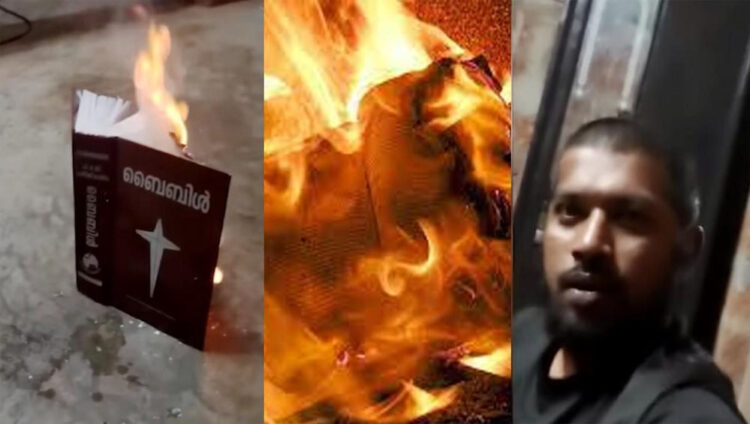
Kerala: Kasargod native Mustafa burns Bible in revenge over the desecration of Quran in Europe, booked

The police registered a case against a Kasargod man named Mustafa for burning the Bible, the holy book of the Christians, in retaliation for the desecration of the Quran in Europe.

The matter came to light after a video of the accused, identified as Erinipuzha Mustafa, burning the Bible went viral on the internet.

In the video, the accused Mustafa is reportedly seen putting the Bible on the table and stating that he is carrying out the act in revenge for the burning of the Quran in Sweden. Then, he turns the pages of the Bible and pours what appears like oil on them, as per reports.

When his attempt to set the holy book on fire fails, he lits the gas stove and places the pages of the Bible on top of it and sets them on fire. He is also seen in the video pouring oil from time to time to keep the fire from spreading. The police registered a case against him after the video went viral on social media.

The police took cognisance of the matter and registered an FIR under relevant sections of the Indian Penal Code. The FIR states that the accused’s act could have stoked communal tensions in the state. It also stated that the accused intentionally caused outrage by burning the holy book in a derogatory manner and spreading it through social media to offend Christians.

Quran burning incidents in Europe

On January 21, a copy of Quran was reportedly burnt in Sweden during protests against Turkey outside Turkish Embassy in Stockholm, Sweden. Three different protests were happening in the city. One was against Turkey, the second was in support of Kurds, and the third was against Sweden’s bid to join North Atlantic Treaty Organisation (NATO). Following the Quran burning incident, sharp reactions came from Turkey and Pakistan. All three protests had permission from the Sweden police.

Rasmus Paludan, the leader of the Danish far-right political party Hard Line, was the one who burnt the copy of the Quran. Notably, he has burnt copies in the past as well. Paludan has Swedish citizenship. Reuters report suggests that in the police permit he obtained, it was mentioned that his rally was against Islam and Turkish President Tayyip Erdogan’s attempt to influence freedom of expression in Sweden.

Days later, Dutch leader of the far-right group, Patriotic Europeans Against the Islamisation of the West (PEGIDA), destroyed a copy of the Quran in the Netherlands before setting it on fire. This came days after a copy of the Quran was burnt in Sweden during the protest against Turkey on January 21.

The video of the said incident went viral over the internet in which the Dutch leader Edwin Wagensveld could be seen tearing apart the pages of the Quran. In the video, he stated that he had attained permission from the city for executing the destruction of the Quran. “Soon, there will be registrations for similar actions in several cities, time to answer disrespect from Islam with disrespect,” the Dutch leader said as he tore the pages of the Quran on January 22.

“Love vs hate” rhetoric during Bharat Jodo Yatra to BBC documentary painting Modi as an instigator of hatred, 2024 playbook of opposition seems clear

There was much hullabaloo in India during the past couple of weeks over the British Broadcasting Corporation’s (BBC) documentary on the incumbent Prime Minister Narendra Modi. The documentary tried, once again, to pin the blame on Narendra Modi for the 2002 riots in Gujarat.

The lopsided BBC documentary, featuring some of the biggest Modi haters like Aakar Patel, Hartosh Singh Bal, and Sanjiv Bhatt’s family, used all the discredited “evidence” to paint Modi as evil reincarnated. It had the token BJP guy in Swapan Dasgupta to give it a feel of “neutrality”. The documentary posed questions on the Indian Supreme Court as well, and their clean chit to Narendra Modi in the 2002 riots case.

Interestingly, it also tried to imply that the reason behind the Godhra train burning, the starting point of the Gujarat riots, is still somehow under dispute. Even though the documentary is full of inconsistencies and discredited evidence, it has obviously been latched upon by the Indian opposition as they once again try to attack Narendra Modi over the 2002 riots.

The Gujarat riots of 2002 have financed several media channels and self-proclaimed activists, and even made the careers of several ‘journalists’ over the past 21 years. Even though hundreds have been prosecuted for the violence, it has been constantly pushed by these media outlets that “justice has not been done” because Narendra Modi still walks free.

The gist of the documentary was clear, that Narendra Modi is a divisive figure and he hates minorities in India. These are the allegations that Narendra Modi has been facing pretty much all his political career from his opponents, political and the ones from media both.

“Love vs Hate” rhetoric during the divisive Bharat Jodo Yatra

Interestingly, the BBC documentary came at a time when the Congress party was attempting yet another relaunch of Rahul Gandhi ahead of the 2024 Lok Sabha elections. With leaders like Mamata Banerjee becoming the main opponent to incumbent PM Modi in the public eye, especially after the 2021 Bengal elections, Rahul Gandhi needed yet another relaunch to try and secure his position as the face of the Indian opposition.

During this entire yatra, Rahul Gandhi tried to pitch himself as the symbol of love, while trying to paint RSS and BJP (by extension Narendra Modi) as the symbols of hate.

“Some people are spreading hatred but the common man of the country is now talking about love. In every State, lakhs have joined the yatra. I’ve said to people of RSS-BJP that we’re here to open the shop of love in your ‘Bazar’ of hatred,” Rahul Gandhi said during his yatra.

This messaging from Rahul Gandhi, that he is somehow spreading love everywhere while BJP is spreading hate, is going to be the theme of the Congress campaign for the upcoming Lok Sabha elections, a message that BBC tried to reinforce through their documentary.

Even though during his ironically named ‘Bharat Jodo Yatra’, Rahul Gandhi tried to pitch the people of Maharashtra against the people of Gujarat, and instigate Jammu & Kashmir people against Indians from other states, Congress continued to pretend that Gandhi is somehow spreading love.

Congress relying on foreign agencies to defeat Modi

Whether BBC aligned with Congress to try and defeat Narendra Modi, we don’t know, but Congress has always been pushing for foreign intervention in Indian domestic politics ever since Modi came to power.

Rahul Gandhi met with Jeremy Corbyn, the former labour leader, who was anti-India and pro-Pakistan anti-semite, who used to head the Labour Party in Britain. Thankfully for India, Corbyn never became the British PM, losing heavily even to the highly unpopular conservatives at the time.

That wasn’t the only time when Congress tried to invite foreign interference in India though. During the protests against Citizenship Amendment Act (CAA), where India tried to support the persecuted minorities from neighbouring countries, Congress ran a campaign with ‘foreign influencers’ to try and paint India as anti-minority, when India was trying to help minorities.

Even during the protests against farm laws, which were actually beneficial for the farmers, Congress supported the interference of foreigners who didn’t know anything about India or Indian farming. Mia Khalifa became the foremost expert on Indian farming for a while just because she said something against the government.

This tendency to use foreigners to attack India is a direct attack on the sovereignty of India. Whoever we are, whatever we are, we are Indians. Inviting outsiders to comment on our domestic matters is questioning our own sovereignty, and that is what modern-day Congress under Rahul Gandhi is reduced to, calling Indian sovereignty into question and hoping for a NATO-led regime change.

Abandoning the 2019 attempt to attack Modi’s incorruptible image and reverting to ‘what about 2002?’

Following the unfortunate Gujarat riots of 2002, Narendra Modi has consistently faced attacks from the opposition and their friendly media. Even though Modi got a clean chit even from the Supreme Court, the opposition has kept repeating its allegations, in the hope that something will eventually stick if they keep throwing enough shit at the wall.

However, Congress decided to go in a different direction ahead of the previous Lok Sabha elections in 2019. Rahul Gandhi decided that he is going to target Modi’s image as an honest, incorruptible man. The purchase of Rafale fighter jets was made a prominent issue with Rahul Gandhi repeatedly saying that there is corruption in the deal.

Dodgy French websites, photoshopped images, Congress-friendly lawyers, and even comedians, all were used to try and imply that there was large-scale corruption in the Rafale purchase. Supreme Court didn’t even find anything worth listening to in the several accusations made by Gandhi, but of course, that wasn’t the aim of all the allegations. The aim was to somehow convince the public that Narendra Modi is corrupt. A lot of people vote for Modi because he is seen as an honest man who is not accumulating wealth in office, something the previous Congress-led UPA government was famous for.

However, once the 2019 elections got over, and people gave a historic majority to Narendra Modi-led NDA, Rahul Gandhi swiftly forgot about Rafale deal realising that his campaign has failed. Thus, for 2024, the opposition seems to have fallen back on its favourite formula to attack Narendra Modi, 2002, man of hatred etc etc. The formula hasn’t worked for over 2 decades, but failure has never stopped Congress from trying the same thing again, as repeated launches of Rahul Gandhi show.

Adani Enterprises FPO oversubscribed amid allegations from Hindenburg Research: Details

Adani Enterprises Ltd’s FPO was oversubscribed by 1.02 times on its final day, due to high demand from non-institutional and qualified institutional investors. Retail investors, however, abstained from subscribing due to the large gap between the stock price and the FPO price range.

FPO refers to a follow-on public offering of shares from a publicly listed company, while IPO refers to a first public offering of shares from a privately held company.

As per data released by BSE, Adani received bids for 463,979,960 shares at 15:25 IST, compared to the 455,067,91 shares on offer. The NII portion was oversubscribed by 3.26 times, followed by QIBs with a 97% subscription rate, and employees at 52%. Only 11% of retail investors subscribed.

The public issue that opened for subscription on Friday, January 27, will close on Tuesday, January 31.

Adani Enterprises Ltd set the price range for its proposed offering at ₹3,112 to ₹3,276 per share. The company’s stock closed at ₹2947 on Tuesday, a 7% decline from the bottom of the price range and 11% below the upper limit.

Despite the stock’s trading below the fixed price range, the company confirmed in an interview with CNBC-TV18 that the FPO will proceed as planned without any changes to the price.

Day 1 of the public offering saw only a 1% subscription rate and Day 2 had a 3% subscription rate.

Adani Group stocks have suffered sharp losses due to allegations of fraud from Hindenburg Research. The investment firm had accused the Adani Group of accounting fraud and stock manipulation, triggering stock prices of its companies to hit lower circuits. The Group has, however, denied the allegations and accused Hindenburg Research of spreading malicious disinformation. The group also issued a 413-page statement to affirm its stance.

On Jan. 25, anchors accounted for 29.92% of the FPO by purchasing 1,82,68,925 shares out of 6,10,50,061 offered. 23 key anchor investors received most of the INR 5,984.90 crore anchor allocation. No shares were given to domestic mutual fund schemes, but insurance companies were major domestic institutional participants. The FPO offers 6,47,38,475 equity shares, with a minimum bid of 4 shares and subsequent bids in multiples of 4.

Adani offers retail investors a discount of ₹64 per FPO equity share. The company aims to raise ₹20,000 crore from the FPO, with the net proceeds going towards paying off debts and funding some subsidiaries’ capital expenditures.

Reports suggest the capital expenditures will be for green hydrogen ecosystem projects, airport improvements, and a greenfield expressway. The retail portion of the offer accounts for at least 35% of the net offer, the NII portion is at least 15%, and the QIB portion is up to 50%, according to Adani’s DRHP.

Ex-Google employee sues the tech giant, says he was fired for rejecting advances of his female senior

0

As per a lawsuit filed in November last year, a former Google employee Ryan Olohan has claimed that the tech giant fired him after he resisted the advances of a senior female coworker. The incident took place at a company meeting held at Fig & Olive shortly after Olohan’s promotion to managing director of food, beverages, and restaurants in December 2019. Tiffany Miller, against whom he has levelled the allegations, is a senior executive at Google.

According to New York Post, Ryan Olohan alleged that Tiffany Miller molested him during a company dinner in Chelsea, Manhattan. She also told him how her marriage was devoid of “spice”. He further claimed in the lawsuit that Miller, an Asian, also informed him that she knew he had an affinity towards Asian women since his wife is of the same race. 

The married father of seven said he “immediately removed himself from the situation”, which made him “extremely uncomfortable”, and escalated it the following week to the tech company’s Human Resources department.

The HR department took no action, and he was supposedly warned that if a female complained about a White male harassing her, the situation would be escalated.

Ryan Olohan, in the lawsuit, further alleged that Miller became so vindictive after Ryan’s complaint about the 2019 incident to the HR department that she filed bogus complaints against him for “microaggressions”.

Olohan recalled how he continued to face Miller’s hostility on several occasions after he had filed a complaint against her with HR. In December 2021, Miller, who was in an inebriated state, publicly reprimanded Olohan at a Google event. Although Miller apologised, she repeated the same behaviour at a bar in April 2022, said Olohan, adding that Miller’s anger and hostility caused him anxiety and made him feel like he was on probation.

Olohan accused Google of taking no action despite knowing that “Miller’s harassment stemmed from his rejection of her sexual advances”.

Olohan stated that he began to feel increased pressure from his boss, and in July 2022, he was requested to fire a male employee in order to hire a woman. Google fired Olohan the next month, ending his 16-year tenure with the corporation.

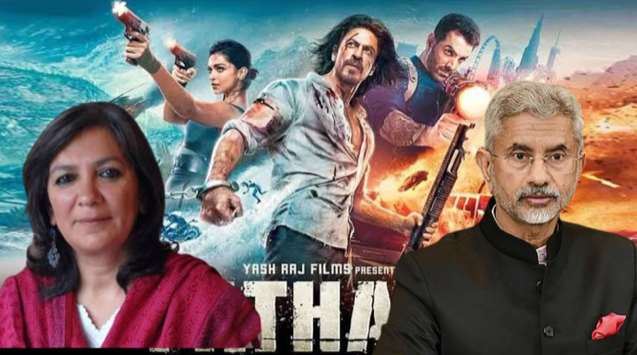
ThePrint columnist wants S Jaishankar to watch ‘Pathaan’ to recalibrate India’s relationship with Pakistan: Here’s why he should not

0

Amid the torrent of ‘expert’ advice and suggestions that S Jaishankar routinely receives for doing his job better, the Indian External Affairs Minister has received yet another recommendation that touts itself as the solution for India’s vexed problems with its neighbour, most notably Pakistan.

Jyoti Malhotra, a senior journalist with Shekhar Gupta’s ThePrint, has advised S Jaishankar to watch Pathaan, a recently released Bollywood movie with Shah Rukh Khan in the lead, to navigate the complexities of geopolitics and managing relationships with neighbours known for harbouring chronic ill-will towards India and for unabashedly sponsoring terror attacks in the country. 

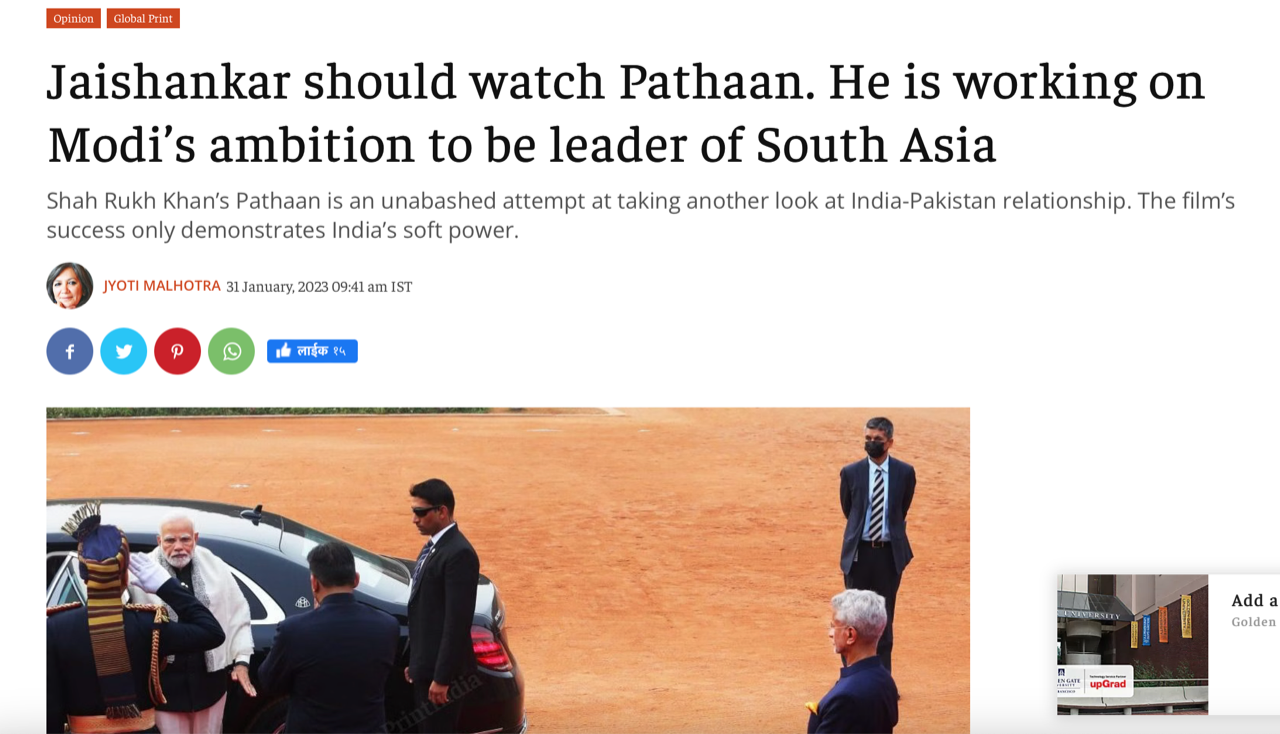
Published on 31 January 2023, the article titled ‘Jaishankar should watch Pathaan. He is working on Modi’s ambition to be the leader of South Asia’ talks about how the Indian Foreign Affairs Minister can learn a thing or two from Bollywood’s latest fictional thriller ‘Pathaan’ to manage India’s complex relations with her obdurate neighbours. 

Source: ThePrint

According to the author, Pathaan’s stunning success at the box office affirms India’s middle-of-the-road message, ‘Live and Let Live’, and it is a stinging reply to the ‘Hindutva Groups’ believing that “Pakistan” is a synonym for everything gone wrong in the subcontinent.

However, she fails to explain that the animosity between India and Pakistan is chiefly due to the latter’s unreasonable behaviour and propensity to wage asymmetrical war against India with the help of Islamic terrorists. India has never initiated a war with Pakistan, has always affirmed its existence as a sovereign country and always has been the first to extend a hand of friendship with its perennially acrimonious neighbour.

Ms Malhotra goes on to explain that ‘Pathaan’ has been an AfPak movie, an abbreviation for Afghanistan and Pakistan. She goes into raptures about the movie, emphasising how Afghans helped SRK, the good guy, in his mission to defeat the bad ones. She also gushes over the role of Deepika Padukone, who plays the character of an ISI agent who shifts her loyalty at the right time to join Pathaan aka SRK. 

The article then goes on to list down challenges faced by India in navigating foreign relations in a restive region of South Asia, where India plans to assert itself as a regional power. It also talks about the opportunities that India has going into the year when it is hosting the G20 summit and plans to launch overtures in its neighbourhood to cement existing ties and build new partnerships.

Towards the end, Ms Malhotra stresses the point that Pathaan serves as a lesson for the Ministry of External Affairs and the Indian diplomats, including Foreign Minister S Jaishankar, who could gain valuable inputs from the movie.

“…Pathaan is an unabashed attempt at, at least partially, taking another look at the India-Pakistan relationship. The movie’s amazing success not only demonstrates India’s soft power — a subject much discussed in the Ministry of External Affairs – but could well make the MEA learn a few things from it,” Ms Malhotra concludes in her article for ThePrint. 

Bollywood has long ceased to depict reality. It shows what is politically correct, what helps them sell their movie with minimal resistance from disparate groups picturised in the film, which explains why ‘Pathaan’ goes to great lengths to distort the actual reality and showcase Pakistan, the cradle of terrorism and anti-India activities, in a positive light. In this way, the movie not only manages to adhere to the liberal worldview but also appeases Pakistan by characterising them as a nation with predominantly peace-loving population (which is contrary to reality).

Contrarily, the movie shows an ex-RAW officer, played by John Abraham, to be corrupt, immoral, and wicked, and who plans to launch terror attacks in India—with money and not ideology being the driving factor behind the attacks.

For people who flock to theatres to watch a masala movie, the fact that Abraham served in the Indian intelligence agency may be lost in the numerous twists and turns the film offers. But for a discerning eye, it is yet another reminder of how Bollywood shields Pakistan and portrays Indians as corrupt and vile. 

Just like the ‘liberals’ claim that a few rotten apples do not represent an entire society, they should be comfortable with it when movies show a few Islamists driven by religious extremism, killing infidels. But that wasn’t the case during the screening of The Kashmir Files, a film that depicted the harsh reality endured by Kashmiri Hindus. 

Why Pakistan continues to treat India as its archenemy and why there is no reconciliation in sight

Those who have studied the Indo-Pakistan relationship for the last 75 years would know that Islamabad’s campaign against India—to bleed the country through 1,000 cuts is not underpinned by a mercantilist objective as ‘Pathaan’ projects it to be—terrorists attacking India for financial motives. It glosses over the ideological and religious differences that buttress Pakistan’s animosity toward India. Though it is currently economically weak, Pakistan still harbours to launch Ghazwa-e-Hind against India and bring her under Islamic dominance. For Pakistan, a quasi-republic created in the name of Islam, a Hindu-majority India is Dar-al-Harb (House of War), meaning a country where Muslims only reside in it but are not rulers. 

The chief architect of the Indian Constitution Dr BR Ambedkar, in his seminal book ‘Pakistan Or The Partition Of Indiaexplained in great detail the ideology that powers Pakistan and those who fought for the creation of Pakistan. 

According to Muslim Canon Law, the world is divided into two camps, Dar-ul-lslam (abode of Islam), and Dar-ul-Harb (abode of war). A country is Dar-ul-Islam when it is ruled by Muslims. A country is Dar-ul-Harb when Muslims only reside in it but are not rulers of it. That being the Canon Law of the Muslims, India cannot be the common motherland of the Hindus and the Musalmans. It can be the land of the Musalmans—but it cannot be the land of the ‘Hindus and the Musalmans living as equals.’ Further, it can be the land of the Musalmans only when it is governed by the Muslims. The moment the land becomes subject to the authority of a non-Muslim power, it ceases to be the land of the Muslims. Instead of being Dar-ul-lslam, it becomes Dar-ul-Harb,” he said.

However, apologists in India continue to disregard grave facts about Pakistan and its raison d’être and instead choose to live in an alternative reality informed by Bollywood’s idealist movies—where Pakistan is a benevolent country, its population is India-friendly, and its objective is mutual development—misconceptions that take root in the minds of ‘liberals’ until another Mumbai 26/11 or Pulwama attack strikes—yanking them back to reality, albeit fleetingly, until another Bollywood movie such as ‘Pathaan’ arrives. 

‘Pathaan’ has undoubtedly become a massive hit, right at the top of the list of highest-grossing movies in India, alongside KGF-I, KGF-II, and Baahubali, even though it may not be as profound and robust as other movies in the list. 

Detractors would keep whining, S Jaishankar should continue buckling down on what he has started

Nonetheless, this article does not attempt to discredit the phenomenal run that ‘Pathaan’ has had at the box office or point out its many lacunas. It also does not seek to dissuade the Indian Foreign Minister from watching the film if he so wishes. Instead, it is an attempt to emphasise how India’s foreign relations ought to be built with self-interest, national security, and mutual co-existence in mind and not premised on some Bollywood fantasy film devoid of realpolitik and geopolitical considerations.

S Jaishankar has been one of the finest foreign ministers in decades. He has been excellent in representing Indian aspirations on global forums and unrepentant in exposing the hypocrisy of the West. Under him, India saw a radical shift in its foreign policy, from once being timid in expressing its needs and desires to oozing supreme confidence in laying down its demands, befitting its growth and strength. Mr Jaishankar is doing an outstanding job. He needs to chug along instead of paying heed to senseless suggestions by Pakistani apologists.

As for Pathaan, it became a superhit not because it holds some geopolitical message for the Indian government or because it had an extraordinary screenplay. It probably had a spectacular run at the box office because of Shah Rukh Khan’s rabid fan following or maybe it was just a quirk of luck. The ‘liberals’ should stop viewing its success as some sort of epiphany for the Indian government. 

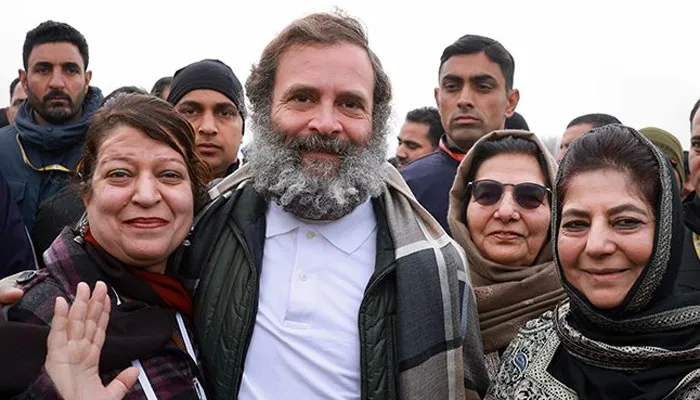
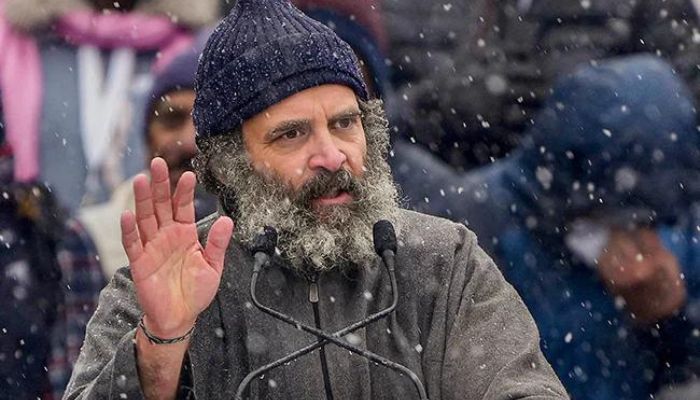
Rahul Gandhi’s beard emerges as the most important outcome of Bharat Jodo Yatra in an analysis by PTI

0

Earlier today, when not even 24 hours had passed since the Bharat Jodo Yatra of Rahul Gandhi concluded, news agency PTI (Press Trust of India) talked to ‘experts’ and declared that Rahul Gandhi’s ‘pappufication’ might be over, as his beard symbolises image makeover.

PTI, which is a news agency jointly funded and managed by various mainstream media houses of India, talked to various marketing experts who opined that Rahul Gandhi has finally ‘come of age’ and had become a political heavyweight with serious demeanour.

It should be noted that Rahul Gandhi has been coming of age ever since 2009, but if experts who talked to PTI are to be believed, that process is now complete with Bharat Jodo Yatra – a political exercise where Rahul Gandhi travelled over a thousand kilometres, allegedly to bring unity in the nation, and allegedly on foot.

The journey of Rahul Gandhi had started from Kanyakumari on 7th September 2022 and concluded in Kashmir on 30th January 2023. Many people wondered what was achieved after this yatra, but PTI talked to experts who could point out the biggest achievement – Rahul Gandhi’s beard.

“The beard has given him a certain degree of seriousness. He has arrived as a man, he is no longer Indira Gandhi’s grandson, Rajiv Gandhi’s son. He is now Rahul Gandhi, the man,” one of the experts quoted by PTI argued.

Perhaps the above quote also puts in perspective the claim when Rahul Gandhi, during his last leg of the Bharat Jodo Yatra, had claimed that he had killed Rahul Gandhi. Possibly, Rahul Gandhi, now the man as per PTI expert, had killed the Rahul Gandhi, who was just Indira Gandhi’s grandson.

PTI talked to various experts, all of whom appeared to agree that the beard of Rahul Gandhi was the biggest outcome of the Bharat Jodo Yatra, which is all set to change the political landscape of India. Experts also analysed what messages the free-flowing big beard of Rahul Gandhi was sending out.

“As a symbol it stands for the new wisdom of age, the hard labour of the prince,” said one of the experts, while the other explained that by sporting ‘a little unkempt and imperfect looking’ beard, Rahul Gandhi was sending a message that he had ‘more important things to focus on’ than grooming his beard.

The PTI report, in line with its serious analysis, further asserted that the key question before Rahul Gandhi now would be to-shave-or-not-to-shave now that the yatra has ended. “I believe this beard is here to stay,” said one of the experts PTI talked to.

The serious political analysis and commentary by the PTI had been re-published by The Hindu, ThePrint, Asianet, The Economic Times, and many other websites by the time of publishing of this report by OpIndia. The same could be expected to be printed in various newspapers tomorrow to help ordinary people understand the importance of Bharat Jodo Yatra.