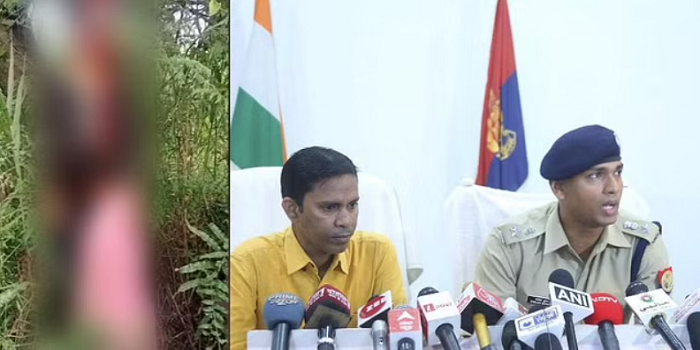
The Uttar Pradesh Police is thinking about slamming the stringent sections of the National Security Act (NSA) against the six accused arrested for the rape and brutal murder of two Dalit sisters in Lakhimpur Kheri. The NSA permits the police to detain the accused for one year without any charge.
“We are mulling imposing the NSA on the six accused persons. Apart from this, DNA samples of the six accused persons and the two girls will also be sent for an examination,” Superintendent of Police Sanjiv Suman was quoted saying.
SP Suman also said that none of the accused was minor and that they needed to be punished under strict laws. Earlier, the accused were produced before a POCSO court, which sent them to 14-day judicial custody. The two Dalit minor girls aged 15 and 17 were brutally raped and murdered by the six accused this week sending shock waves across the state.
The incident happened on Wednesday when two accused named Sohail and Junaid dragged the two Dalit girls to the sugarcane field and brutally raped them. The girls were later murdered and hanged on a tree with their dupattas. Other accused reportedly helped the duo to hang the girls on the tree and rub off the evidence.
Taking cognizance of the crime, UP CM Yogi Adityanath directed financial assistance of Rs 25 lakh and a house and agricultural land to be given to the family members of the girl. He also ordered the state administration to punish all the accused within a month. Reports mention that BJP’s district president Sunil Singh and Nighasan’s BJP legislator Shashank Verma visited the girls’ families to express their solidarity.
Also, 11 members of Congress including MLAs Aradhna Mishra Mona, Virendra Chaudhary, former MP Zafar Ali Naqvi, and former MLA Satish Ajmani met the family members of the deceased girls. Meanwhile, SP president Akhilesh Yadav, BSP supremo Mayawati, and Congress’ Rahul Gandhi attacked the BJP government in the state over the incident. BJP leaders however slammed the parties for playing politics over the human tragedy.
The six arrested accused in the case have been identified as Junaid, Sohail, Arif, Hafiz, Karimuddin and Chhotu (Gautam). They have been charged under the relevant sections of IPC and now the investigating police is thinking to invoke National Security Act in the case.
A trustee of a temple in Sola, a 69-year-old temple trustee from Ahmedabad’s Memnagar neighbourhood, filed a complaint on Wednesday against three unidentified Aam Aadmi Party (AAP) activists for reportedly threatening him over posting the party’s poster on a wall in front of the temple. Diparam Prajapati, a resident of Memnagar’s Chandralok society near Subhash Chowk filed the complaint with the police.
In the complaint, Diparam Prajapati stated that since 1992, he has served as the chairman of the Ramapeer temple trust in Sola. On September 4, Prajapati observed some people sticking AAP posters on a wall in front of the revered site as he was seated inside the temple. A temple security guard instructed them not to put up posters in front of the temple.
They began fighting with the security personnel. Prajapati also approached them and advised them not to paste the posters. Following that, those men left. According to Prajapati’s FIR, when he returned to the temple office at approximately 5.30 PM on September 4, three unidentified men stormed in. Those individuals identified themselves as AAP members and began threatening Prajapati for refusing to allow them to paste the posters.
In the FIR, Prajapati stated, “They threatened me with dire consequences and said that if their government comes to the power, they would teach me a lesson.” Prajapati stated that he could not approach the police sooner since he was attending a religious function at the temple. A criminal trespassing, intimidation, abusive language, and abetment case has been filed by Sola police and the investigation to identify the accused has started.
It is noteworthy that on Tuesday (September 13), supporters of the Arvind Kejriwal-led Aam Aadmi Party attacked a worker of the Bharatiya Janata Party’s Yuva Morcha with a knife. The incident happened in Gujarat’s Ahmedabad city’s Gomtipur suburb.
The victim was identified as Pavan Tomar. While speaking to Opindia, BJP Yuva Morcha (Karnavati Mahanagar) President Vijay Desai said, “Some AAP workers came to the office of Pavan in Gomtipur. Following a heated argument, one of them stabbed him with a knife.”
The same AAP men, according to Vinay, had previously attempted to rag Pavan in his neighbourhood. At present, Pawan is receiving medical care at the Shardaben General Hospital in Saraspur, Ahmedabad.
Days after Tamil Nadu Waqf Board claimed ownership of 7 Hindu-majority villages and a 1500-year-old temple in Tiruchirappalli, it has come to light that the Congress-led-UPA government gifted 123 government properties in Lutyens’ Delhi to Waqf in 2014.
As per a news report by Times Now, the decision was taken by the Cabinet and conveyed through a secret note, just days prior to the 2014 General election. The properties are located in prime locations such as Connaught Place, Ashoka Road, Mathura Road and other VVIP enclaves.
Times Now reported that it took just a phone call to identify the 123 government properties in favour of the Delhi Waqf Board. The news channel also shared the secret note, which is dated March 5, 2014, and signed by Additional Secretary JP Prakash.
#WaqfLandSecretNote#EXCLUSIVE | Days before the 2014 elections, the UPA govt ‘gifts’ 123 prime properties in Delhi to Waqf.
Addressed to the Secretary of the Ministry of Urban Development, the note read, “Denotification of 123 properties in Delhi under the control of Land & Development Office (LNDO) & Delhi Development Authority (DDA) allowing the title to revert to Delhi Waqf Board be communicated to the Ministry pending formal issuance of minutes.”
According to Times Now, a supplementary note was written by the Delhi Waqf Board on February 27, 2014, to the Government of India, staking its claim on the 123 prime properties in the National Capital. Interestingly, the ‘secret note’ was issued by the UPA Cabinet within a week of receiving the proposal.
The news channel also unearthed a notice by the Union Home Ministry which stated, “The Central government is pleased to withdraw from the below-mentioned Waqf properties under the control of LNDO & DDA, subject to the following conditions.”
The Congress-led-UPA government conceded that the 123 properties belonged to the Delhi Waqf Board and decided to ‘withdraw’ its claim on them, after receiving a note from the Board. it must be mentioned that the said properties were inherited from the British government and their status remained unchanged till March 5, 2014.
NDA government took cognisance of the matter in 2015
As early as February 2015, the BJP-led-NDA government vowed to set up an inquiry into the decision by its predecessor to gift government properties to the Delhi Waqf Board. The development came after the Vishwa Hindu Parishad (VHP) moved the Delhi High Court against the decision.
The Hindu organisation had then argued that the prized properties could not be released and identified under Section 48 of the Land Acquisition Act. While speaking about the matter, then Urban Development Minister M Venkaiah Naidu said, “I have received a representation against Salman Khurshid… On the eve of his demitting office last year, he was instrumental in the transfer of these properties, keeping vote bank politics in mind.”
According to a senior official at the Ministry, the de-notification process was done in haste (one day prior to the implementation of the Model Code of Conduct). Reportedly, 61 of the 123 properties were owned by LNDO while the remaining 62 properties were owned by DDA.
Delhi Waqf Board defended its decision
The Delhi Waqf Board was granted the power to carry out renovation and construction on the properties, following the transfer of ownership by the UPA. In its defence, nodal officer Alam Farooqui alleged that the 123 properties were built on masjids, dargahs and graveyards.
He claimed that the reversal of the UPA decision would impede the generation of revenue and the development of the Muslim community. “Revenue from wakf properties is used for the welfare of the community,” Farooqui said.
He further added, “Only a handful is vacant land and most of these have been encroached upon. Ownership rights would have allowed us to remove the encroachments.”
Inquiry Committee failed to resolve the issue
An Inquiry Committee, comprising of a retired Delhi Higher Judicial Service official named JR Aryan, was set up by the BJP government in May 2016. It was tasked to submit the report within a period of 6 months.
In June 2017, it was reported that the Committee recommended that the final call on the fate of the 123 properties must be taken by the Delhi Waqf Commissioner. One official informed that the JR Aryan Committee failed to examine the core issue of the de-notification i.e. whether the properties actually belonged to the Waqf.
This was despite the fact that it was tasked to seek the views of all stakeholders. Even though it took an extension of additional 6 months, the Inquiry Committee failed to come up with a concrete solution and passed the buck on to the Waqf Board Commissioner.
Screengrab of the news report by The Hindustan Times
It suggested that the DDA and LNDA take up the matter with the Commissioner for a solution. Interestingly, the power to appoint the Delhi Waqf Board Commissioner rests with the Delhi government (which is run by the Arvind Kejriwal-led-Aam Aadmi Party).
A source had told The Hindustan Times, “Had the panel taken a call on the ownership of properties and not left it to the waqf commissioner, the NDA government could have struck down the UPA’s decision.”
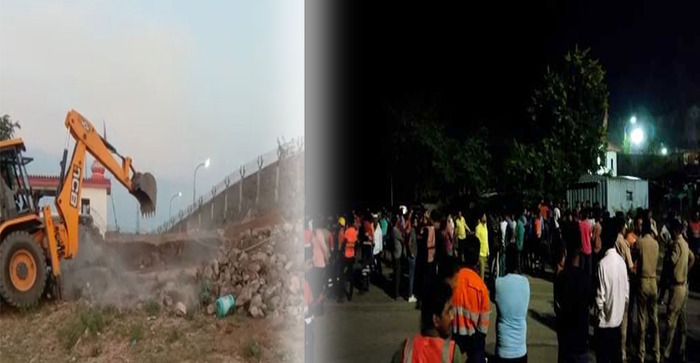
On Saturday, a wall built near the temple in Rajasthan’s Rajsamand was demolished by the local administration. Hundreds of members of the Hindu organization gathered at the location till 1 AM, according to a report by Zee News.
Due to the growing protest, top police authorities were forced to send an additional force to the scene to maintain the law and order. This incident took place near SK Mines in the Dariba police station area, where a wall built near a temple was demolished.
Locals told the media that when they opposed the demolition of the wall near the temple, a protestor was detained. However, after the protest, he was released. According to the Zee News report, Nathdwara deputy Chagan Purohit said that some locals pushed the wall to build their shops. This wall was then demolished by the local administration with a bulldozer.
No one was detained, according to Nathdwara Deputy Chhagan Purohit. Although the situation is now quiet, an additional batch of police officers have been deployed on the spot for security reasons.
Several recent ground reports by OpIndia have shown that demography is changing rapidly along India’s border with Nepal. The number of mosques and madarsas is rapidly increasing in the area. From August 20 to 27, 2022, an OpIndia team visited several areas in Nepal bordering India to observe the ground situation. What follows here is the thirteenth report of the series of reports documenting the facts noticed by the OpIndia team.
In the previous report, we looked in greater detail into the drastically rising number of mosques and places of worship springing up along the road from Balrampur district headquarters to Nepal’s Jarwa border. We emphasised how the entire 50-kilometre area from UP’s Balrampur district headquarters to Nepal’s Jarwa border is plagued with several mosques, mazars, and madarsas. After touring the Tulsipur market region, which borders the Balrampur district headquarters, our team chose to travel to the Barhni border, which is one of Nepal’s busiest border areas. This path is also approximately 60 kilometres long.
Mazars and madarsas on the highway
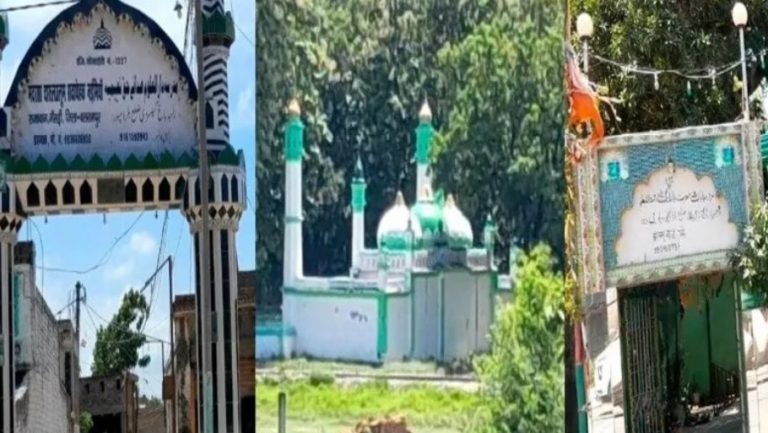
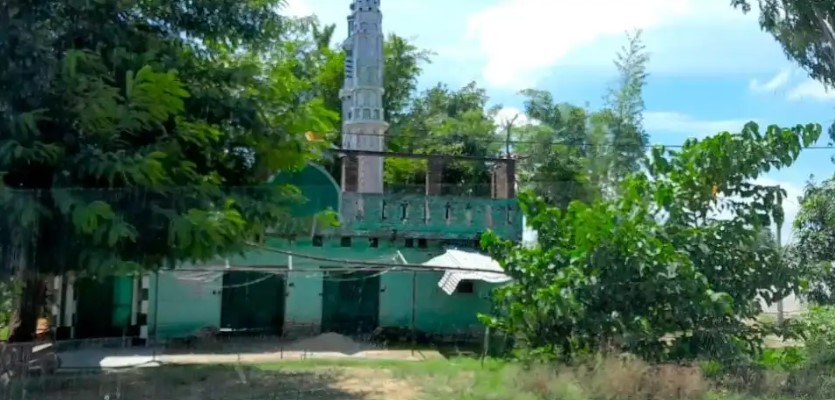
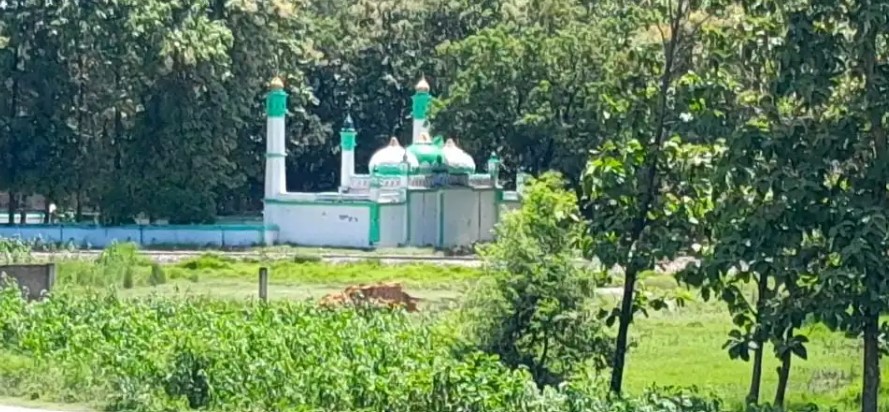
We came to an Islamic site of worship as we drove from Tulsipur market to the Barhni border. The shrine was painted green, and there was complete silence. This shrine had a minaret and a pucca structure built around it. It was only around 50 metres away from the highway.
Mosque on highway near the Barhni border
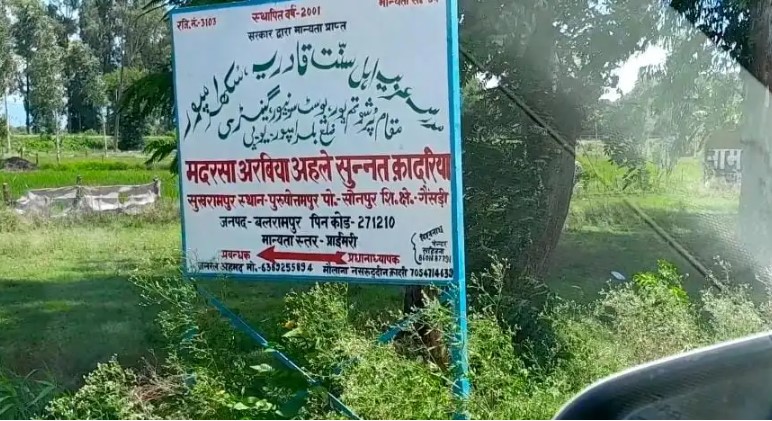
We must have gone about half a kilometre from this mazar before we spotted a madarsa signage on the left side of the road. ‘Madarsa Arabiya Ahle Sunnat Qadriya’ was inscribed on the board. The madarsa in Purushottampur, a village in the Kapilvastu District of the Lumbini Zone on the Indo-Nepal border, was recognised at the elementary level, according to the signboard. Maulana Nasruddin Qadri has been operating this madarsa since 2001.
Madarsa Arabiya Ahle Sunnat Qadriya in Nepal’s Purushottampur village
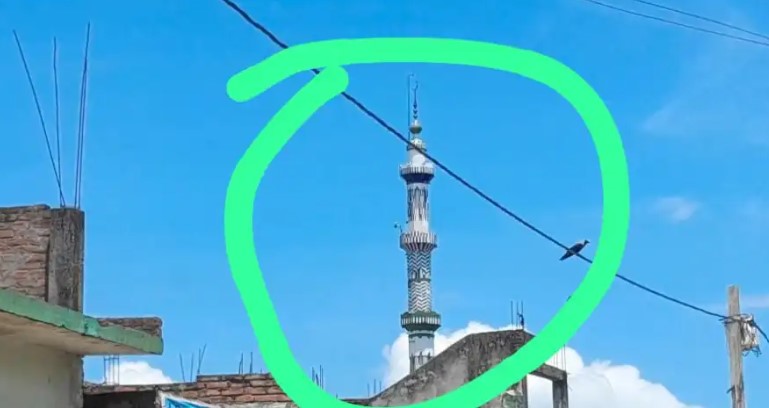
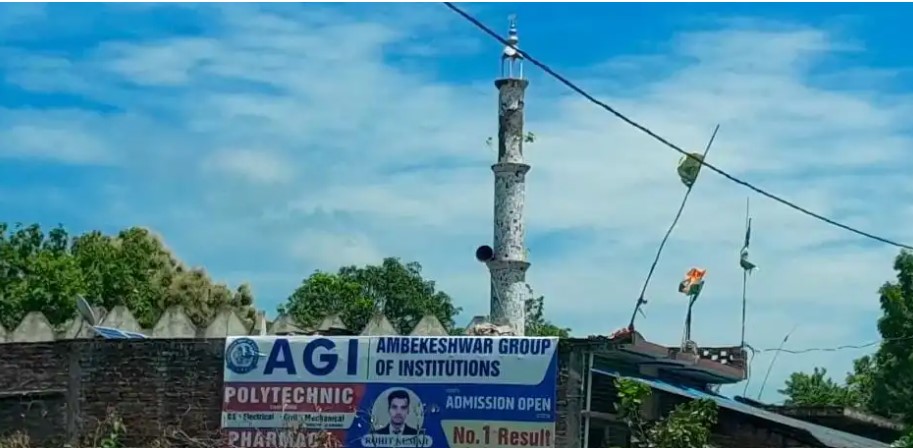
After moving no more than two kilometres from this madarsa, we noticed a mosque with one minaret built in the heart of the market. There was a row of shops outside the mosque. Here one must recall, that in one of our previous reports in this series, we highlighted how Maulana Barkatullah Khan had revealed to us that Saudi Arabia has provided funding for almost all of the mosques that have been built over the years along the Indo-Nepal border. The mosques with two minarets were built with funds from Indian Muslims, he explained, whereas the mosque with just one minaret was funded by Saudi Arabia.
Mosque with one minaret
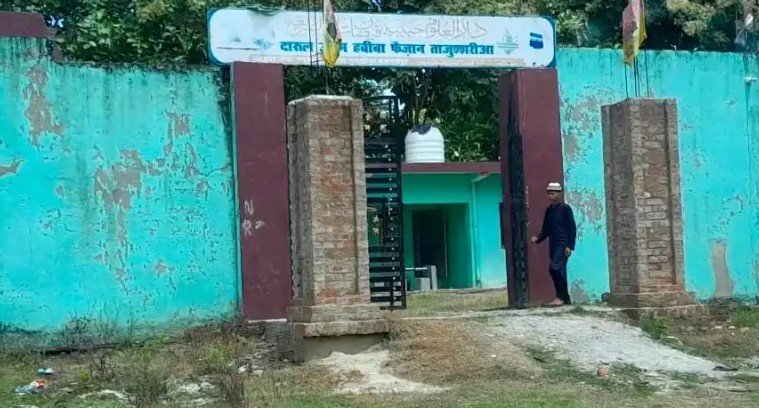
We passed another madarsa on our left as we drove towards Badni on the main highway. The name of this madrasa is ‘Darul Uloom Habiba Faizan Tajjushariya.’ his madrasa is built at a place named Matehna.
Madarsa in Matehna
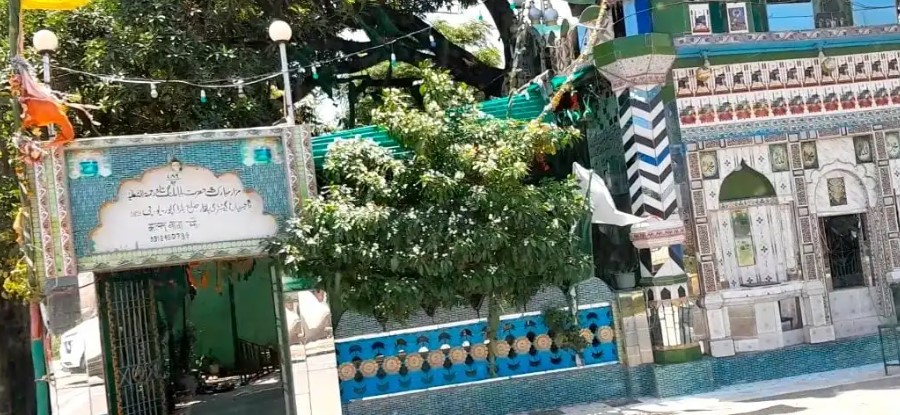
On the main highway after Matehna, there is Kewalpur market. We came across a dargah built right next to the road. A small gathering was also visible at the dargah. Something was inscribed in Arabic on the entry gate of the dargah.
After travelling a maximum of 100 metres from this mazar, a mosque appeared at Kewalpur. It was situated about 200 metres from the road. This mosque featured two minarets.
Mosque with two minarets
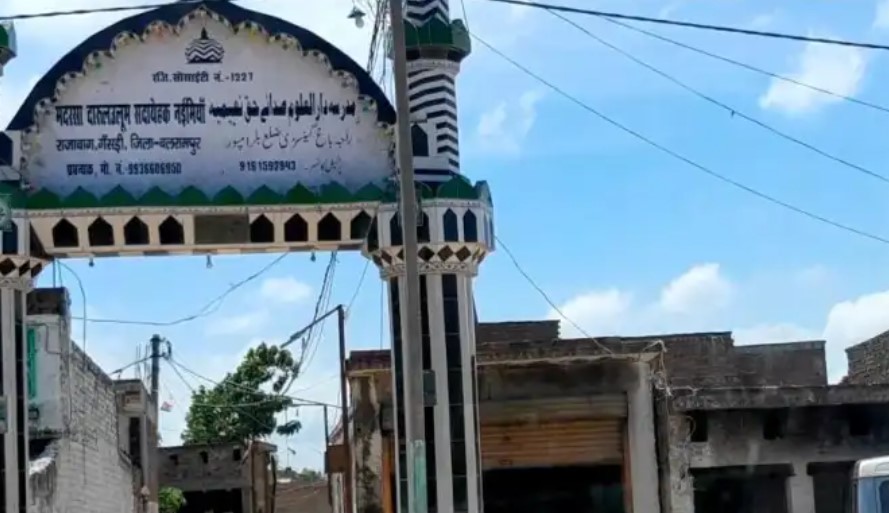
After travelling no more than 100 metres from the mosque, we spotted the gate of a madarsa. The gate was on the main road that led to the connecting road. The name ‘Madarsa Darul Uloom Sadyehq Naimiyan’ was inscribed on the board. This village was called Rajabagh, and it was located near the Gainsari border.
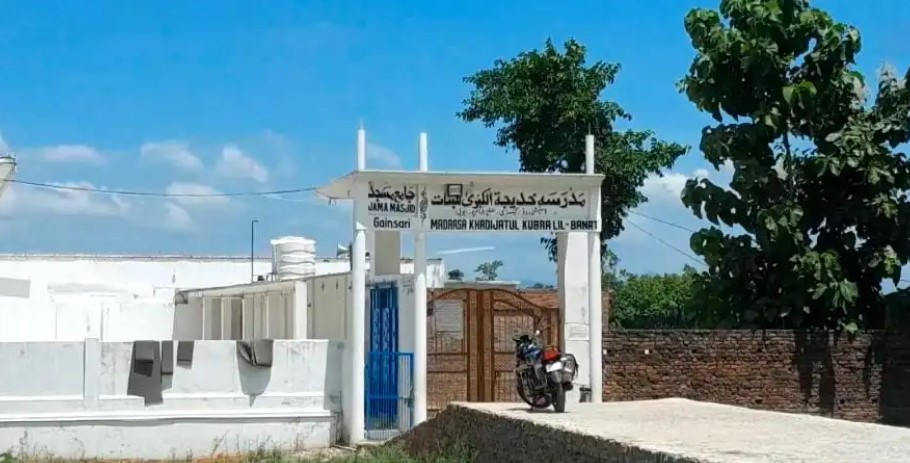
We hardly even walked one kilometre when we saw another madarsa near the main road. This madarsa was named ‘Madarsa Khadijatul Kublial Banat.’ This madarsa had a white-painted boundary and was enclosed on all sides.
Madarsa Khadijatul Kublial Banat
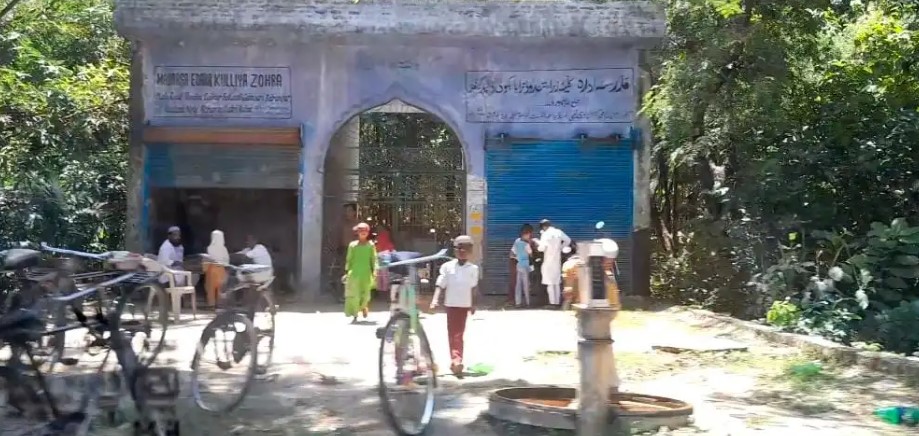
We’d just passed the previous madarsa when we noticed another. This was located on the road leading to Fatima Degree College in the Gainsri neighbourhood. Like the aforementioned madarsa, this too was situated on the side of the road. It was named ‘Madrasa Maculiya Zohra.’ Some people dressed as clerics were spotted teaching while numerous children were seen studying inside the madarsa. A government tap was installed right in front of it.
Madrasa Maculiya Zohra
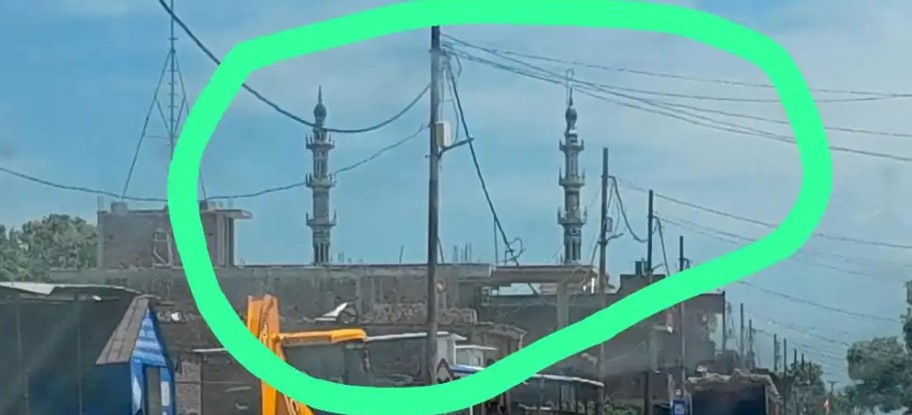
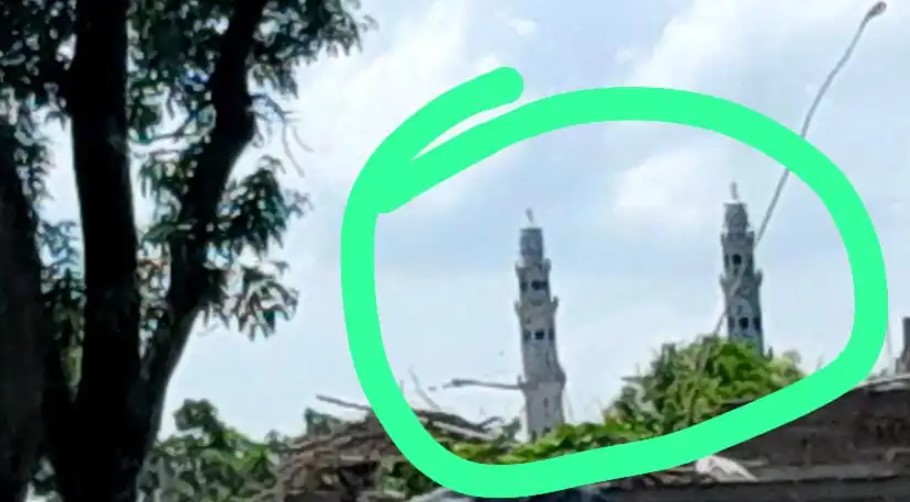
As we drove through the Gainsri neighbourhood toward the Pachpedwa market, we noticed a big mosque. The mosque was located alongside the road in the heart of the main market. Another little road connected to the Nepal border from here, and the mountains beyond the border of Nepal are clearly visible from this market. This mosque had two minarets as well.
SK Mishra, a local resident, told us that there are more shrines or madarsas situated within the villages than can be seen from the road. Mishra described the Pachpedwa mosque as the most important centre of worship in the neighbourhood.
Pachpedwa mosque
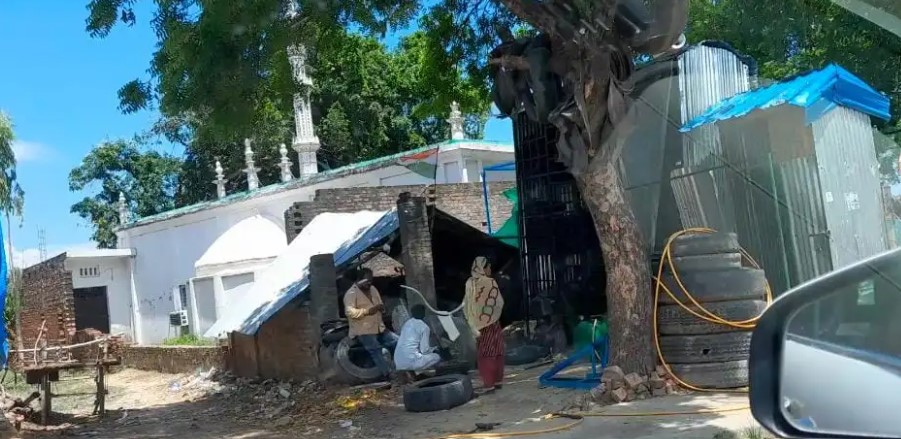
As we passed through the Pachpedwa market on our way to the Badhni border, we noticed another mosque at the Judikuiyan intersection. We had to only travel one kilometre to reach this point. This mosque was plastered white and like all others was also situated merely a short distance from the main road. There was a puncture shop in front of the mosque.
Puncture shop in front of the mosque
Islamic worship places present in every single village
We passed another masjid as we travelled barely 2 kilometres from the Judikuiyan roundabout. This mosque had two minarets and was located in the village town of Shankarpur Kalan in UP’s Balrampur district.
Shankarpur Kalan Masjid
We must have travelled no more than one kilometre from Shankarpur Kalan village when we came upon another mosque in Vishnupur village. This mosque was on our left. The mosque was located alongside a road close to a railway line. This railway line connects Delhi to the Nepalese border station at Barhni. This mosque also had two minarets.
Two minaret mosque found in Vishnupur village
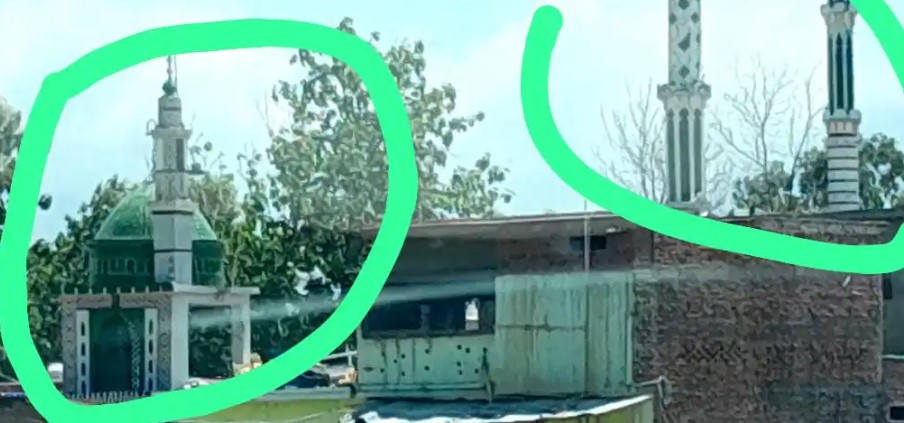
All of the previous markets and villages we visited were very close to the Nepali border. The Nepalese border is only 10 kilometres away from all of these locations. After leaving Vishnupur, we reached Narayanpur village. In this village also we saw a mosque beside the road. The most notable and distinctive feature of Narayanpur village was the presence of mosques with single and double minarets built side by side.
Mosques in Narayanpur with single and double minarets built side by side
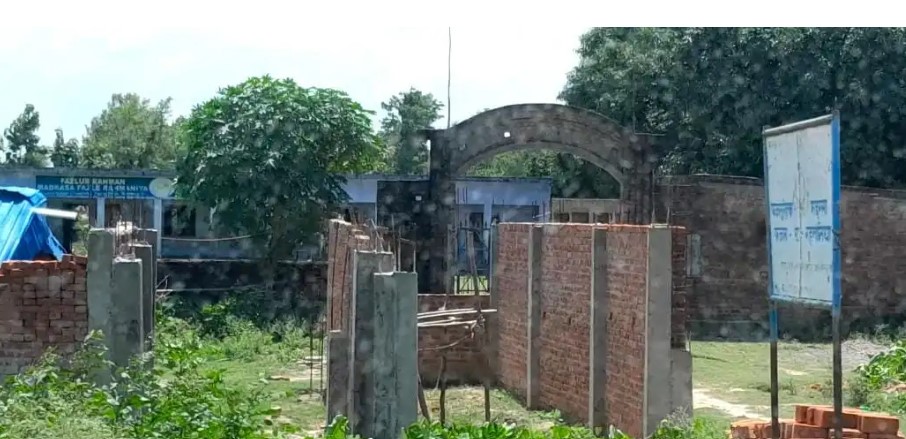
We reached the Laxminagar police checkpoint after travelling a little further away from Narayanpur, which is under the Pachpedwa police station in the Balrampur district. Another madarsa is being built on the opposite side of this police picket line. This madarsa is known as ‘Fazal Rahmania.’
Fazal Rahmania Madarsa
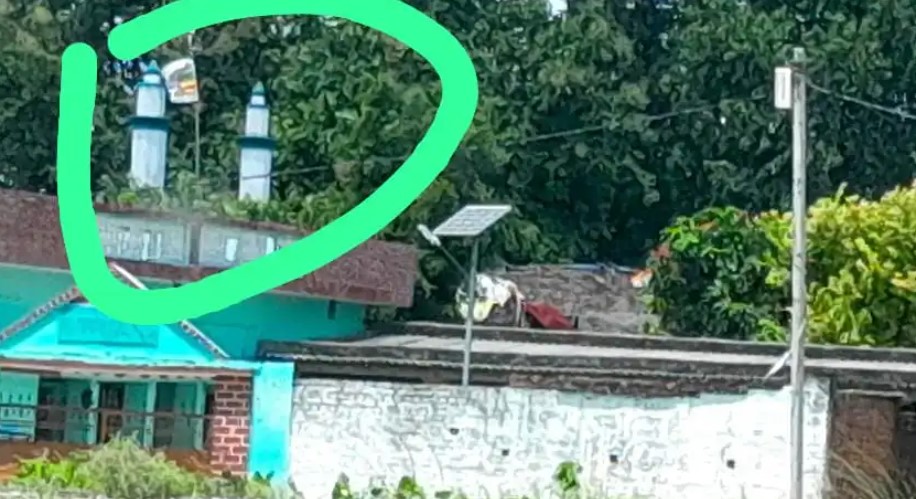
We must have driven for not more than 2 to 3 minutes from this madarsa before seeing a large mosque on the left side. This mosque had a minaret, which was surrounded by Islamic flags.
Islamic flags atop of mosque in Narayanpur
Mazars crop up under recently constructed overbridges and bridges
During our trip, we saw something peculiar. On the roadway from Balrampur to Barhni, we spotted multiple Mazars and Karbalas positioned beneath recently constructed overbridges. The fresh paint and plaster on it spoke to the fact that these were newly built. However, no one in the neighbourhood was willing to talk about it.
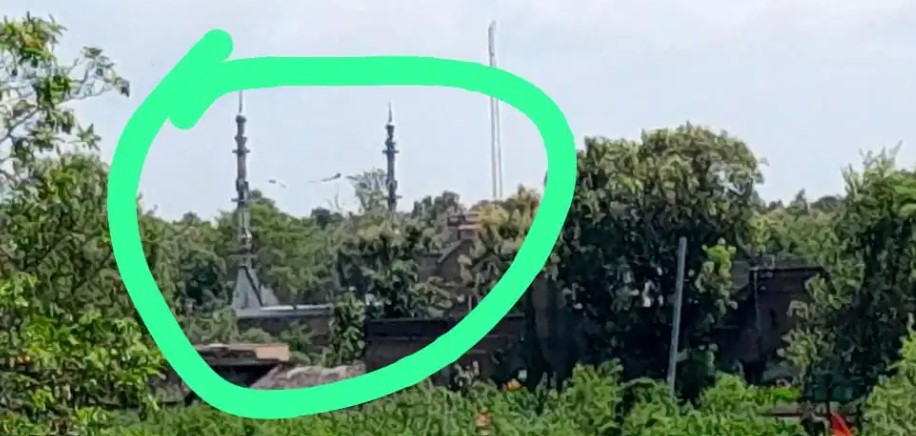
On the route heading to Barhni, there is an overbridge just in front of the village of Bishunpur Tantanwa. When we took a view of the surrounding from this overbridge, we noticed a green-coloured prayer hall in the village approximately a half kilometre away.
Prayer hall built next to the overbridge
When we took a closer look around, we noticed another shrine not far from the first. Both places of worship were nearly the same distance from the overbridge on the highway. The second mosque we saw had two minarets. Local people of Bishunpur Tantanwa hamlet also told us that a madarsa is all operating in that village.
Mosque in Bishunpur Tantanwa village
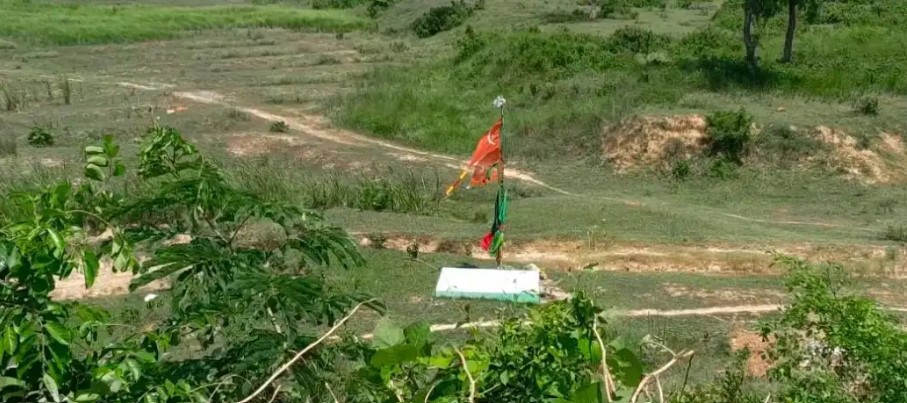
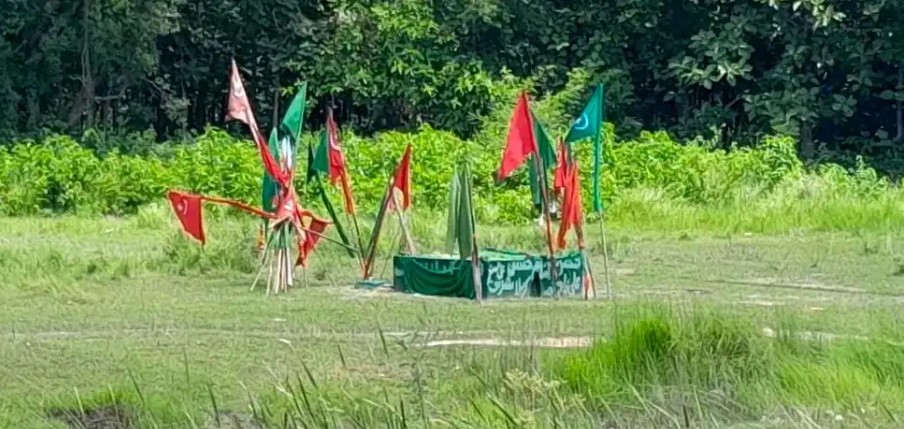
As we approached the Pachpedwa police station, we noticed a new mazar by a bridge. This mazar was located near Banjariya village. The distance between the tomb and the road bridge was hardly 100 metres. There was complete silence and no sign of habitation. Several Islamic flags were placed atop the mazar and a large platform was constructed around the tomb. There was also a pond beside the tomb. We met Arbaaz, a native of Kohandora village, but he couldn’t tell us anything about the mazar’s history.
Mazar near the bridge
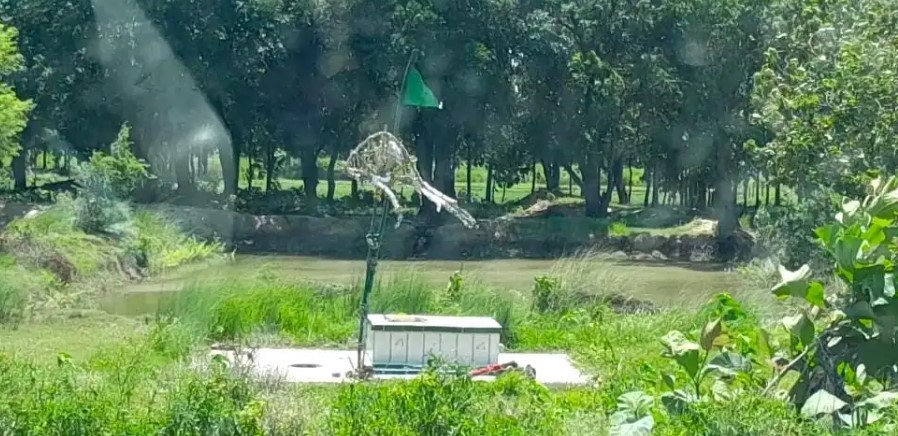
As soon as we crossed Gainsari Bazar, we saw an overbridge on the highway. A recently built mazar could be seen just below the overbridge. Some called it Karbala. This mazar was almost as far away from the overbridge as Pachpedwa’s tomb was from the road bridge. This mazar’s colour and size were comparable to the previous mazar’s. Islamic flags were also flying over it. A river ran alongside this mazar.
Mazar constructed below Gainsari overbridge
On the highway between Tulsipur and Gainsari Bazar, we observed another mazar erected beneath another overbridge. Gainsari is around 5 kilometres away. This tomb was similar in colour to the other ones. A number of green flags were placed around the tomb. The locals were unable to provide us with much information regarding this mazar.
This process of discovering mazars and mosques proceeded all the way to the border. Balrampur district ended at the Pachpedwa boundary, and Uttar Pradesh’s Siddharthnagar district began. What we noticed in this district will be detailed in the following report.
A creeping Islamisation of Nepal and its border areas appears to be underway, with Islamists steadily establishing their foothold in distant villages, including those on the Indian border. In the first four parts of this series, OpIndia documented the demography change ongoing in Nepal, as well as the worrying surge in the number of mosques and madarsas in the Himalayan nation’s border villages. Additionally, we also spoke about the rising incidents of love jihad in Nepal, as well as its Delhi connection and smuggling, and various other notorious activities that are going on along India’s border with Nepal.
It may feel like time has come to a standstill because, really, we just had the 2019 elections a few months back only’ but time is deceptive. Two years of a pandemic may feel like we are stuck, but things have moved ahead.
5.4 million households in India got toilets built between 2020-2021 and 2021-2022 under the Swachha Bharat Mission (Grameen). Despite constraints of the COVID-19 pandemic, 6 crore rural households in India got tap water connections. Under Pradhan Mantri Garib Kalyan Yojana, 14 crores of free LPG cylinders were given during the pandemic to the poor.
In a series of tweets in July 2021 Union Minister of Road Transport and Highways Nitin Gadkari said that highway construction had seen a sharp rise during the pandemic period. He had said that in 2020-21, the highway construction pace reached 36.5 km/day. This was the highest-ever construction speed for national highways.
India has also created world record by constructing 2.5 km 4 lane concrete road in just 24 hours and 26 km single lane Bitumen road in just 21 hours. #PragatiKaHighway
Some record-breaking work was done in infrastructure development across India while the country struggled to cope with the virus. Speaking of virus, the Central government led by Prime Minister Modi gave free ration to 80 crore people of India. Total population of India is pegged to be around 135 crore.
Under Pradhan Mantri Garib Kalyan Anna Yojana, the Centre announced the first relief package for the poor on March 26, 2020, just days into the first ever lockdown, when we stared at uncertainty. The idea was to make sure the poor of India, who were likely to be worst affected, do not have to struggle for food. Free foodgrains for 80 crore people, cooking gas for 8 crore families, and direct cash transfer to over 40 crore farmers, women, the elderly, the poor, and the needy were provided by the Centre during the pandemic. For two years, the Central government provided ration, making sure the most vulnerable section of the society is taken care of.
Not just that, on war footing the vaccines were manufactured and administered including homegrown vaccine, Covaxin. In just about 8 months, over a 100 crore doses were administered. This, despite the opposition leaders creating vaccine hesitancy and playing politics with our lives for their own gains. It was the diplomatic relations created and nurtured over past years that when the oxygen crisis hit India in April 2021, other countries came together to help us out by sending oxygen cylinders and other requirements. We were in this together.
What has Modi done for Hindus?
One of the many grievances people have with PM Modi is what has he done specifically for Hindus. Well, Hindus are unabashedly wearing their religious identity on their sleeves. The farce of ‘secularism’ we have grown up with is being torn down and more people are waking up to realisation that secularism has to be two-way street. That the ‘liberals’ and Islamists are calling ‘Jai Shri Ram’ a terror slogan and that is not okay. People are realising and saying it aloud that baying for someone’s blood and justifying beheading just because someone said something about your divine figures is not acceptable in a civilised society.
Politics is more than just winning elections. The leaders need to create an environment where civilisational issues can be discussed and corrected. A country is not run just by the elected leaders. There are bureaucrats, government officers who continue to serve whichever politician is in power. So it may appear like he has ‘not done anything’ for Hindus, but he has definitely been a catalyst, setting things in motion for a lot of issues.
That a film like Kashmir Files is made 32 years after genocide of Kashmiri Hindus and for the first time a majority of Indians were made to realise how bloody our recent past has been. Things that were brushed under the carpet are being discussed. It may not be a lot, but it is a beginning. There are discussions, debates and conversations. History that has been systematically rewritten over the years with tacit support of ruling dispensation is being corrected, but it won’t happen overnight and we must not lose hope. After all, there are a lot of disputed structures across India that need to be reclaimed.
Not just ‘TINA’
‘There is no alternative’ – ‘TINA factor’ is often peddled as the only reason Modi has won two rounds of general elections and if things go as they look, is set to win even the third time around. Except, that is not true. Before he became the Prime Minister, he has won Gujarat state assembly elections thrice – consecutively. It would not be wrong to say that he has won every election he has contested since 2001. That is a long time for anyone to stay in power ‘just because there’s no other alternative’.
And it is not that over these years other leaders have not portrayed themselves as PM candidate. Nitish Kumar wanted to be PM himself and even now harbours the dreams which has has made no effort to hide in recent times. West Bengal Chief Minister Mamata Banerjee, too, has these dreams. As does Delhi Chief Minister Arvind Kejriwal. Back in 2014, when seasoned protestor Yogendra Yadav, a former Sonia Gandhi aide, was a close aide to Kejriwal, the latter quit as chief minister of Delhi in just 49 days to contest elections against Narendra Modi from Varanasi. Kejriwal, of course, lost the election, but the hope is still alive. He has been trying to portray himself as a national leader.
And speaking of Yogendra Yadav, he has now attached himself to the Gandhis again. Rahul Gandhi has roped him and other ‘activists’ as part of his ‘Bharat Jodo’ container yatra, which appears to have been highly inspired from ex-Pakistan PM Imran Khan’s ‘container yatra’. Rahul Gandhi, too, has been having hopes of becoming the Prime Minister of India one day – after all, his father, grandmother and great grandfather have been one.
Except for Rahul Gandhi, others have been chief ministers of their states, just like Modi was before he became the Prime Minister. Rahul Gandhi has been four time MP – more number of times than Modi has been.
These are all ‘alternatives’. You may not vote for them but there are people who have. So just because you don’t think they’re worthy to be PM, doesn’t mean others don’t think so – ask those who voted for them all these years.
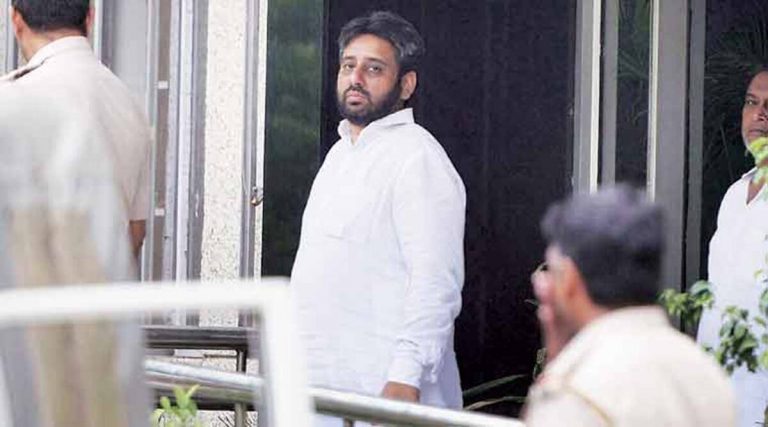
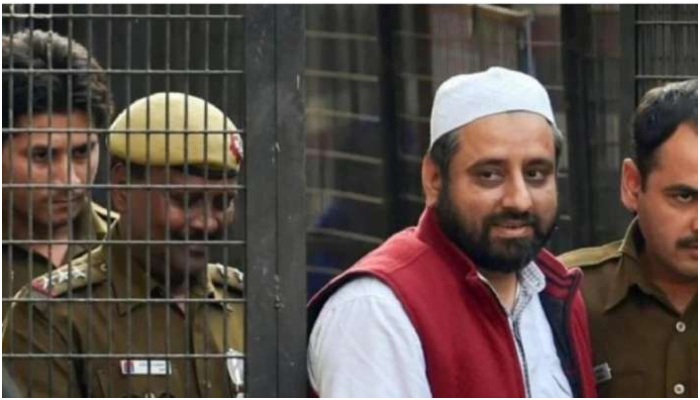
The Delhi Anti-Corruption Branch on Friday arrested AAP MLA Amanatullah Khan in connection with the Delhi Waqf Board corruption case after recovering incriminating material and evidence against him during the raids conducted earlier today.
ACB Delhi arrests AAP MLA Amanatullah Khan in connection with Delhi Wakf Board corruption case on the basis of the recovery of incriminating material and evidence against him during the searches conducted today. pic.twitter.com/9aC8OvKLLs
On Friday, Anti-Corruption Branch raided multiple locations, including the home of Aam Aadmi Party (AAP) MLA Amanatullah Khan. During the raid by the ACB, an unlicensed Beretta pistol was recovered from Hamid Ali Khan, the alleged close aide of Khan. During the raids, officials also recovered Rs 12 lakh.
The raids on Khan are related to an unauthorized appointment to the Waqf Board. At 12 p.m. today, Aam Aadmi Party MLA Amanatullah from Okhla was summoned for interrogation. The case against Amanatullah Khan was filed under the Prevention of Corruption Act 2020.
The Delhi ACB on Thursday issued a summons to Aam Aadmi Party leader Amanatullah Khan for questioning in a two-year-old case involving the Waqf Board.
Amanatullah Khan is the chairman of the Delhi Waqf Board. He tweeted about the notice and claimed that he is being summoned as he got the new office of the Waqf Board built. ACB is probing purported irregularities in the recruitment of the Delhi Waqf Board.
“I was summoned to the #ACB office for questioning and then transferred to the Delhi Police to harass my family members from behind. @LtGovDelhi Sir, remember that the truth never is harmed. I have complete faith in this country’s constitution and judiciary,” Khan tweeted.
On Sunday, 12 September, the personal assistant of AAP MLA Amanatullah Khan was arrested with live cartridges at Patna’s Jai Prakash Narayan International Airport. The passenger has been identified as Noman Ahmed, a resident of Abul Fazal Enclave, Shaheen Bagh, Delhi.
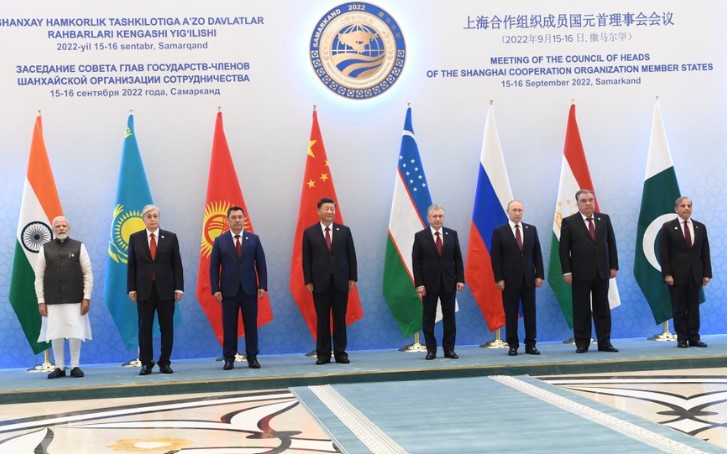
In a significant development, India has assumed the rotating presidency of the Shanghai Cooperation Organisation (SCO) from Uzbekistan. Uzbekistan is the current chair of SCO 2022 whereas India will be the next chair of the SCO.
The Shanghai Cooperation Organisation (SCO) summit which was being held in Samarkand, Uzbekistan has ended today (Friday).
The two-day summit was attended by Prime Minister Narendra Modi, Russian President Vladimir Putin and Chinese President Xi Jinping along with other leaders from a total of fifteen heads of state and the heads of ten international organizations.
Russian President Vladimir Putin extended his good wishes to India for hosting the 23rd edition of the summit next year. Apart from Putin, Chinese President Xi Jinping also congratulated India on assuming the presidency of the Shanghai Cooperation Organisation (SCO) for 2023. “We will support India for its presidency next year,” Jinping stated on Friday at SCO Summit in Uzbekistan. Notably, India will take over the rotating annual chairmanship of the SCO, which is now held by Uzbekistan.
Russian President Vladimir Putin also conveyed a congratulatory message to India for assuming the presidency.
This is the first in-person SCO Summit since the Covid epidemic. The most recent SCO Heads of State Summit took place in Bishkek in June 2019.
The SCO currently has eight member countries (China, India, Kazakhstan, Kyrgyzstan, Russia, Pakistan, Tajikistan, and Uzbekistan), four observer states interested in acceding to full membership (Afghanistan, Belarus, Iran, and Mongolia), and six “Dialogue Partners” (Armenia, Azerbaijan, Cambodia, Nepal, Sri Lanka and Turkey).
Speaking at the SCO meeting on Friday, Prime Minister Narendra Modi stated his desire to convert India into a manufacturing hub. He emphasised SCO’s valuable role in the post-COVID period, notably in advancing economic recovery and improving supply chains. PM Modi emphasised India’s focus on people-centric growth, which also prioritises technology.
At the SCO Summit in Samarkand, emphasised on the constructive role SCO can play in the post-COVID era particularly in furthering economic recovery and strengthening supply chains. Highlighted India’s emphasis on people-centric growth which also gives importance to technology. pic.twitter.com/kwF5bDESkR
At the SCO Summit PM Modi also discussed India’s efforts to increase the popularity of millets and said that SCO can play a big role in marking 2023 as the International Year of Millets.
The second day of the Shanghai Cooperation Organization (SCO) summit began with Prime Minister Narendra Modi, Chinese President Xi Jinping, Pakistan Prime Minister Shehbaz Sharif, and Russian President Vladimir Putin, among others, in attendance.
This is the first time the two world leaders, Xi Jinping and PM Modi, have met since the countries were locked in a standoff following the June 2020 Galwan Valley faceoff. Several rounds of high-level talks have taken place since then, and New Delhi and Beijing recently concluded disengagement at a critical site in Ladakh.
The summit, meanwhile, deliberated on regional security challenges, boosting trade and energy supplies among other issues. PM Modi, on the sidelines of the summit, held bilateral meetings with Putin, and Uzbek President Shavkat Mirziyoyev among other leaders.
Notably, the Shanghai Five, formed in 1996, had become the Shanghai Cooperation Organisation (SCO) in 2001 with the inclusion of Uzbekistan. With the addition of India and Pakistan in 2017 and the decision to admit Tehran as a full member in 2021, the SCO grew to become one of the world’s largest multilateral organisations, accounting for over 30% of the global GDP and 40% of the world’s population.
On Wednesday, a Delhi Court acquitted two defendants named Yogendra Singh and Suraj in connection with the northeast Delhi riots in 2020. The court was hearing a case involving a First Information Report (FIR) filed by a person named Shamshad at the Jyoti Nagar Police Station in Delhi on February 29, 2020. The FIR stated that on February 25, 2020, thousands of rioters robbed, trashed, and torched property in the Ashok Nagar neighbourhood.
According to the reports, Additional Sessions Judge (ASJ) Amitabh Rawat of the Karkardooma Court in Delhi observed that the prosecution has not been able to prove its case against both accused people beyond a reasonable doubt.
“Hence, both the accused persons namely Yogendra Singh and Suraj, are acquitted of all the offenses punishable under Section 147 (rioting), 427 (causing property damage), 436 (mischief by fire or explosive substance with intent to destroy house), and 149 (unlawful assembly) of IPC”, the Court ordered.
The accused Yogendra and Suraj were charged under Indian Penal Code Sections 147, 148, 149, 427, and 436. (IPC). According to the prosecution, among the rioters were accused Yogender Singh and Suraj, who burnt down the complainant’s residence. The prosecution relied on the testimony of purported eyewitness policeman Pramod and public witness Shamshad, who recognized two of the defendants and led to their arrest.
The Court on Wednesday also noted Shamshad’s statement in which he said, “on February 25, 2020, hundreds of rioters came to Ashok Nagar Masjid and they started arsoning the shops including mine. When I saw the rioters, he ran away. I could not identify anyone and I ran away to save my life”.
The court responded by stating that the witness, Shamshad, had unequivocally deposed that rioters began arsoning houses/shops, including his, on February 25, 2020, and that upon witnessing them, he rushed away and was unable to identify any rioters. However, in his statement recorded under Section 161 CrPC, he indicated that he had recognized both of the defendants.
The court further observed that the testimonies of Shamshad and Pramod did not inspire it to find the accused people, Yogendra Singh and Suraj, guilty beyond a reasonable doubt.
“On the cumulative reading of the entire testimonies of all the witnesses, the presence of accused persons in the unlawful assembly on the time and place of incident and their participation in the act of rioting, mischief, and burning of the house of complainant Shamshad is not established at all”, the Court quoted.
Furthermore, the Court noted that SI Yashvir Singh’s testimony concerning Section 188 (violation of an order issued by a public servant) of IPC is insufficient because the appearance of the accused persons is not established and no charges were framed, and even the testimony has not come from the concerned authority who allegedly gave the written permission under Section 195 Cr.P.C.
On Friday, Anti-Corruption Branch raided multiple locations, including the home of Aam Aadmi Party (AAP) MLA Amanatullah Khan. During the raid by the ACB, an unlicensed Beretta pistol was recovered from Hamid Ali Khan, the alleged close aide of AAP MLA Amanatullah Khan. During the raids, officials also recovered Rs 12 lakh.
The raids on Amanatullah Khan is related to an unauthorized appointment to the Waqf Board. At 12 p.m. today, Aam Aadmi Party MLA Amanatullah from Okhla was summoned for interrogation. The case against Amanatullah Khan was filed under the Prevention of Corruption Act 2020.
The Delhi ACB on Thursday issued a summons to Aam Aadmi Party leader Amanatullah Khan for questioning in a two-year-old case involving the Waqf Board.
Amanatullah Khan is the chairman of the Delhi Waqf Board. He tweeted about the notice and claimed that he is being summoned as he got the new office of the Waqf Board built. ACB is probing purported irregularities in the recruitment of the Delhi Waqf Board.
मुझे पूछताछ के लिए #ACB दफ़्तर बुलाया गया और पीछे से मेरे घरवालों को प्रताड़ित करने दिल्ली पुलिस को भेजा गया। @LtGovDelhi साहब, सच को कभी आँच नहीं आती है याद रखिएगा।
“I was summoned to the #ACB office for questioning and then transferred to the Delhi Police to harass my family members from behind. @LtGovDelhi Sir, remember that the truth never is harmed. I have complete faith in this country’s constitution and judiciary,” Amanatullah Khan tweeted.
On Sunday, 12 September, the personal assistant of AAP MLA Amanatullah Khan was arrested with live cartridges at Patna’s Jai Prakash Narayan International Airport. The passenger has been identified as Noman Ahmed, a resident of Abul Fazal Enclave, Shaheen Bagh, Delhi.
Noman Ahmed had arrived at the airport to catch a Spice Jet flight to Delhi. When officials from the Central Industrial Security Force (CISF) inspected his hand luggage, they recovered a 7.65 mm live cartridge. The CISF was unable to locate a weapon license with Noman to explain the live cartridge. Following the discovery, he was turned over to Patna Airport Police.
During the police probe, Noman disclosed that he is the personal assistant to Delhi MLA Amanatullah Khan. He had landed in Patna with a bag of Amanatullah Khan’s Personal Security Officer.