Home Blog Page 2884

Congress leader Jairam Ramesh terms the opening of locks of Babri structure a mistake, party had earlier questioned the existence of Lord Ram

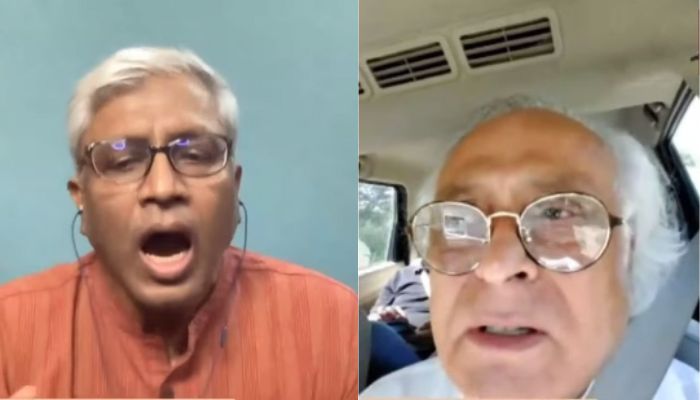
On Thursday (September 15), veteran Congress leader Jairam Ramesh courted controversy after he dubbed the opening of Babri Masjid, which eventually paved the path for the Ram Janmabhoomi struggle, a mistake.

In an interview with ex-AAP leader Ashutosh, Ramesh reminisced about the historical blunders of the Congress party. “We have made several mistakes. It is untrue that we did not commit any mistakes. Take the Shah Bano case for example or the opening of the locks of the Babri Masjid in 1986,” he said.

The Congress leader further added, “I do not want to delve into the history but all these events are recorded in history. And today we are paying the price for it.” It must be mentioned that the Rajiv-Gandhi government ordered the opening of Babri Masjid in February 1986, which has remained locked since 1949.

The Congress government took the drastic step in order to placate the Hindu community, who were miffed at the blatant Muslim appeasement policy of the party. The opening of the Babri Masjid, followed by a concerted campaign by the Vishwa Hindu Parishad and the BJP, culminated in the Ramjanmabhoomi movement.

The movement mobilised lakhs of Hindus into realising the dream of a magnificent Ram Mandir at the site where Lord Ram was born. For Congress to call the opening of the Babri masjid, ‘a mistake’, is to deride the sentiments of the Hindu community that braved the tyranny of Mughal emperor Babur.

However, the grand old party is not new to mocking Hindu beliefs. On several occasions, seasoned party leaders have questioned the existence of Hindu deities and insulted the religious sentiments of the Hindu community.

Congress denied the existence of Lord Ram, opposed Ram Mandir

In 2007, an affidavit filed by the Congress-led government read, “Valmiki Ramayana and Ramcharitmanas admittedly form an important part of ancient Indian literature, but these cannot be said to be historical records to incontrovertibly prove the existence of the characters and occurrences of events depicted therein.”

The affidavit was filed to register the UPA government’s opposition to the demand to scrap the Sethusamudram project as it would damage the Ram Setu.

Screengrab of the news report from 2007

Senior Congress leader Kapil Sibal fought the Ram Janmabhoomi case for the Sunni Waqf Board opposing the building of a magnificent Ram temple at the disputed site in Ayodhya. He also employed dilatory tactics and asked the apex court to delay the decision in the Ram Janmabhoomi case till the 2019 elections. 

Another eminent Congress leader Shashi Tharoor had earlier claimed that no ‘good Hindu’ would want a Ram Mandir at the Babri site. Tharoor urged that one should instead have the Ram Mandir in one’s heart. In August 2020, Congress leader Kumar Ketkar denied the historical existence of Shri Ram and suggested that the Hindu God is a creation of literature.

“Ram exists because of Ramayan. However, a conclusion is yet to be reached on whether Ram is the creation of history or literature. Valmiki wrote a great epic and its impact was felt both in India and abroad. But, I don’t know if He existed in history,“ he had remarked.

On being questioned about his bizarre stance on the existence of Lord Ram, Kumar Ketkar tried to justify his comments in light of the baseless claims made earlier by then Prime Minister of Nepal KP Sharma Oli.  “There is no historical evidence (of the existence of Shri Ram) and that is why Nepal’s PM claimed that Ayodhya is located in Nepal”, Ketkar concluded.

Watch: How Shazia Ilmi stood up to Aatish Taseer-led liberal bullies chanting anti-India slogans at JLF New York

0

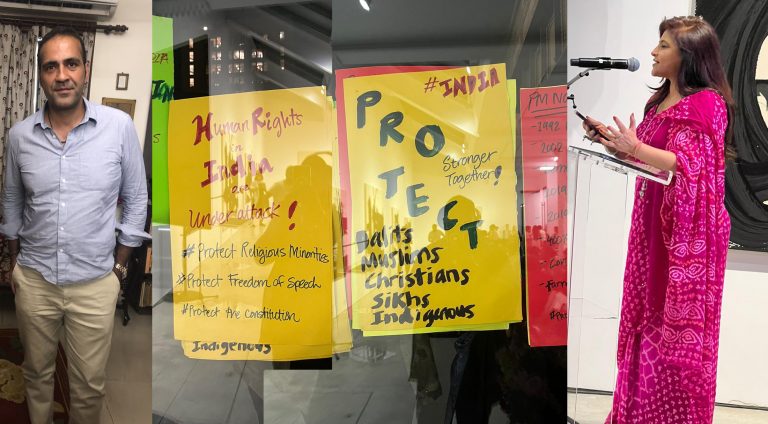
At least three ‘liberal’ panellists had withdrawn from Jaipur Literature Festival in New York earlier this week because BJP leader Shazia Ilmi was invited as a panellist. Despite the protests by Islamists masquerading as left-liberals, Shazia Ilmi participated in the scheduled program on September 14, and also delivered a speech at the conclusion of the three-day event.

While those who had withdrawn from the event were Americans, including authors Marie Brenner and Amy Waldman, the campaign against the BJP leader was led by British-American author Aatish Taseer, who is son of Indian journalist Tavleen Singh and Pakistani politician Salman Taseer. While Aatish Taheer always has been an Islamist, his hatred for the Modi government skyrocketed after the central govt cancelled his OIC card as his father was a Pakistani.

While Shazia Ilmi’s scheduled event titled Intersections: Searching Equity with Dalit activist Guru Prakash Paswan Prashant Jha on September 14 went smoothly, she was heckled later while delivering an address in the evening. She had to face anti-India protests where leftist activists were chanting slogans and holding placards with anti-India messages.

Sharing a video from the event, Shazia Ilmi said, “the chorus of the protesters grew louder as they flashed placards against India! And against this very telling backdrop of hate, I spoke of the necessity to bury hatred within and without.” Standing her ground strongly, she added, “I will not allow ‘borrowed hate and mortgaged rage’ to come between my truth and theirs”.

She also informed that the organisers of the festival stood up to the bullying by anti-India journalists from New York Times who had pulled out from the festival due to her presence. Calling Aatish Taseer the Instigator-in-chief, she said that his whining along with vitriol from Suketu Mehta and Kiran Desai “did nothing to dampen the swag!”

Shazia added, “Freedom of Speech is not a one way street, fellows!”

Days before Shazia was scheduled to participate in the festival, Aatish Taseer had launched a campaign against her, trying to get her cancelled from the event. He had accused the organisers of Jaipur Literature Festival in New York of duping people into believing that they were attending a festival with “respectable, intellectual people with bodies of work behind them”.

He had tweeted on September 13, “wrong to impose a hateful ideology like Hindutva by stealth on unsuspecting members of the New York intelligentsia.”

Acknowledging that he was leading the anti-Shazia protests in New York, Aatish had said that he had mobilised South Asian activists and writers to explain to other participants that “these are full-on right-wing ideologues, including card-holding members of the BJP”.

He said, “These people who are appearing from the New York side who are liberals would never be caught dead with these [BJP] people. So it’s a really, really insidious and sly thing that the JLF leaders have done.”

Aatish Taseer was retweeting campaigns against Shazia at the festival, tweeting to join them on September 14th to tell “Narendra Modi (and his quislings) to go f**k themselves”.

Shazia Ilmi and Aatish Taseer also had an war of words on Twitter, where Taseer alleged that Ilmi was invited due to pressure of BJP, and she had no place in the event as she is not an author. Abusing her, he said, “You’re a shameless quisling, and a traitor to every aspect of your background. Go back to your fascist masters.”

But Shazia shot back saying she was invited to the festival earlier also, and non-authors are regularly invited. “Our truths are not the same. You’re speaking as privileged man and I speak as a Muslim woman living in India,” she added.

Rape and murder in Lakhimpur Kheri: Family allows bodies to be cremated after district administration agrees to fast track case, demand for death sentence

0

In Uttar Pradesh’s Nighasan village in Lakhimpur Kheri, there was a ruckus following the rape and murder of two Dalit young sisters. The Lakhimpur district administration persuaded the family of the victims to allow the remains to be cremated on Thursday after 24 hours of the incident since the families of the victims had refused to conduct the final rites of the girls.

The relatives of the victims consented for the bodies to be cremated after the Lakhimpur district administration made five promises to the families. The administration pledged to provide the family with monetary compensation of Rs 16 lakhs.

In its second promise, the administration stated that the money designated under the Rani Laxmibai plan would be paid promptly upon the completion of the prosecution’s inquiry. Aside from that, the block will shortly begin the process of constructing a house for the victim’s family through the Pradhan Mantri Awas Yojana.

Promises made by the administration to the victim’s family (Credit: Aaj Tak)

In the fourth promise, the administration stated that an application for a job and other financial help will be forwarded to the government soon. At the same time, the government stated that the case will be tried in a fast-track court in order to get the accused the death penalty.

Previously, the family of the deceased girls had made their demands clear by refusing to conduct the funeral rituals. The family had put three conditions for performing the final rites. The family requested that the government pay them one crore rupees in compensation, the siblings of the victims should be granted government employment based on their credentials, and all of the accused should be sentenced to death.

The arrest of 6 accused including Junaid, Sohail and Arif

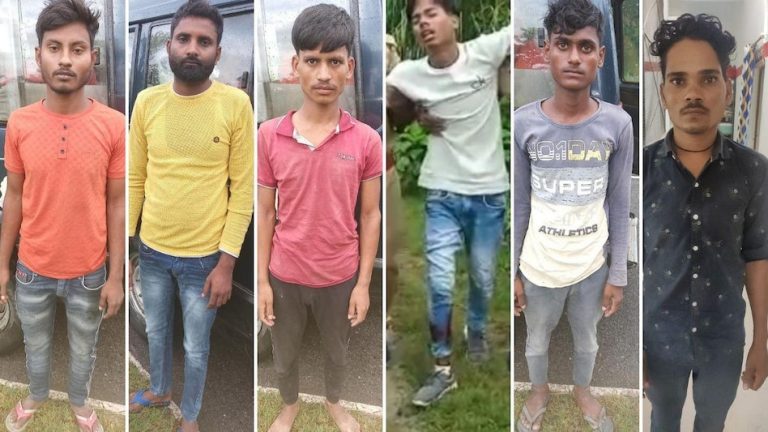
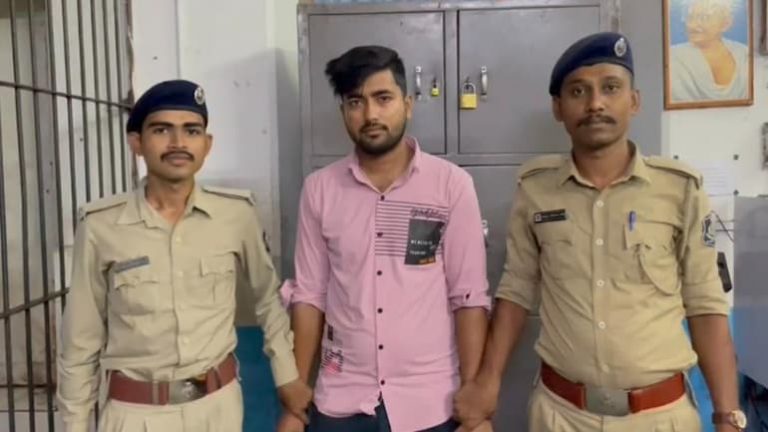
Six individuals were arrested on Thursday by the Uttar Pradesh Police, namely Junaid, Sohail, Arif, Hafiz, Karimuddin, and Chhotu (Gautam), for the horrific rape and murder of the Dalit girls in the Lakhimpur Kheri district of Uttar Pradesh. According to the investigating police officer, the accused Junaid attempted to flee during his capture and was shot in the leg.

The crime took place on Wednesday when two suspects by the identities of Sohail and Junaid brought two Dalit girls, aged 15 and 17, to a sugarcane field and raped them. The girls were later murdered and hanged on a tree with their dupattas by the rapists and their associates.

Ahmedabad court sentences Jignesh Mevani and 18 others to six months in prison in 2016 roadblock protest case

0

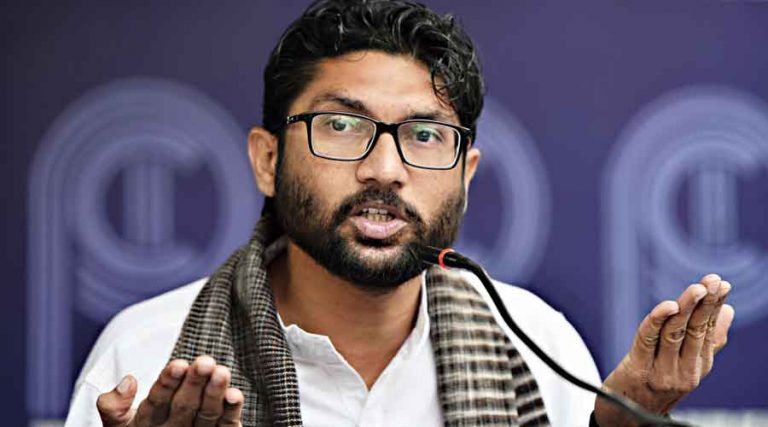
A metropolitan court in Ahmedabad on Friday sentenced independent MLA and the working state president of Gujarat Congress Jignesh Mevani to six months in prison in connection with the 2016 roadblock protest case. Besides Mevani, the court also convicted 18 others involved in the case after an FIR was filed against them for protesting to name a building in Gujarat University’s law department after Dr B R Ambedkar.

Mevani and others were pronounced guilty of charges that included rioting, and unlawful assembly among others. The additional chief judicial magistrate P N Goswami sentenced them to six months in jail and a fine of Rs 700 each. The judgment came after it stayed the order for a month allowing the convicts the time to challenge the verdict.

Mevani, an independent MLA from Vadgam who was appointed as the working state president of the Gujarat Congress, reacted to the judgment by saying, “Gujarat government released all rapists from jail, garlanded them and said that their conduct was very good. C R Patil, the Gujarat BJP president, has nearly 108 cases against him but in none of the cases, he had been convicted. But, this is the second case against the agitators who have been sentenced to six months in jail for carrying out a rally demanding a building to be named after Baba Saheb Ambedkar. We welcome the judgement.”

In 2016, a complaint was filed with the Gujarat University police station in Ahmedabad against Mevani and 19 others linked to Rashtriya Dalit Adhikar Manch for carrying out a protest demanding the under-construction building of the law department be named after Ambedkar. Mevani and others had blocked the road and when the police tried to clear it, they started undressing themselves to oppose them. The police have booked them for rioting, and unlawful assembly among other charges.

Earlier in May, Mevani and nine others were sentenced to three months in jail by Mehsana court in connection with a case registered in 2017 for organising a rally without permission. The court granted him conditional bail, prohibiting him from travelling outside Gujarat without its permission.

In April this year, Assam Police arrested Jignesh Mevani for posting objectionable tweets. His tweets were later withheld by Twitter due to a request by authorities.

Mevani was booked under sections 120B (criminal conspiracy), section 153(A) (promoting enmity between two communities), 295(A), 504 (intentional insult with intent to provoke breach of peace), and sections of the IT Act.

Surat: Restaurant owner Sarfaraz Mohammad Khan arrested for serving beef to customers, butcher who supplied cow meat is now absconding

0

On Sunday, September 11, Sarfaraz Mohammad Wazir Khan, a restaurant owner in Gujarat’s Surat was arrested for serving beef to customers in his hotel. When Hindu organizations learned of the restaurant owner’s activities, they immediately notified the authorities, as per a report in India Today.

The police raided the restaurant based on the information and discovered 60 kg of beef stored in the refrigerator. A case was filed against the restaurant owner at Surat’s Lalgate police station, and he was arrested. Meanwhile, Ansar, the butcher who delivered him with beef, has been declared absconding. 

Three people from Hindu organizations in Surat received information that beef was being served in a non-vegetarian restaurant in the Hodibangla region. They investigated the matter and, after establishing the accuracy of the information, they reported it to the Lalgate police station. 

On September 11, police raided the restaurant and found 60 kg of meat stashed in six bags in the refrigerator. Following that, the police summoned a veterinarian to the scene and sent the sample to the Forensic Scientific Laboratory for analysis. In the FSL report it was found that out of 60 kg of meat, 20 kg was cow meat and 40 kg of buffalo meat, as reported by OneIndia.

Kerala HC upholds life sentence of Beedi tycoon Mohammed Nisham for the brutal murder of security guard Chandrabose

0

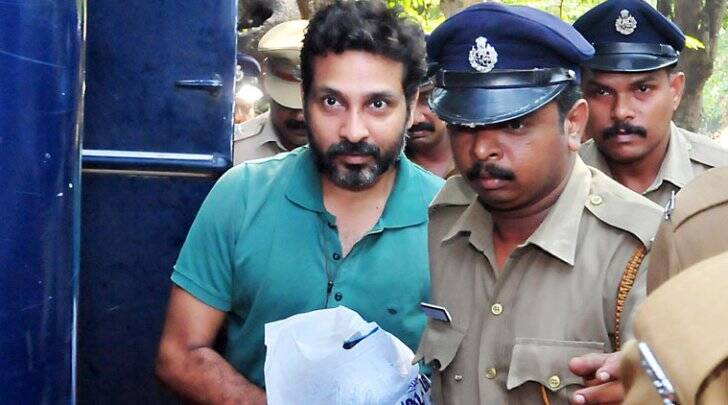
The Kerala High Court upheld the beedi tycoon’s life sentence on Friday. Mohammed Nisham, a beedi tycoon, was sentenced to life imprisonment by the District Sessions Court. Nisham filed an appeal at the High Court against the Session Court’s judgment.

While hearing the case, a division bench of Justice K Vinod Chandran and Justice C Jayachandran of the High Court ruled that all of Nisham’s appeals were dismissed. The Thrissur District Sessions Court sentenced Nisham to life imprisonment in January 2016, a year after the incident, after finding him guilty under sections 302, 326, 323, 324, 427, 449, and 506(1) of the Indian Penal Code (IPC). Along with this, a fine of Rs 80 lakh was also imposed on him.

A few years back, the Kerala High Court ordered the state government to produce a report on Nisham’s mental status when he was imprisoned at Kannur Central Prison. A Kannur district hospital medical board examined Nisham, and the government later notified the court that he did not have any mental issues.

The incident dates back to January 29, 2015, when Mohammed Nisham, the managing director of Tamil Nadu-based King Beedi Company was returning from a late-night party to his apartment in Thrissur in a Hummer SUV. Nisham had severely attacked his security guard K Chandrabose for the delay in opening the gate at the time. Chandrabose was first crushed by Nisham. He then used a rod to beat Chandrabose. When several people arrived and wanted to take Chandrabose to the hospital, Nisham objected.

Police later brought Chandrabose to Amala Hospital in Thrissur, where he succumbed to his injuries on February 16, 2015. Nisham was subsequently charged with murder. The trial court had ordered him to pay Rs 80 lakh in damages, of which Rs 50 lakh were provided to Chandrabose’s family. Nisham’s wife has filed a case of domestic violence against him. 

Nisham’s time in prison was also controversial. Images of a lavish banquet with the cops in the jail surfaced once. Even at the time, the VIP treatment he received sparked controversy. In this case, five police officers were suspended.

Apart from the Chandrabose murder case, 11 criminal cases have been filed against Mohammed Nisham, according to media reports. Apart from being a significant tobacco dealer, he owned a hotel in Dubai, jewellery stores in the Middle East and Kerala (King’s Jewellers in Triprayar, Thrissur), and real estate. Nisham was labelled a goon when the Kerala Anti-Social Activities Prevention Act was applied to him as an undertrial in the murder case (KAAPA).

He once locked a female cop in his luxury car. The officer attempted to interrogate him. Nisham led a lavish lifestyle. Nisham owned 18 luxury cars, including Bentley, Ashton Martin, Ferrari, Jaguar, and Rolls Royce.

Blasphemy murders: The Pakistani origins of ‘Sar Tan Se Juda’ slogan and why it should be treated as a precursor to a terrorist act

For decades now, Islamists in India have mastered the veto of street violence and protests to fulfil their demands and instil a sense of fear among those who dare to enunciate uncomfortable facts. But of late, those protests have gone a step further, devolving into starker violence and featuring a nefarious chant of ‘Sar Tan Se Juda’ that has come to define the blasphemy rage coursing through the country.

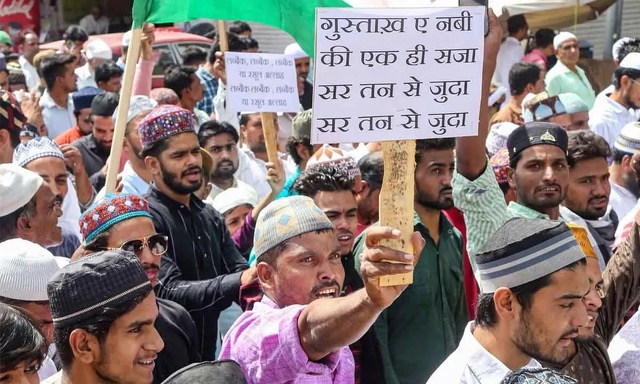
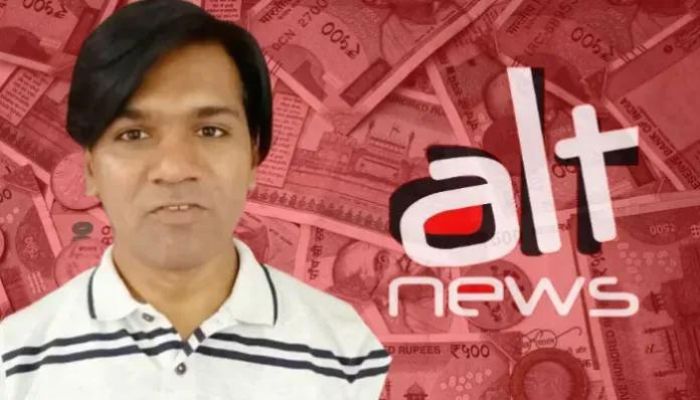
“Gustakh-e-Rasool ki Ek hi saza, sar tan se Juda, sar tan se Juda”, which translates to “There is only one punishment for being disrespectful to Rasool (Prophet Muhammad), their head separated from their torso, their head separated from the torso”, an Islamist clarion call, has become a staple feature of violent protests that have so far claimed the lives of at least 6 Hindus, including Kanhaiya Lal in Udaipur and Umesh Kolhe in Amravati, after Muslim fundamentalists, egged on by the dog-whistling of Alt News co-founder Mohammed Zubair against former BJP spokesperson Nupur Sharma, resorted to violence for what they perceived as ‘blasphemy’ against Prophet Muhammad.

From Kanpur in India’s northern plains to the southern metropolis of Bengaluru, from Kolkata in the east to Hyderabad in the south, protests in the name of blasphemy have erupted in almost every corner of the country as Islamists took to the streets running amok and shouting “Sar Tan Se Juda” chants over the perceived belief of blasphemy against the Prophet.

The Pakistani origins of ‘Sar Tan Se Juda’ chants

Though the slogan has been all the rage among Islamists across India, its origins are beyond the country’s northwest borders. Like all things Islamists, “Sar Tan Se Juda” chants are an imported concept adopted from neighbouring Pakistan, where targeting and attacking minorities, especially Hindus and Christians, in the name of blasphemy has become par for the course for the country’s overwhelmingly extremist and Islamist population.

The radicalised outcry that has taken over the streets of India was first used more than a decade ago in the wake of a brazen assassination of the governor of Punjab, Pakistan. And ever since, the slogan has found currency among the rabble-rousers determined to whip up hatred and anger against non-Muslims in the name of blasphemy.

In 2011, the governor of the Punjab province of Pakistan, Salman Taseer was murdered by his own guard Mumtaz Qadri who disagreed with Taseer’s opposition to Pakistan’s blasphemy law. Khadim Hussain Rizvi, a Maulana in Pakistan at the time hailed Qadri for assassinating Taseer and declared him a ‘Ghazi’. He led a procession with thousands of people in attendance, who raised provocative slogans against the former governor of Punjab, Pakistan, and hailed Qadri as a hero.

The procession, organised by the radical Barelvi terror outfit Tehreek-e-Labbaik Pakistan (TLP), amplified the slogan among the masses of Pakistan in 2011 to shield Mumtaz Qadri. Two slogans were chiefly chanted during the procession. One was “Rasool Allah, Rasool Allah” and the other, “Gustakh-e-Rasool Ki Ek Hi Zaza, Sar Tan Se Juda, Sar Tan Se Juda.” Rizvi would ask the audience during the mass demonstrations, “Gustakh-e-Rasool ki Ek hi Saza?” The protestors would respond by chanting “Sar Tan Se Juda, Sar Tan Se Juda”.

Qadri, who was trained as an elite police commando and assigned to Taseer as his bodyguard, shot the politician at an Islamabad market in January 2011. Being remorseless about his act, Qadri later justified the killing by saying that it was his religious duty to kill the minister, who was an outspoken critic of Pakistan’s harsh blasphemy laws and supported liberal reforms.

But Pakistan has long been wracked by violence in the name of blasphemy. Since the assassination of Salman Taseer, blasphemy-induced violence has only increased multifold in Pakistan, including instances where Islamists use fake blasphemy charges to subjugate and victimise minorities, especially Hindus and Christians. Personal scores against Hindu and Christian families are settled by levelling fabricated charges of blasphemy against them, which causes outrage and paints a target behind them.

How the slogan continues to live on through Islamists bent on “punishing” blasphemers

While Khadim may have passed away in 2020, his slogans have assumed a life of their own, living through murderous Islamists in Pakistan, India, and Bangladesh, who routinely invoke the call for the beheading against those perceived to have blasphemed against Prophet Muhammad. In a sense, Rizvi set a template for the Islamists to follow, sanctioning the murder of those considered “guilty” of blaspheming against Prophet Muhammad. 

In India, be it Hindu Samaj leader Kamlesh Tiwari or the chief abbot of the Dasna Devi Temple Yati Narsighanand Saraswati, or more recently, the former BJP leader Nupur Sharma, all of them have drawn “Sar Tan Se Juda” chants by bloodthirsty Islamists, who believe Prophet Muhammad is beyond reproach and any earnest attempt to impartially assess his life and teachings should be snuffed out, by any and all means.

Unfortunately, the threat of “Sar Tan Se Juda” chants against Kamlesh Tiwari materialised in 2019 when Islamists entered his house under the guise of Hindus and slit his throat for remarks made on Prophet Muhammad years ago, for which he had already served jail time. The Islamists had also planned an assassination bid against Yati Narsighanand Saraswati, but it was foiled by the attentiveness of the Delhi Police, which arrested a JeM terrorist entrusted with the task of taking down the Dasna Devi Temple head priest.

Similarly, Sharma has also been a victim of furore incited by Alt News co-founder Mohammed Zubair, who shared an incomplete clip of her debate on Times Now, where she defended her faith when one of the panellists mocked the discovery of a Shivling inside the controversial Gyanvapi structure. The leitmotif of protests that erupted after her video had gone viral had been Islamists shouting “Sar Tan Se Juda” threats against her, leading to the bloody murders of Kanhaiya Lal, Umesh Kolhe, and others.

Why the calls for beheading should be treated as a prelude to a terror act

Therefore, it is paramount not to understate the threat of “Sar Tan Se Juda” chants and view them for what they stand for: a precursor to a terror attack and a direct incitement to violence. Across the world, blasphemy attacks, such as the killing of Samuel Paty in France, are considered terror attacks and treated with utmost seriousness. 

However, in India and other South East Asian countries, the allies of the Islamists in the form of leftist “intellectuals” downplay blasphemy attacks and inciting violence in the name of blasphemy, and instead paint the victims as aggressors. Therefore, as a first step toward dealing with the menace, the government should treat “Sar Tan Se Juda” chants as a prelude to a terror attack and attract anti-terror charges against those caught chanting the slogan.

Though a radical Muslim outfit in Pakistan coined the slogan, it has gained popularity among Islamists in regions beyond its geographical origins. Over the years, we have seen large crowds of Islamists chanting the “Sar Tan Se Juda” slogan, which is nothing but a direct incitement to violence, leading to murders committed in the name of blasphemy. When such slogans are normalised by not initiating the requisite action that incitement to violence deserves, the sloganeers feel empowered to continue exhibiting their murderous tendencies and instigating others to behead their target.

The condoning of such slogans, believing they are just a cathartic expression of a livid mob aggrieved over the purported insult of their prophet, is nothing but wishful thinking because chances are that some religious zealot in the crowd, egged on by the slogans, would be motivated to pick up the weapon and proceed to kill someone like Kanhaiya Lal.

In such a scenario, the state cannot assume a lasseiz-fair approach and allow the sloganeers to sow hatred and walk away with impunity. Instead, it should come down hard against such miscreants and set an example for others to discourage them from indulging in similar behaviour. Bulldozer action, slapping UAPA charges, and stripping away government benefits are some of the initial measures the government can take to tackle the menace of ‘Sar Tan Se Juda’ chants.

Another crucial measure the government can undertake is to ban the slogan altogether and criminalise its usage. While outlawing the slogan itself won’t solve the scourge of Islamic Jihad afflicting the country, as the source of their hatred has doctrinal roots and is not limited to specific slogans per se, it would at least send a message to Islamists that the state is taking cognisance of blasphemy murders by Islamists, is willing to acknowledge its Islamist links and take action against it.


‘Liberal’ panellists withdraw from Jaipur Literature Festival in New York because BJP leader Shazia Ilmi was a panellist

0

Several ‘liberal’ panellists withdrew from the New York edition of the Jaipur Literature Festival because of the presence of BJP leader Shazia Ilmi. According to a report by Middle East Eye, at least three panellists have withdrawn from the event, alleging that JLF is normalising Hindutva in the United States.

Among the three persons that didn’t participate in the event due to the presence of Shazia Ilmi include Marie Brenner and Amy Waldman. While the two authors have not made any comment on the issue, journalist Aatish Taseer said that he knew at least three persons who had pulled out of the Literature Festival.

He also said that South Asian activists and writers were mobilised to explain to other participants that “these are full-on right-wing ideologues, including card-holding members of the BJP”. He said, “These people who are appearing from the New York side who are liberals would never be caught dead with these [BJP] people. So it’s a really, really insidious and sly thing that the JLF leaders have done.”

According to the schedule of the JLF New York, Shazia Ilmi participated in a session titled Intersections: Searching Equity with Dalit activist Guru Prakash Paswan and Prashant Jha on September 14. Marie Brenner was scheduled to discuss her book ‘The Desperate Hours: One Hospital’s Fight to Save a City on the Pandemic’s Front Lines’ on 14th, and Amy Waldman was scheduled to participate in a conversion titled “Better to have Gone: Love and Death in Auroville”, also on 14th September. But later their names and programs were removed from the schedule published on the official website.

Amy Waldman’s event was presented by Akash Kapur and Myna Mukherjee instead, while Marie Brenner’s event was cancelled. The event was held from 12 September to 14 Setepmber.

Shazia Ilmi sharply reacted after learning that some panellists left the event due to her presence. She said that she was not aware of it,  and said, “If you say that these people have dropped out because of my presence, that remains entirely their choice.” While talking to Middle East Eye, she said “And if they are against freedom of expression, of others, or dissenting voices, a voice that is different from theirs [then] they must take a deep, hard look at themselves and examine the hatred and the bias that they have within themselves towards those who represent a different point of view. And this entire cancel culture and self-cancel culture that they are bringing to the table represents and smacks of intolerance of the worst kind.”

Shazia found support from several other panellists, who said they will not object to the presence of someone with different ideology. Ugandan writer and academic Mahmood Mamdani said, “I have never before considered withdrawing from an event because I objected, however strongly, to the views of a participant – so long as the event itself was not being hijacked by this person or their organisation, thus closing it to opposing or divergent views.”

But Mamdani came under attack for his support to Shazia. Taseer said Mamdani has a lot to answer for because he takes a very strident position when it comes to Israel. “You have a party spokesperson that is systematically creating a climate of genocide in a country where the demographics are even more explosive, even more volatile,” he said. 

Shazia Ilmi also delivered a keynote address during the closing ceremony of the festival.

‘He asked his family to destroy his devices if he is arrested’: Delhi Police opposes Md Zubair’s plea to return seized gadgets

0

On Friday (September 16), the Delhi police opposed the petition of AltNews co-founder Mohammed Zubair wherein he sought the return of devices and documents seized by the cops during the investigation of the case against him.

As per reports, the Delhi police argued that the seized items are being analysed at the Forensic Science Laboratory in Rohini and that Zubair can approach the lower court for their release after the competition of the analysis.

It further added that attempts are underway to recover and analyse data from the devices seized by the cops from the Bengaluru residence of AltNews co-founder. The cops pointed out that Zubair’s 2018 tweet was sufficient to incite hatred among people, resulting in a disturbance to peace and tranquillity in society.

The police stated, “Mohd. Zubair had remained non-cooperative during the investigation. He also disclosed that he has asked his family to dispose of his equipment including his mobile phone and laptop in case he is arrested/apprehended by police,”  

In its affidavit, the Delhi police said, “That, during Police Custody remand, one laptop, two invoices and one hard disk have been recovered from the residence (Bangalore) of accused Mohd Zubair on the basis of disclosure statement which is admissible under Section 27 of Indian Evidence Act, which is to be looked upon at the time of trial.”

“Quashing/ setting aside PC orders by Ld. CMM/ Patiala House Court will make the recovery inadmissible,” it continued. Earlier on July 27 this year, the Delhi High Court had sought the reply of the police about returning of seized items to Mohammed Zubair.

The background of the case

On 13 June 2022, Twitter user ‘The Hawk Eye’ (@thehawkeye) shared a collage of past tweets and posts by Mohammed Zubair, mocking Hindu Gods and beliefs. The development came days after India witnessed violent protests over the alleged insult of Prophet Muhammad.

In one of the tweets shared by The Hawk Eye, Zubair was seen mocking Shivling and comparing it with the top view of the Vatican City. He said the post comparing Shivling with the Vatican City inspired him to come up with a parody Facebook page ‘Unofficial: Subramanian Swamy’ in 2014.

Apparently, one of the posts on the Facebook page ‘Unofficial Mohammed Zubair‘ mocked Arun Govil and took a dig at Lord Ram, suggesting that ISRO must consult the actor for his knowledge about rocketry.

Another post showed an aeroplane under the water with the caption: “Breaking: Underwater Pushpak Vimana used by Raavan 5000 years found in the Indian Ocean.” Besides ridiculing Hindu Gods, Zubair has also poked fun at Hindu beliefs and took a dig at Sanskrit.

As his Hinduphobic posts started getting traction,the AltNews co-founder quietly pulled down his Facebook page. On June 27, Mohammed Zubair was arrested by Delhi Police over his old tweets, insulting Hindu Gods and Goddesses. He was arrested under Section 153 and 295A of the Indian Penal Code.

Additional IPC Sections, including 295A, 201, and 120B of the IPC, as well as Section 35 of the FCRA Act, were invoked against him as the case proceeded. Mohammed Zubair filed a petition with the Supreme Court, seeking dismissal of the six FIRs filed against him in Uttar Pradesh.

The plea filed by him challenged the FIRs recorded in Lakhimpur Kheri, Sitapur, Muzaffarnagar, Ghaziabad, and two in Hathras. and the formation of the SIT by the Uttar Pradesh Police. He was later granted bail by the Supreme Court of India.

63-year-old Abu Abdullah from Saudi Arabia marries 53 women in 43 years, says he was looking for ‘peace and stability’, not ‘personal pleasure’

0

A 63-year-old man from Saudi Arabia, Abu Abdullah, nicknamed as ‘polygamist of the century’ revealed on September 10 that he had married 53 women in his life and does not plan to remarry. The man said that he decided to marry these many women in the hopes of looking for “peace and stability” and not for seeking “personal pleasure”.

The story gained attention after Abu’s video went viral over the internet. Netizens shared the video extensively, some interacting with him and praising him, while others reacted by saying what he did was nothing to be proud of and chastised him.

The man identified as Abu Abdullah was interviewed by Saudi-owned media company MBC where he stated that he performed his first marriage at the age of 20. He back then married a girl who was six years younger than him. “When I married for the first time, I did not plan to marry more than one woman because I was feeling comfortable and had children. But after a while, problems happened and I decided to marry again when I was 23 years old and I informed my wife of my decision”, Abdullah was quoted.

This action did not end his hunt for the right lady for him. Abdullah revealed that when complications arose between his first and second spouses, he opted to marry for the third and fourth time, finally divorcing his first two marriages.

He also claimed to have treated all of his wives properly and acknowledged that, while the majority of his wives were Saudi women, he had married international ladies as well. Abdullah married in other places to guard himself against vices while on work vacations abroad for three to four months.

Abdullah also meanwhile said that the shortest out of his 53 marriages lasted only a single night. “Every man in the world wishes to have one woman and remain with her forever. Stability is not to be found with a young woman, but with an old one”, he suggested. Abdullah is now married to a woman and plans to marry no other lady in the future.